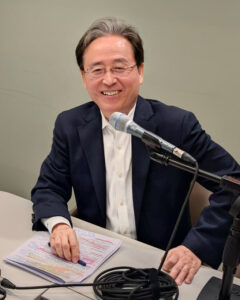
array(1) {
[0]=>
array(395) {
[0]=>
array(4) {
["speaker"]=>
string(12) "Elin Bergner"
["timestamp"]=>
string(8) "00:00:02"
["seconds"]=>
int(2)
["text"]=>
string(484) "And it looks like it has started recording. Five seconds have passed. This is an interview with Ambassador Shin Bong-kil conducted by Elin Bergner for the Oral History Project, a project of the Stanley Center for Peace and Security and BASIC. The interview is taking place on 9 April in Seoul, South Korea. This is session number one out of three. So Ambassador Shin, could you briefly describe your career path leading up to your role as the director of Inter-Korean Policy Division?"
}
[1]=>
array(4) {
["speaker"]=>
string(24) "Ambassador Shin Bong-kil"
["timestamp"]=>
string(8) "00:00:41"
["seconds"]=>
int(41)
["text"]=>
string(408) "Oh, yes. Obviously, during my almost 40 years diplomatic career, I served many parts, but mainly focused on North Korean issues. The Special Policy Division director was the first serious one for me to follow up this North Korean issue. And that was 1992 to 1995. At that time, as you know, that, see, Geneva Nuclear ... What is that? Geneva ... I'm sorry. What's the name exactly, you see? Agreed Framework."
}
[2]=>
array(4) {
["speaker"]=>
string(12) "Elin Bergner"
["timestamp"]=>
string(8) "00:01:42"
["seconds"]=>
int(102)
["text"]=>
string(17) "Agreed Framework."
}
[3]=>
array(4) {
["speaker"]=>
string(24) "Ambassador Shin Bong-kil"
["timestamp"]=>
string(8) "00:01:44"
["seconds"]=>
int(104)
["text"]=>
string(524) "Geneva Agreed Framework was signed at the time. So my division followed all this process. But actually substantial works were done in the Korean Foreign Ministry, Department of US Division. Our division's main role is, you see, collecting information about North Korea, our North Korean nuclear issue, and analyzing it. So participating, helping the new setting team, all these kind of substantial things are done by Korea's US Department in the Korean Foreign Ministry. So that was the case I was involved in in this issue."
}
[4]=>
array(4) {
["speaker"]=>
string(12) "Elin Bergner"
["timestamp"]=>
string(8) "00:02:40"
["seconds"]=>
int(160)
["text"]=>
string(195) "So how, so how on a more personal level, you started in the foreign ministry in 1978, as I'm aware. So how did your career progress from that stage into getting involved with North Korean issues?"
}
[5]=>
array(4) {
["speaker"]=>
string(24) "Ambassador Shin Bong-kil"
["timestamp"]=>
string(8) "00:02:55"
["seconds"]=>
int(175)
["text"]=>
string(391) "Actually, see, I entered the foreign ministry in 1978 by the examination. Since then, I sometimes served as a private secretary to the foreign minister. Then I was sent to the UN mission, mission to United Nations, and I came back to serve in some divisions. I think it's almost 14 years after first entering the foreign ministry, I was appointed as a division director, and that's it. Yeah."
}
[6]=>
array(4) {
["speaker"]=>
string(12) "Elin Bergner"
["timestamp"]=>
string(8) "00:03:48"
["seconds"]=>
int(228)
["text"]=>
string(217) "So could you talk us through a little bit about how was the North Korean nuclear issue understood in South Korea during this '93, '94 Agreed Framework time? What was the Korean understanding of the North Korean issue?"
}
[7]=>
array(4) {
["speaker"]=>
string(24) "Ambassador Shin Bong-kil"
["timestamp"]=>
string(8) "00:04:05"
["seconds"]=>
int(245)
["text"]=>
string(886) "Actually, yeah, Koreans know somewhat about North Korean nuclear issue, because, you see, before, let's see, the signing the Geneva Agreed Framework, actually, see, North Korean nuclear issue was already broken out, and IAEA was involved. North Korea denied any kind of nuclear activity. But, you see, the inspection result was that they were secretly involved in some very beginning stages of extracting, let's see, plutonium, let's see, from the small nuclear reactor. But once IAEA pushed North Korea, see, to investigate it more fully, then suddenly North Korea, you see, announced that they will withdraw from the, see, NPT. That made a big issue in Korea and international world, that ... And then that led to the, you see, negotiation between the United States and North Korea, and they finally got the, you see, Agreed Framework. So we call it generally Geneva Agreed Framework."
}
[8]=>
array(4) {
["speaker"]=>
string(12) "Elin Bergner"
["timestamp"]=>
string(8) "00:05:54"
["seconds"]=>
int(354)
["text"]=>
string(43) "South Korea has a role in this at the time."
}
[9]=>
array(4) {
["speaker"]=>
string(24) "Ambassador Shin Bong-kil"
["timestamp"]=>
string(8) "00:05:54"
["seconds"]=>
int(354)
["text"]=>
string(5) "What?"
}
[10]=>
array(4) {
["speaker"]=>
string(12) "Elin Bergner"
["timestamp"]=>
string(8) "00:05:55"
["seconds"]=>
int(355)
["text"]=>
string(322) "That South Korea has a role in this at the time. The Agreed Framework was between the US and North Korea, but South Korea at the time must have also been worried about the nuclear issue in North Korea. So what did it look like in your policy division or in the foreign ministry? What were the conversations like back then?"
}
[11]=>
array(4) {
["speaker"]=>
string(24) "Ambassador Shin Bong-kil"
["timestamp"]=>
string(8) "00:06:13"
["seconds"]=>
int(373)
["text"]=>
string(342) "Actually, you see, as everyone knows, the US is the main player in this kind of nuclear issue like today. After finding, you see, something from the initial inspection from IAEA, that immediately United States paid attention as this issue became quite a big one. US entered, let's see, I mean, a dialogue and negotiation with the North Korea."
}
[12]=>
array(4) {
["speaker"]=>
string(24) "Ambassador Shin Bong-kil"
["timestamp"]=>
string(8) "00:06:52"
["seconds"]=>
int(412)
["text"]=>
string(369) "At that time Korea, of course, we are, you see, part of this issue. So our government also very much wanted to involve in this negotiation or talk, but North Korea didn't want it. And also I think, certainly, United States was of course not, see, wanted South Korea to involve in this matter. So there was a, see, negotiation between the two in Geneva. Yeah, that's it."
}
[13]=>
array(4) {
["speaker"]=>
string(24) "Ambassador Shin Bong-kil"
["timestamp"]=>
string(8) "00:07:36"
["seconds"]=>
int(456)
["text"]=>
string(199) "And so, at that time, even though Korean government has a great interest in this process of negotiation, but we couldn't participate directly at the negotiation between United States and North Korea."
}
[14]=>
array(4) {
["speaker"]=>
string(24) "Ambassador Shin Bong-kil"
["timestamp"]=>
string(8) "00:08:00"
["seconds"]=>
int(480)
["text"]=>
string(168) "So we sent out delegation to Geneva, but we couldn't enter into the negotiation table. We just heard, see, after talk then some kind of briefing from the United States."
}
[15]=>
array(4) {
["speaker"]=>
string(24) "Ambassador Shin Bong-kil"
["timestamp"]=>
string(8) "00:08:19"
["seconds"]=>
int(499)
["text"]=>
string(489) "I don't think the United States split the whole thing. They wanted, you see, to ... Negotiations sometimes need some kind of secrecy and give and take. I don't think they wanted to reveal everything. But, anyway, they communicated with the Korean delegation who were dispatched to Geneva. So that was, let's see, the way the communication held between the two, and also Korea and United States. So three were there, but that one was only, see, between the two, see, not the three by three."
}
[16]=>
array(4) {
["speaker"]=>
string(12) "Elin Bergner"
["timestamp"]=>
string(8) "00:09:06"
["seconds"]=>
int(546)
["text"]=>
string(250) "So you mentioned earlier that in your role as the director of Inter-Korean Policy Division, one of the tasks that you had was to collect information on North Korea at the time. What was that role like and what was the biggest challenges in that role?"
}
[17]=>
array(4) {
["speaker"]=>
string(24) "Ambassador Shin Bong-kil"
["timestamp"]=>
string(8) "00:09:24"
["seconds"]=>
int(564)
["text"]=>
string(236) "Actually, at that time it was just after the, see, collapse of, I mean, East Europe and the Soviet Union. So there was a kind of, see, saying that North Korea also will collapse soon. That was a very prevalent kind of thinking in Korea."
}
[18]=>
array(4) {
["speaker"]=>
string(24) "Ambassador Shin Bong-kil"
["timestamp"]=>
string(8) "00:09:55"
["seconds"]=>
int(595)
["text"]=>
string(407) "Also, we, I mean, some conservative element in our society, also wanted North Korea to collapse, because Korean society are composed of some who fled from North Korea after the, see, Korean War, and they had a very bad feeling toward the North Korean regime. So generally they had a voice in South Korea, too. They thought that the North Korean regime is a kind of a very bad regime so they should collapse."
}
[19]=>
array(4) {
["speaker"]=>
string(24) "Ambassador Shin Bong-kil"
["timestamp"]=>
string(8) "00:10:32"
["seconds"]=>
int(632)
["text"]=>
string(223) "So there was a kind of wishful thinking at that time in Korean society that following the, let's see, East Europe case and Soviet Union, that North Korea also will collapse. That was the mood in Korean society at that time."
}
[20]=>
array(4) {
["speaker"]=>
string(12) "Elin Bergner"
["timestamp"]=>
string(8) "00:10:54"
["seconds"]=>
int(654)
["text"]=>
string(73) "Was there challenges in finding information from North Korea at the time?"
}
[21]=>
array(4) {
["speaker"]=>
string(24) "Ambassador Shin Bong-kil"
["timestamp"]=>
string(8) "00:11:01"
["seconds"]=>
int(661)
["text"]=>
string(474) "Yeah, at that time, see, we were very keen to collect information from all over the world, every kind of information about North Korea. Particularly interesting was, I mean, contents of telegrams from our mission in Beijing and in China, and then from Washington and some other European countries. Overall, what is very different was that content, that the report from our missions in United States and Europe was the high possibility of the collapse of North Korean regime."
}
[22]=>
array(4) {
["speaker"]=>
string(24) "Ambassador Shin Bong-kil"
["timestamp"]=>
string(8) "00:11:55"
["seconds"]=>
int(715)
["text"]=>
string(342) "Then from China, it's much different. No, North Korea will not collapse very easy because their logic was that Eastern European countries actually had an opportunity to contact and mingle, exchange with, let's see, Western society at the time already. But North Korea is a completely isolated country for a long time until then. So different."
}
[23]=>
array(4) {
["speaker"]=>
string(24) "Ambassador Shin Bong-kil"
["timestamp"]=>
string(8) "00:12:42"
["seconds"]=>
int(762)
["text"]=>
string(657) "I more believed in, I mean, the Chinese kind of observation as a division director because I always ... From that up till now, China better knew North Korea because they had, let's see, the same kind of background of history and governance system, or autocratic or, see, authoritarian, I mean, governing system and everything. So they know better than other European, or particularly the Americans. Americans who with their lens, their kind of belief, and their viewpoint saw North Korea with their kind of, let's see, ideological kind of background. So it was much different, but I as a director of the division, I more believed in the analysis from China."
}
[24]=>
array(4) {
["speaker"]=>
string(24) "Ambassador Shin Bong-kil"
["timestamp"]=>
string(8) "00:13:57"
["seconds"]=>
int(837)
["text"]=>
string(333) "My policy paper, actually, I wrote with that kind of, let's see, belief that putting more importance on China's analysis. But the difficulty was that, as I already said to you, substantial things with North Korea was done in the, I mean, US Department in the Foreign Ministry, and Korea's diplomacy was strongly influenced by the US."
}
[25]=>
array(4) {
["speaker"]=>
string(24) "Ambassador Shin Bong-kil"
["timestamp"]=>
string(8) "00:14:38"
["seconds"]=>
int(878)
["text"]=>
string(308) "We call it the Washington schools. The elite foreign ministry officials were sent to Washington and trained there, served there, and they were very ... Let's see, they had a mentor or ... I mean their way of thinking is influenced by Washington. So I had some problem with these so-called Washington schools."
}
[26]=>
array(4) {
["speaker"]=>
string(24) "Ambassador Shin Bong-kil"
["timestamp"]=>
string(8) "00:15:07"
["seconds"]=>
int(907)
["text"]=>
string(400) "Let's see. Later, I served in China a long time, in Beijing. So I may say I'm in China school. But as I said earlier, that Korean diplomacy was much more influenced by United States and Washington schools. So they are the one who moved up and who formed the leadership in the Korean foreign ministry. Always the last couple of decades they were the main kind of actors in the Korean Foreign Ministry."
}
[27]=>
array(4) {
["speaker"]=>
string(24) "Ambassador Shin Bong-kil"
["timestamp"]=>
string(8) "00:15:51"
["seconds"]=>
int(951)
["text"]=>
string(184) "So China school, even though China became, let's see, more and strong, bigger, and now it's almost a superpower, but still the main kind of actually actors are from Washington schools."
}
[28]=>
array(4) {
["speaker"]=>
string(12) "Elin Bergner"
["timestamp"]=>
string(8) "00:16:14"
["seconds"]=>
int(974)
["text"]=>
string(429) "Maybe leading on to that then, as you mentioned with the Agreed Framework, it took place between the US and North Korea. South Korea was kind of left out of that process. What I'm curious to find out is when the framework was agreed and it was communicated to South Korea, did South Korea share the views of the US, of DC at the time, or did they think that there were other parts that should have been involved in the agreement?"
}
[29]=>
array(4) {
["speaker"]=>
string(24) "Ambassador Shin Bong-kil"
["timestamp"]=>
string(8) "00:16:44"
["seconds"]=>
int(1004)
["text"]=>
string(614) "What do you mean, shared? The US side shared the information? Of course they shared it. But when the Agreed Framework was shared with the Korean government, at first the Korean government was somewhat, see, not so happy because South Korean couldn't, let's see, directly participate in the negotiation. And also there was things like building, let's see, a nuclear power plant for North Korea Light-Water Reactor Project. But after all, Korea, let's see, couldn't but agree on this, see, Geneva agreement, and the government decided to participate in, see, all these projects signed by the Geneva Agreed Framework."
}
[30]=>
array(4) {
["speaker"]=>
string(12) "Elin Bergner"
["timestamp"]=>
string(8) "00:18:00"
["seconds"]=>
int(1080)
["text"]=>
string(185) "Can you walk me through that process? The framework was agreed between the US and North Korea. How did South Korea get involved in the implementation of the Light-Water Reactor Project?"
}
[31]=>
array(4) {
["speaker"]=>
string(24) "Ambassador Shin Bong-kil"
["timestamp"]=>
string(8) "00:18:15"
["seconds"]=>
int(1095)
["text"]=>
string(658) "Oh yeah. The most important element was providing two 1,000-megawatt nuclear light- water reactor, see, to North Korea, provided to North Korea. It's a big project that needs a lot of money, budget. So Korean government, let's see, established an organization, that Light-Water Reactor Planning Office. I was involved in that office. I was appointed as a special advisor, let's see, to this institution, and that's basic ... You see, the role was to support the KEDO, which was established to provide this nuclear light-water reactor to North Korea. The main office was, let's see, established in New York with a couple of countries involved in this project."
}
[32]=>
array(4) {
["speaker"]=>
string(24) "Ambassador Shin Bong-kil"
["timestamp"]=>
string(8) "00:19:45"
["seconds"]=>
int(1185)
["text"]=>
string(414) "The Nuclear Light-Water Reactor Planning Office in Korea was supporting this KEDO international organization, who are officially the provider of this nuclear reactor to North Korea. With that, let's see, I had an opportunity to visit North Korea quite often in 2002 and I could see the proceeding of these projects and also how this project could be seen. Later, it was, I mean, destroyed. That I wrote in my book."
}
[33]=>
array(4) {
["speaker"]=>
string(12) "Elin Bergner"
["timestamp"]=>
string(8) "00:20:43"
["seconds"]=>
int(1243)
["text"]=>
string(98) "So I will ask you a lot of questions about that I think a little bit later this afternoon as well."
}
[34]=>
array(4) {
["speaker"]=>
string(24) "Ambassador Shin Bong-kil"
["timestamp"]=>
string(8) "00:20:50"
["seconds"]=>
int(1250)
["text"]=>
string(11) "Okay, okay."
}
[35]=>
array(4) {
["speaker"]=>
string(12) "Elin Bergner"
["timestamp"]=>
string(8) "00:20:50"
["seconds"]=>
int(1250)
["text"]=>
string(351) "But what I was curious about is my understanding is that you joined the Light-Water Reactor Planning Office around 2002, which is a little bit later in the process on KEDO. So what I'm curious about is the process that led from the Agreed Framework to the KEDO mission's beginnings. How did it move from a framework to implementation in the late '90s?"
}
[36]=>
array(4) {
["speaker"]=>
string(24) "Ambassador Shin Bong-kil"
["timestamp"]=>
string(8) "00:21:23"
["seconds"]=>
int(1283)
["text"]=>
string(612) "As I told you, that the Geneva Agreed Framework stipulates that we'll provide North Korea the nuclear light-water reactor in, I mean, the target date, 2003 or something. Then to provide this, I mean to provide the nuclear reactor, a multilateral, I mean organization, international organization, was established with the leadership of United States and Korea and Japan. US took the, see, position of secretary general of the KEDO and the deputy secretary generals, one from Korea and one other from ... I think it's from Japan or something, the main, see, place who should bear the budget or something like that."
}
[37]=>
array(4) {
["speaker"]=>
string(24) "Ambassador Shin Bong-kil"
["timestamp"]=>
string(8) "00:22:32"
["seconds"]=>
int(1352)
["text"]=>
string(395) "Then at the same time in Korea, we established this Nuclear Light-Water Planning Office to support. Because Korea is the main actor, we should build, let's see, the budget and these kind of things. We had quite a big office in Seoul, and I was dispatched to that organization as a special advisor because of my career, previous career, as the, let's see, director of the Special Policy Division."
}
[38]=>
array(4) {
["speaker"]=>
string(24) "Ambassador Shin Bong-kil"
["timestamp"]=>
string(8) "00:23:16"
["seconds"]=>
int(1396)
["text"]=>
string(528) "I think that career helped me, let's see, to be appointed as a special advisor, because, personally, I had an interest in this North Korean issue, so I was very happy to be involved in this office. Also, it was very exciting that as a Korean diplomat to travel to North Korea quite often. It's a real new ... It's a very exciting new development for me and it's a really rare, rare experience for Korean diplomats, let's see, visiting North Korea at that time. So I was suggested to be involved in this work. That's it. It's ..."
}
[39]=>
array(4) {
["speaker"]=>
string(12) "Elin Bergner"
["timestamp"]=>
string(8) "00:24:21"
["seconds"]=>
int(1461)
["text"]=>
string(229) "So I'm curious also to understand just, again, a little bit on the background. How did it happen that South Korea provided the biggest budget and the implementation of KEDO? Why did the money come from South Korea and not the US?"
}
[40]=>
array(4) {
["speaker"]=>
string(24) "Ambassador Shin Bong-kil"
["timestamp"]=>
string(8) "00:24:41"
["seconds"]=>
int(1481)
["text"]=>
string(281) "US, it was I think that the US thought that after all this is a Korean peninsula issue, even though the United States were negotiating with North Korea, and building nuclear power plant is, let's see ... Who's bear this, I mean, budget is ... South Korea should bear the main part."
}
[41]=>
array(4) {
["speaker"]=>
string(12) "Elin Bergner"
["timestamp"]=>
string(8) "00:25:14"
["seconds"]=>
int(1514)
["text"]=>
string(6) "I see."
}
[42]=>
array(4) {
["speaker"]=>
string(24) "Ambassador Shin Bong-kil"
["timestamp"]=>
string(8) "00:25:19"
["seconds"]=>
int(1519)
["text"]=>
string(244) "See, At first we were not so happy, but finally we agreed because this is also a Korean Peninsula issue. And also if this project goes on, Korea can play the main role in this issue, the denuclearization of Korean Peninsula issue. So we agreed."
}
[43]=>
array(4) {
["speaker"]=>
string(24) "Ambassador Shin Bong-kil"
["timestamp"]=>
string(8) "00:25:49"
["seconds"]=>
int(1549)
["text"]=>
string(202) "But it took time actually how ... Let's see, the percentage, how much we should bear or who, you see. It took time. But the main part of it, Korea actually agreed to bear it, and then, let's see, Japan."
}
[44]=>
array(4) {
["speaker"]=>
string(24) "Ambassador Shin Bong-kil"
["timestamp"]=>
string(8) "00:26:16"
["seconds"]=>
int(1576)
["text"]=>
string(404) "And so, Korea ... I think I should find out it in my material. But 70% of all budget should be borne by Korea and I think around 20% should be borne by Japan. Then what about United States? Then United States took the responsibility of supplying the heavy oil to North Korea up til the completion of this project. So that was, I mean, the division of role, division of budget agreed by the three parties."
}
[45]=>
array(4) {
["speaker"]=>
string(24) "Ambassador Shin Bong-kil"
["timestamp"]=>
string(8) "00:27:10"
["seconds"]=>
int(1630)
["text"]=>
string(384) "As I told you, that South Korean part thought that, you see, this is basically an issue of Korean Peninsula, and the denuclearization is both at that time the most important issue to Korea, and also if we bear the big risk, I mean the percentage, then we can play a much bigger role in this, you see, nuclear issue. So that was our government's kind of, you see, thought at that time."
}
[46]=>
array(4) {
["speaker"]=>
string(12) "Elin Bergner"
["timestamp"]=>
string(8) "00:27:56"
["seconds"]=>
int(1676)
["text"]=>
string(173) "So maybe then still in the role as the director in the Korean Policy Division, at the time, did you have any insight into how North Korea thought about the Agreed Framework?"
}
[47]=>
array(4) {
["speaker"]=>
string(24) "Ambassador Shin Bong-kil"
["timestamp"]=>
string(8) "00:28:13"
["seconds"]=>
int(1693)
["text"]=>
string(283) "At that time, North Korea was in a real difficult situation, as you know, that after the collapse of the Soviet Union, there was, you see, a cut of aid by the Soviet Union to North Korea. Soviet Union was not, see, a situation to give aid to North Korea anymore at that time already."
}
[48]=>
array(4) {
["speaker"]=>
string(24) "Ambassador Shin Bong-kil"
["timestamp"]=>
string(8) "00:28:48"
["seconds"]=>
int(1728)
["text"]=>
string(258) "China was also, see, at that time, not like today. At that time, China is still a developing country, and the international situation overall at that time was very dire to communist regime, communist blocks, and they also couldn't provide aid to North Korea."
}
[49]=>
array(4) {
["speaker"]=>
string(24) "Ambassador Shin Bong-kil"
["timestamp"]=>
string(8) "00:29:13"
["seconds"]=>
int(1753)
["text"]=>
string(500) "So since then, North Korea was, you see, helped a lot by Soviet Union particularly, but these aids stopped. And also natural disaster in agriculture in North Korea. At that time, North Korea was in a dire economic situation and they cannot but agree on this, see, Geneva Agreed Framework, that they were not at the moment at the situation that refusing everything, proposal from the United States, just secretly continue to focus on, let's see, I mean, nuclear development. So temporary, they agreed."
}
[50]=>
array(4) {
["speaker"]=>
string(24) "Ambassador Shin Bong-kil"
["timestamp"]=>
string(8) "00:30:21"
["seconds"]=>
int(1821)
["text"]=>
string(218) "I mean all these kind of nuclear issue was related with the survival of the North Korean regime. See? The regime, the Kim family regime. Survival was the most important thing, at that time, for North Korean government."
}
[51]=>
array(4) {
["speaker"]=>
string(24) "Ambassador Shin Bong-kil"
["timestamp"]=>
string(8) "00:30:41"
["seconds"]=>
int(1841)
["text"]=>
string(435) "So I think, strategically, their decision that at this moment we should agree on this kind of, see, negotiation. They could get somehow, I mean, heavy oils from Korea and from United States. And the original justification that they built a five-megawatt small nuclear reactor was that they said that this small power plant generate electricity. So if they stop that, then, you see, I mean we need electricity and you should provide it."
}
[52]=>
array(4) {
["speaker"]=>
string(24) "Ambassador Shin Bong-kil"
["timestamp"]=>
string(8) "00:31:46"
["seconds"]=>
int(1906)
["text"]=>
string(309) "Then the logic is that, okay, then you should start thinking of this nuclear development. We'll provide you this light-water reactor, which at that time thought as a ... Light-water reactor is difficult for making, you see, material for nuclear development, so we will provide you nuclear light-water reactor."
}
[53]=>
array(4) {
["speaker"]=>
string(24) "Ambassador Shin Bong-kil"
["timestamp"]=>
string(8) "00:32:19"
["seconds"]=>
int(1939)
["text"]=>
string(223) "Also, up till that time, we'll provide you, you see, heavy oil. Heavy oil is a very ... It's oil which is only for, let's see, burning and for making electricity. That oil is not fit for military use or something like that."
}
[54]=>
array(4) {
["speaker"]=>
string(12) "Elin Bergner"
["timestamp"]=>
string(8) "00:32:57"
["seconds"]=>
int(1977)
["text"]=>
string(205) "All right. So I'm curious, as we talk about then what North Korea might have been thinking at the time regarding the Agreed Framework, was there any communication at the time between North and South Korea?"
}
[55]=>
array(4) {
["speaker"]=>
string(24) "Ambassador Shin Bong-kil"
["timestamp"]=>
string(8) "00:33:11"
["seconds"]=>
int(1991)
["text"]=>
string(437) "At that time, yes. Actually, at that time, see, that was the time of President Kim Young-sam's era. He also wanted to talk, you see, communicate with North Korea. Actually as a basis, every kind of Korean president wanted to make some kind of a big contribution of nuclear issue, and everybody wanted some kind of direct contact with North Korea, even before Kim Young-sam's period. Even President Park Chung-hee sent a special envoy ..."
}
[56]=>
array(4) {
["speaker"]=>
string(24) "Ambassador Shin Bong-kil"
["timestamp"]=>
string(8) "00:34:01"
["seconds"]=>
int(2041)
["text"]=>
string(138) "And since then, every president had a tendency that he would like to make some kind of a big thing, breakthrough in South-North relations."
}
[57]=>
array(4) {
["speaker"]=>
string(24) "Ambassador Shin Bong-kil"
["timestamp"]=>
string(8) "00:34:17"
["seconds"]=>
int(2057)
["text"]=>
string(522) "And at that time, President Kim Young-sam he also wanted to have a kind of a summit meeting between Korea and South Korea, South Korea and... South and North. And as far as I understand, he sent that kind of message through his channel, for example, through his envoy in Beijing to communicate it with China to deliberate that I want a summit with the North Korean leader, that kind of a message. That means that kind of message through China, but North Korea looks like was not happy with the communicating through China."
}
[58]=>
array(4) {
["speaker"]=>
string(24) "Ambassador Shin Bong-kil"
["timestamp"]=>
string(8) "00:35:42"
["seconds"]=>
int(2142)
["text"]=>
string(395) "And so there was not a clear response from North Korea. But suddenly, as you know, that there was a chance by President Carter visiting that as a kind of a personal mission that, "I be involved in this resolving this North Korean nuclear issue." And he visited. There was not full support from US Government, but as a former president, he wanted to contribute to this North Korean nuclear issue."
}
[59]=>
array(4) {
["speaker"]=>
string(24) "Ambassador Shin Bong-kil"
["timestamp"]=>
string(8) "00:36:42"
["seconds"]=>
int(2202)
["text"]=>
string(227) "And he visited North Korea, Pyongyang, and he met Pyongyang's Kim Il-sung, the top leader. And he got the response from the President Kim Il-sung of North Korea that, "I suggesting a summit meeting between the South and North.""
}
[60]=>
array(4) {
["speaker"]=>
string(24) "Ambassador Shin Bong-kil"
["timestamp"]=>
string(8) "00:37:14"
["seconds"]=>
int(2234)
["text"]=>
string(391) "I think that, at that time, already North Korean leader knew, as I told you, that the South want summit between the South and North Korean leaders. So he sent the message through Carter that, "Let's make a summit meeting." And it was delivered to President Kim Young-sam. And at that time the President Kim Young-sam was very enthusiastic, very excited to have a summit meeting at that time."
}
[61]=>
array(4) {
["speaker"]=>
string(24) "Ambassador Shin Bong-kil"
["timestamp"]=>
string(8) "00:37:52"
["seconds"]=>
int(2272)
["text"]=>
string(416) "So that means that the two tops from the South and North, they had a intention, honesty in resolving this nuclear issue through the top leaders talk. North Korea has always has that tendency that the top should be involved. I think it's logical and when we think about the North Korean system, it's a, you see,, bureaucrats recommend something and the top down is always the best, efficient way of making big things."
}
[62]=>
array(4) {
["speaker"]=>
string(24) "Ambassador Shin Bong-kil"
["timestamp"]=>
string(8) "00:38:49"
["seconds"]=>
int(2329)
["text"]=>
string(205) "And also, Korean President, also at that time, was eager to engage in this kind of a summit meeting. And he would like to want, to be a real player, to make a big, big breakthrough between South and North."
}
[63]=>
array(4) {
["speaker"]=>
string(24) "Ambassador Shin Bong-kil"
["timestamp"]=>
string(8) "00:39:12"
["seconds"]=>
int(2352)
["text"]=>
string(131) "So immediately after getting the proposal from the North Korean leader, South Korean President agreed, "Okay with me," immediately."
}
[64]=>
array(4) {
["speaker"]=>
string(24) "Ambassador Shin Bong-kil"
["timestamp"]=>
string(8) "00:39:27"
["seconds"]=>
int(2367)
["text"]=>
string(723) "Unfortunately, I think it was very unfortunate for Korean Peninsula and Korean people that suddenly North Korean leader died, as you know, or may know, it's a real unexpected one. I think he was already 80-something, an old man. And also I think because of the stress at the time, as I told, you after the North Korea, I mean at the collapse of Soviet Union and East Block countries, and also after establishment of formal diplomatic relationship with Soviet Union and South Korea, and China and South Korea. And the North Korean leader was, I think he suddenly felt isolated. And I think he was very much frustrated that he should make some kind of a breakthrough. So that was he proposed a meeting between the top leader."
}
[65]=>
array(4) {
["speaker"]=>
string(24) "Ambassador Shin Bong-kil"
["timestamp"]=>
string(8) "00:40:52"
["seconds"]=>
int(2452)
["text"]=>
string(280) "But, as I said, unfortunately, the North Korean leader suddenly died and the summit couldn't be held. I think that was a very unfortunate situation either for Korea in the South and North. If the summit meeting was held at that time, I think that there could be some breakthrough."
}
[66]=>
array(4) {
["speaker"]=>
string(24) "Ambassador Shin Bong-kil"
["timestamp"]=>
string(8) "00:41:24"
["seconds"]=>
int(2484)
["text"]=>
string(252) "And at that time, North Korean leader was, he said that, " Nuclear-free North Korea is the way of our you see, future way of our..." I mean, "South and North peace" and everything. The first leader this dynasty, his thinking was like that at that time."
}
[67]=>
array(4) {
["speaker"]=>
string(24) "Ambassador Shin Bong-kil"
["timestamp"]=>
string(8) "00:41:51"
["seconds"]=>
int(2511)
["text"]=>
string(237) "So that was a very unfortunate situation. The sudden death of North Korean leader, Kim Il-sung for Korean Peninsula. If he didn't die at the time and there was summit, then I think something, some kind of breakthrough could happen there."
}
[68]=>
array(4) {
["speaker"]=>
string(12) "Elin Bergner"
["timestamp"]=>
string(8) "00:42:17"
["seconds"]=>
int(2537)
["text"]=>
string(49) "What do you think about the impact of that for..."
}
[69]=>
array(4) {
["speaker"]=>
string(12) "Elin Bergner"
["timestamp"]=>
string(8) "00:42:25"
["seconds"]=>
int(2545)
["text"]=>
string(112) "So to follow up on what we were just discussing, do you think Kim Il-sung's death affected the Agreed Framework?"
}
[70]=>
array(4) {
["speaker"]=>
string(24) "Ambassador Shin Bong-kil"
["timestamp"]=>
string(8) "00:42:36"
["seconds"]=>
int(2556)
["text"]=>
string(72) "I think so. If the summit meeting be held, then... let's think about it."
}
[71]=>
array(4) {
["speaker"]=>
string(24) "Ambassador Shin Bong-kil"
["timestamp"]=>
string(8) "00:42:56"
["seconds"]=>
int(2576)
["text"]=>
string(527) "Actually, during this negotiation process, suddenly Kim Il-sung died. But what I would like to say is Kim Il-sung, up till that time, that he believed in the denuclearisation of the whole Korean Peninsula, he believed. That means that all kind of nuclear tactical weapons or something like that were removed from South Korean side and North Korea stopped developing nuclear program I think it was possible. That was, I think, President Kim Il-sung's belief that complete denuclearisation of whole Korean Peninsula at that time."
}
[72]=>
array(4) {
["speaker"]=>
string(24) "Ambassador Shin Bong-kil"
["timestamp"]=>
string(8) "00:44:08"
["seconds"]=>
int(2648)
["text"]=>
string(63) "But since, we see it later that things changed as time goes on."
}
[73]=>
array(4) {
["speaker"]=>
string(12) "Elin Bergner"
["timestamp"]=>
string(8) "00:44:17"
["seconds"]=>
int(2657)
["text"]=>
string(220) "Do you think potentially if he had still been alive that South Korea might have had a chair at the table in the discussions in Geneva? Or do you still think that it would have only been the US and North Korea who talked?"
}
[74]=>
array(4) {
["speaker"]=>
string(24) "Ambassador Shin Bong-kil"
["timestamp"]=>
string(8) "00:44:35"
["seconds"]=>
int(2675)
["text"]=>
string(555) "I think that the talk should be United States and North Korea. I don't think that South Korea could participate there. As I already said, that this nuclear issue is mainly, the main actor who has power, and who has all the expertise, and everything is only by United States. And United States is a nuclear power and who are the one who manages this international system of denuclearisation. So I don't think that even though Kim Il-sung live or died, that's not such a big factor of three-party meeting or two-party meeting. I don't think that's the case."
}
[75]=>
array(4) {
["speaker"]=>
string(12) "Elin Bergner"
["timestamp"]=>
string(8) "00:45:54"
["seconds"]=>
int(2754)
["text"]=>
string(215) "So maybe then looking back again at the South Korean position at this time, was there division within South Korean Government at the time on how South Korea wanted to approach the Agreed Framework, the KEDO mission?"
}
[76]=>
array(4) {
["speaker"]=>
string(24) "Ambassador Shin Bong-kil"
["timestamp"]=>
string(8) "00:46:18"
["seconds"]=>
int(2778)
["text"]=>
string(395) "Still, you see, as I told you earlier, that always in South Korea, there's an element, conservative element that has the thinking that talking or engaging with North Korea itself is not a good thing. They really doesn't like the North Korean regime itself. So always there's that kind of move in South Korea. And also the element, the illusion about possible collapse of the North Korean regime."
}
[77]=>
array(4) {
["speaker"]=>
string(24) "Ambassador Shin Bong-kil"
["timestamp"]=>
string(8) "00:47:12"
["seconds"]=>
int(2832)
["text"]=>
string(434) "So the things are mixed. One element, as I told you, is that this is, at this moment, the only way to implement Agreed Framework, and that's a government, official position. But underneath of this official policy position, there's always a kind of thinking that during this process North Korea may collapse or something, that kind of wishful thinking. So the two are always together at the Korean society, even up till at this moment."
}
[78]=>
array(4) {
["speaker"]=>
string(12) "Elin Bergner"
["timestamp"]=>
string(8) "00:48:00"
["seconds"]=>
int(2880)
["text"]=>
string(161) "And maybe then how did you feel when you first heard about the Agreed Framework and when you heard that South Korea was going to be a part in the implementation?"
}
[79]=>
array(4) {
["speaker"]=>
string(24) "Ambassador Shin Bong-kil"
["timestamp"]=>
string(8) "00:48:11"
["seconds"]=>
int(2891)
["text"]=>
string(571) "I think I'm a supporter of this process. And because I am mainly, I am oriented as a kind of liberal-thinking toward North Korea from my university student era, that the only way to make North Korea give up their nuclear ambition is to make them feel safe without thinking of nuclear development. This is my thinking and my belief, that even when I was a Division Director of the Special Policy Division, I wrote a policy paper on this that the only way to... North Korea to abandon the nuclear development thinking is to feel them safe without pursuing a nuclear option."
}
[80]=>
array(4) {
["speaker"]=>
string(24) "Ambassador Shin Bong-kil"
["timestamp"]=>
string(8) "00:49:31"
["seconds"]=>
int(2971)
["text"]=>
string(568) "And I wrote a policy paper on this. The title of the policy paper was, Linking North Korea's Abandoning of Nuclear Mission with Normalization between North Korea and the United States. Because at that time, North Korea felt very much isolate and insecure because other countries, like their close allies like China and in Russia, I mean Soviet Union, had a normalized relationship with South Korea. And they made a full diplomatic relationship. But then the North Koreans were nothing. So always, they ask the normalization of this relationship with the United States."
}
[81]=>
array(4) {
["speaker"]=>
string(24) "Ambassador Shin Bong-kil"
["timestamp"]=>
string(8) "00:50:40"
["seconds"]=>
int(3040)
["text"]=>
string(752) "So I thought that we should give them the incentive. They really, they saw only, they wanted to have a full diplomatic relationship with the United States. At that time, they thought that US is the only country which can help make them safe, who can say make North Korea's regime to survive or to continue. The United States is the key. And the US was the only superpower in the world who can guarantee the survival of North Korea, it's only the United States. That's the firm belief I believe that North Korea. So we should give them big incentive. That means let, allow, let the United States make a full diplomatic relationship with North Korea. And stop the South Korea-United States joint military exercise. At that time, the name was Team Spirit."
}
[82]=>
array(4) {
["speaker"]=>
string(24) "Ambassador Shin Bong-kil"
["timestamp"]=>
string(8) "00:51:59"
["seconds"]=>
int(3119)
["text"]=>
string(592) "Let's stop it. If we give such a big incentive to North Korea, I think they can abandon their thinking obviously, developing a nuclear bomb. Because at that time still, it was a very, very initial stage of this nuclear program for North Korea. And I sent it to National Security Advisor of Kim Young-sam Government. At that time, he was my teacher at the university. So I personally knew him and communicated with him as a Division Director. And when I talked about this logic to him that he somewhat read my kind of this approach. And he asked me to make a written report and send it to him."
}
[83]=>
array(4) {
["speaker"]=>
string(24) "Ambassador Shin Bong-kil"
["timestamp"]=>
string(8) "00:53:06"
["seconds"]=>
int(3186)
["text"]=>
string(269) "And when I sent it, he was, he very much highly regarded this report. And also, I reported to my Foreign Minister. Foreign Minister also very much thanked that the quality of this report and, " Please make this kind of report continually, make it..." and encouraged us."
}
[84]=>
array(4) {
["speaker"]=>
string(24) "Ambassador Shin Bong-kil"
["timestamp"]=>
string(8) "00:53:43"
["seconds"]=>
int(3223)
["text"]=>
string(425) "So because it was the very beginning stage of this nuclear issue, if United States built, made a full diplomatic relationship, and established a embassy in Pyongyang. And then in that case, South and North Korea also could exchange our officers between the South and North. And many, many exchanges between Washington, and Pyongyang, and Korea, Seoul and Pyongyang, then I think things have the overall situation had changed."
}
[85]=>
array(4) {
["speaker"]=>
string(24) "Ambassador Shin Bong-kil"
["timestamp"]=>
string(8) "00:54:29"
["seconds"]=>
int(3269)
["text"]=>
string(246) "But I really regret that, at that time, there was a misconception of that North Korea's early collapse. And also Washington side also wanted to make this establishing full diplomatic relationship as of their leverage negotiation with North Korea."
}
[86]=>
array(4) {
["speaker"]=>
string(24) "Ambassador Shin Bong-kil"
["timestamp"]=>
string(8) "00:55:18"
["seconds"]=>
int(3318)
["text"]=>
string(829) "I think that we should do it in advance. Then I think everything changed a lot, it change and cooperation made North Korea gradually change, the regime, I think could be changed or not. And they may have given up the mission to become a nuclear power. That's my belief. But of course, there are some who doesn't agree with my logic. But I firmly believe that, if, in the very, very initial stage, if there was a close recognition between these big four countries, each other, recognizing the other side. But that was, at that time, unfortunately, that only one side, we benefit, only with establishing relationship with China and Russia. But North Korea didn't have a benefit. They couldn't establish relationship, form a relationship with the United States and Japan, the so-called Four Powers surrounding this Korean peninsula."
}
[87]=>
array(4) {
["speaker"]=>
string(12) "Elin Bergner"
["timestamp"]=>
string(8) "00:56:54"
["seconds"]=>
int(3414)
["text"]=>
string(95) "So just a follow-up question on the policy paper that later report, what year was this written?"
}
[88]=>
array(4) {
["speaker"]=>
string(24) "Ambassador Shin Bong-kil"
["timestamp"]=>
string(8) "00:57:01"
["seconds"]=>
int(3421)
["text"]=>
string(23) "That was 1994, I think."
}
[89]=>
array(4) {
["speaker"]=>
string(12) "Elin Bergner"
["timestamp"]=>
string(8) "00:57:01"
["seconds"]=>
int(3421)
["text"]=>
string(28) "1994. Thank you. So I guess-"
}
[90]=>
array(4) {
["speaker"]=>
string(24) "Ambassador Shin Bong-kil"
["timestamp"]=>
string(8) "00:57:17"
["seconds"]=>
int(3437)
["text"]=>
string(86) "Just at this first nuclear crisis that North Korea withdrew from the NPT at that time."
}
[91]=>
array(4) {
["speaker"]=>
string(12) "Elin Bergner"
["timestamp"]=>
string(8) "00:57:29"
["seconds"]=>
int(3449)
["text"]=>
string(330) "So we've spoken a little bit about the South Korean's thinking, and the potential North Korean thinking, a bit on the US thinking. So I guess one of the parties that is missing a little bit is Japan. What was the thinking in South Korea at the time regarding Japan's role in implementing the Agreed Framework and the KEDO mission?"
}
[92]=>
array(4) {
["speaker"]=>
string(24) "Ambassador Shin Bong-kil"
["timestamp"]=>
string(8) "00:57:52"
["seconds"]=>
int(3472)
["text"]=>
string(741) "Yeah. I think we also thought that Japan is a very important party in this negotiation, and also with Korean peninsula, and nuclear issue. Because Japan is a very special country, which actually experienced that nuclear calamity itself. It's the only country in the world, up to now, that nuclear bomb was used to destroy the cities. So naturally, I think Japan is a very important country. And also Japan is very near from North Korea. Its missiles can easily reach Japan. So Japan, quite naturally, was very afraid of the North Korea's nuclear program. So of course, we had the same feeling that Japan should contribute, contribute either by financially or some other way. I think, of course, we thought that Japan is an important partner."
}
[93]=>
array(4) {
["speaker"]=>
string(12) "Elin Bergner"
["timestamp"]=>
string(8) "00:59:29"
["seconds"]=>
int(3569)
["text"]=>
string(258) "If you think back to the early times of the Agreed Framework and the start and implementation phase when South Korea got involved, was there any thinking about whether KEDO was more of a technical project? Or did South Korea see it more as a diplomatic tool?"
}
[94]=>
array(4) {
["speaker"]=>
string(24) "Ambassador Shin Bong-kil"
["timestamp"]=>
string(8) "01:00:03"
["seconds"]=>
int(3603)
["text"]=>
string(386) "No, I think that government basically was positive in this nuclear power project, building nuclear reactor in North Korea. And we supported it. And we were actively engaged in building this power plant. And we thought this is a very important way of exchanges between the South and the North, for lessening tension. So basically, government supported it, all financially and everything."
}
[95]=>
array(4) {
["speaker"]=>
string(24) "Ambassador Shin Bong-kil"
["timestamp"]=>
string(8) "01:00:55"
["seconds"]=>
int(3655)
["text"]=>
string(427) "But only one time, it was I think it is that year, I don't know, but during this process of building nuclear power plant, one time, the North Korean submarine infiltration was of course in Kim Young-sam Presidency, in Kim Young-sam's era. And Kim Young-sam, President Kim Young-sam was very angry that we are building a power plant in North Korea and suddenly they dispatched, infiltrated submarine. "How come this can happen?""
}
[96]=>
array(4) {
["speaker"]=>
string(24) "Ambassador Shin Bong-kil"
["timestamp"]=>
string(8) "01:01:46"
["seconds"]=>
int(3706)
["text"]=>
string(292) "So he sometimes stop, though. At the time, process was still the beginning stage, making infrastructures, port, or to prepare for the substantial building of this power plant. So for a while, they stopped it, President Kim Young-sam, he was angry. "How come North Korea infiltrate submarine?""
}
[97]=>
array(4) {
["speaker"]=>
string(24) "Ambassador Shin Bong-kil"
["timestamp"]=>
string(8) "01:02:28"
["seconds"]=>
int(3748)
["text"]=>
string(496) "And so, somewhat delayed it. But later time, I don't know what was North Korea apologized it, or they may explained what happened there, but began again. But that kind of thing happened. That means that this kind of long kind of process, anything can happen, which was intended or unintended. I don't know why, at that time, North Korea suddenly sent a submarine to North Korea, South Korea, I don't know, but if they were intentionally or unintentional. There are either two possibilities there."
}
[98]=>
array(4) {
["speaker"]=>
string(24) "Ambassador Shin Bong-kil"
["timestamp"]=>
string(8) "01:03:20"
["seconds"]=>
int(3800)
["text"]=>
string(667) "But always this kind of thing happens. And politicians always think of the vote and how the peoples respond to this accident, so they twist things. If you are a firm believer in something like South-North relationship, like President Kim Young-sam's successor, President Kim Dae-jung, he has some kind of firm philosophy toward this North Korean issue and Korean Peninsula unification, his own vision and his philosophy. So he was right form in even something unexpected happened, but he could portray that his audience is public. But most of the presidency, when these kind of things happen, then the public opinion, "What does the public think about this accident?""
}
[99]=>
array(4) {
["speaker"]=>
string(24) "Ambassador Shin Bong-kil"
["timestamp"]=>
string(8) "01:04:40"
["seconds"]=>
int(3880)
["text"]=>
string(283) "So that's sometimes fragile, this kind of process is fragile sometimes. A lot of risk. And as we know, that every five years in Korea, administration changes. And every four years in United States, the same, election. So not easy job, actually, implementing this kind of big project."
}
[100]=>
array(4) {
["speaker"]=>
string(12) "Elin Bergner"
["timestamp"]=>
string(8) "01:05:22"
["seconds"]=>
int(3922)
["text"]=>
string(100) "Could you maybe walk us through the meeting when you found out that you could join the KEDO mission?"
}
[101]=>
array(4) {
["speaker"]=>
string(24) "Ambassador Shin Bong-kil"
["timestamp"]=>
string(8) "01:05:33"
["seconds"]=>
int(3933)
["text"]=>
string(5) "What?"
}
[102]=>
array(4) {
["speaker"]=>
string(12) "Elin Bergner"
["timestamp"]=>
string(8) "01:05:34"
["seconds"]=>
int(3934)
["text"]=>
string(163) "If you could just walk us through when the meeting, when you found out that you can join the KEDO mission, who told you that you had an opportunity to participate?"
}
[103]=>
array(4) {
["speaker"]=>
string(24) "Ambassador Shin Bong-kil"
["timestamp"]=>
string(8) "01:05:52"
["seconds"]=>
int(3952)
["text"]=>
string(89) "Okay. I was appointed the Special Advisor to Nuclear Light Water Reactor Planning Office."
}
[104]=>
array(4) {
["speaker"]=>
string(12) "Elin Bergner"
["timestamp"]=>
string(8) "01:06:00"
["seconds"]=>
int(3960)
["text"]=>
string(4) "Yes."
}
[105]=>
array(4) {
["speaker"]=>
string(24) "Ambassador Shin Bong-kil"
["timestamp"]=>
string(8) "01:06:01"
["seconds"]=>
int(3961)
["text"]=>
string(33) "Then what you are asking is what?"
}
[106]=>
array(4) {
["speaker"]=>
string(12) "Elin Bergner"
["timestamp"]=>
string(8) "01:06:04"
["seconds"]=>
int(3964)
["text"]=>
string(90) "So if you could walk us through when you found out that you were appointed to this office."
}
[107]=>
array(4) {
["speaker"]=>
string(24) "Ambassador Shin Bong-kil"
["timestamp"]=>
string(8) "01:06:12"
["seconds"]=>
int(3972)
["text"]=>
string(21) "Walk us through what?"
}
[108]=>
array(4) {
["speaker"]=>
string(12) "Elin Bergner"
["timestamp"]=>
string(8) "01:06:14"
["seconds"]=>
int(3974)
["text"]=>
string(118) "If you can tell us about when you found out that you're joining this office as a special advisor, how did that happen?"
}
[109]=>
array(4) {
["speaker"]=>
string(24) "Ambassador Shin Bong-kil"
["timestamp"]=>
string(8) "01:06:25"
["seconds"]=>
int(3985)
["text"]=>
string(615) "Well, actually at that time I was in San Francisco Consulate. I was Deputy Consul General there. And I was seeking another job, actually, that was Deputy Director General of the Asian Affairs Department because I was thinking of my career, of Asian-related careers, Asian Department and maybe assistant minister, this kind of thing. At that time, I didn't know actually this Special Advisor's job was vacant because I was in San Francisco. And usually in the foreign minister there are many kind of change of positions. I didn't know it. I pursued, I sought this Deputy Director General of Asian Affairs Government."
}
[110]=>
array(4) {
["speaker"]=>
string(24) "Ambassador Shin Bong-kil"
["timestamp"]=>
string(8) "01:07:46"
["seconds"]=>
int(4066)
["text"]=>
string(131) "But you see, with the competition between my colleague, I failed, because the colleague has more oriented with this department. He-"
}
[111]=>
array(4) {
["speaker"]=>
string(24) "Ambassador Shin Bong-kil"
["timestamp"]=>
string(8) "01:08:03"
["seconds"]=>
int(4083)
["text"]=>
string(636) "... I see orient with this department. His career was much more fit to this Deputy Director kind of job. And I was coming from the United States Consulate, so I was a little disappointed. But as soon as this job seeking was failed, I got the message that, "You are appointed to the special advisors job at the light-water reactor planning office." I was much happier because I always wanted to have a kind of job which is more challenging. And this is a new area of directly dealing with the North Korean affairs. Maybe I have a chance to visit North Korea. I was really excited. I was very happy. Yeah, that was my feeling at the time."
}
[112]=>
array(4) {
["speaker"]=>
string(12) "Elin Bergner"
["timestamp"]=>
string(8) "01:08:29"
["seconds"]=>
int(4109)
["text"]=>
string(108) "So you said that the position was vacant when you were appointed. Had someone been a special advisor before?"
}
[113]=>
array(4) {
["speaker"]=>
string(24) "Ambassador Shin Bong-kil"
["timestamp"]=>
string(8) "01:08:29"
["seconds"]=>
int(4109)
["text"]=>
string(5) "Yeah."
}
[114]=>
array(4) {
["speaker"]=>
string(12) "Elin Bergner"
["timestamp"]=>
string(8) "01:08:29"
["seconds"]=>
int(4109)
["text"]=>
string(47) "And if so, did you get to speak to that person?"
}
[115]=>
array(4) {
["speaker"]=>
string(24) "Ambassador Shin Bong-kil"
["timestamp"]=>
string(8) "01:08:29"
["seconds"]=>
int(4109)
["text"]=>
string(638) "No, no, no. It was a really unexpected kind of one. And at that time, this office was not much known, but the ones who has experience in this nuclear affairs was appointed as special advisors job before me. Mostly they are the Director of the American Division or director of the nuclear-related affairs division under the Department of International Organizations. Mostly these are appointed. Then suddenly came to me, the chance came to me. I was very excited, but I actually didn't know that I'd be appointed there. But as I told you, my experience as a special policy division director, that justified my appointment to that position."
}
[116]=>
array(4) {
["speaker"]=>
string(12) "Elin Bergner"
["timestamp"]=>
string(8) "01:10:49"
["seconds"]=>
int(4249)
["text"]=>
string(80) "So did you leave San Francisco then and go back to Seoul to start this position?"
}
[117]=>
array(4) {
["speaker"]=>
string(24) "Ambassador Shin Bong-kil"
["timestamp"]=>
string(8) "01:10:54"
["seconds"]=>
int(4254)
["text"]=>
string(4) "Yes."
}
[118]=>
array(4) {
["speaker"]=>
string(12) "Elin Bergner"
["timestamp"]=>
string(8) "01:10:55"
["seconds"]=>
int(4255)
["text"]=>
string(47) "So how were you introduced to the organization?"
}
[119]=>
array(4) {
["speaker"]=>
string(24) "Ambassador Shin Bong-kil"
["timestamp"]=>
string(8) "01:11:00"
["seconds"]=>
int(4260)
["text"]=>
string(9) "How what?"
}
[120]=>
array(4) {
["speaker"]=>
string(12) "Elin Bergner"
["timestamp"]=>
string(8) "01:11:01"
["seconds"]=>
int(4261)
["text"]=>
string(44) "How were you introduced to the organization?"
}
[121]=>
array(4) {
["speaker"]=>
string(24) "Ambassador Shin Bong-kil"
["timestamp"]=>
string(8) "01:11:09"
["seconds"]=>
int(4269)
["text"]=>
string(486) "Yes. At that time the organizations’, I mean the top of the organization was Ambassador Chang Sun-sup who just retired from the ambassadorship to France. And he was also the department of US, Department Director General, before he served as an ambassador to some other countries like France. But he retired from France and he was appointed as a... What was the title of that planning office organization? But he was the chief of this office and I was helping him as a special advisor."
}
[122]=>
array(4) {
["speaker"]=>
string(24) "Ambassador Shin Bong-kil"
["timestamp"]=>
string(8) "01:12:06"
["seconds"]=>
int(4326)
["text"]=>
string(402) "And I think they certainly thought that me... As the previous job as the Division Director of the Special Policy, that North Korean issue. And also after that, after this division director, I was sent to Beijing University to study Chinese language. And I sought a career obviously, in Beijing because we established relationship in 1992. It was a new frontier for Korean diplomats to serve in Beijing."
}
[123]=>
array(4) {
["speaker"]=>
string(24) "Ambassador Shin Bong-kil"
["timestamp"]=>
string(8) "01:13:01"
["seconds"]=>
int(4381)
["text"]=>
string(639) "And I thought that my career path to Beijing, and Beijing, the new frontier and new area. And so I wanted to study the Chinese language then. Then when I was sent to Beijing University, then one year I started language then, I was posted to our embassy in Beijing. There I worked three years. Then I moved to the Deputy Consul General in San Francisco. My main reason was, personally, my family, my three boys' education. And also, I wanted to have my sons to have an opportunity to study in the United States. But I could see from the development of Silicon Valley, Silicon Valley was expanding at that time and I was close in that state."
}
[124]=>
array(4) {
["speaker"]=>
string(24) "Ambassador Shin Bong-kil"
["timestamp"]=>
string(8) "01:14:17"
["seconds"]=>
int(4457)
["text"]=>
string(522) "But when I was in China, at the time, I was a counsellor and also sometimes Consul General there in Beijing embassy. At that time also, very much I followed the North Korean situation and North Korean issue. At that time, collecting information about North Korea was a very important, kind of our mission, our diplomat mission. And China, Beijing was the top important place to directly collecting information. So even though I left division director job, I continued to pay attention to North Korean situation from there."
}
[125]=>
array(4) {
["speaker"]=>
string(24) "Ambassador Shin Bong-kil"
["timestamp"]=>
string(8) "01:15:18"
["seconds"]=>
int(4518)
["text"]=>
string(580) "Even when I was in San Francisco, many times I participate in North Korea related kind of seminar or symposium forum. Sometimes, many times, it was held in Berkeley. And there was a very famous Berkeley professor. He was an expert on North Korean issues. I just forgot his name, but... Scalapino. Scalapino, he was a very famous senior professor there. And he had a Korean... I mean, he had his own kind of small institute there under Berkeley, Korea issue related kind of institution there. They had this North Korean related symposium or seminar, inviting some expert and forum."
}
[126]=>
array(4) {
["speaker"]=>
string(24) "Ambassador Shin Bong-kil"
["timestamp"]=>
string(8) "01:16:33"
["seconds"]=>
int(4593)
["text"]=>
string(617) "Then mainly I attended these events and I reported it to the foreign ministry, to relate... These are all related to the North Korean issue. So since the division director and also as a middle level diplomat in Beijing and in San Francisco, I always paid my attention to the North Korean issue, continued. So I wrote a lot of report, telegrams, about North Korea and sent it to main office headquarters. So I think all these together helped me to get that position, the special advisor, even though I didn't know that that position being vacant, but I think all these, my career paths, helped me to get that position."
}
[127]=>
array(4) {
["speaker"]=>
string(12) "Elin Bergner"
["timestamp"]=>
string(8) "01:17:52"
["seconds"]=>
int(4672)
["text"]=>
string(45) "So what was your role as the special advisor?"
}
[128]=>
array(4) {
["speaker"]=>
string(24) "Ambassador Shin Bong-kil"
["timestamp"]=>
string(8) "01:17:57"
["seconds"]=>
int(4677)
["text"]=>
string(668) "Actually, I'd say, not advising much about our boss, Ambassador Chang Sun-sup but I was a senior official at this organization and whenever a delegation is sent to North Korea, either to the construction site or to Pyongyang, also Myohyang Mountain or somewhere I led the delegation with my supporting staff in our office or sometimes from others, from Unification Ministry or from the Justice Department who has the legal expertise. So I participated in all these, say, negotiations with North Korea and also when there's a need to consult, consultation, or talk with the KEDO headquarter in New York, then also I went there with other staff there and talk with them."
}
[129]=>
array(4) {
["speaker"]=>
string(12) "Elin Bergner"
["timestamp"]=>
string(8) "01:19:22"
["seconds"]=>
int(4762)
["text"]=>
string(193) "So on the delegations going into North Korea, what people were involved in that? You mentioned workers and sometimes the Unification Ministry and Justice Department. Were there other officials?"
}
[130]=>
array(4) {
["speaker"]=>
string(24) "Ambassador Shin Bong-kil"
["timestamp"]=>
string(8) "01:19:40"
["seconds"]=>
int(4780)
["text"]=>
string(565) "Some in the company, private sector companies, who are actually building this nuclear power plant, we called KEPCO, Korea Electricity... K-E-P-C-O, electricity production company or something. Korea's biggest semi-official company provided later with electricity. And these companies, company members who are actually involved in consulting this, and also private company. At that time I think Daewoo or a private construction company was also involved in there. So this was quite a big delegation, official government delegation plus civilian delegations together."
}
[131]=>
array(4) {
["speaker"]=>
string(12) "Elin Bergner"
["timestamp"]=>
string(8) "01:21:00"
["seconds"]=>
int(4860)
["text"]=>
string(355) "I'm thinking this might be the last question for this session now before we dive in. But I'm curious then, when you first arrived in the planning office before you were sent on any missions, how was your role described to you then, what you needed to do, and did you feel prepared for the role with your background or did you need to do a lot of learning?"
}
[132]=>
array(4) {
["speaker"]=>
string(24) "Ambassador Shin Bong-kil"
["timestamp"]=>
string(8) "01:21:30"
["seconds"]=>
int(4890)
["text"]=>
string(883) "See, when you are sent to some post, you should adjust yourself to that post actually, you see? And during the work process you can get materials and you learn and what's your role and sometimes you make your role, you should expand your role. And you are competent and then you can... Even though the special advisor is a very, not specific kind of role, it's a very broad kind of mission. So there are many... A couple of different department, but special partners, I mean special advisor is not presiding directly this department, but the advisor is advising. The official function is advising the top of this office. So with the permission or with the direction of this top boss, I was involved in everything actually. And as I had told you that, even since from my university era and since from my division director era, I had such a great interest in these North Korean issues."
}
[133]=>
array(4) {
["speaker"]=>
string(24) "Ambassador Shin Bong-kil"
["timestamp"]=>
string(8) "01:23:07"
["seconds"]=>
int(4987)
["text"]=>
string(466) "So I had no problem in adapting to this new post. And it was exciting. Everything I was experiencing and also learning. Nobody has been to North Korea before, particularly the youngsters like me at the time. After Korean War, there was a complete division between the two. So nobody had such a chance to visit North Korea. It was such an exciting... I was learning. Hearing or reading about North Korea is different with experiencing it on spot. It's much different."
}
[134]=>
array(4) {
["speaker"]=>
string(12) "Elin Bergner"
["timestamp"]=>
string(8) "01:23:59"
["seconds"]=>
int(5039)
["text"]=>
string(82) "Thank you for that very fascinating answer. Let's take a break and we'll continue."
}
[135]=>
array(4) {
["speaker"]=>
string(24) "Ambassador Shin Bong-kil"
["timestamp"]=>
string(8) "01:24:04"
["seconds"]=>
int(5044)
["text"]=>
string(5) "Okay."
}
[136]=>
array(4) {
["speaker"]=>
string(12) "Elin Bergner"
["timestamp"]=>
string(8) "01:24:12"
["seconds"]=>
int(5052)
["text"]=>
string(100) "Okay. So as a follow-up question then, could you describe in detail your first visit to North Korea?"
}
[137]=>
array(4) {
["speaker"]=>
string(24) "Ambassador Shin Bong-kil"
["timestamp"]=>
string(8) "01:24:22"
["seconds"]=>
int(5062)
["text"]=>
string(351) "Oh, yes. I, that was to say.. I used the ship from Sokcho, that is located in the eastern part of Korean, northeastern part of the Korean peninsula. I was in South Korea and boarded a ship together with some of my colleagues, and also with some 100 Uzbekistan workers who will go to the Sinpo construction site as a worker there, laborer, labor force."
}
[138]=>
array(4) {
["speaker"]=>
string(24) "Ambassador Shin Bong-kil"
["timestamp"]=>
string(8) "01:25:08"
["seconds"]=>
int(5108)
["text"]=>
string(411) "And actually when I see the ship arrived near the port, the small boat approached our ship and one medical doctor climbed our ship and they talked about, they asked about some medical things and each, the medical doctor test what is, the pulse, just with his hand, just a feeling. That remind me when I was very young in Korea, that medical doctors, they count the pulse, with their hands put hands on my pulse."
}
[139]=>
array(4) {
["speaker"]=>
string(24) "Ambassador Shin Bong-kil"
["timestamp"]=>
string(8) "01:26:18"
["seconds"]=>
int(5178)
["text"]=>
string(301) "That's a a very... Oh, this is, I felt a different age, I mean different era. It looks like 40 years ago, when I was very young, the South Korean situation like that. That was my first experience with North Koreans and that means that the medical system is very low, without mechanics, just feel test."
}
[140]=>
array(4) {
["speaker"]=>
string(24) "Ambassador Shin Bong-kil"
["timestamp"]=>
string(8) "01:26:56"
["seconds"]=>
int(5216)
["text"]=>
string(665) "And then looked at the port there, it was all gray and it's winter and already afternoon, and gray and how can I... Desolate. Desolate. I felt North Korea is very difficult economically and also, they had the winter times and I approached the port, the ship approached the port and we disembarked. And look at some workers there, and there were some women with jumpers, and not clean. How could I express it? I could feel definitely the economic difficulties. And looks like I got back 40 years before that. It was such a feeling. And yeah, that was it. Very desolate and difficult economic situation but it was much different with the South Korean situation there."
}
[141]=>
array(4) {
["speaker"]=>
string(12) "Elin Bergner"
["timestamp"]=>
string(8) "01:28:27"
["seconds"]=>
int(5307)
["text"]=>
string(48) "So when you arrived, how did you begin the work?"
}
[142]=>
array(4) {
["speaker"]=>
string(24) "Ambassador Shin Bong-kil"
["timestamp"]=>
string(8) "01:28:37"
["seconds"]=>
int(5317)
["text"]=>
string(552) "Actually, we took the bus there and in around 20 minutes we arrived to the construction site, that's Sinpo, and we call it, what is that? We have the name of that special zone there. And during my 20-minutes bus trip from the port to the construction site, I could see many slogans, "Long live the communists. Long live patriot Kim Jong-Il," or something like that. "We will survive," or something, kind of slogans, many slogans, placards. Or a slogan tower, made of stones or something. That was a very curious and interesting scene I witnessed there."
}
[143]=>
array(4) {
["speaker"]=>
string(24) "Ambassador Shin Bong-kil"
["timestamp"]=>
string(8) "01:29:46"
["seconds"]=>
int(5386)
["text"]=>
string(486) "And then when I arrived at that construction site, and already our Korean companies built some second story kind of auditorium, dormitory, like buildings. So we enter there and it's a simple but comfortable kind of accommodation. And arrived there and met some of my colleagues and also some others who were already there. Yeah, that was the beginning of my Sinpo era. That area is called Kumho area, Kumho site. It's a designated area for the construction of nuclear power plant there."
}
[144]=>
array(4) {
["speaker"]=>
string(24) "Ambassador Shin Bong-kil"
["timestamp"]=>
string(8) "01:30:54"
["seconds"]=>
int(5454)
["text"]=>
string(831) "That was the beginning. And of course that Kumho area is made comfortable. It has independent electricity, generating electricity facilities there. It's an independent one because the electricity situation in North Korea is extremely bad. So the construction company, our site particularly, has constructed one generator there, put there. And for the lighting of that area, there was that electricity facility there. So that area was comfortable even though it was not such a big area. And there was a restaurant which was made by the South Korean side. Also, a restaurant opened by North Koreans and some ladies there. And that was good and we could exchange small talks with the staffs, the lady staff in North Korean restaurant. And of course we could pay money when you eat there and it was managed like a market economy style."
}
[145]=>
array(4) {
["speaker"]=>
string(24) "Ambassador Shin Bong-kil"
["timestamp"]=>
string(8) "01:32:39"
["seconds"]=>
int(5559)
["text"]=>
string(580) "So North Koreans built the restaurant and entertaining small shops there to earn money there. And they sent some girls there for staff and entertainers there. That was also interesting. I felt comfortable there because I was born in the countryside area when I was young. I could feel like the feeling of my young ages. When I was young, I felt the same in South Korea when I was young. And kind of still, it's not so good and still developing country and not enough food and that kind of situation. I was going back to the time of 40 years ago. I felt that kind of feeling there."
}
[146]=>
array(4) {
["speaker"]=>
string(12) "Elin Bergner"
["timestamp"]=>
string(8) "01:33:53"
["seconds"]=>
int(5633)
["text"]=>
string(71) "So when did this visit take place? What year did this visit take place?"
}
[147]=>
array(4) {
["speaker"]=>
string(24) "Ambassador Shin Bong-kil"
["timestamp"]=>
string(8) "01:33:56"
["seconds"]=>
int(5636)
["text"]=>
string(17) "So that was 2002."
}
[148]=>
array(4) {
["speaker"]=>
string(12) "Elin Bergner"
["timestamp"]=>
string(8) "01:34:07"
["seconds"]=>
int(5647)
["text"]=>
string(32) "And how long were you there for?"
}
[149]=>
array(4) {
["speaker"]=>
string(24) "Ambassador Shin Bong-kil"
["timestamp"]=>
string(8) "01:34:13"
["seconds"]=>
int(5653)
["text"]=>
string(157) "Well, every time I visit North Korea, I stayed four days or a week or something like that. Not such a long time. As soon as the meeting ends, then came back."
}
[150]=>
array(4) {
["speaker"]=>
string(12) "Elin Bergner"
["timestamp"]=>
string(8) "01:34:29"
["seconds"]=>
int(5669)
["text"]=>
string(105) "So during this time, did you get an opportunity to talk directly to North Korean officials working there?"
}
[151]=>
array(4) {
["speaker"]=>
string(24) "Ambassador Shin Bong-kil"
["timestamp"]=>
string(8) "01:34:36"
["seconds"]=>
int(5676)
["text"]=>
string(218) "Yes, of course. We could sometimes negotiate some protocols, some agenda. And also I could mingle with the North Korean ladies in the North Korean restaurant or entertaining shop there. Of course, I had an opportunity."
}
[152]=>
array(4) {
["speaker"]=>
string(12) "Elin Bergner"
["timestamp"]=>
string(8) "01:35:01"
["seconds"]=>
int(5701)
["text"]=>
string(81) "What was one of the biggest challenges in negotiating with the North Korean side?"
}
[153]=>
array(4) {
["speaker"]=>
string(24) "Ambassador Shin Bong-kil"
["timestamp"]=>
string(8) "01:35:11"
["seconds"]=>
int(5711)
["text"]=>
string(389) "Yeah. For example, when negotiating the nuclear liability protocol, then North Korean side was not familiar with that kind of issue, nuclear liability, that even, enough expert on these kind of issues, ordinary people doesn't know what is nuclear liability, that means that when something, accident taking place, then who is taking responsibility of paying money, or these kinds of things?"
}
[154]=>
array(4) {
["speaker"]=>
string(24) "Ambassador Shin Bong-kil"
["timestamp"]=>
string(8) "01:35:53"
["seconds"]=>
int(5753)
["text"]=>
string(346) "And even the teams who, especially from North Korea, they are some lawyers or some professors, particularly in this nuclear issue expert, but they even didn't know much about what is the liability, why some accidents happens, of course, in North Korea. Why North Korea should take all the responsibility? And normally they couldn't understand it."
}
[155]=>
array(4) {
["speaker"]=>
string(24) "Ambassador Shin Bong-kil"
["timestamp"]=>
string(8) "01:36:46"
["seconds"]=>
int(5806)
["text"]=>
string(1074) "And sometimes the expert from our side, who are also recruited from the ones who has an expertise of these nuclear liabilities issue, some professors or experts, they should sometimes teach the North Korean side. Sometimes they ask the explanation. So it's not the one-to-one kind of a negotiation. The other part was not familiar with this issue, but not familiar with the detailed things of liability. So it took quite the time. The North Korean side was very earnest actually when they come to the negotiation. They studied a lot about this issue, but sometimes they ask, "What does it mean?" Because it's the first time that they are entering negotiation with this kind of issue, so it quite took time. But overall I can tell you that the North Koreans basically were earnest in whatever issues, but the system itself didn't allow them easily, with flexibility, to come to talk with us. The system itself is very... Not such a, has a flexibility. Whatever they say, that they are very much restrained. So not easy to, very frankly, exchange ideas or something like that."
}
[156]=>
array(4) {
["speaker"]=>
string(12) "Elin Bergner"
["timestamp"]=>
string(8) "01:38:51"
["seconds"]=>
int(5931)
["text"]=>
string(138) "Was there anything else that you remember that they struggled with or didn't understand at the time, in addition to the nuclear liability?"
}
[157]=>
array(4) {
["speaker"]=>
string(24) "Ambassador Shin Bong-kil"
["timestamp"]=>
string(8) "01:39:00"
["seconds"]=>
int(5940)
["text"]=>
string(512) "So nuclear liability issue itself is a very difficult one. Even the Western countries people sometimes don't understand it. Why? If this kind of thing happened then the one in the other side take responsibility of insurmountable money. There should be a limit, but in nuclear liability, in case of nuclear liability, the one who... For example, in this case, the North Koreans should take whole responsibility. That's insurmountable kind of expenses. They should take the responsibility. So it took quite a time."
}
[158]=>
array(4) {
["speaker"]=>
string(12) "Elin Bergner"
["timestamp"]=>
string(8) "01:39:54"
["seconds"]=>
int(5994)
["text"]=>
string(81) "Was there any areas that they understood well, that it was easy to discuss about?"
}
[159]=>
array(4) {
["speaker"]=>
string(24) "Ambassador Shin Bong-kil"
["timestamp"]=>
string(8) "01:40:01"
["seconds"]=>
int(6001)
["text"]=>
string(656) "I don't think there's any... Even when we talk about, for example, immunity issue. Because our people are there, if they don't guarantee the safety of them, then what happens? They should have the diplomat-like immunity. So all these things should be, in advance, agreed between the two. If not, then South Korean workers there make some mistakes there, they can make a mistake, because the system is different, which is not illegal in Korea, sometimes illegal in North Korea, particularly when we... South Koreans are very easy to talk, to criticize our leaders or anybody, but North Korea is strictly prohibited. And it's a big, big issue in North Korea."
}
[160]=>
array(4) {
["speaker"]=>
string(24) "Ambassador Shin Bong-kil"
["timestamp"]=>
string(8) "01:41:16"
["seconds"]=>
int(6076)
["text"]=>
string(427) "So everything... And something happens, then we should safeguard the safety of our people there. So all these kinds of things should be prearranged and signed between the two. So it took quite a time to actually engage in the construction. So that was one barrier that took so much time, which was scheduled before. It was originally eight years, but first it was, who bears this cost? That took quite three years or something."
}
[161]=>
array(4) {
["speaker"]=>
string(24) "Ambassador Shin Bong-kil"
["timestamp"]=>
string(8) "01:42:02"
["seconds"]=>
int(6122)
["text"]=>
string(436) "That took quite three years or something. Second, all this kind of protocol signed took quite a time, and also, port facility and dock. Even these were not sufficient, not modern enough to embark or disembark our ships there. So we should build it, build it. So it took quite the time. Even we didn't expect it. We didn't know that the facilities in the northern part port was so arcane and simply was not up to our kind of expectation."
}
[162]=>
array(4) {
["speaker"]=>
string(12) "Elin Bergner"
["timestamp"]=>
string(8) "01:42:50"
["seconds"]=>
int(6170)
["text"]=>
string(178) "So I'm trying to understand a little bit of what had been done before you arrived. Had the previous special advisor been visiting North Korea or were you the first one to arrive?"
}
[163]=>
array(4) {
["speaker"]=>
string(24) "Ambassador Shin Bong-kil"
["timestamp"]=>
string(8) "01:43:11"
["seconds"]=>
int(6191)
["text"]=>
string(334) "No. No. My predecessors also visited North Korea, and I think different thing is I recorded, I memoed everything. Every day, after finishing my work, then with the note, I recorded my feeling, everything, everything, what I saw and even the slogans, the exact words, I kept it in my note. That was what I could write the book on that."
}
[164]=>
array(4) {
["speaker"]=>
string(24) "Ambassador Shin Bong-kil"
["timestamp"]=>
string(8) "01:43:47"
["seconds"]=>
int(6227)
["text"]=>
string(411) "Mostly, our colleagues didn't have that kind of thinking and some afraid that writing or something can make problem with the North Korean authority or something. I took many photo, actually. Whenever I moved then guide accompanied me one to one. But with the permission of him, very strict. But you see, I dare to take quite many photos, and that was also helped in my book. I could put it on my published book."
}
[165]=>
array(4) {
["speaker"]=>
string(12) "Elin Bergner"
["timestamp"]=>
string(8) "01:44:40"
["seconds"]=>
int(6280)
["text"]=>
string(167) "So we spoke a bit about the first mission. Out of the other five missions that you did to North Korea, was there any of those that was particularly interesting to you?"
}
[166]=>
array(4) {
["speaker"]=>
string(24) "Ambassador Shin Bong-kil"
["timestamp"]=>
string(8) "01:44:56"
["seconds"]=>
int(6296)
["text"]=>
string(552) "North Korean issue itself is, for me, it's real interesting compared to other, let's say, ordinary diplomates' job in other countries. I particularly have a curiosity toward North Korea, and because when I was young, even until the university, always were taught anti-communism of anti-North Korea, every bad things told North Korea. We were taught at that time. It was a hot competition between the two kind of system, between North and South, and the South Korea accused and criticized everything of North Korea, and North Korean side, also the same."
}
[167]=>
array(4) {
["speaker"]=>
string(24) "Ambassador Shin Bong-kil"
["timestamp"]=>
string(8) "01:45:59"
["seconds"]=>
int(6359)
["text"]=>
string(368) "So I was curious, "Is it really the North Korea is as such?" North Korea is also the place where people live, like the same Koreans live there. “How come you say like that?” I was many, many curiosity to North Korea. So my visit to North Korea, for me, it was a personal kind of experience that I should, say, clarify for myself what is the real North Korea. Yeah."
}
[168]=>
array(4) {
["speaker"]=>
string(12) "Elin Bergner"
["timestamp"]=>
string(8) "01:46:49"
["seconds"]=>
int(6409)
["text"]=>
string(78) "Was there any moment during your time there when negotiations went really bad?"
}
[169]=>
array(4) {
["speaker"]=>
string(24) "Ambassador Shin Bong-kil"
["timestamp"]=>
string(8) "01:46:53"
["seconds"]=>
int(6413)
["text"]=>
string(512) "Actually, negotiations went well even they took time. North Korea, I thought the North Korean people who were directly engaged in negotiations were very earnest and they were eager, let's say, to finish this job, to finish constructing this nuclear power plant because they were genuine kind of interest, and at the time, I could feel from North Koreans that they were really envy the South Koreans. They knew that the South Korea was developed a lot compared to them, and even they praised South Korea too much."
}
[170]=>
array(4) {
["speaker"]=>
string(24) "Ambassador Shin Bong-kil"
["timestamp"]=>
string(8) "01:47:50"
["seconds"]=>
int(6470)
["text"]=>
string(384) "Some said that they know that the South Korea already surpassed the economic kind of process, economic capability, then that of Japan, that kind of advertisement. They had some kind of illusion. So in the inner mind, I think they really want to, as a hope for unification. Some told me even, when we are two, only two, when this unification would be realized or that kind of thinking."
}
[171]=>
array(4) {
["speaker"]=>
string(24) "Ambassador Shin Bong-kil"
["timestamp"]=>
string(8) "01:48:35"
["seconds"]=>
int(6515)
["text"]=>
string(183) "So their attitude and everything is approaching toward negotiations. As far as I remember, it's very earnest. They really looks like want this project be complete as soon as possible."
}
[172]=>
array(4) {
["speaker"]=>
string(12) "Elin Bergner"
["timestamp"]=>
string(8) "01:49:02"
["seconds"]=>
int(6542)
["text"]=>
string(81) "Maybe speaking on completion, when you went there, how far along was the project?"
}
[173]=>
array(4) {
["speaker"]=>
string(24) "Ambassador Shin Bong-kil"
["timestamp"]=>
string(8) "01:49:08"
["seconds"]=>
int(6548)
["text"]=>
string(9) "How what?"
}
[174]=>
array(4) {
["speaker"]=>
string(12) "Elin Bergner"
["timestamp"]=>
string(8) "01:49:09"
["seconds"]=>
int(6549)
["text"]=>
string(54) "How far along was the project? What stage was it that?"
}
[175]=>
array(4) {
["speaker"]=>
string(24) "Ambassador Shin Bong-kil"
["timestamp"]=>
string(8) "01:49:15"
["seconds"]=>
int(6555)
["text"]=>
string(468) "Actually, as I told you, originally, it was envisioned as a eight-years program. So 1994 when they agreed that 2003 was the targeted. But at that time, let's say 2002, when I went to the site, it's, mostly, overall kind of construction advancement was 28 or 29%. That means, as I told you earlier, that already they took a lot of time in negotiating who can bear this enormous money and then facilities, to construct the basic facilities to embark on the construction."
}
[176]=>
array(4) {
["speaker"]=>
string(24) "Ambassador Shin Bong-kil"
["timestamp"]=>
string(8) "01:50:14"
["seconds"]=>
int(6614)
["text"]=>
string(413) "So excavation site, I saw that, at first, it took site surveying also takes time. This nuclear power plant cannot be built in normal kind of soils. There should be a rocks there, and so it took time to survey the site where the most appropriate site to build this nuclear plant. So after finishing it, then through that area with the big machineries came, and so we could see these, say, big holes, two big holes."
}
[177]=>
array(4) {
["speaker"]=>
string(24) "Ambassador Shin Bong-kil"
["timestamp"]=>
string(8) "01:51:13"
["seconds"]=>
int(6673)
["text"]=>
string(491) "Mostly, the area consist of rocks, and let's say, big, big, big rocks as you know that nuclear power plants should be built on a very solid ground, not ordinary ground, cannot be built. But I'm not an expert on building, so I don't know. But mostly, they said around 20 or 29% of procedure was completed. So North Koreans sometimes complained that it took already eight years from 1994 to 2003, and you just excavate the hole and you say, "What did you do until now?" That kind of complaint."
}
[178]=>
array(4) {
["speaker"]=>
string(24) "Ambassador Shin Bong-kil"
["timestamp"]=>
string(8) "01:52:16"
["seconds"]=>
int(6736)
["text"]=>
string(250) "That's also one, say, propaganda they could use when they meet, say, when they blame the United States or others that over these eight years time. Originally, it was a target day, but it's only two holes, big holes were excavated. “What is this?”"
}
[179]=>
array(4) {
["speaker"]=>
string(12) "Elin Bergner"
["timestamp"]=>
string(8) "01:52:35"
["seconds"]=>
int(6755)
["text"]=>
string(213) "So maybe speaking of the US, at the time you went on the first visit, you said that there was representatives from South Korea, there were these Uzbek workers. Was the United States represented during your visits?"
}
[180]=>
array(4) {
["speaker"]=>
string(24) "Ambassador Shin Bong-kil"
["timestamp"]=>
string(8) "01:53:00"
["seconds"]=>
int(6780)
["text"]=>
string(190) "For example, this nuclear liabilities, many came from the US and some from Europe experts because Korea didn't have a liability expert, actually. So they were recruited from other countries."
}
[181]=>
array(4) {
["speaker"]=>
string(12) "Elin Bergner"
["timestamp"]=>
string(8) "01:53:23"
["seconds"]=>
int(6803)
["text"]=>
string(98) "How was relations between the different countries that had to collaborate, outside of North Korea?"
}
[182]=>
array(4) {
["speaker"]=>
string(24) "Ambassador Shin Bong-kil"
["timestamp"]=>
string(8) "01:53:29"
["seconds"]=>
int(6809)
["text"]=>
string(543) "Well, that's very interesting. Even they are all experts on this issue, sometimes prior to, say, begin the actual negotiation with North Korea, we gathered in advance and talked about our strategy, how to proceed, time zone, that kind of one. On occasion, the participants or one from United States, and actually, the two, one is lawyer and another is a former diplomat. The two quarrel and also some disagreement between Europe's expert from Europe and from expert from United States, how to talk, how to... Some there was disagreement there."
}
[183]=>
array(4) {
["speaker"]=>
string(24) "Ambassador Shin Bong-kil"
["timestamp"]=>
string(8) "01:54:32"
["seconds"]=>
int(6872)
["text"]=>
string(373) "So one time, I was angry with this. I'm just watching. Together, but I'm just watching the proceedings, and you are fighting here like this. Then those Koreans are, say, honest, "and if we fight like this, then how can this negotiation, liability and losses can end in an earliest possible day? You are not agreeing.” That kind of disagreement were there sometimes. Yeah."
}
[184]=>
array(4) {
["speaker"]=>
string(12) "Elin Bergner"
["timestamp"]=>
string(8) "01:55:21"
["seconds"]=>
int(6921)
["text"]=>
string(81) "Maybe following up on that then, were there any Japanese representatives present?"
}
[185]=>
array(4) {
["speaker"]=>
string(24) "Ambassador Shin Bong-kil"
["timestamp"]=>
string(8) "01:55:27"
["seconds"]=>
int(6927)
["text"]=>
string(364) "Nuclear liability issue, there was not a Japanese expert, but some other occasions, for example, a consul, some Japanese consul in New York joined our team to visit North Korea, and he was very frank. One time, he told me that North Korea's farm side is much better than he imagined. That means that the farms are very much arranged very well and everything clean."
}
[186]=>
array(4) {
["speaker"]=>
string(24) "Ambassador Shin Bong-kil"
["timestamp"]=>
string(8) "01:56:16"
["seconds"]=>
int(6976)
["text"]=>
string(273) "Also, even though the people's lives were very difficult there. Road, or I mean streets, even in the countryside including big city, very, very clean. I got the impression that Korean people are really genuine, very clean people. How come they all the streets are so clean?"
}
[187]=>
array(4) {
["speaker"]=>
string(24) "Ambassador Shin Bong-kil"
["timestamp"]=>
string(8) "01:56:56"
["seconds"]=>
int(7016)
["text"]=>
string(610) "This gentleman from Japan said that he served in Bangladesh and Pakistan as a diplomat, and “I think North Korea has more potential to develop. This is a very closed society, but once it is open, then I think the experts of farm experts of Japan really like North Korea. It's already all farms are really well arranged and clean and people are all very disciplined.” That kind of very frank talk, and also, even though this country is very much, I mean, controlled and not much freedom, “But who knows who is happier comparing to Japan or Korea? Maybe they are happier than us”, but that kind of thing."
}
[188]=>
array(4) {
["speaker"]=>
string(24) "Ambassador Shin Bong-kil"
["timestamp"]=>
string(8) "01:58:06"
["seconds"]=>
int(7086)
["text"]=>
string(409) "But it was his feeling that the first visiting North Korea, maybe he thought that this starving country with much grim kind of grim view, but we could feel that the people are starving and really difficult, but they have their pride possibly in there and quite disciplined, and also, all cities clean and even though they are very poor, but still we could see area clean, and that's very impressive, actually."
}
[189]=>
array(4) {
["speaker"]=>
string(12) "Elin Bergner"
["timestamp"]=>
string(8) "01:58:57"
["seconds"]=>
int(7137)
["text"]=>
string(76) "So between your first visit and your last visit, did you notice any changes?"
}
[190]=>
array(4) {
["speaker"]=>
string(24) "Ambassador Shin Bong-kil"
["timestamp"]=>
string(8) "01:59:01"
["seconds"]=>
int(7141)
["text"]=>
string(355) "Oh, actually, my first visit was maybe possibly February of 2002 and last visit was around end of 2002. So in a year, I felt better in the end of the year, maybe because economies really getting better over our money. It was, say... Anyway, maybe my eyes was accustomed to the new situation, but anyway, I looked better than before in a year's time. Yeah."
}
[191]=>
array(4) {
["speaker"]=>
string(12) "Elin Bergner"
["timestamp"]=>
string(8) "02:00:02"
["seconds"]=>
int(7202)
["text"]=>
string(80) "Was there any difference in negotiations from the first visit to the last visit?"
}
[192]=>
array(4) {
["speaker"]=>
string(24) "Ambassador Shin Bong-kil"
["timestamp"]=>
string(8) "02:00:12"
["seconds"]=>
int(7212)
["text"]=>
string(559) "I think they were all earnest, and also, do you know, after the special envoy, Kelly's visit, we were, at that time, I was involved in the, say, laborers, providing laborers to North Korea and that kind of one, managing laborers. That kind of negotiation was there, and North Koreans were very much would like to end this negotiation as early as possible. They were sometimes... I don't know how to. Sometimes they softened their original position, and we could feel that they or maybe there's instruction from the higher office to finish as soon as possible."
}
[193]=>
array(4) {
["speaker"]=>
string(24) "Ambassador Shin Bong-kil"
["timestamp"]=>
string(8) "02:01:21"
["seconds"]=>
int(7281)
["text"]=>
string(462) "But our side, actually, say, around October, November, November, I say, after Kelly's visit, I could feel the change of our side that I heard from my senior officer who was a KEDO office deputy head there, and he told me that US side asked us not to proceed too rapidly, to don't agree on it. If not the US side, then I think at that time, we could sign a labor-related kind of agreement, but the US side didn't want this negotiation go smoothly, and say, early."
}
[194]=>
array(4) {
["speaker"]=>
string(24) "Ambassador Shin Bong-kil"
["timestamp"]=>
string(8) "02:02:36"
["seconds"]=>
int(7356)
["text"]=>
string(445) "So my senior looked like he got kind of not instruction, but communication from US side that, “Don't sign” possibly. Because after the Kelly's visit, special envoy Kelly’s visit, the so-called neocons, neoconservatives of Bush administration, they didn't like this Geneva Agreed Framework, and they didn't want to proceed this nuclear power plant, this project. So that's, I say, they didn't want this kind of agreement to be signed early."
}
[195]=>
array(4) {
["speaker"]=>
string(12) "Elin Bergner"
["timestamp"]=>
string(8) "02:03:50"
["seconds"]=>
int(7430)
["text"]=>
string(40) "How did you feel about that at the time?"
}
[196]=>
array(4) {
["speaker"]=>
string(24) "Ambassador Shin Bong-kil"
["timestamp"]=>
string(8) "02:03:50"
["seconds"]=>
int(7430)
["text"]=>
string(337) "I was frustrated, and my senior was also frustrated. I had a very genuine kind of attachment to this project. As I told you, I'm much more liberally-oriented person in Korea so I was pro this negotiation. I was pro of this project. So once this project is completed, then I think the situation in Korean Peninsula will be much different."
}
[197]=>
array(4) {
["speaker"]=>
string(24) "Ambassador Shin Bong-kil"
["timestamp"]=>
string(8) "02:04:27"
["seconds"]=>
int(7467)
["text"]=>
string(367) "At that time, the Korean workers will easily, I really say continuously come to the North and then there will be some kind of reconciliation. That kind of feeling was there. Also, I wanted to continue to work on this project, and then things have changed. I could feel it. So we were very much frustrated. This is I mean, power politics, international power politics."
}
[198]=>
array(4) {
["speaker"]=>
string(12) "Elin Bergner"
["timestamp"]=>
string(8) "02:05:09"
["seconds"]=>
int(7509)
["text"]=>
string(55) "Why did you not go on a seventh mission to North Korea?"
}
[199]=>
array(4) {
["speaker"]=>
string(24) "Ambassador Shin Bong-kil"
["timestamp"]=>
string(8) "02:05:13"
["seconds"]=>
int(7513)
["text"]=>
string(627) "Seventh Mission. At that time, I say the Geneva Agreement was now demolished. I mean, scrapped with United States refused to deliver the heavy oil to North Korea. Providing heavy oil is one of the important element of Geneva Agreed Framework. Then the neo-conservatives of Bush administration just started. Say, they think they found that North Korea is engaging different kind of, say, another way of developing nuclear power plant in that, say, what was it? I mean, literally, run from Highly Enriched Uranium, HEU and with the visit of Kelly Mission, United States thought that North Korea acknowledged that they are, I say."
}
[200]=>
array(4) {
["speaker"]=>
string(24) "Ambassador Shin Bong-kil"
["timestamp"]=>
string(8) "02:06:39"
["seconds"]=>
int(7599)
["text"]=>
string(409) "But that was as we knew it lately, that it was very, very beginning stage. It looked like they were importing from aluminum and there was that information United States got and they were angry. United States was very angry and they are breaching the Geneva Agreed framework. So just started, they were very angry, but they didn't know what will happen after stopping this delivery of heavy oil to North Korea."
}
[201]=>
array(4) {
["speaker"]=>
string(24) "Ambassador Shin Bong-kil"
["timestamp"]=>
string(8) "02:07:19"
["seconds"]=>
int(7639)
["text"]=>
string(509) "So I say, the sixth visit, we could feel, now, it's the process going which we didn't want. Now, maybe I may not come, I may not visit North Korea again, that kind of feeling, and North Korea also didn't want because I think exactly the situation, I cannot remember it. But basically, US government didn't want to proceed this project, and also, once they suspend the delivery of the heavy oil, then North Korea immediately responded with the lifting, I say, the opening again the Yongbyon nuclear facilities."
}
[202]=>
array(4) {
["speaker"]=>
string(24) "Ambassador Shin Bong-kil"
["timestamp"]=>
string(8) "02:08:43"
["seconds"]=>
int(7723)
["text"]=>
string(304) "So this process of construction was stopped there, so I couldn't visit North Korea again. Some were remained there, actually because to maintain the many kind of vehicles and everything. The infrastructure still remained some KEDO officials there, but negotiating team normal, we didn't need to go there."
}
[203]=>
array(4) {
["speaker"]=>
string(12) "Elin Bergner"
["timestamp"]=>
string(8) "02:09:20"
["seconds"]=>
int(7760)
["text"]=>
string(155) "So you described how you engaged in negotiation on nuclear liability and on labor issue management. Was there other things you needed to negotiate as well?"
}
[204]=>
array(4) {
["speaker"]=>
string(24) "Ambassador Shin Bong-kil"
["timestamp"]=>
string(8) "02:09:32"
["seconds"]=>
int(7772)
["text"]=>
string(366) "Oh, that's the two things I directly involved, but other things is sometimes we went there just looking at the process of construction and check it, and sometimes, last minute, so December, I went there to encourage our laborers there and spend Christmas together with them, deliver some our present to them and that kind of thing. Not always engaged in negotiation."
}
[205]=>
array(4) {
["speaker"]=>
string(12) "Elin Bergner"
["timestamp"]=>
string(8) "02:10:14"
["seconds"]=>
int(7814)
["text"]=>
string(187) "So maybe beyond negotiations only with North Koreans or some quarrels as you described between the countries, were there other big challenges to the implementation during your six visits?"
}
[206]=>
array(4) {
["speaker"]=>
string(24) "Ambassador Shin Bong-kil"
["timestamp"]=>
string(8) "02:10:36"
["seconds"]=>
int(7836)
["text"]=>
string(528) "Yeah, I'd say, overall, in conclusion. The biggest challenge was the coming of neocons in US. I mean, they were basically, they were denying this Geneva Agreed Framework and also they were not happy with what the previous administration Clinton Administration had done, and they were approaching this North Korean nuclear issue with their kind of moralistic approach, moral kind of thing, North Korea's Axis of Evil, one country of Axis of Evil and with that done already “So why should we build power plant for them? You see?"
}
[207]=>
array(4) {
["speaker"]=>
string(24) "Ambassador Shin Bong-kil"
["timestamp"]=>
string(8) "02:11:39"
["seconds"]=>
int(7899)
["text"]=>
string(406) "Though this is a evil kind of a regime that should be collapsed. Why should we support them by building this nuclear power plant and why should we support them by providing this heavy oil with the money of American people?” Heavy oil expenses mostly burdened, bought by the United States. Power plants, Korea, most of money, and 20% Japan. So yeah. So that was the single most important element was that."
}
[208]=>
array(4) {
["speaker"]=>
string(24) "Ambassador Shin Bong-kil"
["timestamp"]=>
string(8) "02:12:31"
["seconds"]=>
int(7951)
["text"]=>
string(378) "At that time Korea, was still the liberal government, Kim Dae-jung government, famous DJ. When, say, KEDO excuitive committee decided to suspend the delivery of heavy oil, I was one of the Korean delegation with my boss, Ambassador Chang. At that time, President Kim Dae-jung gave a very clear kind of guideline that you should never cut providing this heavy oil to North Korea."
}
[209]=>
array(4) {
["speaker"]=>
string(24) "Ambassador Shin Bong-kil"
["timestamp"]=>
string(8) "02:13:26"
["seconds"]=>
int(8006)
["text"]=>
string(361) "Then I think North Korea will definitely will come out with a kind of brinkmanship strategy. So don't agree towards suspending heavy oil to North Korea. But as you know that the money providing oil, the money came from the US side. So if US side, no, we cannot get anymore from our Congress. From government, cannot provide anymore these expenses. They're gone."
}
[210]=>
array(4) {
["speaker"]=>
string(24) "Ambassador Shin Bong-kil"
["timestamp"]=>
string(8) "02:14:14"
["seconds"]=>
int(8054)
["text"]=>
string(523) "Then in that case, maybe Korea and others, we will provide. But the US, every time until this time has power to, say... Can manipulate other allies. If they decide that we cannot do it anymore, then Korea, Japan... At that time, Korea and Japan, the two very cautious that we were the same, that if you cut providing oil, I mean, the heavy oil stipulated in the Geneva Agreed Framework, then certainly, North Korea will not just stay as is. They will do something, brinkmanship, and they open the Yongbyon nuclear facility."
}
[211]=>
array(4) {
["speaker"]=>
string(24) "Ambassador Shin Bong-kil"
["timestamp"]=>
string(8) "02:15:21"
["seconds"]=>
int(8121)
["text"]=>
string(191) "That was our, say, shared kind of our strategic thinking between Korea and Japan because we had a TCOG meeting. That means that Trilateral Coordination and Oversight Group. So we met Korea..."
}
[212]=>
array(4) {
["speaker"]=>
string(24) "Ambassador Shin Bong-kil"
["timestamp"]=>
string(8) "02:16:06"
["seconds"]=>
int(8166)
["text"]=>
string(249) "Korea, Japan, United States had a prior consultation before convening this KEDO executive committee to decide on whether to cut this heavy oil or not. There from US side, Mr. Kelly who went to Pyongyang as a special envoy, who led the US delegation."
}
[213]=>
array(4) {
["speaker"]=>
string(24) "Ambassador Shin Bong-kil"
["timestamp"]=>
string(8) "02:16:36"
["seconds"]=>
int(8196)
["text"]=>
string(568) "Korea Ambassador Lee Tae-sik ,who was the deputy minister, and from Japanese side, the famous Tanaka Hitoshi, he was the director-general of Asian Affairs and he led the delegation. And Korea and Japan had the same kind of analysis. What will happen if we stop providing this heavy oil? But Kelly, the assistant minister of US State Department, we don't know what's his thinking about it. What is his thinking, his personal thinking? But looks like he had a strong instruction from the US government that we cannot provide anything to North Korea. Just stop it really."
}
[214]=>
array(4) {
["speaker"]=>
string(24) "Ambassador Shin Bong-kil"
["timestamp"]=>
string(8) "02:17:42"
["seconds"]=>
int(8262)
["text"]=>
string(363) "So he couldn't flexibly talk or exchange ideas. He was very strict with the let's say prepared talks, even in this preliminary talks. So that was the situation. The Neocons was such a [inaudible]. So that the KEDO executive committee finally convened with Korea, United States, Japan, and also the EU delegation, EU, who were providing some money to this project."
}
[215]=>
array(4) {
["speaker"]=>
string(24) "Ambassador Shin Bong-kil"
["timestamp"]=>
string(8) "02:18:31"
["seconds"]=>
int(8311)
["text"]=>
string(435) "And we talked but the US side was so strong. You see that the delegation from US side is headed by Jack Pritchard, who wrote this ‘Failed Diplomacy’, Charles Pritchard. And I know him very well because we met actually quite often. And he was a very reasonable or neutral minded man with the North Korean issue. But what he's getting from the White House, always getting, was a very strong instruction, no flexibility, just stop it."
}
[216]=>
array(4) {
["speaker"]=>
string(24) "Ambassador Shin Bong-kil"
["timestamp"]=>
string(8) "02:19:21"
["seconds"]=>
int(8361)
["text"]=>
string(525) "So we tried whatever is let's say in between we decide that even US side asked the ship which was coming from Singapore buying heavy oils and you see, coming to North Korea. And we should stop it even in the sea. That's strong. So I think that stopping a ship in the middle of the ocean, it's a bit too much. So we strongly opposed it. Then finally agreed that delivering this heavy oil which was already in the ocean. Then the next month we stop it. That was the finally agreed kind of thing between the executive committee."
}
[217]=>
array(4) {
["speaker"]=>
string(24) "Ambassador Shin Bong-kil"
["timestamp"]=>
string(8) "02:20:42"
["seconds"]=>
int(8442)
["text"]=>
string(288) "So as soon as North Korea also was looking at this KEDO executive committee meeting with a very much kind of interest. Followed up and they called our mission in our delegation that, what was decided or what happened there. And finally they knew that the stopping of delivery was decided."
}
[218]=>
array(4) {
["speaker"]=>
string(24) "Ambassador Shin Bong-kil"
["timestamp"]=>
string(8) "02:21:27"
["seconds"]=>
int(8487)
["text"]=>
string(414) "Then they enter into their immediate action that was expelling the IAEA official in the Yongbyon. And then I think maybe they declared that they withdraw from the NPT. And at that time the US side and the related participants of KEDO mechanism, very surprised actually, see. We knew that North Korea will come out with a brinkmanship, but they were so speedily they were you see implementing that kind of measures."
}
[219]=>
array(4) {
["speaker"]=>
string(24) "Ambassador Shin Bong-kil"
["timestamp"]=>
string(8) "02:22:24"
["seconds"]=>
int(8544)
["text"]=>
string(352) "And then there was another kind of leverage maybe remained leverages if North Korea is with becoming this brinkmanship, I think the outside gave them that the construction of this nuclear power plant also can be stopped or that kind of... Maybe United States thought that this can be leveraged towards stopping North Korea's, this kind of brinkmanship."
}
[220]=>
array(4) {
["speaker"]=>
string(24) "Ambassador Shin Bong-kil"
["timestamp"]=>
string(8) "02:23:26"
["seconds"]=>
int(8606)
["text"]=>
string(473) "But North Korea was different. They thought that if we concede at this stage then no possibility of actually maybe regime survival. And that's their own policy kind of a strategic decision that you see United States was at that time preparing to invade Iraq. So I mean possibly North Korea thought that this is the only kind of opportunity that we could proceed this, our kind of a decision. If we just here concede was, then maybe after Iraq war then they will come to us."
}
[221]=>
array(4) {
["speaker"]=>
string(24) "Ambassador Shin Bong-kil"
["timestamp"]=>
string(8) "02:24:40"
["seconds"]=>
int(8680)
["text"]=>
string(750) "So maybe possibly their strategic thinking was that we should extract plutonium and this kind of process as soon as possible and making a bomb. That's the only way out they could escape this crisis. But US side thought at that time they were actually very arrogant. Arrogant means that after 9/11 they crushed, I mean defeat. They invade the small country, Afghanistan and topple the regime. Now they are preparing for topple another regime in Axis of Evil in Iraq. And there maybe the Neocons of the United States was full of kind of confidence and arrogance that North Korea can not dare to proceed this nuclear process in this kind of a situation. Maybe I think that was kind of arrogance and ignorance. They didn't know the North Korea as it was."
}
[222]=>
array(4) {
["speaker"]=>
string(24) "Ambassador Shin Bong-kil"
["timestamp"]=>
string(8) "02:26:22"
["seconds"]=>
int(8782)
["text"]=>
string(424) "To North Korea, it was a real kind of survival game, live or die. If we hesitate, then we cannot but meet kind of die, live or die. So they were desperate. But when I say arrogance of Bush and Neocons was that North Korea cannot dare to challenge the United States and they didn't know the brinkmanship of North Korea. How come the small country can dare to challenge this mighty big United States? Arrogance and negligence."
}
[223]=>
array(4) {
["speaker"]=>
string(24) "Ambassador Shin Bong-kil"
["timestamp"]=>
string(8) "02:27:21"
["seconds"]=>
int(8841)
["text"]=>
string(388) "But North Korea as I said, that it's the sole aim of nuclear project was a regime survival. Regime should survive. If not then will be just destroyed by United States. Then saw develop the nuclear bomb as soon as possible and be recognized as a nuclear power. That is the only way for the survival to evade United States attack on North Korea. That kind of, you see, is so much different."
}
[224]=>
array(4) {
["speaker"]=>
string(24) "Ambassador Shin Bong-kil"
["timestamp"]=>
string(8) "02:28:08"
["seconds"]=>
int(8888)
["text"]=>
string(487) "The United States didn't know it. We knew it. Our Kim Dae-jung government knew it. Kim Dae-jung government did everything actually see after this Kelly visit that not to destroy of this mechanism because when the Kelly visited North Korea, North Korea almost begged the meeting, "Come to the meeting. Let's meet again. Let's meet again. If we meet again, then this issue be resolved very easily. So we need a top leaders meeting." I mean the Kim Jong-il and the President Bush's meeting."
}
[225]=>
array(4) {
["speaker"]=>
string(24) "Ambassador Shin Bong-kil"
["timestamp"]=>
string(8) "02:29:11"
["seconds"]=>
int(8951)
["text"]=>
string(438) "Officially Kang Sok-ju the vice minister officially announced it in public that if the two sides meet the top leaders meet, then this should be, can be resolved not in a difficult manner. Actually North Korean side clung to let meet again, but there was no response, very cold response from the United States. We will not meet obviously like you bastard and something immoral kind of a regime. That's the reality it. It's a fatal mistake."
}
[226]=>
array(4) {
["speaker"]=>
string(12) "Elin Bergner"
["timestamp"]=>
string(8) "02:30:07"
["seconds"]=>
int(9007)
["text"]=>
string(190) "So maybe continuing a bit on this sort of step back and greater analysis, did you feel like KEDO was an opportunity to stabilize the situation after the original North Korean nuclear crisis?"
}
[227]=>
array(4) {
["speaker"]=>
string(24) "Ambassador Shin Bong-kil"
["timestamp"]=>
string(8) "02:30:27"
["seconds"]=>
int(9027)
["text"]=>
string(907) "Yes, yes. During this process of constructing this power plant, many exchanges were there, even US delegations with North Korea rather easily. When I was staying in the Kobangsan 초대소 [guesthouse], Guest House, I could see US army were there. They were using... What was that? The military equipment communicating with their officers who are excavating remains of the dead body of a US soldier who have fallen in Korean War. So there was quite an exchange there and of course Koreans like me and even some journalists visit North Korea and many frequent kind of visits and exchanges there. So until they see completing this power plant, there will be many exchanges and talks between the governments between US and North Korea, South Korea and North Korea. And at that time Japanese prime minister was also had a visit to North Korea and had a summit meeting with the North Korean leader at that time."
}
[228]=>
array(4) {
["speaker"]=>
string(24) "Ambassador Shin Bong-kil"
["timestamp"]=>
string(8) "02:32:13"
["seconds"]=>
int(9133)
["text"]=>
string(744) "So at that time North Korea was I think sincere in resolving the survival issue by making reconciliation with the United States and Japan and South Korea. I think at that time they were genuine because they were at that time they had no nuclear, no intercontinental missile, no kind of the HEU, Highly Enriched Uranium program was in real initial stage. So there was nothing. People were starving. So they had an interest in resolving issues through the formalizing, getting help from the United States, Japan because at the Japan - North Korea summit meeting, there was a talk about the possible compensation from Japan with regard to the history, I mean the previous occupation of Japanese colonization of North Korea. So the money was there."
}
[229]=>
array(4) {
["speaker"]=>
string(24) "Ambassador Shin Bong-kil"
["timestamp"]=>
string(8) "02:33:33"
["seconds"]=>
int(9213)
["text"]=>
string(537) "So that was at that time their strategic kind of decision that at that time they didn't have a capability engaging full kind of hostility towards South Korea, or North Korea armed conflict was they were not prepared I think at that time. So they were seriously thinking about negotiation through negotiation. If they can get a lot of money from Japan and officially recognized by US government and US government embassies be launched in Pyongyang and change and everything, then I think that not might be best way but the immediate best."
}
[230]=>
array(4) {
["speaker"]=>
string(24) "Ambassador Shin Bong-kil"
["timestamp"]=>
string(8) "02:34:41"
["seconds"]=>
int(9281)
["text"]=>
string(986) "But everything was as neocons United States, once this new government launched, then looks like they were obstructing all these reconciliation process even with Japan and with Korea, South Korea. So they thought that there's no other way, but see coming back to nuclear development project and also as early as soon as possible, if we lose this timing, then we will be crushed by the United States. I mean they made first Iraq, then maybe they come they invade North Korea there can be another war in the Korean Peninsula. They were really afraid of it because when the special envoy, Kelly, visited North Korea and that they asked North Korea, "Do you secretly engage in HEU program in North Korea?" They look like they said that “We have the right to develop better things than this nuclear power plant. We have the right.” They say that they didn't acknowledge developing HEU program, but anyway, United States translated it as acknowledging by North Korean side to this program."
}
[231]=>
array(4) {
["speaker"]=>
string(24) "Ambassador Shin Bong-kil"
["timestamp"]=>
string(8) "02:36:58"
["seconds"]=>
int(9418)
["text"]=>
string(548) "So they were angry and they went back and at that time the North Korea, you see, were actually almost beg to meet again as I told earlier. This is when the special envoy, Kelly's team, visited North Korea, I wrote in the book that this, I met at that time after around 10 days after the visit I was in Pyongyang with this KEDO kind of issue and I had dinner with the North Korean foreign ministry official who was deputy director general level and he told me what happened at the Kelly’s visit and I could hear the North Korean explanation there."
}
[232]=>
array(4) {
["speaker"]=>
string(24) "Ambassador Shin Bong-kil"
["timestamp"]=>
string(8) "02:38:05"
["seconds"]=>
int(9485)
["text"]=>
string(1049) "When Kelly finished his meeting with North Korean side, he came to Seoul and had one hour meeting with our foreign minister and national security advisor, some others and their explanation was very simple that North Korea acknowledged the HEU program and then they left. They didn't explain what happened in all these things. They didn't just see, the basic was that they acknowledged and they even didn't have allowed to talk with their own consideration. They were strictly instructed that you could only say this one, that North Korea acknowledged it. That was, it looks like instruction from the Washington. So Korean side, Korean government, they didn't know whole picture, what happened there during their three days stay there and they couldn't understand it. The Kim Dae-jung government thought leadership, how come things proceeded like this? And the explanation, actually I heard from the North Korea side looked like North Korean side wanted to explain it to Korean side, but there was not a kind of official line of trying to explain it."
}
[233]=>
array(4) {
["speaker"]=>
string(24) "Ambassador Shin Bong-kil"
["timestamp"]=>
string(8) "02:39:59"
["seconds"]=>
int(9599)
["text"]=>
string(885) "So at that time I was there, I believe that the North Korean foreign ministry top leadership is they decided that this gentleman, Mr. Kim Myong gil, the K, you discreetly tell the whole story about Kelly's visit to Mr. Shin, the special advisor, looks like he will then certainly go back to Seoul to report it to the higher authorities. I think that was their official decision. So Mr. Kim, the deputy Director General level of the US Department of North Korea, foreign ministry, he didn't say that, "Please convey this message to your government." He didn't say it, but he was very talking next to each other at the dinner at Kobangsan Guest House. I was so surprised that this gentleman is talking very kind of secret kind of secret, very sensitive delicate things to me. We were a little drunk, so he's drunk and he's careless to talk this kind of thing, very confidential kind of."
}
[234]=>
array(4) {
["speaker"]=>
string(24) "Ambassador Shin Bong-kil"
["timestamp"]=>
string(8) "02:41:37"
["seconds"]=>
int(9697)
["text"]=>
string(910) "But dialogue continues. I understood all this is not just his decision to talk, it's some high level instructed him to convey this message, to have this special visitor to convey when he comes back to Seoul. I was with already 20 years of experience as a diplomat. I knew it. So from that moment I was really, I was, you see, or I could say my sometimes drunken kind of feeling was just go away and I read it very meticulous. I heard it. And after dinner, I remembered, coming back to my room and I remember all what he said. And the next day also I had a negotiation then finished. The next day two days after the previous dialogue with K, K again appeared at the dinner table next to me and he continued to talk about, you see and at that time my feeling was that North Korean side was really in a very tense kind of feeling I got it, that they really worried, a war may take occur in Korean Peninsula after."
}
[235]=>
array(4) {
["speaker"]=>
string(24) "Ambassador Shin Bong-kil"
["timestamp"]=>
string(8) "02:43:28"
["seconds"]=>
int(9808)
["text"]=>
string(403) "And he explained everything, he told me what happened after special envoy Kelly's. When Kelly was visiting Pyongyang, the United States side first approached their mission in New York, North Korean mission, and they send a special envoy to Pyongyang. They want to send and talk the way to resolve this nuclear issue or something, to improve, to talk about improving relationship or something. Not clear."
}
[236]=>
array(4) {
["speaker"]=>
string(24) "Ambassador Shin Bong-kil"
["timestamp"]=>
string(8) "02:44:14"
["seconds"]=>
int(9854)
["text"]=>
string(839) "And at first, North Korean side, after getting that message from their mission in New York, accepting the visit of special envoy, Kelly, to Pyongyang, they devoted all time and prepared a scenario how to respond to this and it was reported to the top leader, Kim Jong-il at the time. And every scenario and then their response they made it. So the best possible scenario to worst scenario and making scenario and responses and to get the final approval from the General Kim Jong-il, top leader. He said, this gentleman, K, that North Korean side, they mostly had more of expectation, more obviously good scenario than bad scenario that even though you see US side came a conservative kind of a so called neocon took the power. Still they want to send somebody to resolve this pending issue, then they may have their proposal or something."
}
[237]=>
array(4) {
["speaker"]=>
string(24) "Ambassador Shin Bong-kil"
["timestamp"]=>
string(8) "02:46:11"
["seconds"]=>
int(9971)
["text"]=>
string(709) "They more thought of possibility of the best scenario, good scenario. But what happened is actually the worst scenario, what actually happened was the worst scenario that North Korea, or the Kelly mission just directly, “You are engaged in the HEU program. Yes or no, just say yes or no”, that kind of... And Kang Sok-ju the vice minister of foreign affairs, he was the real power at that time at this Kim Jong-il. At first, another vice minister denied it, but at the last day Kang Sok-ju said that “We had the right to own better kind of things. Why not?” Or that kind of response. Then this case explanation was that we asked to meet again. Let's meet again. Then we may talk more about this issue."
}
[238]=>
array(4) {
["speaker"]=>
string(24) "Ambassador Shin Bong-kil"
["timestamp"]=>
string(8) "02:47:38"
["seconds"]=>
int(10058)
["text"]=>
string(931) "But as I told you that the Kelly mission, actually they hadn't have any kind of flexibility or see only very strict kind of instruction that only find out that you have this problem or not. You are developing HEU or something. The other things they were even not allowed to toast. So they couldn't agree on something like I said to meet again. So this North Korea, K said that they were very much frustrated that this is the first time that the US government even refusing to meet, always until this time, even still the two sides communicate when something happens. But this time the Bush administration even refused to meet and he told a lot of frustration, "What should we do from here?" And he was also asking South Korean side to continue to work. That means that was a reconciliation period between South and North. And he also said that Japan also should engage in North Korea and we should continue to talk and communicate."
}
[239]=>
array(4) {
["speaker"]=>
string(24) "Ambassador Shin Bong-kil"
["timestamp"]=>
string(8) "02:49:20"
["seconds"]=>
int(10160)
["text"]=>
string(428) "That kind of frustration, even though this Bush administration is very much negative in even the talks with North Korea, but South Korea and Japan and others should continue to engage North Korea. That was their frustration and they even delivered that kind of message. I wrote that memo and I conveyed it after returning to Seoul and the Seoul wrote it and reported to the presidential office and the foreign ministry and they-"
}
[240]=>
array(4) {
["speaker"]=>
string(24) "Ambassador Shin Bong-kil"
["timestamp"]=>
string(8) "02:50:03"
["seconds"]=>
int(10203)
["text"]=>
string(228) "... and the foreign ministry and they showed great interest in my report. And now it's much more clear what happened because Kelly, even though our ally, they talked very little and what actually happened and they just departed."
}
[241]=>
array(4) {
["speaker"]=>
string(24) "Ambassador Shin Bong-kil"
["timestamp"]=>
string(8) "02:50:27"
["seconds"]=>
int(10227)
["text"]=>
string(546) "And so hearing from United States and from North Korea, the two together now it's more clear what happened in the Kelly's visit. So Kim Dae-jung government tried very hard after that to make North Korea and United States make meet again. But the problem was that Kim Dae-jung government, the term was ending only five months left and US side very strong, “Don't need to meet again.” That kind of bastard. We don't even to talk with them. And maybe they thought that just showing great our determination then that will help resolve this issue."
}
[242]=>
array(4) {
["speaker"]=>
string(24) "Ambassador Shin Bong-kil"
["timestamp"]=>
string(8) "02:51:39"
["seconds"]=>
int(10299)
["text"]=>
string(235) "Then maybe Northern side again begging or begging one, I don't know, but things were much different as was developed. So that was the first time that I wrote about something confidential happened almost 25 or 26 years ago in Pyongyang."
}
[243]=>
array(4) {
["speaker"]=>
string(24) "Ambassador Shin Bong-kil"
["timestamp"]=>
string(8) "02:52:10"
["seconds"]=>
int(10330)
["text"]=>
string(362) "And so it's more clear that at that time North Korean side was clung to talk negotiation. That “if the two top leaders meet then that this issue will be solved instantly” and “Let's meet.” And after that also, a couple of times they officially ask the meeting. And then send with the US delegation send the message, but US side was declined. That was it."
}
[244]=>
array(4) {
["speaker"]=>
string(12) "Elin Bergner"
["timestamp"]=>
string(8) "02:52:49"
["seconds"]=>
int(10369)
["text"]=>
string(62) "I think with that, thank you very much for today. We end here."
}
[245]=>
array(4) {
["speaker"]=>
string(24) "Ambassador Shin Bong-kil"
["timestamp"]=>
string(8) "02:53:05"
["seconds"]=>
int(10385)
["text"]=>
string(35) "Okay. Already. So time passed so..."
}
[246]=>
array(4) {
["speaker"]=>
string(12) "Elin Bergner"
["timestamp"]=>
string(8) "02:53:05"
["seconds"]=>
int(10385)
["text"]=>
string(172) "This is an interview with Ambassador Shin Bong-kil conducted by Elin Bergner for the Oral History Project, a project of the Stanley Center for Peace and Security and BASIC."
}
[247]=>
array(4) {
["speaker"]=>
string(12) "Elin Bergner"
["timestamp"]=>
string(8) "02:53:16"
["seconds"]=>
int(10396)
["text"]=>
string(263) "The interview is taking place on 10 April in Seoul, South Korea. This is Session number Three of Three. Okay. So Ambassador Shin, is there anything else you would like to talk about regarding your experience within North Korea that we didn't talk about yesterday?"
}
[248]=>
array(4) {
["speaker"]=>
string(24) "Ambassador Shin Bong-kil"
["timestamp"]=>
string(8) "02:53:37"
["seconds"]=>
int(10417)
["text"]=>
string(216) "My experience. Actually when I traveled to North Korea, I sometimes took the ship from Sokcho to Sinpo area. Another time I took the airplane from Beijing to North Korea. It's Air Koryo. It's a North Korean aircraft."
}
[249]=>
array(4) {
["speaker"]=>
string(24) "Ambassador Shin Bong-kil"
["timestamp"]=>
string(8) "02:54:08"
["seconds"]=>
int(10448)
["text"]=>
string(276) "And as soon as I took the aircraft and sit there, I felt very much, how do I say? It's a very kind of relaxed feeling because what I hear from the Koryo Air is a children's song, very slow, which I heard when I was young, that kind of songs and everything was slow from there."
}
[250]=>
array(4) {
["speaker"]=>
string(24) "Ambassador Shin Bong-kil"
["timestamp"]=>
string(8) "02:54:54"
["seconds"]=>
int(10494)
["text"]=>
string(753) "When I take Korean National aircraft like, Korean Airline, it's the workers there studies, they listen, busy in providing something and asking the client something like very busy everybody. But it was not like that when we took the Koryo Air, Air Koryo. I think that kind of feeling, relaxed feeling continued when I was staying in North Korea. Everything's slow and nobody's hurrying. Everything is moving slow and it's a very peculiar feeling, but I felt relaxed during my stay. Pyongyang itself was much different with the atmosphere of Seoul. Seoul everybody's busy, busy, but Pyongyang's very calm, silent. Nobody looks busy or something. I really enjoyed it. I was in a secluded places guarded by the North Koreans and so safe and slow everything."
}
[251]=>
array(4) {
["speaker"]=>
string(24) "Ambassador Shin Bong-kil"
["timestamp"]=>
string(8) "02:56:39"
["seconds"]=>
int(10599)
["text"]=>
string(148) "We sometimes in Korea, Koreans go to somewhere to relax or something. North Korea was the place that we could relax. Very, very interesting feeling."
}
[252]=>
array(4) {
["speaker"]=>
string(12) "Elin Bergner"
["timestamp"]=>
string(8) "02:56:58"
["seconds"]=>
int(10618)
["text"]=>
string(264) "Thank you for that. I was also wanting to ask, I think you went over quite a few different reasons for why the KEDO mission failed yesterday. But is there anything else you would like to add to that on why it failed and maybe what could have been done differently?"
}
[253]=>
array(4) {
["speaker"]=>
string(24) "Ambassador Shin Bong-kil"
["timestamp"]=>
string(8) "02:57:17"
["seconds"]=>
int(10637)
["text"]=>
string(179) "Oh, just to say, one thing I would like to add is that you asked why the Korean government took the responsibility of bearing most of the expenses in building nuclear power plant."
}
[254]=>
array(4) {
["speaker"]=>
string(24) "Ambassador Shin Bong-kil"
["timestamp"]=>
string(8) "02:57:38"
["seconds"]=>
int(10658)
["text"]=>
string(274) "The one thing was that Korean government wanted to build it a Korean model, South Korean model, South Korean design. Actually this design was, we imported the technology of Westinghouse, but we developed it and we constructed in South Korea, many, many nuclear power plants."
}
[255]=>
array(4) {
["speaker"]=>
string(24) "Ambassador Shin Bong-kil"
["timestamp"]=>
string(8) "02:58:08"
["seconds"]=>
int(10688)
["text"]=>
string(617) "And... [pause]... North Korea actually wanted the Westinghouse, the model be built. Everything North Korea wanted was to connect with the United States, not South Korea. I don't know, they didn't believe in the technological prowess of Korean model. I don't know. But you see at first they asked Westinghouse, US models to be installed. But if we cannot build Korean model, then we cannot provide money. We cannot provide the expenses. That was our firm position that it's building nuclear power plant in North Korea means exporting our model to abroad. Abroad, huh? North Korea is abroad. So it's kind of our export."
}
[256]=>
array(4) {
["speaker"]=>
string(24) "Ambassador Shin Bong-kil"
["timestamp"]=>
string(8) "02:59:38"
["seconds"]=>
int(10778)
["text"]=>
string(271) "So we agreed to bear almost 70% of the budget. But actually when this light-water reactor project ended in, it was 2000 I think, finally ended 2003 you see, I think, Korea's burden, Korea's share, which we bore, was 76% of all whole budget, and Japan bore 23%, and EU 1%."
}
[257]=>
array(4) {
["speaker"]=>
string(24) "Ambassador Shin Bong-kil"
["timestamp"]=>
string(8) "03:00:25"
["seconds"]=>
int(10825)
["text"]=>
string(200) "So we see the whole, I think the project which spent up till the end of this project was 1.5 billion and we bore, Koreans bore around one billion and others mostly bore by Japan. So that was the case."
}
[258]=>
array(4) {
["speaker"]=>
string(24) "Ambassador Shin Bong-kil"
["timestamp"]=>
string(8) "03:00:56"
["seconds"]=>
int(10856)
["text"]=>
string(269) "And I talked about providing heavy oil to United States. Actually you see during around eight years time, United States spent 0.5 billion for every month sending, buying heavy oil and transporting it to North Korea. So in almost eight years time they spent 0.5 billion."
}
[259]=>
array(4) {
["speaker"]=>
string(24) "Ambassador Shin Bong-kil"
["timestamp"]=>
string(8) "03:01:29"
["seconds"]=>
int(10889)
["text"]=>
string(259) "That means that United States also spent quite money and sometime during, before it ending, North Korea tested a missile and that anger the United States, US government and the US Congress. And, "Why should we provide this heavy oil continues to North Korea?""
}
[260]=>
array(4) {
["speaker"]=>
string(24) "Ambassador Shin Bong-kil"
["timestamp"]=>
string(8) "03:01:57"
["seconds"]=>
int(10917)
["text"]=>
string(287) "And sometimes the atmosphere in US Congress was not good. That missile launch gave a bad feeling toward the US Congress and sometimes they said that we cannot allocate budget for this expense. So there was that kind of difficulties in this process. Okay. That's what I would like to add."
}
[261]=>
array(4) {
["speaker"]=>
string(12) "Elin Bergner"
["timestamp"]=>
string(8) "03:02:29"
["seconds"]=>
int(10949)
["text"]=>
string(185) "So obviously the money that South Korea spent was a big amount of money at the end of the day. Was there any public reaction to the failure of the KEDO mission on the South Korean side?"
}
[262]=>
array(4) {
["speaker"]=>
string(24) "Ambassador Shin Bong-kil"
["timestamp"]=>
string(8) "03:02:45"
["seconds"]=>
int(10965)
["text"]=>
string(536) "Actually not much. Not much. It's very interesting that we see during these areas of time from Geneva Agreed Framework to the ending of this project, it's almost eight years and there was a peace, led peace between Southern Korea. And we exchanged a lot of people and also that was quite a positive one to South Korean people also. And also we gained experience. It was the first time that we are building with our technology and with our own people, workers, a nuclear power plant in abroad. So it gave a very good experience actually."
}
[263]=>
array(4) {
["speaker"]=>
string(24) "Ambassador Shin Bong-kil"
["timestamp"]=>
string(8) "03:03:53"
["seconds"]=>
int(11033)
["text"]=>
string(245) "So when Korea with the fierce competition with United States, Japan and maybe France to get the construction, I mean, the bid, the successful bid for Barakah, Barakah Nuclear Power Plant in UAE and Korea succeeded in getting the Barakah project."
}
[264]=>
array(4) {
["speaker"]=>
string(24) "Ambassador Shin Bong-kil"
["timestamp"]=>
string(8) "03:04:29"
["seconds"]=>
int(11069)
["text"]=>
string(271) "But mostly at that times, general kind of assumption was either United States or France will win. Korea until at that time, Korea was not such a big player in nuclear power plant building group, but surprisingly Korea got the bid. We were successfully in get the project."
}
[265]=>
array(4) {
["speaker"]=>
string(24) "Ambassador Shin Bong-kil"
["timestamp"]=>
string(8) "03:05:05"
["seconds"]=>
int(11105)
["text"]=>
string(213) "Why? We had already had an experience in building abroad. United States, France, Japan, for a long time they didn't even see have that experience. Even mostly they built their own power plant in their own country."
}
[266]=>
array(4) {
["speaker"]=>
string(24) "Ambassador Shin Bong-kil"
["timestamp"]=>
string(8) "03:05:26"
["seconds"]=>
int(11126)
["text"]=>
string(296) "And also it was a very long time ago, that was 20 years or 30 years ago, but Korea built it very recently and also in overseas. Overseas construction and domestic construction is much different. Overseas construction means you see transporting all these materials and everything to other country."
}
[267]=>
array(4) {
["speaker"]=>
string(24) "Ambassador Shin Bong-kil"
["timestamp"]=>
string(8) "03:05:53"
["seconds"]=>
int(11153)
["text"]=>
string(447) "And in that, the last minute, UAE got the briefing and everything and Koreas was much more impressive because Korea had an experience. They were prepared to provide these power plant project, and others, they were now preparing, but we always have all the preparation. So that made the UAE government push that Korea is the one. So it's a very interesting thing, only spending one billion US dollar. Then we could get more than 20 billion project."
}
[268]=>
array(4) {
["speaker"]=>
string(12) "Elin Bergner"
["timestamp"]=>
string(8) "03:06:48"
["seconds"]=>
int(11208)
["text"]=>
string(90) "So following the end of the KEDO project, there was also the start of the Six-Party Talks."
}
[269]=>
array(4) {
["speaker"]=>
string(24) "Ambassador Shin Bong-kil"
["timestamp"]=>
string(8) "03:06:51"
["seconds"]=>
int(11211)
["text"]=>
string(4) "Yes."
}
[270]=>
array(4) {
["speaker"]=>
string(12) "Elin Bergner"
["timestamp"]=>
string(8) "03:06:51"
["seconds"]=>
int(11211)
["text"]=>
string(75) "Can you talk us through your experience taking part in the Six-Party Talks?"
}
[271]=>
array(4) {
["speaker"]=>
string(24) "Ambassador Shin Bong-kil"
["timestamp"]=>
string(8) "03:06:59"
["seconds"]=>
int(11219)
["text"]=>
string(258) "Yes. It's a very exciting kind of experience. Everybody is almost 100 from six countries attend the party, big party, big meeting. But I was see rather disappoint because that is not a serious kind of negotiation. It was not. It's a kind of a political show."
}
[272]=>
array(4) {
["speaker"]=>
string(24) "Ambassador Shin Bong-kil"
["timestamp"]=>
string(8) "03:07:37"
["seconds"]=>
int(11257)
["text"]=>
string(248) "100 person gather in big Chinese guest house in Beijing and media people from whole world they take a photo and they prepare for broadcasting crowded with the media people. That was not a serious talk. It's just a political show, a diplomatic show."
}
[273]=>
array(4) {
["speaker"]=>
string(24) "Ambassador Shin Bong-kil"
["timestamp"]=>
string(8) "03:08:16"
["seconds"]=>
int(11296)
["text"]=>
string(266) "And every head of the delegation was allowed to make a speech and mostly they, like United States, 20 minutes speech. And six party, then 120 minutes was spent there. Just the general, their position or why North Korea is the bastard or something like that, you see?"
}
[274]=>
array(4) {
["speaker"]=>
string(24) "Ambassador Shin Bong-kil"
["timestamp"]=>
string(8) "03:08:42"
["seconds"]=>
int(11322)
["text"]=>
string(308) "And North Korean delegation, particularly the head of the delegation, sometimes he gave one, first session, Kim Yong Il and the second was Kim Gye Gwan, was it? They were very calm and really they were, as a diplomat, I really respected them. They were calm and very logic. Why in North Korea cannot? see..."
}
[275]=>
array(4) {
["speaker"]=>
string(24) "Ambassador Shin Bong-kil"
["timestamp"]=>
string(8) "03:09:24"
["seconds"]=>
int(11364)
["text"]=>
string(302) "And all this media fuss internationally. And every delegation like from United States had a delegation. At first there was James Kelly, after that was... they came out from the meeting room then they are surrounded by the media people and some talk something and Korean was the same head of delegation."
}
[276]=>
array(4) {
["speaker"]=>
string(24) "Ambassador Shin Bong-kil"
["timestamp"]=>
string(8) "03:10:06"
["seconds"]=>
int(11406)
["text"]=>
string(392) "So as soon as they start, they prepare media a... How do you call it? It's something to, the material to provide for the media people. So the Six-Party met at the Beijing and we talked about something, something. Of course there was some one-to-one talks behind the scene, but the mood was not such a serious kind of thing. They were much more media kind of show. So I was quite disappointed."
}
[277]=>
array(4) {
["speaker"]=>
string(24) "Ambassador Shin Bong-kil"
["timestamp"]=>
string(8) "03:10:58"
["seconds"]=>
int(11458)
["text"]=>
string(262) "And fundamentally, this Six Party Talks I at times thought it's an attempt to recover a situation that had already been lost when the Yongbyon reactors restarted in 2003. Frankly, I thought that they merely provided North Korea with time for nuclear development."
}
[278]=>
array(4) {
["speaker"]=>
string(24) "Ambassador Shin Bong-kil"
["timestamp"]=>
string(8) "03:11:36"
["seconds"]=>
int(11496)
["text"]=>
string(336) "I wrote in Korean language that it's like a scoop up of already spilled water. Do you understand what I mean? So they already spilled when they want to scoop up. But that was my, you see... Of course, there were many experts, diplomats who were involved in this North Korea nuclear issue, but I felt that North Korea was not so serious."
}
[279]=>
array(4) {
["speaker"]=>
string(24) "Ambassador Shin Bong-kil"
["timestamp"]=>
string(8) "03:12:18"
["seconds"]=>
int(11538)
["text"]=>
string(273) "At first, North Korea didn't want to participate in Six-Party Talks, but China and the pressure of North Korea should participate, but the Six-Part Talks a couple of years continued. But my frank observation was just for North Korea buying time for developing nuclear bomb."
}
[280]=>
array(4) {
["speaker"]=>
string(24) "Ambassador Shin Bong-kil"
["timestamp"]=>
string(8) "03:12:57"
["seconds"]=>
int(11577)
["text"]=>
string(406) "And also you see during the Six-Part Talks, sanctions were still going on there when you see the North Korea embarked on again the nuclear, I mean, the activation of the Yongbyon facilities. But sanction, of course it's painful, but sanction doesn't apply well with country like North Korea, which for a long time were isolated and even though there were many people starved to death, they could endure it."
}
[281]=>
array(4) {
["speaker"]=>
string(24) "Ambassador Shin Bong-kil"
["timestamp"]=>
string(8) "03:14:04"
["seconds"]=>
int(11644)
["text"]=>
string(289) "There's no way going out from there, even from North Korea. It's North Korea and the China’s, the northern part is China, and the east and west is sea, and the southern part is the military zone. There were no way to escape somewhere like east European countries. Just starving to death."
}
[282]=>
array(4) {
["speaker"]=>
string(24) "Ambassador Shin Bong-kil"
["timestamp"]=>
string(8) "03:14:33"
["seconds"]=>
int(11673)
["text"]=>
string(243) "Personally, I was very sorry that for example in 2002 they were recovering from the so called arduous march, that very difficult economic time, many died, recovering, but still the peoples were really in a difficult situation, not much to eat."
}
[283]=>
array(4) {
["speaker"]=>
string(24) "Ambassador Shin Bong-kil"
["timestamp"]=>
string(8) "03:15:08"
["seconds"]=>
int(11708)
["text"]=>
string(347) "There were some North Korea workers at the construction site too, but when they come to lunchtime, they eat, I heard that they ate a lot. Much more than Korean workers there. They said the North Koreans said they didn't eat in the morning. Breakfast, they just skip it because they don't have enough food and they can eat at the construction site."
}
[284]=>
array(4) {
["speaker"]=>
string(24) "Ambassador Shin Bong-kil"
["timestamp"]=>
string(8) "03:15:48"
["seconds"]=>
int(11748)
["text"]=>
string(213) "And they eat as much as possible in the lunchtime there and they said that they don't eat when they come back to their houses. So just eating one time in lunchtime, which Korean company provide. So very miserable."
}
[285]=>
array(4) {
["speaker"]=>
string(24) "Ambassador Shin Bong-kil"
["timestamp"]=>
string(8) "03:16:20"
["seconds"]=>
int(11780)
["text"]=>
string(437) "I had a feeling that at that time Korea always was abundant, kind of rice and it was stored away in the... And we could pay a lot of money for just putting that in the, how do we call 창고 [storage space] We should spend... Always rice was too much for Korea and the other side, North Koreans were starving to death. I was very sorry when I saw many young children there, very slim and I could feel, they couldn’t, their difficulty."
}
[286]=>
array(4) {
["speaker"]=>
string(24) "Ambassador Shin Bong-kil"
["timestamp"]=>
string(8) "03:17:15"
["seconds"]=>
int(11835)
["text"]=>
string(231) "But anyway, sanctions didn't work well in North Korea, country like North Korea. And although the format of the Six-Party Talks, format appeared in press as I told you, it was not effective in exerting real pressure on North Korea."
}
[287]=>
array(4) {
["speaker"]=>
string(24) "Ambassador Shin Bong-kil"
["timestamp"]=>
string(8) "03:17:40"
["seconds"]=>
int(11860)
["text"]=>
string(224) "Negotiations are difficult between the two, only between the two, like the Geneva meeting between North Korea and United States. How come Six-Party, all delegation, almost 100 can make a real genuine kind of agreement there."
}
[288]=>
array(4) {
["speaker"]=>
string(24) "Ambassador Shin Bong-kil"
["timestamp"]=>
string(8) "03:18:12"
["seconds"]=>
int(11892)
["text"]=>
string(212) "I was very much frustrated when I essentially... I only participated twice in the first session and second session and actually it went on to six, or seven, or eight. It quite took around four or five years more."
}
[289]=>
array(4) {
["speaker"]=>
string(12) "Elin Bergner"
["timestamp"]=>
string(8) "03:18:35"
["seconds"]=>
int(11915)
["text"]=>
string(71) "Can I ask what year that was that you took part in the Six-Party Talks?"
}
[290]=>
array(4) {
["speaker"]=>
string(24) "Ambassador Shin Bong-kil"
["timestamp"]=>
string(8) "03:18:39"
["seconds"]=>
int(11919)
["text"]=>
string(155) "I was you see observing the meetings. Then I came back and mostly I help our media people, Korean media people. Sometimes I explain, which I could explain."
}
[291]=>
array(4) {
["speaker"]=>
string(24) "Ambassador Shin Bong-kil"
["timestamp"]=>
string(8) "03:18:59"
["seconds"]=>
int(11939)
["text"]=>
string(274) "That means that not the secret kind of things, but the format or general atmosphere, who made the first speech and how long did it take, general feeling was how was it, how's North Korea, that kind of. Because without that, media people cannot write an article or something."
}
[292]=>
array(4) {
["speaker"]=>
string(12) "Elin Bergner"
["timestamp"]=>
string(8) "03:19:37"
["seconds"]=>
int(11977)
["text"]=>
string(38) "And what year was it that you partook?"
}
[293]=>
array(4) {
["speaker"]=>
string(24) "Ambassador Shin Bong-kil"
["timestamp"]=>
string(8) "03:19:43"
["seconds"]=>
int(11983)
["text"]=>
string(139) "I see it was 2004 mostly because I served as a spokesperson from the later part of 2003 to whole year of 2004... and the beginning of 2005."
}
[294]=>
array(4) {
["speaker"]=>
string(12) "Elin Bergner"
["timestamp"]=>
string(8) "03:20:04"
["seconds"]=>
int(12004)
["text"]=>
string(162) "So how.. So you've spoken a little bit to how North Korea was talking during the talks. How were other countries approaching this, for example, the United States?"
}
[295]=>
array(4) {
["speaker"]=>
string(24) "Ambassador Shin Bong-kil"
["timestamp"]=>
string(8) "03:20:18"
["seconds"]=>
int(12018)
["text"]=>
string(266) "When the North Korean delegation make a speech then others listen, there was not you see this kind of counter response or a counter attack or something just to make every delegation the top of the delegation, make a speech some 20 minutes, or 15 minutes, 10 minutes."
}
[296]=>
array(4) {
["speaker"]=>
string(24) "Ambassador Shin Bong-kil"
["timestamp"]=>
string(8) "03:20:45"
["seconds"]=>
int(12045)
["text"]=>
string(248) "Then you see, it was as I told you, it was not the discussion. It was just the presentation of each party and discussion sometimes between, I think, that North Korea and United States independently they in a different hall sometimes made the talks."
}
[297]=>
array(4) {
["speaker"]=>
string(24) "Ambassador Shin Bong-kil"
["timestamp"]=>
string(8) "03:21:07"
["seconds"]=>
int(12067)
["text"]=>
string(340) "And also we also tried to have a contact with North Korean delegation. And I also was there twice and South Korean delegation tried to persuade North Korea there, over there. But mostly North Korean delegation just listen. As you know that North Korean delegation, North Korea is not a country which are allowed to freely talk or something."
}
[298]=>
array(4) {
["speaker"]=>
string(12) "Elin Bergner"
["timestamp"]=>
string(8) "03:21:42"
["seconds"]=>
int(12102)
["text"]=>
string(38) "What was China's role in the meetings?"
}
[299]=>
array(4) {
["speaker"]=>
string(24) "Ambassador Shin Bong-kil"
["timestamp"]=>
string(8) "03:21:44"
["seconds"]=>
int(12104)
["text"]=>
string(241) "China's role was mainly organizing, organizing this big conference. Providing the place and, of course, China also made a kind of statement and speech, the Wang Yi, the present, the foreign minister. He was a representative from China there."
}
[300]=>
array(4) {
["speaker"]=>
string(24) "Ambassador Shin Bong-kil"
["timestamp"]=>
string(8) "03:22:14"
["seconds"]=>
int(12134)
["text"]=>
string(294) "And logistics was, as you know, that North Korea, they were mainly, they were not capacity to travel long area or something. Like Kim Jong Un had a talk with US Trump, Hanoi and Singapore. They used a train you see. So North Korea's preference for China was mainly with regard to the logistics."
}
[301]=>
array(4) {
["speaker"]=>
string(24) "Ambassador Shin Bong-kil"
["timestamp"]=>
string(8) "03:22:55"
["seconds"]=>
int(12175)
["text"]=>
string(182) "I don't think North Korea was really say trusted China or something like that. Logistically they could just by train they could arrive Beijing. So I think that's a logistical reason."
}
[302]=>
array(4) {
["speaker"]=>
string(12) "Elin Bergner"
["timestamp"]=>
string(8) "03:23:12"
["seconds"]=>
int(12192)
["text"]=>
string(223) "So you mentioned that there were some potential sideline talks between North Korea and the US and that South Korea attempted to speak to North Korea as well. Did it appear that China was trying to do the same or facilitate-"
}
[303]=>
array(4) {
["speaker"]=>
string(24) "Ambassador Shin Bong-kil"
["timestamp"]=>
string(8) "03:23:31"
["seconds"]=>
int(12211)
["text"]=>
string(289) "I think certainly China also did something bilateral talks I believe. But everybody in a different way pushed North Korea, but mostly they were preparing for the newspaper announcement, kind of you see. I mean official, how do you call it? The official... usually after big meeting, you..."
}
[304]=>
array(4) {
["speaker"]=>
string(24) "Ambassador Shin Bong-kil"
["timestamp"]=>
string(8) "03:24:01"
["seconds"]=>
int(12241)
["text"]=>
string(29) "... after big meeting. You..."
}
[305]=>
array(4) {
["speaker"]=>
string(12) "Elin Bergner"
["timestamp"]=>
string(8) "03:24:05"
["seconds"]=>
int(12245)
["text"]=>
string(10) "Reporting?"
}
[306]=>
array(4) {
["speaker"]=>
string(24) "Ambassador Shin Bong-kil"
["timestamp"]=>
string(8) "03:24:07"
["seconds"]=>
int(12247)
["text"]=>
string(259) "Not recording, but you provide media people the results of the meeting, official kind of newspaper summary, a summary or something kind of thing. They prepare it. As soon as they start, they prepare that kind of media for the media, that kind of announcement."
}
[307]=>
array(4) {
["speaker"]=>
string(12) "Elin Bergner"
["timestamp"]=>
string(8) "03:24:46"
["seconds"]=>
int(12286)
["text"]=>
string(78) "Was there anything that seemed to work in the Six-Party meetings? Any success?"
}
[308]=>
array(4) {
["speaker"]=>
string(24) "Ambassador Shin Bong-kil"
["timestamp"]=>
string(8) "03:24:55"
["seconds"]=>
int(12295)
["text"]=>
string(412) "Yes. I think the negotiation is, you call it 9·19 합의 [September 19 Agreement].. It's September 19 agreement was actually announced at the time. North Korea also agreed. That's about something, North Korea is getting back to NPT... North Korea getting back to NPT and also stopping the activities in Yongbyon nuclear facility area and also normalization of relationship between North Korea and United States."
}
[309]=>
array(4) {
["speaker"]=>
string(24) "Ambassador Shin Bong-kil"
["timestamp"]=>
string(8) "03:25:43"
["seconds"]=>
int(12343)
["text"]=>
string(376) "But as I told you, once this North Korea activate nuclear activities already, then it's very difficult to stop it. If it was done in, as I told you, before nuclear restarted, restarted the nuclear activity, before opening the facilities, I think it should be that time that the United States should agree, persuade North Korea that, okay, I can make normalization or whatever."
}
[310]=>
array(4) {
["speaker"]=>
string(24) "Ambassador Shin Bong-kil"
["timestamp"]=>
string(8) "03:26:27"
["seconds"]=>
int(12387)
["text"]=>
string(562) "But this time already late. I think at that time they were producing plutonium as much as possible in a fastest way, whatever they can do. So even though they agreed September 19 agreement, there was many things included there, everything you see, and also, of course, about the nuclear power plant promising. It was too late. Timing is always important in negotiation. And if it was done in three years ago, two years ago, then I think it was very helpful, making a big kind of breakthrough. But this time North Korea was doing its best to develop nuclear bomb."
}
[311]=>
array(4) {
["speaker"]=>
string(24) "Ambassador Shin Bong-kil"
["timestamp"]=>
string(8) "03:27:31"
["seconds"]=>
int(12451)
["text"]=>
string(178) "And the next day, I think, it was 2006, North Korea tested successfully the first time the nuclear test. And then everything everything already agreed was just crushed, crumbled."
}
[312]=>
array(4) {
["speaker"]=>
string(12) "Elin Bergner"
["timestamp"]=>
string(8) "03:27:55"
["seconds"]=>
int(12475)
["text"]=>
string(78) "Why do you think they agreed to the 19 September agreement in the first place?"
}
[313]=>
array(4) {
["speaker"]=>
string(24) "Ambassador Shin Bong-kil"
["timestamp"]=>
string(8) "03:27:59"
["seconds"]=>
int(12479)
["text"]=>
string(236) "I think that they waited til the maybe the first test. And in retrospect, I think you see, they bought time and maybe they couldn't but at that time agree on that. But with the first test of nuclear bomb, then everything just collapsed."
}
[314]=>
array(4) {
["speaker"]=>
string(12) "Elin Bergner"
["timestamp"]=>
string(8) "03:28:35"
["seconds"]=>
int(12515)
["text"]=>
string(156) "Speaking of retrospect, do you feel like your thoughts and understanding about the Six-Party Talks changed a lot between when you were in the talks and now?"
}
[315]=>
array(4) {
["speaker"]=>
string(24) "Ambassador Shin Bong-kil"
["timestamp"]=>
string(8) "03:28:45"
["seconds"]=>
int(12525)
["text"]=>
string(330) "No, no. I don't think so. I think the last minute which efficiently reach, can you mean, halt, can stop the North Korean nuclear project was the 2002 after Kelly's visit. And at that time North Korea was very, very serious in making something, making deal with the United States. But United States just ignored it, disregarded it."
}
[316]=>
array(4) {
["speaker"]=>
string(24) "Ambassador Shin Bong-kil"
["timestamp"]=>
string(8) "03:29:28"
["seconds"]=>
int(12568)
["text"]=>
string(253) "But after North Korea opened the Yongbyon nuclear facility and enter into extracting, I mean producing plutonium in a fastest way, then United States finally realized, oh, bus has passed. So they tried to catch again the bus. But bus has already passed."
}
[317]=>
array(4) {
["speaker"]=>
string(24) "Ambassador Shin Bong-kil"
["timestamp"]=>
string(8) "03:30:04"
["seconds"]=>
int(12604)
["text"]=>
string(243) "I wrote at that book that 2002, at that time, when North Korea was really clung to the talk and they really asked the top leaders meeting, that was the real opportune time and also the last time that this nuclear project effectively be halted."
}
[318]=>
array(4) {
["speaker"]=>
string(12) "Elin Bergner"
["timestamp"]=>
string(8) "03:30:42"
["seconds"]=>
int(12642)
["text"]=>
string(216) "So just speaking a final time to the countries that were involved in the Six-Party Talks, I know you mentioned that six countries might have been too much. But I was curious, what was Japan's role in the talks? What-"
}
[319]=>
array(4) {
["speaker"]=>
string(24) "Ambassador Shin Bong-kil"
["timestamp"]=>
string(8) "03:30:58"
["seconds"]=>
int(12658)
["text"]=>
string(14) "What was what?"
}
[320]=>
array(4) {
["speaker"]=>
string(12) "Elin Bergner"
["timestamp"]=>
string(8) "03:30:59"
["seconds"]=>
int(12659)
["text"]=>
string(26) "Japan's role in the talks."
}
[321]=>
array(4) {
["speaker"]=>
string(24) "Ambassador Shin Bong-kil"
["timestamp"]=>
string(8) "03:31:04"
["seconds"]=>
int(12664)
["text"]=>
string(412) "Yeah, Japan was very sincere in resolving this nuclear issue because Japan is a party who can be kind of direct affection from the... once North Korea develop nuclear bomb. It's very just medium-sized missiles... missiles, its distance. North Korea already at that time had a medium-sized... medium-range kind of missile capability. Japan had a real serious kind of threat once North Korea develops nuclear bomb."
}
[322]=>
array(4) {
["speaker"]=>
string(24) "Ambassador Shin Bong-kil"
["timestamp"]=>
string(8) "03:31:53"
["seconds"]=>
int(12713)
["text"]=>
string(525) "And also one other thing was very interesting, and also I was disappointed is that Japan raised the abductee issue. Do you know the abductee issue there? And this is not related to nuclear issue. But why? Because of the Japanese domestic politics. The families who were abducted, who are there of their family abducted to North Korea. And we can understand the real sorrowful situation for the family, but this is not a party for abductee issue. But the Japanese top delegate, when they were making speech, this was included."
}
[323]=>
array(4) {
["speaker"]=>
string(24) "Ambassador Shin Bong-kil"
["timestamp"]=>
string(8) "03:32:57"
["seconds"]=>
int(12777)
["text"]=>
string(204) "I was very surprised that what this abductee issue should be related with the North Korean issue. But this always, this domestic politics play a very negative role in this kind of big kind of negotiation."
}
[324]=>
array(4) {
["speaker"]=>
string(12) "Elin Bergner"
["timestamp"]=>
string(8) "03:33:21"
["seconds"]=>
int(12801)
["text"]=>
string(134) "So maybe on a similar note, how did the South Korean side speak at the time about the issue? What did they say at the Six-Party Talks?"
}
[325]=>
array(4) {
["speaker"]=>
string(24) "Ambassador Shin Bong-kil"
["timestamp"]=>
string(8) "03:33:31"
["seconds"]=>
int(12811)
["text"]=>
string(394) "South Korean delegation is continuously that explained that better to pursue this general agreement and also to continue to finish the construction of a nuclear power plant. And also normalizing relations with the United States and also not raising tension in the Korean Peninsula. And you once give up, then I think we can help you to normalize relationship with Japan, or something like that."
}
[326]=>
array(4) {
["speaker"]=>
string(12) "Elin Bergner"
["timestamp"]=>
string(8) "03:34:14"
["seconds"]=>
int(12854)
["text"]=>
string(74) "What were South Korea's and North Korea's relations like during this time?"
}
[327]=>
array(4) {
["speaker"]=>
string(24) "Ambassador Shin Bong-kil"
["timestamp"]=>
string(8) "03:34:23"
["seconds"]=>
int(12863)
["text"]=>
string(350) "Up till this Kelly's visit, very good. As I told you, eight years of peace between South and North Korea. We were building power plant there and many Koreans visited, even media people were allowed to visit Pyongyang. And so it was thawing of Korean Peninsula, thawing moment, everything. And President Kim Dae-jung had a summit meeting at that time."
}
[328]=>
array(4) {
["speaker"]=>
string(24) "Ambassador Shin Bong-kil"
["timestamp"]=>
string(8) "03:34:55"
["seconds"]=>
int(12895)
["text"]=>
string(290) "And as you know that even the Prime Minister Koizumi also visited North and had a summit meet with Kim Jong-il. And Kim Jong-il was serious. There were really kind of a hope to get some compensation money from Japan after the... compensation for occupying the Korean Peninsula for 36 years."
}
[329]=>
array(4) {
["speaker"]=>
string(24) "Ambassador Shin Bong-kil"
["timestamp"]=>
string(8) "03:35:29"
["seconds"]=>
int(12929)
["text"]=>
string(241) "Japan was also serious that whatever way they could, maybe as a aid or something like that, they could provide money at that time, $10 billion or that kind of thing. Media people wrote like $10 billion to give it to North Korea or something."
}
[330]=>
array(4) {
["speaker"]=>
string(24) "Ambassador Shin Bong-kil"
["timestamp"]=>
string(8) "03:35:55"
["seconds"]=>
int(12955)
["text"]=>
string(890) "Then the problem is that Koizumi's visit, his overall kind of mission of thawing relationship with North Korea and final kind of resolve of the San Francisco System. The San Francisco System means that the World War II kind of final resolution. But Japan and North Korea, there was not a resolution still, no official relationship, everything. So Prime Minister Koizumi also had an ambition. But this is... the abductee issue made all this thawing mood crumble. And I think the United States should... the Bush administration, particularly the so-called neocon should... We cannot but blame them. Because of that they actually destroying this nuclear Geneva agreement and everything. And then everything crumbled in the Korean Peninsula, the thawing mood between South and North and between Japan and the North, everything just, you see. Sacrificed everything, every thawing mood that time."
}
[331]=>
array(4) {
["speaker"]=>
string(12) "Elin Bergner"
["timestamp"]=>
string(8) "03:37:52"
["seconds"]=>
int(13072)
["text"]=>
string(108) "During the time that the Six-Party took place, there wasn't much talk anymore between North and South Korea?"
}
[332]=>
array(4) {
["speaker"]=>
string(24) "Ambassador Shin Bong-kil"
["timestamp"]=>
string(8) "03:37:59"
["seconds"]=>
int(13079)
["text"]=>
string(198) "No. Already, see, for example, 2005, 2006, most of the workers from the construction site was expelled. Only a couple of people just remained there, but finally they also left the construction site."
}
[333]=>
array(4) {
["speaker"]=>
string(12) "Elin Bergner"
["timestamp"]=>
string(8) "03:38:25"
["seconds"]=>
int(13105)
["text"]=>
string(82) "Were there any issues in getting the South Koreans out of North Korea at the time?"
}
[334]=>
array(4) {
["speaker"]=>
string(24) "Ambassador Shin Bong-kil"
["timestamp"]=>
string(8) "03:38:31"
["seconds"]=>
int(13111)
["text"]=>
string(5) "What?"
}
[335]=>
array(4) {
["speaker"]=>
string(12) "Elin Bergner"
["timestamp"]=>
string(8) "03:38:31"
["seconds"]=>
int(13111)
["text"]=>
string(73) "Was there any issues getting the South Korean workers out of North Korea?"
}
[336]=>
array(4) {
["speaker"]=>
string(24) "Ambassador Shin Bong-kil"
["timestamp"]=>
string(8) "03:38:38"
["seconds"]=>
int(13118)
["text"]=>
string(216) "No, actually. We somehow afraid that something, they may just, that they may not have Korean workers leave the site. But they didn't make any problem you see. They wanted all the workers to leave as soon as possible."
}
[337]=>
array(4) {
["speaker"]=>
string(24) "Ambassador Shin Bong-kil"
["timestamp"]=>
string(8) "03:39:07"
["seconds"]=>
int(13147)
["text"]=>
string(236) "And our side this too, we said, we should leave with all these facilities like many heavy kind of equipments and also like many buses, trucks and everything. Everything we should leave it there. And I think North Koreans used it. Great."
}
[338]=>
array(4) {
["speaker"]=>
string(12) "Elin Bergner"
["timestamp"]=>
string(8) "03:39:30"
["seconds"]=>
int(13170)
["text"]=>
string(44) "So you ended up leaving the materials there?"
}
[339]=>
array(4) {
["speaker"]=>
string(24) "Ambassador Shin Bong-kil"
["timestamp"]=>
string(8) "03:39:33"
["seconds"]=>
int(13173)
["text"]=>
string(30) "Yes, we left everything there."
}
[340]=>
array(4) {
["speaker"]=>
string(12) "Elin Bergner"
["timestamp"]=>
string(8) "03:39:46"
["seconds"]=>
int(13186)
["text"]=>
string(243) "Maybe then if we start going into a little bit on the sort of lessons learned from this time, maybe to start with, if there was an opportunity in the near future if things changed and perhaps it would be possible again to speak to North Korea."
}
[341]=>
array(4) {
["speaker"]=>
string(24) "Ambassador Shin Bong-kil"
["timestamp"]=>
string(8) "03:40:06"
["seconds"]=>
int(13206)
["text"]=>
string(16) "Yes. What Trump-"
}
[342]=>
array(4) {
["speaker"]=>
string(12) "Elin Bergner"
["timestamp"]=>
string(8) "03:40:08"
["seconds"]=>
int(13208)
["text"]=>
string(26) "What lessons can be drawn?"
}
[343]=>
array(4) {
["speaker"]=>
string(24) "Ambassador Shin Bong-kil"
["timestamp"]=>
string(8) "03:40:08"
["seconds"]=>
int(13208)
["text"]=>
string(380) "Trump is... Yesterday he said that he was not happy with the South Korean government with his Hormuz Iran war that he complained that Korea and Japan and also Australia didn't help, particularly Korea with 45,000 American soldiers stationed here. I don't know why he always says 45,000. And actually it's 28,000. But I don't know, intentional or not. But anyway, but he said that,"
}
[344]=>
array(4) {
["speaker"]=>
string(24) "Ambassador Shin Bong-kil"
["timestamp"]=>
string(8) "03:40:55"
["seconds"]=>
int(13255)
["text"]=>
string(274) "“But still my relationship with North Korea and Kim Jong Un is very good. I like him.” Maybe he thinks of another round of talk with North Korea. Because he failed a lot in this Iran war, so maybe he should recover something from the talk with North Korea. I don't know."
}
[345]=>
array(4) {
["speaker"]=>
string(24) "Ambassador Shin Bong-kil"
["timestamp"]=>
string(8) "03:41:23"
["seconds"]=>
int(13283)
["text"]=>
string(300) "But the most important thing, you should understand the other side that is in Korea we call the... I'm sorry... four-character Chinese idiom 역지사지 [Yeokjisaji]. That means that put yourself in their shoes. Always United States saw North Korea with their own belief system and with their lens."
}
[346]=>
array(4) {
["speaker"]=>
string(24) "Ambassador Shin Bong-kil"
["timestamp"]=>
string(8) "03:42:19"
["seconds"]=>
int(13339)
["text"]=>
string(427) "So always say why North Korea does, why North Korea develop nuclear bomb? What's the real situation? What the people of North Korea think of their leadership or what's the system? They don't know it. It's just a regime the United States cannot understand, and it's evil regime, evil, good and evil, you see. S they always saw the North Korea with biased assumption and wishful thinking. That's one of the biggest problem there."
}
[347]=>
array(4) {
["speaker"]=>
string(24) "Ambassador Shin Bong-kil"
["timestamp"]=>
string(8) "03:43:08"
["seconds"]=>
int(13388)
["text"]=>
string(268) "And actually, my experience is that a couple of years ago, I read the Robert McNamara, the former defense minister of the United States, John F. Kennedy's time. He was the main lead, the main player in Vietnam War. And he wrote a very interesting memoir in retrospect."
}
[348]=>
array(4) {
["speaker"]=>
string(24) "Ambassador Shin Bong-kil"
["timestamp"]=>
string(8) "03:43:40"
["seconds"]=>
int(13420)
["text"]=>
string(440) "There he emphasized, what he believed was he said, why United States failed in Vietnam War, the first is that lesson is that you should first know the enemy. He said that actually In Retrospect, US side didn't fully understand what the Vietnam is, what the Viet Cong, what North Korean... North Vietnam is. They didn't know it. That really is his very frank kind of confession, the character of the regime and the character of the war then."
}
[349]=>
array(4) {
["speaker"]=>
string(24) "Ambassador Shin Bong-kil"
["timestamp"]=>
string(8) "03:44:29"
["seconds"]=>
int(13469)
["text"]=>
string(925) "And the second is that the importance of communication. Communicate even in the wartime. In Retrospect, he said that United States misjudged, misunderstood why you see Vietnam, North Vietnam. And if the two sides communicate even in the wartime, I think the Vietnam War was not such... continued to such a long time and with such money, such a big sacrifice from both sides. That was what he was repenting. And... I would like to my another thinking is that don't afraid to negotiate. Be bold in negotiation. There is a kind of belief in United States and also the same in Korea and also in Europe that you know the appeasement policy of the... you see when the UK prime minister had a kind of talk with Hitler and he came back and saw ‘the peace again!’. And it was later blamed a lot and criticized. And this 뮌헨 [Munich] talk with Hitler got a lot of criticism. Since then this was criticized as appeasement policy."
}
[350]=>
array(4) {
["speaker"]=>
string(24) "Ambassador Shin Bong-kil"
["timestamp"]=>
string(8) "03:46:58"
["seconds"]=>
int(13618)
["text"]=>
string(151) "Appeaser means one who is really begging kind of something which is not just or something. This appeaser means, is treated as a very bad kind of thing."
}
[351]=>
array(4) {
["speaker"]=>
string(24) "Ambassador Shin Bong-kil"
["timestamp"]=>
string(8) "03:47:22"
["seconds"]=>
int(13642)
["text"]=>
string(361) "So everybody, every politician, every negotiator should be should show that strong and always, and they always think of the public's opinion, not negotiating. But as I said that 2002, 2003 was the real opportune time to negotiate that if the when the, if the North Korea begged almost, begged to meet again and let's meet the top leaders that they were genuine."
}
[352]=>
array(4) {
["speaker"]=>
string(24) "Ambassador Shin Bong-kil"
["timestamp"]=>
string(8) "03:48:18"
["seconds"]=>
int(13698)
["text"]=>
string(449) "And atmosphere was... I mean the surrounding environment was justified. North Korea cannot but negotiate at that time. But once United States rejected it, then that pushed them to go to the brinkmanship. Their resolve is different. Either die, live or die kind of situation. I think that the United States pushed them to that kind of situation. So that was I can tell you about in retrospect what we can learn. And also the same in the Hanoi, Hanoi."
}
[353]=>
array(4) {
["speaker"]=>
string(24) "Ambassador Shin Bong-kil"
["timestamp"]=>
string(8) "03:49:15"
["seconds"]=>
int(13755)
["text"]=>
string(145) "And North Korea actually proposed that in condition with some lift of sanctions, then we will completely destroy the Yongbyon nuclear facilities."
}
[354]=>
array(4) {
["speaker"]=>
string(24) "Ambassador Shin Bong-kil"
["timestamp"]=>
string(8) "03:49:39"
["seconds"]=>
int(13779)
["text"]=>
string(513) "And the North Korea leader was... I think that he was very earnest he could actually with that card, that he could get some kind of positive response from United States. So he came from Pyongyang to 26 hours kind of train to arrive in Hanoi. And he may have thought that because you see South Korean government was intermediating between the Washington and Pyongyang. He may have thought that basic things are already arranged, basic understandings are there, so US side will also come with some kind of proposal."
}
[355]=>
array(4) {
["speaker"]=>
string(24) "Ambassador Shin Bong-kil"
["timestamp"]=>
string(8) "03:50:38"
["seconds"]=>
int(13838)
["text"]=>
string(199) "But Trump at the last moment, he just walk away, walked away. And John Bolton also contributed at his memoir that he strongly solicited, recommended President Trump just you see just leave the table."
}
[356]=>
array(4) {
["speaker"]=>
string(24) "Ambassador Shin Bong-kil"
["timestamp"]=>
string(8) "03:51:11"
["seconds"]=>
int(13871)
["text"]=>
string(307) "John Bolton always is liked a Libyan kind of method, approach, the Libya. If you say something like Libyan model, can North Korea can accept it? You know that Libyan leader Gaddafi was mercilessly, he was killed. This John Bolton is, as I told, this real armchair warrior. Just his brand, his selling point."
}
[357]=>
array(4) {
["speaker"]=>
string(24) "Ambassador Shin Bong-kil"
["timestamp"]=>
string(8) "03:51:52"
["seconds"]=>
int(13912)
["text"]=>
string(404) "So anyway, Trump left. And what left now is the situation is much, much dire than Hanoi, the time of Hanoi. If we just agreed at that time, they destroy all the facilities of Yongbyon... Of course, they had some other... They were developing other areas, another facility, Kangson, or something like that. And also they already had some bombs there. But John Bolton, “Everything should be destroyed.”"
}
[358]=>
array(4) {
["speaker"]=>
string(24) "Ambassador Shin Bong-kil"
["timestamp"]=>
string(8) "03:52:27"
["seconds"]=>
int(13947)
["text"]=>
string(162) "Is that possible? Can North Korea abandon everything, that starving so many people and they developed nuclear? Now can they abandon everything? Is that realistic?"
}
[359]=>
array(4) {
["speaker"]=>
string(24) "Ambassador Shin Bong-kil"
["timestamp"]=>
string(8) "03:52:47"
["seconds"]=>
int(13967)
["text"]=>
string(462) "If you see there was agreement in Hanoi, then I think IAEA people will go there and Americans will go there, Koreans will go there to see the destruction and to verify it. And there will be many exchanges there, can build up some kind of, I think, confidence between them. Then it will be much different. Just all or nothing kind of approach. That is you see I have a real... who advocate hardline policies without real solution. I really kind of regret to them."
}
[360]=>
array(4) {
["speaker"]=>
string(24) "Ambassador Shin Bong-kil"
["timestamp"]=>
string(8) "03:53:40"
["seconds"]=>
int(14020)
["text"]=>
string(157) "John Bolton's book Surrender Is Not an Option, one of his... another memoir. Surrender. Who told him surrender? That means that negotiation is not an option."
}
[361]=>
array(4) {
["speaker"]=>
string(24) "Ambassador Shin Bong-kil"
["timestamp"]=>
string(8) "03:53:57"
["seconds"]=>
int(14037)
["text"]=>
string(244) "Cheney, vice president, one of the top of the neocon warrior, Cheney, vice president. He said one time. I remember it, “Negotiation with enemy is not an option. We don't negotiate with an enemy or we don't negotiate enemy. We destroy enemy”"
}
[362]=>
array(4) {
["speaker"]=>
string(24) "Ambassador Shin Bong-kil"
["timestamp"]=>
string(8) "03:54:38"
["seconds"]=>
int(14078)
["text"]=>
string(599) "That's the same approach done by Trump at the Iran war. And what happened? They didn't know the reality, what Iran is. They also have almost 90 million people with a long history. And their regime, this theocratic regime, I don't like that kind of regime. I don't like North Korean regime too. But the regime, the present Iranian regime was chosen by Iranian people after you see expelling the king. Let's support the Iranian people to dismantle the self selection regime. Why United States directly destroy it? Why? Almost the same mentality of neocon. This time again they made a real big mistake."
}
[363]=>
array(4) {
["speaker"]=>
string(12) "Elin Bergner"
["timestamp"]=>
string(8) "03:55:55"
["seconds"]=>
int(14155)
["text"]=>
string(80) "To follow up on the recommendations for the future, if a diplomat like yourself-"
}
[364]=>
array(4) {
["speaker"]=>
string(24) "Ambassador Shin Bong-kil"
["timestamp"]=>
string(8) "03:56:01"
["seconds"]=>
int(14161)
["text"]=>
string(3) "No."
}
[365]=>
array(4) {
["speaker"]=>
string(12) "Elin Bergner"
["timestamp"]=>
string(8) "03:56:01"
["seconds"]=>
int(14161)
["text"]=>
string(191) "... if a diplomat like yourself from South Korea gets an opportunity to negotiate with North Korea in maybe 20 or 30 years, what would you want to tell them to think about in the negotiation?"
}
[366]=>
array(4) {
["speaker"]=>
string(24) "Ambassador Shin Bong-kil"
["timestamp"]=>
string(8) "03:56:19"
["seconds"]=>
int(14179)
["text"]=>
string(137) "Well, what is it I cannot figure out exactly what you mean, but all this negotiation is I see we have two sides. We should compromise it."
}
[367]=>
array(4) {
["speaker"]=>
string(24) "Ambassador Shin Bong-kil"
["timestamp"]=>
string(8) "03:56:36"
["seconds"]=>
int(14196)
["text"]=>
string(392) "And what I would like to recommend to North Korea is a kind of gradual kind of opening up of their system, regime and see. But the problem is that at the moment, they think that opening up their regime, their government, their country is kind of... they feel dangerous, like absorbed by maybe South or something. They fear that kind of a liberal kind of trend infiltrate North Korean society."
}
[368]=>
array(4) {
["speaker"]=>
string(24) "Ambassador Shin Bong-kil"
["timestamp"]=>
string(8) "03:57:40"
["seconds"]=>
int(14260)
["text"]=>
string(245) "So the present Korean government is doing well, this Lee Jae Myung government, as they are more patient. They know that we cannot resolve this nuclear issue in an instant. It's a kind of long time process because of somebody made a mistake that-"
}
[369]=>
array(4) {
["speaker"]=>
string(24) "Ambassador Shin Bong-kil"
["timestamp"]=>
string(8) "03:58:04"
["seconds"]=>
int(14284)
["text"]=>
string(1008) "That the present Korean government has proposed that, basically coexistence. “We don't want to destroy you, and I think you think you will have the same position. So we let you see co-exist and let's exchange. Let's exchange. Let's cooperate. We are ready to help you. We are ready to help you to come out from the economic difficulties.” So if we started this kind of a process, approach, for example, from the time of the, let me see, demolition of Soviet Union and also East European countries, that's already more than 30 years. I think it will be much different at present. Now maybe possibly the North Korean regime also has changed a lot, and I don't know already maybe the North Korean regime has the choice or not. Whatever it should be, there'll be a lot of changes there, and people are also with the coming of Sunshine Policy kind of thing; I think much different. But we read it; now it's no way. Now it's the only way to resolve nuclear issue with North Korea. The other option is only war."
}
[370]=>
array(4) {
["speaker"]=>
string(12) "Elin Bergner"
["timestamp"]=>
string(8) "03:59:55"
["seconds"]=>
int(14395)
["text"]=>
string(196) "So when talking to a North Korean diplomat, when negotiating, what should a South Korean diplomat think about? Are there any good approaches to negotiating with a North Korean diplomat one-on-one?"
}
[371]=>
array(4) {
["speaker"]=>
string(24) "Ambassador Shin Bong-kil"
["timestamp"]=>
string(8) "04:00:15"
["seconds"]=>
int(14415)
["text"]=>
string(20) "Other good approach?"
}
[372]=>
array(4) {
["speaker"]=>
string(12) "Elin Bergner"
["timestamp"]=>
string(8) "04:00:16"
["seconds"]=>
int(14416)
["text"]=>
string(7) "Mm-hmm."
}
[373]=>
array(4) {
["speaker"]=>
string(24) "Ambassador Shin Bong-kil"
["timestamp"]=>
string(8) "04:00:21"
["seconds"]=>
int(14421)
["text"]=>
string(1094) "There's no other way. Just co-existence for a while and leave it to our next generation toward this issue. Some conservative party elements of Korean society still thinks importance of the Korea-US alliance. But alliance changes. That alliance was made just after Korean War. So it's almost 70 years or 80 years ago, and I don't think that something happens here and immediately United States come with their nuclear arsenal for the deterrence of Korean Peninsula. I don't think so. It's just depend on the, let's see, good intention of United States. It's too risky. Why? Already it's in United States, US people will think, Americans will think, that why should we sacrifice us? Why should we use our nuclear capability to defend South Korea? At the previous administration of Yoon Suk Yeol government, they tried very hard diplomatically to strengthen the so-called 확장억제 [Extended Deterrence]. That means that strengthen the system of United States helping South Korea in time of nuclear kind of war, it's possibility. But I don't think that's realistic. I don't think it's feasible."
}
[374]=>
array(4) {
["speaker"]=>
string(24) "Ambassador Shin Bong-kil"
["timestamp"]=>
string(8) "04:02:24"
["seconds"]=>
int(14544)
["text"]=>
string(756) "Now the mood is that we should strengthen our own self-defense capability. That means that missile capability which can detect the movement of, let's see, all these nuclear-related facilities, I mean, equipment, in advance and destroy it in advance. And when the nuclear bomb or something comes, then we should destroy that Kill Chain. We call it Kill Chain. We already have some of that kind of capability. What is that? Let's see, America's Patriot missile. We have our own Patriot missiles. This LIG has already exported it to UAE and so already they say it was very effective one. And so we should develop our own deterrence ability. That's a general kind of mood in South Korea because we cannot solely depend on US kind of umbrella, nuclear umbrella."
}
[375]=>
array(4) {
["speaker"]=>
string(12) "Elin Bergner"
["timestamp"]=>
string(8) "04:03:55"
["seconds"]=>
int(14635)
["text"]=>
string(194) "So if in the future, in another place in the world, there was an opportunity to do something similar to KEDO, so two countries, technical cooperation for peace, what would you recommend to them?"
}
[376]=>
array(4) {
["speaker"]=>
string(24) "Ambassador Shin Bong-kil"
["timestamp"]=>
string(8) "04:04:17"
["seconds"]=>
int(14657)
["text"]=>
string(759) "I you see I strongly would like to recommend it. Why? In case of this unsuccessful project, still, we gained a lot from it with this nuclear power plant project. As I said that it guaranteed almost eight years relative peace in the Korean Peninsula. And also it became a model for subsequent large- scale inter-Korean economic cooperation projects such as Kaesong Industrial Complex and Mount Kumgang Tourism Project. It was implemented, but later during the conservative administration's time, it was scrapped again. By either side has some responsibilities, but because we had such a experience in this kind of South-North kind of negotiation and making related agreements and everything. So it made subsequent large-scale inter-Korean cooperation projects."
}
[377]=>
array(4) {
["speaker"]=>
string(24) "Ambassador Shin Bong-kil"
["timestamp"]=>
string(8) "04:05:53"
["seconds"]=>
int(14753)
["text"]=>
string(504) "And the other, I think, point is we could understand the real situation of North Korea because until that time we could only guess and hear from the North Koreans who fled North Korea, and they also have very bad feeling toward their regime, so it was a rather one sided. But because of these eight years of exchanges, we could see what real situation in North Korea, what it is like, how North Korean system is operating everything. So it was another, I think it's important point I would like to raise."
}
[378]=>
array(4) {
["speaker"]=>
string(24) "Ambassador Shin Bong-kil"
["timestamp"]=>
string(8) "04:06:47"
["seconds"]=>
int(14807)
["text"]=>
string(796) "I think also it somehow has helped North Korea to change reform and opening... because North Koreans saw the system you see. When many North Koreans were involved in construction sites there and they even knew of how the Korean-side restaurants are working business, how, they learn it. That's a very interesting experience for them and how the Korean construction companies actually do work. They said that they can do it with our military; the top military forces come, and then we can make road in a month, something like that. That's the kind of explanation. But when they saw Korean companies, civilian companies came with the heavy equipment; they could see in just one week they could see they were very surprised that they confessed it. At first they didn't think that it can be possible."
}
[379]=>
array(4) {
["speaker"]=>
string(24) "Ambassador Shin Bong-kil"
["timestamp"]=>
string(8) "04:08:13"
["seconds"]=>
int(14893)
["text"]=>
string(703) "Another thing is that this nuclear power plant project was a testing ground for multilateralism in Northeast Asia and for international consortium-based cooperation. In Northeast Asia, there was no such a multilateral kind of organizational experience or multilateral experience. Even though Six-Party failed and this project, nuclear power plant project failed, but still with the KEDO experience we could know how this budget be, how money is shared, how the executive committee actually implemented everything, this kind of problems, and whatever related with consortium-based cooperation. So it was actual display of actual experience, actual experience, not just the mental kind of experience. Yes."
}
[380]=>
array(4) {
["speaker"]=>
string(12) "Elin Bergner"
["timestamp"]=>
string(8) "04:09:30"
["seconds"]=>
int(14970)
["text"]=>
string(87) "So is there anything further that you would like to add that I haven't asked about yet?"
}
[381]=>
array(4) {
["speaker"]=>
string(24) "Ambassador Shin Bong-kil"
["timestamp"]=>
string(8) "04:09:45"
["seconds"]=>
int(14985)
["text"]=>
string(610) "I you see in the last three sessions I talked a lot, and some may say that Ambassador Shin's idea or his talk is also much biased. I and I agree on it. Yes, I have my own kind of lens, but you see, what I would like to tell is that when you see other, then you should be in others shoes kind of thing. With only my thinking, my bias cannot solve issues, like Iran, every people from liberal kind of international kind of other countries, like Western countries, Sweden, you don't like the theocratical regime there. Yeah, I'm the same, but still there are some quite a number of people who support that regime."
}
[382]=>
array(4) {
["speaker"]=>
string(24) "Ambassador Shin Bong-kil"
["timestamp"]=>
string(8) "04:11:04"
["seconds"]=>
int(15064)
["text"]=>
string(531) "So easily outside enforce their kind of system. It's not logical, and it's not a good thing, actually. Who decides you are evil while you, this is a good man, that's a bad man? System should compete each other like communism competed with the capitalism, and communism actually failed. Yeah. That's the experience. We know it now, but communism, even if you should destroy them with the war and bombs, it's not the thing that in this kind of international jungle, if in that case if that is reality, the world will be a real chaos."
}
[383]=>
array(4) {
["speaker"]=>
string(12) "Elin Bergner"
["timestamp"]=>
string(8) "04:12:10"
["seconds"]=>
int(15130)
["text"]=>
string(62) "What was the most surprising thing you learned in North Korea?"
}
[384]=>
array(4) {
["speaker"]=>
string(24) "Ambassador Shin Bong-kil"
["timestamp"]=>
string(8) "04:12:15"
["seconds"]=>
int(15135)
["text"]=>
string(776) "Oh, North Korea, not surprising, but people were really you see. They have an envy and they have a kind of, not illusion, but see, the ones who are exposed to outside world, you see, the hotel people or something or even the guide of me, and they heard much about South Korea, and so they had a kind of a good feeling towards South Korea. “Why we cannot be unified?” I think North Koreans still have a lot of that kind of you see. Because of that problem, North Korea, they now cut all kind of exchanges. We are the two countries. The Kim Jong un regime recently proclaimed that ‘we are two countries’. I will not emphasize anymore about the same national or nationalism. “We are completely different two countries.” So let's think about this as a country country."
}
[385]=>
array(4) {
["speaker"]=>
string(24) "Ambassador Shin Bong-kil"
["timestamp"]=>
string(8) "04:13:45"
["seconds"]=>
int(15225)
["text"]=>
string(1597) "They're afraid that North Korean youngsters, particularly they know BTS and something. They very much say envious of South Korea. I'm very surprised they, when can South and North be unified? A girl in her 20s or something in Myohyangsan the hotel, the best hotel in North Korea at the bar, bartender when nobody was there; only two was there, and she said that, “Who prevents this unifications? Is that Yankees? United States? Why they are so much? Why they always do like that? Why? They are really enemy. Why they prevent unification? We are the same people.” So the problem is in South Korea. South Korean youngsters doesn't have much interest in, doesn't have much kind of interest in unification issue. They are in a busy in how to get the job, how to adapt to this kind of fast-moving and changing kind of world, how can effectively adapt and his own wealth more think of his personal wealth; personal wealth is more important. North Koreans or North Korea, “I don't have energy to think about North Korea.” That's South Korean youngsters. North Korea was different in 2002. They were very envious of our people. So if the engagement and the reconciliation policy was implemented with the patience for a long time, then I think North Korea has changed even though we couldn't reach unification. I think that the overall situations will be much, much different, but always this kind of bunch of people who armchair warrior, always say, “We should destroy this regime, this evil.” How come we can give them rise? Actually, they destroyed the horrible situation. That's my preface."
}
[386]=>
array(4) {
["speaker"]=>
string(24) "Ambassador Shin Bong-kil"
["timestamp"]=>
string(8) "04:16:59"
["seconds"]=>
int(15419)
["text"]=>
string(777) "So overall what I talked is some kind of biased kind of opinion. Not whole of Koreans agree with this, but these days has changed a lot. The president's popularity rate is 69% or something. It's very high actually, and that means he is really approaching North Korea with patience and always sends message that embracing them and peace and reflect toward North Korea. We love to see everything to lessen tension, and finally days ago, two days ago, North Korea responded positively. Before that, you see, North Korea, the previous administration, We will never talk with you. And in the beginning of this new administration, the response was the same that never think of changes or whatever kind of. We are completely hostile, different two country. So that was their approach."
}
[387]=>
array(4) {
["speaker"]=>
string(24) "Ambassador Shin Bong-kil"
["timestamp"]=>
string(8) "04:18:33"
["seconds"]=>
int(15513)
["text"]=>
string(1086) "But two days ago when the president apologized sending this drone, it was not government drone but the civilian sector they were doing this. They developed their own kind of drone and sent it to North Korea. Government didn't know it and apologized. It's a real patience, you see. “We apologize. Actually, the government didn't want to send you the drones or something; apologize. We'll try our best not to provoke you.” And this is the first time that North responds with the polite response; “We will accept your genuine kind of apology.” So when dealing with North Korea, we need a lot of patience actually, but we are in an upper edge actually; you see, the only difference is they, he has a bomb, the other side has a nuclear bomb and we don't have that. And there in Korean society there are also many who argues that we should develop nuclear bomb. There are many, actually, not whole people, but some elements, but I don't agree on that kind of, you see. If South Korea develops nuclear bomb, then why not Japan? Then this area will be all with nuclear bomb, real chaos."
}
[388]=>
array(4) {
["speaker"]=>
string(12) "Elin Bergner"
["timestamp"]=>
string(8) "04:20:22"
["seconds"]=>
int(15622)
["text"]=>
string(81) "Thank you. We have two more minutes. So if there's any final words that you have."
}
[389]=>
array(4) {
["speaker"]=>
string(24) "Ambassador Shin Bong-kil"
["timestamp"]=>
string(8) "04:20:30"
["seconds"]=>
int(15630)
["text"]=>
string(1052) "I would like to thank you for your coming to Korea and to get this kind of opportunity to talk about my thinking about this project and also about Northern nuclear issue. When I was approached by you, I had first was a curiosity. Oh, how come you see somebody from Vienna, and these institutes want to have oral history kind of project applying to me? And the other was, okay, I use this occasion. I would like to say something myself even though this biased one or not, because last 40 years, even though I was not directly sometimes involved in this nuclear issue, I was followed of all my career for almost 40 years of my diplomatic career, I never forgot about this issue, North Korea. My final kind of you see, my dream is to visit North Korea and climb North Korea and Baekdu Mountain from the North Korean side. I already climbed Baekdu Mountain, the highest mountain, it's a symbol of Korea, from the Chinese side a couple of times already. But you see, I would like to climb up there with my bag to that area. It's my dream. I don't know when."
}
[390]=>
array(4) {
["speaker"]=>
string(24) "Ambassador Shin Bong-kil"
["timestamp"]=>
string(8) "04:22:39"
["seconds"]=>
int(15759)
["text"]=>
string(884) "When I talked to the lady at the bar in North Korea, Hyangsan Mountain Hotel, Hyangsan Hotel the best hotel in North Korea in Hyangsan area. She asked me, "Ambassador Shin, when do you think that all the sides could be unified?" I told her that I think it's at the earliest it's five years. At the latest, 50 years, I told her, and she told me that she's a 20-year-old lady. She said, "Ambassador Shin, to me five years is also too long to wait." Why? Korean Peninsula is not unified? Is that because of the United States? Why always the United States harass North Korea, and why they deal North Korea, the weak country, with such a evil power? Why? Why?” That was already from that time it's already passed 25 years or something from 2002 when I talked with her and another half is left; 25 is left still to be unified. But I cannot forget her that she said five years is too long."
}
[391]=>
array(4) {
["speaker"]=>
string(12) "Elin Bergner"
["timestamp"]=>
string(8) "04:24:30"
["seconds"]=>
int(15870)
["text"]=>
string(217) "Well, thank you very much. Thank you very much for this interview, and your experience is very valuable, so thank you for sharing those as well as your perspectives on this. And I think with this we end the recording."
}
[392]=>
array(4) {
["speaker"]=>
string(24) "Ambassador Shin Bong-kil"
["timestamp"]=>
string(8) "04:24:48"
["seconds"]=>
int(15888)
["text"]=>
string(16) "Okay. Thank you."
}
[393]=>
array(4) {
["speaker"]=>
string(12) "Elin Bergner"
["timestamp"]=>
string(8) "04:24:48"
["seconds"]=>
int(15888)
["text"]=>
string(10) "Thank you."
}
[394]=>
array(4) {
["speaker"]=>
string(24) "Ambassador Shin Bong-kil"
["timestamp"]=>
string(8) "04:24:48"
["seconds"]=>
int(15888)
["text"]=>
string(10) "Thank you."
}
}
}
Shin Bong-kil
Interviewed by Elin Bergner
--:--/--:--
Facilitated by Declan Penrose
April 9-10, 2026 | Seoul, South Korea
Search
Download Transcript
Shin Bong-kil | Oral History Project
In this interview, retired South Korean diplomat Shin Bong-kil reflects on his work on North Korean nuclear affairs from the first nuclear crisis through the Six-Party Talks. He describes South Korea’s response to the 1994 Agreed Framework and its role in the Korean Peninsula Energy Development Organization (KEDO), including the project to finance and build two light-water reactors in North Korea.
Shin recounts his appointment as Special Adviser to the Light-Water Reactor Planning Office and six visits to North Korea in 2002. He discusses negotiations with North Korean officials on nuclear liability, legal protections and labor arrangements, as well as daily life at the Kumho construction site. He also recalls the breakdown of the KEDO project following James Kelly’s visit to Pyongyang and the dispute over North Korea’s uranium-enrichment activities.
Turning to the Six-Party Talks, Shin describes the negotiating format and the roles of South Korea, the United States, China and Japan. Throughout the interview, he reflects on missed diplomatic opportunities, the limits of pressure and sanctions, and the importance of understanding North Korean security concerns. He closes by considering what KEDO can teach future negotiators about sustained engagement, technical cooperation and confidence-building.
And it looks like it has started recording. Five seconds have passed. This is an interview with Ambassador Shin Bong-kil conducted by Elin Bergner for the Oral History Project, a project of the Stanley Center for Peace and Security and BASIC. The interview is taking place on 9 April in Seoul, South Korea. This is session number one out of three. So Ambassador Shin, could you briefly describe your career path leading up to your role as the director of Inter-Korean Policy Division?
Oh, yes. Obviously, during my almost 40 years diplomatic career, I served many parts, but mainly focused on North Korean issues. The Special Policy Division director was the first serious one for me to follow up this North Korean issue. And that was 1992 to 1995. At that time, as you know, that, see, Geneva Nuclear ... What is that? Geneva ... I'm sorry. What's the name exactly, you see? Agreed Framework.
Agreed Framework.
Geneva Agreed Framework was signed at the time. So my division followed all this process. But actually substantial works were done in the Korean Foreign Ministry, Department of US Division. Our division's main role is, you see, collecting information about North Korea, our North Korean nuclear issue, and analyzing it. So participating, helping the new setting team, all these kind of substantial things are done by Korea's US Department in the Korean Foreign Ministry. So that was the case I was involved in in this issue.
So how, so how on a more personal level, you started in the foreign ministry in 1978, as I'm aware. So how did your career progress from that stage into getting involved with North Korean issues?
Actually, see, I entered the foreign ministry in 1978 by the examination. Since then, I sometimes served as a private secretary to the foreign minister. Then I was sent to the UN mission, mission to United Nations, and I came back to serve in some divisions. I think it's almost 14 years after first entering the foreign ministry, I was appointed as a division director, and that's it. Yeah.
So could you talk us through a little bit about how was the North Korean nuclear issue understood in South Korea during this '93, '94 Agreed Framework time? What was the Korean understanding of the North Korean issue?
Actually, yeah, Koreans know somewhat about North Korean nuclear issue, because, you see, before, let's see, the signing the Geneva Agreed Framework, actually, see, North Korean nuclear issue was already broken out, and IAEA was involved. North Korea denied any kind of nuclear activity. But, you see, the inspection result was that they were secretly involved in some very beginning stages of extracting, let's see, plutonium, let's see, from the small nuclear reactor. But once IAEA pushed North Korea, see, to investigate it more fully, then suddenly North Korea, you see, announced that they will withdraw from the, see, NPT. That made a big issue in Korea and international world, that ... And then that led to the, you see, negotiation between the United States and North Korea, and they finally got the, you see, Agreed Framework. So we call it generally Geneva Agreed Framework.
South Korea has a role in this at the time.
What?
That South Korea has a role in this at the time. The Agreed Framework was between the US and North Korea, but South Korea at the time must have also been worried about the nuclear issue in North Korea. So what did it look like in your policy division or in the foreign ministry? What were the conversations like back then?
Actually, you see, as everyone knows, the US is the main player in this kind of nuclear issue like today. After finding, you see, something from the initial inspection from IAEA, that immediately United States paid attention as this issue became quite a big one. US entered, let's see, I mean, a dialogue and negotiation with the North Korea.
At that time Korea, of course, we are, you see, part of this issue. So our government also very much wanted to involve in this negotiation or talk, but North Korea didn't want it. And also I think, certainly, United States was of course not, see, wanted South Korea to involve in this matter. So there was a, see, negotiation between the two in Geneva. Yeah, that's it.
And so, at that time, even though Korean government has a great interest in this process of negotiation, but we couldn't participate directly at the negotiation between United States and North Korea.
So we sent out delegation to Geneva, but we couldn't enter into the negotiation table. We just heard, see, after talk then some kind of briefing from the United States.
I don't think the United States split the whole thing. They wanted, you see, to ... Negotiations sometimes need some kind of secrecy and give and take. I don't think they wanted to reveal everything. But, anyway, they communicated with the Korean delegation who were dispatched to Geneva. So that was, let's see, the way the communication held between the two, and also Korea and United States. So three were there, but that one was only, see, between the two, see, not the three by three.
So you mentioned earlier that in your role as the director of Inter-Korean Policy Division, one of the tasks that you had was to collect information on North Korea at the time. What was that role like and what was the biggest challenges in that role?
Actually, at that time it was just after the, see, collapse of, I mean, East Europe and the Soviet Union. So there was a kind of, see, saying that North Korea also will collapse soon. That was a very prevalent kind of thinking in Korea.
Also, we, I mean, some conservative element in our society, also wanted North Korea to collapse, because Korean society are composed of some who fled from North Korea after the, see, Korean War, and they had a very bad feeling toward the North Korean regime. So generally they had a voice in South Korea, too. They thought that the North Korean regime is a kind of a very bad regime so they should collapse.
So there was a kind of wishful thinking at that time in Korean society that following the, let's see, East Europe case and Soviet Union, that North Korea also will collapse. That was the mood in Korean society at that time.
Was there challenges in finding information from North Korea at the time?
Yeah, at that time, see, we were very keen to collect information from all over the world, every kind of information about North Korea. Particularly interesting was, I mean, contents of telegrams from our mission in Beijing and in China, and then from Washington and some other European countries. Overall, what is very different was that content, that the report from our missions in United States and Europe was the high possibility of the collapse of North Korean regime.
Then from China, it's much different. No, North Korea will not collapse very easy because their logic was that Eastern European countries actually had an opportunity to contact and mingle, exchange with, let's see, Western society at the time already. But North Korea is a completely isolated country for a long time until then. So different.
I more believed in, I mean, the Chinese kind of observation as a division director because I always ... From that up till now, China better knew North Korea because they had, let's see, the same kind of background of history and governance system, or autocratic or, see, authoritarian, I mean, governing system and everything. So they know better than other European, or particularly the Americans. Americans who with their lens, their kind of belief, and their viewpoint saw North Korea with their kind of, let's see, ideological kind of background. So it was much different, but I as a director of the division, I more believed in the analysis from China.
My policy paper, actually, I wrote with that kind of, let's see, belief that putting more importance on China's analysis. But the difficulty was that, as I already said to you, substantial things with North Korea was done in the, I mean, US Department in the Foreign Ministry, and Korea's diplomacy was strongly influenced by the US.
We call it the Washington schools. The elite foreign ministry officials were sent to Washington and trained there, served there, and they were very ... Let's see, they had a mentor or ... I mean their way of thinking is influenced by Washington. So I had some problem with these so-called Washington schools.
Let's see. Later, I served in China a long time, in Beijing. So I may say I'm in China school. But as I said earlier, that Korean diplomacy was much more influenced by United States and Washington schools. So they are the one who moved up and who formed the leadership in the Korean foreign ministry. Always the last couple of decades they were the main kind of actors in the Korean Foreign Ministry.
So China school, even though China became, let's see, more and strong, bigger, and now it's almost a superpower, but still the main kind of actually actors are from Washington schools.
Maybe leading on to that then, as you mentioned with the Agreed Framework, it took place between the US and North Korea. South Korea was kind of left out of that process. What I'm curious to find out is when the framework was agreed and it was communicated to South Korea, did South Korea share the views of the US, of DC at the time, or did they think that there were other parts that should have been involved in the agreement?
What do you mean, shared? The US side shared the information? Of course they shared it. But when the Agreed Framework was shared with the Korean government, at first the Korean government was somewhat, see, not so happy because South Korean couldn't, let's see, directly participate in the negotiation. And also there was things like building, let's see, a nuclear power plant for North Korea Light-Water Reactor Project. But after all, Korea, let's see, couldn't but agree on this, see, Geneva agreement, and the government decided to participate in, see, all these projects signed by the Geneva Agreed Framework.
Can you walk me through that process? The framework was agreed between the US and North Korea. How did South Korea get involved in the implementation of the Light-Water Reactor Project?
Oh yeah. The most important element was providing two 1,000-megawatt nuclear light- water reactor, see, to North Korea, provided to North Korea. It's a big project that needs a lot of money, budget. So Korean government, let's see, established an organization, that Light-Water Reactor Planning Office. I was involved in that office. I was appointed as a special advisor, let's see, to this institution, and that's basic ... You see, the role was to support the KEDO, which was established to provide this nuclear light-water reactor to North Korea. The main office was, let's see, established in New York with a couple of countries involved in this project.
The Nuclear Light-Water Reactor Planning Office in Korea was supporting this KEDO international organization, who are officially the provider of this nuclear reactor to North Korea. With that, let's see, I had an opportunity to visit North Korea quite often in 2002 and I could see the proceeding of these projects and also how this project could be seen. Later, it was, I mean, destroyed. That I wrote in my book.
So I will ask you a lot of questions about that I think a little bit later this afternoon as well.
Okay, okay.
But what I was curious about is my understanding is that you joined the Light-Water Reactor Planning Office around 2002, which is a little bit later in the process on KEDO. So what I'm curious about is the process that led from the Agreed Framework to the KEDO mission's beginnings. How did it move from a framework to implementation in the late '90s?
As I told you, that the Geneva Agreed Framework stipulates that we'll provide North Korea the nuclear light-water reactor in, I mean, the target date, 2003 or something. Then to provide this, I mean to provide the nuclear reactor, a multilateral, I mean organization, international organization, was established with the leadership of United States and Korea and Japan. US took the, see, position of secretary general of the KEDO and the deputy secretary generals, one from Korea and one other from ... I think it's from Japan or something, the main, see, place who should bear the budget or something like that.
Then at the same time in Korea, we established this Nuclear Light-Water Planning Office to support. Because Korea is the main actor, we should build, let's see, the budget and these kind of things. We had quite a big office in Seoul, and I was dispatched to that organization as a special advisor because of my career, previous career, as the, let's see, director of the Special Policy Division.
I think that career helped me, let's see, to be appointed as a special advisor, because, personally, I had an interest in this North Korean issue, so I was very happy to be involved in this office. Also, it was very exciting that as a Korean diplomat to travel to North Korea quite often. It's a real new ... It's a very exciting new development for me and it's a really rare, rare experience for Korean diplomats, let's see, visiting North Korea at that time. So I was suggested to be involved in this work. That's it. It's ...
So I'm curious also to understand just, again, a little bit on the background. How did it happen that South Korea provided the biggest budget and the implementation of KEDO? Why did the money come from South Korea and not the US?
US, it was I think that the US thought that after all this is a Korean peninsula issue, even though the United States were negotiating with North Korea, and building nuclear power plant is, let's see ... Who's bear this, I mean, budget is ... South Korea should bear the main part.
I see.
See, At first we were not so happy, but finally we agreed because this is also a Korean Peninsula issue. And also if this project goes on, Korea can play the main role in this issue, the denuclearization of Korean Peninsula issue. So we agreed.
But it took time actually how ... Let's see, the percentage, how much we should bear or who, you see. It took time. But the main part of it, Korea actually agreed to bear it, and then, let's see, Japan.
And so, Korea ... I think I should find out it in my material. But 70% of all budget should be borne by Korea and I think around 20% should be borne by Japan. Then what about United States? Then United States took the responsibility of supplying the heavy oil to North Korea up til the completion of this project. So that was, I mean, the division of role, division of budget agreed by the three parties.
As I told you, that South Korean part thought that, you see, this is basically an issue of Korean Peninsula, and the denuclearization is both at that time the most important issue to Korea, and also if we bear the big risk, I mean the percentage, then we can play a much bigger role in this, you see, nuclear issue. So that was our government's kind of, you see, thought at that time.
So maybe then still in the role as the director in the Korean Policy Division, at the time, did you have any insight into how North Korea thought about the Agreed Framework?
At that time, North Korea was in a real difficult situation, as you know, that after the collapse of the Soviet Union, there was, you see, a cut of aid by the Soviet Union to North Korea. Soviet Union was not, see, a situation to give aid to North Korea anymore at that time already.
China was also, see, at that time, not like today. At that time, China is still a developing country, and the international situation overall at that time was very dire to communist regime, communist blocks, and they also couldn't provide aid to North Korea.
So since then, North Korea was, you see, helped a lot by Soviet Union particularly, but these aids stopped. And also natural disaster in agriculture in North Korea. At that time, North Korea was in a dire economic situation and they cannot but agree on this, see, Geneva Agreed Framework, that they were not at the moment at the situation that refusing everything, proposal from the United States, just secretly continue to focus on, let's see, I mean, nuclear development. So temporary, they agreed.
I mean all these kind of nuclear issue was related with the survival of the North Korean regime. See? The regime, the Kim family regime. Survival was the most important thing, at that time, for North Korean government.
So I think, strategically, their decision that at this moment we should agree on this kind of, see, negotiation. They could get somehow, I mean, heavy oils from Korea and from United States. And the original justification that they built a five-megawatt small nuclear reactor was that they said that this small power plant generate electricity. So if they stop that, then, you see, I mean we need electricity and you should provide it.
Then the logic is that, okay, then you should start thinking of this nuclear development. We'll provide you this light-water reactor, which at that time thought as a ... Light-water reactor is difficult for making, you see, material for nuclear development, so we will provide you nuclear light-water reactor.
Also, up till that time, we'll provide you, you see, heavy oil. Heavy oil is a very ... It's oil which is only for, let's see, burning and for making electricity. That oil is not fit for military use or something like that.
All right. So I'm curious, as we talk about then what North Korea might have been thinking at the time regarding the Agreed Framework, was there any communication at the time between North and South Korea?
At that time, yes. Actually, at that time, see, that was the time of President Kim Young-sam's era. He also wanted to talk, you see, communicate with North Korea. Actually as a basis, every kind of Korean president wanted to make some kind of a big contribution of nuclear issue, and everybody wanted some kind of direct contact with North Korea, even before Kim Young-sam's period. Even President Park Chung-hee sent a special envoy ...
And since then, every president had a tendency that he would like to make some kind of a big thing, breakthrough in South-North relations.
And at that time, President Kim Young-sam he also wanted to have a kind of a summit meeting between Korea and South Korea, South Korea and... South and North. And as far as I understand, he sent that kind of message through his channel, for example, through his envoy in Beijing to communicate it with China to deliberate that I want a summit with the North Korean leader, that kind of a message. That means that kind of message through China, but North Korea looks like was not happy with the communicating through China.
And so there was not a clear response from North Korea. But suddenly, as you know, that there was a chance by President Carter visiting that as a kind of a personal mission that, "I be involved in this resolving this North Korean nuclear issue." And he visited. There was not full support from US Government, but as a former president, he wanted to contribute to this North Korean nuclear issue.
And he visited North Korea, Pyongyang, and he met Pyongyang's Kim Il-sung, the top leader. And he got the response from the President Kim Il-sung of North Korea that, "I suggesting a summit meeting between the South and North."
I think that, at that time, already North Korean leader knew, as I told you, that the South want summit between the South and North Korean leaders. So he sent the message through Carter that, "Let's make a summit meeting." And it was delivered to President Kim Young-sam. And at that time the President Kim Young-sam was very enthusiastic, very excited to have a summit meeting at that time.
So that means that the two tops from the South and North, they had a intention, honesty in resolving this nuclear issue through the top leaders talk. North Korea has always has that tendency that the top should be involved. I think it's logical and when we think about the North Korean system, it's a, you see,, bureaucrats recommend something and the top down is always the best, efficient way of making big things.
And also, Korean President, also at that time, was eager to engage in this kind of a summit meeting. And he would like to want, to be a real player, to make a big, big breakthrough between South and North.
So immediately after getting the proposal from the North Korean leader, South Korean President agreed, "Okay with me," immediately.
Unfortunately, I think it was very unfortunate for Korean Peninsula and Korean people that suddenly North Korean leader died, as you know, or may know, it's a real unexpected one. I think he was already 80-something, an old man. And also I think because of the stress at the time, as I told, you after the North Korea, I mean at the collapse of Soviet Union and East Block countries, and also after establishment of formal diplomatic relationship with Soviet Union and South Korea, and China and South Korea. And the North Korean leader was, I think he suddenly felt isolated. And I think he was very much frustrated that he should make some kind of a breakthrough. So that was he proposed a meeting between the top leader.
But, as I said, unfortunately, the North Korean leader suddenly died and the summit couldn't be held. I think that was a very unfortunate situation either for Korea in the South and North. If the summit meeting was held at that time, I think that there could be some breakthrough.
And at that time, North Korean leader was, he said that, " Nuclear-free North Korea is the way of our you see, future way of our..." I mean, "South and North peace" and everything. The first leader this dynasty, his thinking was like that at that time.
So that was a very unfortunate situation. The sudden death of North Korean leader, Kim Il-sung for Korean Peninsula. If he didn't die at the time and there was summit, then I think something, some kind of breakthrough could happen there.
What do you think about the impact of that for...
So to follow up on what we were just discussing, do you think Kim Il-sung's death affected the Agreed Framework?
I think so. If the summit meeting be held, then... let's think about it.
Actually, during this negotiation process, suddenly Kim Il-sung died. But what I would like to say is Kim Il-sung, up till that time, that he believed in the denuclearisation of the whole Korean Peninsula, he believed. That means that all kind of nuclear tactical weapons or something like that were removed from South Korean side and North Korea stopped developing nuclear program I think it was possible. That was, I think, President Kim Il-sung's belief that complete denuclearisation of whole Korean Peninsula at that time.
But since, we see it later that things changed as time goes on.
Do you think potentially if he had still been alive that South Korea might have had a chair at the table in the discussions in Geneva? Or do you still think that it would have only been the US and North Korea who talked?
I think that the talk should be United States and North Korea. I don't think that South Korea could participate there. As I already said, that this nuclear issue is mainly, the main actor who has power, and who has all the expertise, and everything is only by United States. And United States is a nuclear power and who are the one who manages this international system of denuclearisation. So I don't think that even though Kim Il-sung live or died, that's not such a big factor of three-party meeting or two-party meeting. I don't think that's the case.
So maybe then looking back again at the South Korean position at this time, was there division within South Korean Government at the time on how South Korea wanted to approach the Agreed Framework, the KEDO mission?
Still, you see, as I told you earlier, that always in South Korea, there's an element, conservative element that has the thinking that talking or engaging with North Korea itself is not a good thing. They really doesn't like the North Korean regime itself. So always there's that kind of move in South Korea. And also the element, the illusion about possible collapse of the North Korean regime.
So the things are mixed. One element, as I told you, is that this is, at this moment, the only way to implement Agreed Framework, and that's a government, official position. But underneath of this official policy position, there's always a kind of thinking that during this process North Korea may collapse or something, that kind of wishful thinking. So the two are always together at the Korean society, even up till at this moment.
And maybe then how did you feel when you first heard about the Agreed Framework and when you heard that South Korea was going to be a part in the implementation?
I think I'm a supporter of this process. And because I am mainly, I am oriented as a kind of liberal-thinking toward North Korea from my university student era, that the only way to make North Korea give up their nuclear ambition is to make them feel safe without thinking of nuclear development. This is my thinking and my belief, that even when I was a Division Director of the Special Policy Division, I wrote a policy paper on this that the only way to... North Korea to abandon the nuclear development thinking is to feel them safe without pursuing a nuclear option.
And I wrote a policy paper on this. The title of the policy paper was, Linking North Korea's Abandoning of Nuclear Mission with Normalization between North Korea and the United States. Because at that time, North Korea felt very much isolate and insecure because other countries, like their close allies like China and in Russia, I mean Soviet Union, had a normalized relationship with South Korea. And they made a full diplomatic relationship. But then the North Koreans were nothing. So always, they ask the normalization of this relationship with the United States.
So I thought that we should give them the incentive. They really, they saw only, they wanted to have a full diplomatic relationship with the United States. At that time, they thought that US is the only country which can help make them safe, who can say make North Korea's regime to survive or to continue. The United States is the key. And the US was the only superpower in the world who can guarantee the survival of North Korea, it's only the United States. That's the firm belief I believe that North Korea. So we should give them big incentive. That means let, allow, let the United States make a full diplomatic relationship with North Korea. And stop the South Korea-United States joint military exercise. At that time, the name was Team Spirit.
Let's stop it. If we give such a big incentive to North Korea, I think they can abandon their thinking obviously, developing a nuclear bomb. Because at that time still, it was a very, very initial stage of this nuclear program for North Korea. And I sent it to National Security Advisor of Kim Young-sam Government. At that time, he was my teacher at the university. So I personally knew him and communicated with him as a Division Director. And when I talked about this logic to him that he somewhat read my kind of this approach. And he asked me to make a written report and send it to him.
And when I sent it, he was, he very much highly regarded this report. And also, I reported to my Foreign Minister. Foreign Minister also very much thanked that the quality of this report and, " Please make this kind of report continually, make it..." and encouraged us.
So because it was the very beginning stage of this nuclear issue, if United States built, made a full diplomatic relationship, and established a embassy in Pyongyang. And then in that case, South and North Korea also could exchange our officers between the South and North. And many, many exchanges between Washington, and Pyongyang, and Korea, Seoul and Pyongyang, then I think things have the overall situation had changed.
But I really regret that, at that time, there was a misconception of that North Korea's early collapse. And also Washington side also wanted to make this establishing full diplomatic relationship as of their leverage negotiation with North Korea.
I think that we should do it in advance. Then I think everything changed a lot, it change and cooperation made North Korea gradually change, the regime, I think could be changed or not. And they may have given up the mission to become a nuclear power. That's my belief. But of course, there are some who doesn't agree with my logic. But I firmly believe that, if, in the very, very initial stage, if there was a close recognition between these big four countries, each other, recognizing the other side. But that was, at that time, unfortunately, that only one side, we benefit, only with establishing relationship with China and Russia. But North Korea didn't have a benefit. They couldn't establish relationship, form a relationship with the United States and Japan, the so-called Four Powers surrounding this Korean peninsula.
So just a follow-up question on the policy paper that later report, what year was this written?
That was 1994, I think.
1994. Thank you. So I guess-
Just at this first nuclear crisis that North Korea withdrew from the NPT at that time.
So we've spoken a little bit about the South Korean's thinking, and the potential North Korean thinking, a bit on the US thinking. So I guess one of the parties that is missing a little bit is Japan. What was the thinking in South Korea at the time regarding Japan's role in implementing the Agreed Framework and the KEDO mission?
Yeah. I think we also thought that Japan is a very important party in this negotiation, and also with Korean peninsula, and nuclear issue. Because Japan is a very special country, which actually experienced that nuclear calamity itself. It's the only country in the world, up to now, that nuclear bomb was used to destroy the cities. So naturally, I think Japan is a very important country. And also Japan is very near from North Korea. Its missiles can easily reach Japan. So Japan, quite naturally, was very afraid of the North Korea's nuclear program. So of course, we had the same feeling that Japan should contribute, contribute either by financially or some other way. I think, of course, we thought that Japan is an important partner.
If you think back to the early times of the Agreed Framework and the start and implementation phase when South Korea got involved, was there any thinking about whether KEDO was more of a technical project? Or did South Korea see it more as a diplomatic tool?
No, I think that government basically was positive in this nuclear power project, building nuclear reactor in North Korea. And we supported it. And we were actively engaged in building this power plant. And we thought this is a very important way of exchanges between the South and the North, for lessening tension. So basically, government supported it, all financially and everything.
But only one time, it was I think it is that year, I don't know, but during this process of building nuclear power plant, one time, the North Korean submarine infiltration was of course in Kim Young-sam Presidency, in Kim Young-sam's era. And Kim Young-sam, President Kim Young-sam was very angry that we are building a power plant in North Korea and suddenly they dispatched, infiltrated submarine. "How come this can happen?"
So he sometimes stop, though. At the time, process was still the beginning stage, making infrastructures, port, or to prepare for the substantial building of this power plant. So for a while, they stopped it, President Kim Young-sam, he was angry. "How come North Korea infiltrate submarine?"
And so, somewhat delayed it. But later time, I don't know what was North Korea apologized it, or they may explained what happened there, but began again. But that kind of thing happened. That means that this kind of long kind of process, anything can happen, which was intended or unintended. I don't know why, at that time, North Korea suddenly sent a submarine to North Korea, South Korea, I don't know, but if they were intentionally or unintentional. There are either two possibilities there.
But always this kind of thing happens. And politicians always think of the vote and how the peoples respond to this accident, so they twist things. If you are a firm believer in something like South-North relationship, like President Kim Young-sam's successor, President Kim Dae-jung, he has some kind of firm philosophy toward this North Korean issue and Korean Peninsula unification, his own vision and his philosophy. So he was right form in even something unexpected happened, but he could portray that his audience is public. But most of the presidency, when these kind of things happen, then the public opinion, "What does the public think about this accident?"
So that's sometimes fragile, this kind of process is fragile sometimes. A lot of risk. And as we know, that every five years in Korea, administration changes. And every four years in United States, the same, election. So not easy job, actually, implementing this kind of big project.
Could you maybe walk us through the meeting when you found out that you could join the KEDO mission?
What?
If you could just walk us through when the meeting, when you found out that you can join the KEDO mission, who told you that you had an opportunity to participate?
Okay. I was appointed the Special Advisor to Nuclear Light Water Reactor Planning Office.
Yes.
Then what you are asking is what?
So if you could walk us through when you found out that you were appointed to this office.
Walk us through what?
If you can tell us about when you found out that you're joining this office as a special advisor, how did that happen?
Well, actually at that time I was in San Francisco Consulate. I was Deputy Consul General there. And I was seeking another job, actually, that was Deputy Director General of the Asian Affairs Department because I was thinking of my career, of Asian-related careers, Asian Department and maybe assistant minister, this kind of thing. At that time, I didn't know actually this Special Advisor's job was vacant because I was in San Francisco. And usually in the foreign minister there are many kind of change of positions. I didn't know it. I pursued, I sought this Deputy Director General of Asian Affairs Government.
But you see, with the competition between my colleague, I failed, because the colleague has more oriented with this department. He-
... I see orient with this department. His career was much more fit to this Deputy Director kind of job. And I was coming from the United States Consulate, so I was a little disappointed. But as soon as this job seeking was failed, I got the message that, "You are appointed to the special advisors job at the light-water reactor planning office." I was much happier because I always wanted to have a kind of job which is more challenging. And this is a new area of directly dealing with the North Korean affairs. Maybe I have a chance to visit North Korea. I was really excited. I was very happy. Yeah, that was my feeling at the time.
So you said that the position was vacant when you were appointed. Had someone been a special advisor before?
Yeah.
And if so, did you get to speak to that person?
No, no, no. It was a really unexpected kind of one. And at that time, this office was not much known, but the ones who has experience in this nuclear affairs was appointed as special advisors job before me. Mostly they are the Director of the American Division or director of the nuclear-related affairs division under the Department of International Organizations. Mostly these are appointed. Then suddenly came to me, the chance came to me. I was very excited, but I actually didn't know that I'd be appointed there. But as I told you, my experience as a special policy division director, that justified my appointment to that position.
So did you leave San Francisco then and go back to Seoul to start this position?
Yes.
So how were you introduced to the organization?
How what?
How were you introduced to the organization?
Yes. At that time the organizations’, I mean the top of the organization was Ambassador Chang Sun-sup who just retired from the ambassadorship to France. And he was also the department of US, Department Director General, before he served as an ambassador to some other countries like France. But he retired from France and he was appointed as a... What was the title of that planning office organization? But he was the chief of this office and I was helping him as a special advisor.
And I think they certainly thought that me... As the previous job as the Division Director of the Special Policy, that North Korean issue. And also after that, after this division director, I was sent to Beijing University to study Chinese language. And I sought a career obviously, in Beijing because we established relationship in 1992. It was a new frontier for Korean diplomats to serve in Beijing.
And I thought that my career path to Beijing, and Beijing, the new frontier and new area. And so I wanted to study the Chinese language then. Then when I was sent to Beijing University, then one year I started language then, I was posted to our embassy in Beijing. There I worked three years. Then I moved to the Deputy Consul General in San Francisco. My main reason was, personally, my family, my three boys' education. And also, I wanted to have my sons to have an opportunity to study in the United States. But I could see from the development of Silicon Valley, Silicon Valley was expanding at that time and I was close in that state.
But when I was in China, at the time, I was a counsellor and also sometimes Consul General there in Beijing embassy. At that time also, very much I followed the North Korean situation and North Korean issue. At that time, collecting information about North Korea was a very important, kind of our mission, our diplomat mission. And China, Beijing was the top important place to directly collecting information. So even though I left division director job, I continued to pay attention to North Korean situation from there.
Even when I was in San Francisco, many times I participate in North Korea related kind of seminar or symposium forum. Sometimes, many times, it was held in Berkeley. And there was a very famous Berkeley professor. He was an expert on North Korean issues. I just forgot his name, but... Scalapino. Scalapino, he was a very famous senior professor there. And he had a Korean... I mean, he had his own kind of small institute there under Berkeley, Korea issue related kind of institution there. They had this North Korean related symposium or seminar, inviting some expert and forum.
Then mainly I attended these events and I reported it to the foreign ministry, to relate... These are all related to the North Korean issue. So since the division director and also as a middle level diplomat in Beijing and in San Francisco, I always paid my attention to the North Korean issue, continued. So I wrote a lot of report, telegrams, about North Korea and sent it to main office headquarters. So I think all these together helped me to get that position, the special advisor, even though I didn't know that that position being vacant, but I think all these, my career paths, helped me to get that position.
So what was your role as the special advisor?
Actually, I'd say, not advising much about our boss, Ambassador Chang Sun-sup but I was a senior official at this organization and whenever a delegation is sent to North Korea, either to the construction site or to Pyongyang, also Myohyang Mountain or somewhere I led the delegation with my supporting staff in our office or sometimes from others, from Unification Ministry or from the Justice Department who has the legal expertise. So I participated in all these, say, negotiations with North Korea and also when there's a need to consult, consultation, or talk with the KEDO headquarter in New York, then also I went there with other staff there and talk with them.
So on the delegations going into North Korea, what people were involved in that? You mentioned workers and sometimes the Unification Ministry and Justice Department. Were there other officials?
Some in the company, private sector companies, who are actually building this nuclear power plant, we called KEPCO, Korea Electricity... K-E-P-C-O, electricity production company or something. Korea's biggest semi-official company provided later with electricity. And these companies, company members who are actually involved in consulting this, and also private company. At that time I think Daewoo or a private construction company was also involved in there. So this was quite a big delegation, official government delegation plus civilian delegations together.
I'm thinking this might be the last question for this session now before we dive in. But I'm curious then, when you first arrived in the planning office before you were sent on any missions, how was your role described to you then, what you needed to do, and did you feel prepared for the role with your background or did you need to do a lot of learning?
See, when you are sent to some post, you should adjust yourself to that post actually, you see? And during the work process you can get materials and you learn and what's your role and sometimes you make your role, you should expand your role. And you are competent and then you can... Even though the special advisor is a very, not specific kind of role, it's a very broad kind of mission. So there are many... A couple of different department, but special partners, I mean special advisor is not presiding directly this department, but the advisor is advising. The official function is advising the top of this office. So with the permission or with the direction of this top boss, I was involved in everything actually. And as I had told you that, even since from my university era and since from my division director era, I had such a great interest in these North Korean issues.
So I had no problem in adapting to this new post. And it was exciting. Everything I was experiencing and also learning. Nobody has been to North Korea before, particularly the youngsters like me at the time. After Korean War, there was a complete division between the two. So nobody had such a chance to visit North Korea. It was such an exciting... I was learning. Hearing or reading about North Korea is different with experiencing it on spot. It's much different.
Thank you for that very fascinating answer. Let's take a break and we'll continue.
Okay.
Okay. So as a follow-up question then, could you describe in detail your first visit to North Korea?
Oh, yes. I, that was to say.. I used the ship from Sokcho, that is located in the eastern part of Korean, northeastern part of the Korean peninsula. I was in South Korea and boarded a ship together with some of my colleagues, and also with some 100 Uzbekistan workers who will go to the Sinpo construction site as a worker there, laborer, labor force.
And actually when I see the ship arrived near the port, the small boat approached our ship and one medical doctor climbed our ship and they talked about, they asked about some medical things and each, the medical doctor test what is, the pulse, just with his hand, just a feeling. That remind me when I was very young in Korea, that medical doctors, they count the pulse, with their hands put hands on my pulse.
That's a a very... Oh, this is, I felt a different age, I mean different era. It looks like 40 years ago, when I was very young, the South Korean situation like that. That was my first experience with North Koreans and that means that the medical system is very low, without mechanics, just feel test.
And then looked at the port there, it was all gray and it's winter and already afternoon, and gray and how can I... Desolate. Desolate. I felt North Korea is very difficult economically and also, they had the winter times and I approached the port, the ship approached the port and we disembarked. And look at some workers there, and there were some women with jumpers, and not clean. How could I express it? I could feel definitely the economic difficulties. And looks like I got back 40 years before that. It was such a feeling. And yeah, that was it. Very desolate and difficult economic situation but it was much different with the South Korean situation there.
So when you arrived, how did you begin the work?
Actually, we took the bus there and in around 20 minutes we arrived to the construction site, that's Sinpo, and we call it, what is that? We have the name of that special zone there. And during my 20-minutes bus trip from the port to the construction site, I could see many slogans, "Long live the communists. Long live patriot Kim Jong-Il," or something like that. "We will survive," or something, kind of slogans, many slogans, placards. Or a slogan tower, made of stones or something. That was a very curious and interesting scene I witnessed there.
And then when I arrived at that construction site, and already our Korean companies built some second story kind of auditorium, dormitory, like buildings. So we enter there and it's a simple but comfortable kind of accommodation. And arrived there and met some of my colleagues and also some others who were already there. Yeah, that was the beginning of my Sinpo era. That area is called Kumho area, Kumho site. It's a designated area for the construction of nuclear power plant there.
That was the beginning. And of course that Kumho area is made comfortable. It has independent electricity, generating electricity facilities there. It's an independent one because the electricity situation in North Korea is extremely bad. So the construction company, our site particularly, has constructed one generator there, put there. And for the lighting of that area, there was that electricity facility there. So that area was comfortable even though it was not such a big area. And there was a restaurant which was made by the South Korean side. Also, a restaurant opened by North Koreans and some ladies there. And that was good and we could exchange small talks with the staffs, the lady staff in North Korean restaurant. And of course we could pay money when you eat there and it was managed like a market economy style.
So North Koreans built the restaurant and entertaining small shops there to earn money there. And they sent some girls there for staff and entertainers there. That was also interesting. I felt comfortable there because I was born in the countryside area when I was young. I could feel like the feeling of my young ages. When I was young, I felt the same in South Korea when I was young. And kind of still, it's not so good and still developing country and not enough food and that kind of situation. I was going back to the time of 40 years ago. I felt that kind of feeling there.
So when did this visit take place? What year did this visit take place?
So that was 2002.
And how long were you there for?
Well, every time I visit North Korea, I stayed four days or a week or something like that. Not such a long time. As soon as the meeting ends, then came back.
So during this time, did you get an opportunity to talk directly to North Korean officials working there?
Yes, of course. We could sometimes negotiate some protocols, some agenda. And also I could mingle with the North Korean ladies in the North Korean restaurant or entertaining shop there. Of course, I had an opportunity.
What was one of the biggest challenges in negotiating with the North Korean side?
Yeah. For example, when negotiating the nuclear liability protocol, then North Korean side was not familiar with that kind of issue, nuclear liability, that even, enough expert on these kind of issues, ordinary people doesn't know what is nuclear liability, that means that when something, accident taking place, then who is taking responsibility of paying money, or these kinds of things?
And even the teams who, especially from North Korea, they are some lawyers or some professors, particularly in this nuclear issue expert, but they even didn't know much about what is the liability, why some accidents happens, of course, in North Korea. Why North Korea should take all the responsibility? And normally they couldn't understand it.
And sometimes the expert from our side, who are also recruited from the ones who has an expertise of these nuclear liabilities issue, some professors or experts, they should sometimes teach the North Korean side. Sometimes they ask the explanation. So it's not the one-to-one kind of a negotiation. The other part was not familiar with this issue, but not familiar with the detailed things of liability. So it took quite the time. The North Korean side was very earnest actually when they come to the negotiation. They studied a lot about this issue, but sometimes they ask, "What does it mean?" Because it's the first time that they are entering negotiation with this kind of issue, so it quite took time. But overall I can tell you that the North Koreans basically were earnest in whatever issues, but the system itself didn't allow them easily, with flexibility, to come to talk with us. The system itself is very... Not such a, has a flexibility. Whatever they say, that they are very much restrained. So not easy to, very frankly, exchange ideas or something like that.
Was there anything else that you remember that they struggled with or didn't understand at the time, in addition to the nuclear liability?
So nuclear liability issue itself is a very difficult one. Even the Western countries people sometimes don't understand it. Why? If this kind of thing happened then the one in the other side take responsibility of insurmountable money. There should be a limit, but in nuclear liability, in case of nuclear liability, the one who... For example, in this case, the North Koreans should take whole responsibility. That's insurmountable kind of expenses. They should take the responsibility. So it took quite a time.
Was there any areas that they understood well, that it was easy to discuss about?
I don't think there's any... Even when we talk about, for example, immunity issue. Because our people are there, if they don't guarantee the safety of them, then what happens? They should have the diplomat-like immunity. So all these things should be, in advance, agreed between the two. If not, then South Korean workers there make some mistakes there, they can make a mistake, because the system is different, which is not illegal in Korea, sometimes illegal in North Korea, particularly when we... South Koreans are very easy to talk, to criticize our leaders or anybody, but North Korea is strictly prohibited. And it's a big, big issue in North Korea.
So everything... And something happens, then we should safeguard the safety of our people there. So all these kinds of things should be prearranged and signed between the two. So it took quite a time to actually engage in the construction. So that was one barrier that took so much time, which was scheduled before. It was originally eight years, but first it was, who bears this cost? That took quite three years or something.
That took quite three years or something. Second, all this kind of protocol signed took quite a time, and also, port facility and dock. Even these were not sufficient, not modern enough to embark or disembark our ships there. So we should build it, build it. So it took quite the time. Even we didn't expect it. We didn't know that the facilities in the northern part port was so arcane and simply was not up to our kind of expectation.
So I'm trying to understand a little bit of what had been done before you arrived. Had the previous special advisor been visiting North Korea or were you the first one to arrive?
No. No. My predecessors also visited North Korea, and I think different thing is I recorded, I memoed everything. Every day, after finishing my work, then with the note, I recorded my feeling, everything, everything, what I saw and even the slogans, the exact words, I kept it in my note. That was what I could write the book on that.
Mostly, our colleagues didn't have that kind of thinking and some afraid that writing or something can make problem with the North Korean authority or something. I took many photo, actually. Whenever I moved then guide accompanied me one to one. But with the permission of him, very strict. But you see, I dare to take quite many photos, and that was also helped in my book. I could put it on my published book.
So we spoke a bit about the first mission. Out of the other five missions that you did to North Korea, was there any of those that was particularly interesting to you?
North Korean issue itself is, for me, it's real interesting compared to other, let's say, ordinary diplomates' job in other countries. I particularly have a curiosity toward North Korea, and because when I was young, even until the university, always were taught anti-communism of anti-North Korea, every bad things told North Korea. We were taught at that time. It was a hot competition between the two kind of system, between North and South, and the South Korea accused and criticized everything of North Korea, and North Korean side, also the same.
So I was curious, "Is it really the North Korea is as such?" North Korea is also the place where people live, like the same Koreans live there. “How come you say like that?” I was many, many curiosity to North Korea. So my visit to North Korea, for me, it was a personal kind of experience that I should, say, clarify for myself what is the real North Korea. Yeah.
Was there any moment during your time there when negotiations went really bad?
Actually, negotiations went well even they took time. North Korea, I thought the North Korean people who were directly engaged in negotiations were very earnest and they were eager, let's say, to finish this job, to finish constructing this nuclear power plant because they were genuine kind of interest, and at the time, I could feel from North Koreans that they were really envy the South Koreans. They knew that the South Korea was developed a lot compared to them, and even they praised South Korea too much.
Some said that they know that the South Korea already surpassed the economic kind of process, economic capability, then that of Japan, that kind of advertisement. They had some kind of illusion. So in the inner mind, I think they really want to, as a hope for unification. Some told me even, when we are two, only two, when this unification would be realized or that kind of thinking.
So their attitude and everything is approaching toward negotiations. As far as I remember, it's very earnest. They really looks like want this project be complete as soon as possible.
Maybe speaking on completion, when you went there, how far along was the project?
How what?
How far along was the project? What stage was it that?
Actually, as I told you, originally, it was envisioned as a eight-years program. So 1994 when they agreed that 2003 was the targeted. But at that time, let's say 2002, when I went to the site, it's, mostly, overall kind of construction advancement was 28 or 29%. That means, as I told you earlier, that already they took a lot of time in negotiating who can bear this enormous money and then facilities, to construct the basic facilities to embark on the construction.
So excavation site, I saw that, at first, it took site surveying also takes time. This nuclear power plant cannot be built in normal kind of soils. There should be a rocks there, and so it took time to survey the site where the most appropriate site to build this nuclear plant. So after finishing it, then through that area with the big machineries came, and so we could see these, say, big holes, two big holes.
Mostly, the area consist of rocks, and let's say, big, big, big rocks as you know that nuclear power plants should be built on a very solid ground, not ordinary ground, cannot be built. But I'm not an expert on building, so I don't know. But mostly, they said around 20 or 29% of procedure was completed. So North Koreans sometimes complained that it took already eight years from 1994 to 2003, and you just excavate the hole and you say, "What did you do until now?" That kind of complaint.
That's also one, say, propaganda they could use when they meet, say, when they blame the United States or others that over these eight years time. Originally, it was a target day, but it's only two holes, big holes were excavated. “What is this?”
So maybe speaking of the US, at the time you went on the first visit, you said that there was representatives from South Korea, there were these Uzbek workers. Was the United States represented during your visits?
For example, this nuclear liabilities, many came from the US and some from Europe experts because Korea didn't have a liability expert, actually. So they were recruited from other countries.
How was relations between the different countries that had to collaborate, outside of North Korea?
Well, that's very interesting. Even they are all experts on this issue, sometimes prior to, say, begin the actual negotiation with North Korea, we gathered in advance and talked about our strategy, how to proceed, time zone, that kind of one. On occasion, the participants or one from United States, and actually, the two, one is lawyer and another is a former diplomat. The two quarrel and also some disagreement between Europe's expert from Europe and from expert from United States, how to talk, how to... Some there was disagreement there.
So one time, I was angry with this. I'm just watching. Together, but I'm just watching the proceedings, and you are fighting here like this. Then those Koreans are, say, honest, "and if we fight like this, then how can this negotiation, liability and losses can end in an earliest possible day? You are not agreeing.” That kind of disagreement were there sometimes. Yeah.
Maybe following up on that then, were there any Japanese representatives present?
Nuclear liability issue, there was not a Japanese expert, but some other occasions, for example, a consul, some Japanese consul in New York joined our team to visit North Korea, and he was very frank. One time, he told me that North Korea's farm side is much better than he imagined. That means that the farms are very much arranged very well and everything clean.
Also, even though the people's lives were very difficult there. Road, or I mean streets, even in the countryside including big city, very, very clean. I got the impression that Korean people are really genuine, very clean people. How come they all the streets are so clean?
This gentleman from Japan said that he served in Bangladesh and Pakistan as a diplomat, and “I think North Korea has more potential to develop. This is a very closed society, but once it is open, then I think the experts of farm experts of Japan really like North Korea. It's already all farms are really well arranged and clean and people are all very disciplined.” That kind of very frank talk, and also, even though this country is very much, I mean, controlled and not much freedom, “But who knows who is happier comparing to Japan or Korea? Maybe they are happier than us”, but that kind of thing.
But it was his feeling that the first visiting North Korea, maybe he thought that this starving country with much grim kind of grim view, but we could feel that the people are starving and really difficult, but they have their pride possibly in there and quite disciplined, and also, all cities clean and even though they are very poor, but still we could see area clean, and that's very impressive, actually.
So between your first visit and your last visit, did you notice any changes?
Oh, actually, my first visit was maybe possibly February of 2002 and last visit was around end of 2002. So in a year, I felt better in the end of the year, maybe because economies really getting better over our money. It was, say... Anyway, maybe my eyes was accustomed to the new situation, but anyway, I looked better than before in a year's time. Yeah.
Was there any difference in negotiations from the first visit to the last visit?
I think they were all earnest, and also, do you know, after the special envoy, Kelly's visit, we were, at that time, I was involved in the, say, laborers, providing laborers to North Korea and that kind of one, managing laborers. That kind of negotiation was there, and North Koreans were very much would like to end this negotiation as early as possible. They were sometimes... I don't know how to. Sometimes they softened their original position, and we could feel that they or maybe there's instruction from the higher office to finish as soon as possible.
But our side, actually, say, around October, November, November, I say, after Kelly's visit, I could feel the change of our side that I heard from my senior officer who was a KEDO office deputy head there, and he told me that US side asked us not to proceed too rapidly, to don't agree on it. If not the US side, then I think at that time, we could sign a labor-related kind of agreement, but the US side didn't want this negotiation go smoothly, and say, early.
So my senior looked like he got kind of not instruction, but communication from US side that, “Don't sign” possibly. Because after the Kelly's visit, special envoy Kelly’s visit, the so-called neocons, neoconservatives of Bush administration, they didn't like this Geneva Agreed Framework, and they didn't want to proceed this nuclear power plant, this project. So that's, I say, they didn't want this kind of agreement to be signed early.
How did you feel about that at the time?
I was frustrated, and my senior was also frustrated. I had a very genuine kind of attachment to this project. As I told you, I'm much more liberally-oriented person in Korea so I was pro this negotiation. I was pro of this project. So once this project is completed, then I think the situation in Korean Peninsula will be much different.
At that time, the Korean workers will easily, I really say continuously come to the North and then there will be some kind of reconciliation. That kind of feeling was there. Also, I wanted to continue to work on this project, and then things have changed. I could feel it. So we were very much frustrated. This is I mean, power politics, international power politics.
Why did you not go on a seventh mission to North Korea?
Seventh Mission. At that time, I say the Geneva Agreement was now demolished. I mean, scrapped with United States refused to deliver the heavy oil to North Korea. Providing heavy oil is one of the important element of Geneva Agreed Framework. Then the neo-conservatives of Bush administration just started. Say, they think they found that North Korea is engaging different kind of, say, another way of developing nuclear power plant in that, say, what was it? I mean, literally, run from Highly Enriched Uranium, HEU and with the visit of Kelly Mission, United States thought that North Korea acknowledged that they are, I say.
But that was as we knew it lately, that it was very, very beginning stage. It looked like they were importing from aluminum and there was that information United States got and they were angry. United States was very angry and they are breaching the Geneva Agreed framework. So just started, they were very angry, but they didn't know what will happen after stopping this delivery of heavy oil to North Korea.
So I say, the sixth visit, we could feel, now, it's the process going which we didn't want. Now, maybe I may not come, I may not visit North Korea again, that kind of feeling, and North Korea also didn't want because I think exactly the situation, I cannot remember it. But basically, US government didn't want to proceed this project, and also, once they suspend the delivery of the heavy oil, then North Korea immediately responded with the lifting, I say, the opening again the Yongbyon nuclear facilities.
So this process of construction was stopped there, so I couldn't visit North Korea again. Some were remained there, actually because to maintain the many kind of vehicles and everything. The infrastructure still remained some KEDO officials there, but negotiating team normal, we didn't need to go there.
So you described how you engaged in negotiation on nuclear liability and on labor issue management. Was there other things you needed to negotiate as well?
Oh, that's the two things I directly involved, but other things is sometimes we went there just looking at the process of construction and check it, and sometimes, last minute, so December, I went there to encourage our laborers there and spend Christmas together with them, deliver some our present to them and that kind of thing. Not always engaged in negotiation.
So maybe beyond negotiations only with North Koreans or some quarrels as you described between the countries, were there other big challenges to the implementation during your six visits?
Yeah, I'd say, overall, in conclusion. The biggest challenge was the coming of neocons in US. I mean, they were basically, they were denying this Geneva Agreed Framework and also they were not happy with what the previous administration Clinton Administration had done, and they were approaching this North Korean nuclear issue with their kind of moralistic approach, moral kind of thing, North Korea's Axis of Evil, one country of Axis of Evil and with that done already “So why should we build power plant for them? You see?
Though this is a evil kind of a regime that should be collapsed. Why should we support them by building this nuclear power plant and why should we support them by providing this heavy oil with the money of American people?” Heavy oil expenses mostly burdened, bought by the United States. Power plants, Korea, most of money, and 20% Japan. So yeah. So that was the single most important element was that.
At that time Korea, was still the liberal government, Kim Dae-jung government, famous DJ. When, say, KEDO excuitive committee decided to suspend the delivery of heavy oil, I was one of the Korean delegation with my boss, Ambassador Chang. At that time, President Kim Dae-jung gave a very clear kind of guideline that you should never cut providing this heavy oil to North Korea.
Then I think North Korea will definitely will come out with a kind of brinkmanship strategy. So don't agree towards suspending heavy oil to North Korea. But as you know that the money providing oil, the money came from the US side. So if US side, no, we cannot get anymore from our Congress. From government, cannot provide anymore these expenses. They're gone.
Then in that case, maybe Korea and others, we will provide. But the US, every time until this time has power to, say... Can manipulate other allies. If they decide that we cannot do it anymore, then Korea, Japan... At that time, Korea and Japan, the two very cautious that we were the same, that if you cut providing oil, I mean, the heavy oil stipulated in the Geneva Agreed Framework, then certainly, North Korea will not just stay as is. They will do something, brinkmanship, and they open the Yongbyon nuclear facility.
That was our, say, shared kind of our strategic thinking between Korea and Japan because we had a TCOG meeting. That means that Trilateral Coordination and Oversight Group. So we met Korea...
Korea, Japan, United States had a prior consultation before convening this KEDO executive committee to decide on whether to cut this heavy oil or not. There from US side, Mr. Kelly who went to Pyongyang as a special envoy, who led the US delegation.
Korea Ambassador Lee Tae-sik ,who was the deputy minister, and from Japanese side, the famous Tanaka Hitoshi, he was the director-general of Asian Affairs and he led the delegation. And Korea and Japan had the same kind of analysis. What will happen if we stop providing this heavy oil? But Kelly, the assistant minister of US State Department, we don't know what's his thinking about it. What is his thinking, his personal thinking? But looks like he had a strong instruction from the US government that we cannot provide anything to North Korea. Just stop it really.
So he couldn't flexibly talk or exchange ideas. He was very strict with the let's say prepared talks, even in this preliminary talks. So that was the situation. The Neocons was such a [inaudible]. So that the KEDO executive committee finally convened with Korea, United States, Japan, and also the EU delegation, EU, who were providing some money to this project.
And we talked but the US side was so strong. You see that the delegation from US side is headed by Jack Pritchard, who wrote this ‘Failed Diplomacy’, Charles Pritchard. And I know him very well because we met actually quite often. And he was a very reasonable or neutral minded man with the North Korean issue. But what he's getting from the White House, always getting, was a very strong instruction, no flexibility, just stop it.
So we tried whatever is let's say in between we decide that even US side asked the ship which was coming from Singapore buying heavy oils and you see, coming to North Korea. And we should stop it even in the sea. That's strong. So I think that stopping a ship in the middle of the ocean, it's a bit too much. So we strongly opposed it. Then finally agreed that delivering this heavy oil which was already in the ocean. Then the next month we stop it. That was the finally agreed kind of thing between the executive committee.
So as soon as North Korea also was looking at this KEDO executive committee meeting with a very much kind of interest. Followed up and they called our mission in our delegation that, what was decided or what happened there. And finally they knew that the stopping of delivery was decided.
Then they enter into their immediate action that was expelling the IAEA official in the Yongbyon. And then I think maybe they declared that they withdraw from the NPT. And at that time the US side and the related participants of KEDO mechanism, very surprised actually, see. We knew that North Korea will come out with a brinkmanship, but they were so speedily they were you see implementing that kind of measures.
And then there was another kind of leverage maybe remained leverages if North Korea is with becoming this brinkmanship, I think the outside gave them that the construction of this nuclear power plant also can be stopped or that kind of... Maybe United States thought that this can be leveraged towards stopping North Korea's, this kind of brinkmanship.
But North Korea was different. They thought that if we concede at this stage then no possibility of actually maybe regime survival. And that's their own policy kind of a strategic decision that you see United States was at that time preparing to invade Iraq. So I mean possibly North Korea thought that this is the only kind of opportunity that we could proceed this, our kind of a decision. If we just here concede was, then maybe after Iraq war then they will come to us.
So maybe possibly their strategic thinking was that we should extract plutonium and this kind of process as soon as possible and making a bomb. That's the only way out they could escape this crisis. But US side thought at that time they were actually very arrogant. Arrogant means that after 9/11 they crushed, I mean defeat. They invade the small country, Afghanistan and topple the regime. Now they are preparing for topple another regime in Axis of Evil in Iraq. And there maybe the Neocons of the United States was full of kind of confidence and arrogance that North Korea can not dare to proceed this nuclear process in this kind of a situation. Maybe I think that was kind of arrogance and ignorance. They didn't know the North Korea as it was.
To North Korea, it was a real kind of survival game, live or die. If we hesitate, then we cannot but meet kind of die, live or die. So they were desperate. But when I say arrogance of Bush and Neocons was that North Korea cannot dare to challenge the United States and they didn't know the brinkmanship of North Korea. How come the small country can dare to challenge this mighty big United States? Arrogance and negligence.
But North Korea as I said, that it's the sole aim of nuclear project was a regime survival. Regime should survive. If not then will be just destroyed by United States. Then saw develop the nuclear bomb as soon as possible and be recognized as a nuclear power. That is the only way for the survival to evade United States attack on North Korea. That kind of, you see, is so much different.
The United States didn't know it. We knew it. Our Kim Dae-jung government knew it. Kim Dae-jung government did everything actually see after this Kelly visit that not to destroy of this mechanism because when the Kelly visited North Korea, North Korea almost begged the meeting, "Come to the meeting. Let's meet again. Let's meet again. If we meet again, then this issue be resolved very easily. So we need a top leaders meeting." I mean the Kim Jong-il and the President Bush's meeting.
Officially Kang Sok-ju the vice minister officially announced it in public that if the two sides meet the top leaders meet, then this should be, can be resolved not in a difficult manner. Actually North Korean side clung to let meet again, but there was no response, very cold response from the United States. We will not meet obviously like you bastard and something immoral kind of a regime. That's the reality it. It's a fatal mistake.
So maybe continuing a bit on this sort of step back and greater analysis, did you feel like KEDO was an opportunity to stabilize the situation after the original North Korean nuclear crisis?
Yes, yes. During this process of constructing this power plant, many exchanges were there, even US delegations with North Korea rather easily. When I was staying in the Kobangsan 초대소 [guesthouse], Guest House, I could see US army were there. They were using... What was that? The military equipment communicating with their officers who are excavating remains of the dead body of a US soldier who have fallen in Korean War. So there was quite an exchange there and of course Koreans like me and even some journalists visit North Korea and many frequent kind of visits and exchanges there. So until they see completing this power plant, there will be many exchanges and talks between the governments between US and North Korea, South Korea and North Korea. And at that time Japanese prime minister was also had a visit to North Korea and had a summit meeting with the North Korean leader at that time.
So at that time North Korea was I think sincere in resolving the survival issue by making reconciliation with the United States and Japan and South Korea. I think at that time they were genuine because they were at that time they had no nuclear, no intercontinental missile, no kind of the HEU, Highly Enriched Uranium program was in real initial stage. So there was nothing. People were starving. So they had an interest in resolving issues through the formalizing, getting help from the United States, Japan because at the Japan - North Korea summit meeting, there was a talk about the possible compensation from Japan with regard to the history, I mean the previous occupation of Japanese colonization of North Korea. So the money was there.
So that was at that time their strategic kind of decision that at that time they didn't have a capability engaging full kind of hostility towards South Korea, or North Korea armed conflict was they were not prepared I think at that time. So they were seriously thinking about negotiation through negotiation. If they can get a lot of money from Japan and officially recognized by US government and US government embassies be launched in Pyongyang and change and everything, then I think that not might be best way but the immediate best.
But everything was as neocons United States, once this new government launched, then looks like they were obstructing all these reconciliation process even with Japan and with Korea, South Korea. So they thought that there's no other way, but see coming back to nuclear development project and also as early as soon as possible, if we lose this timing, then we will be crushed by the United States. I mean they made first Iraq, then maybe they come they invade North Korea there can be another war in the Korean Peninsula. They were really afraid of it because when the special envoy, Kelly, visited North Korea and that they asked North Korea, "Do you secretly engage in HEU program in North Korea?" They look like they said that “We have the right to develop better things than this nuclear power plant. We have the right.” They say that they didn't acknowledge developing HEU program, but anyway, United States translated it as acknowledging by North Korean side to this program.
So they were angry and they went back and at that time the North Korea, you see, were actually almost beg to meet again as I told earlier. This is when the special envoy, Kelly's team, visited North Korea, I wrote in the book that this, I met at that time after around 10 days after the visit I was in Pyongyang with this KEDO kind of issue and I had dinner with the North Korean foreign ministry official who was deputy director general level and he told me what happened at the Kelly’s visit and I could hear the North Korean explanation there.
When Kelly finished his meeting with North Korean side, he came to Seoul and had one hour meeting with our foreign minister and national security advisor, some others and their explanation was very simple that North Korea acknowledged the HEU program and then they left. They didn't explain what happened in all these things. They didn't just see, the basic was that they acknowledged and they even didn't have allowed to talk with their own consideration. They were strictly instructed that you could only say this one, that North Korea acknowledged it. That was, it looks like instruction from the Washington. So Korean side, Korean government, they didn't know whole picture, what happened there during their three days stay there and they couldn't understand it. The Kim Dae-jung government thought leadership, how come things proceeded like this? And the explanation, actually I heard from the North Korea side looked like North Korean side wanted to explain it to Korean side, but there was not a kind of official line of trying to explain it.
So at that time I was there, I believe that the North Korean foreign ministry top leadership is they decided that this gentleman, Mr. Kim Myong gil, the K, you discreetly tell the whole story about Kelly's visit to Mr. Shin, the special advisor, looks like he will then certainly go back to Seoul to report it to the higher authorities. I think that was their official decision. So Mr. Kim, the deputy Director General level of the US Department of North Korea, foreign ministry, he didn't say that, "Please convey this message to your government." He didn't say it, but he was very talking next to each other at the dinner at Kobangsan Guest House. I was so surprised that this gentleman is talking very kind of secret kind of secret, very sensitive delicate things to me. We were a little drunk, so he's drunk and he's careless to talk this kind of thing, very confidential kind of.
But dialogue continues. I understood all this is not just his decision to talk, it's some high level instructed him to convey this message, to have this special visitor to convey when he comes back to Seoul. I was with already 20 years of experience as a diplomat. I knew it. So from that moment I was really, I was, you see, or I could say my sometimes drunken kind of feeling was just go away and I read it very meticulous. I heard it. And after dinner, I remembered, coming back to my room and I remember all what he said. And the next day also I had a negotiation then finished. The next day two days after the previous dialogue with K, K again appeared at the dinner table next to me and he continued to talk about, you see and at that time my feeling was that North Korean side was really in a very tense kind of feeling I got it, that they really worried, a war may take occur in Korean Peninsula after.
And he explained everything, he told me what happened after special envoy Kelly's. When Kelly was visiting Pyongyang, the United States side first approached their mission in New York, North Korean mission, and they send a special envoy to Pyongyang. They want to send and talk the way to resolve this nuclear issue or something, to improve, to talk about improving relationship or something. Not clear.
And at first, North Korean side, after getting that message from their mission in New York, accepting the visit of special envoy, Kelly, to Pyongyang, they devoted all time and prepared a scenario how to respond to this and it was reported to the top leader, Kim Jong-il at the time. And every scenario and then their response they made it. So the best possible scenario to worst scenario and making scenario and responses and to get the final approval from the General Kim Jong-il, top leader. He said, this gentleman, K, that North Korean side, they mostly had more of expectation, more obviously good scenario than bad scenario that even though you see US side came a conservative kind of a so called neocon took the power. Still they want to send somebody to resolve this pending issue, then they may have their proposal or something.
They more thought of possibility of the best scenario, good scenario. But what happened is actually the worst scenario, what actually happened was the worst scenario that North Korea, or the Kelly mission just directly, “You are engaged in the HEU program. Yes or no, just say yes or no”, that kind of... And Kang Sok-ju the vice minister of foreign affairs, he was the real power at that time at this Kim Jong-il. At first, another vice minister denied it, but at the last day Kang Sok-ju said that “We had the right to own better kind of things. Why not?” Or that kind of response. Then this case explanation was that we asked to meet again. Let's meet again. Then we may talk more about this issue.
But as I told you that the Kelly mission, actually they hadn't have any kind of flexibility or see only very strict kind of instruction that only find out that you have this problem or not. You are developing HEU or something. The other things they were even not allowed to toast. So they couldn't agree on something like I said to meet again. So this North Korea, K said that they were very much frustrated that this is the first time that the US government even refusing to meet, always until this time, even still the two sides communicate when something happens. But this time the Bush administration even refused to meet and he told a lot of frustration, "What should we do from here?" And he was also asking South Korean side to continue to work. That means that was a reconciliation period between South and North. And he also said that Japan also should engage in North Korea and we should continue to talk and communicate.
That kind of frustration, even though this Bush administration is very much negative in even the talks with North Korea, but South Korea and Japan and others should continue to engage North Korea. That was their frustration and they even delivered that kind of message. I wrote that memo and I conveyed it after returning to Seoul and the Seoul wrote it and reported to the presidential office and the foreign ministry and they-
... and the foreign ministry and they showed great interest in my report. And now it's much more clear what happened because Kelly, even though our ally, they talked very little and what actually happened and they just departed.
And so hearing from United States and from North Korea, the two together now it's more clear what happened in the Kelly's visit. So Kim Dae-jung government tried very hard after that to make North Korea and United States make meet again. But the problem was that Kim Dae-jung government, the term was ending only five months left and US side very strong, “Don't need to meet again.” That kind of bastard. We don't even to talk with them. And maybe they thought that just showing great our determination then that will help resolve this issue.
Then maybe Northern side again begging or begging one, I don't know, but things were much different as was developed. So that was the first time that I wrote about something confidential happened almost 25 or 26 years ago in Pyongyang.
And so it's more clear that at that time North Korean side was clung to talk negotiation. That “if the two top leaders meet then that this issue will be solved instantly” and “Let's meet.” And after that also, a couple of times they officially ask the meeting. And then send with the US delegation send the message, but US side was declined. That was it.
I think with that, thank you very much for today. We end here.
Okay. Already. So time passed so...
This is an interview with Ambassador Shin Bong-kil conducted by Elin Bergner for the Oral History Project, a project of the Stanley Center for Peace and Security and BASIC.
The interview is taking place on 10 April in Seoul, South Korea. This is Session number Three of Three. Okay. So Ambassador Shin, is there anything else you would like to talk about regarding your experience within North Korea that we didn't talk about yesterday?
My experience. Actually when I traveled to North Korea, I sometimes took the ship from Sokcho to Sinpo area. Another time I took the airplane from Beijing to North Korea. It's Air Koryo. It's a North Korean aircraft.
And as soon as I took the aircraft and sit there, I felt very much, how do I say? It's a very kind of relaxed feeling because what I hear from the Koryo Air is a children's song, very slow, which I heard when I was young, that kind of songs and everything was slow from there.
When I take Korean National aircraft like, Korean Airline, it's the workers there studies, they listen, busy in providing something and asking the client something like very busy everybody. But it was not like that when we took the Koryo Air, Air Koryo. I think that kind of feeling, relaxed feeling continued when I was staying in North Korea. Everything's slow and nobody's hurrying. Everything is moving slow and it's a very peculiar feeling, but I felt relaxed during my stay. Pyongyang itself was much different with the atmosphere of Seoul. Seoul everybody's busy, busy, but Pyongyang's very calm, silent. Nobody looks busy or something. I really enjoyed it. I was in a secluded places guarded by the North Koreans and so safe and slow everything.
We sometimes in Korea, Koreans go to somewhere to relax or something. North Korea was the place that we could relax. Very, very interesting feeling.
Thank you for that. I was also wanting to ask, I think you went over quite a few different reasons for why the KEDO mission failed yesterday. But is there anything else you would like to add to that on why it failed and maybe what could have been done differently?
Oh, just to say, one thing I would like to add is that you asked why the Korean government took the responsibility of bearing most of the expenses in building nuclear power plant.
The one thing was that Korean government wanted to build it a Korean model, South Korean model, South Korean design. Actually this design was, we imported the technology of Westinghouse, but we developed it and we constructed in South Korea, many, many nuclear power plants.
And... [pause]... North Korea actually wanted the Westinghouse, the model be built. Everything North Korea wanted was to connect with the United States, not South Korea. I don't know, they didn't believe in the technological prowess of Korean model. I don't know. But you see at first they asked Westinghouse, US models to be installed. But if we cannot build Korean model, then we cannot provide money. We cannot provide the expenses. That was our firm position that it's building nuclear power plant in North Korea means exporting our model to abroad. Abroad, huh? North Korea is abroad. So it's kind of our export.
So we agreed to bear almost 70% of the budget. But actually when this light-water reactor project ended in, it was 2000 I think, finally ended 2003 you see, I think, Korea's burden, Korea's share, which we bore, was 76% of all whole budget, and Japan bore 23%, and EU 1%.
So we see the whole, I think the project which spent up till the end of this project was 1.5 billion and we bore, Koreans bore around one billion and others mostly bore by Japan. So that was the case.
And I talked about providing heavy oil to United States. Actually you see during around eight years time, United States spent 0.5 billion for every month sending, buying heavy oil and transporting it to North Korea. So in almost eight years time they spent 0.5 billion.
That means that United States also spent quite money and sometime during, before it ending, North Korea tested a missile and that anger the United States, US government and the US Congress. And, "Why should we provide this heavy oil continues to North Korea?"
And sometimes the atmosphere in US Congress was not good. That missile launch gave a bad feeling toward the US Congress and sometimes they said that we cannot allocate budget for this expense. So there was that kind of difficulties in this process. Okay. That's what I would like to add.
So obviously the money that South Korea spent was a big amount of money at the end of the day. Was there any public reaction to the failure of the KEDO mission on the South Korean side?
Actually not much. Not much. It's very interesting that we see during these areas of time from Geneva Agreed Framework to the ending of this project, it's almost eight years and there was a peace, led peace between Southern Korea. And we exchanged a lot of people and also that was quite a positive one to South Korean people also. And also we gained experience. It was the first time that we are building with our technology and with our own people, workers, a nuclear power plant in abroad. So it gave a very good experience actually.
So when Korea with the fierce competition with United States, Japan and maybe France to get the construction, I mean, the bid, the successful bid for Barakah, Barakah Nuclear Power Plant in UAE and Korea succeeded in getting the Barakah project.
But mostly at that times, general kind of assumption was either United States or France will win. Korea until at that time, Korea was not such a big player in nuclear power plant building group, but surprisingly Korea got the bid. We were successfully in get the project.
Why? We had already had an experience in building abroad. United States, France, Japan, for a long time they didn't even see have that experience. Even mostly they built their own power plant in their own country.
And also it was a very long time ago, that was 20 years or 30 years ago, but Korea built it very recently and also in overseas. Overseas construction and domestic construction is much different. Overseas construction means you see transporting all these materials and everything to other country.
And in that, the last minute, UAE got the briefing and everything and Koreas was much more impressive because Korea had an experience. They were prepared to provide these power plant project, and others, they were now preparing, but we always have all the preparation. So that made the UAE government push that Korea is the one. So it's a very interesting thing, only spending one billion US dollar. Then we could get more than 20 billion project.
So following the end of the KEDO project, there was also the start of the Six-Party Talks.
Yes.
Can you talk us through your experience taking part in the Six-Party Talks?
Yes. It's a very exciting kind of experience. Everybody is almost 100 from six countries attend the party, big party, big meeting. But I was see rather disappoint because that is not a serious kind of negotiation. It was not. It's a kind of a political show.
100 person gather in big Chinese guest house in Beijing and media people from whole world they take a photo and they prepare for broadcasting crowded with the media people. That was not a serious talk. It's just a political show, a diplomatic show.
And every head of the delegation was allowed to make a speech and mostly they, like United States, 20 minutes speech. And six party, then 120 minutes was spent there. Just the general, their position or why North Korea is the bastard or something like that, you see?
And North Korean delegation, particularly the head of the delegation, sometimes he gave one, first session, Kim Yong Il and the second was Kim Gye Gwan, was it? They were very calm and really they were, as a diplomat, I really respected them. They were calm and very logic. Why in North Korea cannot? see...
And all this media fuss internationally. And every delegation like from United States had a delegation. At first there was James Kelly, after that was... they came out from the meeting room then they are surrounded by the media people and some talk something and Korean was the same head of delegation.
So as soon as they start, they prepare media a... How do you call it? It's something to, the material to provide for the media people. So the Six-Party met at the Beijing and we talked about something, something. Of course there was some one-to-one talks behind the scene, but the mood was not such a serious kind of thing. They were much more media kind of show. So I was quite disappointed.
And fundamentally, this Six Party Talks I at times thought it's an attempt to recover a situation that had already been lost when the Yongbyon reactors restarted in 2003. Frankly, I thought that they merely provided North Korea with time for nuclear development.
I wrote in Korean language that it's like a scoop up of already spilled water. Do you understand what I mean? So they already spilled when they want to scoop up. But that was my, you see... Of course, there were many experts, diplomats who were involved in this North Korea nuclear issue, but I felt that North Korea was not so serious.
At first, North Korea didn't want to participate in Six-Party Talks, but China and the pressure of North Korea should participate, but the Six-Part Talks a couple of years continued. But my frank observation was just for North Korea buying time for developing nuclear bomb.
And also you see during the Six-Part Talks, sanctions were still going on there when you see the North Korea embarked on again the nuclear, I mean, the activation of the Yongbyon facilities. But sanction, of course it's painful, but sanction doesn't apply well with country like North Korea, which for a long time were isolated and even though there were many people starved to death, they could endure it.
There's no way going out from there, even from North Korea. It's North Korea and the China’s, the northern part is China, and the east and west is sea, and the southern part is the military zone. There were no way to escape somewhere like east European countries. Just starving to death.
Personally, I was very sorry that for example in 2002 they were recovering from the so called arduous march, that very difficult economic time, many died, recovering, but still the peoples were really in a difficult situation, not much to eat.
There were some North Korea workers at the construction site too, but when they come to lunchtime, they eat, I heard that they ate a lot. Much more than Korean workers there. They said the North Koreans said they didn't eat in the morning. Breakfast, they just skip it because they don't have enough food and they can eat at the construction site.
And they eat as much as possible in the lunchtime there and they said that they don't eat when they come back to their houses. So just eating one time in lunchtime, which Korean company provide. So very miserable.
I had a feeling that at that time Korea always was abundant, kind of rice and it was stored away in the... And we could pay a lot of money for just putting that in the, how do we call 창고 [storage space] We should spend... Always rice was too much for Korea and the other side, North Koreans were starving to death. I was very sorry when I saw many young children there, very slim and I could feel, they couldn’t, their difficulty.
But anyway, sanctions didn't work well in North Korea, country like North Korea. And although the format of the Six-Party Talks, format appeared in press as I told you, it was not effective in exerting real pressure on North Korea.
Negotiations are difficult between the two, only between the two, like the Geneva meeting between North Korea and United States. How come Six-Party, all delegation, almost 100 can make a real genuine kind of agreement there.
I was very much frustrated when I essentially... I only participated twice in the first session and second session and actually it went on to six, or seven, or eight. It quite took around four or five years more.
Can I ask what year that was that you took part in the Six-Party Talks?
I was you see observing the meetings. Then I came back and mostly I help our media people, Korean media people. Sometimes I explain, which I could explain.
That means that not the secret kind of things, but the format or general atmosphere, who made the first speech and how long did it take, general feeling was how was it, how's North Korea, that kind of. Because without that, media people cannot write an article or something.
And what year was it that you partook?
I see it was 2004 mostly because I served as a spokesperson from the later part of 2003 to whole year of 2004... and the beginning of 2005.
So how.. So you've spoken a little bit to how North Korea was talking during the talks. How were other countries approaching this, for example, the United States?
When the North Korean delegation make a speech then others listen, there was not you see this kind of counter response or a counter attack or something just to make every delegation the top of the delegation, make a speech some 20 minutes, or 15 minutes, 10 minutes.
Then you see, it was as I told you, it was not the discussion. It was just the presentation of each party and discussion sometimes between, I think, that North Korea and United States independently they in a different hall sometimes made the talks.
And also we also tried to have a contact with North Korean delegation. And I also was there twice and South Korean delegation tried to persuade North Korea there, over there. But mostly North Korean delegation just listen. As you know that North Korean delegation, North Korea is not a country which are allowed to freely talk or something.
What was China's role in the meetings?
China's role was mainly organizing, organizing this big conference. Providing the place and, of course, China also made a kind of statement and speech, the Wang Yi, the present, the foreign minister. He was a representative from China there.
And logistics was, as you know, that North Korea, they were mainly, they were not capacity to travel long area or something. Like Kim Jong Un had a talk with US Trump, Hanoi and Singapore. They used a train you see. So North Korea's preference for China was mainly with regard to the logistics.
I don't think North Korea was really say trusted China or something like that. Logistically they could just by train they could arrive Beijing. So I think that's a logistical reason.
So you mentioned that there were some potential sideline talks between North Korea and the US and that South Korea attempted to speak to North Korea as well. Did it appear that China was trying to do the same or facilitate-
I think certainly China also did something bilateral talks I believe. But everybody in a different way pushed North Korea, but mostly they were preparing for the newspaper announcement, kind of you see. I mean official, how do you call it? The official... usually after big meeting, you...
... after big meeting. You...
Reporting?
Not recording, but you provide media people the results of the meeting, official kind of newspaper summary, a summary or something kind of thing. They prepare it. As soon as they start, they prepare that kind of media for the media, that kind of announcement.
Was there anything that seemed to work in the Six-Party meetings? Any success?
Yes. I think the negotiation is, you call it 9·19 합의 [September 19 Agreement].. It's September 19 agreement was actually announced at the time. North Korea also agreed. That's about something, North Korea is getting back to NPT... North Korea getting back to NPT and also stopping the activities in Yongbyon nuclear facility area and also normalization of relationship between North Korea and United States.
But as I told you, once this North Korea activate nuclear activities already, then it's very difficult to stop it. If it was done in, as I told you, before nuclear restarted, restarted the nuclear activity, before opening the facilities, I think it should be that time that the United States should agree, persuade North Korea that, okay, I can make normalization or whatever.
But this time already late. I think at that time they were producing plutonium as much as possible in a fastest way, whatever they can do. So even though they agreed September 19 agreement, there was many things included there, everything you see, and also, of course, about the nuclear power plant promising. It was too late. Timing is always important in negotiation. And if it was done in three years ago, two years ago, then I think it was very helpful, making a big kind of breakthrough. But this time North Korea was doing its best to develop nuclear bomb.
And the next day, I think, it was 2006, North Korea tested successfully the first time the nuclear test. And then everything everything already agreed was just crushed, crumbled.
Why do you think they agreed to the 19 September agreement in the first place?
I think that they waited til the maybe the first test. And in retrospect, I think you see, they bought time and maybe they couldn't but at that time agree on that. But with the first test of nuclear bomb, then everything just collapsed.
Speaking of retrospect, do you feel like your thoughts and understanding about the Six-Party Talks changed a lot between when you were in the talks and now?
No, no. I don't think so. I think the last minute which efficiently reach, can you mean, halt, can stop the North Korean nuclear project was the 2002 after Kelly's visit. And at that time North Korea was very, very serious in making something, making deal with the United States. But United States just ignored it, disregarded it.
But after North Korea opened the Yongbyon nuclear facility and enter into extracting, I mean producing plutonium in a fastest way, then United States finally realized, oh, bus has passed. So they tried to catch again the bus. But bus has already passed.
I wrote at that book that 2002, at that time, when North Korea was really clung to the talk and they really asked the top leaders meeting, that was the real opportune time and also the last time that this nuclear project effectively be halted.
So just speaking a final time to the countries that were involved in the Six-Party Talks, I know you mentioned that six countries might have been too much. But I was curious, what was Japan's role in the talks? What-
What was what?
Japan's role in the talks.
Yeah, Japan was very sincere in resolving this nuclear issue because Japan is a party who can be kind of direct affection from the... once North Korea develop nuclear bomb. It's very just medium-sized missiles... missiles, its distance. North Korea already at that time had a medium-sized... medium-range kind of missile capability. Japan had a real serious kind of threat once North Korea develops nuclear bomb.
And also one other thing was very interesting, and also I was disappointed is that Japan raised the abductee issue. Do you know the abductee issue there? And this is not related to nuclear issue. But why? Because of the Japanese domestic politics. The families who were abducted, who are there of their family abducted to North Korea. And we can understand the real sorrowful situation for the family, but this is not a party for abductee issue. But the Japanese top delegate, when they were making speech, this was included.
I was very surprised that what this abductee issue should be related with the North Korean issue. But this always, this domestic politics play a very negative role in this kind of big kind of negotiation.
So maybe on a similar note, how did the South Korean side speak at the time about the issue? What did they say at the Six-Party Talks?
South Korean delegation is continuously that explained that better to pursue this general agreement and also to continue to finish the construction of a nuclear power plant. And also normalizing relations with the United States and also not raising tension in the Korean Peninsula. And you once give up, then I think we can help you to normalize relationship with Japan, or something like that.
What were South Korea's and North Korea's relations like during this time?
Up till this Kelly's visit, very good. As I told you, eight years of peace between South and North Korea. We were building power plant there and many Koreans visited, even media people were allowed to visit Pyongyang. And so it was thawing of Korean Peninsula, thawing moment, everything. And President Kim Dae-jung had a summit meeting at that time.
And as you know that even the Prime Minister Koizumi also visited North and had a summit meet with Kim Jong-il. And Kim Jong-il was serious. There were really kind of a hope to get some compensation money from Japan after the... compensation for occupying the Korean Peninsula for 36 years.
Japan was also serious that whatever way they could, maybe as a aid or something like that, they could provide money at that time, $10 billion or that kind of thing. Media people wrote like $10 billion to give it to North Korea or something.
Then the problem is that Koizumi's visit, his overall kind of mission of thawing relationship with North Korea and final kind of resolve of the San Francisco System. The San Francisco System means that the World War II kind of final resolution. But Japan and North Korea, there was not a resolution still, no official relationship, everything. So Prime Minister Koizumi also had an ambition. But this is... the abductee issue made all this thawing mood crumble. And I think the United States should... the Bush administration, particularly the so-called neocon should... We cannot but blame them. Because of that they actually destroying this nuclear Geneva agreement and everything. And then everything crumbled in the Korean Peninsula, the thawing mood between South and North and between Japan and the North, everything just, you see. Sacrificed everything, every thawing mood that time.
During the time that the Six-Party took place, there wasn't much talk anymore between North and South Korea?
No. Already, see, for example, 2005, 2006, most of the workers from the construction site was expelled. Only a couple of people just remained there, but finally they also left the construction site.
Were there any issues in getting the South Koreans out of North Korea at the time?
What?
Was there any issues getting the South Korean workers out of North Korea?
No, actually. We somehow afraid that something, they may just, that they may not have Korean workers leave the site. But they didn't make any problem you see. They wanted all the workers to leave as soon as possible.
And our side this too, we said, we should leave with all these facilities like many heavy kind of equipments and also like many buses, trucks and everything. Everything we should leave it there. And I think North Koreans used it. Great.
So you ended up leaving the materials there?
Yes, we left everything there.
Maybe then if we start going into a little bit on the sort of lessons learned from this time, maybe to start with, if there was an opportunity in the near future if things changed and perhaps it would be possible again to speak to North Korea.
Yes. What Trump-
What lessons can be drawn?
Trump is... Yesterday he said that he was not happy with the South Korean government with his Hormuz Iran war that he complained that Korea and Japan and also Australia didn't help, particularly Korea with 45,000 American soldiers stationed here. I don't know why he always says 45,000. And actually it's 28,000. But I don't know, intentional or not. But anyway, but he said that,
“But still my relationship with North Korea and Kim Jong Un is very good. I like him.” Maybe he thinks of another round of talk with North Korea. Because he failed a lot in this Iran war, so maybe he should recover something from the talk with North Korea. I don't know.
But the most important thing, you should understand the other side that is in Korea we call the... I'm sorry... four-character Chinese idiom 역지사지 [Yeokjisaji]. That means that put yourself in their shoes. Always United States saw North Korea with their own belief system and with their lens.
So always say why North Korea does, why North Korea develop nuclear bomb? What's the real situation? What the people of North Korea think of their leadership or what's the system? They don't know it. It's just a regime the United States cannot understand, and it's evil regime, evil, good and evil, you see. S they always saw the North Korea with biased assumption and wishful thinking. That's one of the biggest problem there.
And actually, my experience is that a couple of years ago, I read the Robert McNamara, the former defense minister of the United States, John F. Kennedy's time. He was the main lead, the main player in Vietnam War. And he wrote a very interesting memoir in retrospect.
There he emphasized, what he believed was he said, why United States failed in Vietnam War, the first is that lesson is that you should first know the enemy. He said that actually In Retrospect, US side didn't fully understand what the Vietnam is, what the Viet Cong, what North Korean... North Vietnam is. They didn't know it. That really is his very frank kind of confession, the character of the regime and the character of the war then.
And the second is that the importance of communication. Communicate even in the wartime. In Retrospect, he said that United States misjudged, misunderstood why you see Vietnam, North Vietnam. And if the two sides communicate even in the wartime, I think the Vietnam War was not such... continued to such a long time and with such money, such a big sacrifice from both sides. That was what he was repenting. And... I would like to my another thinking is that don't afraid to negotiate. Be bold in negotiation. There is a kind of belief in United States and also the same in Korea and also in Europe that you know the appeasement policy of the... you see when the UK prime minister had a kind of talk with Hitler and he came back and saw ‘the peace again!’. And it was later blamed a lot and criticized. And this 뮌헨 [Munich] talk with Hitler got a lot of criticism. Since then this was criticized as appeasement policy.
Appeaser means one who is really begging kind of something which is not just or something. This appeaser means, is treated as a very bad kind of thing.
So everybody, every politician, every negotiator should be should show that strong and always, and they always think of the public's opinion, not negotiating. But as I said that 2002, 2003 was the real opportune time to negotiate that if the when the, if the North Korea begged almost, begged to meet again and let's meet the top leaders that they were genuine.
And atmosphere was... I mean the surrounding environment was justified. North Korea cannot but negotiate at that time. But once United States rejected it, then that pushed them to go to the brinkmanship. Their resolve is different. Either die, live or die kind of situation. I think that the United States pushed them to that kind of situation. So that was I can tell you about in retrospect what we can learn. And also the same in the Hanoi, Hanoi.
And North Korea actually proposed that in condition with some lift of sanctions, then we will completely destroy the Yongbyon nuclear facilities.
And the North Korea leader was... I think that he was very earnest he could actually with that card, that he could get some kind of positive response from United States. So he came from Pyongyang to 26 hours kind of train to arrive in Hanoi. And he may have thought that because you see South Korean government was intermediating between the Washington and Pyongyang. He may have thought that basic things are already arranged, basic understandings are there, so US side will also come with some kind of proposal.
But Trump at the last moment, he just walk away, walked away. And John Bolton also contributed at his memoir that he strongly solicited, recommended President Trump just you see just leave the table.
John Bolton always is liked a Libyan kind of method, approach, the Libya. If you say something like Libyan model, can North Korea can accept it? You know that Libyan leader Gaddafi was mercilessly, he was killed. This John Bolton is, as I told, this real armchair warrior. Just his brand, his selling point.
So anyway, Trump left. And what left now is the situation is much, much dire than Hanoi, the time of Hanoi. If we just agreed at that time, they destroy all the facilities of Yongbyon... Of course, they had some other... They were developing other areas, another facility, Kangson, or something like that. And also they already had some bombs there. But John Bolton, “Everything should be destroyed.”
Is that possible? Can North Korea abandon everything, that starving so many people and they developed nuclear? Now can they abandon everything? Is that realistic?
If you see there was agreement in Hanoi, then I think IAEA people will go there and Americans will go there, Koreans will go there to see the destruction and to verify it. And there will be many exchanges there, can build up some kind of, I think, confidence between them. Then it will be much different. Just all or nothing kind of approach. That is you see I have a real... who advocate hardline policies without real solution. I really kind of regret to them.
John Bolton's book Surrender Is Not an Option, one of his... another memoir. Surrender. Who told him surrender? That means that negotiation is not an option.
Cheney, vice president, one of the top of the neocon warrior, Cheney, vice president. He said one time. I remember it, “Negotiation with enemy is not an option. We don't negotiate with an enemy or we don't negotiate enemy. We destroy enemy”
That's the same approach done by Trump at the Iran war. And what happened? They didn't know the reality, what Iran is. They also have almost 90 million people with a long history. And their regime, this theocratic regime, I don't like that kind of regime. I don't like North Korean regime too. But the regime, the present Iranian regime was chosen by Iranian people after you see expelling the king. Let's support the Iranian people to dismantle the self selection regime. Why United States directly destroy it? Why? Almost the same mentality of neocon. This time again they made a real big mistake.
To follow up on the recommendations for the future, if a diplomat like yourself-
No.
... if a diplomat like yourself from South Korea gets an opportunity to negotiate with North Korea in maybe 20 or 30 years, what would you want to tell them to think about in the negotiation?
Well, what is it I cannot figure out exactly what you mean, but all this negotiation is I see we have two sides. We should compromise it.
And what I would like to recommend to North Korea is a kind of gradual kind of opening up of their system, regime and see. But the problem is that at the moment, they think that opening up their regime, their government, their country is kind of... they feel dangerous, like absorbed by maybe South or something. They fear that kind of a liberal kind of trend infiltrate North Korean society.
So the present Korean government is doing well, this Lee Jae Myung government, as they are more patient. They know that we cannot resolve this nuclear issue in an instant. It's a kind of long time process because of somebody made a mistake that-
That the present Korean government has proposed that, basically coexistence. “We don't want to destroy you, and I think you think you will have the same position. So we let you see co-exist and let's exchange. Let's exchange. Let's cooperate. We are ready to help you. We are ready to help you to come out from the economic difficulties.” So if we started this kind of a process, approach, for example, from the time of the, let me see, demolition of Soviet Union and also East European countries, that's already more than 30 years. I think it will be much different at present. Now maybe possibly the North Korean regime also has changed a lot, and I don't know already maybe the North Korean regime has the choice or not. Whatever it should be, there'll be a lot of changes there, and people are also with the coming of Sunshine Policy kind of thing; I think much different. But we read it; now it's no way. Now it's the only way to resolve nuclear issue with North Korea. The other option is only war.
So when talking to a North Korean diplomat, when negotiating, what should a South Korean diplomat think about? Are there any good approaches to negotiating with a North Korean diplomat one-on-one?
Other good approach?
Mm-hmm.
There's no other way. Just co-existence for a while and leave it to our next generation toward this issue. Some conservative party elements of Korean society still thinks importance of the Korea-US alliance. But alliance changes. That alliance was made just after Korean War. So it's almost 70 years or 80 years ago, and I don't think that something happens here and immediately United States come with their nuclear arsenal for the deterrence of Korean Peninsula. I don't think so. It's just depend on the, let's see, good intention of United States. It's too risky. Why? Already it's in United States, US people will think, Americans will think, that why should we sacrifice us? Why should we use our nuclear capability to defend South Korea? At the previous administration of Yoon Suk Yeol government, they tried very hard diplomatically to strengthen the so-called 확장억제 [Extended Deterrence]. That means that strengthen the system of United States helping South Korea in time of nuclear kind of war, it's possibility. But I don't think that's realistic. I don't think it's feasible.
Now the mood is that we should strengthen our own self-defense capability. That means that missile capability which can detect the movement of, let's see, all these nuclear-related facilities, I mean, equipment, in advance and destroy it in advance. And when the nuclear bomb or something comes, then we should destroy that Kill Chain. We call it Kill Chain. We already have some of that kind of capability. What is that? Let's see, America's Patriot missile. We have our own Patriot missiles. This LIG has already exported it to UAE and so already they say it was very effective one. And so we should develop our own deterrence ability. That's a general kind of mood in South Korea because we cannot solely depend on US kind of umbrella, nuclear umbrella.
So if in the future, in another place in the world, there was an opportunity to do something similar to KEDO, so two countries, technical cooperation for peace, what would you recommend to them?
I you see I strongly would like to recommend it. Why? In case of this unsuccessful project, still, we gained a lot from it with this nuclear power plant project. As I said that it guaranteed almost eight years relative peace in the Korean Peninsula. And also it became a model for subsequent large- scale inter-Korean economic cooperation projects such as Kaesong Industrial Complex and Mount Kumgang Tourism Project. It was implemented, but later during the conservative administration's time, it was scrapped again. By either side has some responsibilities, but because we had such a experience in this kind of South-North kind of negotiation and making related agreements and everything. So it made subsequent large-scale inter-Korean cooperation projects.
And the other, I think, point is we could understand the real situation of North Korea because until that time we could only guess and hear from the North Koreans who fled North Korea, and they also have very bad feeling toward their regime, so it was a rather one sided. But because of these eight years of exchanges, we could see what real situation in North Korea, what it is like, how North Korean system is operating everything. So it was another, I think it's important point I would like to raise.
I think also it somehow has helped North Korea to change reform and opening... because North Koreans saw the system you see. When many North Koreans were involved in construction sites there and they even knew of how the Korean-side restaurants are working business, how, they learn it. That's a very interesting experience for them and how the Korean construction companies actually do work. They said that they can do it with our military; the top military forces come, and then we can make road in a month, something like that. That's the kind of explanation. But when they saw Korean companies, civilian companies came with the heavy equipment; they could see in just one week they could see they were very surprised that they confessed it. At first they didn't think that it can be possible.
Another thing is that this nuclear power plant project was a testing ground for multilateralism in Northeast Asia and for international consortium-based cooperation. In Northeast Asia, there was no such a multilateral kind of organizational experience or multilateral experience. Even though Six-Party failed and this project, nuclear power plant project failed, but still with the KEDO experience we could know how this budget be, how money is shared, how the executive committee actually implemented everything, this kind of problems, and whatever related with consortium-based cooperation. So it was actual display of actual experience, actual experience, not just the mental kind of experience. Yes.
So is there anything further that you would like to add that I haven't asked about yet?
I you see in the last three sessions I talked a lot, and some may say that Ambassador Shin's idea or his talk is also much biased. I and I agree on it. Yes, I have my own kind of lens, but you see, what I would like to tell is that when you see other, then you should be in others shoes kind of thing. With only my thinking, my bias cannot solve issues, like Iran, every people from liberal kind of international kind of other countries, like Western countries, Sweden, you don't like the theocratical regime there. Yeah, I'm the same, but still there are some quite a number of people who support that regime.
So easily outside enforce their kind of system. It's not logical, and it's not a good thing, actually. Who decides you are evil while you, this is a good man, that's a bad man? System should compete each other like communism competed with the capitalism, and communism actually failed. Yeah. That's the experience. We know it now, but communism, even if you should destroy them with the war and bombs, it's not the thing that in this kind of international jungle, if in that case if that is reality, the world will be a real chaos.
What was the most surprising thing you learned in North Korea?
Oh, North Korea, not surprising, but people were really you see. They have an envy and they have a kind of, not illusion, but see, the ones who are exposed to outside world, you see, the hotel people or something or even the guide of me, and they heard much about South Korea, and so they had a kind of a good feeling towards South Korea. “Why we cannot be unified?” I think North Koreans still have a lot of that kind of you see. Because of that problem, North Korea, they now cut all kind of exchanges. We are the two countries. The Kim Jong un regime recently proclaimed that ‘we are two countries’. I will not emphasize anymore about the same national or nationalism. “We are completely different two countries.” So let's think about this as a country country.
They're afraid that North Korean youngsters, particularly they know BTS and something. They very much say envious of South Korea. I'm very surprised they, when can South and North be unified? A girl in her 20s or something in Myohyangsan the hotel, the best hotel in North Korea at the bar, bartender when nobody was there; only two was there, and she said that, “Who prevents this unifications? Is that Yankees? United States? Why they are so much? Why they always do like that? Why? They are really enemy. Why they prevent unification? We are the same people.” So the problem is in South Korea. South Korean youngsters doesn't have much interest in, doesn't have much kind of interest in unification issue. They are in a busy in how to get the job, how to adapt to this kind of fast-moving and changing kind of world, how can effectively adapt and his own wealth more think of his personal wealth; personal wealth is more important. North Koreans or North Korea, “I don't have energy to think about North Korea.” That's South Korean youngsters. North Korea was different in 2002. They were very envious of our people. So if the engagement and the reconciliation policy was implemented with the patience for a long time, then I think North Korea has changed even though we couldn't reach unification. I think that the overall situations will be much, much different, but always this kind of bunch of people who armchair warrior, always say, “We should destroy this regime, this evil.” How come we can give them rise? Actually, they destroyed the horrible situation. That's my preface.
So overall what I talked is some kind of biased kind of opinion. Not whole of Koreans agree with this, but these days has changed a lot. The president's popularity rate is 69% or something. It's very high actually, and that means he is really approaching North Korea with patience and always sends message that embracing them and peace and reflect toward North Korea. We love to see everything to lessen tension, and finally days ago, two days ago, North Korea responded positively. Before that, you see, North Korea, the previous administration, We will never talk with you. And in the beginning of this new administration, the response was the same that never think of changes or whatever kind of. We are completely hostile, different two country. So that was their approach.
But two days ago when the president apologized sending this drone, it was not government drone but the civilian sector they were doing this. They developed their own kind of drone and sent it to North Korea. Government didn't know it and apologized. It's a real patience, you see. “We apologize. Actually, the government didn't want to send you the drones or something; apologize. We'll try our best not to provoke you.” And this is the first time that North responds with the polite response; “We will accept your genuine kind of apology.” So when dealing with North Korea, we need a lot of patience actually, but we are in an upper edge actually; you see, the only difference is they, he has a bomb, the other side has a nuclear bomb and we don't have that. And there in Korean society there are also many who argues that we should develop nuclear bomb. There are many, actually, not whole people, but some elements, but I don't agree on that kind of, you see. If South Korea develops nuclear bomb, then why not Japan? Then this area will be all with nuclear bomb, real chaos.
Thank you. We have two more minutes. So if there's any final words that you have.
I would like to thank you for your coming to Korea and to get this kind of opportunity to talk about my thinking about this project and also about Northern nuclear issue. When I was approached by you, I had first was a curiosity. Oh, how come you see somebody from Vienna, and these institutes want to have oral history kind of project applying to me? And the other was, okay, I use this occasion. I would like to say something myself even though this biased one or not, because last 40 years, even though I was not directly sometimes involved in this nuclear issue, I was followed of all my career for almost 40 years of my diplomatic career, I never forgot about this issue, North Korea. My final kind of you see, my dream is to visit North Korea and climb North Korea and Baekdu Mountain from the North Korean side. I already climbed Baekdu Mountain, the highest mountain, it's a symbol of Korea, from the Chinese side a couple of times already. But you see, I would like to climb up there with my bag to that area. It's my dream. I don't know when.
When I talked to the lady at the bar in North Korea, Hyangsan Mountain Hotel, Hyangsan Hotel the best hotel in North Korea in Hyangsan area. She asked me, "Ambassador Shin, when do you think that all the sides could be unified?" I told her that I think it's at the earliest it's five years. At the latest, 50 years, I told her, and she told me that she's a 20-year-old lady. She said, "Ambassador Shin, to me five years is also too long to wait." Why? Korean Peninsula is not unified? Is that because of the United States? Why always the United States harass North Korea, and why they deal North Korea, the weak country, with such a evil power? Why? Why?” That was already from that time it's already passed 25 years or something from 2002 when I talked with her and another half is left; 25 is left still to be unified. But I cannot forget her that she said five years is too long.
Well, thank you very much. Thank you very much for this interview, and your experience is very valuable, so thank you for sharing those as well as your perspectives on this. And I think with this we end the recording.
Okay. Thank you.
Thank you.
Thank you.
Shin Bong-kil
Ambassador (ret.) Shin Bong-kil (신봉길) is a retired South Korean diplomat who currently serves as President of the Korea-India Future Association and holds a chair professorship at the University of North Korean Studies. He is also Honorary President of the Korean Council on Foreign Relations. Over a foreign-service career spanning nearly four decades, he specialized in North Korea policy, inter-Korean relations and Northeast Asian diplomacy.
Ambassador Shin entered the South Korean foreign service in 1978. From 1992 to 1995, he served as Director of the Inter-Korea Policy Division at the Ministry of Foreign Affairs. His tenure coincided with the first North Korean nuclear crisis of 1993–1994 and the negotiation of the 1994 Agreed Framework, placing him within the South Korean foreign-policy establishment during a pivotal period of confrontation and diplomatic engagement.
From 2002 to 2003, Ambassador Shin served as Special Adviser at the Office of Planning for the Light-Water Reactor Project, the South Korean government body supporting the country’s participation in the Korean Peninsula Energy Development Organization (KEDO) project. He visited North Korea six times in connection with the project, gaining direct experience of engagement with North Korean counterparts and of the practical and political challenges involved in implementing a complex multilateral agreement on the ground.
Other notable diplomatic appointments included First Secretary at the South Korean Embassy in Tokyo from 1987 to 1990; Spokesperson of the Ministry of Foreign Affairs and Trade from 2003 to 2004; Counselor/Consul General from 1996 to 1998 and Minister from 2004 to 2007 at the South Korean Embassy in Beijing. He subsequently served as Ambassador to Jordan and Ambassador to India. Ambassador Shin was also the inaugural Secretary-General of the Trilateral Cooperation Secretariat, which promotes cooperation among China, Japan and the Republic of Korea, and later Director of the Institute of Foreign Affairs and National Security at the Korea National Diplomatic Academy.
Ambassador Shin graduated from Seoul National University and holds a master’s and doctoral degree from the University of North Korean Studies. His recollections provide insight into KEDO’s operation, South Korea’s engagement with North Korea, and the wider regional diplomacy surrounding the project.
Elin Bergner
Elin Bergner is a Research Coordinator and open-source analyst at Open Nuclear Network, a programme of PAX sapiens, in Vienna. She specializes in nuclear risk reduction on the Korean Peninsula and across the broader Indo-Pacific.
Her research examines the DPRK’s nuclear program from political, technical and non-traditional security perspectives. Recent analyses have covered DPRK nuclear facilities, fuel-cycle activities, fissile-material production, weaponization, high-explosives testing, nuclear safety, and environmental risks, including how climate-related hazards may exacerbate existing vulnerabilities. Her work has also addressed the challenges of building credible assessments in low-information environments such as the DPRK, how non-traditional security issues can drive conflict in the DPRK, and potential avenues for inter-Korean cooperation. She recently authored a chapter tracing the evolution of Nordic engagement with the Korean Peninsula, including Sweden’s long-standing role in facilitating dialogue and supporting peace.
Elin is currently a Non-resident Fellow with the European Center for North Korea Studies at the University of Vienna. She previously worked as a research intern at the Korea Center of the Institute for Security and Development Policy in Stockholm. She was also a 2024-2025 Accelerator with the Stanley Center for Peace and Security and a 2022-2023 mentee in the Young Women in Non-Proliferation and Disarmament Mentorship Programme under the EU Non-Proliferation and Disarmament Consortium.
Elin is a social anthropologist and political scientist by training. Her B.Sc. and M.Sc. studies at Lund University and Stockholm University, Sweden, included exchange semesters at the University of Sussex in the United Kingdom, Linnaeus University in Spain, the University of Hawai‘i in the United States, and Kyung Hee University in South Korea. In addition, she has received training in open-source analysis and nuclear non-proliferation, disarmament and arms control through programs organized by the Federation of American Scientists, the Stanley Center for Peace and Security, the Carnegie Corporation of New York, the British American Security Information Council, the Vienna Center for Disarmament and Non-Proliferation, the Istituto Affari Internazionali, the International School on Disarmament and Research on Conflicts, and the Odesa Center for Nonproliferation.
Co-hosted by BASIC and the Stanley Center for Peace and Security, the Oral History Project provides professional training on oral history methodology for policy researchers who seek to develop their research skillsets, add to the historical record, elevate the role of storytelling in policy discourse, and expand their professional networks.
Participants in the project are applying their training to prepare, conduct, publish, and archive oral history interviews with risk reduction practitioners.