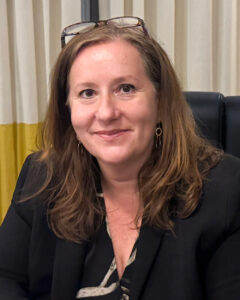
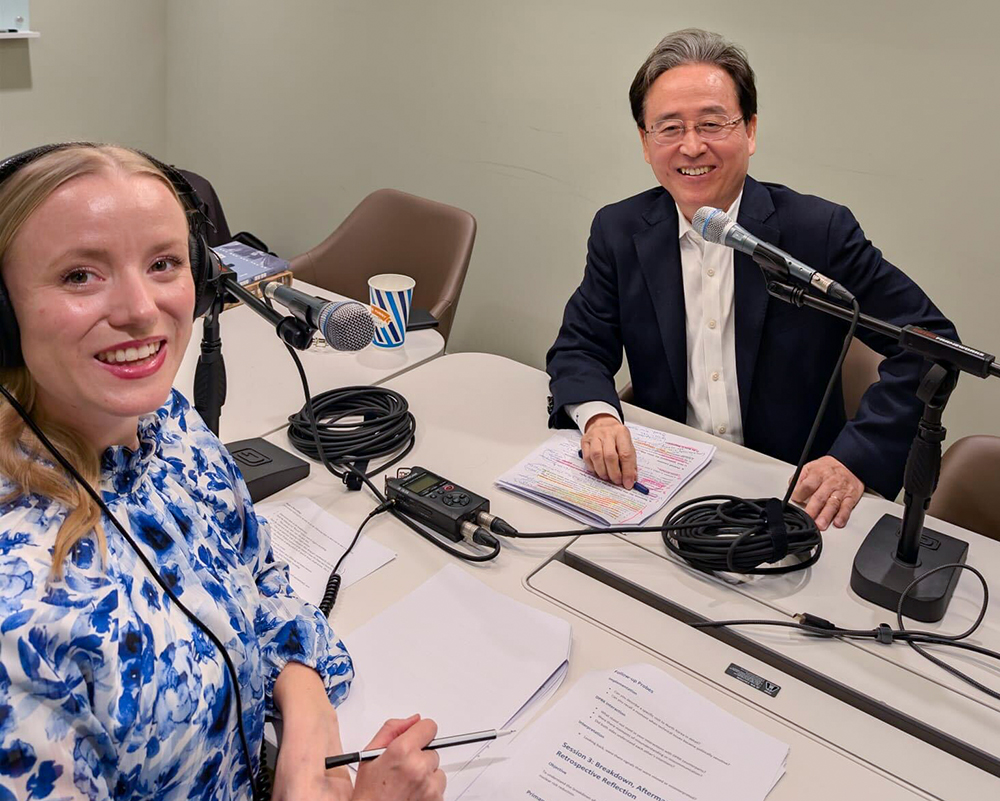
array(1) {
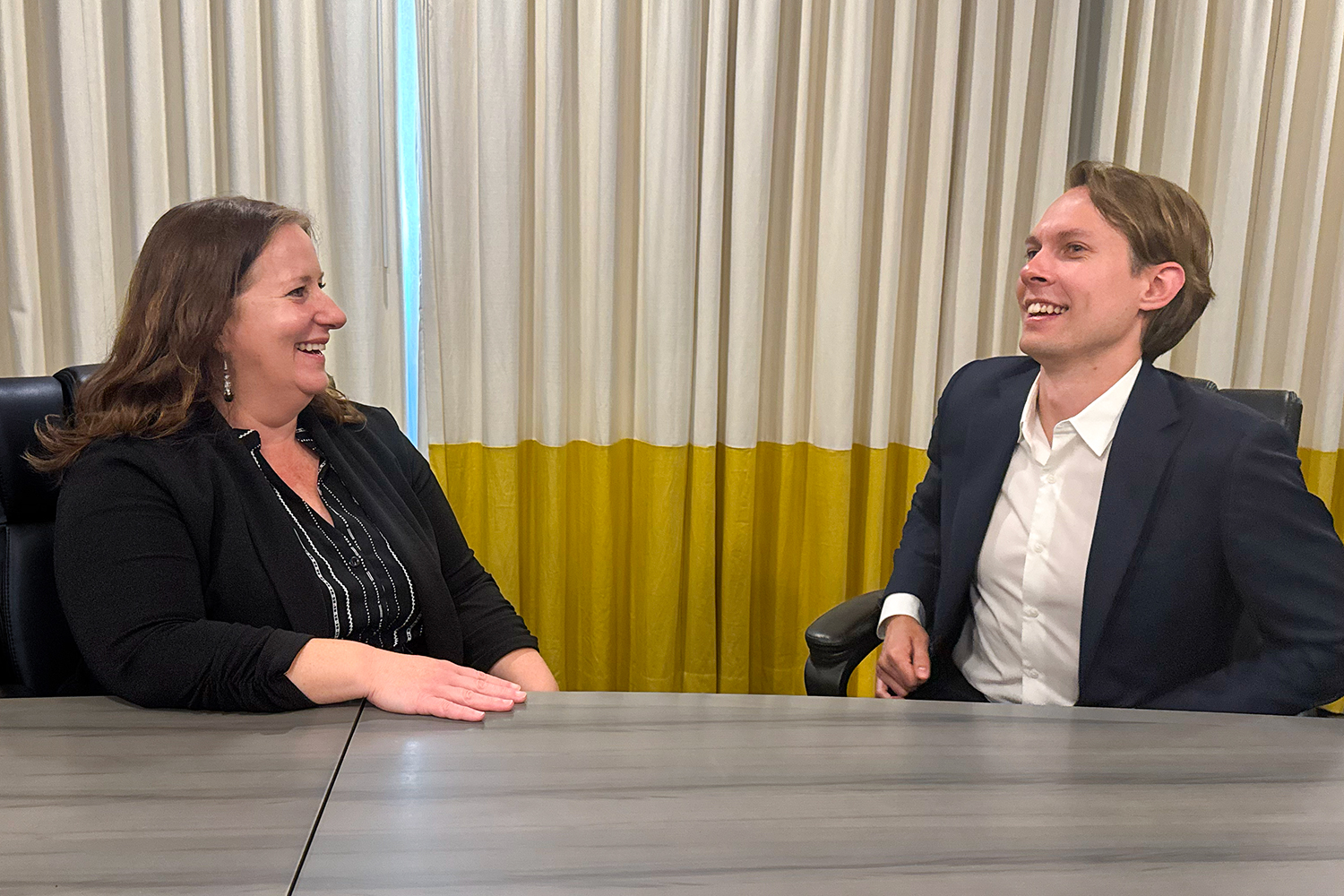
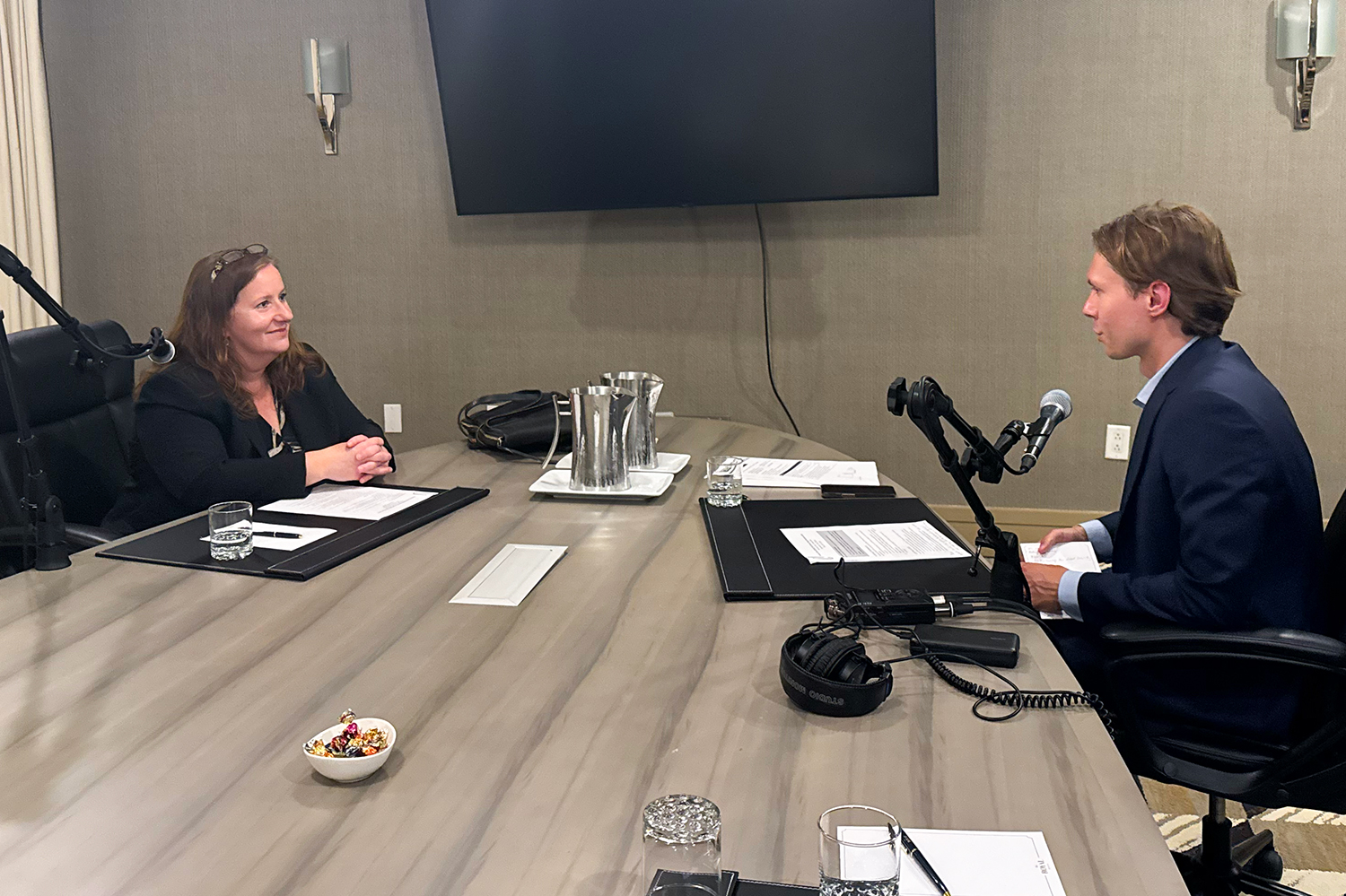
[0]=>
array(525) {
[0]=>
array(4) {
["speaker"]=>
string(10) "Dan Zhukov"
["timestamp"]=>
string(8) "00:00:01"
["seconds"]=>
int(1)
["text"]=>
string(164) "This is an interview with Elena Thomas-Kerr, conducted by Dan Zhukov for the Oral History Project, a project of the Stanley Center for Peace and Security and BASIC."
}
[1]=>
array(4) {
["speaker"]=>
string(10) "Dan Zhukov"
["timestamp"]=>
string(8) "00:00:10"
["seconds"]=>
int(10)
["text"]=>
string(129) "The interview's taking place on May 28th, 2026, in Washington, DC, in the United States of America. This is session one of three."
}
[2]=>
array(4) {
["speaker"]=>
string(10) "Dan Zhukov"
["timestamp"]=>
string(8) "00:00:18"
["seconds"]=>
int(18)
["text"]=>
string(231) "So Elena, thank you so much for joining us and thank you for sharing your story. Let's start a bit with your early years. Could you tell me where you were born and when, and what were those early years like for you and your family?"
}
[3]=>
array(4) {
["speaker"]=>
string(17) "Elena Thomas-Kerr"
["timestamp"]=>
string(8) "00:00:32"
["seconds"]=>
int(32)
["text"]=>
string(260) "Sure. I was born in the mid ‘70s in Michigan. My formative years were during the Reagan-Gorbachev Cold War years, so I was fascinated by what was happening in the former Soviet Union. And I was in high school in 1991, so it was a very, very fascinating time."
}
[4]=>
array(4) {
["speaker"]=>
string(17) "Elena Thomas-Kerr"
["timestamp"]=>
string(8) "00:00:51"
["seconds"]=>
int(51)
["text"]=>
string(195) "My family is Greek, and so I was very interested in Russia. Similar alphabet, but definitely interested in international affairs from a very young age, from my own international travel to Greece."
}
[5]=>
array(4) {
["speaker"]=>
string(17) "Elena Thomas-Kerr"
["timestamp"]=>
string(8) "00:01:05"
["seconds"]=>
int(65)
["text"]=>
string(190) "But with what was happening globally, I was absolutely fascinated with Russia. I'd never anticipated being in Russian studies or anything like that, but I took Russian language just for fun."
}
[6]=>
array(4) {
["speaker"]=>
string(17) "Elena Thomas-Kerr"
["timestamp"]=>
string(8) "00:01:17"
["seconds"]=>
int(77)
["text"]=>
string(203) "I loved languages growing up, having spoken Greek as I grew up. And I was just fascinated with what was happening around me, that Russia was just a natural subject that was always in the back of my mind."
}
[7]=>
array(4) {
["speaker"]=>
string(17) "Elena Thomas-Kerr"
["timestamp"]=>
string(8) "00:01:29"
["seconds"]=>
int(89)
["text"]=>
string(187) "So I pursued studies that focused more on national security and international affairs, but Russia was somewhere in the background. Not a main focus, but always an area of interest for me."
}
[8]=>
array(4) {
["speaker"]=>
string(10) "Dan Zhukov"
["timestamp"]=>
string(8) "00:01:42"
["seconds"]=>
int(102)
["text"]=>
string(79) "When did you first start learning Russian? Was it in high school or university?"
}
[9]=>
array(4) {
["speaker"]=>
string(17) "Elena Thomas-Kerr"
["timestamp"]=>
string(8) "00:01:45"
["seconds"]=>
int(105)
["text"]=>
string(325) "So, in high school, there was an opportunity to take Russian. They had an intensive course and it was offered to just two students. I competed for it, and then I was a junior, and then they decided to only offer it to seniors. So while I was selected, I gave up my slot, but then the following year they canceled the program."
}
[10]=>
array(4) {
["speaker"]=>
string(17) "Elena Thomas-Kerr"
["timestamp"]=>
string(8) "00:02:03"
["seconds"]=>
int(123)
["text"]=>
string(339) "So, it wasn't until I started in college. And I took intensive Russian, and then studied abroad, and just took it for fun. I had studied French in high school. And it was fun because when I would read Russian texts, often there was French in the old Russian texts. So, it was something I just took on the side for fun, starting in college."
}
[11]=>
array(4) {
["speaker"]=>
string(10) "Dan Zhukov"
["timestamp"]=>
string(8) "00:02:26"
["seconds"]=>
int(146)
["text"]=>
string(35) "Sorry to hear that the high school-"
}
[12]=>
array(4) {
["speaker"]=>
string(17) "Elena Thomas-Kerr"
["timestamp"]=>
string(8) "00:02:28"
["seconds"]=>
int(148)
["text"]=>
string(19) "Very disappointing."
}
[13]=>
array(4) {
["speaker"]=>
string(10) "Dan Zhukov"
["timestamp"]=>
string(8) "00:02:29"
["seconds"]=>
int(149)
["text"]=>
string(127) "... dropped that. But yeah, could you tell a bit more about your studying abroad, 'cause you went to St. Petersburg, I believe?"
}
[14]=>
array(4) {
["speaker"]=>
string(17) "Elena Thomas-Kerr"
["timestamp"]=>
string(8) "00:02:35"
["seconds"]=>
int(155)
["text"]=>
string(297) "Yeah. When I was in college, I was on a Rotary scholarship to be a cultural ambassador for a semester in St. Petersburg. The Rotary Clubs were fairly new. The one in St. Petersburg was brand new. So I think they had one in Moscow before, and this one was a brand new Rotary Club in St. Petersburg."
}
[15]=>
array(4) {
["speaker"]=>
string(17) "Elena Thomas-Kerr"
["timestamp"]=>
string(8) "00:02:52"
["seconds"]=>
int(172)
["text"]=>
string(299) "I think there were actually two. There was one that was more focused on business members and one that was more focused on academics. And so I would give presentations about what life was like back in America, and just do engagements with universities and folks that the Rotary Club introduced me to."
}
[16]=>
array(4) {
["speaker"]=>
string(17) "Elena Thomas-Kerr"
["timestamp"]=>
string(8) "00:03:12"
["seconds"]=>
int(192)
["text"]=>
string(384) "But I studied at St. Petersburg State University for the semester. There were a lot of international students there. I made a lot of fun connections. And I stayed with a host mother who lived not far from the Mariinsky Theater. So, I was very spoiled to be able to go there frequently to see the beautiful ballet, hear opera, and enjoy all the beauty that St. Petersburg had to offer."
}
[17]=>
array(4) {
["speaker"]=>
string(10) "Dan Zhukov"
["timestamp"]=>
string(8) "00:03:33"
["seconds"]=>
int(213)
["text"]=>
string(29) "Did you have a favorite show?"
}
[18]=>
array(4) {
["speaker"]=>
string(17) "Elena Thomas-Kerr"
["timestamp"]=>
string(8) "00:03:35"
["seconds"]=>
int(215)
["text"]=>
string(166) "Oh my gosh. No, everything was absolutely phenomenal. I can't even think of one specific one. And I loved spending a lot of time at the Hermitage, that was beautiful."
}
[19]=>
array(4) {
["speaker"]=>
string(17) "Elena Thomas-Kerr"
["timestamp"]=>
string(8) "00:03:46"
["seconds"]=>
int(226)
["text"]=>
string(219) "And the one thing about my host mother that was incredible, is she would take me around St. Petersburg and tell me, "This is where Pushkin died in the duel, and this is where this happened, this is where this happened.""
}
[20]=>
array(4) {
["speaker"]=>
string(17) "Elena Thomas-Kerr"
["timestamp"]=>
string(8) "00:03:57"
["seconds"]=>
int(237)
["text"]=>
string(271) "And then when I would come home from school, from the university, she would discuss politics with me, economics, and just really push me to my limits. So, at that time, my Russian was very, very good. Unfortunately, it's very rusty now, but it was a fantastic experience."
}
[21]=>
array(4) {
["speaker"]=>
string(10) "Dan Zhukov"
["timestamp"]=>
string(8) "00:04:16"
["seconds"]=>
int(256)
["text"]=>
string(72) "Was there a larger family that you stayed with, besides the host mother?"
}
[22]=>
array(4) {
["speaker"]=>
string(17) "Elena Thomas-Kerr"
["timestamp"]=>
string(8) "00:04:20"
["seconds"]=>
int(260)
["text"]=>
string(237) "It was just one daughter, and the daughter stayed with the grandmother because she didn't have enough space to host me and her daughter. It was a fascinating experience to understand culturally what people were going through at the time."
}
[23]=>
array(4) {
["speaker"]=>
string(17) "Elena Thomas-Kerr"
["timestamp"]=>
string(8) "00:04:35"
["seconds"]=>
int(275)
["text"]=>
string(179) "This was in 1996. And her reliance on students in order to supplement her... She was retired and she was supplementing her income that way, and also supporting her elderly mother."
}
[24]=>
array(4) {
["speaker"]=>
string(17) "Elena Thomas-Kerr"
["timestamp"]=>
string(8) "00:04:49"
["seconds"]=>
int(289)
["text"]=>
string(413) "So, just a hard life that she lived. I learned a lot from her, and saw sort of some of the challenges and everything that was happening in Russia at the time. And all of my classmates had similar experiences with their host family. So it was just a really fascinating, very human experience, in addition to being in a beautiful culture, and appreciating the ballet and all the arts that we had, and the Hermitage."
}
[25]=>
array(4) {
["speaker"]=>
string(17) "Elena Thomas-Kerr"
["timestamp"]=>
string(8) "00:05:18"
["seconds"]=>
int(318)
["text"]=>
string(192) "But also, to develop these relationships with Russians, who for most of my upbringing, seemed like very, very foreign people behind the Iron Curtain. So, it was just a fascinating time for me."
}
[26]=>
array(4) {
["speaker"]=>
string(17) "Elena Thomas-Kerr"
["timestamp"]=>
string(8) "00:05:30"
["seconds"]=>
int(330)
["text"]=>
string(268) "It was also one of the coldest winters they had in about a decade. So I touched down on January 3rd or something like that. And I was not prepared for that, but I was able to walk across the Neva River to cut time to the university, so at least that helped my commute."
}
[27]=>
array(4) {
["speaker"]=>
string(10) "Dan Zhukov"
["timestamp"]=>
string(8) "00:05:48"
["seconds"]=>
int(348)
["text"]=>
string(43) "Well, hopefully you've got a lot of layers-"
}
[28]=>
array(4) {
["speaker"]=>
string(17) "Elena Thomas-Kerr"
["timestamp"]=>
string(8) "00:05:54"
["seconds"]=>
int(354)
["text"]=>
string(4) "Yes."
}
[29]=>
array(4) {
["speaker"]=>
string(10) "Dan Zhukov"
["timestamp"]=>
string(8) "00:05:55"
["seconds"]=>
int(355)
["text"]=>
string(234) "... over the course of the trip. Yeah. Excuse me. To circle back a little bit, do you have a first earliest memory of, back then the Soviets, but also the nuclear side of things as you grew up during the Reagan-Gorbachev developments?"
}
[30]=>
array(4) {
["speaker"]=>
string(17) "Elena Thomas-Kerr"
["timestamp"]=>
string(8) "00:06:11"
["seconds"]=>
int(371)
["text"]=>
string(256) "Oh, let me think about this. One thing that has stood out in my mind was when Yeltsin was standing on the tank in August of 1991. That was just such a fascinating time. I just remember seeing the images and just thinking, "My gosh, what's going to happen?""
}
[31]=>
array(4) {
["speaker"]=>
string(17) "Elena Thomas-Kerr"
["timestamp"]=>
string(8) "00:06:32"
["seconds"]=>
int(392)
["text"]=>
string(278) "I was fascinated with Perestroika and Glasnost and seeing the major changes that were happening in the Soviet Union, and really trying to see which way are things going to go. I couldn't get enough when I would see the news and see what was happening in the former Soviet Union."
}
[32]=>
array(4) {
["speaker"]=>
string(17) "Elena Thomas-Kerr"
["timestamp"]=>
string(8) "00:06:50"
["seconds"]=>
int(410)
["text"]=>
string(225) "And then I started following what was happening in the former Yugoslav republics and the Balkan Wars. That's where, in the undergrad years, I was focused on ethnic conflict around the Balkan Wars and what was happening there."
}
[33]=>
array(4) {
["speaker"]=>
string(17) "Elena Thomas-Kerr"
["timestamp"]=>
string(8) "00:07:03"
["seconds"]=>
int(423)
["text"]=>
string(144) "But the whole region and what was happening, as you had these forces where democracy was trying to break through, it was just fascinating to me."
}
[34]=>
array(4) {
["speaker"]=>
string(17) "Elena Thomas-Kerr"
["timestamp"]=>
string(8) "00:07:14"
["seconds"]=>
int(434)
["text"]=>
string(147) "So, I think that I just had this strong appetite always in the back of my head to pursue something with Russia, and just learn more and study more."
}
[35]=>
array(4) {
["speaker"]=>
string(17) "Elena Thomas-Kerr"
["timestamp"]=>
string(8) "00:07:22"
["seconds"]=>
int(442)
["text"]=>
string(228) "I can't remember the first interaction I had on Russian culture, but when I heard about this Rotary Scholarship, we had a choice of where to go, and I had studied French for many years, but I thought France is so easy to get to."
}
[36]=>
array(4) {
["speaker"]=>
string(17) "Elena Thomas-Kerr"
["timestamp"]=>
string(8) "00:07:36"
["seconds"]=>
int(456)
["text"]=>
string(368) "And I had traveled there once before, and I thought at that time, and I thought, "This is a unique opportunity." And especially with the new Rotary Club, to really be able to be one of the first people out there to really promote these cultural exchanges as a cultural ambassador just absolutely blew me away. So it was just a really fascinating time to be over there."
}
[37]=>
array(4) {
["speaker"]=>
string(10) "Dan Zhukov"
["timestamp"]=>
string(8) "00:08:00"
["seconds"]=>
int(480)
["text"]=>
string(164) "Yeah, it does sound like it. So, how did you end up eventually landing on the nuclear side of things as the nexus with which you would interact further with Russia?"
}
[38]=>
array(4) {
["speaker"]=>
string(17) "Elena Thomas-Kerr"
["timestamp"]=>
string(8) "00:08:11"
["seconds"]=>
int(491)
["text"]=>
string(270) "I really tripped into it. I tripped into a lot of things in my career. So, when I was in grad school, there wasn't a nuclear nonproliferation program at the time at Georgetown. I went there for the School of Foreign Service thinking I wanted to join the Foreign Service."
}
[39]=>
array(4) {
["speaker"]=>
string(17) "Elena Thomas-Kerr"
["timestamp"]=>
string(8) "00:08:28"
["seconds"]=>
int(508)
["text"]=>
string(315) "My second year of grad school, that last semester, they finally had a nonproliferation class but I wasn't able to get into it. But how I tripped into nonproliferation was I actually did an internship at an organization called the Russian-American Nuclear Security Advisory Council, RANSAC, which is a great acronym."
}
[40]=>
array(4) {
["speaker"]=>
string(17) "Elena Thomas-Kerr"
["timestamp"]=>
string(8) "00:08:46"
["seconds"]=>
int(526)
["text"]=>
string(474) "It's now turned into the Partnership for Global Security, so it has a much broader focus. At the time, it was a two-person DC office, with our boss based out in... Where was he? Philadelphia, Pittsburgh, somewhere like that, I can't remember. ... where we followed all of the Threat Reduction Programs, the Nunn-Lugar programs, and looked at all the work the DOD was doing, the Defense Threat Reduction Agency, Department of Energy. That's really how I became exposed to it."
}
[41]=>
array(4) {
["speaker"]=>
string(17) "Elena Thomas-Kerr"
["timestamp"]=>
string(8) "00:09:19"
["seconds"]=>
int(559)
["text"]=>
string(346) "It was something that took my interest of national security and married it with my interest with Russia, and I was like, "This is what I'm really interested in." So I decided I didn't want to go into the Foreign Service. As much as I was attracted to traveling all over the world, I really found, "This is an area I really want to specialize in.""
}
[42]=>
array(4) {
["speaker"]=>
string(17) "Elena Thomas-Kerr"
["timestamp"]=>
string(8) "00:09:36"
["seconds"]=>
int(576)
["text"]=>
string(700) "And so, when I came back to the university and they finally had a nonproliferation program, I tried so hard to get into it, but for some reason I wasn't... See, a lot of, I had these moments where these universities and high schools take away my opportunities, but nevertheless, I heard about the Nonproliferation Graduate Program Fellowship at the Department of Energy that was a postgraduate fellowship. So it started with a one-year practicum and... I mean several weeks... At the time, it was run by Argonne National Laboratory. So several weeks of training at Argonne National Laboratory, followed by a year practicum, and then a lot of the fellows would get hired into the Department of Energy."
}
[43]=>
array(4) {
["speaker"]=>
string(17) "Elena Thomas-Kerr"
["timestamp"]=>
string(8) "00:10:15"
["seconds"]=>
int(615)
["text"]=>
string(298) "So when I found out about this, I applied, I was accepted, and I just found that absolutely thrilling. This was in 2000. So I had graduated from Georgetown, immediately started the Nonproliferation Graduate Fellowship. We went out to Argonne for, I think, two weeks of training with a small cohort."
}
[44]=>
array(4) {
["speaker"]=>
string(17) "Elena Thomas-Kerr"
["timestamp"]=>
string(8) "00:10:39"
["seconds"]=>
int(639)
["text"]=>
string(220) "I think there were maybe 12 students, or postgrads, that received this fellowship. And when I came back to headquarters, the team that hired me knew they wanted me but didn't actually figure out right away how to use me."
}
[45]=>
array(4) {
["speaker"]=>
string(17) "Elena Thomas-Kerr"
["timestamp"]=>
string(8) "00:10:55"
["seconds"]=>
int(655)
["text"]=>
string(421) "And I'm one of these people that can't just sit still, so I volunteered to do everything, but then at one point the HEU Transparency Program, there were some issues, and so I said, "Well, hey, why don't you send me to Moscow for a couple of months? I speak Russian. I'll be in the same time zone, I can help out." And so, they were going to send me over for two to three months and I came home two and a half years later."
}
[46]=>
array(4) {
["speaker"]=>
string(10) "Dan Zhukov"
["timestamp"]=>
string(8) "00:11:19"
["seconds"]=>
int(679)
["text"]=>
string(169) "Well, that's a great segue to, for the record, just state what the HEU Agreement was. So could you just very briefly describe the agreement and the Transparency Program?"
}
[47]=>
array(4) {
["speaker"]=>
string(17) "Elena Thomas-Kerr"
["timestamp"]=>
string(8) "00:11:32"
["seconds"]=>
int(692)
["text"]=>
string(382) "Sure. So, the HEU Purchase Agreement was signed in 1993. It was a 20-year deal between the US and Russian Federation to dismantle 500 metric tons of highly-enriched uranium from Russia's nuclear weapons. And to convert it into low-enriched uranium, which would then be purchased under a commercial contract, and used in commercial power plants for peaceful use in the United States."
}
[48]=>
array(4) {
["speaker"]=>
string(17) "Elena Thomas-Kerr"
["timestamp"]=>
string(8) "00:11:54"
["seconds"]=>
int(714)
["text"]=>
string(240) "So it was a commercial deal, but the Department of Energy's National Nuclear Security Administration developed a Nonproliferation Transparency Program around it to ensure that the nonproliferation objectives of the agreement were being met."
}
[49]=>
array(4) {
["speaker"]=>
string(17) "Elena Thomas-Kerr"
["timestamp"]=>
string(8) "00:12:07"
["seconds"]=>
int(727)
["text"]=>
string(320) "So, that's the program that I was involved in for a period of about nine years, from the very beginning of my days in nonproliferation. Absolutely fascinating starting with when the... This came out of the START negotiations, where the US and Russia were dismantling their warheads and you had a lot of fissile material."
}
[50]=>
array(4) {
["speaker"]=>
string(17) "Elena Thomas-Kerr"
["timestamp"]=>
string(8) "00:12:28"
["seconds"]=>
int(748)
["text"]=>
string(307) "And of course, as you know, the former Soviet Union was facing bankruptcy, and you had all of these weapon scientists that were no longer getting paid. So there was this fear on what would happen to not only the material but also the expertise. Could it be diverted to proliferating countries or terrorists?"
}
[51]=>
array(4) {
["speaker"]=>
string(17) "Elena Thomas-Kerr"
["timestamp"]=>
string(8) "00:12:46"
["seconds"]=>
int(766)
["text"]=>
string(312) "So, there was a series of initiatives around the early '90s to try to develop these programs to help Russia contain the material, account for the material and protect it, and help facilitate the warhead dismantlement, and also deal with the reduction of the stockpiles that came out of the dismantlement process."
}
[52]=>
array(4) {
["speaker"]=>
string(17) "Elena Thomas-Kerr"
["timestamp"]=>
string(8) "00:13:08"
["seconds"]=>
int(788)
["text"]=>
string(638) "So, the Transparency Program would take over monitoring from the time the components came to the plant. We would monitor the containers, but then we would actually watch... When they were machined into chips, we would actually watch them being, the chips being oxidized in the glovebox. We had visual observation of that. And then taken throughout the process of the plants. There were four Russian nuclear facilities that we monitored. And then through the conversion process, we also had equipment that we used to monitor the process. And it was just an incredible set of transparency monitoring rights that were negotiated that were..."
}
[53]=>
array(4) {
["speaker"]=>
string(17) "Elena Thomas-Kerr"
["timestamp"]=>
string(8) "00:13:49"
["seconds"]=>
int(829)
["text"]=>
string(268) "To this day, it's hard for me to understand just how we went from the Cold War years of total mistrust, to having access so deep inside Russian nuclear facilities, and having strong partnerships that lasted through a 20-year agreement that was tremendously successful."
}
[54]=>
array(4) {
["speaker"]=>
string(17) "Elena Thomas-Kerr"
["timestamp"]=>
string(8) "00:14:07"
["seconds"]=>
int(847)
["text"]=>
string(270) "And Russia had reciprocal rights, where they could then monitor the low-enriched uranium that was purchased and brought to the United States to ensure that we used it for peaceful uses here for electricity in our power plants. So, just an absolutely fascinating program."
}
[55]=>
array(4) {
["speaker"]=>
string(10) "Dan Zhukov"
["timestamp"]=>
string(8) "00:14:24"
["seconds"]=>
int(864)
["text"]=>
string(231) "There are so many threads there that I'm really excited to dig into over the course of this interview, but let me briefly circle back. Did you know about this agreement before you started at the DOE as you were an intern at RANSAC?"
}
[56]=>
array(4) {
["speaker"]=>
string(17) "Elena Thomas-Kerr"
["timestamp"]=>
string(8) "00:14:38"
["seconds"]=>
int(878)
["text"]=>
string(233) "Yeah. So when I was at RANSAC, I started reading about the program. I would go to a lot of... There were a lot of hearings that congressional leaders would have, 'cause they had an exchange, an ongoing exchange with the Russian Duma."
}
[57]=>
array(4) {
["speaker"]=>
string(17) "Elena Thomas-Kerr"
["timestamp"]=>
string(8) "00:14:51"
["seconds"]=>
int(891)
["text"]=>
string(179) "So on a lot of the Threat Reduction Programs, they would talk about those projects, and we would go and get readouts from the Congresspeople that were involved in those exchanges."
}
[58]=>
array(4) {
["speaker"]=>
string(17) "Elena Thomas-Kerr"
["timestamp"]=>
string(8) "00:15:00"
["seconds"]=>
int(900)
["text"]=>
string(171) "We would go to all sorts of NGO events, and we would just follow all of the developments, do a lot of reporting. And so, I did get exposed to the program during that time."
}
[59]=>
array(4) {
["speaker"]=>
string(10) "Dan Zhukov"
["timestamp"]=>
string(8) "00:15:09"
["seconds"]=>
int(909)
["text"]=>
string(70) "Must have been amazing to then start working on it directly, actually?"
}
[60]=>
array(4) {
["speaker"]=>
string(17) "Elena Thomas-Kerr"
["timestamp"]=>
string(8) "00:15:12"
["seconds"]=>
int(912)
["text"]=>
string(269) "Oh, I couldn't believe it. I absolutely couldn't believe it. And that's why I'm so excited to talk to you today, because I think anybody who touched this program over the course of the 20 years, I think anybody who was involved has always been very passionate about it."
}
[61]=>
array(4) {
["speaker"]=>
string(17) "Elena Thomas-Kerr"
["timestamp"]=>
string(8) "00:15:26"
["seconds"]=>
int(926)
["text"]=>
string(230) "It was probably the most successful nonproliferation program we've had, certainly with Russia, but certainly one of the most nonproliferation programs we've had globally. It was just a tremendous impact, and very, very successful."
}
[62]=>
array(4) {
["speaker"]=>
string(10) "Dan Zhukov"
["timestamp"]=>
string(8) "00:15:40"
["seconds"]=>
int(940)
["text"]=>
string(54) "So what was the first issue that they assigned you to?"
}
[63]=>
array(4) {
["speaker"]=>
string(17) "Elena Thomas-Kerr"
["timestamp"]=>
string(8) "00:15:44"
["seconds"]=>
int(944)
["text"]=>
string(241) "Oh gosh, that's a very long time ago to remember. I think there were some customs issues, if I recall correctly. Getting some of the equipment that we had installed at some of the facilities, misunderstandings, delays, all kinds of problems."
}
[64]=>
array(4) {
["speaker"]=>
string(17) "Elena Thomas-Kerr"
["timestamp"]=>
string(8) "00:16:04"
["seconds"]=>
int(964)
["text"]=>
string(337) "And it was a very, very large monitoring program. We had 24 monitoring visits, so six per year at four different facilities. So, you know, a lot of experts going over to Russia, Russian delegations coming here to monitor their facilities. There was a lot going on, a lot of movement of equipment, a lot of analysis of what was happening."
}
[65]=>
array(4) {
["speaker"]=>
string(17) "Elena Thomas-Kerr"
["timestamp"]=>
string(8) "00:16:28"
["seconds"]=>
int(988)
["text"]=>
string(311) "We had ongoing issues for implementation of a program of that size. And so I think at the time, if I'm not mistaken, a lot of it was more of these logistical kinds of issues. A lot of the annexes under the agreement that specify the monitoring rights at each facility, most of those had already been negotiated."
}
[66]=>
array(4) {
["speaker"]=>
string(17) "Elena Thomas-Kerr"
["timestamp"]=>
string(8) "00:16:49"
["seconds"]=>
int(1009)
["text"]=>
string(261) "Some of the equipment, there was equipment called the Blend Down Monitoring System that was actually put on the blending tee at three of the sites where the HEU came in, a blend stock of LEU came in, and then it would create an LEU outcome for the blending tee."
}
[67]=>
array(4) {
["speaker"]=>
string(17) "Elena Thomas-Kerr"
["timestamp"]=>
string(8) "00:17:09"
["seconds"]=>
int(1029)
["text"]=>
string(214) "So the Blend Down Monitoring System would actually provide that unattended monitoring when the monitors weren't there, but also helped us track, maintain chain of custody, that this material actually came from HEU."
}
[68]=>
array(4) {
["speaker"]=>
string(17) "Elena Thomas-Kerr"
["timestamp"]=>
string(8) "00:17:24"
["seconds"]=>
int(1044)
["text"]=>
string(260) "And so, the last of the three BDMS equipment was installed a couple of years before I started at one of the sites, but there were always kinks to work out. Sometimes some of the software had to be changed out, some of the hardware components might have failed."
}
[69]=>
array(4) {
["speaker"]=>
string(17) "Elena Thomas-Kerr"
["timestamp"]=>
string(8) "00:17:38"
["seconds"]=>
int(1058)
["text"]=>
string(291) "So getting some of the equipment over there, getting it certified and into the facilities. And then, the time and implications for ongoing process operations was another issue. So, it created a little bit of friction when things like that happen, but this is just the cost of doing business."
}
[70]=>
array(4) {
["speaker"]=>
string(17) "Elena Thomas-Kerr"
["timestamp"]=>
string(8) "00:17:54"
["seconds"]=>
int(1074)
["text"]=>
string(175) "So I think having me over there in real time to deal with these issues so that they didn't bubble up and then turn into long delay just proved to be a very, very useful thing."
}
[71]=>
array(4) {
["speaker"]=>
string(17) "Elena Thomas-Kerr"
["timestamp"]=>
string(8) "00:18:04"
["seconds"]=>
int(1084)
["text"]=>
string(261) "And so, we established a specific position at our DOE office at the embassy in Moscow dedicated to the HEU program for my time there, because there was just so much work to be done, and it was very useful to have an officer dedicated to that particular program."
}
[72]=>
array(4) {
["speaker"]=>
string(10) "Dan Zhukov"
["timestamp"]=>
string(8) "00:18:20"
["seconds"]=>
int(1100)
["text"]=>
string(200) "And were you primarily based in Moscow and traveling to the four different facilities, or did you eventually end up being stationed at the... I believe there was a permanent presence at the Urals one?"
}
[73]=>
array(4) {
["speaker"]=>
string(17) "Elena Thomas-Kerr"
["timestamp"]=>
string(8) "00:18:30"
["seconds"]=>
int(1110)
["text"]=>
string(320) "Yeah, there was a permanent presence office. I was based in Moscow, at the embassy. I was put on the transparency monitors list. We maintained a list of 100 monitors that were approved by the Russian side. So I was put on that list, and I did join some of the special monitoring visits, but I was always based in Moscow."
}
[74]=>
array(4) {
["speaker"]=>
string(10) "Dan Zhukov"
["timestamp"]=>
string(8) "00:18:53"
["seconds"]=>
int(1133)
["text"]=>
string(68) "What was it like for you to be in Moscow compared to St. Petersburg?"
}
[75]=>
array(4) {
["speaker"]=>
string(17) "Elena Thomas-Kerr"
["timestamp"]=>
string(8) "00:19:00"
["seconds"]=>
int(1140)
["text"]=>
string(457) "Very, very different. St. Petersburg is just an absolutely beautiful, aesthetically-pleasing city, very rich in culture. Moscow has very beautiful things as well, but obviously it's a big city. It's a capital city, so it has the traffic and all the things that you deal with in any major hub, but I think... And the pace is much faster and everything. And plus, I was a student versus a working professional, so life was a lot easier in St. Petersburg, too."
}
[76]=>
array(4) {
["speaker"]=>
string(17) "Elena Thomas-Kerr"
["timestamp"]=>
string(8) "00:19:27"
["seconds"]=>
int(1167)
["text"]=>
string(415) "Moscow was a fascinating place. And just one little, if you want a little funny anecdote. So when I was in St. Petersburg, a lot of times when we first joined, when we first got there, a lot of the students and I didn't know where to buy toilet paper. And sometimes we didn't want to bother our host parents to give us more toilet paper, 'cause the toilets were left without toilet paper and we needed toilet paper."
}
[77]=>
array(4) {
["speaker"]=>
string(17) "Elena Thomas-Kerr"
["timestamp"]=>
string(8) "00:19:52"
["seconds"]=>
int(1192)
["text"]=>
string(341) "So we weren't exactly sure where to go buy it. So sometimes we would get together once a month and go to the large five star hotels for a coffee, spend a lot of money on a cappuccino. I remember it was a $5 cappuccino. I remember thinking, "That's so expensive." But once a month we would go and just kind of live the high life once a month."
}
[78]=>
array(4) {
["speaker"]=>
string(17) "Elena Thomas-Kerr"
["timestamp"]=>
string(8) "00:20:14"
["seconds"]=>
int(1214)
["text"]=>
string(566) "And then while we were in the bathroom, I'm not proud to admit this, but I once stole a roll of toilet paper 'cause I really needed it. Fast-forward to my work as a government official, I was now staying at those hotels. And at one point I actually, just out of habit, reached for the toilet paper and I thought, “Oh, should I take a roll?" And I was like, "Oh my gosh, no, my life has advanced beyond that." So, I would have reimbursed, but I didn't know how to do it or where, so I'm not proud of that fact, but my life had come around full circle at that point."
}
[79]=>
array(4) {
["speaker"]=>
string(10) "Dan Zhukov"
["timestamp"]=>
string(8) "00:20:47"
["seconds"]=>
int(1247)
["text"]=>
string(112) "That's amazing. When you were in St. Petersburg, did you eventually find out the stores to buy the toilet paper?"
}
[80]=>
array(4) {
["speaker"]=>
string(17) "Elena Thomas-Kerr"
["timestamp"]=>
string(8) "00:20:57"
["seconds"]=>
int(1257)
["text"]=>
string(44) "I did. Yes. Yes, that didn't last very long."
}
[81]=>
array(4) {
["speaker"]=>
string(10) "Dan Zhukov"
["timestamp"]=>
string(8) "00:20:59"
["seconds"]=>
int(1259)
["text"]=>
string(154) "Yeah, that's a really funny circle-back moment. So, when did you first, while you were in Moscow, when did you first start going on the monitoring visits?"
}
[82]=>
array(4) {
["speaker"]=>
string(17) "Elena Thomas-Kerr"
["timestamp"]=>
string(8) "00:21:13"
["seconds"]=>
int(1273)
["text"]=>
string(245) "I think I had been on the ground for probably at least six months or so, maybe a year into it. So again, I ended up staying for two and a half years. I was only supposed to be there for a couple of months, but it turned out to be very effective."
}
[83]=>
array(4) {
["speaker"]=>
string(17) "Elena Thomas-Kerr"
["timestamp"]=>
string(8) "00:21:26"
["seconds"]=>
int(1286)
["text"]=>
string(233) "And also, just developing a really strong relationship with our counterpart at, it was Minatom at the time, but Rosatom, really proved to be very, very helpful. So, maybe six months to a year is when I, I think, joined the first SMV."
}
[84]=>
array(4) {
["speaker"]=>
string(10) "Dan Zhukov"
["timestamp"]=>
string(8) "00:21:43"
["seconds"]=>
int(1303)
["text"]=>
string(165) "And just for the record, Minatom is the Ministry of Atomic Energy, that then turned into the Russian Atomic Energy Corporation, if I'm not getting my acronyms wrong."
}
[85]=>
array(4) {
["speaker"]=>
string(10) "Dan Zhukov"
["timestamp"]=>
string(8) "00:21:58"
["seconds"]=>
int(1318)
["text"]=>
string(203) "What were the visits like? Obviously, there's a lot of material around what were the procedures behind the special monitoring visits, but what was your experience like as a monitor on one of these trips?"
}
[86]=>
array(4) {
["speaker"]=>
string(17) "Elena Thomas-Kerr"
["timestamp"]=>
string(8) "00:22:08"
["seconds"]=>
int(1328)
["text"]=>
string(309) "I'll tell you, I was so fascinated. Here, I joined the program about midway through. So, they had these monitoring procedures very well established. It was, in great detail, documented in the protocols for... The annexes for each of the facilities. They knew exactly every aspect of how the operations worked."
}
[87]=>
array(4) {
["speaker"]=>
string(17) "Elena Thomas-Kerr"
["timestamp"]=>
string(8) "00:22:31"
["seconds"]=>
int(1351)
["text"]=>
string(268) "And the monitors that came from our national laboratories, we had 13 national laboratories and support service contractors that were part of this implementation program. They were so knowledgeable, and all of the Russian experts knew these experts really, really well."
}
[88]=>
array(4) {
["speaker"]=>
string(17) "Elena Thomas-Kerr"
["timestamp"]=>
string(8) "00:22:48"
["seconds"]=>
int(1368)
["text"]=>
string(325) "So, stepping into these facilities, first of all, I was fascinated to be in one of these nuclear cities, these closed nuclear cities in Russia, which I never would have imagined I'd have access to, but then walking into these plants and seeing the camaraderie between the experts who had been working together for many years."
}
[89]=>
array(4) {
["speaker"]=>
string(17) "Elena Thomas-Kerr"
["timestamp"]=>
string(8) "00:23:08"
["seconds"]=>
int(1388)
["text"]=>
string(355) "And a lot of the same experts would come back to the same sites. So they had very, very good working relationships, but also started developing personal relationships. The professionalism, it was almost like watching a ballet at the Mariinsky, the movement through the process operations, and just everybody understood exactly the flow and who to talk to."
}
[90]=>
array(4) {
["speaker"]=>
string(17) "Elena Thomas-Kerr"
["timestamp"]=>
string(8) "00:23:29"
["seconds"]=>
int(1409)
["text"]=>
string(309) "And we had equipment, NDA equipment where we would monitor the HEU in the containers before we had the BDMS system, but by the time I started, we already had the BDMS system, so that was providing the traceability. We had tags and seals for certain containers to make sure they were tamper-indicating devices."
}
[91]=>
array(4) {
["speaker"]=>
string(17) "Elena Thomas-Kerr"
["timestamp"]=>
string(8) "00:23:53"
["seconds"]=>
int(1433)
["text"]=>
string(255) "We would copy process forms that we would take the data back, hand copy, which was a very tedious task. So that's one of the things I was tasked with, since I didn't have any of the expertise that all of the monitors had. I was very good at copying forms."
}
[92]=>
array(4) {
["speaker"]=>
string(17) "Elena Thomas-Kerr"
["timestamp"]=>
string(8) "00:24:10"
["seconds"]=>
int(1450)
["text"]=>
string(272) "Depending on which facility, at the facilities where we actually got to go to the glovebox and see the metal chips oxidized, we would monitor that process, record our observations, copy the plant data, go through the whole process, do the NDA measurements, check the BDMS."
}
[93]=>
array(4) {
["speaker"]=>
string(17) "Elena Thomas-Kerr"
["timestamp"]=>
string(8) "00:24:28"
["seconds"]=>
int(1468)
["text"]=>
string(188) "At the BDMS, we would gather all the data from the previous SMV. So it wasn't coming back to the United States, but it was recording all of the data on site and then we would take it back."
}
[94]=>
array(4) {
["speaker"]=>
string(17) "Elena Thomas-Kerr"
["timestamp"]=>
string(8) "00:24:37"
["seconds"]=>
int(1477)
["text"]=>
string(251) "So, all of that through five days at the plant. And then the closeout would always be a big banquet with the vodka flowing and the good wishes, and it was just a well-oiled machine. It fascinated me how well the annexes addressed the monitoring needs."
}
[95]=>
array(4) {
["speaker"]=>
string(17) "Elena Thomas-Kerr"
["timestamp"]=>
string(8) "00:25:01"
["seconds"]=>
int(1501)
["text"]=>
string(328) "The way the process worked when there was a new facility, they would do a familiarization visit so that the experts could understand the operations, the flow. And then from that, they started to determine, "What are the right transparency monitoring points we need to have access to? What kind of forms do we need?" All of that."
}
[96]=>
array(4) {
["speaker"]=>
string(17) "Elena Thomas-Kerr"
["timestamp"]=>
string(8) "00:25:18"
["seconds"]=>
int(1518)
["text"]=>
string(324) "And so, all of that had been worked out well before I got there. So I was absolutely floored by how strong these transparency measures were, and then the partnerships between the experts. And really, when you get down to scientist-to-scientist engagement, language barriers don't really matter. They speak the same language."
}
[97]=>
array(4) {
["speaker"]=>
string(17) "Elena Thomas-Kerr"
["timestamp"]=>
string(8) "00:25:37"
["seconds"]=>
int(1537)
["text"]=>
string(200) "Although, it was fun that I spoke Russian because they relied on me as an interpreter quite a bit, and I had to interpret a few sloppy toasts as well. So we had a little bit of fun along the way, too."
}
[98]=>
array(4) {
["speaker"]=>
string(10) "Dan Zhukov"
["timestamp"]=>
string(8) "00:25:50"
["seconds"]=>
int(1550)
["text"]=>
string(56) "I'm sure that was really, really helpful for both sides."
}
[99]=>
array(4) {
["speaker"]=>
string(17) "Elena Thomas-Kerr"
["timestamp"]=>
string(8) "00:25:53"
["seconds"]=>
int(1553)
["text"]=>
string(5) "Yeah."
}
[100]=>
array(4) {
["speaker"]=>
string(10) "Dan Zhukov"
["timestamp"]=>
string(8) "00:25:53"
["seconds"]=>
int(1553)
["text"]=>
string(116) "Have you begun developing any kind of relationships of this kind over your time monitoring and attending the visits?"
}
[101]=>
array(4) {
["speaker"]=>
string(17) "Elena Thomas-Kerr"
["timestamp"]=>
string(8) "00:26:01"
["seconds"]=>
int(1561)
["text"]=>
string(361) "Absolutely. I didn't travel on these monitoring visits as often, but certainly, by the time I took over the program as the director, 2008 was the 15-year anniversary of the program. And so I went to each of the four facilities, and we did big celebratory events at each of the facilities. And I had gone to most, I think all of the facilities a couple of times."
}
[102]=>
array(4) {
["speaker"]=>
string(17) "Elena Thomas-Kerr"
["timestamp"]=>
string(8) "00:26:27"
["seconds"]=>
int(1587)
["text"]=>
string(381) "So, they were familiar with me, they knew me well. And because I spoke Russian, that created a bond, they remembered me fondly. But then as the director, I was able to then really celebrate the tremendous progress that had been made. It was about two thirds of the way through the program of monitoring the dismantled material flow. So it was a very exciting time to be over there."
}
[103]=>
array(4) {
["speaker"]=>
string(17) "Elena Thomas-Kerr"
["timestamp"]=>
string(8) "00:26:52"
["seconds"]=>
int(1612)
["text"]=>
string(282) "And honestly, as people exchange toast, they were tearjerkers, because everybody spent so much time, I think, really reflecting on what it meant to work on this program and what it meant for nonproliferation goals globally. And it wasn't lost on people, the importance of this work."
}
[104]=>
array(4) {
["speaker"]=>
string(10) "Dan Zhukov"
["timestamp"]=>
string(8) "00:27:15"
["seconds"]=>
int(1635)
["text"]=>
string(199) "Even before you were the director, while you were still staffing the visits, did your duties evolve over time as well? Did the copying process get easier? Did you develop certain habits or shorthand?"
}
[105]=>
array(4) {
["speaker"]=>
string(17) "Elena Thomas-Kerr"
["timestamp"]=>
string(8) "00:27:29"
["seconds"]=>
int(1649)
["text"]=>
string(361) "One of the big challenges we had was after you're filling out numbers, a whole bunch of numbers all day, jet-lagged and everything, a lot of times you invert the numbers. So a lot of times, we would cross check each other's numbers, so they learned the hard way. The monitors learned the hard way over time and learned how to build efficiencies into their role."
}
[106]=>
array(4) {
["speaker"]=>
string(17) "Elena Thomas-Kerr"
["timestamp"]=>
string(8) "00:27:48"
["seconds"]=>
int(1668)
["text"]=>
string(492) "Each team, special monitoring team was led by an expert who had a lot of familiarity with the site, had probably been there... I think we did 400 visits over the course of the 20 years, so they had been there many, many, many times, knew every inch of those facilities, as well as the forms required, and would assign each monitor to do what was appropriate for their skillset. So we had the right grouping of people and then we would cross check to make sure we were as accurate as possible."
}
[107]=>
array(4) {
["speaker"]=>
string(10) "Dan Zhukov"
["timestamp"]=>
string(8) "00:28:22"
["seconds"]=>
int(1702)
["text"]=>
string(91) "And what were other monitors like, and what was your relationship with those monitors like?"
}
[108]=>
array(4) {
["speaker"]=>
string(17) "Elena Thomas-Kerr"
["timestamp"]=>
string(8) "00:28:28"
["seconds"]=>
int(1708)
["text"]=>
string(237) "Well, first of all, it's a very, very bonding experience to go on these monitoring visits. I think that's true anytime you travel overseas with folks for work, but we had experts in every aspect of uranium processing, uranium metallurgy."
}
[109]=>
array(4) {
["speaker"]=>
string(17) "Elena Thomas-Kerr"
["timestamp"]=>
string(8) "00:28:44"
["seconds"]=>
int(1724)
["text"]=>
string(216) "We had health and safety experts to make sure they kept an eye on the dosimeters and make sure that we were safe. We had people, experts involved with the tamper-indicating devices, the tags and seals that we put up."
}
[110]=>
array(4) {
["speaker"]=>
string(17) "Elena Thomas-Kerr"
["timestamp"]=>
string(8) "00:28:57"
["seconds"]=>
int(1737)
["text"]=>
string(200) "We had experts focused on the Blend Down Monitoring System. So they had all the expertise we needed, NDA experts, the non-destructive assay measurements, we had experts that knew how to monitor those."
}
[111]=>
array(4) {
["speaker"]=>
string(17) "Elena Thomas-Kerr"
["timestamp"]=>
string(8) "00:29:08"
["seconds"]=>
int(1748)
["text"]=>
string(259) "So, people who went there on the ground really, really knew what they were doing. There were people like me, who it was useful for me to understand how the operations worked so that I could support, 'cause I also supported the negotiations on the policy side."
}
[112]=>
array(4) {
["speaker"]=>
string(17) "Elena Thomas-Kerr"
["timestamp"]=>
string(8) "00:29:25"
["seconds"]=>
int(1765)
["text"]=>
string(286) "So backing up, the office that I worked for handled the HEU policy, and then there was a whole separate office that was focused on HEU transparency implementation. When I took over the program as director, the two had merged, but at the time these were actually run as separate offices."
}
[113]=>
array(4) {
["speaker"]=>
string(17) "Elena Thomas-Kerr"
["timestamp"]=>
string(8) "00:29:44"
["seconds"]=>
int(1784)
["text"]=>
string(320) "So it was very helpful to me, working on the policy side, to understand what exactly we were negotiating, and understand the facilities, understand the operations, understand how we're getting the data, what the challenges are on a daily basis, and what would need to be worked on. So that was very, very helpful for me."
}
[114]=>
array(4) {
["speaker"]=>
string(17) "Elena Thomas-Kerr"
["timestamp"]=>
string(8) "00:30:06"
["seconds"]=>
int(1806)
["text"]=>
string(344) "And I developed very good relationships with the folks that were on the monitoring visits, but they all came through Moscow anyway. So I would always meet with them, do a debrief. A lot of times, they would have follow up meetings with the Minatom officials, so I would organize those meetings and join their meetings sometimes on the weekends."
}
[115]=>
array(4) {
["speaker"]=>
string(17) "Elena Thomas-Kerr"
["timestamp"]=>
string(8) "00:30:26"
["seconds"]=>
int(1826)
["text"]=>
string(388) "Being the central person based in Moscow, I got to know most of the monitors that came over. And then also the interpreters. We had US-based interpreters who were all fantastic and had really understood the technical language of the monitoring aspects. So, they were phenomenal, and so we developed very, very strong relationships, professional and personal. It was like a family, really."
}
[116]=>
array(4) {
["speaker"]=>
string(10) "Dan Zhukov"
["timestamp"]=>
string(8) "00:30:55"
["seconds"]=>
int(1855)
["text"]=>
string(119) "I want to follow the thread of the negotiations that you've just laid out, but first let me just wrap up this subtopic."
}
[117]=>
array(4) {
["speaker"]=>
string(10) "Dan Zhukov"
["timestamp"]=>
string(8) "00:31:04"
["seconds"]=>
int(1864)
["text"]=>
string(201) "Did the family largely stay the same over your years there or was there a bit of turnover from the labs as different experts moved around, different people come to the teams? How did that dynamic work?"
}
[118]=>
array(4) {
["speaker"]=>
string(17) "Elena Thomas-Kerr"
["timestamp"]=>
string(8) "00:31:16"
["seconds"]=>
int(1876)
["text"]=>
string(253) "Since we had 100 monitors, there was some turnover, but we had a core group of experts that knew these facilities and knew the equipment, especially the Blend Down Monitoring System. So, those people, I think, stayed on the program for many, many years."
}
[119]=>
array(4) {
["speaker"]=>
string(17) "Elena Thomas-Kerr"
["timestamp"]=>
string(8) "00:31:32"
["seconds"]=>
int(1892)
["text"]=>
string(301) "I'll also say anybody involved in the program, being so passionate about the program, wanted to stay on the program. So, a lot of people who moved onto other duties at their laboratories still stayed on the monitoring visits, on the list so they could continue to participate and lend their expertise."
}
[120]=>
array(4) {
["speaker"]=>
string(17) "Elena Thomas-Kerr"
["timestamp"]=>
string(8) "00:31:49"
["seconds"]=>
int(1909)
["text"]=>
string(160) "So we had very strong consistency of expertise and familiar faces, which I think really, really helped the relationship and the trust, really build the trust..."
}
[121]=>
array(4) {
["speaker"]=>
string(17) "Elena Thomas-Kerr"
["timestamp"]=>
string(8) "00:32:03"
["seconds"]=>
int(1923)
["text"]=>
string(243) "... over the years, so there was turnout. We also had some policy folks that we would add to the monitoring visit. Sometimes some State Department people would be added too, just so they could see and verify. The Nuclear Verification Office..."
}
[122]=>
array(4) {
["speaker"]=>
string(17) "Elena Thomas-Kerr"
["timestamp"]=>
string(8) "00:32:15"
["seconds"]=>
int(1935)
["text"]=>
string(240) "I can't recall the new name now, but sometimes they would join just from time to time to be able to see what were we doing, how we were doing it. But there was definitely a core group of people that stayed with the program for the duration."
}
[123]=>
array(4) {
["speaker"]=>
string(10) "Dan Zhukov"
["timestamp"]=>
string(8) "00:32:28"
["seconds"]=>
int(1948)
["text"]=>
string(312) "And how did it work for those people that went on to support other programs, but still became monitors? And even for you, since monitoring was not your primary function at the DOE, did you have to coordinate with your supervisors that, “Hey, I'm going to go to this city in Russia for a week. Don't miss me”?"
}
[124]=>
array(4) {
["speaker"]=>
string(17) "Elena Thomas-Kerr"
["timestamp"]=>
string(8) "00:32:50"
["seconds"]=>
int(1970)
["text"]=>
string(361) "Yeah, probably. I'm sure that when they moved on to other duties, they said, "But I still have to do this." A lot of our experts like, for example, our non-destructive assay experts, that's expertise that you need in a lot of programs. So, they already were involved in multiple programs, but they would spend part of their time on the HEU Transparency Program."
}
[125]=>
array(4) {
["speaker"]=>
string(17) "Elena Thomas-Kerr"
["timestamp"]=>
string(8) "00:33:13"
["seconds"]=>
int(1993)
["text"]=>
string(571) "And then in my case, I came into the program where the lead negotiator was my boss. I had no problem going anywhere related to the HEU program, but the experts always ensured that they would remain there. It got to the point where there was one man named Dave Thomas, who, God rest his soul, he was a longtime expert and one of the blend points, they called it Thomas Point. Because he was always there and he used to point at it when new monitors would come on and he would explain, "This is the blending tee." And he'd always point and they would always take a picture."
}
[126]=>
array(4) {
["speaker"]=>
string(17) "Elena Thomas-Kerr"
["timestamp"]=>
string(8) "00:33:51"
["seconds"]=>
int(2031)
["text"]=>
string(185) "And so the Russians came up with it and they called it the Thomas Point. And they even offered him a, what do you call it? It was some kind of retirement, collection of your retirement-"
}
[127]=>
array(4) {
["speaker"]=>
string(10) "Dan Zhukov"
["timestamp"]=>
string(8) "00:34:09"
["seconds"]=>
int(2049)
["text"]=>
string(17) "Pensioner's card?"
}
[128]=>
array(4) {
["speaker"]=>
string(17) "Elena Thomas-Kerr"
["timestamp"]=>
string(8) "00:34:09"
["seconds"]=>
int(2049)
["text"]=>
string(360) "Yes, thank you. A pensioner card. They jokingly gave him a pensioner card because he stayed with the program all the way through. And we had many, many, many people like that who were involved. Plus, it was also a challenge to get approval for new monitors, because that had to be vetted by the Russian side and sometimes that went through a difficult process."
}
[129]=>
array(4) {
["speaker"]=>
string(17) "Elena Thomas-Kerr"
["timestamp"]=>
string(8) "00:34:28"
["seconds"]=>
int(2068)
["text"]=>
string(394) "Same thing on our end, there were Russian monitors on a pre-approved list. So, we would always make sure we vetted on both sides, and sometimes the bureaucratic process of getting new monitors added was challenging. But again, we had the same experts because we really wanted people very familiar with each of the facilities, but we were able to cycle through some new people from time to time."
}
[130]=>
array(4) {
["speaker"]=>
string(10) "Dan Zhukov"
["timestamp"]=>
string(8) "00:34:55"
["seconds"]=>
int(2095)
["text"]=>
string(331) "I promise I will wrap up this thread shortly, but I'm interested a bit more in the bureaucratic side of this. So, what were some of the difficulties, if you can share, with getting new people on? Like, for example, if someone from another program was really interested in joining the list, how long would it take them to get on it?"
}
[131]=>
array(4) {
["speaker"]=>
string(17) "Elena Thomas-Kerr"
["timestamp"]=>
string(8) "00:35:16"
["seconds"]=>
int(2116)
["text"]=>
string(329) "Gosh, I don't even remember. If I recall correctly, I think we would do periodic updates like once a year. There was a designated point where if they made changes, we would do them all at once because it was too hard to add one person here, a couple of months later, if I remember correctly, and this is really testing my memory."
}
[132]=>
array(4) {
["speaker"]=>
string(17) "Elena Thomas-Kerr"
["timestamp"]=>
string(8) "00:35:36"
["seconds"]=>
int(2136)
["text"]=>
string(524) "And because we wanted to keep the core experts for each of these four facilities, and there were multiple experts, and we wanted redundancy obviously because some people had conflicts with other programs that they supported in other work, and all these experts are in high demand. So, we wanted a lot of redundancy. We had to make sure there was enough room on the monitor list, but we always kept a certain number, maybe, I don't know, 10% or something like that, that would be policy people who would need to go out there."
}
[133]=>
array(4) {
["speaker"]=>
string(17) "Elena Thomas-Kerr"
["timestamp"]=>
string(8) "00:36:09"
["seconds"]=>
int(2169)
["text"]=>
string(355) "So, that was really where we made some of the changes. Sometimes people moved on completely to other professions or a new expert was coming in. Let's be frank, I was in my 20s and 30s in these programs, and I was working with a lot of white-haired old men back in the nonproliferation years. So, they were bringing in newer people to get them up to speed."
}
[134]=>
array(4) {
["speaker"]=>
string(17) "Elena Thomas-Kerr"
["timestamp"]=>
string(8) "00:36:33"
["seconds"]=>
int(2193)
["text"]=>
string(505) "And actually that's great that you're doing this program to maintain that kind of expertise, because the folks that were coming in, they were trying to train them, get them into new facilities. So, a lot of times it was bringing in new staff who could build up that expertise as well. But again, we maintained the main core group of monitors that we could to make sure that we had excellent experts at each facility. And who could mitigate any issues that came up on site before they became bigger issues."
}
[135]=>
array(4) {
["speaker"]=>
string(10) "Dan Zhukov"
["timestamp"]=>
string(8) "00:37:05"
["seconds"]=>
int(2225)
["text"]=>
string(144) "Well, now I want to turn to the negotiation side of things. So, what were you initially involved in negotiating in your role at the DOE embassy?"
}
[136]=>
array(4) {
["speaker"]=>
string(17) "Elena Thomas-Kerr"
["timestamp"]=>
string(8) "00:37:18"
["seconds"]=>
int(2238)
["text"]=>
string(279) "Let's see. I'm trying to think back to those years and what we were working on. I believe, because the Blend Down Monitoring Systems were already negotiated. I believe some of those negotiations might have been about swapping out components of the system. I'm trying to remember."
}
[137]=>
array(4) {
["speaker"]=>
string(17) "Elena Thomas-Kerr"
["timestamp"]=>
string(8) "00:37:47"
["seconds"]=>
int(2267)
["text"]=>
string(172) "All the facilities had been negotiated, but we did have several rounds of negotiations. I really can't remember. You're testing my memory here. Oh, I do remember one thing."
}
[138]=>
array(4) {
["speaker"]=>
string(17) "Elena Thomas-Kerr"
["timestamp"]=>
string(8) "00:38:00"
["seconds"]=>
int(2280)
["text"]=>
string(415) "So, the sources, the radioactive sources that we needed for the Blend Down Monitoring System, essentially we would tag the material upstream and we'd be able to monitor it through the blending tee down to the other side. So, you would use a radioactive source that would tag it upstream and you could see it again downstream, so that way you maintain chain of custody. These sources had to be changed out over time."
}
[139]=>
array(4) {
["speaker"]=>
string(17) "Elena Thomas-Kerr"
["timestamp"]=>
string(8) "00:38:27"
["seconds"]=>
int(2307)
["text"]=>
string(508) "So, then you had to negotiate the process for that, where to secure the material, the new radioactive sources, how to dispose of it, how to build the... We would do back to back monitoring visits. So, we would take two of those four, I’m sorry, two of the six monitoring visits and put them back to back. So, we'd need about two weeks to be on site to be able to change out the radioactive sources and check the system. And so we had to negotiate the process for doing that at each of the three facilities."
}
[140]=>
array(4) {
["speaker"]=>
string(17) "Elena Thomas-Kerr"
["timestamp"]=>
string(8) "00:39:00"
["seconds"]=>
int(2340)
["text"]=>
string(392) "So, the Electrochemical Plant, I believe, was the last one to be negotiated a few years before I came on site. I think that was one of the things that we were negotiating is the change out of the sources, how we would do that process. So, anytime there was a process change, because they were so detailed in the annexes for each of the facilities, we had to go through the negotiations there."
}
[141]=>
array(4) {
["speaker"]=>
string(17) "Elena Thomas-Kerr"
["timestamp"]=>
string(8) "00:39:22"
["seconds"]=>
int(2362)
["text"]=>
string(367) "There were also issues that would come up where there might have been process changes on the Indian... I'm sorry, on the Russian side. Sorry, I work on India now, that's why I keep saying that. On the Russian side where maybe part of the facility was working on something else, and we had to make sure that our monitoring visit didn't interfere with their operations."
}
[142]=>
array(4) {
["speaker"]=>
string(17) "Elena Thomas-Kerr"
["timestamp"]=>
string(8) "00:39:44"
["seconds"]=>
int(2384)
["text"]=>
string(356) "So, there were times where maybe there were requests from Minatom to change access at certain places or things like that. So, we wanted to minimize the disruption to the operations, but we had to have the personnel available to us to escort us, and also to walk us through the process and watch them conduct the process. So, things like that would come up."
}
[143]=>
array(4) {
["speaker"]=>
string(17) "Elena Thomas-Kerr"
["timestamp"]=>
string(8) "00:40:10"
["seconds"]=>
int(2410)
["text"]=>
string(480) "I'm really starting to blank on a lot of the other things we did. But frequently, we would take negotiations to a third country to have dedicated negotiations, usually in Geneva. Because sometimes meetings would start late or lunches would turn into two hour lunches and we'd run out of the clock. So, to have a dedicated time where we could get everything done in those five days, that's where we frequently would go to Geneva or Prague or somewhere like that to be very focused."
}
[144]=>
array(4) {
["speaker"]=>
string(17) "Elena Thomas-Kerr"
["timestamp"]=>
string(8) "00:40:43"
["seconds"]=>
int(2443)
["text"]=>
string(493) "But one of the things that I did was do the hallway negotiations. So, my counterpart and I could go outside, talk about what are the real issues for you here? Where is there some flexibility? And we could do backdoor negotiations that we could bring back to the table and then see if we can find a solution. So, that's why that position based in Moscow was so useful, because it was a way to really build those relationships that you needed to get through some difficult negotiations at times."
}
[145]=>
array(4) {
["speaker"]=>
string(10) "Dan Zhukov"
["timestamp"]=>
string(8) "00:41:16"
["seconds"]=>
int(2476)
["text"]=>
string(49) "How big were the negotiating delegations overall?"
}
[146]=>
array(4) {
["speaker"]=>
string(17) "Elena Thomas-Kerr"
["timestamp"]=>
string(8) "00:41:19"
["seconds"]=>
int(2479)
["text"]=>
string(268) "I seem to recall something like eight people or so. We always had a lawyer with us. We had our transparency lead negotiator, my boss, Kurt Siemon, who was just a fantastic negotiator. I learned a lot from him and he had a lot of experience with the START negotiations."
}
[147]=>
array(4) {
["speaker"]=>
string(17) "Elena Thomas-Kerr"
["timestamp"]=>
string(8) "00:41:43"
["seconds"]=>
int(2503)
["text"]=>
string(353) "We had chemists, nuclear engineers, physicists, we had the right experts in the room. A lot of times we would bring the health and safety folks there because a lot of these issues, like for the source changes, required that kind of expertise too. So, I'm thinking, I don't remember exactly, but I would say something like eight or so, eight to 10 maybe."
}
[148]=>
array(4) {
["speaker"]=>
string(10) "Dan Zhukov"
["timestamp"]=>
string(8) "00:42:05"
["seconds"]=>
int(2525)
["text"]=>
string(71) "Yeah. Very crucial to have someone who can do the hallway negotiations-"
}
[149]=>
array(4) {
["speaker"]=>
string(17) "Elena Thomas-Kerr"
["timestamp"]=>
string(8) "00:42:09"
["seconds"]=>
int(2529)
["text"]=>
string(8) "Exactly."
}
[150]=>
array(4) {
["speaker"]=>
string(10) "Dan Zhukov"
["timestamp"]=>
string(8) "00:42:11"
["seconds"]=>
int(2531)
["text"]=>
string(122) "... and bridge some of those gaps. What was it like working under Kurt Siemon, if I can briefly delve into that direction?"
}
[151]=>
array(4) {
["speaker"]=>
string(17) "Elena Thomas-Kerr"
["timestamp"]=>
string(8) "00:42:19"
["seconds"]=>
int(2539)
["text"]=>
string(477) "Oh, he's a fantastic manager. Different offices undergo change of personnel, but he had probably the most dedicated group that didn't leave. He had people working for him for very many years. He was very serious, very fair. He would always give the most junior person in the room the opportunity to brief leadership. He wouldn't take credit for things. He would say, "That person, that very young person that just joined the organization, they're the ones that did everything.""
}
[152]=>
array(4) {
["speaker"]=>
string(17) "Elena Thomas-Kerr"
["timestamp"]=>
string(8) "00:42:46"
["seconds"]=>
int(2566)
["text"]=>
string(439) "Just very humble, but incredibly strong negotiator and he established a very, very good rapport with our counterparts in Russia, and just had tremendous expertise on START negotiations. Worked very closely with Rose Gottemoeller and Linton Brooks and all these tremendous negotiators who had really amazing expertise. So, really learned a lot from him on managing people, managing teams, managing large programs, and managing negotiations."
}
[153]=>
array(4) {
["speaker"]=>
string(10) "Dan Zhukov"
["timestamp"]=>
string(8) "00:43:19"
["seconds"]=>
int(2599)
["text"]=>
string(93) "What did it feel like to be in those negotiator rooms and helping do the backdoor channeling?"
}
[154]=>
array(4) {
["speaker"]=>
string(17) "Elena Thomas-Kerr"
["timestamp"]=>
string(8) "00:43:27"
["seconds"]=>
int(2607)
["text"]=>
string(218) "I couldn't believe how lucky I was. Honestly, tears are almost coming to my eyes right now. It was never lost on me how important this was and the fact that I could play a role without having that technical background."
}
[155]=>
array(4) {
["speaker"]=>
string(17) "Elena Thomas-Kerr"
["timestamp"]=>
string(8) "00:43:42"
["seconds"]=>
int(2622)
["text"]=>
string(339) "I was a international affairs person and being able to lend a hand using my language skills, but also my policy skills that I developed over the years to be able to play an important role. And the relationship building that I helped bring to some of those negotiations really was unbelievable. I was just really honored to be part of that."
}
[156]=>
array(4) {
["speaker"]=>
string(10) "Dan Zhukov"
["timestamp"]=>
string(8) "00:44:07"
["seconds"]=>
int(2647)
["text"]=>
string(138) "Do you recall any specific moments when there was some really important breakthrough that you helped achieve during one of those episodes?"
}
[157]=>
array(4) {
["speaker"]=>
string(17) "Elena Thomas-Kerr"
["timestamp"]=>
string(8) "00:44:21"
["seconds"]=>
int(2661)
["text"]=>
string(423) "One thing that comes to mind was later when I was the director. We had been looking for efficiencies throughout the years. We had been in the plants for a long time. We had the operations down for a long time, very, very smooth. But the hand copying of the forms was just a very challenging thing and you have human error. You always have your eyes get tired after all of that, those numbers and the jet lag and everything."
}
[158]=>
array(4) {
["speaker"]=>
string(17) "Elena Thomas-Kerr"
["timestamp"]=>
string(8) "00:44:50"
["seconds"]=>
int(2690)
["text"]=>
string(398) "So, we had tried for about 10 years to negotiate photocopies instead of handwriting forms. At the same time, when I took over the program, I took over the role of two directors basically; the director of the policy team and then the director of the transparency implementation team. I inherited the two together and my budget was cut at the same time. So, I had to make some really tough decisions."
}
[159]=>
array(4) {
["speaker"]=>
string(17) "Elena Thomas-Kerr"
["timestamp"]=>
string(8) "00:45:20"
["seconds"]=>
int(2720)
["text"]=>
string(543) "At that point, we looked for efficiencies because I wanted to negotiate reductions rather than just unilaterally stop fulfilling all of our transparency rights. So, one of the things we were able to negotiate successfully was photocopies of those forms by reducing the number of people you needed on site and the number of days on site, because you didn't need that many people spending hours and hours copying forms. And that was actually good for the Russian side because fewer people on site was less disruption to their ongoing operations."
}
[160]=>
array(4) {
["speaker"]=>
string(17) "Elena Thomas-Kerr"
["timestamp"]=>
string(8) "00:45:54"
["seconds"]=>
int(2754)
["text"]=>
string(193) "So, it was a win-win. We were very successful, and people for 10 years worked on it and we managed to do it. So, it worked out very, very well, but that was probably one of my proudest moments."
}
[161]=>
array(4) {
["speaker"]=>
string(10) "Dan Zhukov"
["timestamp"]=>
string(8) "00:46:07"
["seconds"]=>
int(2767)
["text"]=>
string(122) "Can imagine how gratifying that must have been to finally get that hurdle out of the way after you yourself were doing it?"
}
[162]=>
array(4) {
["speaker"]=>
string(17) "Elena Thomas-Kerr"
["timestamp"]=>
string(8) "00:46:14"
["seconds"]=>
int(2774)
["text"]=>
string(98) "Yes. And saved a lot of people's eyesight. Probably arthritis too, writing all those numbers down."
}
[163]=>
array(4) {
["speaker"]=>
string(10) "Dan Zhukov"
["timestamp"]=>
string(8) "00:46:20"
["seconds"]=>
int(2780)
["text"]=>
string(225) "I had a gentleman who was doing a lot of writing for a project that I was involved in, telling me that he would probably have carpal tunnel from how much grief I caused him. So, I would imagine that it helped a lot of people-"
}
[164]=>
array(4) {
["speaker"]=>
string(17) "Elena Thomas-Kerr"
["timestamp"]=>
string(8) "00:46:36"
["seconds"]=>
int(2796)
["text"]=>
string(15) "Yeah. For sure."
}
[165]=>
array(4) {
["speaker"]=>
string(10) "Dan Zhukov"
["timestamp"]=>
string(8) "00:46:38"
["seconds"]=>
int(2798)
["text"]=>
string(195) "... mitigate all those health issues. Before we fully turn into the tenure, the directorship, I was also wondering, did you have any other duties or day to day besides working on HEU policy side?"
}
[166]=>
array(4) {
["speaker"]=>
string(17) "Elena Thomas-Kerr"
["timestamp"]=>
string(8) "00:46:57"
["seconds"]=>
int(2817)
["text"]=>
string(295) "So, when I came back from Moscow two and a half years later, I did work on a couple other programs while I still supported the negotiations. So, there was a Warhead Safety and Security Exchange program, WSSX, that was looking at different technologies that could help with warhead dismantlement."
}
[167]=>
array(4) {
["speaker"]=>
string(17) "Elena Thomas-Kerr"
["timestamp"]=>
string(8) "00:47:15"
["seconds"]=>
int(2835)
["text"]=>
string(440) "So, for example, one was using a water jet technology that could actually cut into the warhead casings as one way of doing it. And the reason why that one sticks out in my mind is one of the gifts we received was a piece of a warhead casing was planted on a plaque with the Siberian birch trees done in glitter. It was beautiful. It was beautiful. And so that was one of the plaques they gave us at one of the closeout meetings that we had."
}
[168]=>
array(4) {
["speaker"]=>
string(17) "Elena Thomas-Kerr"
["timestamp"]=>
string(8) "00:47:47"
["seconds"]=>
int(2867)
["text"]=>
string(422) "So, we went into a lot of the facilities in Russia that worked on those kinds of technologies. And I'll tell you, these were experts that were during their toasts, this is something that remains in my mind. Tear-jerking toasts about how they spent their careers working to build weapons directed against each other, and now we're working together to figure out how to dismantle them. I'm just about to get emotional again."
}
[169]=>
array(4) {
["speaker"]=>
string(17) "Elena Thomas-Kerr"
["timestamp"]=>
string(8) "00:48:19"
["seconds"]=>
int(2899)
["text"]=>
string(414) "Just unbelievable. Unbelievable at such a young age in my 20s to be part of that and to hear that, and to see the tears coming down the plant director's eyes. It was just fascinating, fascinating to be part of that. I also, right before I did a short stint at our DOE Tokyo office for a few months in 2006, I worked for a couple of years maybe, prior to that I worked on the Plutonium Production Reactor Agreement."
}
[170]=>
array(4) {
["speaker"]=>
string(17) "Elena Thomas-Kerr"
["timestamp"]=>
string(8) "00:48:48"
["seconds"]=>
int(2928)
["text"]=>
string(460) "So, that was monitoring the plutonium oxide that came out of Russia's three plutonium production reactors that couldn't be shut down, because they were simultaneously providing heat and electricity to the cities that depended on them. So, they were producing weapons grade plutonium and so our program monitored the plutonium to ensure that it remained in storage. And then I was leading negotiations on developing equipment to monitor the plutonium isotopics."
}
[171]=>
array(4) {
["speaker"]=>
string(17) "Elena Thomas-Kerr"
["timestamp"]=>
string(8) "00:49:16"
["seconds"]=>
int(2956)
["text"]=>
string(167) "So, that's what I was working on for a while, and then got the opportunity to do a short stint in between directors for three months in Tokyo. So, it was a lot of fun."
}
[172]=>
array(4) {
["speaker"]=>
string(10) "Dan Zhukov"
["timestamp"]=>
string(8) "00:49:29"
["seconds"]=>
int(2969)
["text"]=>
string(52) "You said in between directors. So, you directed the-"
}
[173]=>
array(4) {
["speaker"]=>
string(17) "Elena Thomas-Kerr"
["timestamp"]=>
string(8) "00:49:32"
["seconds"]=>
int(2972)
["text"]=>
string(212) "Sorry. The directors in Tokyo. So, a director was coming back, a DOE office director basically in Tokyo. So, one had to come back and before they hired the next one there was a three-month gap, so I filled it in."
}
[174]=>
array(4) {
["speaker"]=>
string(10) "Dan Zhukov"
["timestamp"]=>
string(8) "00:49:44"
["seconds"]=>
int(2984)
["text"]=>
string(71) "Did it feel like a break from doing all the Russia stuff or how did it-"
}
[175]=>
array(4) {
["speaker"]=>
string(17) "Elena Thomas-Kerr"
["timestamp"]=>
string(8) "00:49:48"
["seconds"]=>
int(2988)
["text"]=>
string(398) "Completely different. In fact, when the Japanese found out that my day job was to work with Russia, they actually wanted to talk to me about working with the Russians. The culture couldn't be more different and they just really wanted advice. That program, that office we did a lot of work on the energy side, nuclear energy, but on the energy side, not just nuclear, and the nonproliferation side."
}
[176]=>
array(4) {
["speaker"]=>
string(17) "Elena Thomas-Kerr"
["timestamp"]=>
string(8) "00:50:12"
["seconds"]=>
int(3012)
["text"]=>
string(400) "So, I only had nonproliferation experience at NNSA, so I learned a lot in those three months. But when I went over there, it was during a time when the State Department was doing a downsizing exercise across all of the overseas embassies. So, they were trying to reduce positions and I had to justify why we had a DOE Tokyo office, because the non-State agencies were the first on the chopping block."
}
[177]=>
array(4) {
["speaker"]=>
string(17) "Elena Thomas-Kerr"
["timestamp"]=>
string(8) "00:50:41"
["seconds"]=>
int(3041)
["text"]=>
string(373) "And even though I didn't know that much about what we did over there, because I was given three weeks notice before I went over there. What I did when I briefed the ambassador and the senior staff was, I was honest, I said, "I don't know much yet about what we do with Tokyo. I will learn what we do with Japan. But I can tell you about the kinds of things that NNSA does.""
}
[178]=>
array(4) {
["speaker"]=>
string(17) "Elena Thomas-Kerr"
["timestamp"]=>
string(8) "00:51:01"
["seconds"]=>
int(3061)
["text"]=>
string(312) "And when I talked about the HEU Transparency Program, they were wowed and they said, "Oh, my gosh, not only is your office important, but can we lend you support from our political section and our econ section?" Because I think that the Transparency Program was just one of these stories that wasn't told enough."
}
[179]=>
array(4) {
["speaker"]=>
string(17) "Elena Thomas-Kerr"
["timestamp"]=>
string(8) "00:51:18"
["seconds"]=>
int(3078)
["text"]=>
string(245) "It was such an incredible story and when people heard about it, they were floored that such a thing existed. So, it really helped me because I was actually able to help preserve our office. So, it had reverberations beyond what one might expect."
}
[180]=>
array(4) {
["speaker"]=>
string(10) "Dan Zhukov"
["timestamp"]=>
string(8) "00:51:35"
["seconds"]=>
int(3095)
["text"]=>
string(149) "Yeah. That's a fantastic link. How did you manage to get onboarded so quickly on to something totally different in just a span of three short months?"
}
[181]=>
array(4) {
["speaker"]=>
string(17) "Elena Thomas-Kerr"
["timestamp"]=>
string(8) "00:51:48"
["seconds"]=>
int(3108)
["text"]=>
string(398) "Well, I was younger then. My memory worked a lot better then. I just was just so passionate about all the work that we were doing. I was so excited to be there. I wanted to go into the Foreign Service years ago, so this was my second overseas tour as a diplomat, so I was having so much fun. I was having my cake and eating it too, specializing in an area, but also living the Foreign Service life."
}
[182]=>
array(4) {
["speaker"]=>
string(17) "Elena Thomas-Kerr"
["timestamp"]=>
string(8) "00:52:14"
["seconds"]=>
int(3134)
["text"]=>
string(297) "I just worked very long hours and just soaked up what I could and tried to support things as best I could. Most importantly, I relied on our locally hired staff that have been with our office for many, many years. They briefed me very well in between meetings and I just did the best that I could."
}
[183]=>
array(4) {
["speaker"]=>
string(17) "Elena Thomas-Kerr"
["timestamp"]=>
string(8) "00:52:32"
["seconds"]=>
int(3152)
["text"]=>
string(229) "But I think you just learned to, when you're so young and hungry for this kind of work, you're just very passionate about what you do and do everything you can to give it your all, and learn as much as you can while you're there."
}
[184]=>
array(4) {
["speaker"]=>
string(17) "Elena Thomas-Kerr"
["timestamp"]=>
string(8) "00:52:47"
["seconds"]=>
int(3167)
["text"]=>
string(137) "So, it was three months, three and a half months, but it felt like a lot longer and I really felt like I learned a lot. Great experience."
}
[185]=>
array(4) {
["speaker"]=>
string(10) "Dan Zhukov"
["timestamp"]=>
string(8) "00:52:54"
["seconds"]=>
int(3174)
["text"]=>
string(296) "Sounds absolutely incredible. I'm hearing the theme between both what you had to deal with as you were going to Tokyo and also right before you became director of the HEU Transparency Program of downsizing and budgets getting cut, and reorganizations happening that were leading to tough choices."
}
[186]=>
array(4) {
["speaker"]=>
string(10) "Dan Zhukov"
["timestamp"]=>
string(8) "00:53:21"
["seconds"]=>
int(3201)
["text"]=>
string(155) "What was it like, I would say still early entry and mid-career at that point for you, to work on these issues and see the shrinking happening in real time?"
}
[187]=>
array(4) {
["speaker"]=>
string(17) "Elena Thomas-Kerr"
["timestamp"]=>
string(8) "00:53:35"
["seconds"]=>
int(3215)
["text"]=>
string(464) "Incredibly frustrating. A lot of what I did in my role was to do a lot of briefings for our leadership, to argue for retaining our budget. Because the programs were just growing and so there wasn't enough funding to go around. We did have a lot of champions on the Hill who recognized the importance of the program, but there were other nonproliferation programs that really needed a lot of funding, new programs. So, there just wasn't enough funding to go around."
}
[188]=>
array(4) {
["speaker"]=>
string(17) "Elena Thomas-Kerr"
["timestamp"]=>
string(8) "00:54:08"
["seconds"]=>
int(3248)
["text"]=>
string(349) "So, I did a ton of briefings for our leadership to argue for the success of the program. But part of the problem is we were victims of our own success, because we weren't getting a lot of attention because it was working so well. And so if you're not in the spotlight, you get out of front of mind. So, that was one of the challenges on the program."
}
[189]=>
array(4) {
["speaker"]=>
string(17) "Elena Thomas-Kerr"
["timestamp"]=>
string(8) "00:54:34"
["seconds"]=>
int(3274)
["text"]=>
string(397) "I tried so hard to get press releases out there. The Nuclear Threat Initiative was always a huge supporter of the HEU program. They always said, "You guys should do more, you should go longer." So, I had a lot of meetings with them. We'd do a lot of briefings at a lot of international nuclear conferences. Well, the Institute of Nuclear Material Management, we always did briefings there as well."
}
[190]=>
array(4) {
["speaker"]=>
string(17) "Elena Thomas-Kerr"
["timestamp"]=>
string(8) "00:54:59"
["seconds"]=>
int(3299)
["text"]=>
string(540) "And so one of the biggest challenges I had was, why don't people understand how important this is? Why don't I have the resources to do what I would need to do? That was just an ongoing frustration, and I think the Greek in me was just really, really about to explode. Just that Greek fire in me, as they used to joke about my Greek fire. So, that was one of the biggest challenges, but I also didn't want to let down the program to just unilaterally stop doing things because scaling back because we didn't have enough money to support it."
}
[191]=>
array(4) {
["speaker"]=>
string(17) "Elena Thomas-Kerr"
["timestamp"]=>
string(8) "00:55:30"
["seconds"]=>
int(3330)
["text"]=>
string(520) "And it's a lot logistically to send a group of experts to all these facilities, 24 visits a year and to maintain the permanent presence office at one of the facilities. So, in addition to other expenditures that happen, and then we have laboratory experts flying in from all over the country. So, then they had layovers here and they had to extend their time here, and it was just a big, big challenge. And I just tried to get very creative about where we could find some efficiencies that we could negotiate reductions."
}
[192]=>
array(4) {
["speaker"]=>
string(17) "Elena Thomas-Kerr"
["timestamp"]=>
string(8) "00:56:08"
["seconds"]=>
int(3368)
["text"]=>
string(358) "One of the things we did was extend the life of the radioactive sources, so we didn't have to do them as often. And our technical people analyzed that to make sure that it would still work. We'd get enough of a source strength to be able to track the material flow. So, we figured out the size of the sources we needed to stretch out the radioactive sources."
}
[193]=>
array(4) {
["speaker"]=>
string(17) "Elena Thomas-Kerr"
["timestamp"]=>
string(8) "00:56:35"
["seconds"]=>
int(3395)
["text"]=>
string(292) "And so we did a lot of things like that. So, we tried to not only deal with the human component of reducing the number of people going and the number of days on site, but also where are there process efficiencies like extending the life of the sources. So, we did a lot of analysis like that."
}
[194]=>
array(4) {
["speaker"]=>
string(17) "Elena Thomas-Kerr"
["timestamp"]=>
string(8) "00:56:53"
["seconds"]=>
int(3413)
["text"]=>
string(453) "And then looking ahead, we already, even at the 15-year mark, we already had to start looking at program closeout, because there was a lot we would have to do. How do you dispose of the equipment? How do you close out the program? And we were monitoring and analyzing the progress throughout the years. And then where can we lend our expertise to other nonproliferation programs? That was always an ongoing discussion and briefings and things like that."
}
[195]=>
array(4) {
["speaker"]=>
string(17) "Elena Thomas-Kerr"
["timestamp"]=>
string(8) "00:57:22"
["seconds"]=>
int(3442)
["text"]=>
string(262) "And then also, can we extend the program beyond 2013? So, I had been working on that for a long time, had put a proposal together, presented it to the NSC right before I went overseas for my last overseas tour. But that required the politics to be there as well."
}
[196]=>
array(4) {
["speaker"]=>
string(17) "Elena Thomas-Kerr"
["timestamp"]=>
string(8) "00:57:44"
["seconds"]=>
int(3464)
["text"]=>
string(209) "So, we did a lot of work to see how can we leverage what we've built here and the expertise that we have here, and lend it to other programs or extending the program. So, that was a lot of what we did as well."
}
[197]=>
array(4) {
["speaker"]=>
string(10) "Dan Zhukov"
["timestamp"]=>
string(8) "00:58:01"
["seconds"]=>
int(3481)
["text"]=>
string(404) "To briefly circle back, because I know that we will touch on a lot of these issues further as we dig into the meat of your duties as director. But you mentioned the Warhead Safety and Security Exchange and then the fact that you've had some people from State even coming on the special monitoring visits. The Warhead Security and Safety Exchange, that was with the Defense Threat Reduction Agency, right?"
}
[198]=>
array(4) {
["speaker"]=>
string(17) "Elena Thomas-Kerr"
["timestamp"]=>
string(8) "00:58:30"
["seconds"]=>
int(3510)
["text"]=>
string(149) "It was a DOE program. I'm trying to remember if DTRA was part of that. They might have been. That was very early on in my memory bank that's lacking."
}
[199]=>
array(4) {
["speaker"]=>
string(10) "Dan Zhukov"
["timestamp"]=>
string(8) "00:58:41"
["seconds"]=>
int(3521)
["text"]=>
string(32) "Maybe there were two parallel..."
}
[200]=>
array(4) {
["speaker"]=>
string(17) "Elena Thomas-Kerr"
["timestamp"]=>
string(8) "00:58:42"
["seconds"]=>
int(3522)
["text"]=>
string(323) "There might have been. There were some programs like PPRA, for example, the Plutonium Production Reactor Agreement, DTRA actually led the monitoring teams. So, it had DOE experts from the laboratories, but DTRA actually ran the monitoring, the missions. So, there were programs where we worked very closely with DTRA, DTRA."
}
[201]=>
array(4) {
["speaker"]=>
string(10) "Dan Zhukov"
["timestamp"]=>
string(8) "00:59:04"
["seconds"]=>
int(3544)
["text"]=>
string(135) "So, in both of those cases, what were the interactions like with DTRA or State folks compared to members of your own team and the labs?"
}
[202]=>
array(4) {
["speaker"]=>
string(17) "Elena Thomas-Kerr"
["timestamp"]=>
string(8) "00:59:14"
["seconds"]=>
int(3554)
["text"]=>
string(270) "Pretty strong. We had a shared mission. These programs were negotiated long before I came on board, so I had the luxury of joining programs when they were well underway. We had very strong interagency relationships. These were really important nonproliferation programs."
}
[203]=>
array(4) {
["speaker"]=>
string(17) "Elena Thomas-Kerr"
["timestamp"]=>
string(8) "00:59:36"
["seconds"]=>
int(3576)
["text"]=>
string(280) "The PPRA program, that was a bit more challenging because we were trying to build a system to measure plutonium isotopics that Russia really said was a state secret so that they couldn't do it. So, we had to build a whole new system and DTRA actually was required to pay for that."
}
[204]=>
array(4) {
["speaker"]=>
string(17) "Elena Thomas-Kerr"
["timestamp"]=>
string(8) "00:59:56"
["seconds"]=>
int(3596)
["text"]=>
string(423) "So, they paid for the negotiations and all of the monitoring visits, that was on their dime. And so it was challenging as we struggled to make progress, got a lot of pushback from the Russian side. That program did not run as smoothly as the HEU program. It was more sensitive. So, there were some challenges about ensuring adequate ongoing discussions, and so it was much more about resource issues, some personnel issues."
}
[205]=>
array(4) {
["speaker"]=>
string(17) "Elena Thomas-Kerr"
["timestamp"]=>
string(8) "01:00:23"
["seconds"]=>
int(3623)
["text"]=>
string(293) "But I think by and large as the US government, we had a very strong, clear, shared mission on each of these programs in a way I haven't seen in other programs. I don't recall seeing turf issues really. There's some instances where some agencies want to take credit for things more than others."
}
[206]=>
array(4) {
["speaker"]=>
string(17) "Elena Thomas-Kerr"
["timestamp"]=>
string(8) "01:00:43"
["seconds"]=>
int(3643)
["text"]=>
string(281) "But I would say with those programs and the importance of them and at the time that we were doing, it was such a vital period of time to secure these materials and make sure they were well accounted for and eliminated, that I think we worked pretty well together as an interagency."
}
[207]=>
array(4) {
["speaker"]=>
string(10) "Dan Zhukov"
["timestamp"]=>
string(8) "01:01:04"
["seconds"]=>
int(3664)
["text"]=>
string(296) "Was there anyone on the Russia side who was very similar to you in terms of having access and having contributed to a number of these nonproliferation agreements? Have you basically had your own analog at some point sitting against you and saying, "Oh, I've seen you in three other negotiations?""
}
[208]=>
array(4) {
["speaker"]=>
string(17) "Elena Thomas-Kerr"
["timestamp"]=>
string(8) "01:01:20"
["seconds"]=>
int(3680)
["text"]=>
string(348) "Well, I did have my main counterpart at Minatom that I worked with very closely. He stayed with the program even when I returned back and continued negotiations and even when I became the program director, years and years later. So, we had that well established relationship and I think that was very, very helpful to work through all these things."
}
[209]=>
array(4) {
["speaker"]=>
string(17) "Elena Thomas-Kerr"
["timestamp"]=>
string(8) "01:01:46"
["seconds"]=>
int(3706)
["text"]=>
string(209) "Because he knew and we both knew we were honest brokers and that obviously our organizations might have slightly different views on certain things. But we really wanted to roll up our sleeves and make it work."
}
[210]=>
array(4) {
["speaker"]=>
string(17) "Elena Thomas-Kerr"
["timestamp"]=>
string(8) "01:01:59"
["seconds"]=>
int(3719)
["text"]=>
string(839) "So, establishing those personal relationships was critically important. Some cultures, that's more important than others, and certainly with Russia, that's very important to establish that. Again, thinking about where we came from in our relationship to where we were with this program, deep inside their nuclear facilities, working together to eliminate this material, it was really a shared sense of mission, and the importance of it was what really helped carry us forward. It was our job to really figure out what are the things that are more bluster over the negotiating table or what are things that we can work with? How do we reconcile things that maybe other agencies and our governments want that are causing some issues, but can satisfy all agencies? So, we had a pretty good relationship to be able to work through all of that."
}
[211]=>
array(4) {
["speaker"]=>
string(10) "Dan Zhukov"
["timestamp"]=>
string(8) "01:02:55"
["seconds"]=>
int(3775)
["text"]=>
string(175) "That sounds vitally important for the success of all of your negotiation and any kinks that you had to iron out. I also want to pull on the thread of civil society engagement."
}
[212]=>
array(4) {
["speaker"]=>
string(17) "Elena Thomas-Kerr"
["timestamp"]=>
string(8) "01:03:09"
["seconds"]=>
int(3789)
["text"]=>
string(4) "Yes."
}
[213]=>
array(4) {
["speaker"]=>
string(10) "Dan Zhukov"
["timestamp"]=>
string(8) "01:03:09"
["seconds"]=>
int(3789)
["text"]=>
string(150) "You mentioned NTI, the Nuclear Threat Initiative. When did you first start interacting with them and preaching to them about the program, so to speak?"
}
[214]=>
array(4) {
["speaker"]=>
string(17) "Elena Thomas-Kerr"
["timestamp"]=>
string(8) "01:03:18"
["seconds"]=>
int(3798)
["text"]=>
string(454) "Usually they preach to us about the need to extend the program. No, obviously, as we were working on things, we couldn't share a lot with the outside world. And so a lot of the things that they were pushing us to do to expand the HEU program beyond the 2013 years we were already thinking about and working on. But it's always very helpful to talk to experts who have a fresh perspective and are looking across programs and coming up with creative ideas."
}
[215]=>
array(4) {
["speaker"]=>
string(17) "Elena Thomas-Kerr"
["timestamp"]=>
string(8) "01:03:51"
["seconds"]=>
int(3831)
["text"]=>
string(669) "So we very much valued the relationship with NTI, but I remember many times they were pushing, "You really need to extend the program," and I wanted to say, but couldn't say at the time, "We're actually working on it. We have a paper." So I probably started working with them maybe I was going to say only when I returned, but I actually do think there were some NTI folks that came to Moscow while I was stationed over there. So I think I probably did start pretty early on when they would come over and have some of their own meetings. The Union of Concerned Scientists was another one, Arms Control Association, a number of these groups closely followed the program."
}
[216]=>
array(4) {
["speaker"]=>
string(17) "Elena Thomas-Kerr"
["timestamp"]=>
string(8) "01:04:35"
["seconds"]=>
int(3875)
["text"]=>
string(548) "I always read their work. I think NTI we probably talked to more often, but it was a very important and valuable relationship with civil society to get their perspectives and to have us be challenged, and, "Have you thought about this? You have thought about that?" People bring unique experiences and especially a program where you've been doing for so many years, you can get dead set in your ways and not think about other things. So it was always very valuable to be checked and challenged and hear from them. I think that was really important."
}
[217]=>
array(4) {
["speaker"]=>
string(10) "Dan Zhukov"
["timestamp"]=>
string(8) "01:05:10"
["seconds"]=>
int(3910)
["text"]=>
string(281) "Going a bit meta for a second. Do you often find over your whole span of time in government that there are people from the outside coming in and asking, or in this case demanding, "Hey, you should do this," and you can't say, but you're like, "Well, actually we are working on it.""
}
[218]=>
array(4) {
["speaker"]=>
string(17) "Elena Thomas-Kerr"
["timestamp"]=>
string(8) "01:05:26"
["seconds"]=>
int(3926)
["text"]=>
string(5) "Yeah."
}
[219]=>
array(4) {
["speaker"]=>
string(10) "Dan Zhukov"
["timestamp"]=>
string(8) "01:05:27"
["seconds"]=>
int(3927)
["text"]=>
string(18) "How did that work?"
}
[220]=>
array(4) {
["speaker"]=>
string(17) "Elena Thomas-Kerr"
["timestamp"]=>
string(8) "01:05:29"
["seconds"]=>
int(3929)
["text"]=>
string(881) "I would say I found that more at that time. I think in the work I do now on the energy side, it's a lot more we can share, a lot more open exchange that we can share. NTI was very, very supportive too, and so a lot of it was briefing them on the progress that we had made and some of the breakthroughs. So it wasn't that they were just telling us, pushing us to do more. I think that it was a very good relationship where they had followed the program so closely, saw its critical importance and were big champions of it. And so we just kept an ongoing dialogue on how things were going, what we could say publicly, and get their feedback. And then they would also talk about the program in other NGO world conferences and things and kind of be champions for us as well. So when I couldn't get a press release out, NTI usually got a press release out, that was always very welcome."
}
[221]=>
array(4) {
["speaker"]=>
string(10) "Dan Zhukov"
["timestamp"]=>
string(8) "01:06:29"
["seconds"]=>
int(3989)
["text"]=>
string(317) "Very convenient. Speaking of champions, what was the relationship like with the Capitol Hill at that time? Did you have any specific offices that you would often work with and also similarly try to get your message out of the importance of the program through them? And just in general, what were those dynamics like?"
}
[222]=>
array(4) {
["speaker"]=>
string(17) "Elena Thomas-Kerr"
["timestamp"]=>
string(8) "01:06:50"
["seconds"]=>
int(4010)
["text"]=>
string(949) "So that would have been handled more by our congressional affairs team and my boss, Kurt, probably was directly involved in those discussions, but we did have champions on the Hill. Obviously Nunn, Lugar, all the Nunn-Lugar programs where all of this started. Domenici, there was the Domenici legislation that tracked the program very carefully. I think it was one of those programs that was watched very carefully and there was support. Obviously the question of funding, where I sat at the time, I didn't have direct access to budget decisions, but arguing for increased budgets for NNSA as a whole and specific projects or specific funding for certain line items under NNSA, those were being handled by our congressional affairs folks, but then budget decisions were coming down on where the allocations would be. And I think just the good thing about expanding nonproliferation programs also meant that it was cutting into the funding available."
}
[223]=>
array(4) {
["speaker"]=>
string(17) "Elena Thomas-Kerr"
["timestamp"]=>
string(8) "01:07:57"
["seconds"]=>
int(4077)
["text"]=>
string(938) "So it was a good thing, but it was a difficult reality. So we had to face cuts. So I think every phase in the 20-year program had its own unique set of challenges. We had the folks in the beginning who had to do these very difficult negotiations and move from a Cold War fully opposed relationship to one where we can try to build some trust through these transparency measures and actually successfully negotiate them. I would have loved to have been a fly on the wall if I wasn't so young at the time. Where I took over sort of in the middle was merging the policy and the implementation, getting up to speed very quickly on the actual operations of the SMV, monitoring all of that, and taking all of that over when all I did before was policy, although I obviously had a lot of familiarity with it, but then really the handling the funding reductions and how do we continue to implement our program successfully with those budget cuts."
}
[224]=>
array(4) {
["speaker"]=>
string(17) "Elena Thomas-Kerr"
["timestamp"]=>
string(8) "01:09:05"
["seconds"]=>
int(4145)
["text"]=>
string(348) "Then when I left for my next assignment in Vienna and turned it over to my successor, he continued on with the closeout of the program, which came with its own challenges and rewards. So I think that anytime you worked on this program would have been a fascinating time and I was just grateful for my time wherever they placed me on that continuum."
}
[225]=>
array(4) {
["speaker"]=>
string(10) "Dan Zhukov"
["timestamp"]=>
string(8) "01:09:32"
["seconds"]=>
int(4172)
["text"]=>
string(241) "Do you recall any stories of the people that were at the origins of that program when you were coming in? What was it like hearing from them about their experience of the '90s while you were maybe watching on TV all the episodes from Russia?"
}
[226]=>
array(4) {
["speaker"]=>
string(17) "Elena Thomas-Kerr"
["timestamp"]=>
string(8) "01:09:50"
["seconds"]=>
int(4190)
["text"]=>
string(552) "They had all kinds of crazy stories about their times in Moscow as they were negotiating and mostly silly stories, just a lot of strong personalities involved and they had to be to go toe to toe and have these tough negotiations. I'm trying to remember specifics and you're really testing my memory here. I can't quite recall. I remember one time our State Department lawyer threw our younger lead negotiator in the dumpster one time. I don't remember why. I think he was a little annoyed with him and they were goofing around. So crazy, crazy stories."
}
[227]=>
array(4) {
["speaker"]=>
string(17) "Elena Thomas-Kerr"
["timestamp"]=>
string(8) "01:10:38"
["seconds"]=>
int(4238)
["text"]=>
string(677) "But I think more positive stories... One thing I would say is the Transparency Program before it merged over to the policy side, one of the things that really warmed my heart is they also did other things. So they built relationships with orphanages in these cities. So just on their own time they would get donations and they would take these... I'm about to get emotional again. They would take these donations of clothes, raise some funds to help if there was like a new stove, industrial stove they needed or something like that, but mostly toys and things like that and also just spend time with the children at different orphanages. I don't even know how that came about."
}
[228]=>
array(4) {
["speaker"]=>
string(17) "Elena Thomas-Kerr"
["timestamp"]=>
string(8) "01:11:25"
["seconds"]=>
int(4285)
["text"]=>
string(676) "We had people with a really good heart on the monitor list that started this. So that started in the implementation program and I remember going to one of these events during one of our monitoring visits and they were making s'mores and for a lot of these kids, they've never seen marshmallows before, and the whole thing was fantastic and there was this little boy that was crying in the corner and I went over to him and in Russian I was like, "What's wrong? What's going on?" Apparently he wanted to save his marshmallow for later. So his melted marshmallow, he put it in his pocket and then he looked and saw what happened when he pulled his hand out and so he was crying."
}
[229]=>
array(4) {
["speaker"]=>
string(17) "Elena Thomas-Kerr"
["timestamp"]=>
string(8) "01:12:04"
["seconds"]=>
int(4324)
["text"]=>
string(765) "And so it was these touching moments and then just hearing the stories of the children and the directors of these orphanages and why and how they developed these orphanages. It was just a heartwarming aspect that people don't even know about. People think about the monitoring and all of that, but all of these were real people and I think people saw changes in Russia over time. And obviously when we came in, when the program started, Russia was pretty much bankrupt and so there were really hard times there. There were hard stories. And so our monitors who came from all over the country, had all of their own experiences, developed these professional relationships, but then developed these personal relationships and somebody probably heard about this person."
}
[230]=>
array(4) {
["speaker"]=>
string(17) "Elena Thomas-Kerr"
["timestamp"]=>
string(8) "01:12:58"
["seconds"]=>
int(4378)
["text"]=>
string(993) "I remember there was one woman who ran an orphanage called Mama Masha. All the kids called her Mama Masha because she was their mom, all of them, and she was just the sweetest woman just built an orphanage out of her home and it was just the most incredible, incredible thing to be a part of, and so they would always bring over these donations because the Transparency Implementation Program, they viewed themselves as cultural ambassadors as well as monitors. So there was that whole human aspect to the program. There was another time where... This is when I was director, but there was another time when our lead at one of the facilities had just found out that a few weeks before many of his family members died in a plane crash and we were so shocked and the interpreter and I, but I was able to speak, we were all speaking in Russian, just had this moment off to the side, I think before the banquet separate from everyone and just all cried together and... I’m about to cry here too."
}
[231]=>
array(4) {
["speaker"]=>
string(17) "Elena Thomas-Kerr"
["timestamp"]=>
string(8) "01:14:06"
["seconds"]=>
int(4446)
["text"]=>
string(976) "There were just these human experiences along the way that were just tremendous. And I hate to say it, people in the field were getting older. There were a lot of issues with alcoholism. When I was director, I wrote a lot of condolence letters. We lost a lot of our Russian counterparts over the years. So I would send condolence letters on behalf of the program, people we worked with for many, many years. So there was that whole human side that just, that story gets lost. But when you have people so passionate about something and working together to build something together that is so vitally important for your countries and people really wanted to do this for Russia and for the United States, it's so hard not to do that without the human element. And so I think that's something that just really is so understated and just lost. And so I just wanted to mention here that there was that whole side to it as well, and I was so grateful to see that and be part of that."
}
[232]=>
array(4) {
["speaker"]=>
string(10) "Dan Zhukov"
["timestamp"]=>
string(8) "01:15:07"
["seconds"]=>
int(4507)
["text"]=>
string(284) "Thank you for mentioning that. It seems to me that it must have been really hard to deal with that, especially if you said that the team on the US side was a family. I would imagine that a lot of the people that you would develop relationships within Russia were also extended family."
}
[233]=>
array(4) {
["speaker"]=>
string(17) "Elena Thomas-Kerr"
["timestamp"]=>
string(8) "01:15:30"
["seconds"]=>
int(4530)
["text"]=>
string(911) "Yeah. That's not to say it was always easy. I was a young female taking over and I had to prove myself to some people and that happened in a lot of the programs, the PPRA program especially, but there was one facility where this guy kind of resented the fact that I wasn't a nuclear engineer, I wasn't a chemist, but I was just this young girl that's showing up, now she's suddenly the director and this is the same guy who lost family and we became very close and bonded and ended up having a good relationship. And a lot of times when they heard I spoke Russian, they just assumed I was the interpreter, especially because I was a lot younger than a lot of the people on the team so they immediately assumed I was the interpreter and so they would dismiss me initially and then they're like, "Oh, she's the program director." But we had some little glitches like that, but I won them all over. It didn't last."
}
[234]=>
array(4) {
["speaker"]=>
string(10) "Dan Zhukov"
["timestamp"]=>
string(8) "01:16:28"
["seconds"]=>
int(4588)
["text"]=>
string(126) "Must have been annoying to deal with before you did win them over, but it sounds like it happened relatively quickly at least."
}
[235]=>
array(4) {
["speaker"]=>
string(17) "Elena Thomas-Kerr"
["timestamp"]=>
string(8) "01:16:36"
["seconds"]=>
int(4596)
["text"]=>
string(9) "Yes, yes."
}
[236]=>
array(4) {
["speaker"]=>
string(10) "Dan Zhukov"
["timestamp"]=>
string(8) "01:16:38"
["seconds"]=>
int(4598)
["text"]=>
string(244) "Yeah. Your note about the orphanages also reminds me, I recall reading this story from 1999 when a girl from one of the closed cities was taken to the US for treatment. I think that was under when Ed Mastal was heading the Transparency Program."
}
[237]=>
array(4) {
["speaker"]=>
string(17) "Elena Thomas-Kerr"
["timestamp"]=>
string(8) "01:16:55"
["seconds"]=>
int(4615)
["text"]=>
string(991) "I absolutely remember that. Thank you. It slipped my memory, but yeah, I think she had needed heart surgery, if I'm not mistaken. It was very serious, and Ed Mastal... So Ed managed the Transparency Implementation Program. He was the director of that when it was in a separate office and Ed and his team facilitated those connections to help bring her over. That's right. I had completely forgotten about that for a while. Fantastic. I mean, if you think about that, it's just mind-boggling, isn't it? I mean, it's just incredible and Ed had a big heart, all the people on the monitoring team had a big heart. They really, really saw themselves as cultural ambassadors and just human to human. When you're building trust, you're building relationships and people matter and you can't do these things unless you build these strong bonds. You can't do things like this that are this challenging and this hard and to have success like this for so many years, those relationships at every level."
}
[238]=>
array(4) {
["speaker"]=>
string(17) "Elena Thomas-Kerr"
["timestamp"]=>
string(8) "01:18:04"
["seconds"]=>
int(4684)
["text"]=>
string(446) "So me being able to talk to my counterpart outside the negotiating room all the way down to all of the monitors on the ground, more importantly probably all the monitors on the ground working with the plant personnel, just incredible to have those relationships and we were able to build those over time. When I came in, a lot of those relationships were already so well established so I really benefited from going into that kind of environment."
}
[239]=>
array(4) {
["speaker"]=>
string(10) "Dan Zhukov"
["timestamp"]=>
string(8) "01:18:34"
["seconds"]=>
int(4714)
["text"]=>
string(57) "The importance of the human element just on full display."
}
[240]=>
array(4) {
["speaker"]=>
string(17) "Elena Thomas-Kerr"
["timestamp"]=>
string(8) "01:18:39"
["seconds"]=>
int(4719)
["text"]=>
string(11) "Absolutely."
}
[241]=>
array(4) {
["speaker"]=>
string(10) "Dan Zhukov"
["timestamp"]=>
string(8) "01:18:41"
["seconds"]=>
int(4721)
["text"]=>
string(530) "I noticed that we're starting to come a bit close. We're at the 78-minute mark. I want to save most of the covering the meat of the directorship years for tomorrow, but I would say to start to get into a reflection for some of the earlier years, was it natural for you to assume that if you kept working on this program, you would eventually arise to the level of director or how did you come about thinking that, yes, this is what I want to pursue, I want to stay with this and lead this part of the HEU Agreement implementation?"
}
[242]=>
array(4) {
["speaker"]=>
string(17) "Elena Thomas-Kerr"
["timestamp"]=>
string(8) "01:19:20"
["seconds"]=>
int(4760)
["text"]=>
string(785) "I don't think I have that goal in mind necessarily to become director. I just always wanted to be a part of it. I think my boss, Kurt Siemon, had a growth path for me and wanted me to become director, and so when I went overseas to Japan, I think he had in mind that I would take it over. I mean, obviously I would want to advance my career, so it was a very welcome thing. I was just so stunned to be able to be part of this, that it was just something I was just so passionate about. And it's very unusual if you think about it to work on a program for nine years, not directly the entire time. Obviously I took on the PPRA program where that was my largest focus, but when I did WSSX, I was very much involved in the HEU program as well, because we had others leading the WSSX work."
}
[243]=>
array(4) {
["speaker"]=>
string(17) "Elena Thomas-Kerr"
["timestamp"]=>
string(8) "01:20:15"
["seconds"]=>
int(4815)
["text"]=>
string(829) "And when I took the opportunity to go to Vienna and left the HEU program, that was a really hard decision because I really wanted to be there through closeout, to be honest with you. I wanted to be there the last five years too. It was just such a monumental program that I just was so passionate about, but I felt like I needed change, I needed new challenges and I almost didn't apply for the position to go to Vienna, but ultimately, I did and my team and my colleagues did a going away party that ended up being huge because it involved so many of the monitors and so many people involved and it was as if it was a retirement party. I mean, I was just moving on to another assignment and it was just like this huge, huge thing. But that shows you the family and the extended family and it was just like this incredible thing."
}
[244]=>
array(4) {
["speaker"]=>
string(17) "Elena Thomas-Kerr"
["timestamp"]=>
string(8) "01:21:10"
["seconds"]=>
int(4870)
["text"]=>
string(919) "So I just feel very, very strongly and very fondly about those years. Unfortunately, some of the folks involved have passed on. I've gone to their funerals and it's so wonderful to see some of the old people getting together and reminiscing. This gentleman I mentioned, Dave Thomas, I went to his funeral and he had HEU transparency stuff around because they put that around the funeral home because that was his passion too and then seeing the monitors and we immediately hugged and had good laughs about Dave's Point and everything else. Another key person, Joe Glaser, who was a tremendous expert and a deputy to Ed Mastal and Janie Benton took over the program. Janie's still with us fortunately, but went to Joe Glaser's funeral, that was a shock and he was a tremendous delight to work with, extremely smart, but had an incredible sense of humor. I think a sense of humor is really important in this kind of work."
}
[245]=>
array(4) {
["speaker"]=>
string(17) "Elena Thomas-Kerr"
["timestamp"]=>
string(8) "01:22:10"
["seconds"]=>
int(4930)
["text"]=>
string(372) "So when we were in the trenches on the monitoring visits or in a negotiating room where things were hard, the humor would come out. We had karaoke days, we had all kinds of fun. We made it fun, because again, we were with our family and our friends, but doing something we were so passionate about just made it that much more of a tremendous experience that we all shared."
}
[246]=>
array(4) {
["speaker"]=>
string(10) "Dan Zhukov"
["timestamp"]=>
string(8) "01:22:38"
["seconds"]=>
int(4958)
["text"]=>
string(181) "It strikes me that the HEU Transparency Program almost feels unique in that regard. You don't hear a lot about other government programs that there were such a tight-knit community."
}
[247]=>
array(4) {
["speaker"]=>
string(17) "Elena Thomas-Kerr"
["timestamp"]=>
string(8) "01:22:52"
["seconds"]=>
int(4972)
["text"]=>
string(246) "Absolutely, yeah. And I'm reluctant to say names because I can't say all the names because there were just so many people that played such crucial roles under the program and were just... I know every single one of them felt lucky to be involved."
}
[248]=>
array(4) {
["speaker"]=>
string(10) "Dan Zhukov"
["timestamp"]=>
string(8) "01:23:09"
["seconds"]=>
int(4989)
["text"]=>
string(133) "And I would say to start to close out, do you still do meetings with monitors or fellow former HEU Agreement... any sort of reunions?"
}
[249]=>
array(4) {
["speaker"]=>
string(17) "Elena Thomas-Kerr"
["timestamp"]=>
string(8) "01:23:22"
["seconds"]=>
int(5002)
["text"]=>
string(679) "I don't. We had a couple... A lot of them were based out of Germantown, Maryland, so it's the office, I never get out there. I know a lot of the monitors on the old HEU team that Ed Mastal and Janie Benton used to run, a lot of them still get together pretty frequently. I unfortunately saw them at funerals or before Dave Thomas died, for example, we had a gathering, had a dinner, we all got together. So some people are still able to get together from time to time. Unfortunately, I haven't seen a lot of them, but now you're inspiring me to go back and reach out to some of them and say hello and talk to my colleagues because they'll always have a special place in my heart."
}
[250]=>
array(4) {
["speaker"]=>
string(10) "Dan Zhukov"
["timestamp"]=>
string(8) "01:24:08"
["seconds"]=>
int(5048)
["text"]=>
string(242) "Well, I tell you, I've seen a lot of those names on, of course, various reports. The INMM briefings that you mentioned was super helpful to prepare for this, but to hear the human side of it is so invaluable. So thank you so much for sharing."
}
[251]=>
array(4) {
["speaker"]=>
string(17) "Elena Thomas-Kerr"
["timestamp"]=>
string(8) "01:24:23"
["seconds"]=>
int(5063)
["text"]=>
string(12) "My pleasure."
}
[252]=>
array(4) {
["speaker"]=>
string(10) "Dan Zhukov"
["timestamp"]=>
string(8) "01:24:24"
["seconds"]=>
int(5064)
["text"]=>
string(140) "Before we fully close out this session, is there anything else over about those years that we haven't touched on that you wanted to mention?"
}
[253]=>
array(4) {
["speaker"]=>
string(17) "Elena Thomas-Kerr"
["timestamp"]=>
string(8) "01:24:35"
["seconds"]=>
int(5075)
["text"]=>
string(874) "Gosh, I might think of something in our next session, but no, I think one of the things that was recognized was the need to continue the expertise and pass it on. So we had a lot of very smart, very young people coming into the program over time. Greg Dwyer took over the program after me and Bill Wanderer supported the program. He was on the program when I was director but also continued through closeout, so they brought fresh new life to carry it through to the end of the program as well. I think also the labs probably tried to preserve some of the expertise as well locally and do some of their own passing on of information. But some of these memories are starting to flood back to me and that's why I'm so happy you reached out for this interview. But I love reliving this time, because again, it was just so important, but also such a wonderful period of my life."
}
[254]=>
array(4) {
["speaker"]=>
string(10) "Dan Zhukov"
["timestamp"]=>
string(8) "01:25:45"
["seconds"]=>
int(5145)
["text"]=>
string(228) "And I personally am very happy. I'm sure the Stanley Center and BASIC are very happy that you joined us. So let me thank you so much for the conclusion of this amazing first session. I'm really excited to continue this tomorrow."
}
[255]=>
array(4) {
["speaker"]=>
string(17) "Elena Thomas-Kerr"
["timestamp"]=>
string(8) "01:25:58"
["seconds"]=>
int(5158)
["text"]=>
string(24) "Great. Sounds wonderful."
}
[256]=>
array(4) {
["speaker"]=>
string(10) "Dan Zhukov"
["timestamp"]=>
string(8) "01:26:00"
["seconds"]=>
int(5160)
["text"]=>
string(10) "All right."
}
[257]=>
array(4) {
["speaker"]=>
string(10) "Dan Zhukov"
["timestamp"]=>
string(8) "01:26:05"
["seconds"]=>
int(5165)
["text"]=>
string(786) "This is an interview with Elena Thomas-Kerr conducted by Dan Zhukov for the Oral History Project, a project of the Stanley Center for Peace and Security and BASIC. The interview's taking place on May 29th, 2026 in Washington DC, United States of America. This is session two out of three. So Elena, yesterday during our first session we talked a whole lot about your early years at the National Nuclear Security Administration as you were handling the HEU Purchase Agreement, the Plutonium Production Reactor Agreement and a few other tasks, and how a lot of those things shaped your time heading up to becoming the director of the HEU Transparency Program in 2007. Could you tell me a bit about the day that you found out that you were going to be director and how you felt about that?"
}
[258]=>
array(4) {
["speaker"]=>
string(17) "Elena Thomas-Kerr"
["timestamp"]=>
string(8) "01:27:00"
["seconds"]=>
int(5220)
["text"]=>
string(952) "Oh, goodness. I'm not sure I remember exactly. I think it was probably right before I came back when I was looking... Came back from Tokyo since I was in the Tokyo office and I came back... No, it was probably after I returned. I started talking to my boss about next steps and I think he always saw this trajectory for me to take on the program and so when we discussed the role I should play, how he had more responsibilities, he remained the chief negotiator. We had a Transparency Review Committee that had very formal negotiations to make sure we were aligned with the annexes. So he remained in that role, but he as the office director had a lot of other programs that he had to do. So as the program director of the HEU program, I was also one of two deputies to him in the office and he needed to relinquish some of those responsibilities. He trusted me and he wanted to give me an opportunity and so I think we saw it as a natural progression."
}
[259]=>
array(4) {
["speaker"]=>
string(17) "Elena Thomas-Kerr"
["timestamp"]=>
string(8) "01:28:03"
["seconds"]=>
int(5283)
["text"]=>
string(819) "I was really excited to take on the role. Shortly after I took on the role... We were actually a team of three all of those years on the policy side. So it was my boss, Kurt, our fantastic nuclear chemist named Dave Dougherty, who was from Oak Ridge National Laboratory, he was a contractor based in DC and he was one of these rare experts that can translate technical aspects into policy speak. So he was a long-term partner there. So the three of us were doing policy for a long time and Kurt sort of moved up to focus on other things and Dave at some point retired. I think he was on board for a while and then we had Bill Wanderer focus more on the policy side. So it was a very small policy team and then shortly after I took over the role is when we merged the two offices. And so that was a really big challenge."
}
[260]=>
array(4) {
["speaker"]=>
string(17) "Elena Thomas-Kerr"
["timestamp"]=>
string(8) "01:28:58"
["seconds"]=>
int(5338)
["text"]=>
string(654) "I think it was hard for people to get used to that kind of change. It was a tough change. Most of them were based out of Germantown and lived closer to Germantown, had to come Downtown DC and work out of our building down here, new leadership, new way of doing things. It was difficult, but the benefit that I had was that I had worked with the team for so many years. I was a known entity and so that personal relationship with everybody definitely helped and they saw that I was very passionate about the program so hopefully they felt like they were in good hands and the same is true with all of the lab experts that were the monitors across the lab."
}
[261]=>
array(4) {
["speaker"]=>
string(17) "Elena Thomas-Kerr"
["timestamp"]=>
string(8) "01:29:41"
["seconds"]=>
int(5381)
["text"]=>
string(797) "So I think that period of transition anytime you have a massive reorg like that can make things very, very challenging. I did my best to be very open about the process, reassure everybody that what they were contributing and how they were contributing, the work, I wanted to continue to ensure that we had retained this very, very strong implementation program, but we were merging the policy oversight with the program so there'd be closer coordination and visibility. That was a decision made up well above my pay grade at the time. And it was a lot of work. I had a huge learning curve to pick up all of that because if you imagine, like I said yesterday, managing 24 monitoring visits, it certainly was a well-oiled machine, but issues came up all the time. It was a very, very active program."
}
[262]=>
array(4) {
["speaker"]=>
string(17) "Elena Thomas-Kerr"
["timestamp"]=>
string(8) "01:30:40"
["seconds"]=>
int(5440)
["text"]=>
string(911) "And then the policy issues continued and there were fewer of us to do it and it was just different challenges. So I think it was a fascinating time and a unique experience for me to have to navigate not only taking on the role as the director, but then managing a whole new program that handled all of these logistics but also all of the analysis that came out of the monitoring visits and managing 13 labs and support service contractors under that with program reviews at each of these organizations and all of the details. It was a fascinating growth experience for me, both on the technical side, on the management side and just on growing my confidence to take on a role like that and really do the work of two directors was really a big challenge. But my boss Kurt always had faith in me so that really helped me believe that I could do it too. So we got through it and it worked out very well in the end."
}
[263]=>
array(4) {
["speaker"]=>
string(10) "Dan Zhukov"
["timestamp"]=>
string(8) "01:31:40"
["seconds"]=>
int(5500)
["text"]=>
string(108) "Yeah, that sounds like an immense mountain to climb, especially with double the workload essentially, right?"
}
[264]=>
array(4) {
["speaker"]=>
string(17) "Elena Thomas-Kerr"
["timestamp"]=>
string(8) "01:31:46"
["seconds"]=>
int(5506)
["text"]=>
string(47) "Right. And the budget being cut as I mentioned."
}
[265]=>
array(4) {
["speaker"]=>
string(10) "Dan Zhukov"
["timestamp"]=>
string(8) "01:31:50"
["seconds"]=>
int(5510)
["text"]=>
string(38) "Yeah. More work for less pay as usual."
}
[266]=>
array(4) {
["speaker"]=>
string(17) "Elena Thomas-Kerr"
["timestamp"]=>
string(8) "01:31:52"
["seconds"]=>
int(5512)
["text"]=>
string(912) "Which I will say was one of the biggest challenges I faced, not just having to find efficiencies, but also managing people's emotions around it. I had to make a lot of hard decisions. Things became less comfortable for monitors. We had to cut one of their... If they were coming from some of the labs on the West Coast, they would have a rest day. One of the things we had to do is cut the rest day. I mean, it was really, really difficult in order to retain some of that. And so I got a little bit of hate mail, but it was because people felt so comfortable with me that they felt that they could express that kind of frustration and we immediately talked through it. It was never an issue because we had such a good relationship and people understood in the end. Again, I tried to always be very, very transparent, no pun intended, about these challenges in the budget and some of the decisions we had to make."
}
[267]=>
array(4) {
["speaker"]=>
string(17) "Elena Thomas-Kerr"
["timestamp"]=>
string(8) "01:32:51"
["seconds"]=>
int(5571)
["text"]=>
string(472) "And as I mentioned, we wanted to make sure we negotiated reductions rather than just have to make unilateral cuts to make sure that we adhere to the agreement. We wanted to maintain the highest level of confidence, that the program objectives remained met and so it was a very, very tough, challenging time. I think that was probably one of the biggest challenges I had to overcome in my career, especially earlier in my career. A very rewarding experience in the process."
}
[268]=>
array(4) {
["speaker"]=>
string(10) "Dan Zhukov"
["timestamp"]=>
string(8) "01:33:26"
["seconds"]=>
int(5606)
["text"]=>
string(285) "As a brief follow up, so you came from a team of three on the policy negotiation side to then manage all the different subcontractors and teams at the labs who were doing this work on transparency implementation. How many people became in the new merged program that you had to manage?"
}
[269]=>
array(4) {
["speaker"]=>
string(17) "Elena Thomas-Kerr"
["timestamp"]=>
string(8) "01:33:47"
["seconds"]=>
int(5627)
["text"]=>
string(424) "I think I think on staff at headquarters we had... SAIC handled a lot of the logistics. A lot of them were onsite in our Forrestal office in DC, and then we had a couple of contractors from the labs at headquarters. I think all in all, I'm going to guess around 10 or so. Again, my memory's very fuzzy, but we had a good team on staff and then worked very, very closely with the folks across the national laboratory complex."
}
[270]=>
array(4) {
["speaker"]=>
string(10) "Dan Zhukov"
["timestamp"]=>
string(8) "01:34:22"
["seconds"]=>
int(5662)
["text"]=>
string(288) "Big jump. In that environment as you were entering it, how did it feel to, as you mentioned, negotiate some of the reductions and draw-downs with the Russians? Did you then also step into a leading role in those negotiations and how did that feel to transition out of hallway discussions?"
}
[271]=>
array(4) {
["speaker"]=>
string(17) "Elena Thomas-Kerr"
["timestamp"]=>
string(8) "01:34:49"
["seconds"]=>
int(5689)
["text"]=>
string(868) "I think at the point where I took over, maybe a couple years before, we didn't have these big Transparency Review Committee meetings as often because we were able to do a lot through exchange of letters. And those were big things. They were big negotiations. They brought in interagency players on both sides and sometimes created greater challenges because the whole interagency in each country didn't necessarily have the same feel good impression about how to move forward. So they brought a lot of challenges with it. So through an exchange of letters... And especially because we had worked out a lot of the hardest challenges about concluding all of the transparency measures at each of the facilities, a lot of the very heavy lift of the negotiations was done at that point. These were things that would come up with process changes at a facility that needed..."
}
[272]=>
array(4) {
["speaker"]=>
string(17) "Elena Thomas-Kerr"
["timestamp"]=>
string(8) "01:35:51"
["seconds"]=>
int(5751)
["text"]=>
string(227) "... to change how and where we had access to monitoring, for example. Equipment that became obsolete that had to be replaced, sometimes changed out with a different type of system. Things like that. Operational kinds of things."
}
[273]=>
array(4) {
["speaker"]=>
string(17) "Elena Thomas-Kerr"
["timestamp"]=>
string(8) "01:36:09"
["seconds"]=>
int(5769)
["text"]=>
string(682) "Some of the big heavier ones that required reviewing the annexes very carefully, getting into the transparency protocols, some of that still had to come from the lead negotiator. A lot of the day-to-day things were more from my side, and so I was able to work with my counterpart that I worked with back in Moscow many days, so either exchange of letters, but many times phone calls. Things that might have elevated to the Technical Review Committee, I think we handled more at our level, probably more frequently, because we were able to work through the policy discussions and streamline that, and because we had established such a good relationship. I think it was very exciting."
}
[274]=>
array(4) {
["speaker"]=>
string(17) "Elena Thomas-Kerr"
["timestamp"]=>
string(8) "01:36:55"
["seconds"]=>
int(5815)
["text"]=>
string(760) "Then, of course, I worked with the lab directors in the Russian facilities when there were these kinds of process changes and these kinds of things happening in the plant that needed to have some review. A lot of that was through calls and exchanges of letters. Sometimes we had to quote the specific parts of each protocol and reassert our rights and say, "You're cleverly defining this. This isn't actually the intent of this, and it clearly states that these are our rights, and we need to retain our rights. And if we have to change the process, there has to be some other way that we can confirm that part of the process." There were occasions where things had to be elevated, but I think we were able to handle a lot at my level, so it was very exciting."
}
[275]=>
array(4) {
["speaker"]=>
string(17) "Elena Thomas-Kerr"
["timestamp"]=>
string(8) "01:37:44"
["seconds"]=>
int(5864)
["text"]=>
string(671) "As I mentioned, the source changes to extend the life of the sources by getting larger sources, and then what that meant for health and safety implications, what that meant for the time that you needed to do the change out of the sources at the plant. So combining some of the special monitoring visits and what that meant for access of people, access to certain processes as they did the change out, sharing studies that our national labs did to demonstrate what a larger source would be like and what kind of implications it would have. There was a lot of that that had to be worked out, so it was much, much more on the operational side and less so on the policy side."
}
[276]=>
array(4) {
["speaker"]=>
string(10) "Dan Zhukov"
["timestamp"]=>
string(8) "01:38:29"
["seconds"]=>
int(5909)
["text"]=>
string(291) "Did the breakthrough that you mentioned earlier about changing from hard copy by hand of all the data during the special monitoring visits into photocopying, did that also primarily... The groundwork was laid during the exchange of letters and phone calls, or did that require a TRC meeting?"
}
[277]=>
array(4) {
["speaker"]=>
string(17) "Elena Thomas-Kerr"
["timestamp"]=>
string(8) "01:38:48"
["seconds"]=>
int(5928)
["text"]=>
string(631) "I remember there was an exchange of letters, but I don't know if we ended up having to have a full TRC. We might have. But I remember a lot of phone calls. I remember brainstorming with my boss for a long time to develop a position and then with the team, of course. Then I had a lot of phone calls with my counterpart, and we also met on the margins of the INMM meetings and other venues. Or when I was traveling out there, we would have a lot of discussions to hammer out what would work. We did the pre-negotiation part of it sometimes face-to-face, sometimes in phone calls, and then codified it through an exchange of letters."
}
[278]=>
array(4) {
["speaker"]=>
string(17) "Elena Thomas-Kerr"
["timestamp"]=>
string(8) "01:39:29"
["seconds"]=>
int(5969)
["text"]=>
string(548) "Because it required a review of some of the transparency annexes, we might have had a TRC, but I can't seem to recall one during that period. I feel like we were able to work that one out through an exchange of letters, which shows you how far we had come. It was funny, last night, when I was reflecting on our conversation, I remembered when I was at the Electrohemical Plant in Zelenogorsk. During the 15-year anniversary celebration, I was interviewed by a local news outlet and then my counterpart at the plant was also interviewed separately."
}
[279]=>
array(4) {
["speaker"]=>
string(17) "Elena Thomas-Kerr"
["timestamp"]=>
string(8) "01:40:12"
["seconds"]=>
int(6012)
["text"]=>
string(715) "I remember he said in his interview how, in the early days, when the plant operators would share information, the US team looked at them, sort of questioning if what they were saying was true, or a lot of pushback on the things they were saying. Then when the monitors would show up, the plant operators felt like the Americans were being too intrusive and all of that. He had been involved in the program from the very beginning, and he said, "I remember seeing and feeling those exchanges early on where there was a lot of mistrust and a lot of tension between the groups to here we are, 15 years later, and everybody knows exactly what we're doing. We're working on it together, and we want it to be successful.""
}
[280]=>
array(4) {
["speaker"]=>
string(17) "Elena Thomas-Kerr"
["timestamp"]=>
string(8) "01:41:02"
["seconds"]=>
int(6062)
["text"]=>
string(363) "He said, "It's just been a testament to the people on both sides to do what they need to do to do due diligence and continue to do what's best for both of their countries, but have a shared goal, and it was just such a great success." I remember reflecting on that and just realizing the impact of this program that went on for so long and its tremendous success."
}
[281]=>
array(4) {
["speaker"]=>
string(10) "Dan Zhukov"
["timestamp"]=>
string(8) "01:41:29"
["seconds"]=>
int(6089)
["text"]=>
string(267) "That's a great segue to talk about the 15th year anniversary. What were the preparations like for that? Did you and your counterpart know that you wanted to have a celebration about it? How did the programming come together, and, yeah, what was the actual event like?"
}
[282]=>
array(4) {
["speaker"]=>
string(17) "Elena Thomas-Kerr"
["timestamp"]=>
string(8) "01:41:52"
["seconds"]=>
int(6112)
["text"]=>
string(655) "It was amazing. We did celebratory events at each of the four facilities at the tail end of a special monitoring visit. I went to each of the facilities on one visit to do a big celebration. We did something similar at the halfway mark in 2003. What we wanted to do is demonstrate... It was a program that was so successful, and I think I said yesterday that we were victims of our own success, that it just sort of fell off people's radar. It was so important for people to understand what we were doing together and the impact of it that I think it was no question to both sides that this was something we wanted to celebrate and make a big deal out of."
}
[283]=>
array(4) {
["speaker"]=>
string(17) "Elena Thomas-Kerr"
["timestamp"]=>
string(8) "01:42:40"
["seconds"]=>
int(6160)
["text"]=>
string(581) "On the US side, in addition to doing... We did a 15-year report that assessed the progress of the program, how many metric tons we had eliminated, I think it was around 370, at that point, metric tons, and about 14,000 nuclear weapons equivalent, and then we reviewed the reciprocal transparency monitors that we had and just the historical importance of it. The importance to the nonproliferation regime. The importance of the US and Russia adhering to their Article VI NPT requirements for disarmament, but also Article IV of deriving the material and using it for peaceful uses."
}
[284]=>
array(4) {
["speaker"]=>
string(17) "Elena Thomas-Kerr"
["timestamp"]=>
string(8) "01:43:25"
["seconds"]=>
int(6205)
["text"]=>
string(708) "And so, just the impact in so many different ways, and the fact that it was providing electricity in the United States. We used to say one in 10 light bulbs was lit by the material from a Russian nuclear warhead. And the economic benefit, obviously, that it provided to Russia when it was in need of hard currency. It was definitely something that we wanted to celebrate, so we did our ongoing analysis of all of the monitoring observations, the data and all of that, and then the ability to do a lot of briefings. We did briefings for NGOs at INMM, for the interagency, press releases, all kinds of things. But then we also wanted to congratulate all of the people, past and present, that had been involved."
}
[285]=>
array(4) {
["speaker"]=>
string(17) "Elena Thomas-Kerr"
["timestamp"]=>
string(8) "01:44:11"
["seconds"]=>
int(6251)
["text"]=>
string(544) "We were trying to find ways... In the government, you have very little money to do things like this, but we were trying to find ways to have little tokens to help people remember, and so we created a little HEU Transparency coin in Russian on one side, English on the other. We did a logo, where it showed the map of the two countries with the sites on there, and the atomic symbol, and electric bolt on the other side to show the Megatons to Megawatts aspect of the program. We had little acrylic paperweights that had a picture on the inside."
}
[286]=>
array(4) {
["speaker"]=>
string(17) "Elena Thomas-Kerr"
["timestamp"]=>
string(8) "01:44:48"
["seconds"]=>
int(6288)
["text"]=>
string(582) "We had all kinds of little things that we tried to do. We also did these beautiful collages for each of the sites that... I think it was Argonne National Laboratory that came up with this, where they were these huge, I don't know, six feet by four feet printouts that we took on each of these visits where we rolled it out and it was photos from over the years of the monitoring, and then it was done in the shape of the logo of the two countries and all of that. It was just really, really exciting. We just wanted to roll it out and have these little trinkets that we could share."
}
[287]=>
array(4) {
["speaker"]=>
string(17) "Elena Thomas-Kerr"
["timestamp"]=>
string(8) "01:45:20"
["seconds"]=>
int(6320)
["text"]=>
string(638) "Then we wrote a letter. I wrote a letter to all of the monitors, past and present, that we could still find and also a congratulatory letter to our counterparts on the Russian side to just again, thank them for their contribution to the program and just reiterate how important their contribution was. I think that kind of thing just was really, really important to highlight not only externally through all these press releases and things that we were doing, but also while we were at the plant doing the formal festivities, but then again, the toasts that came. That's when I did my toasts in Russian so I could charm them a little bit."
}
[288]=>
array(4) {
["speaker"]=>
string(17) "Elena Thomas-Kerr"
["timestamp"]=>
string(8) "01:46:01"
["seconds"]=>
int(6361)
["text"]=>
string(533) "Then so many stories. The funny stories, the silly stories that came out from years and years of working together, and the tear-jerking toasts about how important this work was. I mean, just very, very important. We had the formal program, and then we just had these wonderful celebrations. It was always at the end of an SMV because we wanted to show that we were always working really hard, moving forward on our nonproliferation objectives, but had to celebrate the importance of it and could also have a little fun along the way."
}
[289]=>
array(4) {
["speaker"]=>
string(10) "Dan Zhukov"
["timestamp"]=>
string(8) "01:46:33"
["seconds"]=>
int(6393)
["text"]=>
string(105) "Did the celebratory SMVs happen back to back, so you were there for 20 days or so or were they scattered?"
}
[290]=>
array(4) {
["speaker"]=>
string(17) "Elena Thomas-Kerr"
["timestamp"]=>
string(8) "01:46:41"
["seconds"]=>
int(6401)
["text"]=>
string(225) "No, no, I think they were... I didn't want to do that to myself. Because we had six monitoring visits a year, I did one every couple of months, so I separated them a little bit. It was too challenging to do them back-to-back."
}
[291]=>
array(4) {
["speaker"]=>
string(10) "Dan Zhukov"
["timestamp"]=>
string(8) "01:46:57"
["seconds"]=>
int(6417)
["text"]=>
string(46) "Yeah, that sounds like an amazing celebration."
}
[292]=>
array(4) {
["speaker"]=>
string(17) "Elena Thomas-Kerr"
["timestamp"]=>
string(8) "01:46:59"
["seconds"]=>
int(6419)
["text"]=>
string(7) "Mm-hmm."
}
[293]=>
array(4) {
["speaker"]=>
string(10) "Dan Zhukov"
["timestamp"]=>
string(8) "01:47:01"
["seconds"]=>
int(6421)
["text"]=>
string(113) "And then you had a similar milestone, I believe, in 2009 when the... by metric tonnage, 75% of HEU was processed."
}
[294]=>
array(4) {
["speaker"]=>
string(17) "Elena Thomas-Kerr"
["timestamp"]=>
string(8) "01:47:10"
["seconds"]=>
int(6430)
["text"]=>
string(4) "Yes."
}
[295]=>
array(4) {
["speaker"]=>
string(10) "Dan Zhukov"
["timestamp"]=>
string(8) "01:47:11"
["seconds"]=>
int(6431)
["text"]=>
string(184) "What was it like putting that out, and how much coordination was there with the rest of the NNSA? Because I believe it was Administrator D'Agostino who was singing praises then to the-"
}
[296]=>
array(4) {
["speaker"]=>
string(17) "Elena Thomas-Kerr"
["timestamp"]=>
string(8) "01:47:24"
["seconds"]=>
int(6444)
["text"]=>
string(494) "Yes. Yes. We were working on press releases all the time. Because honestly, one of the things I was trying to do is raise the awareness of the program as a way to try to preserve the budget as well, but just get the word out, because again, this is something people should be aware of. Yeah, Tom D'Agostino was very, very supportive of the program. When we reached that, I believe it was 375 metric tons and 15,000 weapons worth, it was an easy sell to get that out the door and highlight that."
}
[297]=>
array(4) {
["speaker"]=>
string(17) "Elena Thomas-Kerr"
["timestamp"]=>
string(8) "01:48:00"
["seconds"]=>
int(6480)
["text"]=>
string(613) "Again, I think that was something that was picked up by a lot of the NGOs that had been following the program and championing it. Certainly our Russian counterparts as well. The commercial partners, USEC and Tenex, also would have their own press releases because of the role that they played, obviously with the commercial agreement. This was all in support of the commercial agreement. There was a lot of attention around these important milestones that really needed to be emphasized, and just the impact and importance they had to thinking through other such nonproliferation efforts that could be considered."
}
[298]=>
array(4) {
["speaker"]=>
string(17) "Elena Thomas-Kerr"
["timestamp"]=>
string(8) "01:48:40"
["seconds"]=>
int(6520)
["text"]=>
string(689) "I think, during that time, we were always thinking about other ways we could lend the expertise, the experience, the best practices to other nonproliferation regimes as programs were emerging, not just with Russia, but with other partners around the world. I think it's something we still need to consider going forward because I think such a strong nonproliferation regime came out of this, this transparency regime, that was reciprocal in nature and eliminated such a huge amount of a country's weapon stockpile being dismantled. I think it holds a lot of important lessons, and so I think it was very easy when we had these big milestones to get these kinds of press releases out there."
}
[299]=>
array(4) {
["speaker"]=>
string(10) "Dan Zhukov"
["timestamp"]=>
string(8) "01:49:25"
["seconds"]=>
int(6565)
["text"]=>
string(248) "On the topic of special monitoring visits, you talked about the US right to exercise six per facility over the course of a year. What about the Russian exercise of their rights? Did they come through to US facilities during your tenure as director?"
}
[300]=>
array(4) {
["speaker"]=>
string(17) "Elena Thomas-Kerr"
["timestamp"]=>
string(8) "01:49:45"
["seconds"]=>
int(6585)
["text"]=>
string(346) "I don't recall if they did in my years as director. I remember there was one we were considering in 2008, but I can't recall if they actually came. They did not come every year. Sometimes it was every two years or every three years. I think on my whole time during the portfolio, they might have come four or five times, so over those nine years."
}
[301]=>
array(4) {
["speaker"]=>
string(17) "Elena Thomas-Kerr"
["timestamp"]=>
string(8) "01:50:08"
["seconds"]=>
int(6608)
["text"]=>
string(497) "I remember being at least at one of them. I was at the Gaseous Diffusion Plant in Paducah when I first came back from Moscow, so earlier on in the process. I remember that because I was helping with the interpreting from Kentucky English to East Coast English so then the interpreters could then take it into the Russian. It was a bit of an assembly line of interpretation, which was really fun. Some toasts, some idioms about hogs and things didn't quite translate so that was always interesting."
}
[302]=>
array(4) {
["speaker"]=>
string(17) "Elena Thomas-Kerr"
["timestamp"]=>
string(8) "01:50:44"
["seconds"]=>
int(6644)
["text"]=>
string(443) "It was very important that we had Minatom officials. We had key plant officials come. They were serious about their monitoring rights. They went to the gaseous diffusion plants and then also the fuel fabricators to make sure they could see where the LEU hexafluoride had arrived, being weighed, and sampled, analyzed, and then when it went out to the fuel fabricators to be turned into fuel rods before going out to the commercial power plant."
}
[303]=>
array(4) {
["speaker"]=>
string(17) "Elena Thomas-Kerr"
["timestamp"]=>
string(8) "01:51:12"
["seconds"]=>
int(6672)
["text"]=>
string(306) "They exercised their rights fully. I remember they had a copy of their annex for each of those facilities, and very carefully went through it and made sure they hit all those parts. Those went very well. I think I may have only done one or possibly two, but I don't think it was during my time as director."
}
[304]=>
array(4) {
["speaker"]=>
string(10) "Dan Zhukov"
["timestamp"]=>
string(8) "01:51:34"
["seconds"]=>
int(6694)
["text"]=>
string(191) "Were there any special dynamics about welcoming and being part of a team that welcomed the Russian monitors to facilities that I believe were operated by private actors on the US soil, right?"
}
[305]=>
array(4) {
["speaker"]=>
string(17) "Elena Thomas-Kerr"
["timestamp"]=>
string(8) "01:51:46"
["seconds"]=>
int(6706)
["text"]=>
string(14) "Mm-hmm. Right."
}
[306]=>
array(4) {
["speaker"]=>
string(10) "Dan Zhukov"
["timestamp"]=>
string(8) "01:51:46"
["seconds"]=>
int(6706)
["text"]=>
string(21) "So how did that work?"
}
[307]=>
array(4) {
["speaker"]=>
string(17) "Elena Thomas-Kerr"
["timestamp"]=>
string(8) "01:51:49"
["seconds"]=>
int(6709)
["text"]=>
string(518) "The private entities that were a part of the program were very easy to work with. I think they understood their important role in this agreement and just very professional. Typically, when we would invite them, we would kick it off from the NNSA side and put it in context of the nonproliferation goals that we had. Then the facility manager from the private sector would run through the operation again, how everything operates, from the receipt of the material to the processing and then onward to the next facility."
}
[308]=>
array(4) {
["speaker"]=>
string(17) "Elena Thomas-Kerr"
["timestamp"]=>
string(8) "01:52:30"
["seconds"]=>
int(6750)
["text"]=>
string(360) "They would go through very detailed walkthroughs of that, and then all of their plant personnel would take them through each process. It was just a very professional exchange. I recall nothing but very positive engagements with those partners. Then they always provided some sort of cultural thing at the end to cap off the visit. So they went very, very well."
}
[309]=>
array(4) {
["speaker"]=>
string(10) "Dan Zhukov"
["timestamp"]=>
string(8) "01:52:57"
["seconds"]=>
int(6777)
["text"]=>
string(96) "Do you remember some of those translation stories from Kentucky English into East Coast English?"
}
[310]=>
array(4) {
["speaker"]=>
string(17) "Elena Thomas-Kerr"
["timestamp"]=>
string(8) "01:53:06"
["seconds"]=>
int(6786)
["text"]=>
string(649) "The biggest one was the idiom... There were several idioms about hogs. I didn't know how to translate that into an idiom that would translate well into Russian, so it was a group experience, where myself and one or two... I think there was a second interpreter there. We'd just huddle and say, "How do you translate this?" The US is a diverse place, and we have very different accents, and some of us can understand accents better than others. I grew up with a mom who had an accent, so I was more tuned to accents, so I could probably understand the English a little bit better to help translate it to the interpreter who could then pass it on too."
}
[311]=>
array(4) {
["speaker"]=>
string(17) "Elena Thomas-Kerr"
["timestamp"]=>
string(8) "01:53:46"
["seconds"]=>
int(6826)
["text"]=>
string(484) "It was fun. I think our colleagues from Kentucky had very good humor about it as well, so it was always a very... There was a layer of very serious professionalism and a seriousness during the day, but then when these evening things came up, and we had... I think there was a Low Country Boil at one of them and these kinds of exchanges. It was always a very good time to let people's guard down and just share cultural experiences and share some of these fun idioms that didn't work."
}
[312]=>
array(4) {
["speaker"]=>
string(10) "Dan Zhukov"
["timestamp"]=>
string(8) "01:54:23"
["seconds"]=>
int(6863)
["text"]=>
string(174) "Did the Russian monitors have any similar challenges on their end, like someone analogous to your role was hand copying everything and really shaking their hand all the time?"
}
[313]=>
array(4) {
["speaker"]=>
string(17) "Elena Thomas-Kerr"
["timestamp"]=>
string(8) "01:54:39"
["seconds"]=>
int(6879)
["text"]=>
string(392) "They didn't have to copy as much data, given what they were monitoring versus the processes that we were monitoring. It was more straightforward. It was more straightforward of, I think, visual observations. There were tags and seals on the cylinders getting from one place to the other and seeing the seals removed as the material was then inputted into another process, things of that sort."
}
[314]=>
array(4) {
["speaker"]=>
string(17) "Elena Thomas-Kerr"
["timestamp"]=>
string(8) "01:55:05"
["seconds"]=>
int(6905)
["text"]=>
string(485) "They might have done NDA measurements, I can't remember. They had probably more of an observational role and probably less so of actual hand copying. I think we provided the data maybe in hand copy. I mean a printed form. I honestly can't remember so don't quote me if somebody out there does research and says I was wrong. It's been a long time. But they had analogous rights that we did. I think the processes were a bit simpler on the LEU receipt side and the fuel fabrication side."
}
[315]=>
array(4) {
["speaker"]=>
string(10) "Dan Zhukov"
["timestamp"]=>
string(8) "01:55:39"
["seconds"]=>
int(6939)
["text"]=>
string(140) "Yeah. I think that specific aspect of having private actors involved in such a key nonproliferation agreement feels unprecedented, for sure."
}
[316]=>
array(4) {
["speaker"]=>
string(17) "Elena Thomas-Kerr"
["timestamp"]=>
string(8) "01:55:50"
["seconds"]=>
int(6950)
["text"]=>
string(11) "Yeah. Yeah."
}
[317]=>
array(4) {
["speaker"]=>
string(10) "Dan Zhukov"
["timestamp"]=>
string(8) "01:55:52"
["seconds"]=>
int(6952)
["text"]=>
string(87) "Yeah, who knows whether that experience will come in handy at some point in the future."
}
[318]=>
array(4) {
["speaker"]=>
string(17) "Elena Thomas-Kerr"
["timestamp"]=>
string(8) "01:55:56"
["seconds"]=>
int(6956)
["text"]=>
string(8) "Exactly."
}
[319]=>
array(4) {
["speaker"]=>
string(10) "Dan Zhukov"
["timestamp"]=>
string(8) "01:55:57"
["seconds"]=>
int(6957)
["text"]=>
string(261) "You mentioned a few minutes ago the experience that you were trying to highlight during the 2008 celebration and the milestones that was starting to come handy for other partnerships around the world. Do any examples come to mind that you'd be willing to share?"
}
[320]=>
array(4) {
["speaker"]=>
string(17) "Elena Thomas-Kerr"
["timestamp"]=>
string(8) "01:56:19"
["seconds"]=>
int(6979)
["text"]=>
string(609) "Well, we didn't extend our work in a formal way. We would brief a lot of different programs on the kinds of transparency monitoring rights we had and how we implemented them, the equipment we used, so sharing best practices to different programs. We had a regular conversation with the Material Protection, Control and Accounting Group because they installed a lot of the portal monitors and did a lot of the material control and accounting in a lot of these similar facilities. We would see them in use, so it was good to provide that feedback, how they were operating when those delegations weren't in town."
}
[321]=>
array(4) {
["speaker"]=>
string(17) "Elena Thomas-Kerr"
["timestamp"]=>
string(8) "01:57:05"
["seconds"]=>
int(7025)
["text"]=>
string(592) "But on the actual transparency measures, I think there were so many other teams that were working on developing new programs it was really more of an information sharing. And as our other offices at NNSA were considering working with other partners, or thinking through how they might develop some new monitoring measures, what kinds of equipment worked, what kinds of access worked. I can't say where exactly some of those experiences landed, but we did do a lot of those kinds of briefings to share our experience through a very lengthy and very detailed process working under this program."
}
[322]=>
array(4) {
["speaker"]=>
string(10) "Dan Zhukov"
["timestamp"]=>
string(8) "01:57:53"
["seconds"]=>
int(7073)
["text"]=>
string(679) "Pivoting a bit to maybe a little bit more challenging topic. Of course the celebration that happened in 2008 and these milestones, I know that they were happening against the backdrop of global environment and even bilateral environment that was starting to see some cracks. There was, of course, Putin's speech in Munich in 2007, the Russian-Georgian war in 2008 that introduced some bilateral tensions, and then the global recession that was happening. Did any of those global, I don't know if you want to call them earthquakes but certainly tremors, did they affect your work with your Russian counterpart and with implementing the program, or were you able to stay insulated?"
}
[323]=>
array(4) {
["speaker"]=>
string(17) "Elena Thomas-Kerr"
["timestamp"]=>
string(8) "01:58:41"
["seconds"]=>
int(7121)
["text"]=>
string(612) "I think we were largely able to stay insulated. We had been operating for so many years and working on something that was so critical to nonproliferation. It was the one good thing that was working, despite whatever may have been happening at the strategic level, that I think, certainly, there were tensions at the highest levels of government, but they weren't going to stop engagement. Because getting into a place where you suddenly are denying access to monitors, denying rights to verify material, and especially because it was tied to a commercial contract, there would be commercial ramifications, right?"
}
[324]=>
array(4) {
["speaker"]=>
string(17) "Elena Thomas-Kerr"
["timestamp"]=>
string(8) "01:59:23"
["seconds"]=>
int(7163)
["text"]=>
string(563) "If we couldn't perform our monitoring to ensure that the material came from a weapon, then USEC could easily have rejected cylinders. I think because of that unique aspect of the program with the commercial component, because of the longevity of the program, because it had gotten to the point where it went down from the political level to really the implementation level with the technical exchanges and the importance of the work, not to mention that the funding from this kept the scientists engaged and working. I think it really helped insulate the program."
}
[325]=>
array(4) {
["speaker"]=>
string(17) "Elena Thomas-Kerr"
["timestamp"]=>
string(8) "02:00:00"
["seconds"]=>
int(7200)
["text"]=>
string(729) "There were certainly tensions at the political level and probably at the embassy. When I was in Moscow early on, I remember there were things going on politically that created a lot of tension, might have interfered with some of the frequency of some of my discussions with my counterpart at certain times. We even had periods were, while I was there, several of our diplomats were expelled persona non-grata. There was a similar action here in the United States. Parts of the embassy were affected, but the Department of Energy's office... This was all NNSA work at the time that had provided so many programs with Russia, this is early 2000s again, to help secure that material, account for it, and prevent theft and diversion."
}
[326]=>
array(4) {
["speaker"]=>
string(17) "Elena Thomas-Kerr"
["timestamp"]=>
string(8) "02:00:59"
["seconds"]=>
int(7259)
["text"]=>
string(326) "We were insulated. We were really worried during that period that something would have happened to our office. We didn't lose a single person. Whole other offices at the embassy were wiped out of people, expelled. Again, we weren't State Department, we were Department of Energy, but still we could have been swept up in that."
}
[327]=>
array(4) {
["speaker"]=>
string(17) "Elena Thomas-Kerr"
["timestamp"]=>
string(8) "02:01:19"
["seconds"]=>
int(7279)
["text"]=>
string(498) "I think the importance of the nature of our work and also what it did for Russia's economy and also helping secure this material, which was obviously the best interest of the Russian government, and provide hard currency to help keep a lot of these scientists employed. I think all of that together is why we were insulated as a whole, the DOE/NNSA office in Moscow, but especially our program over the years. So as these issues arose, we didn't really feel the impacts on our program, fortunately."
}
[328]=>
array(4) {
["speaker"]=>
string(10) "Dan Zhukov"
["timestamp"]=>
string(8) "02:01:55"
["seconds"]=>
int(7315)
["text"]=>
string(33) "Yeah, that sounds very fortunate."
}
[329]=>
array(4) {
["speaker"]=>
string(17) "Elena Thomas-Kerr"
["timestamp"]=>
string(8) "02:01:57"
["seconds"]=>
int(7317)
["text"]=>
string(5) "Yeah."
}
[330]=>
array(4) {
["speaker"]=>
string(10) "Dan Zhukov"
["timestamp"]=>
string(8) "02:01:59"
["seconds"]=>
int(7319)
["text"]=>
string(159) "You mentioned yesterday that, as you became director, you would start also to lay the groundwork for a closeout of the program that would be happening by 2013."
}
[331]=>
array(4) {
["speaker"]=>
string(17) "Elena Thomas-Kerr"
["timestamp"]=>
string(8) "02:02:10"
["seconds"]=>
int(7330)
["text"]=>
string(7) "Mm-hmm."
}
[332]=>
array(4) {
["speaker"]=>
string(10) "Dan Zhukov"
["timestamp"]=>
string(8) "02:02:11"
["seconds"]=>
int(7331)
["text"]=>
string(119) "Could you talk a bit about some of the preparations you've laid out and how that trajectory was set for your successor?"
}
[333]=>
array(4) {
["speaker"]=>
string(17) "Elena Thomas-Kerr"
["timestamp"]=>
string(8) "02:02:19"
["seconds"]=>
int(7339)
["text"]=>
string(709) "Sure. It was lots of things. It was looking at source changes for BDMS. How often would we need to change out the sources? How can we stretch it out through the end of the program? That kind of consideration. The life of the components of the equipment that we had over there, how long could that last? Then once the program ended, how would we recover the equipment? What will we do with it? Also, analysis of the information. Where were we in the process? How would we get to the full 20,000 weapons worth of material, 500 metric tons, and how would we wrap up all of these things? Also, our permanent presence office, when would we close that down? Would we decline the presence there? Things of that sort."
}
[334]=>
array(4) {
["speaker"]=>
string(17) "Elena Thomas-Kerr"
["timestamp"]=>
string(8) "02:03:16"
["seconds"]=>
int(7396)
["text"]=>
string(711) "There were just a lot of logistical issues. We didn't want any surprises at the end, and we wanted to be able to say with great certainty that we had high confidence that we had successfully achieved the objectives that 500 metric tons, 20,000 nuclear weapons worth of material had in fact come from weapons, been converted to HEU oxide, converted down to LEU, and then down to peaceful use in the United States. We wanted to be able to ensure that as we were finding efficiencies, as the program would wind down, how much would we still need of each equipment? How much would we still need, as monitors may have changed, we might downsize. I was saying, we were trying to find efficiencies in our monitoring…"
}
[335]=>
array(4) {
["speaker"]=>
string(17) "Elena Thomas-Kerr"
["timestamp"]=>
string(8) "02:04:07"
["seconds"]=>
int(7447)
["text"]=>
string(704) "Then certainly once we had the photocopies, we had fewer people on site, fewer days on site. So, how did all of this come together so we could look at closing out the program while maintaining the highest level of transparency and assurances through the end? Just a lot of considerations. Then also the systems that were used back in the labs to do the analysis and that sort of how do they close out the program. We kicked off a chain of events so that each of the labs that had a critical role, both in the equipment maintenance, the analysis of the data... And so many different labs had so many important aspects of it, we wanted each lab to start to look at a closeout plan over the next five years."
}
[336]=>
array(4) {
["speaker"]=>
string(10) "Dan Zhukov"
["timestamp"]=>
string(8) "02:04:53"
["seconds"]=>
int(7493)
["text"]=>
string(138) "Did you think, as you were starting to work on that, that you would see it through fully? Were you expecting to stay through the closeout?"
}
[337]=>
array(4) {
["speaker"]=>
string(17) "Elena Thomas-Kerr"
["timestamp"]=>
string(8) "02:05:02"
["seconds"]=>
int(7502)
["text"]=>
string(324) "I did. I actually expected to stay on through the very end. I wanted to. Part of me said, "Oh, I really need to see this through." And part of me said, "Elena, you need to have new changes. You've been in the same program, more or less, for nine years straight. You really should get some more experience on your portfolio.""
}
[338]=>
array(4) {
["speaker"]=>
string(17) "Elena Thomas-Kerr"
["timestamp"]=>
string(8) "02:05:22"
["seconds"]=>
int(7522)
["text"]=>
string(392) "It was a very conflicting decision for me, and when a new opportunity came up, I really questioned it. Even the day I landed in Vienna, I was like, "Vienna's amazing. This is going to be a cool experience, but I don't have HEU anymore." It was hard. It was hard. But I was very grateful that when they did do the final closeout, I was invited to participate in some of the celebratory events."
}
[339]=>
array(4) {
["speaker"]=>
string(10) "Dan Zhukov"
["timestamp"]=>
string(8) "02:05:47"
["seconds"]=>
int(7547)
["text"]=>
string(79) "Yeah, what was the opportunity in Vienna, if you don't mind talking about that?"
}
[340]=>
array(4) {
["speaker"]=>
string(17) "Elena Thomas-Kerr"
["timestamp"]=>
string(8) "02:05:51"
["seconds"]=>
int(7551)
["text"]=>
string(461) "Sure. DOE has an office at the U.S. Mission to International Organizations in Vienna, UNVIE as we call it. We have a tri-mission set out there. We have the bilateral embassy, we have UNVIE, and then we have another multilateral presence out there. I was selected to be the senior DOE attache out there and focused on safeguards. We had two other people on the team that covered nuclear energy and nuclear security. I focused more on the safeguards aspect of it."
}
[341]=>
array(4) {
["speaker"]=>
string(17) "Elena Thomas-Kerr"
["timestamp"]=>
string(8) "02:06:29"
["seconds"]=>
int(7589)
["text"]=>
string(565) "It was a really exciting experience, but IAEA safeguards and the work that we were doing on the monitoring were very... Excuse me. Very similar. It was a very nice fit for me to go into it, but it was really exciting because it took me back to my earlier interests in my career to go into the Foreign Service and explore other places and explore other cultures, and here, I was able to work with all of the missions at the International Atomic Energy Agency. Actually worked very little with Russia while I was out there, but it was just a very exciting experience."
}
[342]=>
array(4) {
["speaker"]=>
string(17) "Elena Thomas-Kerr"
["timestamp"]=>
string(8) "02:07:08"
["seconds"]=>
int(7628)
["text"]=>
string(652) "Again, my heart was always with the HEU program, so as things, milestones would come up, or events would come up, I'd hear from the team from time to time, and I'd always think fondly about it. But it was very exciting to be in Vienna. Worked very, very long hours. But it was very exciting to be part of a multilateral organization that had a really important nonproliferation role. I felt like I took everything that I learned by benefiting, not only from this tremendous program, but having just knowledge exchange on a daily basis by all of these technical experts around me every day, who made me smarter every day on my team, nuclear engineers..."
}
[343]=>
array(4) {
["speaker"]=>
string(17) "Elena Thomas-Kerr"
["timestamp"]=>
string(8) "02:07:51"
["seconds"]=>
int(7671)
["text"]=>
string(278) "... chemists, physicists. I learned every single day through the end of that program. And so that really helped me carry that forward when I went to Vienna. But, of course, it was much more on the policy side being out there. So it was very exciting to work on these challenges."
}
[344]=>
array(4) {
["speaker"]=>
string(17) "Elena Thomas-Kerr"
["timestamp"]=>
string(8) "02:08:03"
["seconds"]=>
int(7683)
["text"]=>
string(188) "I also played a key role on working on developing the IAEA LEU Bank. So that was a big initiative and a lot of diplomatic efforts to get countries aligned with that. So just very exciting."
}
[345]=>
array(4) {
["speaker"]=>
string(17) "Elena Thomas-Kerr"
["timestamp"]=>
string(8) "02:08:21"
["seconds"]=>
int(7701)
["text"]=>
string(401) "Also, I worked with a lot of countries to do outreach on getting countries to sign on to an additional protocol. So I also had opportunities to the... UNVIE has an opportunity to brief the NATO School in Oberammergau in Germany. We do like a nonproliferation lecture for them. And so, one year I went and did that and briefed on various USG nonproliferation programs, and that was really a lot of fun."
}
[346]=>
array(4) {
["speaker"]=>
string(17) "Elena Thomas-Kerr"
["timestamp"]=>
string(8) "02:08:48"
["seconds"]=>
int(7728)
["text"]=>
string(435) "So I got to experience a broader view of the global nonproliferation regime and the implementation in various countries and the challenges we were facing in different countries, and then supporting all the delegations that were coming over for Board of Governors meetings and the General Conference every year where the Secretary of Energy and sometimes 60 of his closest interagency friends were part of the delegation. A lot of work."
}
[347]=>
array(4) {
["speaker"]=>
string(17) "Elena Thomas-Kerr"
["timestamp"]=>
string(8) "02:09:16"
["seconds"]=>
int(7756)
["text"]=>
string(171) "And on the margins we were working on negotiating the safeguards resolution, as my colleagues were working on the nuclear energy resolution or nuclear security resolution."
}
[348]=>
array(4) {
["speaker"]=>
string(17) "Elena Thomas-Kerr"
["timestamp"]=>
string(8) "02:09:25"
["seconds"]=>
int(7765)
["text"]=>
string(236) "So you got a little bit of everything. All this diplomatic engagement, so the excitement of sort of the Foreign Service view, but focused on nonproliferation, which is really where my passion was. So I got the best of both worlds again."
}
[349]=>
array(4) {
["speaker"]=>
string(17) "Elena Thomas-Kerr"
["timestamp"]=>
string(8) "02:09:40"
["seconds"]=>
int(7780)
["text"]=>
string(189) "And then negotiating, which I always really enjoyed doing and then all the outreach to the various missions and just it was a lot of hard work, but it was really rewarding and a lot of fun."
}
[350]=>
array(4) {
["speaker"]=>
string(10) "Dan Zhukov"
["timestamp"]=>
string(8) "02:09:53"
["seconds"]=>
int(7793)
["text"]=>
string(178) "It strikes me that you mentioned yesterday that there were a few moments where you were hoping to do something, but then that specific door that you're trying to get into closed."
}
[351]=>
array(4) {
["speaker"]=>
string(17) "Elena Thomas-Kerr"
["timestamp"]=>
string(8) "02:10:03"
["seconds"]=>
int(7803)
["text"]=>
string(5) "Yeah."
}
[352]=>
array(4) {
["speaker"]=>
string(10) "Dan Zhukov"
["timestamp"]=>
string(8) "02:10:03"
["seconds"]=>
int(7803)
["text"]=>
string(57) "But it sounds like eventually you found something better."
}
[353]=>
array(4) {
["speaker"]=>
string(17) "Elena Thomas-Kerr"
["timestamp"]=>
string(8) "02:10:06"
["seconds"]=>
int(7806)
["text"]=>
string(5) "Yeah."
}
[354]=>
array(4) {
["speaker"]=>
string(10) "Dan Zhukov"
["timestamp"]=>
string(8) "02:10:06"
["seconds"]=>
int(7806)
["text"]=>
string(19) "And this is just..."
}
[355]=>
array(4) {
["speaker"]=>
string(17) "Elena Thomas-Kerr"
["timestamp"]=>
string(8) "02:10:08"
["seconds"]=>
int(7808)
["text"]=>
string(328) "When I mentor people, I often say, "Just keep your eyes and ears open,” because, honestly, I feel like I've tripped into everything in my career. And some of the things I pursued didn't work out, but the things I ended up doing, which were all amazing, is because some new opportunity came up, and I just happened to be there."
}
[356]=>
array(4) {
["speaker"]=>
string(17) "Elena Thomas-Kerr"
["timestamp"]=>
string(8) "02:10:26"
["seconds"]=>
int(7826)
["text"]=>
string(73) "So just keep your eyes and ears open, and great experiences will come up."
}
[357]=>
array(4) {
["speaker"]=>
string(10) "Dan Zhukov"
["timestamp"]=>
string(8) "02:10:30"
["seconds"]=>
int(7830)
["text"]=>
string(96) "I want to hear quite a bit more about the LEU Bank dynamics and negotiations, if you don't mind."
}
[358]=>
array(4) {
["speaker"]=>
string(10) "Dan Zhukov"
["timestamp"]=>
string(8) "02:10:37"
["seconds"]=>
int(7837)
["text"]=>
string(387) "But first, just to close the loop on you exiting the HEU Transparency Program, was there any specific or final moment when you did make the decision that, "Okay, you know what, I need to do this?" Yeah, could you talk to me a little bit more through the feelings as you were making that decision, because it feels like that's a very hard decision, and, yeah, how did you grapple with it?"
}
[359]=>
array(4) {
["speaker"]=>
string(17) "Elena Thomas-Kerr"
["timestamp"]=>
string(8) "02:11:10"
["seconds"]=>
int(7870)
["text"]=>
string(300) "It was very difficult, and I worked on the program up until the day I departed. I left the very next day. In fact, I had a final briefing to the NSC about the possibility of extending the program up like the very last day, and it was very, very challenging for me because these people were my family."
}
[360]=>
array(4) {
["speaker"]=>
string(17) "Elena Thomas-Kerr"
["timestamp"]=>
string(8) "02:11:29"
["seconds"]=>
int(7889)
["text"]=>
string(394) "I'll give you another example of how close we were. My mother had passed away during the years that I was director. So one of the challenges was that she had cancer and every two weeks for about 10 months, I was either going to a Russian nuclear facility or to one of the labs for program reviews or back to Michigan to be with her for a week every month. So it was a very, very difficult time."
}
[361]=>
array(4) {
["speaker"]=>
string(17) "Elena Thomas-Kerr"
["timestamp"]=>
string(8) "02:11:56"
["seconds"]=>
int(7916)
["text"]=>
string(107) "And then when she passed away, I took some time off, but then I went and continued with my program reviews."
}
[362]=>
array(4) {
["speaker"]=>
string(17) "Elena Thomas-Kerr"
["timestamp"]=>
string(8) "02:12:02"
["seconds"]=>
int(7922)
["text"]=>
string(369) "And I'll tell you, I flew in everybody for one of the big program reviews, and I started talking to them, and then I just burst into tears, and then everyone in the room burst into tears, and it was just like this big family. So when you have that kind of relationship, in addition to having the passion about this kind of work, it is so hard to think about leaving it."
}
[363]=>
array(4) {
["speaker"]=>
string(17) "Elena Thomas-Kerr"
["timestamp"]=>
string(8) "02:12:31"
["seconds"]=>
int(7951)
["text"]=>
string(425) "But this position in Vienna had actually been encumbered by somebody for a really long time, about 18 years. So that position was a rarity to get. And when it finally opened up, I had already... I had always thought that would be a really interesting position to be working with the IAEA, with all of these different missions on this program. And so when the position opened up, I thought this is a pretty unique opportunity."
}
[364]=>
array(4) {
["speaker"]=>
string(17) "Elena Thomas-Kerr"
["timestamp"]=>
string(8) "02:12:59"
["seconds"]=>
int(7979)
["text"]=>
string(339) "And so I just threw my hat in the ring, not expecting to get it. I was perfectly content thinking I was going to close out the program, went through my interviews, thought again, I probably still won't get it. And I was still focused on closing out the program in five years. And then I was selected, and so I was really, really surprised."
}
[365]=>
array(4) {
["speaker"]=>
string(17) "Elena Thomas-Kerr"
["timestamp"]=>
string(8) "02:13:19"
["seconds"]=>
int(7999)
["text"]=>
string(239) "But even on the plane, I remember thinking, "Am I making the right decision?" I mean, I just was that passionate about it. And plus, I had just gotten closer with people after the experiences that I had been going through during that time."
}
[366]=>
array(4) {
["speaker"]=>
string(17) "Elena Thomas-Kerr"
["timestamp"]=>
string(8) "02:13:33"
["seconds"]=>
int(8013)
["text"]=>
string(333) "But it was, you have to move on and you have to explore new things. And I tend to be one of those people that delves down deep and likes to stay with programs for a while, which is not the norm anymore. Especially early in people's careers, nowadays after three years, people are often moving on to something new, some new challenge."
}
[367]=>
array(4) {
["speaker"]=>
string(17) "Elena Thomas-Kerr"
["timestamp"]=>
string(8) "02:13:55"
["seconds"]=>
int(8035)
["text"]=>
string(500) "I worked on that in some capacity for nine years while doing a few other things. When I came back from Vienna, I worked on something else for five years. Now my current portfolio, I've been working on it for eight years. So I really get deep and passionate about things and stick with them for a while, especially something I've been doing for so long. But I do think it was the right decision for me, and it was a great experience, very rewarding, but it was something that I thought about at times."
}
[368]=>
array(4) {
["speaker"]=>
string(17) "Elena Thomas-Kerr"
["timestamp"]=>
string(8) "02:14:28"
["seconds"]=>
int(8068)
["text"]=>
string(327) "And even as we were approaching the closeout, I kept thinking, "Oh, I wish I was there. I wish I was doing it." But Greg Dwyer had took over and did a great job with the team. And like I said, they were gracious enough to invite me to join in the celebrations and see everybody again. So it was exciting to still be part of it."
}
[369]=>
array(4) {
["speaker"]=>
string(10) "Dan Zhukov"
["timestamp"]=>
string(8) "02:14:50"
["seconds"]=>
int(8090)
["text"]=>
string(90) "Really sorry to hear about the difficulty that you faced personally and about your mother."
}
[370]=>
array(4) {
["speaker"]=>
string(17) "Elena Thomas-Kerr"
["timestamp"]=>
string(8) "02:14:56"
["seconds"]=>
int(8096)
["text"]=>
string(21) "Thank you. Thank you."
}
[371]=>
array(4) {
["speaker"]=>
string(10) "Dan Zhukov"
["timestamp"]=>
string(8) "02:14:59"
["seconds"]=>
int(8099)
["text"]=>
string(80) "It sounded like she was an amazing inspiration for a lot of things that you did-"
}
[372]=>
array(4) {
["speaker"]=>
string(17) "Elena Thomas-Kerr"
["timestamp"]=>
string(8) "02:15:02"
["seconds"]=>
int(8102)
["text"]=>
string(14) "She was, yeah."
}
[373]=>
array(4) {
["speaker"]=>
string(10) "Dan Zhukov"
["timestamp"]=>
string(8) "02:15:05"
["seconds"]=>
int(8105)
["text"]=>
string(142) "... so can imagine it must have been very difficult to deal with everything that you've been dealing with at work while also... managing that-"
}
[374]=>
array(4) {
["speaker"]=>
string(17) "Elena Thomas-Kerr"
["timestamp"]=>
string(8) "02:15:11"
["seconds"]=>
int(8111)
["text"]=>
string(82) "It was definitely a very challenging time, but I had a very, very supportive team."
}
[375]=>
array(4) {
["speaker"]=>
string(10) "Dan Zhukov"
["timestamp"]=>
string(8) "02:15:18"
["seconds"]=>
int(8118)
["text"]=>
string(137) "As you were transitioning, did you do a lot of onboarding and handover of issues to Greg Dwyer and, yeah, how long did that process take?"
}
[376]=>
array(4) {
["speaker"]=>
string(17) "Elena Thomas-Kerr"
["timestamp"]=>
string(8) "02:15:34"
["seconds"]=>
int(8134)
["text"]=>
string(225) "I did. I'm trying to remember. I feel like for about a month we spent a lot of time doing transition. Again, this was so long ago I can't recall correctly, and if you ask him, he might have a completely different perspective."
}
[377]=>
array(4) {
["speaker"]=>
string(17) "Elena Thomas-Kerr"
["timestamp"]=>
string(8) "02:15:53"
["seconds"]=>
int(8153)
["text"]=>
string(391) "But Greg also brought his own perspective. He was doing other nonproliferation programs with Russia. He was involved in the MPC&A program for many, many years. And then after I left there were reorganizations, and so the office, I think, shifted more as a nuclear verification office. So he was involved in other things as well, so he brought more of like a verification perspective as well."
}
[378]=>
array(4) {
["speaker"]=>
string(17) "Elena Thomas-Kerr"
["timestamp"]=>
string(8) "02:16:20"
["seconds"]=>
int(8180)
["text"]=>
string(244) "So I did do a lot of handover. I did, as part of the internal NNSA briefings, to let other programs know what we were doing, and we already did have a lot of those discussions about what we were doing on HEU when he was doing the MPC&A program."
}
[379]=>
array(4) {
["speaker"]=>
string(17) "Elena Thomas-Kerr"
["timestamp"]=>
string(8) "02:16:40"
["seconds"]=>
int(8200)
["text"]=>
string(78) "But yeah, I think we had about a month overlap from the time when I found out."
}
[380]=>
array(4) {
["speaker"]=>
string(17) "Elena Thomas-Kerr"
["timestamp"]=>
string(8) "02:16:45"
["seconds"]=>
int(8205)
["text"]=>
string(166) "Nowadays, when we send people overseas, we actually release them from their previous job to spend some time learning their new portfolio before we send them overseas."
}
[381]=>
array(4) {
["speaker"]=>
string(17) "Elena Thomas-Kerr"
["timestamp"]=>
string(8) "02:16:55"
["seconds"]=>
int(8215)
["text"]=>
string(137) "We didn't do that back then, unfortunately. So I didn't get the training that we provide now. I didn't get time to stop doing my old job."
}
[382]=>
array(4) {
["speaker"]=>
string(17) "Elena Thomas-Kerr"
["timestamp"]=>
string(8) "02:17:03"
["seconds"]=>
int(8223)
["text"]=>
string(129) "But honestly, if it was offered, I would have said no. I probably wanted to work on HEU to the minute I got on the plane, anyway."
}
[383]=>
array(4) {
["speaker"]=>
string(17) "Elena Thomas-Kerr"
["timestamp"]=>
string(8) "02:17:11"
["seconds"]=>
int(8231)
["text"]=>
string(221) "So I remember it being a very stressful job because I was trying to prepare for my new position, but I was still very much in the trenches working on these initiatives, again, up until the last business day before I left."
}
[384]=>
array(4) {
["speaker"]=>
string(10) "Dan Zhukov"
["timestamp"]=>
string(8) "02:17:26"
["seconds"]=>
int(8246)
["text"]=>
string(71) "I hope you've had breaks between postings afterwards at the very least."
}
[385]=>
array(4) {
["speaker"]=>
string(17) "Elena Thomas-Kerr"
["timestamp"]=>
string(8) "02:17:29"
["seconds"]=>
int(8249)
["text"]=>
string(18) "Yeah, I did. Yeah."
}
[386]=>
array(4) {
["speaker"]=>
string(10) "Dan Zhukov"
["timestamp"]=>
string(8) "02:17:32"
["seconds"]=>
int(8252)
["text"]=>
string(132) "Yeah. But it sounds like the experience over nine years of helping staff and manage the HEU program really set you well for success-"
}
[387]=>
array(4) {
["speaker"]=>
string(17) "Elena Thomas-Kerr"
["timestamp"]=>
string(8) "02:17:42"
["seconds"]=>
int(8262)
["text"]=>
string(16) "Yep. Definitely."
}
[388]=>
array(4) {
["speaker"]=>
string(10) "Dan Zhukov"
["timestamp"]=>
string(8) "02:17:42"
["seconds"]=>
int(8262)
["text"]=>
string(42) "... yeah, and given the overlap in topics."
}
[389]=>
array(4) {
["speaker"]=>
string(17) "Elena Thomas-Kerr"
["timestamp"]=>
string(8) "02:17:44"
["seconds"]=>
int(8264)
["text"]=>
string(5) "Yeah."
}
[390]=>
array(4) {
["speaker"]=>
string(10) "Dan Zhukov"
["timestamp"]=>
string(8) "02:17:45"
["seconds"]=>
int(8265)
["text"]=>
string(275) "Could you talk a little bit more about the LEU Bank? Because that sounds like a fascinating, almost natural progression to the story that here you were working on "Megatons and Megawatts" on the US side, and now there's this grand new initiative. What was your role in there?"
}
[391]=>
array(4) {
["speaker"]=>
string(17) "Elena Thomas-Kerr"
["timestamp"]=>
string(8) "02:18:02"
["seconds"]=>
int(8282)
["text"]=>
string(660) "So we worked very closely with State Department and NNSA headquarters and obviously the NSC and other interagency players, on establishing an IAEA LEU Bank that would have been available for emergency situations. Russia had established its own LEU bank, but I think it was more restrictive in some ways, and so the IAEA wanted to develop its own LEU Bank, and it was tough negotiations. That's probably where we had more conversations with Russia to explain why do we need multiple banks. There were even other proposals to have yet a third LEU Bank by a few other countries, and we said these are multiple assurances, multiple ways to provide fuel assurances."
}
[392]=>
array(4) {
["speaker"]=>
string(17) "Elena Thomas-Kerr"
["timestamp"]=>
string(8) "02:18:52"
["seconds"]=>
int(8332)
["text"]=>
string(372) "And so I remember the negotiations were very tough. We would have very large rooms full of mission representatives, the State Department counselor on our team, Mark Scheland and I were sort of the leads working on this initiative, negotiating the text with the IAEA, with the various mission representatives from the various countries, coordinating back with headquarters."
}
[393]=>
array(4) {
["speaker"]=>
string(17) "Elena Thomas-Kerr"
["timestamp"]=>
string(8) "02:19:27"
["seconds"]=>
int(8367)
["text"]=>
string(152) "So it was just a very exciting time when we finally got it over the finish line, and it was a very big exciting milestone to be a part of there as well."
}
[394]=>
array(4) {
["speaker"]=>
string(17) "Elena Thomas-Kerr"
["timestamp"]=>
string(8) "02:19:40"
["seconds"]=>
int(8380)
["text"]=>
string(628) "I think anything you do in a multilateral context like that where you have a lot of geopolitics at play, it's a lot less straightforward, and so there are many more challenges that arise. So you just have to do a lot of diplomacy and spend a lot of time hearing the concerns of your counterparts, trying to take them into consideration, consider all the views of all the sides, while still trying to keep the task at hand and negotiate with different mindsets and different approaches to negotiating, which was all just a very exciting and fascinating process in and of itself. So that was a very exciting thing to be a part of."
}
[395]=>
array(4) {
["speaker"]=>
string(10) "Dan Zhukov"
["timestamp"]=>
string(8) "02:20:21"
["seconds"]=>
int(8421)
["text"]=>
string(61) "How many years did you spend in the Vienna office all in all?"
}
[396]=>
array(4) {
["speaker"]=>
string(17) "Elena Thomas-Kerr"
["timestamp"]=>
string(8) "02:20:24"
["seconds"]=>
int(8424)
["text"]=>
string(23) "Three and a half years."
}
[397]=>
array(4) {
["speaker"]=>
string(10) "Dan Zhukov"
["timestamp"]=>
string(8) "02:20:25"
["seconds"]=>
int(8425)
["text"]=>
string(37) "Okay. And then where'd you move next?"
}
[398]=>
array(4) {
["speaker"]=>
string(17) "Elena Thomas-Kerr"
["timestamp"]=>
string(8) "02:20:29"
["seconds"]=>
int(8429)
["text"]=>
string(299) "So when I came back, because we're not a foreign service agency, we don't have a natural progression of bringing people back to a position like the State Department does. And this was back in 2013. So I think we do a much better job now of helping people with transitioning back from overseas posts."
}
[399]=>
array(4) {
["speaker"]=>
string(17) "Elena Thomas-Kerr"
["timestamp"]=>
string(8) "02:20:51"
["seconds"]=>
int(8451)
["text"]=>
string(326) "But at the time, it was a bit difficult. So I had been a deputy office director before I went and coming back, positions were only available when people left so they don't hold the position open for you. So I spent a lot of time, I actually spent nine months kind of twiddling my thumbs in the International Operations Office."
}
[400]=>
array(4) {
["speaker"]=>
string(17) "Elena Thomas-Kerr"
["timestamp"]=>
string(8) "02:21:09"
["seconds"]=>
int(8469)
["text"]=>
string(337) "But what I did was a lot of self-directed projects, including these "Tiger Teams" of former attaches to look at how do we better prepare people for going overseas? How do we better utilize them while they're overseas, and how do we do a better job of transitioning back and leveraging their experience and their contacts and all of that?"
}
[401]=>
array(4) {
["speaker"]=>
string(17) "Elena Thomas-Kerr"
["timestamp"]=>
string(8) "02:21:31"
["seconds"]=>
int(8491)
["text"]=>
string(225) "So we set up a number of "Tiger Teams" to take all of the input from the previous attaches and current attaches, which I think was very useful, and a lot of that translated into changes so we do a much better job of that now."
}
[402]=>
array(4) {
["speaker"]=>
string(17) "Elena Thomas-Kerr"
["timestamp"]=>
string(8) "02:21:45"
["seconds"]=>
int(8505)
["text"]=>
string(592) "But in the process of consulting with different offices that utilized our overseas offices, I spoke to some people in the International Affairs office at DOE, so outside of NNSA, and they said, and again, it was meant to understand how they use the attaches, what they'd like to see better, how our perspective on how they could better get more out of their attaches by involving them more in the planning of programs and just trying to do some information-gathering about how to improve the process overall, and while they said, "Oh, you don't actually have a job, we'd love to take you on.""
}
[403]=>
array(4) {
["speaker"]=>
string(17) "Elena Thomas-Kerr"
["timestamp"]=>
string(8) "02:22:27"
["seconds"]=>
int(8547)
["text"]=>
string(252) "So I ended up taking a position in the Office of International Affairs as the US representative to the Energy Working Group under the Asia Pacific Economic Cooperation, APEC. Total career change, still in the same department, but a total career change."
}
[404]=>
array(4) {
["speaker"]=>
string(17) "Elena Thomas-Kerr"
["timestamp"]=>
string(8) "02:22:46"
["seconds"]=>
int(8566)
["text"]=>
string(262) "Now I was working on clean energy programs. I was working on just about everything, except nuclear. So I had a huge learning curve, but it was fun because I got to do a lot of negotiating. It was a consensus-based organization, so challenging in its own respect."
}
[405]=>
array(4) {
["speaker"]=>
string(17) "Elena Thomas-Kerr"
["timestamp"]=>
string(8) "02:23:04"
["seconds"]=>
int(8584)
["text"]=>
string(508) "And the deputy assistant secretary at the time was the lead shepherd of the Energy Working Group, and I was, at the time, directly attached to her. So she would, a lot of times, let me step in for events and briefings and events with APEC when she wasn't able to travel because she was a deputy assistant secretary for multiple regions so she was a busy lady. So I got to do a lot to support her in her lead shepherd role of the Energy Working Group as well, in addition to being the energy lead for the USG."
}
[406]=>
array(4) {
["speaker"]=>
string(17) "Elena Thomas-Kerr"
["timestamp"]=>
string(8) "02:23:38"
["seconds"]=>
int(8618)
["text"]=>
string(177) "And there's a business group that works with APEC. So we worked closely with them and bring them into the fold. So it was a lot of coordinating with the program offices and DOE."
}
[407]=>
array(4) {
["speaker"]=>
string(17) "Elena Thomas-Kerr"
["timestamp"]=>
string(8) "02:23:49"
["seconds"]=>
int(8629)
["text"]=>
string(189) "So I had a complete career change just within the department, the first 13 years in NNSA and then since then, I've been in the Office of International Affairs. So I did that for five years."
}
[408]=>
array(4) {
["speaker"]=>
string(17) "Elena Thomas-Kerr"
["timestamp"]=>
string(8) "02:24:03"
["seconds"]=>
int(8643)
["text"]=>
string(340) "And then the India lead on our team left, and our deputy director said, "We need somebody senior in that position. Would you mind doing India?" And again, I was so passionate about APEC that I was like, "Ah, I don't want to leave it." I have a hard time letting go, I've realized about myself, but I'm very passionate about everything I do."
}
[409]=>
array(4) {
["speaker"]=>
string(17) "Elena Thomas-Kerr"
["timestamp"]=>
string(8) "02:24:24"
["seconds"]=>
int(8664)
["text"]=>
string(125) "But I thought, you know what, this could be very exciting. So I took over the India portfolio in the Office of Asian Affairs."
}
[410]=>
array(4) {
["speaker"]=>
string(17) "Elena Thomas-Kerr"
["timestamp"]=>
string(8) "02:24:30"
["seconds"]=>
int(8670)
["text"]=>
string(394) "So now I coordinate our energy security partnership with India. We've had a dialogue with India on energy since 2005. It's only deepened and grown over the years, and I've been doing that portfolio for eight years now. So again, one of these long-term people. It's probably getting to the point where I should probably move on, but I'm still very passionate about the current portfolio as well."
}
[411]=>
array(4) {
["speaker"]=>
string(17) "Elena Thomas-Kerr"
["timestamp"]=>
string(8) "02:24:55"
["seconds"]=>
int(8695)
["text"]=>
string(81) "But I have to say, I've missed my NNSA days. I really do. That was exciting work."
}
[412]=>
array(4) {
["speaker"]=>
string(10) "Dan Zhukov"
["timestamp"]=>
string(8) "02:25:01"
["seconds"]=>
int(8701)
["text"]=>
string(64) "Do you get to interact with NNSA in your current role a bit and-"
}
[413]=>
array(4) {
["speaker"]=>
string(17) "Elena Thomas-Kerr"
["timestamp"]=>
string(8) "02:25:06"
["seconds"]=>
int(8706)
["text"]=>
string(121) "I do a little bit. Yeah, I do. I do. And all people I know very well, it's exciting to get back into those conversations."
}
[414]=>
array(4) {
["speaker"]=>
string(17) "Elena Thomas-Kerr"
["timestamp"]=>
string(8) "02:25:17"
["seconds"]=>
int(8717)
["text"]=>
string(152) "I work with the Office of Nuclear Energy more, but I do work a lot with NNSA on a growing basis, and I work with the range of energy offices across DOE."
}
[415]=>
array(4) {
["speaker"]=>
string(17) "Elena Thomas-Kerr"
["timestamp"]=>
string(8) "02:25:29"
["seconds"]=>
int(8729)
["text"]=>
string(549) "So again, it's very exciting. This is a very important dialogue, just like my passion for getting involved in nonproliferation programs with Russia, given how important it was to try to bring in material control and accounting and reductions at that time, the excitement of helping India achieve its energy demand growth is another exciting mission. And APEC, there were a lot of energy challenges that the region was facing. So I feel like I've been able to be part of really important missions working at the department in these various positions."
}
[416]=>
array(4) {
["speaker"]=>
string(17) "Elena Thomas-Kerr"
["timestamp"]=>
string(8) "02:26:14"
["seconds"]=>
int(8774)
["text"]=>
string(127) "So again, even though I sort of tripped across a lot of them, they've always all been very, very exciting and interesting work."
}
[417]=>
array(4) {
["speaker"]=>
string(10) "Dan Zhukov"
["timestamp"]=>
string(8) "02:26:23"
["seconds"]=>
int(8783)
["text"]=>
string(55) "How often do you get to travel these days to India for?"
}
[418]=>
array(4) {
["speaker"]=>
string(17) "Elena Thomas-Kerr"
["timestamp"]=>
string(8) "02:26:27"
["seconds"]=>
int(8787)
["text"]=>
string(129) "I was there in January. I just got back last week. Typically, only about once or twice a year, but it's far, it's hard to get to."
}
[419]=>
array(4) {
["speaker"]=>
string(17) "Elena Thomas-Kerr"
["timestamp"]=>
string(8) "02:26:37"
["seconds"]=>
int(8797)
["text"]=>
string(202) "I do a lot of coordination from here and honestly, since COVID, post-COVID, we do a lot of virtual discussions. So just yesterday we had a three-hour technical experts discussion with a number of folks."
}
[420]=>
array(4) {
["speaker"]=>
string(17) "Elena Thomas-Kerr"
["timestamp"]=>
string(8) "02:26:51"
["seconds"]=>
int(8811)
["text"]=>
string(103) "So we do a lot virtually, but we're hoping to go out there, again, probably toward the end of the year."
}
[421]=>
array(4) {
["speaker"]=>
string(10) "Dan Zhukov"
["timestamp"]=>
string(8) "02:26:58"
["seconds"]=>
int(8818)
["text"]=>
string(104) "Wow. Well, thank you so much for doing this, in conjunction with your work and your late night meetings."
}
[422]=>
array(4) {
["speaker"]=>
string(17) "Elena Thomas-Kerr"
["timestamp"]=>
string(8) "02:27:06"
["seconds"]=>
int(8826)
["text"]=>
string(12) "My pleasure."
}
[423]=>
array(4) {
["speaker"]=>
string(10) "Dan Zhukov"
["timestamp"]=>
string(8) "02:27:08"
["seconds"]=>
int(8828)
["text"]=>
string(132) "Let's take a pause here. We will come back for our last session where we'll dip into some reflections of the overall experience and-"
}
[424]=>
array(4) {
["speaker"]=>
string(17) "Elena Thomas-Kerr"
["timestamp"]=>
string(8) "02:27:16"
["seconds"]=>
int(8836)
["text"]=>
string(5) "Okay."
}
[425]=>
array(4) {
["speaker"]=>
string(10) "Dan Zhukov"
["timestamp"]=>
string(8) "02:27:16"
["seconds"]=>
int(8836)
["text"]=>
string(72) "... some of the ways that you managed the transitions between the teams."
}
[426]=>
array(4) {
["speaker"]=>
string(10) "Dan Zhukov"
["timestamp"]=>
string(8) "02:27:22"
["seconds"]=>
int(8842)
["text"]=>
string(50) "But yeah, thanks so much, and we'll be right back."
}
[427]=>
array(4) {
["speaker"]=>
string(10) "Dan Zhukov"
["timestamp"]=>
string(8) "02:27:26"
["seconds"]=>
int(8846)
["text"]=>
string(297) "This is an interview with Elena Thomas-Kerr conducted by Dan Zhukov for the Oral History Project, a project of the Stanley Center for Peace and Security and BASIC. The interview is taking place on May 29th, 2026 in Washington, DC in the United States of America. This is Concluding Session 3 of 3."
}
[428]=>
array(4) {
["speaker"]=>
string(10) "Dan Zhukov"
["timestamp"]=>
string(8) "02:27:44"
["seconds"]=>
int(8864)
["text"]=>
string(433) "So, Elena, we've just spent the last two sessions talking about your wonderful journey through the National Nuclear Security Administration, through managing the HEU Purchase Agreement portfolio on the transparency implementation side, and then using that experience in a whole bunch of additional fascinating roles and even applying, I would imagine, some of the management styles and lessons you've learned in your current setting."
}
[429]=>
array(4) {
["speaker"]=>
string(10) "Dan Zhukov"
["timestamp"]=>
string(8) "02:28:17"
["seconds"]=>
int(8897)
["text"]=>
string(244) "I would say looking back on both your time implementing the agreement, but also just the essence of the agreement itself, out of all the results that came out of it, what would you say was the most important outcome, just reflecting back on it?"
}
[430]=>
array(4) {
["speaker"]=>
string(17) "Elena Thomas-Kerr"
["timestamp"]=>
string(8) "02:28:35"
["seconds"]=>
int(8915)
["text"]=>
string(146) "So I think, without a doubt, the ability to monitor and ensure the reduction of weapons, a large number of weapons, 20,000 nuclear weapons' worth."
}
[431]=>
array(4) {
["speaker"]=>
string(17) "Elena Thomas-Kerr"
["timestamp"]=>
string(8) "02:28:51"
["seconds"]=>
int(8931)
["text"]=>
string(412) "First of all, helping Russia obtain these reductions, these fissile material reductions, incredibly important, ensuring that they were irreversibly eliminated so they wouldn't be diverted to theft or diversion to a nuclear device and, frankly, keeping weapon scientists employed. You know, this was a critical program at a critical time that would have ramifications for Russia, the United States, and the world."
}
[432]=>
array(4) {
["speaker"]=>
string(17) "Elena Thomas-Kerr"
["timestamp"]=>
string(8) "02:29:21"
["seconds"]=>
int(8961)
["text"]=>
string(493) "So the fissile material reductions and the ability to monitor with very high confidence that the material we were receiving and eliminating really was coming from nuclear weapons and not just material being re-enriched and then down-blended or coming from a different stockpile, I think was incredible to have that level of access, that level of assurance and to really help disarm, help India, I mean, sorry, help Russia with its disarmament challenges and to do it in a very transparent way."
}
[433]=>
array(4) {
["speaker"]=>
string(17) "Elena Thomas-Kerr"
["timestamp"]=>
string(8) "02:29:56"
["seconds"]=>
int(8996)
["text"]=>
string(652) "Of course, there are also the economic benefits. We had electricity in the United States, assured supply over a 20-year period for electricity, again, one in 10 light bulbs, like we like to say, but also the importance of tying this to a commercial agreement that really enabled this particular program because it was a way for Russia to actually get hard currency when it desperately needed it. I don't know that we would have had the level of access that we had or even this kind of disarmament agreement or transparency program, I mean, in place without the convergence of all of these issues that really brought the urgency of all of this together."
}
[434]=>
array(4) {
["speaker"]=>
string(17) "Elena Thomas-Kerr"
["timestamp"]=>
string(8) "02:30:40"
["seconds"]=>
int(9040)
["text"]=>
string(239) "So I think the ability to bring two countries that had a lot of mistrust together to a shared goal to achieve a huge nonproliferation objective is really the biggest outcome. And it just shows what's possible in the nonproliferation world."
}
[435]=>
array(4) {
["speaker"]=>
string(17) "Elena Thomas-Kerr"
["timestamp"]=>
string(8) "02:30:58"
["seconds"]=>
int(9058)
["text"]=>
string(824) "There are other countries we can work with to reduce whether it's radioactive sources, not necessarily nuclear weapons, but the diversity and the mistrust and the positions that the United States and Russia were in at the time, to overcome all of that, it's a lot easier to be done with some other partner. So it just shows you that if you are creative, if you are tenacious, if you can really put your mind down thinking about this is a critical goal and we have to figure out how to get there, anything's possible. You know, they brought together a lot of really smart people, policy people, technical people, lawyers, to pull together this tremendous regime that had transparency measures, so detailed across multiple plants that had unique operations in both countries, it's astounding, and it held up so well over time."
}
[436]=>
array(4) {
["speaker"]=>
string(17) "Elena Thomas-Kerr"
["timestamp"]=>
string(8) "02:31:56"
["seconds"]=>
int(9116)
["text"]=>
string(328) "So it just shows you what's possible, and don't let these obstacles feel like you can't overcome them. These were politically difficult, technically difficult and economically difficult, and yet, we were able to overcome all of those challenges to pull off the most important and successful nonproliferation program that we had."
}
[437]=>
array(4) {
["speaker"]=>
string(17) "Elena Thomas-Kerr"
["timestamp"]=>
string(8) "02:32:19"
["seconds"]=>
int(9139)
["text"]=>
string(23) "That was a long answer."
}
[438]=>
array(4) {
["speaker"]=>
string(10) "Dan Zhukov"
["timestamp"]=>
string(8) "02:32:20"
["seconds"]=>
int(9140)
["text"]=>
string(379) "It was a fantastic answer, and I'm wondering if you could tell your younger self that was watching the Reagan-Gorbachev negotiations play out in the news, or even the news of the impending Soviet Union collapse, the emergence of Russia and the start of all of these agreements, you would eventually contribute in such an amazing fashion to this landmark nonproliferation outcome."
}
[439]=>
array(4) {
["speaker"]=>
string(17) "Elena Thomas-Kerr"
["timestamp"]=>
string(8) "02:32:55"
["seconds"]=>
int(9175)
["text"]=>
string(5) "Yeah."
}
[440]=>
array(4) {
["speaker"]=>
string(10) "Dan Zhukov"
["timestamp"]=>
string(8) "02:32:55"
["seconds"]=>
int(9175)
["text"]=>
string(120) "What would you say and would you do anything differently in the preceding years before getting to work on the agreement?"
}
[441]=>
array(4) {
["speaker"]=>
string(17) "Elena Thomas-Kerr"
["timestamp"]=>
string(8) "02:33:03"
["seconds"]=>
int(9183)
["text"]=>
string(71) "First, I would say, "Buckle up, kid. You're not going to believe this.""
}
[442]=>
array(4) {
["speaker"]=>
string(17) "Elena Thomas-Kerr"
["timestamp"]=>
string(8) "02:33:08"
["seconds"]=>
int(9188)
["text"]=>
string(351) "I would say I would probably have explored more mentors. You know, I had tremendous people around me that taught me so much. It's so hard not to learn when you are surrounded by all these technical experts and these brilliant minds and these great negotiators. I just had this group of people around me that I just learned so much. I soaked it all up."
}
[443]=>
array(4) {
["speaker"]=>
string(17) "Elena Thomas-Kerr"
["timestamp"]=>
string(8) "02:33:37"
["seconds"]=>
int(9217)
["text"]=>
string(492) "But when you're young entering something that is so challenging and so difficult, especially when you're a young woman in a male-dominated, especially older male-dominated field, I had a lot of imposter syndrome. And if I had more mentors, if I sought more mentors that could encourage me along the way to say, "You know what? You can do this. You got this," I would have felt better about it. I don't think it impacted my performance, but I think it would have just given me more confidence."
}
[444]=>
array(4) {
["speaker"]=>
string(17) "Elena Thomas-Kerr"
["timestamp"]=>
string(8) "02:34:10"
["seconds"]=>
int(9250)
["text"]=>
string(436) "And I would encourage people, I think young people are probably better about developing mentor-mentee relationships these days entering into the field. I try to participate in programs where I can mentor people over the years, and I think there are more of those kinds of networks out there. And just naturally, I think a lot of young people seek mentors a lot more often, which is wonderful and I think there's this culture of it more."
}
[445]=>
array(4) {
["speaker"]=>
string(17) "Elena Thomas-Kerr"
["timestamp"]=>
string(8) "02:34:34"
["seconds"]=>
int(9274)
["text"]=>
string(284) "I think that I was so intimidated at times that sometimes I would sort of stay in the shadows and maybe not tout my own successes, and it was after the fact, years after the fact sometimes, where I would finally give myself credit for some of the things that I was able to accomplish."
}
[446]=>
array(4) {
["speaker"]=>
string(17) "Elena Thomas-Kerr"
["timestamp"]=>
string(8) "02:34:49"
["seconds"]=>
int(9289)
["text"]=>
string(91) "But if I may, I have one example of this, not during the HEU program, but the PPRA program."
}
[447]=>
array(4) {
["speaker"]=>
string(17) "Elena Thomas-Kerr"
["timestamp"]=>
string(8) "02:34:56"
["seconds"]=>
int(9296)
["text"]=>
string(117) "So I took over the program, and I was supposed to negotiate a development of a plutonium isotopic measurement system."
}
[448]=>
array(4) {
["speaker"]=>
string(17) "Elena Thomas-Kerr"
["timestamp"]=>
string(8) "02:35:04"
["seconds"]=>
int(9304)
["text"]=>
string(271) "Now, what does a foreign policy person know about that? I was very intimidated. I was in my late 20s, my counterpart was at least twice my age. He was a nuclear engineer. I was not. And I didn't experience this kind of thing in the HEU program, but in this program I did."
}
[449]=>
array(4) {
["speaker"]=>
string(17) "Elena Thomas-Kerr"
["timestamp"]=>
string(8) "02:35:22"
["seconds"]=>
int(9322)
["text"]=>
string(532) "When I showed up with the delegation and about to start the negotiations, my counterpart was offended that such a young person and a woman would come and be his counterpart, especially because I didn't have the technical background. He would not look at me when I would speak. He would only respond to the male members of my delegation. So much so that my counterparts, I mean my colleagues on my side, wouldn't speak unless I gave them permission. Like they wanted to show that, "No, she's the negotiator. Give her proper respect.""
}
[450]=>
array(4) {
["speaker"]=>
string(17) "Elena Thomas-Kerr"
["timestamp"]=>
string(8) "02:35:55"
["seconds"]=>
int(9355)
["text"]=>
string(157) "So what would happen is I would really have to prove myself and had to be a bit more aggressive than I normally would be, and it helped that I spoke Russian."
}
[451]=>
array(4) {
["speaker"]=>
string(17) "Elena Thomas-Kerr"
["timestamp"]=>
string(8) "02:36:07"
["seconds"]=>
int(9367)
["text"]=>
string(405) "And that was a contentious program. I mean, they really did not want to make progress. And so sometimes my counterpart would turn logic on its head. Even his own delegation would yell at him sometimes because his arguments were really crazy. But it got to the point where we were almost shouting at each other in Russian, and I would forget to let the interpreters interpret for the rest of my delegation."
}
[452]=>
array(4) {
["speaker"]=>
string(17) "Elena Thomas-Kerr"
["timestamp"]=>
string(8) "02:36:28"
["seconds"]=>
int(9388)
["text"]=>
string(230) "But honestly, I remember after the first round of negotiations, I came out of there, he was finally paying attention to me. He was finally responding to me and looking at me and asking me questions, rather than just my delegation."
}
[453]=>
array(4) {
["speaker"]=>
string(17) "Elena Thomas-Kerr"
["timestamp"]=>
string(8) "02:36:40"
["seconds"]=>
int(9400)
["text"]=>
string(381) "And I remember walking out with one of the interpreters, and I said, "I know I got rather aggressive there." I said, "It was a little bit out of my comfort level. I didn't mean to do that." She said, "No, they respect you now." Because in that particular cultural exchange, that was necessary. I had to sort of prove my chops. So then we had a good working relationship after that."
}
[454]=>
array(4) {
["speaker"]=>
string(17) "Elena Thomas-Kerr"
["timestamp"]=>
string(8) "02:37:01"
["seconds"]=>
int(9421)
["text"]=>
string(167) "But six months went by and we went through this whole song-and-dance again. So it took two rounds of negotiations before this guy finally started to take me seriously."
}
[455]=>
array(4) {
["speaker"]=>
string(17) "Elena Thomas-Kerr"
["timestamp"]=>
string(8) "02:37:10"
["seconds"]=>
int(9430)
["text"]=>
string(148) "But then we developed a very good working relationship and professional respect for each other, and I didn't have to deal with these issues anymore."
}
[456]=>
array(4) {
["speaker"]=>
string(17) "Elena Thomas-Kerr"
["timestamp"]=>
string(8) "02:37:18"
["seconds"]=>
int(9438)
["text"]=>
string(203) "And in fact, at one point, it was my 30th birthday and when you go to Russia, they have all your visa information and your passport information. So he knew it was my birthday, but we hadn't discussed it."
}
[457]=>
array(4) {
["speaker"]=>
string(17) "Elena Thomas-Kerr"
["timestamp"]=>
string(8) "02:37:32"
["seconds"]=>
int(9452)
["text"]=>
string(285) "We were in the middle of very contentious negotiations. I was on my elbows shouting at him, and he was shouting at me. And then finally, he went, "Stop," doing like a T-shape right in front of my face. And I'm huffing and puffing, going, "What? Is he shutting me down?" I was so angry."
}
[458]=>
array(4) {
["speaker"]=>
string(17) "Elena Thomas-Kerr"
["timestamp"]=>
string(8) "02:37:50"
["seconds"]=>
int(9470)
["text"]=>
string(239) "And then he motions to the door, and he calls people in, and there was this big bouquet and this giant matryoshka doll and big bottles of Sovetskoye Shampanskoye. They wanted to celebrate my birthday right in the middle of our negotiation."
}
[459]=>
array(4) {
["speaker"]=>
string(17) "Elena Thomas-Kerr"
["timestamp"]=>
string(8) "02:38:08"
["seconds"]=>
int(9488)
["text"]=>
string(230) "So I calmed down, I started laughing, and I said, "You're trying to butter me up." He says, "No, Lenochka." He said, "This is work. This is personal." And so that really brought a level of sort of a personal connection after that."
}
[460]=>
array(4) {
["speaker"]=>
string(17) "Elena Thomas-Kerr"
["timestamp"]=>
string(8) "02:38:24"
["seconds"]=>
int(9504)
["text"]=>
string(107) "And then we went right back after we all had champagne, we went back to some very contentious negotiations."
}
[461]=>
array(4) {
["speaker"]=>
string(17) "Elena Thomas-Kerr"
["timestamp"]=>
string(8) "02:38:30"
["seconds"]=>
int(9510)
["text"]=>
string(93) "Now I didn't normally negotiate like that. I was much more calm and diplomatic in most of my-"
}
[462]=>
array(4) {
["speaker"]=>
string(10) "Dan Zhukov"
["timestamp"]=>
string(8) "02:38:35"
["seconds"]=>
int(9515)
["text"]=>
string(5) "Sure."
}
[463]=>
array(4) {
["speaker"]=>
string(17) "Elena Thomas-Kerr"
["timestamp"]=>
string(8) "02:38:35"
["seconds"]=>
int(9515)
["text"]=>
string(134) "... like during the whole HEU transparency days. But in that particular program and those particular negotiations, it had to go there."
}
[464]=>
array(4) {
["speaker"]=>
string(17) "Elena Thomas-Kerr"
["timestamp"]=>
string(8) "02:38:43"
["seconds"]=>
int(9523)
["text"]=>
string(321) "And honestly, it ended up working out really, really well. We developed a very, very good relationship. I left sort of, I didn't work on that program for very long, so that's when I went to Japan. And then when I came back, I took over the HEU program. So I wasn't on it for many years, but we did make a lot of progress."
}
[465]=>
array(4) {
["speaker"]=>
string(17) "Elena Thomas-Kerr"
["timestamp"]=>
string(8) "02:39:01"
["seconds"]=>
int(9541)
["text"]=>
string(466) "So I think what really helped me is when I took that on, I was incredibly intimidated because my predecessor who was also a young woman, but she was a technical person. And so she was respected, and I think she had to prove herself a little bit, too, but I think it was easier for her. And she was also former military so she just had this commanding presence about her, and it was a little bit more challenging for me, and I didn't have the confidence that she did."
}
[466]=>
array(4) {
["speaker"]=>
string(17) "Elena Thomas-Kerr"
["timestamp"]=>
string(8) "02:39:31"
["seconds"]=>
int(9571)
["text"]=>
string(319) "And I remember I had a mentor who said to me, "Okay, Elena, do you have a nuclear chemist on your team?" "Yes." "Do you have a physicist on your team?" "Yes." "Do you have a computer expert on your team?" "Yes." She said, "Could any of them negotiate?" I said, "Oh, no." She said, "That's right. That's why you're...”"
}
[467]=>
array(4) {
["speaker"]=>
string(17) "Elena Thomas-Kerr"
["timestamp"]=>
string(8) "02:39:48"
["seconds"]=>
int(9588)
["text"]=>
string(734) "... in your chair and that's why they're in their chairs.” And I thought, "Okay, yeah, she's absolutely right." So that simple statement made me realize, you know what? I do have a role to play. I don't need to know everything about these plutonium isotopics and all the technical details. That's why my team was there. But I had to know enough and I had to be able to translate to the policy to be able to negotiate well. So that's what gave me confidence. So I think those kinds of relationships from mentors who've been experienced in the field, had I done that earlier on, it may not have been so stressful for me, if you will. I ended up doing fine and being successful anyway, but I think I was really hard on myself early on."
}
[468]=>
array(4) {
["speaker"]=>
string(17) "Elena Thomas-Kerr"
["timestamp"]=>
string(8) "02:40:29"
["seconds"]=>
int(9629)
["text"]=>
string(482) "The HEU program, I didn't really experience it that much. I think it was just such a ... I wasn't thrown into negotiations without any background or anything like that. I kind of eased my way into it and sort of grew up in the program and organically got to know people and understand the processes and learned every day. So I don't think it was that much of a challenge while I was doing that program. But when I did that one particular PPRA program, it was definitely a challenge."
}
[469]=>
array(4) {
["speaker"]=>
string(17) "Elena Thomas-Kerr"
["timestamp"]=>
string(8) "02:40:56"
["seconds"]=>
int(9656)
["text"]=>
string(344) "So I would encourage young people coming into the field, if you have imposter syndrome. There's a reason why you were selected, there's a reason why you're there. You have a skillset that people recognized in you and so find ways to convince yourself of that and it'll make your job a lot easier. So mentors in the field I think are really key."
}
[470]=>
array(4) {
["speaker"]=>
string(10) "Dan Zhukov"
["timestamp"]=>
string(8) "02:41:19"
["seconds"]=>
int(9679)
["text"]=>
string(266) "That is really useful and thank you so much for sharing that story of the challenges that you've had to face personally, especially as a woman in such a male dominated field as nuclear nonproliferation writ large feels to be, but especially in that specific context."
}
[471]=>
array(4) {
["speaker"]=>
string(10) "Dan Zhukov"
["timestamp"]=>
string(8) "02:41:39"
["seconds"]=>
int(9699)
["text"]=>
string(463) "I almost hesitate to ask, but I wonder if, in general, there were other similar dynamics that you've had to navigate in other aspects of the job. You mentioned that HEU transparency was less of an issue, but just in general, was the same approach of seeking out mentors who would build up your confidence, having your team back you up, did that work or were there any other approaches that you've had to adapt if you've ever faced similar complications elsewhere?"
}
[472]=>
array(4) {
["speaker"]=>
string(17) "Elena Thomas-Kerr"
["timestamp"]=>
string(8) "02:42:15"
["seconds"]=>
int(9735)
["text"]=>
string(605) "I think the PPRA program was probably the toughest one I dealt with in those early years. But I recognized the importance of my mentor. It was also that same mentor who kept pushing me to leave the HEU program. She's like, "You need to change and not be so comfortable and you need to try different things." So I actually think she was one of the reasons why I pursued the Vienna job, if I'm remembering correctly, to get out of my comfort zone. But I think I recognized the value of that and tried to then give back and do a lot of that kind of encouragement and mentoring for other people as I moved on."
}
[473]=>
array(4) {
["speaker"]=>
string(17) "Elena Thomas-Kerr"
["timestamp"]=>
string(8) "02:42:57"
["seconds"]=>
int(9777)
["text"]=>
string(610) "When I went to Vienna, it was a challenge for a variety of reasons. I was taking over for somebody who had been in the position for many, many years. So that came with its own challenges. And didn't have much training, although I had the experience of monitoring, so I had the substantive understanding of all of that. But in terms of how we worked within that context of the IAEA, had very little training because that's not really something we had established as a program, sending people overseas. I had one day with a couple of safeguards experts in a conference room for a few hours. That was my training."
}
[474]=>
array(4) {
["speaker"]=>
string(10) "Dan Zhukov"
["timestamp"]=>
string(8) "02:43:43"
["seconds"]=>
int(9823)
["text"]=>
string(16) "The way it goes."
}
[475]=>
array(4) {
["speaker"]=>
string(17) "Elena Thomas-Kerr"
["timestamp"]=>
string(8) "02:43:43"
["seconds"]=>
int(9823)
["text"]=>
string(440) "I learned a lot on the job, let's say that. And again, bringing the experience that I had with the HEU program and a program that had these kinds of technical monitoring lent itself very well for what the IAEA does and the safeguards program, so it was a familiar area. But there's a lot to learn about multilateral dynamics and the kinds of safeguards, specific safeguards requirements and all of that. So I learned all of that on the job."
}
[476]=>
array(4) {
["speaker"]=>
string(17) "Elena Thomas-Kerr"
["timestamp"]=>
string(8) "02:44:17"
["seconds"]=>
int(9857)
["text"]=>
string(369) "There were probably periods, especially replacing somebody who had been there for so long, there were probably periods where a little bit of a confidence boost, shot in the arm, it might have been helpful in the beginning, but I always embraced new adventures pretty well. So just worked extra long hours to learn everything that I could and that's how I coped with it."
}
[477]=>
array(4) {
["speaker"]=>
string(17) "Elena Thomas-Kerr"
["timestamp"]=>
string(8) "02:44:37"
["seconds"]=>
int(9877)
["text"]=>
string(252) "And then I really enjoyed it. I thought it was a really rewarding experience. Vienna's beautiful. I spent more time in my office than out of my office probably. So if I went back and did all over again, I'd probably not try so hard to learn everything."
}
[478]=>
array(4) {
["speaker"]=>
string(17) "Elena Thomas-Kerr"
["timestamp"]=>
string(8) "02:44:55"
["seconds"]=>
int(9895)
["text"]=>
string(644) "But I think it was an incredible experience working with the people at the IAEA and a lot of the directors of a lot of the programs and also with the different missions and understanding their perspectives, and then the ability to jump into negotiations on these different resolutions and things really, really exciting. And to be part of a broader policy group. So because we were such a small mission, we were an interagency team supporting the ambassador on all of the safeguards work. So probably was able to delve into some things that DOE NNSA alone wouldn't have done and get into some bigger issues with a pretty broad access to topics."
}
[479]=>
array(4) {
["speaker"]=>
string(17) "Elena Thomas-Kerr"
["timestamp"]=>
string(8) "02:45:44"
["seconds"]=>
int(9944)
["text"]=>
string(506) "So I think it was very challenging and exciting in new ways. So I think all of that gave me the confidence that when I came back and did a complete departure from nonproliferation onto the energy side, I felt like, "You know what? I've been able to learn things so I can do this too." So I think a lot of my experience just taking on challenges head on helped in later years. But I think if I sought out more mentors along the way, it may not have been so challenging or made me so insecure at some points."
}
[480]=>
array(4) {
["speaker"]=>
string(10) "Dan Zhukov"
["timestamp"]=>
string(8) "02:46:20"
["seconds"]=>
int(9980)
["text"]=>
string(95) "Do you think you would ever want to come back to the nonproliferation side in your later years?"
}
[481]=>
array(4) {
["speaker"]=>
string(17) "Elena Thomas-Kerr"
["timestamp"]=>
string(8) "02:46:27"
["seconds"]=>
int(9987)
["text"]=>
string(634) "I've thought about it for years. I loved my time at NNSA. But they say you can never go home again, not necessarily. But it was such a unique experience. It was such a unique time. And part of me wonders if I went back, would it be as fulfilling? Because what I was doing was such a ... It was a historic program. So to be at the top, doing something so critically important, not to say that the ongoing nonproliferation work isn't incredibly important, but I just feel like it would be very different and maybe I would seek the same kind of things, emotions or experience that would not necessarily be the same, wouldn't be the same."
}
[482]=>
array(4) {
["speaker"]=>
string(17) "Elena Thomas-Kerr"
["timestamp"]=>
string(8) "02:47:18"
["seconds"]=>
int(10038)
["text"]=>
string(590) "I'm just looking for new challenges right now and the energy side has brought me some new challenges and some exciting work with new missions. So I may go back to NNSA at some point. I've thought about it over the years. Part of me wishes I continued when I came back from Vienna, but then I wouldn't have been able to explore all of these new cultures, all of these new countries that I worked with under these economies, under APEC, working with India and the rewarding work that I'm working on now. So it's always good to move forward and find new experiences and new adventures as well."
}
[483]=>
array(4) {
["speaker"]=>
string(10) "Dan Zhukov"
["timestamp"]=>
string(8) "02:47:56"
["seconds"]=>
int(10076)
["text"]=>
string(172) "And I think it's especially admirable that, as you've discussed during the last session, you worked on making the process that you went through easier for people after you."
}
[484]=>
array(4) {
["speaker"]=>
string(17) "Elena Thomas-Kerr"
["timestamp"]=>
string(8) "02:48:04"
["seconds"]=>
int(10084)
["text"]=>
string(5) "Yeah."
}
[485]=>
array(4) {
["speaker"]=>
string(10) "Dan Zhukov"
["timestamp"]=>
string(8) "02:48:05"
["seconds"]=>
int(10085)
["text"]=>
string(238) "I think the nine months or so that you spent trying to figure out how to send people abroad, to me that seems really valuable. And have you heard back from people that went through overseas postings later how easier their lives have been?"
}
[486]=>
array(4) {
["speaker"]=>
string(17) "Elena Thomas-Kerr"
["timestamp"]=>
string(8) "02:48:26"
["seconds"]=>
int(10106)
["text"]=>
string(537) "Yeah. I mean, I see it too. When we have more attaches going overseas, I see that they're given time, they're freed up from their previous position, they're given a certain amount of time to actually embed themselves in the main office they will be supporting, have a lot more time to do consultations with the interagency on the issues they will be working on there, have time for training. What a thought. I'm a little envious that my three times overseas, I had absolutely zero training or consultations, but I think that's wonderful."
}
[487]=>
array(4) {
["speaker"]=>
string(17) "Elena Thomas-Kerr"
["timestamp"]=>
string(8) "02:49:05"
["seconds"]=>
int(10145)
["text"]=>
string(556) "When I worked on these with other attaches, we worked on these “Tiger Teams” and I also drafted a few training and management plans for different sites, different overseas posts that we have for the attaches. I don't know how much of that was immediately implemented, because that takes resources and that takes time and it's hard to figure out. And I think the re-entry, the transition back is challenging because we can't hold positions open for people. So it's really up to you to determine, yeah, to do your outreach and find something that's open."
}
[488]=>
array(4) {
["speaker"]=>
string(17) "Elena Thomas-Kerr"
["timestamp"]=>
string(8) "02:49:45"
["seconds"]=>
int(10185)
["text"]=>
string(930) "I think we do a much better job now of considering positions for people, especially including in the Office of International Affairs, since initially most of the positions were NNSA, mainly NNSA missions. Coming back to NNSA, I thought was a bit challenging for me for a couple reasons when I came back from Vienna. There were a few dynamics that made it a little bit difficult to find a position that worked. But I think for attaches that are in the offices that do both the NNSA portfolio and the DOE portfolio, we have more and more of those kinds of posts. They have access now to NNSA and big DOE so there are a lot more opportunities they could explore. And also, I think the Office of International Affairs does a good job of leveraging the experience of the attaches when they return and determining a good place for them to land, even if it's temporary, rather than just doing work in the International Operations Office."
}
[489]=>
array(4) {
["speaker"]=>
string(17) "Elena Thomas-Kerr"
["timestamp"]=>
string(8) "02:50:51"
["seconds"]=>
int(10251)
["text"]=>
string(429) "So I think that's all evolved over time. I've been out of NNSA since 2013, so I don't know what the process is like on their end. I presume they've incorporated some improvements on their side too, so I don't have that kind of visibility. But I do see people are landing in good places and are being better prepared when they go over there and are integrated more in daily activities than we had in some of the posts in the past."
}
[490]=>
array(4) {
["speaker"]=>
string(17) "Elena Thomas-Kerr"
["timestamp"]=>
string(8) "02:51:20"
["seconds"]=>
int(10280)
["text"]=>
string(344) "My experiences in all three of the missions were very, very good, despite not having any training or being able to finish my job. But again, the first one was I had just come on board. I was a fellow for that first year and then they hired me on. So I created that position, that wasn't something that I was entering into. It was my suggestion."
}
[491]=>
array(4) {
["speaker"]=>
string(17) "Elena Thomas-Kerr"
["timestamp"]=>
string(8) "02:51:44"
["seconds"]=>
int(10304)
["text"]=>
string(779) "And then the Tokyo one was just a temporary fill-in position, although very short notice and no time to do any consultations. It was kind of fun. I have to say, I take on adventures, I take on challenges like this. So the Vienna one, I probably could have used a little bit more training beforehand, but again, I had so much experience with the HEU program that substantively, it wasn't a hard thing to learn. It was more about procedure and processes and the culture of working at UNVIE and with the International Atomic [Energy] Agency. It was more like that, so those are things you can learn on the job pretty easily, but it would have been nice to have some time to do consultation. So I didn't really need the training, but I would have liked more time doing consultations."
}
[492]=>
array(4) {
["speaker"]=>
string(17) "Elena Thomas-Kerr"
["timestamp"]=>
string(8) "02:52:26"
["seconds"]=>
int(10346)
["text"]=>
string(332) "But all of that's improved and so I'm really glad that those thoughts from former attaches really work their way into the system eventually and have made things better for people at post, and for us to utilize people at the post more while they're there so that we get more out of them and they also have more enriching experiences."
}
[493]=>
array(4) {
["speaker"]=>
string(10) "Dan Zhukov"
["timestamp"]=>
string(8) "02:52:49"
["seconds"]=>
int(10369)
["text"]=>
string(235) "Very heartening to hear. Just for the record, because I know the term “Tiger Teams” came up a couple of times during the last session as well, could you explain the term a little bit for future generations who might listen to this?"
}
[494]=>
array(4) {
["speaker"]=>
string(17) "Elena Thomas-Kerr"
["timestamp"]=>
string(8) "02:53:00"
["seconds"]=>
int(10380)
["text"]=>
string(539) "Yeah, yeah, sure. So this was a process where we brought together experts to sort of, meaning former attaches, so people who had actual experience going to post and just doing a data dump initially on what were all of the challenges we faced, what could have been done better. So we would have these little groups that focused on how can we better prepare people and how can we better utilize people while they're overseas and how can we do a better job of returning and transitioning back to headquarters and getting into a good position."
}
[495]=>
array(4) {
["speaker"]=>
string(17) "Elena Thomas-Kerr"
["timestamp"]=>
string(8) "02:53:35"
["seconds"]=>
int(10415)
["text"]=>
string(775) "And first, it started with a data dump of everybody's experiences, what they thought worked well, what they found very challenging, and then developing recommendations. So ultimately, we developed recommendations from these teams of people who really tried to find process improvements. So we provided that back to the International Operations Office. There's an overseas board among elements within the department where these ideas were presented to and again, not immediately implemented, but as time went on, aspects were definitely implemented and things have definitely improved. So I think every attache that comes back has ideas for improvement and I think those should absolutely be captured somehow. So I'm hoping it's an ongoing process to continue to get feedback."
}
[496]=>
array(4) {
["speaker"]=>
string(10) "Dan Zhukov"
["timestamp"]=>
string(8) "02:54:29"
["seconds"]=>
int(10469)
["text"]=>
string(235) "Was that feedback sought from you when you came back from Vienna or were you so inspired both by the challenges in your three posts that you decided, "Okay, I have this bit of time for the self-directed projects. I'm going to do this"?"
}
[497]=>
array(4) {
["speaker"]=>
string(17) "Elena Thomas-Kerr"
["timestamp"]=>
string(8) "02:54:43"
["seconds"]=>
int(10483)
["text"]=>
string(415) "I think it was more self-directed. I had a lot of frustration and I saw a lot of room for improvement. And also, I hadn't found a good place to land, so I wanted to make the most of my time. And I'm the type of person that always wants to try to improve things. I also heard similar frustrations from some other attaches and so I thought, "You know what? We really need to start figuring out how to make it better.""
}
[498]=>
array(4) {
["speaker"]=>
string(17) "Elena Thomas-Kerr"
["timestamp"]=>
string(8) "02:55:09"
["seconds"]=>
int(10509)
["text"]=>
string(507) "And then I think there was some recognition in the International Operations Office because they would hear a lot from other attaches that had similar thoughts, similar concerns. So people were feeding back their ideas and we just tried to put it together in a more structured way. So that's why I wanted to take these things on and really try to find ways to leverage their on-the-ground experiences and show people that your voice matters and also try to make it better for the next person going out there."
}
[499]=>
array(4) {
["speaker"]=>
string(17) "Elena Thomas-Kerr"
["timestamp"]=>
string(8) "02:55:39"
["seconds"]=>
int(10539)
["text"]=>
string(684) "So it's a wonderful opportunity to be an attache because you really get to see, you get a bird's eye view of everything the department does with that particular country or that particular organization, whether it's a multilateral post or a bilateral post. So it's a tremendous opportunity for people. And then you get involved in issues at the highest levels. And when the secretary or other senior officials come over or officials from other agencies come over, you get to be part of all of that and engage at very, very high levels. So that's a very exciting aspect of the work that you may not normally get involved in if you're a program manager somewhere deep inside DOE or NNSA."
}
[500]=>
array(4) {
["speaker"]=>
string(17) "Elena Thomas-Kerr"
["timestamp"]=>
string(8) "02:56:23"
["seconds"]=>
int(10583)
["text"]=>
string(346) "So it's a tremendous opportunity. It's a great experience, but we want to make sure it's fulfilling and doesn't end up being a career ender or when people try to come back and find a good job. And that we continue to help these people grow when they come back to the department and leverage the investment we make in people that we send overseas."
}
[501]=>
array(4) {
["speaker"]=>
string(10) "Dan Zhukov"
["timestamp"]=>
string(8) "02:56:50"
["seconds"]=>
int(10610)
["text"]=>
string(142) "Thank you for doing that work. That seems immensely useful and glad to hear that it appears to be bearing fruit and people are landing better-"
}
[502]=>
array(4) {
["speaker"]=>
string(17) "Elena Thomas-Kerr"
["timestamp"]=>
string(8) "02:56:58"
["seconds"]=>
int(10618)
["text"]=>
string(107) "Yeah. I wasn't the only one that contributed, but definitely a lot of people poured their hearts into this."
}
[503]=>
array(4) {
["speaker"]=>
string(10) "Dan Zhukov"
["timestamp"]=>
string(8) "02:57:05"
["seconds"]=>
int(10625)
["text"]=>
string(331) "Get the snowball rolling. For someone who is interested in getting specifically into the nuclear field and maybe might be inspired by your story of this historic thing that you contributed to, do you share usually any other advices besides the mentorship piece about getting involved in nuclear nonproliferation and risk reduction?"
}
[504]=>
array(4) {
["speaker"]=>
string(17) "Elena Thomas-Kerr"
["timestamp"]=>
string(8) "02:57:30"
["seconds"]=>
int(10650)
["text"]=>
string(837) "I thought that coming to DC for grad school, which even though I didn't know about nonproliferation initially when I decided to come to DC for Georgetown, was a fantastic step because it exposed me to so many meetings, discussions, conferences, all about the topic. So I think going to as many events, it doesn't necessarily have to be in DC since there are a lot of centers around the country that are focused on nonproliferation, but go to those places, go to as many conferences, go to as many NGO events and briefings where nonproliferation is a topic. First of all, you'll meet a lot of people, so do a lot of networking that way, but also hear about the programs and hear about the challenges. So the more exposure you have, getting out there and just being soaked in the nonproliferation work is a really, really good opportunity."
}
[505]=>
array(4) {
["speaker"]=>
string(17) "Elena Thomas-Kerr"
["timestamp"]=>
string(8) "02:58:30"
["seconds"]=>
int(10710)
["text"]=>
string(228) "So obviously also getting mentors. Some of the people you network with can become your mentors, but doing a lot of informational interviews from different organizations that are involved in different aspects of nonproliferation."
}
[506]=>
array(4) {
["speaker"]=>
string(17) "Elena Thomas-Kerr"
["timestamp"]=>
string(8) "02:58:43"
["seconds"]=>
int(10723)
["text"]=>
string(265) "I think it's also very helpful not only to understand nonproliferation and how different organizations have approached it, but also to decide, "Oh, I really like this," or, "Maybe I don't like this as much." So to help give you a path that you might want to pursue."
}
[507]=>
array(4) {
["speaker"]=>
string(17) "Elena Thomas-Kerr"
["timestamp"]=>
string(8) "02:58:56"
["seconds"]=>
int(10736)
["text"]=>
string(662) "So I think just making yourself available and taking advantage of every opportunity that you can see out there in these different centers of nonproliferation around the country is really what you should do. You can get out there as often as possible. And there are a lot of events held virtually now so you can participate in a lot of these things. But I think the more exposure you have to it, the more people you meet and network with, the more you trip into a lot of these things too and new opportunities come up. So just keep yourself open to everything, experience as much as you can and you will end up finding a really useful, rewarding career out of it."
}
[508]=>
array(4) {
["speaker"]=>
string(10) "Dan Zhukov"
["timestamp"]=>
string(8) "02:59:36"
["seconds"]=>
int(10776)
["text"]=>
string(141) "Were there any specific instances during your time at Georgetown that really brought that home and pushed you into nonproliferation interest?"
}
[509]=>
array(4) {
["speaker"]=>
string(17) "Elena Thomas-Kerr"
["timestamp"]=>
string(8) "02:59:46"
["seconds"]=>
int(10786)
["text"]=>
string(437) "Well, it was the internship I did at RANSAC. I was looking for an internship, I didn't know ... I was looking at different national security kinds of things and I heard about this Russian-American Nuclear Security Advisory Council and I was like, "This sounds really interesting." So I applied for it and I was fascinated and the rest was history. It was just that internship. Had that not come up, I would not be doing nonproliferation."
}
[510]=>
array(4) {
["speaker"]=>
string(17) "Elena Thomas-Kerr"
["timestamp"]=>
string(8) "03:00:13"
["seconds"]=>
int(10813)
["text"]=>
string(408) "Again, the first nonproliferation class wasn't until my second semester of my second year and I didn't get into it. So I probably would have gone down some other national security path because I was more interested in ethnic conflict coming out of undergrad. So I happened to be in DC, I happened to come across that internship. I started going to those meetings and I'm like, "Ah, that's what I want to do.""
}
[511]=>
array(4) {
["speaker"]=>
string(17) "Elena Thomas-Kerr"
["timestamp"]=>
string(8) "03:00:39"
["seconds"]=>
int(10839)
["text"]=>
string(371) "And then I started going to different NGOs, reading more about it, meeting more people and became absolutely enamored by the topic. And then heard about the NGP program, the Nonproliferation Graduate Program at NNSA, the postgraduate program, applied for it and here I am. So again, it was just being open to different things and that's really what led me down this path."
}
[512]=>
array(4) {
["speaker"]=>
string(10) "Dan Zhukov"
["timestamp"]=>
string(8) "03:01:09"
["seconds"]=>
int(10869)
["text"]=>
string(239) "An absolutely fascinating story all through and through and I think it just underscores the role of almost contingency in so many of these journeys that you say, that other people say in the nuclear field that it's so interesting to trace."
}
[513]=>
array(4) {
["speaker"]=>
string(10) "Dan Zhukov"
["timestamp"]=>
string(8) "03:01:33"
["seconds"]=>
int(10893)
["text"]=>
string(767) "Sort of a last question from me. For someone, you mentioned how the historic nature of the HEU Agreement and that the current nonproliferation work is important, but there was a unique part of how just comprehensively important and landmark that agreement was. What would be your advice to someone who currently feels a bit down about the possibility of reaching that kind of an agreement? Whether of course it would be with Russia only in years to come, but just in general, a lot of current US-Chinese risk reduction discussions, but not clear whether there will be progress. So yeah, what advice would you give for someone to keep their fire inside of them going and either continuing to pursue the career in this field or jumping into it at such a turbulent time?"
}
[514]=>
array(4) {
["speaker"]=>
string(17) "Elena Thomas-Kerr"
["timestamp"]=>
string(8) "03:02:41"
["seconds"]=>
int(10961)
["text"]=>
string(417) "I think looking at these historical programs and understanding that they weren't easy. They came at very challenging times. Very contentious relationships between our countries and we still managed to develop such a successful program. So don't give up and anything is possible. And I think in 1990, 1991, if you told people that you would end up having this kind of nonproliferation program, nobody would believe it."
}
[515]=>
array(4) {
["speaker"]=>
string(17) "Elena Thomas-Kerr"
["timestamp"]=>
string(8) "03:03:16"
["seconds"]=>
int(10996)
["text"]=>
string(530) "So it takes having a little bit of hope or a lot of hope, having a drive, learning from history, being creative. The idea of the program was brilliant, being creative, don't let these ... Politics change, geopolitical issues change, things get better, things get worse. There are going to be challenges along the way, but you have to be ready. And these nonproliferation programs hold, these historical nonproliferation programs in particular like the HEU program, but others as well, hold really important lessons for the future."
}
[516]=>
array(4) {
["speaker"]=>
string(17) "Elena Thomas-Kerr"
["timestamp"]=>
string(8) "03:03:54"
["seconds"]=>
int(11034)
["text"]=>
string(432) "We know how to do it technically. We know how to do it logistically. We know the issues we have to overcome because we overcame them and it can be done again. So I think if you're interested in the field but may feel discouraged, learn about these programs, really get into the depths of these programs and you'll see, especially the early years of how they were even able to pull it off, and you will see that anything is possible."
}
[517]=>
array(4) {
["speaker"]=>
string(17) "Elena Thomas-Kerr"
["timestamp"]=>
string(8) "03:04:23"
["seconds"]=>
int(11063)
["text"]=>
string(450) "And I think continuing to be part of these conversations about nonproliferation, continuing to go to events, conferences where these things are discussed. There may be frustrations about what's possible, what's not, but sometimes there will be an opening. There might be a few years where all of a sudden something happens globally or bilaterally with a country that provides that one opportunity and then we can get in there and establish a program."
}
[518]=>
array(4) {
["speaker"]=>
string(17) "Elena Thomas-Kerr"
["timestamp"]=>
string(8) "03:04:52"
["seconds"]=>
int(11092)
["text"]=>
string(916) "So nobody knows what tomorrow will bring, and so I do believe things will change and new opportunities will be created. But we need a generation of people that have learned those lessons, who have that creativity to think about how to link those kinds of lessons and expertise to new opportunities and are ready to go when the opportunity arises. I also think it's really important, and I assume this is still happening, the training of the next group, the next generation of experts at the national labs, I'm sure they're doing that. Just these oral histories that you all are doing is a fantastic program because you want to keep that information available and also let people know it's not easy, it's not meant to be easy. But it's doable and then it's very rewarding. I think people just try not to be discouraged and just realize that anything is possible and you can have an important role in making it happen."
}
[519]=>
array(4) {
["speaker"]=>
string(10) "Dan Zhukov"
["timestamp"]=>
string(8) "03:05:51"
["seconds"]=>
int(11151)
["text"]=>
string(278) "Thank you. This is very sage advice that hope people listening to this in the future will take to heart. Before we fully wrap, are there any additional topics or any specific episodes that we haven't touched on that you would like to also share before we conclude the interview?"
}
[520]=>
array(4) {
["speaker"]=>
string(17) "Elena Thomas-Kerr"
["timestamp"]=>
string(8) "03:06:12"
["seconds"]=>
int(11172)
["text"]=>
string(582) "I think this was pretty comprehensive. I really appreciate you taking me down memory lane of a time that I was really honored and still am very honored to have been a part of; something that was so historical and so important. Again, as I said before, anybody who touched this program I'm sure feels the same way, probably in both countries. And I'm grateful for the opportunity to sort of relive some of this. It was a tremendous program. I think people played an important role at every stage of its implementation. And I was grateful for the time that I had to play a role in it."
}
[521]=>
array(4) {
["speaker"]=>
string(17) "Elena Thomas-Kerr"
["timestamp"]=>
string(8) "03:06:52"
["seconds"]=>
int(11212)
["text"]=>
string(462) "And I just hope that my experience is interesting, perhaps useful, maybe even a little comical. I have a lot more stories I could tell, but I hope that it encourages people to continue down this path and continue to pursue nonproliferation or even just take on other big adventures and learn some kind of lessons. So I hope it was helpful to some degree, but for me it was a great delight to be able to think back to those days, so thank you for the opportunity."
}
[522]=>
array(4) {
["speaker"]=>
string(10) "Dan Zhukov"
["timestamp"]=>
string(8) "03:07:23"
["seconds"]=>
int(11243)
["text"]=>
string(156) "And thank you very much for accepting and sitting down with me to discuss this. This was tremendous experience for both of us, but really gratifying for me-"
}
[523]=>
array(4) {
["speaker"]=>
string(17) "Elena Thomas-Kerr"
["timestamp"]=>
string(8) "03:07:33"
["seconds"]=>
int(11253)
["text"]=>
string(29) "Wonderful. Glad to hear that."
}
[524]=>
array(4) {
["speaker"]=>
string(10) "Dan Zhukov"
["timestamp"]=>
string(8) "03:07:35"
["seconds"]=>
int(11255)
["text"]=>
string(72) "...and a huge delight. Thank you so much. I will stop the recording now."
}
}
}
Elena Thomas-Kerr
Interviewed by Dan Zhukov
--:--/--:--
Facilitated by Luisa Kenausis
May 28-29, 2026 | Washington, DC, United States
Search
Download Transcript
Elena Thomas-Kerr | Oral History Project
Elena Thomas-Kerr, a long-time practitioner of nuclear nonproliferation and energy diplomacy at the US Department of Energy, discusses her time working in the National Nuclear Security Administration (NNSA) in support of the 1993 Highly-Enriched Uranium (HEU) Purchase Agreement. The HEU Agreement was a landmark nonproliferation agreement between the United States and the Russian Federation to downblend 500 metric tons of weapons-grade uranium from dismantled Soviet warheads and turn it into fuel for US nuclear power plants. Ms. Thomas-Kerr, who supported the agreement from her first years at NNSA and directed the HEU Transparency Program between 2007-2009, walks us through the implementation efforts and the human connections that contributed to the success of this agreement.
Throughout this interview, Ms. Thomas-Kerr shares remarkable stories from her time working on the HEU Agreement and other significant nuclear nonproliferation measures at NNSA, offering a wealth of lessons for aspiring and future nuclear nonproliferation and risk reduction practitioners.
This is an interview with Elena Thomas-Kerr, conducted by Dan Zhukov for the Oral History Project, a project of the Stanley Center for Peace and Security and BASIC.
The interview's taking place on May 28th, 2026, in Washington, DC, in the United States of America. This is session one of three.
So Elena, thank you so much for joining us and thank you for sharing your story. Let's start a bit with your early years. Could you tell me where you were born and when, and what were those early years like for you and your family?
Sure. I was born in the mid ‘70s in Michigan. My formative years were during the Reagan-Gorbachev Cold War years, so I was fascinated by what was happening in the former Soviet Union. And I was in high school in 1991, so it was a very, very fascinating time.
My family is Greek, and so I was very interested in Russia. Similar alphabet, but definitely interested in international affairs from a very young age, from my own international travel to Greece.
But with what was happening globally, I was absolutely fascinated with Russia. I'd never anticipated being in Russian studies or anything like that, but I took Russian language just for fun.
I loved languages growing up, having spoken Greek as I grew up. And I was just fascinated with what was happening around me, that Russia was just a natural subject that was always in the back of my mind.
So I pursued studies that focused more on national security and international affairs, but Russia was somewhere in the background. Not a main focus, but always an area of interest for me.
When did you first start learning Russian? Was it in high school or university?
So, in high school, there was an opportunity to take Russian. They had an intensive course and it was offered to just two students. I competed for it, and then I was a junior, and then they decided to only offer it to seniors. So while I was selected, I gave up my slot, but then the following year they canceled the program.
So, it wasn't until I started in college. And I took intensive Russian, and then studied abroad, and just took it for fun. I had studied French in high school. And it was fun because when I would read Russian texts, often there was French in the old Russian texts. So, it was something I just took on the side for fun, starting in college.
Sorry to hear that the high school-
Very disappointing.
... dropped that. But yeah, could you tell a bit more about your studying abroad, 'cause you went to St. Petersburg, I believe?
Yeah. When I was in college, I was on a Rotary scholarship to be a cultural ambassador for a semester in St. Petersburg. The Rotary Clubs were fairly new. The one in St. Petersburg was brand new. So I think they had one in Moscow before, and this one was a brand new Rotary Club in St. Petersburg.
I think there were actually two. There was one that was more focused on business members and one that was more focused on academics. And so I would give presentations about what life was like back in America, and just do engagements with universities and folks that the Rotary Club introduced me to.
But I studied at St. Petersburg State University for the semester. There were a lot of international students there. I made a lot of fun connections. And I stayed with a host mother who lived not far from the Mariinsky Theater. So, I was very spoiled to be able to go there frequently to see the beautiful ballet, hear opera, and enjoy all the beauty that St. Petersburg had to offer.
Did you have a favorite show?
Oh my gosh. No, everything was absolutely phenomenal. I can't even think of one specific one. And I loved spending a lot of time at the Hermitage, that was beautiful.
And the one thing about my host mother that was incredible, is she would take me around St. Petersburg and tell me, "This is where Pushkin died in the duel, and this is where this happened, this is where this happened."
And then when I would come home from school, from the university, she would discuss politics with me, economics, and just really push me to my limits. So, at that time, my Russian was very, very good. Unfortunately, it's very rusty now, but it was a fantastic experience.
Was there a larger family that you stayed with, besides the host mother?
It was just one daughter, and the daughter stayed with the grandmother because she didn't have enough space to host me and her daughter. It was a fascinating experience to understand culturally what people were going through at the time.
This was in 1996. And her reliance on students in order to supplement her... She was retired and she was supplementing her income that way, and also supporting her elderly mother.
So, just a hard life that she lived. I learned a lot from her, and saw sort of some of the challenges and everything that was happening in Russia at the time. And all of my classmates had similar experiences with their host family. So it was just a really fascinating, very human experience, in addition to being in a beautiful culture, and appreciating the ballet and all the arts that we had, and the Hermitage.
But also, to develop these relationships with Russians, who for most of my upbringing, seemed like very, very foreign people behind the Iron Curtain. So, it was just a fascinating time for me.
It was also one of the coldest winters they had in about a decade. So I touched down on January 3rd or something like that. And I was not prepared for that, but I was able to walk across the Neva River to cut time to the university, so at least that helped my commute.
Well, hopefully you've got a lot of layers-
Yes.
... over the course of the trip. Yeah. Excuse me. To circle back a little bit, do you have a first earliest memory of, back then the Soviets, but also the nuclear side of things as you grew up during the Reagan-Gorbachev developments?
Oh, let me think about this. One thing that has stood out in my mind was when Yeltsin was standing on the tank in August of 1991. That was just such a fascinating time. I just remember seeing the images and just thinking, "My gosh, what's going to happen?"
I was fascinated with Perestroika and Glasnost and seeing the major changes that were happening in the Soviet Union, and really trying to see which way are things going to go. I couldn't get enough when I would see the news and see what was happening in the former Soviet Union.
And then I started following what was happening in the former Yugoslav republics and the Balkan Wars. That's where, in the undergrad years, I was focused on ethnic conflict around the Balkan Wars and what was happening there.
But the whole region and what was happening, as you had these forces where democracy was trying to break through, it was just fascinating to me.
So, I think that I just had this strong appetite always in the back of my head to pursue something with Russia, and just learn more and study more.
I can't remember the first interaction I had on Russian culture, but when I heard about this Rotary Scholarship, we had a choice of where to go, and I had studied French for many years, but I thought France is so easy to get to.
And I had traveled there once before, and I thought at that time, and I thought, "This is a unique opportunity." And especially with the new Rotary Club, to really be able to be one of the first people out there to really promote these cultural exchanges as a cultural ambassador just absolutely blew me away. So it was just a really fascinating time to be over there.
Yeah, it does sound like it. So, how did you end up eventually landing on the nuclear side of things as the nexus with which you would interact further with Russia?
I really tripped into it. I tripped into a lot of things in my career. So, when I was in grad school, there wasn't a nuclear nonproliferation program at the time at Georgetown. I went there for the School of Foreign Service thinking I wanted to join the Foreign Service.
My second year of grad school, that last semester, they finally had a nonproliferation class but I wasn't able to get into it. But how I tripped into nonproliferation was I actually did an internship at an organization called the Russian-American Nuclear Security Advisory Council, RANSAC, which is a great acronym.
It's now turned into the Partnership for Global Security, so it has a much broader focus. At the time, it was a two-person DC office, with our boss based out in... Where was he? Philadelphia, Pittsburgh, somewhere like that, I can't remember. ... where we followed all of the Threat Reduction Programs, the Nunn-Lugar programs, and looked at all the work the DOD was doing, the Defense Threat Reduction Agency, Department of Energy. That's really how I became exposed to it.
It was something that took my interest of national security and married it with my interest with Russia, and I was like, "This is what I'm really interested in." So I decided I didn't want to go into the Foreign Service. As much as I was attracted to traveling all over the world, I really found, "This is an area I really want to specialize in."
And so, when I came back to the university and they finally had a nonproliferation program, I tried so hard to get into it, but for some reason I wasn't... See, a lot of, I had these moments where these universities and high schools take away my opportunities, but nevertheless, I heard about the Nonproliferation Graduate Program Fellowship at the Department of Energy that was a postgraduate fellowship. So it started with a one-year practicum and... I mean several weeks... At the time, it was run by Argonne National Laboratory. So several weeks of training at Argonne National Laboratory, followed by a year practicum, and then a lot of the fellows would get hired into the Department of Energy.
So when I found out about this, I applied, I was accepted, and I just found that absolutely thrilling. This was in 2000. So I had graduated from Georgetown, immediately started the Nonproliferation Graduate Fellowship. We went out to Argonne for, I think, two weeks of training with a small cohort.
I think there were maybe 12 students, or postgrads, that received this fellowship. And when I came back to headquarters, the team that hired me knew they wanted me but didn't actually figure out right away how to use me.
And I'm one of these people that can't just sit still, so I volunteered to do everything, but then at one point the HEU Transparency Program, there were some issues, and so I said, "Well, hey, why don't you send me to Moscow for a couple of months? I speak Russian. I'll be in the same time zone, I can help out." And so, they were going to send me over for two to three months and I came home two and a half years later.
Well, that's a great segue to, for the record, just state what the HEU Agreement was. So could you just very briefly describe the agreement and the Transparency Program?
Sure. So, the HEU Purchase Agreement was signed in 1993. It was a 20-year deal between the US and Russian Federation to dismantle 500 metric tons of highly-enriched uranium from Russia's nuclear weapons. And to convert it into low-enriched uranium, which would then be purchased under a commercial contract, and used in commercial power plants for peaceful use in the United States.
So it was a commercial deal, but the Department of Energy's National Nuclear Security Administration developed a Nonproliferation Transparency Program around it to ensure that the nonproliferation objectives of the agreement were being met.
So, that's the program that I was involved in for a period of about nine years, from the very beginning of my days in nonproliferation. Absolutely fascinating starting with when the... This came out of the START negotiations, where the US and Russia were dismantling their warheads and you had a lot of fissile material.
And of course, as you know, the former Soviet Union was facing bankruptcy, and you had all of these weapon scientists that were no longer getting paid. So there was this fear on what would happen to not only the material but also the expertise. Could it be diverted to proliferating countries or terrorists?
So, there was a series of initiatives around the early '90s to try to develop these programs to help Russia contain the material, account for the material and protect it, and help facilitate the warhead dismantlement, and also deal with the reduction of the stockpiles that came out of the dismantlement process.
So, the Transparency Program would take over monitoring from the time the components came to the plant. We would monitor the containers, but then we would actually watch... When they were machined into chips, we would actually watch them being, the chips being oxidized in the glovebox. We had visual observation of that. And then taken throughout the process of the plants. There were four Russian nuclear facilities that we monitored. And then through the conversion process, we also had equipment that we used to monitor the process. And it was just an incredible set of transparency monitoring rights that were negotiated that were...
To this day, it's hard for me to understand just how we went from the Cold War years of total mistrust, to having access so deep inside Russian nuclear facilities, and having strong partnerships that lasted through a 20-year agreement that was tremendously successful.
And Russia had reciprocal rights, where they could then monitor the low-enriched uranium that was purchased and brought to the United States to ensure that we used it for peaceful uses here for electricity in our power plants. So, just an absolutely fascinating program.
There are so many threads there that I'm really excited to dig into over the course of this interview, but let me briefly circle back. Did you know about this agreement before you started at the DOE as you were an intern at RANSAC?
Yeah. So when I was at RANSAC, I started reading about the program. I would go to a lot of... There were a lot of hearings that congressional leaders would have, 'cause they had an exchange, an ongoing exchange with the Russian Duma.
So on a lot of the Threat Reduction Programs, they would talk about those projects, and we would go and get readouts from the Congresspeople that were involved in those exchanges.
We would go to all sorts of NGO events, and we would just follow all of the developments, do a lot of reporting. And so, I did get exposed to the program during that time.
Must have been amazing to then start working on it directly, actually?
Oh, I couldn't believe it. I absolutely couldn't believe it. And that's why I'm so excited to talk to you today, because I think anybody who touched this program over the course of the 20 years, I think anybody who was involved has always been very passionate about it.
It was probably the most successful nonproliferation program we've had, certainly with Russia, but certainly one of the most nonproliferation programs we've had globally. It was just a tremendous impact, and very, very successful.
So what was the first issue that they assigned you to?
Oh gosh, that's a very long time ago to remember. I think there were some customs issues, if I recall correctly. Getting some of the equipment that we had installed at some of the facilities, misunderstandings, delays, all kinds of problems.
And it was a very, very large monitoring program. We had 24 monitoring visits, so six per year at four different facilities. So, you know, a lot of experts going over to Russia, Russian delegations coming here to monitor their facilities. There was a lot going on, a lot of movement of equipment, a lot of analysis of what was happening.
We had ongoing issues for implementation of a program of that size. And so I think at the time, if I'm not mistaken, a lot of it was more of these logistical kinds of issues. A lot of the annexes under the agreement that specify the monitoring rights at each facility, most of those had already been negotiated.
Some of the equipment, there was equipment called the Blend Down Monitoring System that was actually put on the blending tee at three of the sites where the HEU came in, a blend stock of LEU came in, and then it would create an LEU outcome for the blending tee.
So the Blend Down Monitoring System would actually provide that unattended monitoring when the monitors weren't there, but also helped us track, maintain chain of custody, that this material actually came from HEU.
And so, the last of the three BDMS equipment was installed a couple of years before I started at one of the sites, but there were always kinks to work out. Sometimes some of the software had to be changed out, some of the hardware components might have failed.
So getting some of the equipment over there, getting it certified and into the facilities. And then, the time and implications for ongoing process operations was another issue. So, it created a little bit of friction when things like that happen, but this is just the cost of doing business.
So I think having me over there in real time to deal with these issues so that they didn't bubble up and then turn into long delay just proved to be a very, very useful thing.
And so, we established a specific position at our DOE office at the embassy in Moscow dedicated to the HEU program for my time there, because there was just so much work to be done, and it was very useful to have an officer dedicated to that particular program.
And were you primarily based in Moscow and traveling to the four different facilities, or did you eventually end up being stationed at the... I believe there was a permanent presence at the Urals one?
Yeah, there was a permanent presence office. I was based in Moscow, at the embassy. I was put on the transparency monitors list. We maintained a list of 100 monitors that were approved by the Russian side. So I was put on that list, and I did join some of the special monitoring visits, but I was always based in Moscow.
What was it like for you to be in Moscow compared to St. Petersburg?
Very, very different. St. Petersburg is just an absolutely beautiful, aesthetically-pleasing city, very rich in culture. Moscow has very beautiful things as well, but obviously it's a big city. It's a capital city, so it has the traffic and all the things that you deal with in any major hub, but I think... And the pace is much faster and everything. And plus, I was a student versus a working professional, so life was a lot easier in St. Petersburg, too.
Moscow was a fascinating place. And just one little, if you want a little funny anecdote. So when I was in St. Petersburg, a lot of times when we first joined, when we first got there, a lot of the students and I didn't know where to buy toilet paper. And sometimes we didn't want to bother our host parents to give us more toilet paper, 'cause the toilets were left without toilet paper and we needed toilet paper.
So we weren't exactly sure where to go buy it. So sometimes we would get together once a month and go to the large five star hotels for a coffee, spend a lot of money on a cappuccino. I remember it was a $5 cappuccino. I remember thinking, "That's so expensive." But once a month we would go and just kind of live the high life once a month.
And then while we were in the bathroom, I'm not proud to admit this, but I once stole a roll of toilet paper 'cause I really needed it. Fast-forward to my work as a government official, I was now staying at those hotels. And at one point I actually, just out of habit, reached for the toilet paper and I thought, “Oh, should I take a roll?" And I was like, "Oh my gosh, no, my life has advanced beyond that." So, I would have reimbursed, but I didn't know how to do it or where, so I'm not proud of that fact, but my life had come around full circle at that point.
That's amazing. When you were in St. Petersburg, did you eventually find out the stores to buy the toilet paper?
I did. Yes. Yes, that didn't last very long.
Yeah, that's a really funny circle-back moment. So, when did you first, while you were in Moscow, when did you first start going on the monitoring visits?
I think I had been on the ground for probably at least six months or so, maybe a year into it. So again, I ended up staying for two and a half years. I was only supposed to be there for a couple of months, but it turned out to be very effective.
And also, just developing a really strong relationship with our counterpart at, it was Minatom at the time, but Rosatom, really proved to be very, very helpful. So, maybe six months to a year is when I, I think, joined the first SMV.
And just for the record, Minatom is the Ministry of Atomic Energy, that then turned into the Russian Atomic Energy Corporation, if I'm not getting my acronyms wrong.
What were the visits like? Obviously, there's a lot of material around what were the procedures behind the special monitoring visits, but what was your experience like as a monitor on one of these trips?
I'll tell you, I was so fascinated. Here, I joined the program about midway through. So, they had these monitoring procedures very well established. It was, in great detail, documented in the protocols for... The annexes for each of the facilities. They knew exactly every aspect of how the operations worked.
And the monitors that came from our national laboratories, we had 13 national laboratories and support service contractors that were part of this implementation program. They were so knowledgeable, and all of the Russian experts knew these experts really, really well.
So, stepping into these facilities, first of all, I was fascinated to be in one of these nuclear cities, these closed nuclear cities in Russia, which I never would have imagined I'd have access to, but then walking into these plants and seeing the camaraderie between the experts who had been working together for many years.
And a lot of the same experts would come back to the same sites. So they had very, very good working relationships, but also started developing personal relationships. The professionalism, it was almost like watching a ballet at the Mariinsky, the movement through the process operations, and just everybody understood exactly the flow and who to talk to.
And we had equipment, NDA equipment where we would monitor the HEU in the containers before we had the BDMS system, but by the time I started, we already had the BDMS system, so that was providing the traceability. We had tags and seals for certain containers to make sure they were tamper-indicating devices.
We would copy process forms that we would take the data back, hand copy, which was a very tedious task. So that's one of the things I was tasked with, since I didn't have any of the expertise that all of the monitors had. I was very good at copying forms.
Depending on which facility, at the facilities where we actually got to go to the glovebox and see the metal chips oxidized, we would monitor that process, record our observations, copy the plant data, go through the whole process, do the NDA measurements, check the BDMS.
At the BDMS, we would gather all the data from the previous SMV. So it wasn't coming back to the United States, but it was recording all of the data on site and then we would take it back.
So, all of that through five days at the plant. And then the closeout would always be a big banquet with the vodka flowing and the good wishes, and it was just a well-oiled machine. It fascinated me how well the annexes addressed the monitoring needs.
The way the process worked when there was a new facility, they would do a familiarization visit so that the experts could understand the operations, the flow. And then from that, they started to determine, "What are the right transparency monitoring points we need to have access to? What kind of forms do we need?" All of that.
And so, all of that had been worked out well before I got there. So I was absolutely floored by how strong these transparency measures were, and then the partnerships between the experts. And really, when you get down to scientist-to-scientist engagement, language barriers don't really matter. They speak the same language.
Although, it was fun that I spoke Russian because they relied on me as an interpreter quite a bit, and I had to interpret a few sloppy toasts as well. So we had a little bit of fun along the way, too.
I'm sure that was really, really helpful for both sides.
Yeah.
Have you begun developing any kind of relationships of this kind over your time monitoring and attending the visits?
Absolutely. I didn't travel on these monitoring visits as often, but certainly, by the time I took over the program as the director, 2008 was the 15-year anniversary of the program. And so I went to each of the four facilities, and we did big celebratory events at each of the facilities. And I had gone to most, I think all of the facilities a couple of times.
So, they were familiar with me, they knew me well. And because I spoke Russian, that created a bond, they remembered me fondly. But then as the director, I was able to then really celebrate the tremendous progress that had been made. It was about two thirds of the way through the program of monitoring the dismantled material flow. So it was a very exciting time to be over there.
And honestly, as people exchange toast, they were tearjerkers, because everybody spent so much time, I think, really reflecting on what it meant to work on this program and what it meant for nonproliferation goals globally. And it wasn't lost on people, the importance of this work.
Even before you were the director, while you were still staffing the visits, did your duties evolve over time as well? Did the copying process get easier? Did you develop certain habits or shorthand?
One of the big challenges we had was after you're filling out numbers, a whole bunch of numbers all day, jet-lagged and everything, a lot of times you invert the numbers. So a lot of times, we would cross check each other's numbers, so they learned the hard way. The monitors learned the hard way over time and learned how to build efficiencies into their role.
Each team, special monitoring team was led by an expert who had a lot of familiarity with the site, had probably been there... I think we did 400 visits over the course of the 20 years, so they had been there many, many, many times, knew every inch of those facilities, as well as the forms required, and would assign each monitor to do what was appropriate for their skillset. So we had the right grouping of people and then we would cross check to make sure we were as accurate as possible.
And what were other monitors like, and what was your relationship with those monitors like?
Well, first of all, it's a very, very bonding experience to go on these monitoring visits. I think that's true anytime you travel overseas with folks for work, but we had experts in every aspect of uranium processing, uranium metallurgy.
We had health and safety experts to make sure they kept an eye on the dosimeters and make sure that we were safe. We had people, experts involved with the tamper-indicating devices, the tags and seals that we put up.
We had experts focused on the Blend Down Monitoring System. So they had all the expertise we needed, NDA experts, the non-destructive assay measurements, we had experts that knew how to monitor those.
So, people who went there on the ground really, really knew what they were doing. There were people like me, who it was useful for me to understand how the operations worked so that I could support, 'cause I also supported the negotiations on the policy side.
So backing up, the office that I worked for handled the HEU policy, and then there was a whole separate office that was focused on HEU transparency implementation. When I took over the program as director, the two had merged, but at the time these were actually run as separate offices.
So it was very helpful to me, working on the policy side, to understand what exactly we were negotiating, and understand the facilities, understand the operations, understand how we're getting the data, what the challenges are on a daily basis, and what would need to be worked on. So that was very, very helpful for me.
And I developed very good relationships with the folks that were on the monitoring visits, but they all came through Moscow anyway. So I would always meet with them, do a debrief. A lot of times, they would have follow up meetings with the Minatom officials, so I would organize those meetings and join their meetings sometimes on the weekends.
Being the central person based in Moscow, I got to know most of the monitors that came over. And then also the interpreters. We had US-based interpreters who were all fantastic and had really understood the technical language of the monitoring aspects. So, they were phenomenal, and so we developed very, very strong relationships, professional and personal. It was like a family, really.
I want to follow the thread of the negotiations that you've just laid out, but first let me just wrap up this subtopic.
Did the family largely stay the same over your years there or was there a bit of turnover from the labs as different experts moved around, different people come to the teams? How did that dynamic work?
Since we had 100 monitors, there was some turnover, but we had a core group of experts that knew these facilities and knew the equipment, especially the Blend Down Monitoring System. So, those people, I think, stayed on the program for many, many years.
I'll also say anybody involved in the program, being so passionate about the program, wanted to stay on the program. So, a lot of people who moved onto other duties at their laboratories still stayed on the monitoring visits, on the list so they could continue to participate and lend their expertise.
So we had very strong consistency of expertise and familiar faces, which I think really, really helped the relationship and the trust, really build the trust...
... over the years, so there was turnout. We also had some policy folks that we would add to the monitoring visit. Sometimes some State Department people would be added too, just so they could see and verify. The Nuclear Verification Office...
I can't recall the new name now, but sometimes they would join just from time to time to be able to see what were we doing, how we were doing it. But there was definitely a core group of people that stayed with the program for the duration.
And how did it work for those people that went on to support other programs, but still became monitors? And even for you, since monitoring was not your primary function at the DOE, did you have to coordinate with your supervisors that, “Hey, I'm going to go to this city in Russia for a week. Don't miss me”?
Yeah, probably. I'm sure that when they moved on to other duties, they said, "But I still have to do this." A lot of our experts like, for example, our non-destructive assay experts, that's expertise that you need in a lot of programs. So, they already were involved in multiple programs, but they would spend part of their time on the HEU Transparency Program.
And then in my case, I came into the program where the lead negotiator was my boss. I had no problem going anywhere related to the HEU program, but the experts always ensured that they would remain there. It got to the point where there was one man named Dave Thomas, who, God rest his soul, he was a longtime expert and one of the blend points, they called it Thomas Point. Because he was always there and he used to point at it when new monitors would come on and he would explain, "This is the blending tee." And he'd always point and they would always take a picture.
And so the Russians came up with it and they called it the Thomas Point. And they even offered him a, what do you call it? It was some kind of retirement, collection of your retirement-
Pensioner's card?
Yes, thank you. A pensioner card. They jokingly gave him a pensioner card because he stayed with the program all the way through. And we had many, many, many people like that who were involved. Plus, it was also a challenge to get approval for new monitors, because that had to be vetted by the Russian side and sometimes that went through a difficult process.
Same thing on our end, there were Russian monitors on a pre-approved list. So, we would always make sure we vetted on both sides, and sometimes the bureaucratic process of getting new monitors added was challenging. But again, we had the same experts because we really wanted people very familiar with each of the facilities, but we were able to cycle through some new people from time to time.
I promise I will wrap up this thread shortly, but I'm interested a bit more in the bureaucratic side of this. So, what were some of the difficulties, if you can share, with getting new people on? Like, for example, if someone from another program was really interested in joining the list, how long would it take them to get on it?
Gosh, I don't even remember. If I recall correctly, I think we would do periodic updates like once a year. There was a designated point where if they made changes, we would do them all at once because it was too hard to add one person here, a couple of months later, if I remember correctly, and this is really testing my memory.
And because we wanted to keep the core experts for each of these four facilities, and there were multiple experts, and we wanted redundancy obviously because some people had conflicts with other programs that they supported in other work, and all these experts are in high demand. So, we wanted a lot of redundancy. We had to make sure there was enough room on the monitor list, but we always kept a certain number, maybe, I don't know, 10% or something like that, that would be policy people who would need to go out there.
So, that was really where we made some of the changes. Sometimes people moved on completely to other professions or a new expert was coming in. Let's be frank, I was in my 20s and 30s in these programs, and I was working with a lot of white-haired old men back in the nonproliferation years. So, they were bringing in newer people to get them up to speed.
And actually that's great that you're doing this program to maintain that kind of expertise, because the folks that were coming in, they were trying to train them, get them into new facilities. So, a lot of times it was bringing in new staff who could build up that expertise as well. But again, we maintained the main core group of monitors that we could to make sure that we had excellent experts at each facility. And who could mitigate any issues that came up on site before they became bigger issues.
Well, now I want to turn to the negotiation side of things. So, what were you initially involved in negotiating in your role at the DOE embassy?
Let's see. I'm trying to think back to those years and what we were working on. I believe, because the Blend Down Monitoring Systems were already negotiated. I believe some of those negotiations might have been about swapping out components of the system. I'm trying to remember.
All the facilities had been negotiated, but we did have several rounds of negotiations. I really can't remember. You're testing my memory here. Oh, I do remember one thing.
So, the sources, the radioactive sources that we needed for the Blend Down Monitoring System, essentially we would tag the material upstream and we'd be able to monitor it through the blending tee down to the other side. So, you would use a radioactive source that would tag it upstream and you could see it again downstream, so that way you maintain chain of custody. These sources had to be changed out over time.
So, then you had to negotiate the process for that, where to secure the material, the new radioactive sources, how to dispose of it, how to build the... We would do back to back monitoring visits. So, we would take two of those four, I’m sorry, two of the six monitoring visits and put them back to back. So, we'd need about two weeks to be on site to be able to change out the radioactive sources and check the system. And so we had to negotiate the process for doing that at each of the three facilities.
So, the Electrochemical Plant, I believe, was the last one to be negotiated a few years before I came on site. I think that was one of the things that we were negotiating is the change out of the sources, how we would do that process. So, anytime there was a process change, because they were so detailed in the annexes for each of the facilities, we had to go through the negotiations there.
There were also issues that would come up where there might have been process changes on the Indian... I'm sorry, on the Russian side. Sorry, I work on India now, that's why I keep saying that. On the Russian side where maybe part of the facility was working on something else, and we had to make sure that our monitoring visit didn't interfere with their operations.
So, there were times where maybe there were requests from Minatom to change access at certain places or things like that. So, we wanted to minimize the disruption to the operations, but we had to have the personnel available to us to escort us, and also to walk us through the process and watch them conduct the process. So, things like that would come up.
I'm really starting to blank on a lot of the other things we did. But frequently, we would take negotiations to a third country to have dedicated negotiations, usually in Geneva. Because sometimes meetings would start late or lunches would turn into two hour lunches and we'd run out of the clock. So, to have a dedicated time where we could get everything done in those five days, that's where we frequently would go to Geneva or Prague or somewhere like that to be very focused.
But one of the things that I did was do the hallway negotiations. So, my counterpart and I could go outside, talk about what are the real issues for you here? Where is there some flexibility? And we could do backdoor negotiations that we could bring back to the table and then see if we can find a solution. So, that's why that position based in Moscow was so useful, because it was a way to really build those relationships that you needed to get through some difficult negotiations at times.
How big were the negotiating delegations overall?
I seem to recall something like eight people or so. We always had a lawyer with us. We had our transparency lead negotiator, my boss, Kurt Siemon, who was just a fantastic negotiator. I learned a lot from him and he had a lot of experience with the START negotiations.
We had chemists, nuclear engineers, physicists, we had the right experts in the room. A lot of times we would bring the health and safety folks there because a lot of these issues, like for the source changes, required that kind of expertise too. So, I'm thinking, I don't remember exactly, but I would say something like eight or so, eight to 10 maybe.
Yeah. Very crucial to have someone who can do the hallway negotiations-
Exactly.
... and bridge some of those gaps. What was it like working under Kurt Siemon, if I can briefly delve into that direction?
Oh, he's a fantastic manager. Different offices undergo change of personnel, but he had probably the most dedicated group that didn't leave. He had people working for him for very many years. He was very serious, very fair. He would always give the most junior person in the room the opportunity to brief leadership. He wouldn't take credit for things. He would say, "That person, that very young person that just joined the organization, they're the ones that did everything."
Just very humble, but incredibly strong negotiator and he established a very, very good rapport with our counterparts in Russia, and just had tremendous expertise on START negotiations. Worked very closely with Rose Gottemoeller and Linton Brooks and all these tremendous negotiators who had really amazing expertise. So, really learned a lot from him on managing people, managing teams, managing large programs, and managing negotiations.
What did it feel like to be in those negotiator rooms and helping do the backdoor channeling?
I couldn't believe how lucky I was. Honestly, tears are almost coming to my eyes right now. It was never lost on me how important this was and the fact that I could play a role without having that technical background.
I was a international affairs person and being able to lend a hand using my language skills, but also my policy skills that I developed over the years to be able to play an important role. And the relationship building that I helped bring to some of those negotiations really was unbelievable. I was just really honored to be part of that.
Do you recall any specific moments when there was some really important breakthrough that you helped achieve during one of those episodes?
One thing that comes to mind was later when I was the director. We had been looking for efficiencies throughout the years. We had been in the plants for a long time. We had the operations down for a long time, very, very smooth. But the hand copying of the forms was just a very challenging thing and you have human error. You always have your eyes get tired after all of that, those numbers and the jet lag and everything.
So, we had tried for about 10 years to negotiate photocopies instead of handwriting forms. At the same time, when I took over the program, I took over the role of two directors basically; the director of the policy team and then the director of the transparency implementation team. I inherited the two together and my budget was cut at the same time. So, I had to make some really tough decisions.
At that point, we looked for efficiencies because I wanted to negotiate reductions rather than just unilaterally stop fulfilling all of our transparency rights. So, one of the things we were able to negotiate successfully was photocopies of those forms by reducing the number of people you needed on site and the number of days on site, because you didn't need that many people spending hours and hours copying forms. And that was actually good for the Russian side because fewer people on site was less disruption to their ongoing operations.
So, it was a win-win. We were very successful, and people for 10 years worked on it and we managed to do it. So, it worked out very, very well, but that was probably one of my proudest moments.
Can imagine how gratifying that must have been to finally get that hurdle out of the way after you yourself were doing it?
Yes. And saved a lot of people's eyesight. Probably arthritis too, writing all those numbers down.
I had a gentleman who was doing a lot of writing for a project that I was involved in, telling me that he would probably have carpal tunnel from how much grief I caused him. So, I would imagine that it helped a lot of people-
Yeah. For sure.
... mitigate all those health issues. Before we fully turn into the tenure, the directorship, I was also wondering, did you have any other duties or day to day besides working on HEU policy side?
So, when I came back from Moscow two and a half years later, I did work on a couple other programs while I still supported the negotiations. So, there was a Warhead Safety and Security Exchange program, WSSX, that was looking at different technologies that could help with warhead dismantlement.
So, for example, one was using a water jet technology that could actually cut into the warhead casings as one way of doing it. And the reason why that one sticks out in my mind is one of the gifts we received was a piece of a warhead casing was planted on a plaque with the Siberian birch trees done in glitter. It was beautiful. It was beautiful. And so that was one of the plaques they gave us at one of the closeout meetings that we had.
So, we went into a lot of the facilities in Russia that worked on those kinds of technologies. And I'll tell you, these were experts that were during their toasts, this is something that remains in my mind. Tear-jerking toasts about how they spent their careers working to build weapons directed against each other, and now we're working together to figure out how to dismantle them. I'm just about to get emotional again.
Just unbelievable. Unbelievable at such a young age in my 20s to be part of that and to hear that, and to see the tears coming down the plant director's eyes. It was just fascinating, fascinating to be part of that. I also, right before I did a short stint at our DOE Tokyo office for a few months in 2006, I worked for a couple of years maybe, prior to that I worked on the Plutonium Production Reactor Agreement.
So, that was monitoring the plutonium oxide that came out of Russia's three plutonium production reactors that couldn't be shut down, because they were simultaneously providing heat and electricity to the cities that depended on them. So, they were producing weapons grade plutonium and so our program monitored the plutonium to ensure that it remained in storage. And then I was leading negotiations on developing equipment to monitor the plutonium isotopics.
So, that's what I was working on for a while, and then got the opportunity to do a short stint in between directors for three months in Tokyo. So, it was a lot of fun.
You said in between directors. So, you directed the-
Sorry. The directors in Tokyo. So, a director was coming back, a DOE office director basically in Tokyo. So, one had to come back and before they hired the next one there was a three-month gap, so I filled it in.
Did it feel like a break from doing all the Russia stuff or how did it-
Completely different. In fact, when the Japanese found out that my day job was to work with Russia, they actually wanted to talk to me about working with the Russians. The culture couldn't be more different and they just really wanted advice. That program, that office we did a lot of work on the energy side, nuclear energy, but on the energy side, not just nuclear, and the nonproliferation side.
So, I only had nonproliferation experience at NNSA, so I learned a lot in those three months. But when I went over there, it was during a time when the State Department was doing a downsizing exercise across all of the overseas embassies. So, they were trying to reduce positions and I had to justify why we had a DOE Tokyo office, because the non-State agencies were the first on the chopping block.
And even though I didn't know that much about what we did over there, because I was given three weeks notice before I went over there. What I did when I briefed the ambassador and the senior staff was, I was honest, I said, "I don't know much yet about what we do with Tokyo. I will learn what we do with Japan. But I can tell you about the kinds of things that NNSA does."
And when I talked about the HEU Transparency Program, they were wowed and they said, "Oh, my gosh, not only is your office important, but can we lend you support from our political section and our econ section?" Because I think that the Transparency Program was just one of these stories that wasn't told enough.
It was such an incredible story and when people heard about it, they were floored that such a thing existed. So, it really helped me because I was actually able to help preserve our office. So, it had reverberations beyond what one might expect.
Yeah. That's a fantastic link. How did you manage to get onboarded so quickly on to something totally different in just a span of three short months?
Well, I was younger then. My memory worked a lot better then. I just was just so passionate about all the work that we were doing. I was so excited to be there. I wanted to go into the Foreign Service years ago, so this was my second overseas tour as a diplomat, so I was having so much fun. I was having my cake and eating it too, specializing in an area, but also living the Foreign Service life.
I just worked very long hours and just soaked up what I could and tried to support things as best I could. Most importantly, I relied on our locally hired staff that have been with our office for many, many years. They briefed me very well in between meetings and I just did the best that I could.
But I think you just learned to, when you're so young and hungry for this kind of work, you're just very passionate about what you do and do everything you can to give it your all, and learn as much as you can while you're there.
So, it was three months, three and a half months, but it felt like a lot longer and I really felt like I learned a lot. Great experience.
Sounds absolutely incredible. I'm hearing the theme between both what you had to deal with as you were going to Tokyo and also right before you became director of the HEU Transparency Program of downsizing and budgets getting cut, and reorganizations happening that were leading to tough choices.
What was it like, I would say still early entry and mid-career at that point for you, to work on these issues and see the shrinking happening in real time?
Incredibly frustrating. A lot of what I did in my role was to do a lot of briefings for our leadership, to argue for retaining our budget. Because the programs were just growing and so there wasn't enough funding to go around. We did have a lot of champions on the Hill who recognized the importance of the program, but there were other nonproliferation programs that really needed a lot of funding, new programs. So, there just wasn't enough funding to go around.
So, I did a ton of briefings for our leadership to argue for the success of the program. But part of the problem is we were victims of our own success, because we weren't getting a lot of attention because it was working so well. And so if you're not in the spotlight, you get out of front of mind. So, that was one of the challenges on the program.
I tried so hard to get press releases out there. The Nuclear Threat Initiative was always a huge supporter of the HEU program. They always said, "You guys should do more, you should go longer." So, I had a lot of meetings with them. We'd do a lot of briefings at a lot of international nuclear conferences. Well, the Institute of Nuclear Material Management, we always did briefings there as well.
And so one of the biggest challenges I had was, why don't people understand how important this is? Why don't I have the resources to do what I would need to do? That was just an ongoing frustration, and I think the Greek in me was just really, really about to explode. Just that Greek fire in me, as they used to joke about my Greek fire. So, that was one of the biggest challenges, but I also didn't want to let down the program to just unilaterally stop doing things because scaling back because we didn't have enough money to support it.
And it's a lot logistically to send a group of experts to all these facilities, 24 visits a year and to maintain the permanent presence office at one of the facilities. So, in addition to other expenditures that happen, and then we have laboratory experts flying in from all over the country. So, then they had layovers here and they had to extend their time here, and it was just a big, big challenge. And I just tried to get very creative about where we could find some efficiencies that we could negotiate reductions.
One of the things we did was extend the life of the radioactive sources, so we didn't have to do them as often. And our technical people analyzed that to make sure that it would still work. We'd get enough of a source strength to be able to track the material flow. So, we figured out the size of the sources we needed to stretch out the radioactive sources.
And so we did a lot of things like that. So, we tried to not only deal with the human component of reducing the number of people going and the number of days on site, but also where are there process efficiencies like extending the life of the sources. So, we did a lot of analysis like that.
And then looking ahead, we already, even at the 15-year mark, we already had to start looking at program closeout, because there was a lot we would have to do. How do you dispose of the equipment? How do you close out the program? And we were monitoring and analyzing the progress throughout the years. And then where can we lend our expertise to other nonproliferation programs? That was always an ongoing discussion and briefings and things like that.
And then also, can we extend the program beyond 2013? So, I had been working on that for a long time, had put a proposal together, presented it to the NSC right before I went overseas for my last overseas tour. But that required the politics to be there as well.
So, we did a lot of work to see how can we leverage what we've built here and the expertise that we have here, and lend it to other programs or extending the program. So, that was a lot of what we did as well.
To briefly circle back, because I know that we will touch on a lot of these issues further as we dig into the meat of your duties as director. But you mentioned the Warhead Safety and Security Exchange and then the fact that you've had some people from State even coming on the special monitoring visits. The Warhead Security and Safety Exchange, that was with the Defense Threat Reduction Agency, right?
It was a DOE program. I'm trying to remember if DTRA was part of that. They might have been. That was very early on in my memory bank that's lacking.
Maybe there were two parallel...
There might have been. There were some programs like PPRA, for example, the Plutonium Production Reactor Agreement, DTRA actually led the monitoring teams. So, it had DOE experts from the laboratories, but DTRA actually ran the monitoring, the missions. So, there were programs where we worked very closely with DTRA, DTRA.
So, in both of those cases, what were the interactions like with DTRA or State folks compared to members of your own team and the labs?
Pretty strong. We had a shared mission. These programs were negotiated long before I came on board, so I had the luxury of joining programs when they were well underway. We had very strong interagency relationships. These were really important nonproliferation programs.
The PPRA program, that was a bit more challenging because we were trying to build a system to measure plutonium isotopics that Russia really said was a state secret so that they couldn't do it. So, we had to build a whole new system and DTRA actually was required to pay for that.
So, they paid for the negotiations and all of the monitoring visits, that was on their dime. And so it was challenging as we struggled to make progress, got a lot of pushback from the Russian side. That program did not run as smoothly as the HEU program. It was more sensitive. So, there were some challenges about ensuring adequate ongoing discussions, and so it was much more about resource issues, some personnel issues.
But I think by and large as the US government, we had a very strong, clear, shared mission on each of these programs in a way I haven't seen in other programs. I don't recall seeing turf issues really. There's some instances where some agencies want to take credit for things more than others.
But I would say with those programs and the importance of them and at the time that we were doing, it was such a vital period of time to secure these materials and make sure they were well accounted for and eliminated, that I think we worked pretty well together as an interagency.
Was there anyone on the Russia side who was very similar to you in terms of having access and having contributed to a number of these nonproliferation agreements? Have you basically had your own analog at some point sitting against you and saying, "Oh, I've seen you in three other negotiations?"
Well, I did have my main counterpart at Minatom that I worked with very closely. He stayed with the program even when I returned back and continued negotiations and even when I became the program director, years and years later. So, we had that well established relationship and I think that was very, very helpful to work through all these things.
Because he knew and we both knew we were honest brokers and that obviously our organizations might have slightly different views on certain things. But we really wanted to roll up our sleeves and make it work.
So, establishing those personal relationships was critically important. Some cultures, that's more important than others, and certainly with Russia, that's very important to establish that. Again, thinking about where we came from in our relationship to where we were with this program, deep inside their nuclear facilities, working together to eliminate this material, it was really a shared sense of mission, and the importance of it was what really helped carry us forward. It was our job to really figure out what are the things that are more bluster over the negotiating table or what are things that we can work with? How do we reconcile things that maybe other agencies and our governments want that are causing some issues, but can satisfy all agencies? So, we had a pretty good relationship to be able to work through all of that.
That sounds vitally important for the success of all of your negotiation and any kinks that you had to iron out. I also want to pull on the thread of civil society engagement.
Yes.
You mentioned NTI, the Nuclear Threat Initiative. When did you first start interacting with them and preaching to them about the program, so to speak?
Usually they preach to us about the need to extend the program. No, obviously, as we were working on things, we couldn't share a lot with the outside world. And so a lot of the things that they were pushing us to do to expand the HEU program beyond the 2013 years we were already thinking about and working on. But it's always very helpful to talk to experts who have a fresh perspective and are looking across programs and coming up with creative ideas.
So we very much valued the relationship with NTI, but I remember many times they were pushing, "You really need to extend the program," and I wanted to say, but couldn't say at the time, "We're actually working on it. We have a paper." So I probably started working with them maybe I was going to say only when I returned, but I actually do think there were some NTI folks that came to Moscow while I was stationed over there. So I think I probably did start pretty early on when they would come over and have some of their own meetings. The Union of Concerned Scientists was another one, Arms Control Association, a number of these groups closely followed the program.
I always read their work. I think NTI we probably talked to more often, but it was a very important and valuable relationship with civil society to get their perspectives and to have us be challenged, and, "Have you thought about this? You have thought about that?" People bring unique experiences and especially a program where you've been doing for so many years, you can get dead set in your ways and not think about other things. So it was always very valuable to be checked and challenged and hear from them. I think that was really important.
Going a bit meta for a second. Do you often find over your whole span of time in government that there are people from the outside coming in and asking, or in this case demanding, "Hey, you should do this," and you can't say, but you're like, "Well, actually we are working on it."
Yeah.
How did that work?
I would say I found that more at that time. I think in the work I do now on the energy side, it's a lot more we can share, a lot more open exchange that we can share. NTI was very, very supportive too, and so a lot of it was briefing them on the progress that we had made and some of the breakthroughs. So it wasn't that they were just telling us, pushing us to do more. I think that it was a very good relationship where they had followed the program so closely, saw its critical importance and were big champions of it. And so we just kept an ongoing dialogue on how things were going, what we could say publicly, and get their feedback. And then they would also talk about the program in other NGO world conferences and things and kind of be champions for us as well. So when I couldn't get a press release out, NTI usually got a press release out, that was always very welcome.
Very convenient. Speaking of champions, what was the relationship like with the Capitol Hill at that time? Did you have any specific offices that you would often work with and also similarly try to get your message out of the importance of the program through them? And just in general, what were those dynamics like?
So that would have been handled more by our congressional affairs team and my boss, Kurt, probably was directly involved in those discussions, but we did have champions on the Hill. Obviously Nunn, Lugar, all the Nunn-Lugar programs where all of this started. Domenici, there was the Domenici legislation that tracked the program very carefully. I think it was one of those programs that was watched very carefully and there was support. Obviously the question of funding, where I sat at the time, I didn't have direct access to budget decisions, but arguing for increased budgets for NNSA as a whole and specific projects or specific funding for certain line items under NNSA, those were being handled by our congressional affairs folks, but then budget decisions were coming down on where the allocations would be. And I think just the good thing about expanding nonproliferation programs also meant that it was cutting into the funding available.
So it was a good thing, but it was a difficult reality. So we had to face cuts. So I think every phase in the 20-year program had its own unique set of challenges. We had the folks in the beginning who had to do these very difficult negotiations and move from a Cold War fully opposed relationship to one where we can try to build some trust through these transparency measures and actually successfully negotiate them. I would have loved to have been a fly on the wall if I wasn't so young at the time. Where I took over sort of in the middle was merging the policy and the implementation, getting up to speed very quickly on the actual operations of the SMV, monitoring all of that, and taking all of that over when all I did before was policy, although I obviously had a lot of familiarity with it, but then really the handling the funding reductions and how do we continue to implement our program successfully with those budget cuts.
Then when I left for my next assignment in Vienna and turned it over to my successor, he continued on with the closeout of the program, which came with its own challenges and rewards. So I think that anytime you worked on this program would have been a fascinating time and I was just grateful for my time wherever they placed me on that continuum.
Do you recall any stories of the people that were at the origins of that program when you were coming in? What was it like hearing from them about their experience of the '90s while you were maybe watching on TV all the episodes from Russia?
They had all kinds of crazy stories about their times in Moscow as they were negotiating and mostly silly stories, just a lot of strong personalities involved and they had to be to go toe to toe and have these tough negotiations. I'm trying to remember specifics and you're really testing my memory here. I can't quite recall. I remember one time our State Department lawyer threw our younger lead negotiator in the dumpster one time. I don't remember why. I think he was a little annoyed with him and they were goofing around. So crazy, crazy stories.
But I think more positive stories... One thing I would say is the Transparency Program before it merged over to the policy side, one of the things that really warmed my heart is they also did other things. So they built relationships with orphanages in these cities. So just on their own time they would get donations and they would take these... I'm about to get emotional again. They would take these donations of clothes, raise some funds to help if there was like a new stove, industrial stove they needed or something like that, but mostly toys and things like that and also just spend time with the children at different orphanages. I don't even know how that came about.
We had people with a really good heart on the monitor list that started this. So that started in the implementation program and I remember going to one of these events during one of our monitoring visits and they were making s'mores and for a lot of these kids, they've never seen marshmallows before, and the whole thing was fantastic and there was this little boy that was crying in the corner and I went over to him and in Russian I was like, "What's wrong? What's going on?" Apparently he wanted to save his marshmallow for later. So his melted marshmallow, he put it in his pocket and then he looked and saw what happened when he pulled his hand out and so he was crying.
And so it was these touching moments and then just hearing the stories of the children and the directors of these orphanages and why and how they developed these orphanages. It was just a heartwarming aspect that people don't even know about. People think about the monitoring and all of that, but all of these were real people and I think people saw changes in Russia over time. And obviously when we came in, when the program started, Russia was pretty much bankrupt and so there were really hard times there. There were hard stories. And so our monitors who came from all over the country, had all of their own experiences, developed these professional relationships, but then developed these personal relationships and somebody probably heard about this person.
I remember there was one woman who ran an orphanage called Mama Masha. All the kids called her Mama Masha because she was their mom, all of them, and she was just the sweetest woman just built an orphanage out of her home and it was just the most incredible, incredible thing to be a part of, and so they would always bring over these donations because the Transparency Implementation Program, they viewed themselves as cultural ambassadors as well as monitors. So there was that whole human aspect to the program. There was another time where... This is when I was director, but there was another time when our lead at one of the facilities had just found out that a few weeks before many of his family members died in a plane crash and we were so shocked and the interpreter and I, but I was able to speak, we were all speaking in Russian, just had this moment off to the side, I think before the banquet separate from everyone and just all cried together and... I’m about to cry here too.
There were just these human experiences along the way that were just tremendous. And I hate to say it, people in the field were getting older. There were a lot of issues with alcoholism. When I was director, I wrote a lot of condolence letters. We lost a lot of our Russian counterparts over the years. So I would send condolence letters on behalf of the program, people we worked with for many, many years. So there was that whole human side that just, that story gets lost. But when you have people so passionate about something and working together to build something together that is so vitally important for your countries and people really wanted to do this for Russia and for the United States, it's so hard not to do that without the human element. And so I think that's something that just really is so understated and just lost. And so I just wanted to mention here that there was that whole side to it as well, and I was so grateful to see that and be part of that.
Thank you for mentioning that. It seems to me that it must have been really hard to deal with that, especially if you said that the team on the US side was a family. I would imagine that a lot of the people that you would develop relationships within Russia were also extended family.
Yeah. That's not to say it was always easy. I was a young female taking over and I had to prove myself to some people and that happened in a lot of the programs, the PPRA program especially, but there was one facility where this guy kind of resented the fact that I wasn't a nuclear engineer, I wasn't a chemist, but I was just this young girl that's showing up, now she's suddenly the director and this is the same guy who lost family and we became very close and bonded and ended up having a good relationship. And a lot of times when they heard I spoke Russian, they just assumed I was the interpreter, especially because I was a lot younger than a lot of the people on the team so they immediately assumed I was the interpreter and so they would dismiss me initially and then they're like, "Oh, she's the program director." But we had some little glitches like that, but I won them all over. It didn't last.
Must have been annoying to deal with before you did win them over, but it sounds like it happened relatively quickly at least.
Yes, yes.
Yeah. Your note about the orphanages also reminds me, I recall reading this story from 1999 when a girl from one of the closed cities was taken to the US for treatment. I think that was under when Ed Mastal was heading the Transparency Program.
I absolutely remember that. Thank you. It slipped my memory, but yeah, I think she had needed heart surgery, if I'm not mistaken. It was very serious, and Ed Mastal... So Ed managed the Transparency Implementation Program. He was the director of that when it was in a separate office and Ed and his team facilitated those connections to help bring her over. That's right. I had completely forgotten about that for a while. Fantastic. I mean, if you think about that, it's just mind-boggling, isn't it? I mean, it's just incredible and Ed had a big heart, all the people on the monitoring team had a big heart. They really, really saw themselves as cultural ambassadors and just human to human. When you're building trust, you're building relationships and people matter and you can't do these things unless you build these strong bonds. You can't do things like this that are this challenging and this hard and to have success like this for so many years, those relationships at every level.
So me being able to talk to my counterpart outside the negotiating room all the way down to all of the monitors on the ground, more importantly probably all the monitors on the ground working with the plant personnel, just incredible to have those relationships and we were able to build those over time. When I came in, a lot of those relationships were already so well established so I really benefited from going into that kind of environment.
The importance of the human element just on full display.
Absolutely.
I noticed that we're starting to come a bit close. We're at the 78-minute mark. I want to save most of the covering the meat of the directorship years for tomorrow, but I would say to start to get into a reflection for some of the earlier years, was it natural for you to assume that if you kept working on this program, you would eventually arise to the level of director or how did you come about thinking that, yes, this is what I want to pursue, I want to stay with this and lead this part of the HEU Agreement implementation?
I don't think I have that goal in mind necessarily to become director. I just always wanted to be a part of it. I think my boss, Kurt Siemon, had a growth path for me and wanted me to become director, and so when I went overseas to Japan, I think he had in mind that I would take it over. I mean, obviously I would want to advance my career, so it was a very welcome thing. I was just so stunned to be able to be part of this, that it was just something I was just so passionate about. And it's very unusual if you think about it to work on a program for nine years, not directly the entire time. Obviously I took on the PPRA program where that was my largest focus, but when I did WSSX, I was very much involved in the HEU program as well, because we had others leading the WSSX work.
And when I took the opportunity to go to Vienna and left the HEU program, that was a really hard decision because I really wanted to be there through closeout, to be honest with you. I wanted to be there the last five years too. It was just such a monumental program that I just was so passionate about, but I felt like I needed change, I needed new challenges and I almost didn't apply for the position to go to Vienna, but ultimately, I did and my team and my colleagues did a going away party that ended up being huge because it involved so many of the monitors and so many people involved and it was as if it was a retirement party. I mean, I was just moving on to another assignment and it was just like this huge, huge thing. But that shows you the family and the extended family and it was just like this incredible thing.
So I just feel very, very strongly and very fondly about those years. Unfortunately, some of the folks involved have passed on. I've gone to their funerals and it's so wonderful to see some of the old people getting together and reminiscing. This gentleman I mentioned, Dave Thomas, I went to his funeral and he had HEU transparency stuff around because they put that around the funeral home because that was his passion too and then seeing the monitors and we immediately hugged and had good laughs about Dave's Point and everything else. Another key person, Joe Glaser, who was a tremendous expert and a deputy to Ed Mastal and Janie Benton took over the program. Janie's still with us fortunately, but went to Joe Glaser's funeral, that was a shock and he was a tremendous delight to work with, extremely smart, but had an incredible sense of humor. I think a sense of humor is really important in this kind of work.
So when we were in the trenches on the monitoring visits or in a negotiating room where things were hard, the humor would come out. We had karaoke days, we had all kinds of fun. We made it fun, because again, we were with our family and our friends, but doing something we were so passionate about just made it that much more of a tremendous experience that we all shared.
It strikes me that the HEU Transparency Program almost feels unique in that regard. You don't hear a lot about other government programs that there were such a tight-knit community.
Absolutely, yeah. And I'm reluctant to say names because I can't say all the names because there were just so many people that played such crucial roles under the program and were just... I know every single one of them felt lucky to be involved.
And I would say to start to close out, do you still do meetings with monitors or fellow former HEU Agreement... any sort of reunions?
I don't. We had a couple... A lot of them were based out of Germantown, Maryland, so it's the office, I never get out there. I know a lot of the monitors on the old HEU team that Ed Mastal and Janie Benton used to run, a lot of them still get together pretty frequently. I unfortunately saw them at funerals or before Dave Thomas died, for example, we had a gathering, had a dinner, we all got together. So some people are still able to get together from time to time. Unfortunately, I haven't seen a lot of them, but now you're inspiring me to go back and reach out to some of them and say hello and talk to my colleagues because they'll always have a special place in my heart.
Well, I tell you, I've seen a lot of those names on, of course, various reports. The INMM briefings that you mentioned was super helpful to prepare for this, but to hear the human side of it is so invaluable. So thank you so much for sharing.
My pleasure.
Before we fully close out this session, is there anything else over about those years that we haven't touched on that you wanted to mention?
Gosh, I might think of something in our next session, but no, I think one of the things that was recognized was the need to continue the expertise and pass it on. So we had a lot of very smart, very young people coming into the program over time. Greg Dwyer took over the program after me and Bill Wanderer supported the program. He was on the program when I was director but also continued through closeout, so they brought fresh new life to carry it through to the end of the program as well. I think also the labs probably tried to preserve some of the expertise as well locally and do some of their own passing on of information. But some of these memories are starting to flood back to me and that's why I'm so happy you reached out for this interview. But I love reliving this time, because again, it was just so important, but also such a wonderful period of my life.
And I personally am very happy. I'm sure the Stanley Center and BASIC are very happy that you joined us. So let me thank you so much for the conclusion of this amazing first session. I'm really excited to continue this tomorrow.
Great. Sounds wonderful.
All right.
This is an interview with Elena Thomas-Kerr conducted by Dan Zhukov for the Oral History Project, a project of the Stanley Center for Peace and Security and BASIC. The interview's taking place on May 29th, 2026 in Washington DC, United States of America. This is session two out of three. So Elena, yesterday during our first session we talked a whole lot about your early years at the National Nuclear Security Administration as you were handling the HEU Purchase Agreement, the Plutonium Production Reactor Agreement and a few other tasks, and how a lot of those things shaped your time heading up to becoming the director of the HEU Transparency Program in 2007. Could you tell me a bit about the day that you found out that you were going to be director and how you felt about that?
Oh, goodness. I'm not sure I remember exactly. I think it was probably right before I came back when I was looking... Came back from Tokyo since I was in the Tokyo office and I came back... No, it was probably after I returned. I started talking to my boss about next steps and I think he always saw this trajectory for me to take on the program and so when we discussed the role I should play, how he had more responsibilities, he remained the chief negotiator. We had a Transparency Review Committee that had very formal negotiations to make sure we were aligned with the annexes. So he remained in that role, but he as the office director had a lot of other programs that he had to do. So as the program director of the HEU program, I was also one of two deputies to him in the office and he needed to relinquish some of those responsibilities. He trusted me and he wanted to give me an opportunity and so I think we saw it as a natural progression.
I was really excited to take on the role. Shortly after I took on the role... We were actually a team of three all of those years on the policy side. So it was my boss, Kurt, our fantastic nuclear chemist named Dave Dougherty, who was from Oak Ridge National Laboratory, he was a contractor based in DC and he was one of these rare experts that can translate technical aspects into policy speak. So he was a long-term partner there. So the three of us were doing policy for a long time and Kurt sort of moved up to focus on other things and Dave at some point retired. I think he was on board for a while and then we had Bill Wanderer focus more on the policy side. So it was a very small policy team and then shortly after I took over the role is when we merged the two offices. And so that was a really big challenge.
I think it was hard for people to get used to that kind of change. It was a tough change. Most of them were based out of Germantown and lived closer to Germantown, had to come Downtown DC and work out of our building down here, new leadership, new way of doing things. It was difficult, but the benefit that I had was that I had worked with the team for so many years. I was a known entity and so that personal relationship with everybody definitely helped and they saw that I was very passionate about the program so hopefully they felt like they were in good hands and the same is true with all of the lab experts that were the monitors across the lab.
So I think that period of transition anytime you have a massive reorg like that can make things very, very challenging. I did my best to be very open about the process, reassure everybody that what they were contributing and how they were contributing, the work, I wanted to continue to ensure that we had retained this very, very strong implementation program, but we were merging the policy oversight with the program so there'd be closer coordination and visibility. That was a decision made up well above my pay grade at the time. And it was a lot of work. I had a huge learning curve to pick up all of that because if you imagine, like I said yesterday, managing 24 monitoring visits, it certainly was a well-oiled machine, but issues came up all the time. It was a very, very active program.
And then the policy issues continued and there were fewer of us to do it and it was just different challenges. So I think it was a fascinating time and a unique experience for me to have to navigate not only taking on the role as the director, but then managing a whole new program that handled all of these logistics but also all of the analysis that came out of the monitoring visits and managing 13 labs and support service contractors under that with program reviews at each of these organizations and all of the details. It was a fascinating growth experience for me, both on the technical side, on the management side and just on growing my confidence to take on a role like that and really do the work of two directors was really a big challenge. But my boss Kurt always had faith in me so that really helped me believe that I could do it too. So we got through it and it worked out very well in the end.
Yeah, that sounds like an immense mountain to climb, especially with double the workload essentially, right?
Right. And the budget being cut as I mentioned.
Yeah. More work for less pay as usual.
Which I will say was one of the biggest challenges I faced, not just having to find efficiencies, but also managing people's emotions around it. I had to make a lot of hard decisions. Things became less comfortable for monitors. We had to cut one of their... If they were coming from some of the labs on the West Coast, they would have a rest day. One of the things we had to do is cut the rest day. I mean, it was really, really difficult in order to retain some of that. And so I got a little bit of hate mail, but it was because people felt so comfortable with me that they felt that they could express that kind of frustration and we immediately talked through it. It was never an issue because we had such a good relationship and people understood in the end. Again, I tried to always be very, very transparent, no pun intended, about these challenges in the budget and some of the decisions we had to make.
And as I mentioned, we wanted to make sure we negotiated reductions rather than just have to make unilateral cuts to make sure that we adhere to the agreement. We wanted to maintain the highest level of confidence, that the program objectives remained met and so it was a very, very tough, challenging time. I think that was probably one of the biggest challenges I had to overcome in my career, especially earlier in my career. A very rewarding experience in the process.
As a brief follow up, so you came from a team of three on the policy negotiation side to then manage all the different subcontractors and teams at the labs who were doing this work on transparency implementation. How many people became in the new merged program that you had to manage?
I think I think on staff at headquarters we had... SAIC handled a lot of the logistics. A lot of them were onsite in our Forrestal office in DC, and then we had a couple of contractors from the labs at headquarters. I think all in all, I'm going to guess around 10 or so. Again, my memory's very fuzzy, but we had a good team on staff and then worked very, very closely with the folks across the national laboratory complex.
Big jump. In that environment as you were entering it, how did it feel to, as you mentioned, negotiate some of the reductions and draw-downs with the Russians? Did you then also step into a leading role in those negotiations and how did that feel to transition out of hallway discussions?
I think at the point where I took over, maybe a couple years before, we didn't have these big Transparency Review Committee meetings as often because we were able to do a lot through exchange of letters. And those were big things. They were big negotiations. They brought in interagency players on both sides and sometimes created greater challenges because the whole interagency in each country didn't necessarily have the same feel good impression about how to move forward. So they brought a lot of challenges with it. So through an exchange of letters... And especially because we had worked out a lot of the hardest challenges about concluding all of the transparency measures at each of the facilities, a lot of the very heavy lift of the negotiations was done at that point. These were things that would come up with process changes at a facility that needed...
... to change how and where we had access to monitoring, for example. Equipment that became obsolete that had to be replaced, sometimes changed out with a different type of system. Things like that. Operational kinds of things.
Some of the big heavier ones that required reviewing the annexes very carefully, getting into the transparency protocols, some of that still had to come from the lead negotiator. A lot of the day-to-day things were more from my side, and so I was able to work with my counterpart that I worked with back in Moscow many days, so either exchange of letters, but many times phone calls. Things that might have elevated to the Technical Review Committee, I think we handled more at our level, probably more frequently, because we were able to work through the policy discussions and streamline that, and because we had established such a good relationship. I think it was very exciting.
Then, of course, I worked with the lab directors in the Russian facilities when there were these kinds of process changes and these kinds of things happening in the plant that needed to have some review. A lot of that was through calls and exchanges of letters. Sometimes we had to quote the specific parts of each protocol and reassert our rights and say, "You're cleverly defining this. This isn't actually the intent of this, and it clearly states that these are our rights, and we need to retain our rights. And if we have to change the process, there has to be some other way that we can confirm that part of the process." There were occasions where things had to be elevated, but I think we were able to handle a lot at my level, so it was very exciting.
As I mentioned, the source changes to extend the life of the sources by getting larger sources, and then what that meant for health and safety implications, what that meant for the time that you needed to do the change out of the sources at the plant. So combining some of the special monitoring visits and what that meant for access of people, access to certain processes as they did the change out, sharing studies that our national labs did to demonstrate what a larger source would be like and what kind of implications it would have. There was a lot of that that had to be worked out, so it was much, much more on the operational side and less so on the policy side.
Did the breakthrough that you mentioned earlier about changing from hard copy by hand of all the data during the special monitoring visits into photocopying, did that also primarily... The groundwork was laid during the exchange of letters and phone calls, or did that require a TRC meeting?
I remember there was an exchange of letters, but I don't know if we ended up having to have a full TRC. We might have. But I remember a lot of phone calls. I remember brainstorming with my boss for a long time to develop a position and then with the team, of course. Then I had a lot of phone calls with my counterpart, and we also met on the margins of the INMM meetings and other venues. Or when I was traveling out there, we would have a lot of discussions to hammer out what would work. We did the pre-negotiation part of it sometimes face-to-face, sometimes in phone calls, and then codified it through an exchange of letters.
Because it required a review of some of the transparency annexes, we might have had a TRC, but I can't seem to recall one during that period. I feel like we were able to work that one out through an exchange of letters, which shows you how far we had come. It was funny, last night, when I was reflecting on our conversation, I remembered when I was at the Electrohemical Plant in Zelenogorsk. During the 15-year anniversary celebration, I was interviewed by a local news outlet and then my counterpart at the plant was also interviewed separately.
I remember he said in his interview how, in the early days, when the plant operators would share information, the US team looked at them, sort of questioning if what they were saying was true, or a lot of pushback on the things they were saying. Then when the monitors would show up, the plant operators felt like the Americans were being too intrusive and all of that. He had been involved in the program from the very beginning, and he said, "I remember seeing and feeling those exchanges early on where there was a lot of mistrust and a lot of tension between the groups to here we are, 15 years later, and everybody knows exactly what we're doing. We're working on it together, and we want it to be successful."
He said, "It's just been a testament to the people on both sides to do what they need to do to do due diligence and continue to do what's best for both of their countries, but have a shared goal, and it was just such a great success." I remember reflecting on that and just realizing the impact of this program that went on for so long and its tremendous success.
That's a great segue to talk about the 15th year anniversary. What were the preparations like for that? Did you and your counterpart know that you wanted to have a celebration about it? How did the programming come together, and, yeah, what was the actual event like?
It was amazing. We did celebratory events at each of the four facilities at the tail end of a special monitoring visit. I went to each of the facilities on one visit to do a big celebration. We did something similar at the halfway mark in 2003. What we wanted to do is demonstrate... It was a program that was so successful, and I think I said yesterday that we were victims of our own success, that it just sort of fell off people's radar. It was so important for people to understand what we were doing together and the impact of it that I think it was no question to both sides that this was something we wanted to celebrate and make a big deal out of.
On the US side, in addition to doing... We did a 15-year report that assessed the progress of the program, how many metric tons we had eliminated, I think it was around 370, at that point, metric tons, and about 14,000 nuclear weapons equivalent, and then we reviewed the reciprocal transparency monitors that we had and just the historical importance of it. The importance to the nonproliferation regime. The importance of the US and Russia adhering to their Article VI NPT requirements for disarmament, but also Article IV of deriving the material and using it for peaceful uses.
And so, just the impact in so many different ways, and the fact that it was providing electricity in the United States. We used to say one in 10 light bulbs was lit by the material from a Russian nuclear warhead. And the economic benefit, obviously, that it provided to Russia when it was in need of hard currency. It was definitely something that we wanted to celebrate, so we did our ongoing analysis of all of the monitoring observations, the data and all of that, and then the ability to do a lot of briefings. We did briefings for NGOs at INMM, for the interagency, press releases, all kinds of things. But then we also wanted to congratulate all of the people, past and present, that had been involved.
We were trying to find ways... In the government, you have very little money to do things like this, but we were trying to find ways to have little tokens to help people remember, and so we created a little HEU Transparency coin in Russian on one side, English on the other. We did a logo, where it showed the map of the two countries with the sites on there, and the atomic symbol, and electric bolt on the other side to show the Megatons to Megawatts aspect of the program. We had little acrylic paperweights that had a picture on the inside.
We had all kinds of little things that we tried to do. We also did these beautiful collages for each of the sites that... I think it was Argonne National Laboratory that came up with this, where they were these huge, I don't know, six feet by four feet printouts that we took on each of these visits where we rolled it out and it was photos from over the years of the monitoring, and then it was done in the shape of the logo of the two countries and all of that. It was just really, really exciting. We just wanted to roll it out and have these little trinkets that we could share.
Then we wrote a letter. I wrote a letter to all of the monitors, past and present, that we could still find and also a congratulatory letter to our counterparts on the Russian side to just again, thank them for their contribution to the program and just reiterate how important their contribution was. I think that kind of thing just was really, really important to highlight not only externally through all these press releases and things that we were doing, but also while we were at the plant doing the formal festivities, but then again, the toasts that came. That's when I did my toasts in Russian so I could charm them a little bit.
Then so many stories. The funny stories, the silly stories that came out from years and years of working together, and the tear-jerking toasts about how important this work was. I mean, just very, very important. We had the formal program, and then we just had these wonderful celebrations. It was always at the end of an SMV because we wanted to show that we were always working really hard, moving forward on our nonproliferation objectives, but had to celebrate the importance of it and could also have a little fun along the way.
Did the celebratory SMVs happen back to back, so you were there for 20 days or so or were they scattered?
No, no, I think they were... I didn't want to do that to myself. Because we had six monitoring visits a year, I did one every couple of months, so I separated them a little bit. It was too challenging to do them back-to-back.
Yeah, that sounds like an amazing celebration.
Mm-hmm.
And then you had a similar milestone, I believe, in 2009 when the... by metric tonnage, 75% of HEU was processed.
Yes.
What was it like putting that out, and how much coordination was there with the rest of the NNSA? Because I believe it was Administrator D'Agostino who was singing praises then to the-
Yes. Yes. We were working on press releases all the time. Because honestly, one of the things I was trying to do is raise the awareness of the program as a way to try to preserve the budget as well, but just get the word out, because again, this is something people should be aware of. Yeah, Tom D'Agostino was very, very supportive of the program. When we reached that, I believe it was 375 metric tons and 15,000 weapons worth, it was an easy sell to get that out the door and highlight that.
Again, I think that was something that was picked up by a lot of the NGOs that had been following the program and championing it. Certainly our Russian counterparts as well. The commercial partners, USEC and Tenex, also would have their own press releases because of the role that they played, obviously with the commercial agreement. This was all in support of the commercial agreement. There was a lot of attention around these important milestones that really needed to be emphasized, and just the impact and importance they had to thinking through other such nonproliferation efforts that could be considered.
I think, during that time, we were always thinking about other ways we could lend the expertise, the experience, the best practices to other nonproliferation regimes as programs were emerging, not just with Russia, but with other partners around the world. I think it's something we still need to consider going forward because I think such a strong nonproliferation regime came out of this, this transparency regime, that was reciprocal in nature and eliminated such a huge amount of a country's weapon stockpile being dismantled. I think it holds a lot of important lessons, and so I think it was very easy when we had these big milestones to get these kinds of press releases out there.
On the topic of special monitoring visits, you talked about the US right to exercise six per facility over the course of a year. What about the Russian exercise of their rights? Did they come through to US facilities during your tenure as director?
I don't recall if they did in my years as director. I remember there was one we were considering in 2008, but I can't recall if they actually came. They did not come every year. Sometimes it was every two years or every three years. I think on my whole time during the portfolio, they might have come four or five times, so over those nine years.
I remember being at least at one of them. I was at the Gaseous Diffusion Plant in Paducah when I first came back from Moscow, so earlier on in the process. I remember that because I was helping with the interpreting from Kentucky English to East Coast English so then the interpreters could then take it into the Russian. It was a bit of an assembly line of interpretation, which was really fun. Some toasts, some idioms about hogs and things didn't quite translate so that was always interesting.
It was very important that we had Minatom officials. We had key plant officials come. They were serious about their monitoring rights. They went to the gaseous diffusion plants and then also the fuel fabricators to make sure they could see where the LEU hexafluoride had arrived, being weighed, and sampled, analyzed, and then when it went out to the fuel fabricators to be turned into fuel rods before going out to the commercial power plant.
They exercised their rights fully. I remember they had a copy of their annex for each of those facilities, and very carefully went through it and made sure they hit all those parts. Those went very well. I think I may have only done one or possibly two, but I don't think it was during my time as director.
Were there any special dynamics about welcoming and being part of a team that welcomed the Russian monitors to facilities that I believe were operated by private actors on the US soil, right?
Mm-hmm. Right.
So how did that work?
The private entities that were a part of the program were very easy to work with. I think they understood their important role in this agreement and just very professional. Typically, when we would invite them, we would kick it off from the NNSA side and put it in context of the nonproliferation goals that we had. Then the facility manager from the private sector would run through the operation again, how everything operates, from the receipt of the material to the processing and then onward to the next facility.
They would go through very detailed walkthroughs of that, and then all of their plant personnel would take them through each process. It was just a very professional exchange. I recall nothing but very positive engagements with those partners. Then they always provided some sort of cultural thing at the end to cap off the visit. So they went very, very well.
Do you remember some of those translation stories from Kentucky English into East Coast English?
The biggest one was the idiom... There were several idioms about hogs. I didn't know how to translate that into an idiom that would translate well into Russian, so it was a group experience, where myself and one or two... I think there was a second interpreter there. We'd just huddle and say, "How do you translate this?" The US is a diverse place, and we have very different accents, and some of us can understand accents better than others. I grew up with a mom who had an accent, so I was more tuned to accents, so I could probably understand the English a little bit better to help translate it to the interpreter who could then pass it on too.
It was fun. I think our colleagues from Kentucky had very good humor about it as well, so it was always a very... There was a layer of very serious professionalism and a seriousness during the day, but then when these evening things came up, and we had... I think there was a Low Country Boil at one of them and these kinds of exchanges. It was always a very good time to let people's guard down and just share cultural experiences and share some of these fun idioms that didn't work.
Did the Russian monitors have any similar challenges on their end, like someone analogous to your role was hand copying everything and really shaking their hand all the time?
They didn't have to copy as much data, given what they were monitoring versus the processes that we were monitoring. It was more straightforward. It was more straightforward of, I think, visual observations. There were tags and seals on the cylinders getting from one place to the other and seeing the seals removed as the material was then inputted into another process, things of that sort.
They might have done NDA measurements, I can't remember. They had probably more of an observational role and probably less so of actual hand copying. I think we provided the data maybe in hand copy. I mean a printed form. I honestly can't remember so don't quote me if somebody out there does research and says I was wrong. It's been a long time. But they had analogous rights that we did. I think the processes were a bit simpler on the LEU receipt side and the fuel fabrication side.
Yeah. I think that specific aspect of having private actors involved in such a key nonproliferation agreement feels unprecedented, for sure.
Yeah. Yeah.
Yeah, who knows whether that experience will come in handy at some point in the future.
Exactly.
You mentioned a few minutes ago the experience that you were trying to highlight during the 2008 celebration and the milestones that was starting to come handy for other partnerships around the world. Do any examples come to mind that you'd be willing to share?
Well, we didn't extend our work in a formal way. We would brief a lot of different programs on the kinds of transparency monitoring rights we had and how we implemented them, the equipment we used, so sharing best practices to different programs. We had a regular conversation with the Material Protection, Control and Accounting Group because they installed a lot of the portal monitors and did a lot of the material control and accounting in a lot of these similar facilities. We would see them in use, so it was good to provide that feedback, how they were operating when those delegations weren't in town.
But on the actual transparency measures, I think there were so many other teams that were working on developing new programs it was really more of an information sharing. And as our other offices at NNSA were considering working with other partners, or thinking through how they might develop some new monitoring measures, what kinds of equipment worked, what kinds of access worked. I can't say where exactly some of those experiences landed, but we did do a lot of those kinds of briefings to share our experience through a very lengthy and very detailed process working under this program.
Pivoting a bit to maybe a little bit more challenging topic. Of course the celebration that happened in 2008 and these milestones, I know that they were happening against the backdrop of global environment and even bilateral environment that was starting to see some cracks. There was, of course, Putin's speech in Munich in 2007, the Russian-Georgian war in 2008 that introduced some bilateral tensions, and then the global recession that was happening. Did any of those global, I don't know if you want to call them earthquakes but certainly tremors, did they affect your work with your Russian counterpart and with implementing the program, or were you able to stay insulated?
I think we were largely able to stay insulated. We had been operating for so many years and working on something that was so critical to nonproliferation. It was the one good thing that was working, despite whatever may have been happening at the strategic level, that I think, certainly, there were tensions at the highest levels of government, but they weren't going to stop engagement. Because getting into a place where you suddenly are denying access to monitors, denying rights to verify material, and especially because it was tied to a commercial contract, there would be commercial ramifications, right?
If we couldn't perform our monitoring to ensure that the material came from a weapon, then USEC could easily have rejected cylinders. I think because of that unique aspect of the program with the commercial component, because of the longevity of the program, because it had gotten to the point where it went down from the political level to really the implementation level with the technical exchanges and the importance of the work, not to mention that the funding from this kept the scientists engaged and working. I think it really helped insulate the program.
There were certainly tensions at the political level and probably at the embassy. When I was in Moscow early on, I remember there were things going on politically that created a lot of tension, might have interfered with some of the frequency of some of my discussions with my counterpart at certain times. We even had periods were, while I was there, several of our diplomats were expelled persona non-grata. There was a similar action here in the United States. Parts of the embassy were affected, but the Department of Energy's office... This was all NNSA work at the time that had provided so many programs with Russia, this is early 2000s again, to help secure that material, account for it, and prevent theft and diversion.
We were insulated. We were really worried during that period that something would have happened to our office. We didn't lose a single person. Whole other offices at the embassy were wiped out of people, expelled. Again, we weren't State Department, we were Department of Energy, but still we could have been swept up in that.
I think the importance of the nature of our work and also what it did for Russia's economy and also helping secure this material, which was obviously the best interest of the Russian government, and provide hard currency to help keep a lot of these scientists employed. I think all of that together is why we were insulated as a whole, the DOE/NNSA office in Moscow, but especially our program over the years. So as these issues arose, we didn't really feel the impacts on our program, fortunately.
Yeah, that sounds very fortunate.
Yeah.
You mentioned yesterday that, as you became director, you would start also to lay the groundwork for a closeout of the program that would be happening by 2013.
Mm-hmm.
Could you talk a bit about some of the preparations you've laid out and how that trajectory was set for your successor?
Sure. It was lots of things. It was looking at source changes for BDMS. How often would we need to change out the sources? How can we stretch it out through the end of the program? That kind of consideration. The life of the components of the equipment that we had over there, how long could that last? Then once the program ended, how would we recover the equipment? What will we do with it? Also, analysis of the information. Where were we in the process? How would we get to the full 20,000 weapons worth of material, 500 metric tons, and how would we wrap up all of these things? Also, our permanent presence office, when would we close that down? Would we decline the presence there? Things of that sort.
There were just a lot of logistical issues. We didn't want any surprises at the end, and we wanted to be able to say with great certainty that we had high confidence that we had successfully achieved the objectives that 500 metric tons, 20,000 nuclear weapons worth of material had in fact come from weapons, been converted to HEU oxide, converted down to LEU, and then down to peaceful use in the United States. We wanted to be able to ensure that as we were finding efficiencies, as the program would wind down, how much would we still need of each equipment? How much would we still need, as monitors may have changed, we might downsize. I was saying, we were trying to find efficiencies in our monitoring…
Then certainly once we had the photocopies, we had fewer people on site, fewer days on site. So, how did all of this come together so we could look at closing out the program while maintaining the highest level of transparency and assurances through the end? Just a lot of considerations. Then also the systems that were used back in the labs to do the analysis and that sort of how do they close out the program. We kicked off a chain of events so that each of the labs that had a critical role, both in the equipment maintenance, the analysis of the data... And so many different labs had so many important aspects of it, we wanted each lab to start to look at a closeout plan over the next five years.
Did you think, as you were starting to work on that, that you would see it through fully? Were you expecting to stay through the closeout?
I did. I actually expected to stay on through the very end. I wanted to. Part of me said, "Oh, I really need to see this through." And part of me said, "Elena, you need to have new changes. You've been in the same program, more or less, for nine years straight. You really should get some more experience on your portfolio."
It was a very conflicting decision for me, and when a new opportunity came up, I really questioned it. Even the day I landed in Vienna, I was like, "Vienna's amazing. This is going to be a cool experience, but I don't have HEU anymore." It was hard. It was hard. But I was very grateful that when they did do the final closeout, I was invited to participate in some of the celebratory events.
Yeah, what was the opportunity in Vienna, if you don't mind talking about that?
Sure. DOE has an office at the U.S. Mission to International Organizations in Vienna, UNVIE as we call it. We have a tri-mission set out there. We have the bilateral embassy, we have UNVIE, and then we have another multilateral presence out there. I was selected to be the senior DOE attache out there and focused on safeguards. We had two other people on the team that covered nuclear energy and nuclear security. I focused more on the safeguards aspect of it.
It was a really exciting experience, but IAEA safeguards and the work that we were doing on the monitoring were very... Excuse me. Very similar. It was a very nice fit for me to go into it, but it was really exciting because it took me back to my earlier interests in my career to go into the Foreign Service and explore other places and explore other cultures, and here, I was able to work with all of the missions at the International Atomic Energy Agency. Actually worked very little with Russia while I was out there, but it was just a very exciting experience.
Again, my heart was always with the HEU program, so as things, milestones would come up, or events would come up, I'd hear from the team from time to time, and I'd always think fondly about it. But it was very exciting to be in Vienna. Worked very, very long hours. But it was very exciting to be part of a multilateral organization that had a really important nonproliferation role. I felt like I took everything that I learned by benefiting, not only from this tremendous program, but having just knowledge exchange on a daily basis by all of these technical experts around me every day, who made me smarter every day on my team, nuclear engineers...
... chemists, physicists. I learned every single day through the end of that program. And so that really helped me carry that forward when I went to Vienna. But, of course, it was much more on the policy side being out there. So it was very exciting to work on these challenges.
I also played a key role on working on developing the IAEA LEU Bank. So that was a big initiative and a lot of diplomatic efforts to get countries aligned with that. So just very exciting.
Also, I worked with a lot of countries to do outreach on getting countries to sign on to an additional protocol. So I also had opportunities to the... UNVIE has an opportunity to brief the NATO School in Oberammergau in Germany. We do like a nonproliferation lecture for them. And so, one year I went and did that and briefed on various USG nonproliferation programs, and that was really a lot of fun.
So I got to experience a broader view of the global nonproliferation regime and the implementation in various countries and the challenges we were facing in different countries, and then supporting all the delegations that were coming over for Board of Governors meetings and the General Conference every year where the Secretary of Energy and sometimes 60 of his closest interagency friends were part of the delegation. A lot of work.
And on the margins we were working on negotiating the safeguards resolution, as my colleagues were working on the nuclear energy resolution or nuclear security resolution.
So you got a little bit of everything. All this diplomatic engagement, so the excitement of sort of the Foreign Service view, but focused on nonproliferation, which is really where my passion was. So I got the best of both worlds again.
And then negotiating, which I always really enjoyed doing and then all the outreach to the various missions and just it was a lot of hard work, but it was really rewarding and a lot of fun.
It strikes me that you mentioned yesterday that there were a few moments where you were hoping to do something, but then that specific door that you're trying to get into closed.
Yeah.
But it sounds like eventually you found something better.
Yeah.
And this is just...
When I mentor people, I often say, "Just keep your eyes and ears open,” because, honestly, I feel like I've tripped into everything in my career. And some of the things I pursued didn't work out, but the things I ended up doing, which were all amazing, is because some new opportunity came up, and I just happened to be there.
So just keep your eyes and ears open, and great experiences will come up.
I want to hear quite a bit more about the LEU Bank dynamics and negotiations, if you don't mind.
But first, just to close the loop on you exiting the HEU Transparency Program, was there any specific or final moment when you did make the decision that, "Okay, you know what, I need to do this?" Yeah, could you talk to me a little bit more through the feelings as you were making that decision, because it feels like that's a very hard decision, and, yeah, how did you grapple with it?
It was very difficult, and I worked on the program up until the day I departed. I left the very next day. In fact, I had a final briefing to the NSC about the possibility of extending the program up like the very last day, and it was very, very challenging for me because these people were my family.
I'll give you another example of how close we were. My mother had passed away during the years that I was director. So one of the challenges was that she had cancer and every two weeks for about 10 months, I was either going to a Russian nuclear facility or to one of the labs for program reviews or back to Michigan to be with her for a week every month. So it was a very, very difficult time.
And then when she passed away, I took some time off, but then I went and continued with my program reviews.
And I'll tell you, I flew in everybody for one of the big program reviews, and I started talking to them, and then I just burst into tears, and then everyone in the room burst into tears, and it was just like this big family. So when you have that kind of relationship, in addition to having the passion about this kind of work, it is so hard to think about leaving it.
But this position in Vienna had actually been encumbered by somebody for a really long time, about 18 years. So that position was a rarity to get. And when it finally opened up, I had already... I had always thought that would be a really interesting position to be working with the IAEA, with all of these different missions on this program. And so when the position opened up, I thought this is a pretty unique opportunity.
And so I just threw my hat in the ring, not expecting to get it. I was perfectly content thinking I was going to close out the program, went through my interviews, thought again, I probably still won't get it. And I was still focused on closing out the program in five years. And then I was selected, and so I was really, really surprised.
But even on the plane, I remember thinking, "Am I making the right decision?" I mean, I just was that passionate about it. And plus, I had just gotten closer with people after the experiences that I had been going through during that time.
But it was, you have to move on and you have to explore new things. And I tend to be one of those people that delves down deep and likes to stay with programs for a while, which is not the norm anymore. Especially early in people's careers, nowadays after three years, people are often moving on to something new, some new challenge.
I worked on that in some capacity for nine years while doing a few other things. When I came back from Vienna, I worked on something else for five years. Now my current portfolio, I've been working on it for eight years. So I really get deep and passionate about things and stick with them for a while, especially something I've been doing for so long. But I do think it was the right decision for me, and it was a great experience, very rewarding, but it was something that I thought about at times.
And even as we were approaching the closeout, I kept thinking, "Oh, I wish I was there. I wish I was doing it." But Greg Dwyer had took over and did a great job with the team. And like I said, they were gracious enough to invite me to join in the celebrations and see everybody again. So it was exciting to still be part of it.
Really sorry to hear about the difficulty that you faced personally and about your mother.
Thank you. Thank you.
It sounded like she was an amazing inspiration for a lot of things that you did-
She was, yeah.
... so can imagine it must have been very difficult to deal with everything that you've been dealing with at work while also... managing that-
It was definitely a very challenging time, but I had a very, very supportive team.
As you were transitioning, did you do a lot of onboarding and handover of issues to Greg Dwyer and, yeah, how long did that process take?
I did. I'm trying to remember. I feel like for about a month we spent a lot of time doing transition. Again, this was so long ago I can't recall correctly, and if you ask him, he might have a completely different perspective.
But Greg also brought his own perspective. He was doing other nonproliferation programs with Russia. He was involved in the MPC&A program for many, many years. And then after I left there were reorganizations, and so the office, I think, shifted more as a nuclear verification office. So he was involved in other things as well, so he brought more of like a verification perspective as well.
So I did do a lot of handover. I did, as part of the internal NNSA briefings, to let other programs know what we were doing, and we already did have a lot of those discussions about what we were doing on HEU when he was doing the MPC&A program.
But yeah, I think we had about a month overlap from the time when I found out.
Nowadays, when we send people overseas, we actually release them from their previous job to spend some time learning their new portfolio before we send them overseas.
We didn't do that back then, unfortunately. So I didn't get the training that we provide now. I didn't get time to stop doing my old job.
But honestly, if it was offered, I would have said no. I probably wanted to work on HEU to the minute I got on the plane, anyway.
So I remember it being a very stressful job because I was trying to prepare for my new position, but I was still very much in the trenches working on these initiatives, again, up until the last business day before I left.
I hope you've had breaks between postings afterwards at the very least.
Yeah, I did. Yeah.
Yeah. But it sounds like the experience over nine years of helping staff and manage the HEU program really set you well for success-
Yep. Definitely.
... yeah, and given the overlap in topics.
Yeah.
Could you talk a little bit more about the LEU Bank? Because that sounds like a fascinating, almost natural progression to the story that here you were working on "Megatons and Megawatts" on the US side, and now there's this grand new initiative. What was your role in there?
So we worked very closely with State Department and NNSA headquarters and obviously the NSC and other interagency players, on establishing an IAEA LEU Bank that would have been available for emergency situations. Russia had established its own LEU bank, but I think it was more restrictive in some ways, and so the IAEA wanted to develop its own LEU Bank, and it was tough negotiations. That's probably where we had more conversations with Russia to explain why do we need multiple banks. There were even other proposals to have yet a third LEU Bank by a few other countries, and we said these are multiple assurances, multiple ways to provide fuel assurances.
And so I remember the negotiations were very tough. We would have very large rooms full of mission representatives, the State Department counselor on our team, Mark Scheland and I were sort of the leads working on this initiative, negotiating the text with the IAEA, with the various mission representatives from the various countries, coordinating back with headquarters.
So it was just a very exciting time when we finally got it over the finish line, and it was a very big exciting milestone to be a part of there as well.
I think anything you do in a multilateral context like that where you have a lot of geopolitics at play, it's a lot less straightforward, and so there are many more challenges that arise. So you just have to do a lot of diplomacy and spend a lot of time hearing the concerns of your counterparts, trying to take them into consideration, consider all the views of all the sides, while still trying to keep the task at hand and negotiate with different mindsets and different approaches to negotiating, which was all just a very exciting and fascinating process in and of itself. So that was a very exciting thing to be a part of.
How many years did you spend in the Vienna office all in all?
Three and a half years.
Okay. And then where'd you move next?
So when I came back, because we're not a foreign service agency, we don't have a natural progression of bringing people back to a position like the State Department does. And this was back in 2013. So I think we do a much better job now of helping people with transitioning back from overseas posts.
But at the time, it was a bit difficult. So I had been a deputy office director before I went and coming back, positions were only available when people left so they don't hold the position open for you. So I spent a lot of time, I actually spent nine months kind of twiddling my thumbs in the International Operations Office.
But what I did was a lot of self-directed projects, including these "Tiger Teams" of former attaches to look at how do we better prepare people for going overseas? How do we better utilize them while they're overseas, and how do we do a better job of transitioning back and leveraging their experience and their contacts and all of that?
So we set up a number of "Tiger Teams" to take all of the input from the previous attaches and current attaches, which I think was very useful, and a lot of that translated into changes so we do a much better job of that now.
But in the process of consulting with different offices that utilized our overseas offices, I spoke to some people in the International Affairs office at DOE, so outside of NNSA, and they said, and again, it was meant to understand how they use the attaches, what they'd like to see better, how our perspective on how they could better get more out of their attaches by involving them more in the planning of programs and just trying to do some information-gathering about how to improve the process overall, and while they said, "Oh, you don't actually have a job, we'd love to take you on."
So I ended up taking a position in the Office of International Affairs as the US representative to the Energy Working Group under the Asia Pacific Economic Cooperation, APEC. Total career change, still in the same department, but a total career change.
Now I was working on clean energy programs. I was working on just about everything, except nuclear. So I had a huge learning curve, but it was fun because I got to do a lot of negotiating. It was a consensus-based organization, so challenging in its own respect.
And the deputy assistant secretary at the time was the lead shepherd of the Energy Working Group, and I was, at the time, directly attached to her. So she would, a lot of times, let me step in for events and briefings and events with APEC when she wasn't able to travel because she was a deputy assistant secretary for multiple regions so she was a busy lady. So I got to do a lot to support her in her lead shepherd role of the Energy Working Group as well, in addition to being the energy lead for the USG.
And there's a business group that works with APEC. So we worked closely with them and bring them into the fold. So it was a lot of coordinating with the program offices and DOE.
So I had a complete career change just within the department, the first 13 years in NNSA and then since then, I've been in the Office of International Affairs. So I did that for five years.
And then the India lead on our team left, and our deputy director said, "We need somebody senior in that position. Would you mind doing India?" And again, I was so passionate about APEC that I was like, "Ah, I don't want to leave it." I have a hard time letting go, I've realized about myself, but I'm very passionate about everything I do.
But I thought, you know what, this could be very exciting. So I took over the India portfolio in the Office of Asian Affairs.
So now I coordinate our energy security partnership with India. We've had a dialogue with India on energy since 2005. It's only deepened and grown over the years, and I've been doing that portfolio for eight years now. So again, one of these long-term people. It's probably getting to the point where I should probably move on, but I'm still very passionate about the current portfolio as well.
But I have to say, I've missed my NNSA days. I really do. That was exciting work.
Do you get to interact with NNSA in your current role a bit and-
I do a little bit. Yeah, I do. I do. And all people I know very well, it's exciting to get back into those conversations.
I work with the Office of Nuclear Energy more, but I do work a lot with NNSA on a growing basis, and I work with the range of energy offices across DOE.
So again, it's very exciting. This is a very important dialogue, just like my passion for getting involved in nonproliferation programs with Russia, given how important it was to try to bring in material control and accounting and reductions at that time, the excitement of helping India achieve its energy demand growth is another exciting mission. And APEC, there were a lot of energy challenges that the region was facing. So I feel like I've been able to be part of really important missions working at the department in these various positions.
So again, even though I sort of tripped across a lot of them, they've always all been very, very exciting and interesting work.
How often do you get to travel these days to India for?
I was there in January. I just got back last week. Typically, only about once or twice a year, but it's far, it's hard to get to.
I do a lot of coordination from here and honestly, since COVID, post-COVID, we do a lot of virtual discussions. So just yesterday we had a three-hour technical experts discussion with a number of folks.
So we do a lot virtually, but we're hoping to go out there, again, probably toward the end of the year.
Wow. Well, thank you so much for doing this, in conjunction with your work and your late night meetings.
My pleasure.
Let's take a pause here. We will come back for our last session where we'll dip into some reflections of the overall experience and-
Okay.
... some of the ways that you managed the transitions between the teams.
But yeah, thanks so much, and we'll be right back.
This is an interview with Elena Thomas-Kerr conducted by Dan Zhukov for the Oral History Project, a project of the Stanley Center for Peace and Security and BASIC. The interview is taking place on May 29th, 2026 in Washington, DC in the United States of America. This is Concluding Session 3 of 3.
So, Elena, we've just spent the last two sessions talking about your wonderful journey through the National Nuclear Security Administration, through managing the HEU Purchase Agreement portfolio on the transparency implementation side, and then using that experience in a whole bunch of additional fascinating roles and even applying, I would imagine, some of the management styles and lessons you've learned in your current setting.
I would say looking back on both your time implementing the agreement, but also just the essence of the agreement itself, out of all the results that came out of it, what would you say was the most important outcome, just reflecting back on it?
So I think, without a doubt, the ability to monitor and ensure the reduction of weapons, a large number of weapons, 20,000 nuclear weapons' worth.
First of all, helping Russia obtain these reductions, these fissile material reductions, incredibly important, ensuring that they were irreversibly eliminated so they wouldn't be diverted to theft or diversion to a nuclear device and, frankly, keeping weapon scientists employed. You know, this was a critical program at a critical time that would have ramifications for Russia, the United States, and the world.
So the fissile material reductions and the ability to monitor with very high confidence that the material we were receiving and eliminating really was coming from nuclear weapons and not just material being re-enriched and then down-blended or coming from a different stockpile, I think was incredible to have that level of access, that level of assurance and to really help disarm, help India, I mean, sorry, help Russia with its disarmament challenges and to do it in a very transparent way.
Of course, there are also the economic benefits. We had electricity in the United States, assured supply over a 20-year period for electricity, again, one in 10 light bulbs, like we like to say, but also the importance of tying this to a commercial agreement that really enabled this particular program because it was a way for Russia to actually get hard currency when it desperately needed it. I don't know that we would have had the level of access that we had or even this kind of disarmament agreement or transparency program, I mean, in place without the convergence of all of these issues that really brought the urgency of all of this together.
So I think the ability to bring two countries that had a lot of mistrust together to a shared goal to achieve a huge nonproliferation objective is really the biggest outcome. And it just shows what's possible in the nonproliferation world.
There are other countries we can work with to reduce whether it's radioactive sources, not necessarily nuclear weapons, but the diversity and the mistrust and the positions that the United States and Russia were in at the time, to overcome all of that, it's a lot easier to be done with some other partner. So it just shows you that if you are creative, if you are tenacious, if you can really put your mind down thinking about this is a critical goal and we have to figure out how to get there, anything's possible. You know, they brought together a lot of really smart people, policy people, technical people, lawyers, to pull together this tremendous regime that had transparency measures, so detailed across multiple plants that had unique operations in both countries, it's astounding, and it held up so well over time.
So it just shows you what's possible, and don't let these obstacles feel like you can't overcome them. These were politically difficult, technically difficult and economically difficult, and yet, we were able to overcome all of those challenges to pull off the most important and successful nonproliferation program that we had.
That was a long answer.
It was a fantastic answer, and I'm wondering if you could tell your younger self that was watching the Reagan-Gorbachev negotiations play out in the news, or even the news of the impending Soviet Union collapse, the emergence of Russia and the start of all of these agreements, you would eventually contribute in such an amazing fashion to this landmark nonproliferation outcome.
Yeah.
What would you say and would you do anything differently in the preceding years before getting to work on the agreement?
First, I would say, "Buckle up, kid. You're not going to believe this."
I would say I would probably have explored more mentors. You know, I had tremendous people around me that taught me so much. It's so hard not to learn when you are surrounded by all these technical experts and these brilliant minds and these great negotiators. I just had this group of people around me that I just learned so much. I soaked it all up.
But when you're young entering something that is so challenging and so difficult, especially when you're a young woman in a male-dominated, especially older male-dominated field, I had a lot of imposter syndrome. And if I had more mentors, if I sought more mentors that could encourage me along the way to say, "You know what? You can do this. You got this," I would have felt better about it. I don't think it impacted my performance, but I think it would have just given me more confidence.
And I would encourage people, I think young people are probably better about developing mentor-mentee relationships these days entering into the field. I try to participate in programs where I can mentor people over the years, and I think there are more of those kinds of networks out there. And just naturally, I think a lot of young people seek mentors a lot more often, which is wonderful and I think there's this culture of it more.
I think that I was so intimidated at times that sometimes I would sort of stay in the shadows and maybe not tout my own successes, and it was after the fact, years after the fact sometimes, where I would finally give myself credit for some of the things that I was able to accomplish.
But if I may, I have one example of this, not during the HEU program, but the PPRA program.
So I took over the program, and I was supposed to negotiate a development of a plutonium isotopic measurement system.
Now, what does a foreign policy person know about that? I was very intimidated. I was in my late 20s, my counterpart was at least twice my age. He was a nuclear engineer. I was not. And I didn't experience this kind of thing in the HEU program, but in this program I did.
When I showed up with the delegation and about to start the negotiations, my counterpart was offended that such a young person and a woman would come and be his counterpart, especially because I didn't have the technical background. He would not look at me when I would speak. He would only respond to the male members of my delegation. So much so that my counterparts, I mean my colleagues on my side, wouldn't speak unless I gave them permission. Like they wanted to show that, "No, she's the negotiator. Give her proper respect."
So what would happen is I would really have to prove myself and had to be a bit more aggressive than I normally would be, and it helped that I spoke Russian.
And that was a contentious program. I mean, they really did not want to make progress. And so sometimes my counterpart would turn logic on its head. Even his own delegation would yell at him sometimes because his arguments were really crazy. But it got to the point where we were almost shouting at each other in Russian, and I would forget to let the interpreters interpret for the rest of my delegation.
But honestly, I remember after the first round of negotiations, I came out of there, he was finally paying attention to me. He was finally responding to me and looking at me and asking me questions, rather than just my delegation.
And I remember walking out with one of the interpreters, and I said, "I know I got rather aggressive there." I said, "It was a little bit out of my comfort level. I didn't mean to do that." She said, "No, they respect you now." Because in that particular cultural exchange, that was necessary. I had to sort of prove my chops. So then we had a good working relationship after that.
But six months went by and we went through this whole song-and-dance again. So it took two rounds of negotiations before this guy finally started to take me seriously.
But then we developed a very good working relationship and professional respect for each other, and I didn't have to deal with these issues anymore.
And in fact, at one point, it was my 30th birthday and when you go to Russia, they have all your visa information and your passport information. So he knew it was my birthday, but we hadn't discussed it.
We were in the middle of very contentious negotiations. I was on my elbows shouting at him, and he was shouting at me. And then finally, he went, "Stop," doing like a T-shape right in front of my face. And I'm huffing and puffing, going, "What? Is he shutting me down?" I was so angry.
And then he motions to the door, and he calls people in, and there was this big bouquet and this giant matryoshka doll and big bottles of Sovetskoye Shampanskoye. They wanted to celebrate my birthday right in the middle of our negotiation.
So I calmed down, I started laughing, and I said, "You're trying to butter me up." He says, "No, Lenochka." He said, "This is work. This is personal." And so that really brought a level of sort of a personal connection after that.
And then we went right back after we all had champagne, we went back to some very contentious negotiations.
Now I didn't normally negotiate like that. I was much more calm and diplomatic in most of my-
Sure.
... like during the whole HEU transparency days. But in that particular program and those particular negotiations, it had to go there.
And honestly, it ended up working out really, really well. We developed a very, very good relationship. I left sort of, I didn't work on that program for very long, so that's when I went to Japan. And then when I came back, I took over the HEU program. So I wasn't on it for many years, but we did make a lot of progress.
So I think what really helped me is when I took that on, I was incredibly intimidated because my predecessor who was also a young woman, but she was a technical person. And so she was respected, and I think she had to prove herself a little bit, too, but I think it was easier for her. And she was also former military so she just had this commanding presence about her, and it was a little bit more challenging for me, and I didn't have the confidence that she did.
And I remember I had a mentor who said to me, "Okay, Elena, do you have a nuclear chemist on your team?" "Yes." "Do you have a physicist on your team?" "Yes." "Do you have a computer expert on your team?" "Yes." She said, "Could any of them negotiate?" I said, "Oh, no." She said, "That's right. That's why you're...”
... in your chair and that's why they're in their chairs.” And I thought, "Okay, yeah, she's absolutely right." So that simple statement made me realize, you know what? I do have a role to play. I don't need to know everything about these plutonium isotopics and all the technical details. That's why my team was there. But I had to know enough and I had to be able to translate to the policy to be able to negotiate well. So that's what gave me confidence. So I think those kinds of relationships from mentors who've been experienced in the field, had I done that earlier on, it may not have been so stressful for me, if you will. I ended up doing fine and being successful anyway, but I think I was really hard on myself early on.
The HEU program, I didn't really experience it that much. I think it was just such a ... I wasn't thrown into negotiations without any background or anything like that. I kind of eased my way into it and sort of grew up in the program and organically got to know people and understand the processes and learned every day. So I don't think it was that much of a challenge while I was doing that program. But when I did that one particular PPRA program, it was definitely a challenge.
So I would encourage young people coming into the field, if you have imposter syndrome. There's a reason why you were selected, there's a reason why you're there. You have a skillset that people recognized in you and so find ways to convince yourself of that and it'll make your job a lot easier. So mentors in the field I think are really key.
That is really useful and thank you so much for sharing that story of the challenges that you've had to face personally, especially as a woman in such a male dominated field as nuclear nonproliferation writ large feels to be, but especially in that specific context.
I almost hesitate to ask, but I wonder if, in general, there were other similar dynamics that you've had to navigate in other aspects of the job. You mentioned that HEU transparency was less of an issue, but just in general, was the same approach of seeking out mentors who would build up your confidence, having your team back you up, did that work or were there any other approaches that you've had to adapt if you've ever faced similar complications elsewhere?
I think the PPRA program was probably the toughest one I dealt with in those early years. But I recognized the importance of my mentor. It was also that same mentor who kept pushing me to leave the HEU program. She's like, "You need to change and not be so comfortable and you need to try different things." So I actually think she was one of the reasons why I pursued the Vienna job, if I'm remembering correctly, to get out of my comfort zone. But I think I recognized the value of that and tried to then give back and do a lot of that kind of encouragement and mentoring for other people as I moved on.
When I went to Vienna, it was a challenge for a variety of reasons. I was taking over for somebody who had been in the position for many, many years. So that came with its own challenges. And didn't have much training, although I had the experience of monitoring, so I had the substantive understanding of all of that. But in terms of how we worked within that context of the IAEA, had very little training because that's not really something we had established as a program, sending people overseas. I had one day with a couple of safeguards experts in a conference room for a few hours. That was my training.
The way it goes.
I learned a lot on the job, let's say that. And again, bringing the experience that I had with the HEU program and a program that had these kinds of technical monitoring lent itself very well for what the IAEA does and the safeguards program, so it was a familiar area. But there's a lot to learn about multilateral dynamics and the kinds of safeguards, specific safeguards requirements and all of that. So I learned all of that on the job.
There were probably periods, especially replacing somebody who had been there for so long, there were probably periods where a little bit of a confidence boost, shot in the arm, it might have been helpful in the beginning, but I always embraced new adventures pretty well. So just worked extra long hours to learn everything that I could and that's how I coped with it.
And then I really enjoyed it. I thought it was a really rewarding experience. Vienna's beautiful. I spent more time in my office than out of my office probably. So if I went back and did all over again, I'd probably not try so hard to learn everything.
But I think it was an incredible experience working with the people at the IAEA and a lot of the directors of a lot of the programs and also with the different missions and understanding their perspectives, and then the ability to jump into negotiations on these different resolutions and things really, really exciting. And to be part of a broader policy group. So because we were such a small mission, we were an interagency team supporting the ambassador on all of the safeguards work. So probably was able to delve into some things that DOE NNSA alone wouldn't have done and get into some bigger issues with a pretty broad access to topics.
So I think it was very challenging and exciting in new ways. So I think all of that gave me the confidence that when I came back and did a complete departure from nonproliferation onto the energy side, I felt like, "You know what? I've been able to learn things so I can do this too." So I think a lot of my experience just taking on challenges head on helped in later years. But I think if I sought out more mentors along the way, it may not have been so challenging or made me so insecure at some points.
Do you think you would ever want to come back to the nonproliferation side in your later years?
I've thought about it for years. I loved my time at NNSA. But they say you can never go home again, not necessarily. But it was such a unique experience. It was such a unique time. And part of me wonders if I went back, would it be as fulfilling? Because what I was doing was such a ... It was a historic program. So to be at the top, doing something so critically important, not to say that the ongoing nonproliferation work isn't incredibly important, but I just feel like it would be very different and maybe I would seek the same kind of things, emotions or experience that would not necessarily be the same, wouldn't be the same.
I'm just looking for new challenges right now and the energy side has brought me some new challenges and some exciting work with new missions. So I may go back to NNSA at some point. I've thought about it over the years. Part of me wishes I continued when I came back from Vienna, but then I wouldn't have been able to explore all of these new cultures, all of these new countries that I worked with under these economies, under APEC, working with India and the rewarding work that I'm working on now. So it's always good to move forward and find new experiences and new adventures as well.
And I think it's especially admirable that, as you've discussed during the last session, you worked on making the process that you went through easier for people after you.
Yeah.
I think the nine months or so that you spent trying to figure out how to send people abroad, to me that seems really valuable. And have you heard back from people that went through overseas postings later how easier their lives have been?
Yeah. I mean, I see it too. When we have more attaches going overseas, I see that they're given time, they're freed up from their previous position, they're given a certain amount of time to actually embed themselves in the main office they will be supporting, have a lot more time to do consultations with the interagency on the issues they will be working on there, have time for training. What a thought. I'm a little envious that my three times overseas, I had absolutely zero training or consultations, but I think that's wonderful.
When I worked on these with other attaches, we worked on these “Tiger Teams” and I also drafted a few training and management plans for different sites, different overseas posts that we have for the attaches. I don't know how much of that was immediately implemented, because that takes resources and that takes time and it's hard to figure out. And I think the re-entry, the transition back is challenging because we can't hold positions open for people. So it's really up to you to determine, yeah, to do your outreach and find something that's open.
I think we do a much better job now of considering positions for people, especially including in the Office of International Affairs, since initially most of the positions were NNSA, mainly NNSA missions. Coming back to NNSA, I thought was a bit challenging for me for a couple reasons when I came back from Vienna. There were a few dynamics that made it a little bit difficult to find a position that worked. But I think for attaches that are in the offices that do both the NNSA portfolio and the DOE portfolio, we have more and more of those kinds of posts. They have access now to NNSA and big DOE so there are a lot more opportunities they could explore. And also, I think the Office of International Affairs does a good job of leveraging the experience of the attaches when they return and determining a good place for them to land, even if it's temporary, rather than just doing work in the International Operations Office.
So I think that's all evolved over time. I've been out of NNSA since 2013, so I don't know what the process is like on their end. I presume they've incorporated some improvements on their side too, so I don't have that kind of visibility. But I do see people are landing in good places and are being better prepared when they go over there and are integrated more in daily activities than we had in some of the posts in the past.
My experiences in all three of the missions were very, very good, despite not having any training or being able to finish my job. But again, the first one was I had just come on board. I was a fellow for that first year and then they hired me on. So I created that position, that wasn't something that I was entering into. It was my suggestion.
And then the Tokyo one was just a temporary fill-in position, although very short notice and no time to do any consultations. It was kind of fun. I have to say, I take on adventures, I take on challenges like this. So the Vienna one, I probably could have used a little bit more training beforehand, but again, I had so much experience with the HEU program that substantively, it wasn't a hard thing to learn. It was more about procedure and processes and the culture of working at UNVIE and with the International Atomic [Energy] Agency. It was more like that, so those are things you can learn on the job pretty easily, but it would have been nice to have some time to do consultation. So I didn't really need the training, but I would have liked more time doing consultations.
But all of that's improved and so I'm really glad that those thoughts from former attaches really work their way into the system eventually and have made things better for people at post, and for us to utilize people at the post more while they're there so that we get more out of them and they also have more enriching experiences.
Very heartening to hear. Just for the record, because I know the term “Tiger Teams” came up a couple of times during the last session as well, could you explain the term a little bit for future generations who might listen to this?
Yeah, yeah, sure. So this was a process where we brought together experts to sort of, meaning former attaches, so people who had actual experience going to post and just doing a data dump initially on what were all of the challenges we faced, what could have been done better. So we would have these little groups that focused on how can we better prepare people and how can we better utilize people while they're overseas and how can we do a better job of returning and transitioning back to headquarters and getting into a good position.
And first, it started with a data dump of everybody's experiences, what they thought worked well, what they found very challenging, and then developing recommendations. So ultimately, we developed recommendations from these teams of people who really tried to find process improvements. So we provided that back to the International Operations Office. There's an overseas board among elements within the department where these ideas were presented to and again, not immediately implemented, but as time went on, aspects were definitely implemented and things have definitely improved. So I think every attache that comes back has ideas for improvement and I think those should absolutely be captured somehow. So I'm hoping it's an ongoing process to continue to get feedback.
Was that feedback sought from you when you came back from Vienna or were you so inspired both by the challenges in your three posts that you decided, "Okay, I have this bit of time for the self-directed projects. I'm going to do this"?
I think it was more self-directed. I had a lot of frustration and I saw a lot of room for improvement. And also, I hadn't found a good place to land, so I wanted to make the most of my time. And I'm the type of person that always wants to try to improve things. I also heard similar frustrations from some other attaches and so I thought, "You know what? We really need to start figuring out how to make it better."
And then I think there was some recognition in the International Operations Office because they would hear a lot from other attaches that had similar thoughts, similar concerns. So people were feeding back their ideas and we just tried to put it together in a more structured way. So that's why I wanted to take these things on and really try to find ways to leverage their on-the-ground experiences and show people that your voice matters and also try to make it better for the next person going out there.
So it's a wonderful opportunity to be an attache because you really get to see, you get a bird's eye view of everything the department does with that particular country or that particular organization, whether it's a multilateral post or a bilateral post. So it's a tremendous opportunity for people. And then you get involved in issues at the highest levels. And when the secretary or other senior officials come over or officials from other agencies come over, you get to be part of all of that and engage at very, very high levels. So that's a very exciting aspect of the work that you may not normally get involved in if you're a program manager somewhere deep inside DOE or NNSA.
So it's a tremendous opportunity. It's a great experience, but we want to make sure it's fulfilling and doesn't end up being a career ender or when people try to come back and find a good job. And that we continue to help these people grow when they come back to the department and leverage the investment we make in people that we send overseas.
Thank you for doing that work. That seems immensely useful and glad to hear that it appears to be bearing fruit and people are landing better-
Yeah. I wasn't the only one that contributed, but definitely a lot of people poured their hearts into this.
Get the snowball rolling. For someone who is interested in getting specifically into the nuclear field and maybe might be inspired by your story of this historic thing that you contributed to, do you share usually any other advices besides the mentorship piece about getting involved in nuclear nonproliferation and risk reduction?
I thought that coming to DC for grad school, which even though I didn't know about nonproliferation initially when I decided to come to DC for Georgetown, was a fantastic step because it exposed me to so many meetings, discussions, conferences, all about the topic. So I think going to as many events, it doesn't necessarily have to be in DC since there are a lot of centers around the country that are focused on nonproliferation, but go to those places, go to as many conferences, go to as many NGO events and briefings where nonproliferation is a topic. First of all, you'll meet a lot of people, so do a lot of networking that way, but also hear about the programs and hear about the challenges. So the more exposure you have, getting out there and just being soaked in the nonproliferation work is a really, really good opportunity.
So obviously also getting mentors. Some of the people you network with can become your mentors, but doing a lot of informational interviews from different organizations that are involved in different aspects of nonproliferation.
I think it's also very helpful not only to understand nonproliferation and how different organizations have approached it, but also to decide, "Oh, I really like this," or, "Maybe I don't like this as much." So to help give you a path that you might want to pursue.
So I think just making yourself available and taking advantage of every opportunity that you can see out there in these different centers of nonproliferation around the country is really what you should do. You can get out there as often as possible. And there are a lot of events held virtually now so you can participate in a lot of these things. But I think the more exposure you have to it, the more people you meet and network with, the more you trip into a lot of these things too and new opportunities come up. So just keep yourself open to everything, experience as much as you can and you will end up finding a really useful, rewarding career out of it.
Were there any specific instances during your time at Georgetown that really brought that home and pushed you into nonproliferation interest?
Well, it was the internship I did at RANSAC. I was looking for an internship, I didn't know ... I was looking at different national security kinds of things and I heard about this Russian-American Nuclear Security Advisory Council and I was like, "This sounds really interesting." So I applied for it and I was fascinated and the rest was history. It was just that internship. Had that not come up, I would not be doing nonproliferation.
Again, the first nonproliferation class wasn't until my second semester of my second year and I didn't get into it. So I probably would have gone down some other national security path because I was more interested in ethnic conflict coming out of undergrad. So I happened to be in DC, I happened to come across that internship. I started going to those meetings and I'm like, "Ah, that's what I want to do."
And then I started going to different NGOs, reading more about it, meeting more people and became absolutely enamored by the topic. And then heard about the NGP program, the Nonproliferation Graduate Program at NNSA, the postgraduate program, applied for it and here I am. So again, it was just being open to different things and that's really what led me down this path.
An absolutely fascinating story all through and through and I think it just underscores the role of almost contingency in so many of these journeys that you say, that other people say in the nuclear field that it's so interesting to trace.
Sort of a last question from me. For someone, you mentioned how the historic nature of the HEU Agreement and that the current nonproliferation work is important, but there was a unique part of how just comprehensively important and landmark that agreement was. What would be your advice to someone who currently feels a bit down about the possibility of reaching that kind of an agreement? Whether of course it would be with Russia only in years to come, but just in general, a lot of current US-Chinese risk reduction discussions, but not clear whether there will be progress. So yeah, what advice would you give for someone to keep their fire inside of them going and either continuing to pursue the career in this field or jumping into it at such a turbulent time?
I think looking at these historical programs and understanding that they weren't easy. They came at very challenging times. Very contentious relationships between our countries and we still managed to develop such a successful program. So don't give up and anything is possible. And I think in 1990, 1991, if you told people that you would end up having this kind of nonproliferation program, nobody would believe it.
So it takes having a little bit of hope or a lot of hope, having a drive, learning from history, being creative. The idea of the program was brilliant, being creative, don't let these ... Politics change, geopolitical issues change, things get better, things get worse. There are going to be challenges along the way, but you have to be ready. And these nonproliferation programs hold, these historical nonproliferation programs in particular like the HEU program, but others as well, hold really important lessons for the future.
We know how to do it technically. We know how to do it logistically. We know the issues we have to overcome because we overcame them and it can be done again. So I think if you're interested in the field but may feel discouraged, learn about these programs, really get into the depths of these programs and you'll see, especially the early years of how they were even able to pull it off, and you will see that anything is possible.
And I think continuing to be part of these conversations about nonproliferation, continuing to go to events, conferences where these things are discussed. There may be frustrations about what's possible, what's not, but sometimes there will be an opening. There might be a few years where all of a sudden something happens globally or bilaterally with a country that provides that one opportunity and then we can get in there and establish a program.
So nobody knows what tomorrow will bring, and so I do believe things will change and new opportunities will be created. But we need a generation of people that have learned those lessons, who have that creativity to think about how to link those kinds of lessons and expertise to new opportunities and are ready to go when the opportunity arises. I also think it's really important, and I assume this is still happening, the training of the next group, the next generation of experts at the national labs, I'm sure they're doing that. Just these oral histories that you all are doing is a fantastic program because you want to keep that information available and also let people know it's not easy, it's not meant to be easy. But it's doable and then it's very rewarding. I think people just try not to be discouraged and just realize that anything is possible and you can have an important role in making it happen.
Thank you. This is very sage advice that hope people listening to this in the future will take to heart. Before we fully wrap, are there any additional topics or any specific episodes that we haven't touched on that you would like to also share before we conclude the interview?
I think this was pretty comprehensive. I really appreciate you taking me down memory lane of a time that I was really honored and still am very honored to have been a part of; something that was so historical and so important. Again, as I said before, anybody who touched this program I'm sure feels the same way, probably in both countries. And I'm grateful for the opportunity to sort of relive some of this. It was a tremendous program. I think people played an important role at every stage of its implementation. And I was grateful for the time that I had to play a role in it.
And I just hope that my experience is interesting, perhaps useful, maybe even a little comical. I have a lot more stories I could tell, but I hope that it encourages people to continue down this path and continue to pursue nonproliferation or even just take on other big adventures and learn some kind of lessons. So I hope it was helpful to some degree, but for me it was a great delight to be able to think back to those days, so thank you for the opportunity.
And thank you very much for accepting and sitting down with me to discuss this. This was tremendous experience for both of us, but really gratifying for me-
Wonderful. Glad to hear that.
...and a huge delight. Thank you so much. I will stop the recording now.
Elena Thomas-Kerr
Elena Thomas-Kerr is a senior advisor in the US Department of Energy’s International Affairs Office, where she leads the Department’s bilateral engagement with India and coordinates broader interagency efforts under the US-India Strategic Energy Partnership. Since assuming this role in 2018, she has played a central role in shaping and advancing US energy priorities in one of the world’s most consequential and rapidly evolving energy markets.
Prior to this role, she served as the US Government Representative to the Asia-Pacific Economic Cooperation (APEC) Energy Working Group, working with Asia-Pacific partners to advance clean, efficient, secure, and sustainable energy policies and programs.
Earlier in her career, Ms. Thomas-Kerr spent 13 years with DOE’s National Nuclear Security Administration (NNSA), from 2000 to 2013, where she led and managed impactful nuclear nonproliferation initiatives focused on nuclear warhead dismantlement, fissile material reductions, and international transparency.
During her time as Director of the Highly Enriched Uranium (HEU) Transparency Program, she led a multi-laboratory effort to monitor and assess the downblending of 500 metric tons of HEU derived from dismantled Russian nuclear weapons, advancing the nonproliferation objectives of the historic US-Russia HEU Purchase Agreement.
From 2009 to 2013, Ms. Thomas-Kerr served as Senior DOE Representative and Energy Attaché at the US Mission to International Organizations in Vienna (UNVIE). In that capacity, she helped develop and implement US policy and technical support for International Atomic Energy Agency (IAEA) safeguards and nonproliferation initiatives, including efforts leading to the establishment of the IAEA Low Enriched Uranium (LEU) Bank. She also held overseas assignments with DOE in Moscow and Tokyo, building extensive experience in international energy, nuclear security, and diplomatic engagement.
Ms. Thomas-Kerr holds a Master’s degree in Foreign Policy and National Security from Georgetown University and a Bachelor’s degree in International Relations from the University of Michigan.
Dan Zhukov
Dan Zhukov is a nuclear arms control analyst focusing on US and Russian nuclear weapons policies and diplomacy. Most recently, Dan was a Program Coordinator at the Berkeley Risk and Security Lab (BRSL) at University of California, Berkeley. Before that, he worked at Stanford University’s Center for International Security and Cooperation (CISAC) and contributed to several research projects organized by the James Martin Center for Nonproliferation Studies (CNS). Dan also participated in multiple fellowships, including the Nuclear Scholars Initiative at the Center for Strategic and International Studies (CSIS) and the Early-Career Nuclear Risk Reduction Fellowship at the Council on Strategic Risks (CRS). He published and co-authored several papers related to nuclear arms control and risk reduction, including with the Journal for Peace and Nuclear Disarmament, the Stanley Center for Peace and Security, CNS, and CSIS, among others. Dan received his MA in War Studies at King’s College London and his BA in History and Political Science at University of California, Los Angeles.
Co-hosted by BASIC and the Stanley Center for Peace and Security, the Oral History Project provides professional training on oral history methodology for policy researchers who seek to develop their research skillsets, add to the historical record, elevate the role of storytelling in policy discourse, and expand their professional networks.
Participants in the project are applying their training to prepare, conduct, publish, and archive oral history interviews with risk reduction practitioners.