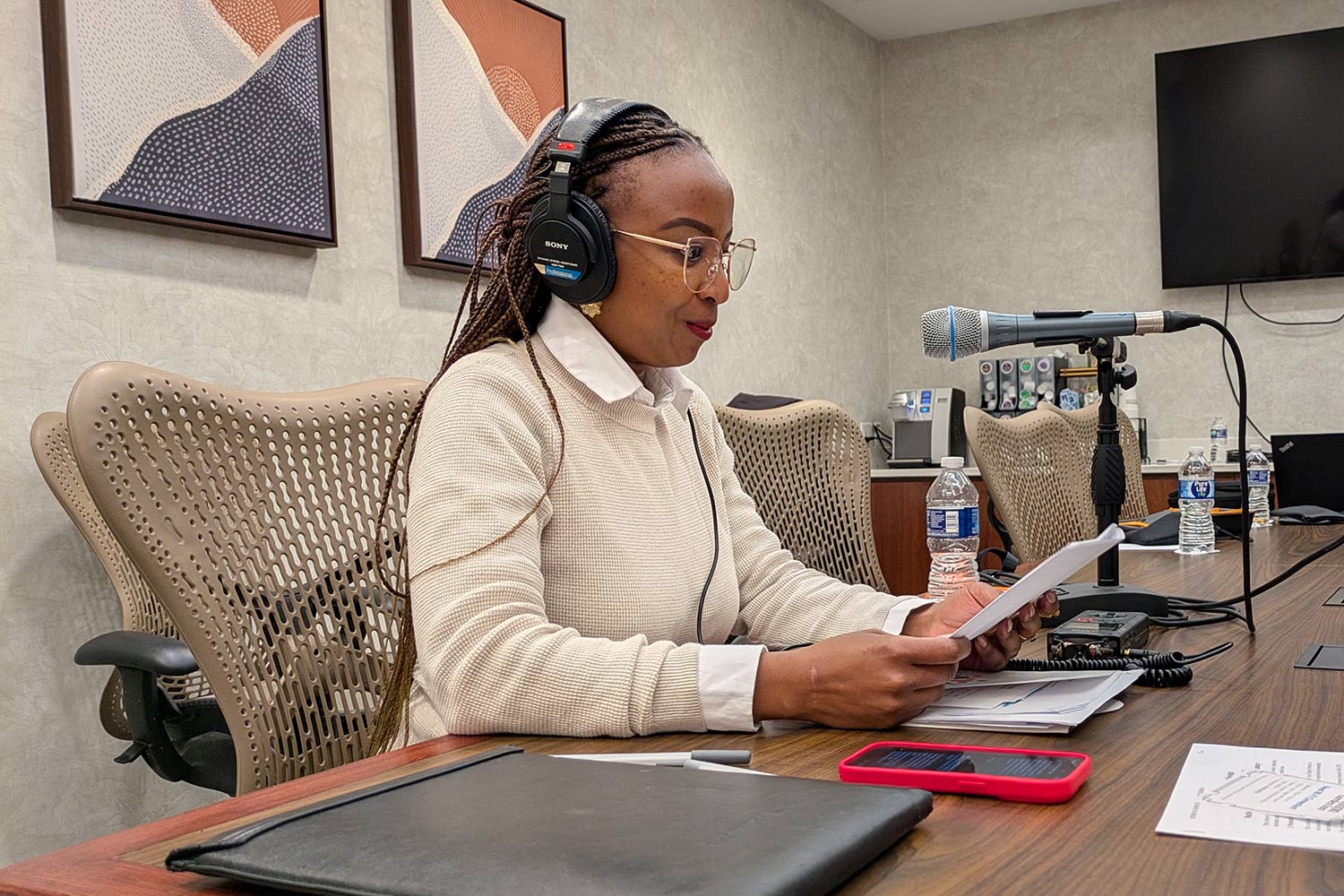
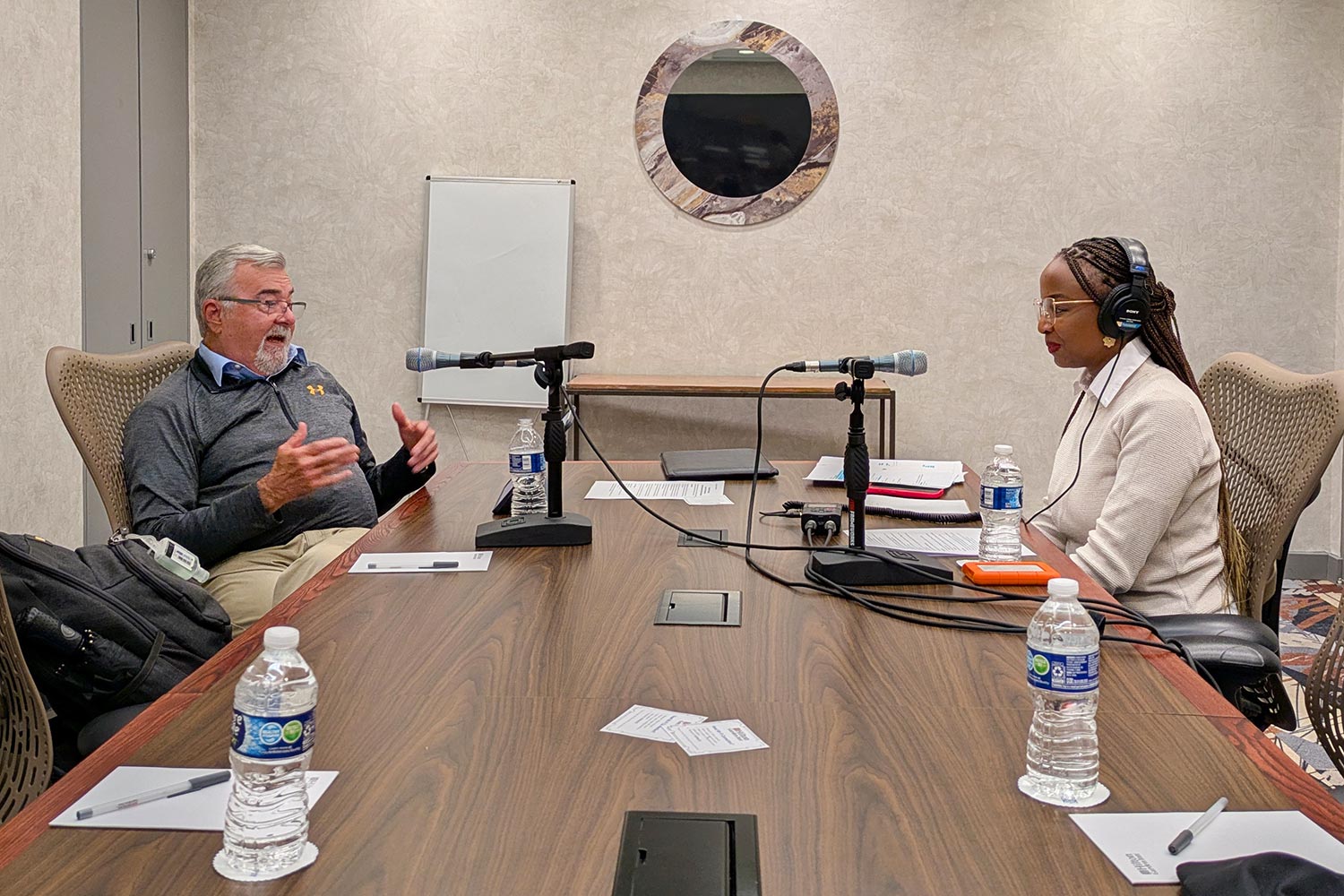
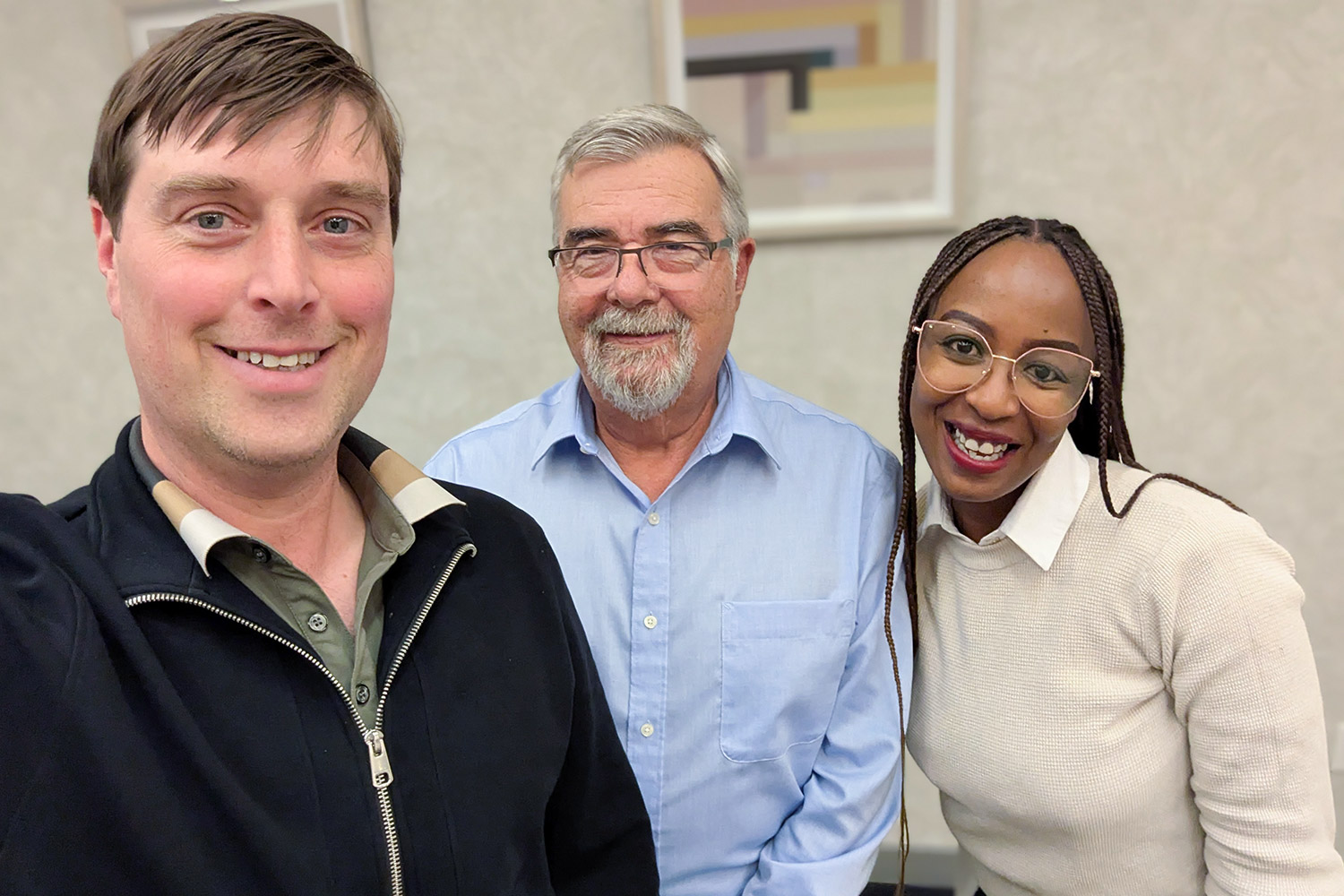
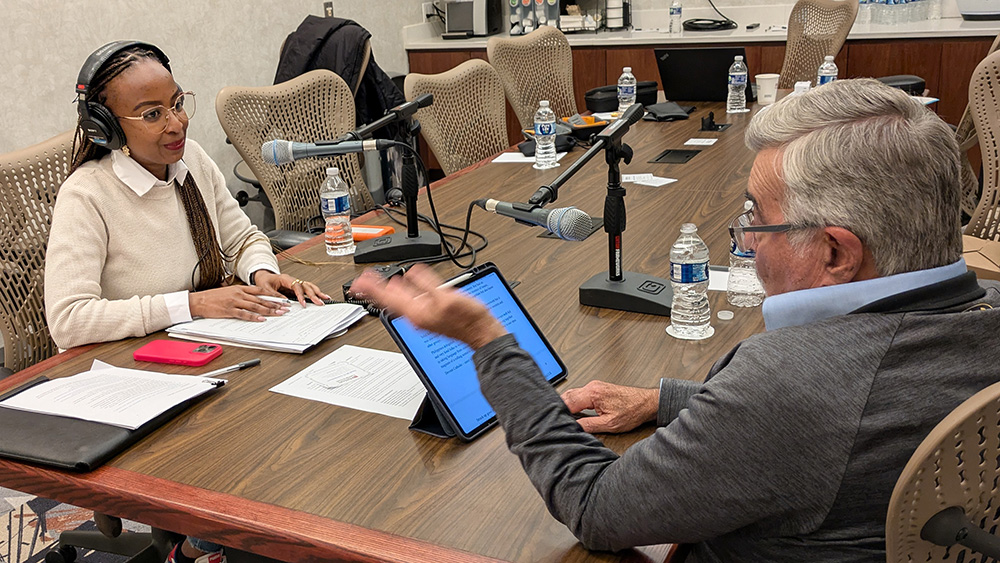
array(1) {
[0]=>
array(282) {
[0]=>
array(4) {
["speaker"]=>
string(17) "Esther W. Kabochi"
["timestamp"]=>
string(8) "00:00:03"
["seconds"]=>
int(3)
["text"]=>
string(359) "This is an interview with Thomas Markram conducted by Esther Kabochi for the Oral History Project, a project of the Stanley Center for Peace and Security and BASIC. Also present in the room is Dave Cullen from BASIC. The interview is taking place on Wednesday 29th April 2026 in New York, United States of America. This is session one of three. Welcome, Tom."
}
[1]=>
array(4) {
["speaker"]=>
string(14) "Thomas Markram"
["timestamp"]=>
string(8) "00:00:28"
["seconds"]=>
int(28)
["text"]=>
string(20) "Thank you very much."
}
[2]=>
array(4) {
["speaker"]=>
string(17) "Esther W. Kabochi"
["timestamp"]=>
string(8) "00:00:29"
["seconds"]=>
int(29)
["text"]=>
string(249) "It's good to have you here with us. Maybe we can go direct to begin our interview. We'll start with the background. Maybe I should start by asking you, could you begin by describing your path into nuclear diplomacy and multilateral disarmament work?"
}
[3]=>
array(4) {
["speaker"]=>
string(14) "Thomas Markram"
["timestamp"]=>
string(8) "00:00:51"
["seconds"]=>
int(51)
["text"]=>
string(195) "I think Esther, I don't know if you want to go through all of the questions in each session and then I'll respond instead of doing one one by one. Otherwise, it's not going to be very sequential."
}
[4]=>
array(4) {
["speaker"]=>
string(17) "Esther W. Kabochi"
["timestamp"]=>
string(8) "00:01:05"
["seconds"]=>
int(65)
["text"]=>
string(395) "Okay. I'll ask you the first three questions of the background and then we can proceed from there. Could you begin by describing your path into nuclear diplomacy and multilateral disarmament work? Also, we'd like to know where did you grow up and how did your early experiences shape your interest in diplomacy, and also a bit of your academic background and how did it lead you into this field?"
}
[5]=>
array(4) {
["speaker"]=>
string(14) "Thomas Markram"
["timestamp"]=>
string(8) "00:01:29"
["seconds"]=>
int(89)
["text"]=>
string(467) "Perhaps I'll start with a little bit of my childhood, my younger childhood. I was actually, grew up in the northern part of Zambia until I was 10, and then moved back to South Africa where I was born originally. At high school, I began to develop an interest in international affairs and particularly in the United Nations. I went to university with the idea of becoming a lawyer, but I found that my interests lay more in political science and international affairs."
}
[6]=>
array(4) {
["speaker"]=>
string(14) "Thomas Markram"
["timestamp"]=>
string(8) "00:02:02"
["seconds"]=>
int(122)
["text"]=>
string(150) "I actually went and saw a guidance counselor at the university who said, "Well, the limited opportunities in this field, you could go into diplomacy.""
}
[7]=>
array(4) {
["speaker"]=>
string(14) "Thomas Markram"
["timestamp"]=>
string(8) "00:02:12"
["seconds"]=>
int(132)
["text"]=>
string(212) "And I said, "Well, at this stage I don't think working for government makes any sense." I came from a liberal background, went to a very liberal university and I just couldn't even fathom that they would take me."
}
[8]=>
array(4) {
["speaker"]=>
string(14) "Thomas Markram"
["timestamp"]=>
string(8) "00:02:26"
["seconds"]=>
int(146)
["text"]=>
string(102) "But he said, "Well, you don't know if you don't apply." So I applied and I got in much to my surprise."
}
[9]=>
array(4) {
["speaker"]=>
string(14) "Thomas Markram"
["timestamp"]=>
string(8) "00:02:33"
["seconds"]=>
int(153)
["text"]=>
string(602) "During the early days of being in the foreign ministry, I did a postgraduate degree in strategic studies and this was probably a good entrée to things later in life. South Africa was a pariah state at the moment. We'd been suspended from the United Nations so there was absolutely no career possibilities at that stage to even think about the United Nations, and so I ended up with a number of bilateral posts. But when we became a democracy in 1994, obviously multilateralism became a reality, but maybe I'll just go a couple of years back and how that connected me to getting into nuclear diplomacy."
}
[10]=>
array(4) {
["speaker"]=>
string(14) "Thomas Markram"
["timestamp"]=>
string(8) "00:03:25"
["seconds"]=>
int(205)
["text"]=>
string(789) "I think my path to a large degree was a combination of luck and timing as well. Luck in that I happened to be, for whatever reason part of a South African delegation that met with the non-proliferation treaty depository states, that is the US, United Kingdom, and the Soviet Union in August 1988. I just happened to be in Vienna at the time and I was asked to be part of this delegation. I mean, I went into this delegation room and the only discussion on the table was South Africa's possible accession to the NPT. I mean, for me it was quite a revelation because I thought, wow, we do have nuclear weapons, otherwise they wouldn't be talking about this stuff. And the point that they were trying to make is you can join the treaty as long as you get rid of your nuclear weapons program."
}
[11]=>
array(4) {
["speaker"]=>
string(14) "Thomas Markram"
["timestamp"]=>
string(8) "00:04:22"
["seconds"]=>
int(262)
["text"]=>
string(439) "This was three years before we dismantled the program. We joined the NPT in 1991, and this timing was very good because we only announced that actual dismantlement in 1993 and in '95 I actually joined the disarmament section in the foreign ministry where one of the things that I was given as a job to do was deal with the NPT and nuclear disarmament issues. So it gave me my career path into getting to where I was connected with the NPT."
}
[12]=>
array(4) {
["speaker"]=>
string(17) "Esther W. Kabochi"
["timestamp"]=>
string(8) "00:04:57"
["seconds"]=>
int(297)
["text"]=>
string(402) "Thank you. That's an interesting conversation. And I like that you mentioned 1993 around time for disarmament. It takes a move from bilateral or working nationally to work multilaterally now, so I'm very interested in the path from coming out of the South African government and joining multilateral diplomacy so that we can move now to the section about your life and career in multilateral democracy."
}
[13]=>
array(4) {
["speaker"]=>
string(14) "Thomas Markram"
["timestamp"]=>
string(8) "00:05:30"
["seconds"]=>
int(330)
["text"]=>
string(17) "Good. No problem."
}
[14]=>
array(4) {
["speaker"]=>
string(17) "Esther W. Kabochi"
["timestamp"]=>
string(8) "00:05:31"
["seconds"]=>
int(331)
["text"]=>
string(17) "Diplomacy, sorry."
}
[15]=>
array(4) {
["speaker"]=>
string(14) "Thomas Markram"
["timestamp"]=>
string(8) "00:05:37"
["seconds"]=>
int(337)
["text"]=>
string(27) "Are we going to move on to?"
}
[16]=>
array(4) {
["speaker"]=>
string(17) "Esther W. Kabochi"
["timestamp"]=>
string(8) "00:05:38"
["seconds"]=>
int(338)
["text"]=>
string(20) "Yes, the transition."
}
[17]=>
array(4) {
["speaker"]=>
string(14) "Thomas Markram"
["timestamp"]=>
string(8) "00:05:41"
["seconds"]=>
int(341)
["text"]=>
string(1000) "Well, the transition, I mean South Africa was basically trying to become a responsible player in the international environment. It had come from this background where it was more into armament than disarmament. It realized the only way to get back into the international environment was becoming very responsible and doing all the things by joining all the treaties it could. It already joined the NPT then acceded to the Chemical Weapons Convention. It was already part of the Biological Weapons Convention. We started joining some of the export control regimes. So it was basically, for me, a golden period in our disarmament by joining all these things and making sure that we were actually inculcating this into the entire South African system so that it would stay and be a sustainable thing going forward. I happened to be at the prime time right there when we were doing all these things, and I was back at head office probably only two, three years, two years when I was promoted to director."
}
[18]=>
array(4) {
["speaker"]=>
string(14) "Thomas Markram"
["timestamp"]=>
string(8) "00:06:48"
["seconds"]=>
int(408)
["text"]=>
string(560) "I was basically in charge of driving a lot of this process. It also was a good time because not only did I deal predominantly with weapons of mass destruction issues, but I also dealt with the entire gamut in the whole disarmament and arms control spectrum, which included landmines as well. I only mentioned this because later on I'll be talking about a lot of the people that I was involved with in the Mine Ban Treaty negotiations that ended up being very important players in the NPT process and having known them just helped just so much in that process."
}
[19]=>
array(4) {
["speaker"]=>
string(14) "Thomas Markram"
["timestamp"]=>
string(8) "00:07:25"
["seconds"]=>
int(445)
["text"]=>
string(553) "But those of you that understand the background in '95, I was not at the '95 Conference. I followed it very closely, but I just returned from posting in Stockholm. But at the 1995 Conference, our Foreign Minister Alfred Nzo basically put the defining proposal on the table. You must remember this was now already at a period where the treaty was supposed to end. After 25 years, its time had basically run out, and so this Conference was not only a Review Conference but an Extension Conference. Would the treaty be extended or would it not be extended?"
}
[20]=>
array(4) {
["speaker"]=>
string(14) "Thomas Markram"
["timestamp"]=>
string(8) "00:08:06"
["seconds"]=>
int(486)
["text"]=>
string(506) "And so there were many thoughts in different parts of the world, many of the Non-Aligned were very recalcitrant to move forward without actually getting something out of that process. Some of them wanted a fixed period extension, some wanted rolling extensions of a period. Naturally, the nuclear weapon states wanted to have an indefinite extension, and South Africa put forward a proposal saying that we should have an indefinite extension, but it should actually have some accountability built into it."
}
[21]=>
array(4) {
["speaker"]=>
string(14) "Thomas Markram"
["timestamp"]=>
string(8) "00:08:48"
["seconds"]=>
int(528)
["text"]=>
string(756) "That accountability would be basically drawn out of what was called a strengthened review process in which there would be an automatic coming together once a year, three times in a five-year cycle where you would have these preparatory meetings and these preparatory meetings would then prepare for a Review Conference. Where it differed from the previous set of preparatory meetings, those prior to '95 had been mainly organizational and procedural meetings. For the first time, this would basically be dealing with substance. And for those of us amongst non-nuclear weapon states, it gave us the opportunity to hold the nuclear weapon state's feet to the fire, if I can put it that way, because they now had to account for what they've done and not done."
}
[22]=>
array(4) {
["speaker"]=>
string(14) "Thomas Markram"
["timestamp"]=>
string(8) "00:09:36"
["seconds"]=>
int(576)
["text"]=>
string(650) "The second part of what came out in '95, because there were three decisions on one resolution that made up the final package, no consensus document, but this was the package that basically was adopted in '95. The second part of it was principles and objectives for nonproliferation and disarmament. Both of these proposals were essentially South African proposals that had been put forward at the Conference and the third decision was on the indefinite extension and to make the Conference actually conclude there had to be a resolution adopted on the Middle East, and that formed a big component of getting a lot of the Arab states to agree to this."
}
[23]=>
array(4) {
["speaker"]=>
string(17) "Esther W. Kabochi"
["timestamp"]=>
string(8) "00:10:18"
["seconds"]=>
int(618)
["text"]=>
string(467) "Yeah, wow. I'm very excited to actually chart into the path of the NPT, the NPT being a cornerstone treaty, and now you're moving from representing your country in these discussions to moving to the multilateral processes world. And as we get into the NPT now, I would probably like to ask you questions as regard to the NPT where you were the Secretary General. Yeah, I would ask you a few questions and then probably we can answer them in the order that you prefer."
}
[24]=>
array(4) {
["speaker"]=>
string(17) "Esther W. Kabochi"
["timestamp"]=>
string(8) "00:10:54"
["seconds"]=>
int(654)
["text"]=>
string(522) "I would like to ask, how did you come to serve as the Sec Gen of the 2010 NPT Review Conference? What did your role involve in practice as the Conference approached? What expectations or concerns existed ahead of the Conference, particularly in light of the 2005 outcome? Who were the actors you were engaging in the lead up to the Conference? What issues were already emerging as particularly sensitive, and what did success realistically look like at this stage? We'd probably go back to your journey into the 2010 NPT."
}
[25]=>
array(4) {
["speaker"]=>
string(14) "Thomas Markram"
["timestamp"]=>
string(8) "00:11:33"
["seconds"]=>
int(693)
["text"]=>
string(532) "Good. Maybe I should just take one step back further to my first Review Conference, which was as a delegate for the South African delegation. As I say, coming on the success of the 1995 Conference where South Africa played this big role, there was a lot of expectation at the 2000 Conference to continue on that work based on these decisions that had been adopted. It ended up at the 2000 Conference where there'd been an alliance formed between a couple of countries, South Africa being one of them called the New Agenda Coalition."
}
[26]=>
array(4) {
["speaker"]=>
string(14) "Thomas Markram"
["timestamp"]=>
string(8) "00:12:10"
["seconds"]=>
int(730)
["text"]=>
string(628) "The New Agenda Coalition became basically the only credible negotiating partner for the nuclear weapon states. I think the nuclear weapon states thought that the Non-Aligned Movement was a bit too radical for them to actually get a realistic outcome with, so a negotiation took place outside the Conference room in the Mexican mission at 2000 between the seven members of the New Agenda Coalition and the five nuclear weapon states, bit like the Enid Blyton and “The Secret Seven”. But the 12 then met and they basically set out a number of steps which was then adopted by the Conference that is known today as the 13 steps."
}
[27]=>
array(4) {
["speaker"]=>
string(14) "Thomas Markram"
["timestamp"]=>
string(8) "00:12:55"
["seconds"]=>
int(775)
["text"]=>
string(685) "Those 13 steps were basically what people were trying to work on going forward and it was a good outcome and a run through from what happened in '95 because we were actually following what was decided on '95 and moving the process forward. Because one of the decisions from '95 in the review process is that it needed to look backward to see what had happened in the past, and it needed to look forward to make plans on how further implementation would be undertaken. Coming up to that, I had left the foreign ministry, and by 2005 I'd actually taken a job at the Office for Disarmament Affairs at the United Nations and they had hired me primarily to actually undertake doing the NPT."
}
[28]=>
array(4) {
["speaker"]=>
string(14) "Thomas Markram"
["timestamp"]=>
string(8) "00:13:48"
["seconds"]=>
int(828)
["text"]=>
string(516) "As with all UN processes, it takes a long time between the time that you interview and the time you actually arrive to start working. In my case, I think it took 13 months, and so by the time I was brought on board, it was a month before the 2005 Review Conference, too late for me to actually be the Secretary General of that Conference. I was put in the deputy role because a lot of the preparation and the organization had already gone on prior to that, and so I stepped into the role to deal with the substance."
}
[29]=>
array(4) {
["speaker"]=>
string(14) "Thomas Markram"
["timestamp"]=>
string(8) "00:14:25"
["seconds"]=>
int(865)
["text"]=>
string(470) "I won't go into a lot of detail about 2005. It ended up being an absolute disaster. We spent 18 days negotiating on the agenda before we could actually get down to talking about substance. If you can recall, this was during the time of the Bush administration. Obviously, arms control was not the highest priority at the time and so it was just a very difficult Conference to get through. And so we had this disaster in 2005 and then maybe I'll just lead into 2010 then."
}
[30]=>
array(4) {
["speaker"]=>
string(14) "Thomas Markram"
["timestamp"]=>
string(8) "00:15:04"
["seconds"]=>
int(904)
["text"]=>
string(543) "I mean, the Secretary General has quite a multifaceted role. At the Review Conference, the Secretary General isin charge of the Secretariat. There are about 20 people that actually work directly for you as part of the Secretariat. A good portion of those people, probably about five are from the International Atomic Energy Agency because they look after the safeguards and the peaceful uses components, which are two of the three pillars that get discussed at the NPT, and the rest were support staff from the Office for Disarmament Affairs."
}
[31]=>
array(4) {
["speaker"]=>
string(14) "Thomas Markram"
["timestamp"]=>
string(8) "00:15:39"
["seconds"]=>
int(939)
["text"]=>
string(741) "The job of the Secretary General and the Secretariat is to provide all the substantive and the organizational support for the office bearers. Those are the chairs of the three main committees, the chairs of the three Subsidiary Bodies, the chair of the drafting committee, and the chair of the credentials committee. But probably the most important job as the Secretary General of the Conference is to provide support to the president of the Conference on all facets. Being Secretary General also involves dealing with all the protocol issues, all the media issues, all the security issues, managing all facets of Conference support, interpretation and translation. There are thousands of pages of documentation at these Review Conferences."
}
[32]=>
array(4) {
["speaker"]=>
string(14) "Thomas Markram"
["timestamp"]=>
string(8) "00:16:28"
["seconds"]=>
int(988)
["text"]=>
string(675) "You also have to provide support for the non-governmental organizations. About 1,200 NGOs come to the Review Conference. They all need to be accredited. They all need to be given rooms to do their work in. They need support, photocopy facilities, things like that, and this is all provided for by the secretariat. And then there's also the support to the delegates. About 1,300 delegates come to a Review Conference, and that is not just delegates from the various states, but also from the intergovernmental organizations that attend. So at a Review Conference, you've got about two and a half thousand people. It's a big group of people to deal with a lot of work involved."
}
[33]=>
array(4) {
["speaker"]=>
string(14) "Thomas Markram"
["timestamp"]=>
string(8) "00:17:10"
["seconds"]=>
int(1030)
["text"]=>
string(1022) "But advising the president, as I say, is probably one of the most important roles. One of the things that happens in all this, you get attached to the hip of the president for that period of time and particularly for the entire month of the Review Conference. We would meet every day between 9:00 and 9:30 with the inner bureau, which at 2010, the president had decided to extend the inner bureau to include not just the main committee chairs, the chair of the credentials committee and the drafting committee, but also to include the Subsidiary Body chairs, because normally it's a smaller group. We just decided to make a slightly larger group. The whole idea would be to run through what had happened the day before and just to see if there are any problems. If things were getting particularly hectic during the meeting, we would actually meet after the end of the day at six o'clock for a very brief meeting, just so anyone could update on what had happened if something needed to be attended to and things like that."
}
[34]=>
array(4) {
["speaker"]=>
string(14) "Thomas Markram"
["timestamp"]=>
string(8) "00:18:14"
["seconds"]=>
int(1094)
["text"]=>
string(704) "Basically at 9:30, between 9:30 and about 10 to 10:00, because all meetings start at 10:00, for those 20 minutes, I would brief the president on what he could expect for the day and we would go through the script. The scripts are always written by the Secretary General, and if you're a secretary of one of the main committees, you'd write the scripts there as well. It's basically just a reading record of everything the president has to go through, and it's just a question of walking him through that and providing any briefing notes for any technical issues that might come up in that discussion in case somebody asks a question from the floor that he actually has all the notes with him for the day."
}
[35]=>
array(4) {
["speaker"]=>
string(14) "Thomas Markram"
["timestamp"]=>
string(8) "00:18:59"
["seconds"]=>
int(1139)
["text"]=>
string(1700) "The other thing that a Secretary General does, you chair all the Secretariat meetings. This is this 20 people that I'm talking about. So usually in the evenings after the day's events, but sometimes early in the morning before the nine o'clock meeting with the rest, we'd get together briefly just if we needed to sort out something. It's basically to give advice to the secretaries of the main committees and the Subsidiary Bodies to keep a track on translation and the document production, a very important thing. I mean, the Review Conference in 2010 produced 176 documents, some of them many pages long, 95% of them had to be translated into six languages. That just takes a lot of work and obviously a lot of money as well, but that brings me to the other point. You're also in charge of the finances. So you have to keep an eye on the budget, you have to collect all the dues from the member states, chase those who haven't paid, that sort of thing. And then I think the last job for a Secretary General is you're a general Mister Fix It. Although theoretically the UN has nothing to do with visas, visas are an actually issue for the host country. When a country has a problem getting a visa and they don't have a particularly good relationship with, in this case the United States, I used to act as an interlocutor. So for many PrepComs and RevCons, but particularly 2010, when we had President Ahmadinejad as the President of Iran at the time, he had a delegation of 40 he wanted to bring to the RevCon. The Americans wouldn't speak to Iranians, Iranians wouldn't speak to the Americans, so I had to be the guy in the middle just to try and get those visas sorted out from these delegations."
}
[36]=>
array(4) {
["speaker"]=>
string(14) "Thomas Markram"
["timestamp"]=>
string(8) "00:20:54"
["seconds"]=>
int(1254)
["text"]=>
string(847) "Following on 2005 in the lead up to the Conference, we'd had two nuclear tests by the DPRK. The Bush administration, as I mentioned earlier, it showed a lack of interest in arms control and in multilateralism. There was a concern about Iran's activities. There was increasing frustration from non-nuclear weapon states after the 13 steps had been adopted in 2000, as well as addressing this Middle East issue, which was still an outstanding issue as part of that resolution from '95. The added advantage was a year before the PrepCom, he had a new United States administration under President Obama, and he had a reassertion by the United States for a commitment to nuclear disarmament. He made a speech in April of 2009 in Prague setting out the goal of a world free of nuclear weapons, and this was a big boost for anybody working in this field."
}
[37]=>
array(4) {
["speaker"]=>
string(14) "Thomas Markram"
["timestamp"]=>
string(8) "00:22:02"
["seconds"]=>
int(1322)
["text"]=>
string(430) "But in the run up to 2010, you obviously have three Preparatory Committee meetings, as I said, coming out of a strengthened review process. In 2007, 2008, 2009, I'd already began to identify key players that I thought there would be a possibility that they could lead efforts, particularly on some of the difficult issues, which at that stage I'd identified would be nuclear disarmament and the Middle East issue going into 2010."
}
[38]=>
array(4) {
["speaker"]=>
string(14) "Thomas Markram"
["timestamp"]=>
string(8) "00:22:36"
["seconds"]=>
int(1356)
["text"]=>
string(828) "The third PrepCom, which is the deciding PrepCom in the run-up for particularly the organizational stuff for the Review Conference, Libran Cabactulan from the Philippines was elected as the designate president. It was a bit of a rough start between him and myself. The moment that his election took place, he basically put up his flag and he wanted to speak, and I'm sitting there, Secretary next to the chair of the PrepCom, and we were trying to run through all the procedural stuff that needed to be taken for the RevCon. And once you get into a rhythm, you don't want to break that rhythm by having people from the floor take the floor and then other people respond to him, it just breaks up the whole decision making process. I basically said, I signaled to the Philippines, "We saw your flag go up, but we're pressing on.""
}
[39]=>
array(4) {
["speaker"]=>
string(14) "Thomas Markram"
["timestamp"]=>
string(8) "00:23:41"
["seconds"]=>
int(1421)
["text"]=>
string(208) "I mean, he was a little impatient by nature anyway, but he then gets one of his colleagues to come up to the podium and says to me, "My Ambassador would like to take the floor because he's just been elected.""
}
[40]=>
array(4) {
["speaker"]=>
string(14) "Thomas Markram"
["timestamp"]=>
string(8) "00:23:56"
["seconds"]=>
int(1436)
["text"]=>
string(157) "And I said, "Yeah, we've seen the flag. Just bear with us. We just want to take these decisions. Once we've taken these decisions, we'll give you the floor.""
}
[41]=>
array(4) {
["speaker"]=>
string(14) "Thomas Markram"
["timestamp"]=>
string(8) "00:24:06"
["seconds"]=>
int(1446)
["text"]=>
string(398) "He goes back and conveys the message. We carry on proceeding through all the other decisions that we had to have taken just to do the organizational and procedural stuff for the RevCon. So when he gets to the end, eventually the chair gives the floor to Ambassador Cabactulan and he starts off by saying, "Well, the Secretary of the Conference wouldn't give me the floor." That's how he starts off."
}
[42]=>
array(4) {
["speaker"]=>
string(14) "Thomas Markram"
["timestamp"]=>
string(8) "00:24:32"
["seconds"]=>
int(1472)
["text"]=>
string(587) "And I mean, I have nothing to do with giving him the floor, that's the chair's job. So it was an interesting start, but rough to just... Pounce on me straight away. But the good thing was that when the meeting dissolved and everyone got up, I think a couple of people went up to him to say, "Hey, that was a bit rough on Tom." And maybe by the time I actually then met him and shook his hand, because this guy was new to disarmament. He'd never been in any disarmament meeting before. He was completely new character, didn't know him from a bar of soap. So it was a bit of a rough start."
}
[43]=>
array(4) {
["speaker"]=>
string(14) "Thomas Markram"
["timestamp"]=>
string(8) "00:25:09"
["seconds"]=>
int(1509)
["text"]=>
string(206) "Maybe I should just go through some of the milestones that lead up to any sort of, the big RevCons. There are a couple of meetings that take place throughout the year in the run-up to any Review Conference."
}
[44]=>
array(4) {
["speaker"]=>
string(17) "Esther W. Kabochi"
["timestamp"]=>
string(8) "00:25:25"
["seconds"]=>
int(1525)
["text"]=>
string(288) "Yeah. I would really actually appreciate that for me and the rest of the practitioners out there, probably some have never attended any Review Conferences and not even the PrepComs. It will be nice to know what it entails to actually maintain these meetings and the NPT regime in general."
}
[45]=>
array(4) {
["speaker"]=>
string(14) "Thomas Markram"
["timestamp"]=>
string(8) "00:25:44"
["seconds"]=>
int(1544)
["text"]=>
string(459) "There are a couple of meetings. One of the meetings is Wilton Park. It's a place run by the foreign ministry in the United Kingdom, very beautiful setting, and a place where people get together the week before Christmas to discuss nuclear non-proliferation issues and predominantly before every RevCon, this meeting has some real meaning because they bring all the key players together and the whole idea of Wilton Park is to run through some of these issues."
}
[46]=>
array(4) {
["speaker"]=>
string(14) "Thomas Markram"
["timestamp"]=>
string(8) "00:26:20"
["seconds"]=>
int(1580)
["text"]=>
string(724) "Already, I'd had these people that I knew on a list in my back pocket, as I say, through the PrepCom process. I started making recommendations to Libran Cabactulan as president saying, "These are the kind of people that you would need if you were thinking of creating a Subsidiary Body," because the '95 decisions said that the Conference may establish a Subsidiary Body, it doesn't say it has to. And the whole idea of Subsidiary Body is to have a focused discussion on a particular issue to actually try and resolve that particular issue instead of just letting the main committee try and deal with it as such as appoint somebody to do a focus thing on this and produce something, particularly in the forward-looking side."
}
[47]=>
array(4) {
["speaker"]=>
string(14) "Thomas Markram"
["timestamp"]=>
string(8) "00:27:08"
["seconds"]=>
int(1628)
["text"]=>
string(426) "What happened then and has happened subsequently, most of the main committees dealt with a review component of things, backward looking part and Subsidiary Bodies would deal with the forward-looking part, so I started identifying people. Early on, I'd recommended to Libran Cabactulan that he should perhaps talk to Alex Marschik from Austria for the Subsidiary Body 1, and also Alison Kelly from Ireland in Subsidiary Body 2."
}
[48]=>
array(4) {
["speaker"]=>
string(14) "Thomas Markram"
["timestamp"]=>
string(8) "00:27:36"
["seconds"]=>
int(1656)
["text"]=>
string(712) "Part of this was discussing with Libran how a Review Conference would actually develop. My experience from 2000 taught me that when things were to get stuck or delayed in the main committees, you need something to break it through, and that's why we broke away into that small group at the Mexican mission to basically bring a package together that could be taken back to the Conference and it would actually help the Conference get to a finality. And so I had already started sketching some of these different scenarios to him about how you would finalize negotiations by having a smaller group, particularly when the main committees start to wind down or they can't deliver a consensus in their own committees."
}
[49]=>
array(4) {
["speaker"]=>
string(14) "Thomas Markram"
["timestamp"]=>
string(8) "00:28:19"
["seconds"]=>
int(1699)
["text"]=>
string(714) "I also introduced Libran Cabactulan to Steffen Kongstad from Norway, and many of these connections came from my Mine Ban Treaty experience. South Africa had actually chaired the meeting that negotiated the Conference to create the Mine Ban Treaty in 1997 in Oslo. Steffen had been my main counterpart in Norway in running that conference, and Austria and Ireland and Norway were part of the core group in the Mine Ban Treaty that pushed the treaty forward to a large degree and actually managed to get it concluded. So many of the people I knew from the Mine Treaty days were now the same people that were coming to the RevCon, and so it was just good to meet these people and start introducing them to Cabactulan."
}
[50]=>
array(4) {
["speaker"]=>
string(14) "Thomas Markram"
["timestamp"]=>
string(8) "00:29:15"
["seconds"]=>
int(1755)
["text"]=>
string(592) "I'd also mentioned to Libran that having another meeting like this after Wilton Park might be a very good idea because already you could see patterns beginning to create a relationship beginning to be established, but it probably needed a little bit more of a push. I mean the problem with having, all Review Conferences are chaired by the Non-Aligned Movement. It's just one of these things that was set up from the beginning and invariably presidents from the Non-Aligned Movement don't have a lot of money to, one, travel, and secondly, to start arranging conferences in the own countries."
}
[51]=>
array(4) {
["speaker"]=>
string(14) "Thomas Markram"
["timestamp"]=>
string(8) "00:29:57"
["seconds"]=>
int(1797)
["text"]=>
string(613) "But because I knew Steffen Kongstad started that and because Norway were an extremely a good donor on many fronts, not just on development aid but also in the arms control field, he basically gave me the funds to arrange a meeting in Manila in the Philippines. We arranged it through UNDP because this was part of their brief, they could actually do a lot of work on the ground for us and so we invited a bunch of the most important players we thought would be at the RevCon that could probably help push things through and particularly key players from the nuclear five or the P5, whatever you want to call them."
}
[52]=>
array(4) {
["speaker"]=>
string(14) "Thomas Markram"
["timestamp"]=>
string(8) "00:30:45"
["seconds"]=>
int(1845)
["text"]=>
string(275) "There were still a couple of trust issues between Libran and myself. I mean, getting to know somebody and trusting people, when you decide to take on a big Conference like us, it is quite risky for a diplomat because you put your country's prestige on the line kind of thing-"
}
[53]=>
array(4) {
["speaker"]=>
string(14) "Thomas Markram"
["timestamp"]=>
string(8) "00:31:03"
["seconds"]=>
int(1863)
["text"]=>
string(308) "... because you put your country's prestige on the line kind of thing. The secretariats, I mean for good and bad, they serve a very useful role as a resource. But you don't know them. They're not from your country. They're not from your delegation. It takes a while to build up that kind of trust and things."
}
[54]=>
array(4) {
["speaker"]=>
string(14) "Thomas Markram"
["timestamp"]=>
string(8) "00:31:19"
["seconds"]=>
int(1879)
["text"]=>
string(450) "And so, while we were at this Conference, he'd arranged a meeting one evening and he'd invited a couple of these guys that he thought would be key players to come and meet. He did not invite me. And then Steffen said to me, "I'll see you tonight." Then I said, "Where?" He said, "Oh, at this meeting." I said, "Well, I haven't been invited." But, anyway, Steffen went and spoke to Libran and eventually I got a late invitation to get to this meeting."
}
[55]=>
array(4) {
["speaker"]=>
string(14) "Thomas Markram"
["timestamp"]=>
string(8) "00:31:47"
["seconds"]=>
int(1907)
["text"]=>
string(245) "So I go into this meeting and Libran had drawn up a list of two pillars, mainly disarmament and nonproliferation. He had listed a couple of things in there. Never discussed it with me. As I say, we did not have that level of trust at that stage."
}
[56]=>
array(4) {
["speaker"]=>
string(14) "Thomas Markram"
["timestamp"]=>
string(8) "00:32:08"
["seconds"]=>
int(1928)
["text"]=>
string(341) "He had some really odd issues on this list. One of the things that really tickled me and did not tickle some of the other guys around the room, that he had this reference to the lesser nuclear weapon states, which France and the UK probably thought that meant them. I don't think they were too pleased with being put in those kind of labels."
}
[57]=>
array(4) {
["speaker"]=>
string(14) "Thomas Markram"
["timestamp"]=>
string(8) "00:32:33"
["seconds"]=>
int(1953)
["text"]=>
string(447) "But the idea was a good idea, was to get the main players together and start talking about stuff and having a list of things. As I say, I then said to him after the meeting, "Why did you have this list? I've never seen it. You didn't talk to me," and he said, "Oh, but I showed it to your boss at ODA, the undersecretary general, and he said it was fine." I mean my boss had never spoken to me about it either. So I didn't know what was happening."
}
[58]=>
array(4) {
["speaker"]=>
string(14) "Thomas Markram"
["timestamp"]=>
string(8) "00:33:03"
["seconds"]=>
int(1983)
["text"]=>
string(573) "But, anyway, the important thing about the workshop is that it cemented, not only identified some of the really sticky problems that come up at the RevCon, but also managed to get people that were going to be working together closer with each other the whole time. The good thing, I think, in the run up to 2010 is that diplomats come and go the whole time. We had a consistent bunch of important players that were in their posts for enough of a period of time that they got to know each other and they could work with each other. I think that's an important facet as well."
}
[59]=>
array(4) {
["speaker"]=>
string(14) "Thomas Markram"
["timestamp"]=>
string(8) "00:33:41"
["seconds"]=>
int(2021)
["text"]=>
string(404) "I think the other important thing from Libran's point of view is that having a big Conference like us, Philippines being involved, we all got invited to lunch at the president's palace, which was very nice, and it cemented a lot of internal support in the Philippines for Libran. I say this, and I'll come back to Libran later on, because he was not a disarmament guy. And so, there's an important thing."
}
[60]=>
array(4) {
["speaker"]=>
string(14) "Thomas Markram"
["timestamp"]=>
string(8) "00:34:10"
["seconds"]=>
int(2050)
["text"]=>
string(422) "Before you get to the RevCon, we have to have consultations in various places. So in March, we all went to Geneva and met with the parties in Geneva. Libran then brought out this list again. Well, he didn't bring it out. Actually it'd been leaked by diplomats, which is normal in diplomatic life. These things are never a secret. Libran talks to everyone. Exchanging of information is the way the world works in diplomacy."
}
[61]=>
array(4) {
["speaker"]=>
string(14) "Thomas Markram"
["timestamp"]=>
string(8) "00:34:41"
["seconds"]=>
int(2081)
["text"]=>
string(204) "And so, this list had been leaked. Obviously it'd been leaked to people that weren't in Manila. So a lot of them started raising questions from the floor about this list, which theoretically didn't exist."
}
[62]=>
array(4) {
["speaker"]=>
string(14) "Thomas Markram"
["timestamp"]=>
string(8) "00:34:55"
["seconds"]=>
int(2095)
["text"]=>
string(432) "And so, Libran knew my views on this list because, as I said, I told him I thought it was a bad idea. And so, he started getting pummeled by these delegations. Eventually he turned to me on the podium and said, "What do I do?" and then I said, "Well, I think you should just withdraw the list." And so, he was basically forced to say on the floor, "I withdraw the list. It doesn't exist." And so, that got rid of that list at least."
}
[63]=>
array(4) {
["speaker"]=>
string(14) "Thomas Markram"
["timestamp"]=>
string(8) "00:35:25"
["seconds"]=>
int(2125)
["text"]=>
string(225) "But the good thing was that in meetings like that is that, as I say, these relationships began to get stronger and stronger. I also started introducing him to other groups that play an important role at the Review Conference."
}
[64]=>
array(4) {
["speaker"]=>
string(14) "Thomas Markram"
["timestamp"]=>
string(8) "00:35:40"
["seconds"]=>
int(2140)
["text"]=>
string(555) "There are many small coalitions of groups that get together. One was the New Agenda Coalition, which I already mentioned. The other one was NPDI [sic]. They're a larger group of people, but with very much similar ideas. A little bit more sort of a European spread amongst NPDI, but they do have people from all parts of the world, and obviously and I also started introducing Libran to some of the big NGOs that would also be at the RevCon. I mean NGOs do play an important role. They are a very good resource. Libran started meeting some of them as well."
}
[65]=>
array(4) {
["speaker"]=>
string(14) "Thomas Markram"
["timestamp"]=>
string(8) "00:36:14"
["seconds"]=>
int(2174)
["text"]=>
string(202) "The one thing that the Center for Nonproliferation Studies at Monterey does, the James Martin Center, is they hold a meeting in Annecy in France, just after the Geneva consultations, with member states."
}
[66]=>
array(4) {
["speaker"]=>
string(14) "Thomas Markram"
["timestamp"]=>
string(8) "00:36:28"
["seconds"]=>
int(2188)
["text"]=>
string(379) "This is very similar to the Wilton Park meeting where this is the last sort of meeting before the RevCon for people. It's an informal meeting, quite a big meeting, like 75 people come to it, but it's the last chance for people to talk off the record kind of thing in a frank and open manner about issues. They always managed to invite all the important players to those meetings."
}
[67]=>
array(4) {
["speaker"]=>
string(14) "Thomas Markram"
["timestamp"]=>
string(8) "00:36:55"
["seconds"]=>
int(2215)
["text"]=>
string(237) "It afforded Libran the opportunity to get to know many of these players even better. It also, I think, concretized in his mind the people that needed to be the subsidiary body chairs, because those decisions only get taken at the RevCon."
}
[68]=>
array(4) {
["speaker"]=>
string(14) "Thomas Markram"
["timestamp"]=>
string(8) "00:37:14"
["seconds"]=>
int(2234)
["text"]=>
string(396) "The good thing is by then I think he felt strong enough in his conviction that these were the right people to actually tell these guys, "You can start preparing. I'm going to actually put your names forward when we get there." The good thing about a meeting like that is you start beginning to see where the divergence lines lie, where the problem areas are, and where more work is really needed."
}
[69]=>
array(4) {
["speaker"]=>
string(14) "Thomas Markram"
["timestamp"]=>
string(8) "00:37:45"
["seconds"]=>
int(2265)
["text"]=>
string(284) "So by April 2010, a month of the Review Conference starting, it was clear that there was already a sort of rising anticipation that we needed to put the debacle of 2005 behind us. It could not be repeated. You had this high degree of political will beginning to coalesce among states."
}
[70]=>
array(4) {
["speaker"]=>
string(14) "Thomas Markram"
["timestamp"]=>
string(8) "00:38:15"
["seconds"]=>
int(2295)
["text"]=>
string(423) "The P5 were beginning to work together on things. The United States leadership under President Obama was quite evident. You had the New START agreement came into being. So the atmospherics were beginning to change. I mean, granted, there were still major differences between the priorities of the nuclear weapon states and the leading members of the non-nuclear weapon states and obviously the Non-Aligned Movement as well."
}
[71]=>
array(4) {
["speaker"]=>
string(14) "Thomas Markram"
["timestamp"]=>
string(8) "00:38:46"
["seconds"]=>
int(2326)
["text"]=>
string(608) "I think the United States and the Western group were hoping that the initiatives under President Obama where he was talking about the diminished role of nuclear weapons under the US Nuclear Posture Review at the time, he was talking about forward-looking commitments from the United States, that they would lead. He was hosting a nuclear security summit. He was trying to lead some progress in dealing with the DPRK issues. There were things in motion to try and curtail the ambitions of Iran and there was also a sort of decreasing risk on nuclear terrorism because of all of these things coming into being."
}
[72]=>
array(4) {
["speaker"]=>
string(14) "Thomas Markram"
["timestamp"]=>
string(8) "00:39:37"
["seconds"]=>
int(2377)
["text"]=>
string(295) "One objective was to try and have the 1997 IAEA Additional Protocol endorsed as this verification standard for the NPT, as well as the condition of supply being a role there. The issue with withdrawal was very much on people's minds at the time as a fallout with the DPRK having left the treaty."
}
[73]=>
array(4) {
["speaker"]=>
string(14) "Thomas Markram"
["timestamp"]=>
string(8) "00:40:01"
["seconds"]=>
int(2401)
["text"]=>
string(730) "And so, a lot of people wanted to ... With the concerns about Iran, they were trying to strengthen the withdrawal components on how you would deal with countries that were thinking or leaving or were going to leave, how you would actually make it very difficult for these countries to withdraw so they just wouldn't even go there. It's mainly the concerns about Iran at the time. I think non-aligned states and non-nuclear weapon states from the developed world, they wanted firm commitments from the nuclear weapon states on nuclear disarmament. The NAM states wanted phased reductions. They wanted support for a nuclear weapons convention that would supersede the NPT. They were talking about specific timeframes and benchmarks."
}
[74]=>
array(4) {
["speaker"]=>
string(14) "Thomas Markram"
["timestamp"]=>
string(8) "00:41:06"
["seconds"]=>
int(2466)
["text"]=>
string(356) "It was very clear that many of these things would be very difficult to achieve. President Obama had already run into some domestic and political obstacles in trying to implement his promises. This included the push that Americans tried to make on the negotiation of fissile materials, cutoff treaty, the Senate ratification where the CTBT ran into trouble."
}
[75]=>
array(4) {
["speaker"]=>
string(14) "Thomas Markram"
["timestamp"]=>
string(8) "00:41:34"
["seconds"]=>
int(2494)
["text"]=>
string(181) "Also, this vision of a world free of nuclear weapons was not exactly shared equally by the other nuclear weapon states, perhaps with the exception of the United Kingdom at the time."
}
[76]=>
array(4) {
["speaker"]=>
string(14) "Thomas Markram"
["timestamp"]=>
string(8) "00:41:48"
["seconds"]=>
int(2508)
["text"]=>
string(228) "The stakes were basically raised for the United States to make the NPT Review Conference a success. It also had started making some headway with gaining support from Egypt on the Middle East issue, which was an important factor."
}
[77]=>
array(4) {
["speaker"]=>
string(14) "Thomas Markram"
["timestamp"]=>
string(8) "00:42:06"
["seconds"]=>
int(2526)
["text"]=>
string(499) "I think one of the important factors as well, I mean having grown up in this sort of diplomatic world and getting to know many people, a lot of these people now trust you from your previous diplomatic life. Now you're working in the secretariat as the UN. But you've known these people as friends before, people like the head of the Russian delegation was Anatoly Antonov. Both of us were deputy Permanent Representatives in Geneva for our respective countries. And so, we knew each other very well."
}
[78]=>
array(4) {
["speaker"]=>
string(14) "Thomas Markram"
["timestamp"]=>
string(8) "00:42:42"
["seconds"]=>
int(2562)
["text"]=>
string(296) "Other positive things. Egypt was chairing the Arab group. They were chairing the Non-Aligned Movement in the run up to 2010 and at 2010, and they were chairing the New Agenda. The chap in charge was Ambassador Maged Abdelaziz, who today is still the Ambassador for the Arab league here at the UN."
}
[79]=>
array(4) {
["speaker"]=>
string(14) "Thomas Markram"
["timestamp"]=>
string(8) "00:43:04"
["seconds"]=>
int(2584)
["text"]=>
string(400) "But him and I had been colleagues together since '95, sitting at the back of the first committee. We'd known each other for a long time. So these were all people you knew very well. That just helps, I think, in just building that trust and credibility and also being able to be honest with each other and to be sharing things on a confidential front. But maybe I should get back to Libran Cabactulan."
}
[80]=>
array(4) {
["speaker"]=>
string(17) "Esther W. Kabochi"
["timestamp"]=>
string(8) "00:43:29"
["seconds"]=>
int(2609)
["text"]=>
string(10) "Yes, sure."
}
[81]=>
array(4) {
["speaker"]=>
string(14) "Thomas Markram"
["timestamp"]=>
string(8) "00:43:31"
["seconds"]=>
int(2611)
["text"]=>
string(494) "He came directly from a posting in the United Arab Emirates, and there was initially a lot of skepticism amongst, I think, some of the delegates about not just his knowledge, but also his experience particularly in the NPT arena. He had WTO experience. So he had multilateral experience, but he was stationed in the bilateral post in the UAE. His major role there was looking after the Philippine community. Many Filipinos work in Arab states. And so, a lot of people thought, "Who's this guy?""
}
[82]=>
array(4) {
["speaker"]=>
string(14) "Thomas Markram"
["timestamp"]=>
string(8) "00:44:08"
["seconds"]=>
int(2648)
["text"]=>
string(436) "I think it quickly changed when he started working with people. I mean he did have this lengthy multilateral negotiating experience in fora, and he had ... In this process when I was working with him, we'd undertaken these extensive consultations in all these places that we had met, and he had really drawn up a sort of intricate network of support amongst all different levels of government and as well as in his own foreign ministry."
}
[83]=>
array(4) {
["speaker"]=>
string(14) "Thomas Markram"
["timestamp"]=>
string(8) "00:44:45"
["seconds"]=>
int(2685)
["text"]=>
string(427) "This instilled, I think, a lot of trust and confidence amongst the key players and also amongst delegations. The good thing was just prior to coming to the RevCon, he was appointed as the Permanent Representative in New York, which really helps because he was on the spot, stuff like that. As I say, he had obviously made an impression on his President. But maybe I get back to the secretariat as well and the Philippines team."
}
[84]=>
array(4) {
["speaker"]=>
string(14) "Thomas Markram"
["timestamp"]=>
string(8) "00:45:12"
["seconds"]=>
int(2712)
["text"]=>
string(233) "My experience from the Preparatory Committee meetings is that, as the secretary general, you have to have a small team around you to help you do the day-to-day legwork, especially on a substantive time, this substantive sort of work."
}
[85]=>
array(4) {
["speaker"]=>
string(14) "Thomas Markram"
["timestamp"]=>
string(8) "00:45:31"
["seconds"]=>
int(2731)
["text"]=>
string(301) "So I had a colleague, Michael Spies, working very closely with me, and we had worked out a series of scenarios for every conceivable issue under the sun. We had drawn up these matrixes which run into hundreds and hundreds of pages. I can actually show an example of it later if you're just interested."
}
[86]=>
array(4) {
["speaker"]=>
string(17) "Esther W. Kabochi"
["timestamp"]=>
string(8) "00:45:50"
["seconds"]=>
int(2750)
["text"]=>
string(17) "Glad to see that."
}
[87]=>
array(4) {
["speaker"]=>
string(14) "Thomas Markram"
["timestamp"]=>
string(8) "00:45:51"
["seconds"]=>
int(2751)
["text"]=>
string(369) "But basically it was taking language from each of the PrepComs on every particular issue. The language at this PrepCom, the language at the next PrepCom, the language that was adopted at the previous Review Conference, and then what states have actually said in various places and what working papers that they handed in the Conference said about this particular issue."
}
[88]=>
array(4) {
["speaker"]=>
string(14) "Thomas Markram"
["timestamp"]=>
string(8) "00:46:10"
["seconds"]=>
int(2770)
["text"]=>
string(245) "So you can imagine a matrix like that just runs into lots and lots of pages. But it's useful to have that information on hand so you can quickly draw up where the convergence lines are and things like that. It just helps doing your work so much."
}
[89]=>
array(4) {
["speaker"]=>
string(14) "Thomas Markram"
["timestamp"]=>
string(8) "00:46:24"
["seconds"]=>
int(2784)
["text"]=>
string(197) "And so, we'd taken all this work and we had shared it not only with the president, but also with the chairs of these main committees. So they would have all this ready to help them with this stuff."
}
[90]=>
array(4) {
["speaker"]=>
string(14) "Thomas Markram"
["timestamp"]=>
string(8) "00:46:38"
["seconds"]=>
int(2798)
["text"]=>
string(384) "We worked with the Philippines's substance team. The one thing that Cabactulan had managed to do is to say get the support from the Philippines. So he had on hand there ... He had his Ambassador from Vienna as part of his support team, he has his Ambassador from Geneva as part of his support team, and he had a small group of people working from their disarmament component with him."
}
[91]=>
array(4) {
["speaker"]=>
string(14) "Thomas Markram"
["timestamp"]=>
string(8) "00:46:59"
["seconds"]=>
int(2819)
["text"]=>
string(1138) "So basically my inner secretariat at the Office for Disarmament Affairs and his people used to meet on a daily basis and work through these documents. We obviously worked every weekend as well at the Philippines mission, a whole of Saturday, the holiday of Sunday, to go through all these things so that they were prepared and knew what was happening as well and they could engage with anything that came up. The other thing was that just prior to actually getting to the RevCon, we'd undertaken a visit to the Center for Nonproliferation Studies in Monterey. They are one of the leading NGOs in this field for expertise. Let's see. Bill Potter runs the institute, has been dealing with NPT issues since '95. They've done a lot of work on these issues, and they're the ones that arranged the same meeting in Annecy in France. So they brought him to Monterey and basically ran through some of the real sticky issues that had been identified up until then, and they brought in experts to talk about it, particularly about things like safeguards, the pitfalls and the language that could be used on the Additional Protocol, things like that."
}
[92]=>
array(4) {
["speaker"]=>
string(14) "Thomas Markram"
["timestamp"]=>
string(8) "00:48:21"
["seconds"]=>
int(2901)
["text"]=>
string(300) "I mean, although he didn't have disarmament experience, Cabactulan, I think he had an electrical engineering background from his studies. So technical stuff he managed to grasp quite quickly. But it was good to run all the stuff through him as well, the nuances and the language and things like that."
}
[93]=>
array(4) {
["speaker"]=>
string(14) "Thomas Markram"
["timestamp"]=>
string(8) "00:48:42"
["seconds"]=>
int(2922)
["text"]=>
string(406) "So up until the brink of the Conference, we were pretty well-prepared, gone through all these things. I had also walked him through some of the possibilities, having seen what happened at the 2000 Conference, when we negotiated the 13 steps at the Mexican mission. The chap who chaired those negotiations was the Steffen Kongstad from Norway. So the chap that came out of the Mine Ban Treaty kind of thing."
}
[94]=>
array(4) {
["speaker"]=>
string(14) "Thomas Markram"
["timestamp"]=>
string(8) "00:49:12"
["seconds"]=>
int(2952)
["text"]=>
string(504) "And so, I'd say to Libran this would be a good chap to have close by in case you end up in a scenario like that, because the odds of the president having the bandwidth to actually deal with something like that would be very difficult, but good to appoint somebody else. Also someone from a NATO country just gives some comfort to some of the nuclear weapon states that he's not going to do something crazy. Steffen Kongstad was just such an incredibly good negotiator and a good facilitator and mediator."
}
[95]=>
array(4) {
["speaker"]=>
string(14) "Thomas Markram"
["timestamp"]=>
string(8) "00:49:46"
["seconds"]=>
int(2986)
["text"]=>
string(140) "So we basically had good people at hand. We had set up all these people ready to actually get cracking when we got to the Review Conference."
}
[96]=>
array(4) {
["speaker"]=>
string(17) "Esther W. Kabochi"
["timestamp"]=>
string(8) "00:49:58"
["seconds"]=>
int(2998)
["text"]=>
string(297) "Oh, wow. Okay. So it has been very interesting to listen to ... You were the deputy Mr. Fix It in 2005, and now we are leading up to the 2010 NPT RevCon. You have mentioned the actors that were involved, all the things that you did and perhaps that were done before, and that was very informative."
}
[97]=>
array(4) {
["speaker"]=>
string(17) "Esther W. Kabochi"
["timestamp"]=>
string(8) "00:50:22"
["seconds"]=>
int(3022)
["text"]=>
string(462) "I would probably like to hear from you particularly, because there was a lot of things happening geopolitically at that time. America had a new administration then. There were the issues of DPRK. I would probably like to know, from your angle now coming in as a SecGen, from the emerging issues that we have discussed that were particularly sensitive, what did success realistically look like at that particular stage that you expected now moving on to the 2010?"
}
[98]=>
array(4) {
["speaker"]=>
string(14) "Thomas Markram"
["timestamp"]=>
string(8) "00:50:54"
["seconds"]=>
int(3054)
["text"]=>
string(376) "I think success is a difficult thing to gauge. What is a success? Is success a consensus document? I mean some people will say yes. Others would say, well, it's important to meet and to go through all the issues and if you can get a consensus document, good. But it doesn't have to be a consensus document. You can get decisions like we had in '95 that serve the same purpose."
}
[99]=>
array(4) {
["speaker"]=>
string(14) "Thomas Markram"
["timestamp"]=>
string(8) "00:51:17"
["seconds"]=>
int(3077)
["text"]=>
string(282) "So what would be success? I've always thought success would be not going backwards. I think that constitutes success in any multilateral field. If you're not going backwards and you can actually achieve something going forward realistically, I think that can be regarded as success."
}
[100]=>
array(4) {
["speaker"]=>
string(14) "Thomas Markram"
["timestamp"]=>
string(8) "00:51:38"
["seconds"]=>
int(3098)
["text"]=>
string(372) "I mean the one thing about disarmament is the success rate is low and the work is very glacial. It takes years and years to prepare things, to get things to fruition, to get everybody on board. Multilateralism tends to work on the lowest common denominator. The NPT works by consensus. And so, trying to move 190 oddstates parties in the right direction is very difficult."
}
[101]=>
array(4) {
["speaker"]=>
string(14) "Thomas Markram"
["timestamp"]=>
string(8) "00:52:07"
["seconds"]=>
int(3127)
["text"]=>
string(479) "That's why I think moving the process forward, having a plan where you can take some of the issues that are problematic and start dealing with them in a systematic way, that gives you some scope in five years to come back and measure how far you actually went. I think that is what realistically success would look at. As I say, we're going to talk about the conduct of the Conference later, so we'll get into the other details. But I think that is what it does constitute. Yeah."
}
[102]=>
array(4) {
["speaker"]=>
string(17) "Esther W. Kabochi"
["timestamp"]=>
string(8) "00:52:41"
["seconds"]=>
int(3161)
["text"]=>
string(219) "Okay. Yes, I do agree with you. Success probably at this point will not be going back. Did you actually feel like you were ready to deliver the success however it looked like at a particular point, technically speaking?"
}
[103]=>
array(4) {
["speaker"]=>
string(14) "Thomas Markram"
["timestamp"]=>
string(8) "00:52:57"
["seconds"]=>
int(3177)
["text"]=>
string(364) "Every Review Conference is unique. I mean it comes out of, as you've mentioned, the geopolitical environment at the time. It depends on the personalities at the Conference at the time. It depends on a whole lot of factors. The dynamics change from Review Conference to Review Conference. So it's hard to gauge, if I can put it that way, but they are all different."
}
[104]=>
array(4) {
["speaker"]=>
string(17) "Esther W. Kabochi"
["timestamp"]=>
string(8) "00:53:24"
["seconds"]=>
int(3204)
["text"]=>
string(412) "Yes. I believe from the conversations that we had, you had created a good repo with the actors that were probably going to be engaged, and as well as the president of the Conference at that particular time. Was this something that you were interested in as a person in a profession and a practitioner to have maybe like an outcome document, or you just were hoping that you don't take the same route as the 2005?"
}
[105]=>
array(4) {
["speaker"]=>
string(14) "Thomas Markram"
["timestamp"]=>
string(8) "00:53:56"
["seconds"]=>
int(3236)
["text"]=>
string(385) "No, I think the ambition is always to have an outcome document that everyone can support. I mean I think that the last time we'd had that was in 2000. The 2000 document, extremely long document, includes everything and the kitchen sink. I actually don't like those very long documents, but it tends to help everybody in seeing their own bits inside the document so they can support it."
}
[106]=>
array(4) {
["speaker"]=>
string(14) "Thomas Markram"
["timestamp"]=>
string(8) "00:54:28"
["seconds"]=>
int(3268)
["text"]=>
string(311) "I always tell people that say we should have a short document it's actually more difficult to negotiate a shorter document, because people then miss the things that they want and then they have to make compromises in what's in the document. So it's always a very difficult thing, I think, to do short documents."
}
[107]=>
array(4) {
["speaker"]=>
string(14) "Thomas Markram"
["timestamp"]=>
string(8) "00:54:44"
["seconds"]=>
int(3284)
["text"]=>
string(159) "But the disaster of 2005 was something people didn't want to contemplate. We were imbued with a far more positive spirit at the time going into the Conference."
}
[108]=>
array(4) {
["speaker"]=>
string(14) "Thomas Markram"
["timestamp"]=>
string(8) "00:54:58"
["seconds"]=>
int(3298)
["text"]=>
string(230) "So the signs were there that it was possible, but, as I say, the dynamics of any Conference can bring it crashing down for all sorts of reasons. Plus, you're there for one month. Anything can happen in the world within that month."
}
[109]=>
array(4) {
["speaker"]=>
string(17) "Esther W. Kabochi"
["timestamp"]=>
string(8) "00:55:17"
["seconds"]=>
int(3317)
["text"]=>
string(172) "Correct. This is very interesting. So we'll probably take a short break and then we'll probably take the other set of questions as regards to the conduct on the Conference-"
}
[110]=>
array(4) {
["speaker"]=>
string(14) "Thomas Markram"
["timestamp"]=>
string(8) "00:55:26"
["seconds"]=>
int(3326)
["text"]=>
string(5) "Sure."
}
[111]=>
array(4) {
["speaker"]=>
string(17) "Esther W. Kabochi"
["timestamp"]=>
string(8) "00:55:27"
["seconds"]=>
int(3327)
["text"]=>
string(37) "... and whatever happened after that."
}
[112]=>
array(4) {
["speaker"]=>
string(14) "Thomas Markram"
["timestamp"]=>
string(8) "00:55:28"
["seconds"]=>
int(3328)
["text"]=>
string(10) "Thank you."
}
[113]=>
array(4) {
["speaker"]=>
string(17) "Esther W. Kabochi"
["timestamp"]=>
string(8) "00:55:29"
["seconds"]=>
int(3329)
["text"]=>
string(386) "So thank you so much. This is an interview with Thomas Markram conducted by Esther Kabochi for the Oral History Project, a project of the Stanley Center for Peace and Security and BASIC. Also present with us is Dave Cullen from BASIC. The interview is taking place on Wednesday, 29th April, 2026 in New York, United States of America. This is session two of three. So welcome back, Tom."
}
[114]=>
array(4) {
["speaker"]=>
string(14) "Thomas Markram"
["timestamp"]=>
string(8) "00:56:04"
["seconds"]=>
int(3364)
["text"]=>
string(10) "Thank you."
}
[115]=>
array(4) {
["speaker"]=>
string(17) "Esther W. Kabochi"
["timestamp"]=>
string(8) "00:56:06"
["seconds"]=>
int(3366)
["text"]=>
string(665) "I'd like us to now head to the meat of our discussion, which is basically as regards to the 2010 NPT Conference. We're going to discuss the conduct of the Conference. We're going to cover issues from how did the Conference unfold in practice? What are the main challenges during the negotiations? How were different positions and tensions among state parties managed? Can you walk me through how the first week of the Conference unfolded? Which issues tended to dominate discussions on a day-to-day basis? How were informal consultations used in practice? And maybe how about the main points of friction between state parties? So maybe you can take me through that."
}
[116]=>
array(4) {
["speaker"]=>
string(14) "Thomas Markram"
["timestamp"]=>
string(8) "00:56:53"
["seconds"]=>
int(3413)
["text"]=>
string(234) "Sure. The actual Conference. Yeah. Well, day one is normally a big day on the opening. The Conference is opened by the last PrepCom chair, and his basic job is only just to have the president elected. Then you just start on the stuff."
}
[117]=>
array(4) {
["speaker"]=>
string(14) "Thomas Markram"
["timestamp"]=>
string(8) "00:57:16"
["seconds"]=>
int(3436)
["text"]=>
string(227) "The important thing at the beginning of any Conference is to get all the procedural stuff out of the way, the adoption of the agenda, the adoption of the rules of procedure, the appointment of office barriers, things like that."
}
[118]=>
array(4) {
["speaker"]=>
string(14) "Thomas Markram"
["timestamp"]=>
string(8) "00:57:31"
["seconds"]=>
int(3451)
["text"]=>
string(640) "And so, unlike 2005 when we got stuck for 18 days on the agenda, this all went smoothly. As I say, we had done so much prep. Up until then there had been a completely different atmosphere in the run up to the Conference. So we'd already sorted out all of these issues prior to the review Conference. So day one, very smooth, adopted all that stuff, and therefore we could start immediately with the general debate. General debate is interesting. I mean NPT is the biggest multilateral Conference in the disarmament arena. Let's say two and a half thousand delegates in 2010. You have 40 odd speakers that come at ministerial level to speak."
}
[119]=>
array(4) {
["speaker"]=>
string(14) "Thomas Markram"
["timestamp"]=>
string(8) "00:58:22"
["seconds"]=>
int(3502)
["text"]=>
string(348) "As I said earlier, President Ahmadinejad of Iran was actually there. So due to his rank and status and protocol, became one of the first speakers. I mean he made a rather insulting speech. A sizable number of Western delegations actually got up and left the room. So that was from that part not such a great thing, but it was to be expected anyway."
}
[120]=>
array(4) {
["speaker"]=>
string(14) "Thomas Markram"
["timestamp"]=>
string(8) "00:58:54"
["seconds"]=>
int(3534)
["text"]=>
string(379) "Later on in that week, Secretary of State Hillary Clinton spoke and made a number of positive announcements. As I had mentioned earlier, the Obama administration had decided on doing a number of things, and for the first time, the United States, in a promotion of transparency, disclosed the number of warheads in their arsenal, which was quite a big breakthrough in those terms."
}
[121]=>
array(4) {
["speaker"]=>
string(14) "Thomas Markram"
["timestamp"]=>
string(8) "00:59:29"
["seconds"]=>
int(3569)
["text"]=>
string(285) "So the first week definitely started on a positive note. We finished the main procedural issues. One of the important issues was actually getting a decision on establishing these subsidiary bodies that were going to be taking the forward-looking elements in any sort of format forward."
}
[122]=>
array(4) {
["speaker"]=>
string(14) "Thomas Markram"
["timestamp"]=>
string(8) "00:59:55"
["seconds"]=>
int(3595)
["text"]=>
string(474) "As Cabactulan had already done his legwork in the preparatory phases, he actually proposed the nomination of Alexander Marschik of Austria to chair Subsidiary Body 1, Alison Kelly of Ireland to chair Subsidiary Body 2. Then he thought that he needed to get some balance because there's two, obviously, European states and find someone on the peaceful uses side to chair from the Non-Aligned Movement. He approached Jose Luis Cancela from Uruguay to provide that NAM balance."
}
[123]=>
array(4) {
["speaker"]=>
string(14) "Thomas Markram"
["timestamp"]=>
string(8) "01:00:40"
["seconds"]=>
int(3640)
["text"]=>
string(203) "As I'd mentioned earlier, we had these daily bureau meetings where he'd included the subsidiary body chairs in those meetings, just those early morning meetings and the meetings after, and then evenings."
}
[124]=>
array(4) {
["speaker"]=>
string(14) "Thomas Markram"
["timestamp"]=>
string(8) "01:00:58"
["seconds"]=>
int(3658)
["text"]=>
string(318) "So the first week is usually pretty good because you go through the general debate for the entire week. It's just listening to a lot of speeches. It gives everybody an opportunity to come from their countries at a senior level and to express what they're doing on the treaty. It's just a good entrée to these things."
}
[125]=>
array(4) {
["speaker"]=>
string(14) "Thomas Markram"
["timestamp"]=>
string(8) "01:01:18"
["seconds"]=>
int(3678)
["text"]=>
string(226) "I mean during preparatory meetings, I for one have always said that we need to get rid of the debate, general debate, or at least shorten it as much as we can because it just wastes time to try and get to the substantive work."
}
[126]=>
array(4) {
["speaker"]=>
string(14) "Thomas Markram"
["timestamp"]=>
string(8) "01:01:31"
["seconds"]=>
int(3691)
["text"]=>
string(261) "But at a RevCon, every five years, it's the important component of the actual Conference to have senior people come and recommit their countries to what the NPT stands for and why they're a member and what they're actually doing. So it's a very important facet."
}
[127]=>
array(4) {
["speaker"]=>
string(14) "Thomas Markram"
["timestamp"]=>
string(8) "01:01:52"
["seconds"]=>
int(3712)
["text"]=>
string(146) "I think one of the problems coming into the RevCon, besides all the preparation we made, which plays a big role in the conduct of a Conference ..."
}
[128]=>
array(4) {
["speaker"]=>
string(14) "Thomas Markram"
["timestamp"]=>
string(8) "01:02:03"
["seconds"]=>
int(3723)
["text"]=>
string(939) "... and which plays a big role in the conduct of a Conference as there weren't actually no real bridge builders, or states, or groupings that could narrow the gap between views expressed between the nuclear weapon states and the non-nuclear weapon states. As I had said earlier at the 2000 Conference, you had this role effectively played by the New Agenda Coalition that managed to at least come up with credible, realistic, and practical suggestions so that the nuclear weapon states felt comfortable in engaging with them, and that's how we actually got the disarmament component coming out of, the 13 steps coming out of 2000. In the 1995 Conference, you had individual countries such as Canada and South Africa playing a big role in putting ideas on the table and moving a lot of the substance, particularly on the strengthened review process and on the principles and objectives for nuclear disarmament and non proliferation forward."
}
[129]=>
array(4) {
["speaker"]=>
string(14) "Thomas Markram"
["timestamp"]=>
string(8) "01:03:12"
["seconds"]=>
int(3792)
["text"]=>
string(789) "So, you had those countries playing those bridge building sort of roles. But in 2010, you had none of these political groupings really engaging the way they'd done earlier. And the New Agenda had lost a bit of its steam after 2000. The problem with all negotiations is when you go into something like this and you have a fixed idea of where you stand, once you start negotiating, it's obviously going to come back from where you started off. And then you end up with an end product that sometimes you feel sort of like, this is really what we agreed to? It doesn't actually mirror what we actually stood for going into this. And do we really still identify with it as our product because it's now the product of another outcome, and it's difficult then. We sort of lost steam a little bit."
}
[130]=>
array(4) {
["speaker"]=>
string(14) "Thomas Markram"
["timestamp"]=>
string(8) "01:04:09"
["seconds"]=>
int(3849)
["text"]=>
string(913) "As I said, I chaired the New Agenda straight after the 2000 Conference, and I basically was talking about maybe even it had fulfilled its purpose, but other states felt that it needed to continue. They did come to 2010, but I felt it had lost a little bit of its steam. It has subsequently over the years regained some of that steam, as I say, there was nobody really driving that kind of stuff at the time. Much of the work at a RevCon takes place particularly in the second and the third weeks, takes place in the three main committees. And three main committees, they have their own almost general debate of their own, the main committees, where they go through those issues that are relevant to that main committee. Main committee one, obviously disarmament, main committee two, not non-proliferation issues including Nuclear-Weapon-Free Zones, and a main committee three, the peaceful uses of nuclear energy."
}
[131]=>
array(4) {
["speaker"]=>
string(14) "Thomas Markram"
["timestamp"]=>
string(8) "01:05:18"
["seconds"]=>
int(3918)
["text"]=>
string(533) "And so, you find these committees break into these various groups at the Review Conference, you have to run these two main committees in parallel. So, you find that one of the main committees will be meeting and another one will be meeting at exactly the same time. It makes it very difficult for small delegations to actually participate. You actually need a lot of people at a Review Conference to have people and all these committees putting your government's views across, it makes it extremely difficult for countries to follow."
}
[132]=>
array(4) {
["speaker"]=>
string(14) "Thomas Markram"
["timestamp"]=>
string(8) "01:05:57"
["seconds"]=>
int(3957)
["text"]=>
string(968) "So, you go through all these things, you go through the general debate and then you go through a series of committee meetings where that chairman is trying to reflect what was said in that committee, and then coming up with a draft. Now, they can come up with a number of drafts to try and get to by the end of the third week where they feel that the draft is now of such a degree that normally you can hand those drafts in and a drafting committee would put all those drafts together. They wouldn't change the substance, but they would make sure that it hangs in a manner that actually makes sense as an outcome document, and that there's no overlap between the issues. Because some of the issues they tend to have slight overlaps, the whole idea is to eliminate those overlaps in any sort of drafting session. At the 2000 Conference, there had actually been a drafting committee, they'd actually managed to do most of that legwork and sorted out any of that overlap."
}
[133]=>
array(4) {
["speaker"]=>
string(14) "Thomas Markram"
["timestamp"]=>
string(8) "01:06:59"
["seconds"]=>
int(4019)
["text"]=>
string(748) "But as I said, you had a long document that had everything in the kitchen sink in it. So, coming into 2010, these main committees now working through these issues. The whole idea of the subsidiary bodies is to actually look at things in a more focused manner, so they would select components out of those things and to discuss or take further, and most of their work is more on a forward-looking sort of manner. What are we going to do in the next five years to actually implement the treaty? And particularly those components that they're dealing with, disarmament, non-proliferation, peaceful uses. And in the case of our main committee two, it was decided that the Middle East and other regional issues would be discussed in that main committee."
}
[134]=>
array(4) {
["speaker"]=>
string(14) "Thomas Markram"
["timestamp"]=>
string(8) "01:07:52"
["seconds"]=>
int(4072)
["text"]=>
string(575) "Alison Kelly was going to be driving the process there. So, by the end of the first week, by the end of the second week, I could say, the chairs of main committee one, subsidiary body one, that's Ambassador Boniface Chidyausiku of Zimbabwe and Ambassador Alexander Marschik respectively, they tabled a draft substantive text. Ambassador Marschik's draft, he had a disarmament plan that he had drawn up, it was widely, I think applauded by many of the delegations because it built on the 13 steps from 2000, and it basically just took all the issues a little bit more forward."
}
[135]=>
array(4) {
["speaker"]=>
string(14) "Thomas Markram"
["timestamp"]=>
string(8) "01:08:42"
["seconds"]=>
int(4122)
["text"]=>
string(1080) "It had taken a lot of the views from the Non Aligned and everything and put it all in their very forward-looking document, set a very high bar for the disarmament work. But it became evident quite clearly that a lot of those items were a bit too ambitious for some of the nuclear weapon states. The good thing is, is Alex had done this great job in making this high bar in doing that. I'm going to focus mainly on the issues that were problematic at the RevCon. Peaceful uses is normally not a difficult issue, all states support peaceful uses, and so you usually find that it's easy in those committees to make things work. Subsidiary body two, this was the one dealing with the Middle East. As I say, the main committee deals with non-proliferation issues so they deal with all the safeguards issues, they deal with nuclear-weapon-free zones and all that, but the backward looking part is never that complicated except when you have to deal with language, like on Iran, on safeguards, and things like that, that's when you have to be very careful and how that stuff is drafted."
}
[136]=>
array(4) {
["speaker"]=>
string(14) "Thomas Markram"
["timestamp"]=>
string(8) "01:10:01"
["seconds"]=>
int(4201)
["text"]=>
string(815) "And that is where it's very difficult to very often get any agreement on any backward looking sort of thing, because states have major disagreements on what they think actually occurred, and then to find language that'll actually capture that in a consensual way. There are many ways to do this, going back in the history of the NPT in 1985, they'd actually started by, instead of trying to say the Conference decided, or the Conference agreed on whatever, blah, blah, blah, blah, blah, they'd said many states said this, other states said that, one state said this, which means at the end of the day it reflects a number of viewpoints which they can all agree is reflecting what they actually said at a Conference, and therefore you can actually get a consensus document quite often. That's one way to look at it."
}
[137]=>
array(4) {
["speaker"]=>
string(14) "Thomas Markram"
["timestamp"]=>
string(8) "01:10:58"
["seconds"]=>
int(4258)
["text"]=>
string(830) "But what main committees try and do at the beginning is try and find language that everyone can agree to. So, before you get to doing things like that, which you usually say for changing things at the end, you try and get a language that says the Conference decided, or the Conference agreed, or the Conference saw it in this particular way, which means everybody agreed on that set of wording written there is what they agreed on. Very difficult to achieve. But probably the biggest challenge at the RevCon was probably how to deal with taking the 1995 resolution on the Middle East further. The '95 resolution called for the establishment of an ineffectively verifiable Middle East zone free of weapons of mass destruction, and it actually goes into detail about saying nuclear, chemical, biological, and their delivery systems."
}
[138]=>
array(4) {
["speaker"]=>
string(14) "Thomas Markram"
["timestamp"]=>
string(8) "01:12:09"
["seconds"]=>
int(4329)
["text"]=>
string(828) "The resolution in 1995 was co-sponsored by Russia, United Kingdom, and the United States, the three depositories of the treaty, and it was negotiated in '95 predominantly by Egypt and its Arab partners at the '95 Review Conference as part of this extension package of agreements of the three decisions and the resolution making up the decisions that actually allowed that Conference to be a consensus at the end of the day. Although there was no outcome document as such. I think the difficulties involved in making progress towards the Middle East WMD Free Zone had tested not only governments but as well as civil society in the years that had passed since 1995. So, you're looking at a 15-year period that had gone past, in 2000 there had been a little bit more talk about reporting, or what had been done on the actual zone."
}
[139]=>
array(4) {
["speaker"]=>
string(14) "Thomas Markram"
["timestamp"]=>
string(8) "01:13:19"
["seconds"]=>
int(4399)
["text"]=>
string(1039) "But the political will had weakened in the years that had gone past since 1995, and that had predominantly been influenced by developments in the peace process in the Middle East, which had not actually exactly moved forward. So, Alison Kelly from Ireland had held only four meetings, formal meetings in the subsidiary body, which enabled states to basically set out their views and to present proposals on what they thought had to happen on the Middle East issue. I think this provided a clear view of where the common ground sort of lay, and the red lines that existed, and it also included the essential elements that would be needed to actually get an agreement on a text. Alison held a lot of informal meetings. The formal meetings were there for everyone to put their viewpoints across, but there was no way you're going to negotiate in a big room like that. So, she needed to have a lot of informal meetings, meeting with one delegation at a time, not with mixing the delegations up because they just begin to fight with each other."
}
[140]=>
array(4) {
["speaker"]=>
string(14) "Thomas Markram"
["timestamp"]=>
string(8) "01:14:43"
["seconds"]=>
int(4483)
["text"]=>
string(804) "So, she would meet a delegation at a time, and then hear what they had to say and then see whether she could take that piece and move it forward with the next delegation. The United States delegation, they'd actually sent the Under Secretary for Arms Control, Ellen Tauscher, who had actually been quite a formidable lawyer working in New York prior to that, as their chief negotiator on the Middle East issues. I can remember one incident where she was meeting, and she was also meeting with various players herself, and the Russian Ambassador, Anatoly Antonov, who was a hard-headed character in his own right, came out of a room and he said to me, "If you're going in there, you better put on your crash helmet." It sort of just underlaid the rough talking that was going on in some of these meetings."
}
[141]=>
array(4) {
["speaker"]=>
string(14) "Thomas Markram"
["timestamp"]=>
string(8) "01:15:48"
["seconds"]=>
int(4548)
["text"]=>
string(970) "And I think because of the nuances involved in the Middle East discussion, Alison couldn't really spend equal time with 20-odd Arab states. You've only got a limited amount of time to actually do this stuff, and a lot of these discussions are very complicated. So, trying to spend equal time with 20-odd Middle Eastern states, and the three depositories was a complicated process to do, and I think what she had done is she had conveyed this difficulty to Libran Cabactulan as president. Libran had this fantastic residence which was bought in the earlier days of the Philippines history, if I can put it that way, and so he decided to hold these big dinners in which he invited all the Arab states to come. And the chief negotiaters from the nuclear weapon states, to talk in a more informal sort of atmosphere, and where some of these states that obviously didn't get to meet on a day-to-day basis with people like the Under Secretary from the United States in detail."
}
[142]=>
array(4) {
["speaker"]=>
string(14) "Thomas Markram"
["timestamp"]=>
string(8) "01:17:10"
["seconds"]=>
int(4630)
["text"]=>
string(953) "They could ask questions and they would respond to these things, but in an informal setting. I think it went a long way to promote transparency in those groups, that things were going on, that people were talking to each other, that their issues were being listened to. And although many of them were meeting with Alison anyway, obviously some of the states didn't get the same amount of time that they would have if they were a big delegation or a major player. So, this made them also feel that they could do that. Some of the states are a bit more difficult to talk to than others, some of them have a little bit more radical views than others, and so they are all together in these big dinners and things, they could express their viewpoints, people could hear them, they could say what they felt about things, and at least they were informed about what was happening. Because the problem with subsidiary bodies is they closed to the general public."
}
[143]=>
array(4) {
["speaker"]=>
string(14) "Thomas Markram"
["timestamp"]=>
string(8) "01:18:12"
["seconds"]=>
int(4692)
["text"]=>
string(930) "So, subsidiary bodies are only for the state's parties. So, although the state's parties were in these rooms meeting in these subsidiary bodies, as I said, they're only at four meetings. So, the rest of the stuff was all taking place elsewhere, and this is very much how a lot of work gets done at a Review Conference. A lot of the work is done outside the formal rooms, meeting in corridors, meeting in the evenings, and admissions, and places like that. Alison managed by the end of the third week, on the 21st of May... Or the end of the second week, I'm trying to think now back to the dates here. To present a 10 paragraph text that she had worked on. In main committee three, they were dealing with peaceful uses, they'd actually had quite a debate originally when they were working on the stuff on how the withdrawal thing would be included in this, because a lot of states wanted to discuss withdrawal clause particularly."
}
[144]=>
array(4) {
["speaker"]=>
string(14) "Thomas Markram"
["timestamp"]=>
string(8) "01:19:34"
["seconds"]=>
int(4774)
["text"]=>
string(906) "So, the language had been nuanced in such a way that the subsidiary body would discuss the peaceful uses stuff, and any other issues that were relevant to that, which means you could discuss things like withdrawal. As I say, a lot of the states were very concerned about the DPRK issue, and the fact that other countries there were concerns about their programs and that they might withdraw. So, the whole idea was to make it as difficult as possible for these states to withdraw. Many states felt that tampering with things like this would be difficult because the treaty does allow for withdrawal. So, there was a real push mainly I think from the Western side to try and get hard language and withdraw, but from many members of the Non-Aligned movement, they thought this was very much a non-event, that the odds of people withdrawing were actually pretty low, plus the treaty did allow you to withdraw."
}
[145]=>
array(4) {
["speaker"]=>
string(14) "Thomas Markram"
["timestamp"]=>
string(8) "01:20:32"
["seconds"]=>
int(4832)
["text"]=>
string(942) "So, didn't they have the same sort of passion for the feeling as many of the Western states had. That was basically I think a lot of the groundwork being done at that period between the end of the first week when you had the general debate and our going into the concrete work that took place, mainly in weeks two and three. It was very clear I think from the beginning that the nuclear disarmament issue would be in the main issue, and the Middle East issue would be the main issue. Whereas you had in 2000, the 13 steps between negotiated someone else, Alex had managed to draw up, as I say, in the subsidiary body, this very strong document. So, they had this document ready to work on, but now you get to the end of the third week, and you're now faced with a situation about what to do with these things. What happens in this process is that the subsidiary body chair's text is usually folded into the text with the main committee chair."
}
[146]=>
array(4) {
["speaker"]=>
string(14) "Thomas Markram"
["timestamp"]=>
string(8) "01:21:54"
["seconds"]=>
int(4914)
["text"]=>
string(850) "So, you put it all into one document. What happens at a Review Conference is that the chairs of the main committees do report to the plenary meetings on progress in their committees, and that is the way for the president to gauge in a formal manner where things stand. Obviously he's talking to these people on a daily basis so he knows what's happening in these meetings and things. But it is a question of how you manage that process. I think I'm going to leave it there on the running and conduct of the Conference, unless you have other questions. I know you have other questions later on. But I think that was the main, sort of the way things actually progressed. Things tend to go well in those first couple of weeks because people are working very hard, they have to read all these documents, they have to get instructions from their capitals."
}
[147]=>
array(4) {
["speaker"]=>
string(14) "Thomas Markram"
["timestamp"]=>
string(8) "01:23:07"
["seconds"]=>
int(4987)
["text"]=>
string(889) "And so, it's a day-to-day sort of slog of going to these Conference rooms, putting your viewpoint across, getting invited to informal meetings, which quite often happen in the evenings. So, the days are extremely long for delegates going to these things, besides sitting in these rooms for six hours a day, there are a lot of side events that happen at these Review Conferences, and maybe that's another part of the conduct of a Conference that I need to get to is maybe not the hardcore stuff of this stuff. But in the first week you get almost out of the 1200 NGOs that come, about 900 of them tend to be from Japan for obvious reasons, and then so you get a lot of events around that first week that are centered around just respecting the Hibakusha who come and report on their testimony as survivors of Hiroshima and Nagasaki, they come in and give testimony to the Review Conference."
}
[148]=>
array(4) {
["speaker"]=>
string(14) "Thomas Markram"
["timestamp"]=>
string(8) "01:24:21"
["seconds"]=>
int(5061)
["text"]=>
string(1036) "Many of these meetings are very emotional obviously, and there's a lot of time given to dealing with a lot of these particular issues in the side events where a lot of these issues are discussed. Side events I think fill a very important role because NGOs don't get a chance to speak at Review Conferences, there is one session that's put aside for NGOs to actually address the Conference, and the NGOs amongst themselves decide on who would speak. So, they line up a lot of speakers and those speakers then speak one after the other, and then it's then put to the floor where states can ask questions or not. It's a place where NGOs can put their points of view across, but they don't actually participate in the day-to-day negotiations. So, although they have that opportunity to actually address the floor and get their viewpoints across, a lot of their work take place in side events that they arrange, where they can actually go into more detail, they can invite a lot more outside speakers, and they have more time in side events."
}
[149]=>
array(4) {
["speaker"]=>
string(14) "Thomas Markram"
["timestamp"]=>
string(8) "01:25:41"
["seconds"]=>
int(5141)
["text"]=>
string(906) "You have these side events running through the whole cycle of the Review Conference, and they perform in a very important part. It gives an opportunity for some states to go into more depth and more detail, particularly on their national reports, nuclear weapon states, who want to be transparent about stuff that they're getting up to, or want to explain difficult elements within their policy, have an opportunity at side events to provide more detail. And people can ask questions. Side events are not part of the formal process for the Review Conference, so these meetings are informal and therefore people can be a little bit more direct. They can say what they would like to say, and people can respond to these things. So, whereas in the big open plenaries, they are a little bit more inclined to restrict themselves to things on record, and so site events play an extremely important role for NGOs."
}
[150]=>
array(4) {
["speaker"]=>
string(14) "Thomas Markram"
["timestamp"]=>
string(8) "01:26:40"
["seconds"]=>
int(5200)
["text"]=>
string(858) "It's the only way they can really do a lot of the work that they actually do, and have a say, and have an influence. Because many delegates, most delegates actually attend these site events every day, and that's a place where they can be influenced on particular issues. So, it takes up a lot of that time at any Review Conference. And it all forms part of the whole package of things that goes on at a Review Conference. I think it's particularly difficult for the president because he is hounded by the media the whole time. As I say, there is a massive engagement by certain countries that have an interest like Japan, a lot of Japanese media, and so the president will get overrun by people who want to interview him, and he has to make time for all that stuff as well. Some of the key players are overrun by media, who would want to know things as well."
}
[151]=>
array(4) {
["speaker"]=>
string(14) "Thomas Markram"
["timestamp"]=>
string(8) "01:27:46"
["seconds"]=>
int(5266)
["text"]=>
string(454) "So, the Conference has many layers if I can put it that way, besides the formal negotiations in the room, there's a lot going on on the outsides. The days are extremely long for diplomats who then have to go back to the missions in the evening, write the reports to their capitals, get instructions that evening so the next day before they come to the Conference... That's probably why conferences only start at 10:00 in the morning. That's what happens."
}
[152]=>
array(4) {
["speaker"]=>
string(14) "Thomas Markram"
["timestamp"]=>
string(8) "01:28:15"
["seconds"]=>
int(5295)
["text"]=>
string(690) "But all delegates are members of groups as well. And so, if you do come to a Conference for, as I say, many years as a delegate myself, I go to Non-Aligned meetings, those take place 8:30, 9:00 in the morning before the Conference starts. And you can find that a lot of those group meetings, particularly the political group meetings, can be more traumatic, if I can put it that way, than actually some of the negotiations in the big rooms. Because trying to get your group to decide on a group decision, and get consensus on your group can actually be more difficult sometimes in getting a decision in the big room. So, the dynamics within these particular groups are all very fascinating."
}
[153]=>
array(4) {
["speaker"]=>
string(14) "Thomas Markram"
["timestamp"]=>
string(8) "01:29:08"
["seconds"]=>
int(5348)
["text"]=>
string(790) "The Western group has, as I said, the Western countries from all over, they have big blocks inside them, like the European Union, and it's very difficult for them because they can't stray away from the European Union decision as well. And all of these things actually come back to the Review Conference in one format or other, because all these decisions taken in these groups, those delegates are expected to go into those Conference rooms and stick to those positions. Stick to the NAM position, not go outside of it too much, or at least mention it and then have a national position which may be weaker or stronger than the position of the group, but at least they have to try and stay within the guardrails of the group as well, and that can complicate the procedure quite dramatically."
}
[154]=>
array(4) {
["speaker"]=>
string(14) "Thomas Markram"
["timestamp"]=>
string(8) "01:29:56"
["seconds"]=>
int(5396)
["text"]=>
string(888) "The Eastern group has traditionally been more a group that shares information but they don't actually take decisions because they just can't agree on things in that group. And it's very difficult for them. On procedural stuff they can take decisions, but on the substance they tend to share information but not make too many decisions. The non-aligned, obviously a massive big group, 100+ countries trying to find agreement in the Non-Aligned Movement is almost as difficult as getting it inside the Review Conference. And it just depends on who's presiding over the Non-Aligned Movement at the time, in 2010 it was Egypt. And as I say, Egypt was playing a leading role in chairing the New Agenda, and chairing the Arab group. So, they had a vested interest in making sure the Non-Aligned Movement didn't veer very far away from where the Arabs wanted to see things go in the Middle East."
}
[155]=>
array(4) {
["speaker"]=>
string(14) "Thomas Markram"
["timestamp"]=>
string(8) "01:30:53"
["seconds"]=>
int(5453)
["text"]=>
string(879) "So, although Alison Kelly was talking to individual groups, she also had this overpowering solidarity coming out of the Non-Aligned movement on the Middle East issue as well. And these group dynamics are extremely important. So, you've got smaller groups like NAC, and the other groups that also do things, then you have groups like the group of 10, which are a group of states that are Vienna-based, and they work on purely technical issues that the IAEA normally deals with. And they are a group probably more Western states than other states, but it is a group of 10 states, and they usually come up with language that is as close to what you can normally see the final documents on those issues on main committee two. They're extremely good, and nuanced, and actually coming up with consensual language. And that is also a useful tool for many of these office bearers to use."
}
[156]=>
array(4) {
["speaker"]=>
string(14) "Thomas Markram"
["timestamp"]=>
string(8) "01:32:01"
["seconds"]=>
int(5521)
["text"]=>
string(598) "Although they are trying to reflect everything coming through, some of these countries actually put up very good working papers and actually have gone through the stuff in great detail, and have actually brought language to the table that forms the basis of many of the documents that a lot of these chairs put together. All these office bearers have to, as I say, work on these papers, bring all these papers to fruition, work through all this stuff. A lot of work goes in on in the second and third weeks of these conferences. So, maybe I should leave it at that unless there's further questions."
}
[157]=>
array(4) {
["speaker"]=>
string(17) "Esther W. Kabochi"
["timestamp"]=>
string(8) "01:32:42"
["seconds"]=>
int(5562)
["text"]=>
string(314) "Yes, thank you. I'm very keen on a few things that you have mentioned, but I would probably like you to give me a bit more, walk me through how you... I know you say that the language and the informal discussions and conversations as well as side events played a big role, or do play a big role to date. I would..."
}
[158]=>
array(4) {
["speaker"]=>
string(17) "Esther W. Kabochi"
["timestamp"]=>
string(8) "01:33:03"
["seconds"]=>
int(5583)
["text"]=>
string(573) "... event played a big role or do play a big role to date. I would like you to take me through what were the different positions and tensions around the biggest challenge that you mentioned then was around the issue of the Middle East Weapon-Free Zone discussions that had been a resolution in '95. I would just like you to take me through the positions and the tensions that were there amongst the states, especially being that it began with Iran's comments when it was beginning and eventually when people walked out of the room. I just want to understand that situation."
}
[159]=>
array(4) {
["speaker"]=>
string(14) "Thomas Markram"
["timestamp"]=>
string(8) "01:33:42"
["seconds"]=>
int(5622)
["text"]=>
string(476) "I covered some of this in the later questions that we're going to address after this. I don't know if I should come back to those there and do it then because I think the problem with trying to start talking about it now, it won't match with some of the questions that come later. Because one of the particular issues is that countries get mentioned in these documents, and as I say, maybe I should come back to the Middle East issue when we address the next set of questions."
}
[160]=>
array(4) {
["speaker"]=>
string(17) "Esther W. Kabochi"
["timestamp"]=>
string(8) "01:34:18"
["seconds"]=>
int(5658)
["text"]=>
string(17) "That's all right."
}
[161]=>
array(4) {
["speaker"]=>
string(14) "Thomas Markram"
["timestamp"]=>
string(8) "01:34:19"
["seconds"]=>
int(5659)
["text"]=>
string(73) "Because I think when you're talking about the tensions in your questions."
}
[162]=>
array(4) {
["speaker"]=>
string(17) "Esther W. Kabochi"
["timestamp"]=>
string(8) "01:34:24"
["seconds"]=>
int(5664)
["text"]=>
string(4) "Yes."
}
[163]=>
array(4) {
["speaker"]=>
string(14) "Thomas Markram"
["timestamp"]=>
string(8) "01:34:25"
["seconds"]=>
int(5665)
["text"]=>
string(645) "Many of these questions come through the managing pressure and these other things, which form part of, I think, the later questions. Because the Middle East was probably the most tense component at this Conference. You had already some concerns about Syria being mentioned as well, and so there were some strains within the Middle East. Although they worked very well in a unified manner, there are major differences amongst them as well. Egypt is obviously the leader in that component. But that being said, Iran has its own view. It's not an Arab state, but it is very much part of the Middle East. They wanted to see movement on that as well."
}
[164]=>
array(4) {
["speaker"]=>
string(14) "Thomas Markram"
["timestamp"]=>
string(8) "01:35:14"
["seconds"]=>
int(5714)
["text"]=>
string(921) "As I say, Alison had to play this very delicate balancing act between some of the players there and also put something down that the nuclear weapon states would be able, the three depositories particularly and particularly the United States would be prepared to accept. One of the things that goes into all these meetings, and that's something which I think people don't see that clearly looking at just what happens at a Conference, is the amount of domestic pressure that gets put on some of the people at the Conference. When you're dealing with the United States particularly, you have a very big Jewish lobby that's involved, you have a lot of domestic politics playing into it. They have special relationships with countries like Israel, and all those dynamics play into these things that heighten the tension that you're mentioning here. And so all those things actually come to fruition at a Conference like this."
}
[165]=>
array(4) {
["speaker"]=>
string(14) "Thomas Markram"
["timestamp"]=>
string(8) "01:36:18"
["seconds"]=>
int(5778)
["text"]=>
string(833) "I think the Arab states were so aggrieved that 15 years had gone past since '95 and how in '95 it was the one necessary component to actually allow the extension of the treaty and definitely was the Middle East resolution. So you had this intrinsic part of '95 now being, I wouldn't say ignored, but not given the attention that the Arab states wanted it to be given in that 15-year period, and all that tension had built up. So by the time we got to 2010, there was a great expectation that something would be delivered. And it was clear, I think, not only to Cabactulan but to Alison Kelly and many other people, that if they did not resolve this issue in 2010 at the Review Conference, the Review Conference stood very little chance of actually making headway. Maybe I'll leave it at, and then we'll come back to this issue later."
}
[166]=>
array(4) {
["speaker"]=>
string(17) "Esther W. Kabochi"
["timestamp"]=>
string(8) "01:37:18"
["seconds"]=>
int(5838)
["text"]=>
string(301) "Yes. You also mentioned something. So as we move away from the nuclear weapon free zones, I'd like , you mentioned something about disarmament and the very ambitious document that , Alex I think his name was, you mentioned. I'm actually very curious to know what that entailed, the disarmament bundle."
}
[167]=>
array(4) {
["speaker"]=>
string(14) "Thomas Markram"
["timestamp"]=>
string(8) "01:37:39"
["seconds"]=>
int(5859)
["text"]=>
string(381) "Yeah. 16 years has gone past. My memory isn't what it used to be. 16 years is a big chunk. It's about a quarter of my life, probably half of your life. So I don't remember a lot of the fine detail, but I mean, there are a lot of points in that document. And I mean, if you go back and see what came out of that in the action plan, we will address this a little bit later on, but..."
}
[168]=>
array(4) {
["speaker"]=>
string(14) "Thomas Markram"
["timestamp"]=>
string(8) "01:38:11"
["seconds"]=>
int(5891)
["text"]=>
string(860) "It was moving a lot of the elements that came out of 2000. In 2000, there was an unequivocal commitment made by the nuclear weapons states to actually eliminate their nuclear weapons. And it was a question of a number of factors underneath it in trying to not have... Nuclear doctrine play as an important role. There were a whole lot of facets in the disarmament steps that had to be taken to improve transparency, to improve reporting, to see work progress on various things. We had in 1996 concluded and adopted the Comprehensive Nuclear-Test-Ban Treaty, which had come out of the 1995 Conference, but it had not entered into force. I was trying to move that process forward. There was the Fissile Materials Cutoff Treaty, which, as I say, had been given a little bit of a boost under the Obama administration coming in, trying to work these things forward."
}
[169]=>
array(4) {
["speaker"]=>
string(14) "Thomas Markram"
["timestamp"]=>
string(8) "01:39:19"
["seconds"]=>
int(5959)
["text"]=>
string(913) "These were things that were then being done outside of the NPT, but they all formed part of the whole nuclear non-proliferation and disarmament. I think the FMCT issue was being discussed at the Conference on Disarmament in Geneva, the same place as the CTBT had come out. There was a question of moving many of these issues forward. At the same time, you began to see a discernible concern amongst a whole number of states that we need to address the consequences that any nuclear sort of war would bring about, I mean, just humanitarian consequences. And so this was a factor that, also going into the Conference, became sort of an issue that had to be addressed. And Axel had managed, I think, to cement all of these issues together in such a way, as I say, and set a very high bar on the language, drawing a lot of language out of the non-alignment movement, particularly in trying to pull in some benchmarks."
}
[170]=>
array(4) {
["speaker"]=>
string(14) "Thomas Markram"
["timestamp"]=>
string(8) "01:40:26"
["seconds"]=>
int(6026)
["text"]=>
string(622) "And benchmarks were probably the most important thing from the non-aligned point of view and probably the thing that the nuclear weapon states would have the biggest problem with. But as I say, he had already incorporated a lot of this stuff into his document, and so that bar was set very high. I don't think I can go into too much detail without actually going and referring to the document and walking away through it, but I think everybody that has an interest in this particular field can go back and look at that stuff and then pull up those documents and see where it is at. Maybe I should leave it at that for now."
}
[171]=>
array(4) {
["speaker"]=>
string(17) "Esther W. Kabochi"
["timestamp"]=>
string(8) "01:41:09"
["seconds"]=>
int(6069)
["text"]=>
string(570) "Yes. Thank you. Thank you. I think that was very important, getting into the structure, the procedure, the language, the setup of the committees and the sessions as they went on and just starting to look at the main issues which you raised, which are according to the three pillars, pillar one, pillar two, and pillar three, on all the above issues in NPT. I would probably now like to take us through to the questions around the key moments. Yeah. I think probably I could give you the questions to the moments, and then we probably can start our discussion over there."
}
[172]=>
array(4) {
["speaker"]=>
string(14) "Thomas Markram"
["timestamp"]=>
string(8) "01:41:51"
["seconds"]=>
int(6111)
["text"]=>
string(22) "Maybe we take a break."
}
[173]=>
array(4) {
["speaker"]=>
string(17) "Esther W. Kabochi"
["timestamp"]=>
string(8) "01:41:52"
["seconds"]=>
int(6112)
["text"]=>
string(11) "Sure thing."
}
[174]=>
array(4) {
["speaker"]=>
string(14) "Thomas Markram"
["timestamp"]=>
string(8) "01:41:52"
["seconds"]=>
int(6112)
["text"]=>
string(5) "Yeah."
}
[175]=>
array(4) {
["speaker"]=>
string(17) "Esther W. Kabochi"
["timestamp"]=>
string(8) "01:41:53"
["seconds"]=>
int(6113)
["text"]=>
string(4) "Yes."
}
[176]=>
array(4) {
["speaker"]=>
string(17) "Esther W. Kabochi"
["timestamp"]=>
string(8) "01:41:58"
["seconds"]=>
int(6118)
["text"]=>
string(181) "Tom, you mentioned something about the ambitious paper on disarmament that Axel had brought forward. Can you walk me through the issues in Axel's final paper on the summons, please?"
}
[177]=>
array(4) {
["speaker"]=>
string(14) "Thomas Markram"
["timestamp"]=>
string(8) "01:42:15"
["seconds"]=>
int(6135)
["text"]=>
string(1080) "Yeah. I think the important issue, and I mean Axel's final paper, which I think was introduced in the beginning of the last week because the main committee tried to still resolve some of its differences, but the final paper he put out contains an action plan of 24 points. And if you go and look at the actual action plan that came out of the final document, you'll see there it's a little bit shorter, but Axel had covered most of the points, and you'll see them reflected in the final document, but let me just walk through them. I mean, his paper actually had divided things into different sections. He had started off with the principles and objectives just sort of outlining the important thing about resolving to seek a safer world to achieve peace. He had reaffirmed the unequivocal undertaking by the nuclear weapons states to accomplish the total elimination of the nuclear arsenals, which had been decided at the 2000 Conference, which was building on, this was taken from the 13 steps. They go back and then and reaffirm the validity of those practical steps from 2000."
}
[178]=>
array(4) {
["speaker"]=>
string(14) "Thomas Markram"
["timestamp"]=>
string(8) "01:43:35"
["seconds"]=>
int(6215)
["text"]=>
string(1079) "It's basically steps through basically reaffirming the ultimate objective for complete and general disarmament. It reaffirms the vital importance of the universality of the treaty, and it calls on all those states that obviously aren't part of it to actually join, and then it starts going into action points. I say he has 24 action points in his action plan. And I say, when you go and look at the eventual final document, you'll see very few differences. I'll try and highlight those when I walk through it. I mean, Axel's document basically in action one commits all states to pursue policies that are fully compatible with the treaty and the objective of achieving a world without nuclear weapons. His action plan commits all states to the principles of irreversibility, verifiability, accountability, and transparency to nuclear disarmament. He then goes into a paragraph on disarmament of nuclear weapons where they reaffirm the urgent need to implement the steps agreed to in the 2000 document, the 13 steps, and it then highlights a number of action points there as well."
}
[179]=>
array(4) {
["speaker"]=>
string(14) "Thomas Markram"
["timestamp"]=>
string(8) "01:45:04"
["seconds"]=>
int(6304)
["text"]=>
string(1217) "Action three: to implement that unequivocal undertaking, previously undertaken in 2000. Action four: for the Russian Federation, the United States to commit to the entry into force of the START Treaty, which they'd agreed upon. Action five: the nuclear weapon states to cease the development and qualitative improvement of nuclear weapons and end the development on advanced new types of nuclear weapons. Action six has like a little list of items under a sort of chapeau that basically commits them to accelerate the concrete progress from the 2000 final document and to undertake a couple of things. Firstly, to pursue an overall reduction in the global stockpile of the types of nuclear weapons; to address the question of all types of nuclear weapons and the related infrastructure on the territories of non-nuclear weapon states; to diminish the role and the significance of nuclear weapons in the military and security concepts; to discuss their various policies; to also consider reducing the operational status of the nuclear weapons so it promotes international peace and security; to also reduce the risk of accidental or unauthorized use of weapons; and also to increase transparency and mutual confidence."
}
[180]=>
array(4) {
["speaker"]=>
string(14) "Thomas Markram"
["timestamp"]=>
string(8) "01:46:38"
["seconds"]=>
int(6398)
["text"]=>
string(896) "It then tells the nuclear weapons states to report back to the state's parties on their consultations within the upcoming review cycle, that is obviously the cycle from 2010 to 2015, and it says, "Based on the outcome of these consultations, the Secretary General is then invited to convene an open-ended high-level meeting." Because this is something that the general assembly had actually... The Secretary General had done under other items, and then basically this Conference will take stock and agree on a roadmap for the complete elimination of nuclear weapons, including by means of a universal legal instrument. I mean, this is a really far-reaching step, and obviously this is exactly where raising that bar came. Obviously, this is somewhere that the nuclear weapon states wouldn't want to go. And as I say, we'll be discussing that in the next section when the action plan was drawn up."
}
[181]=>
array(4) {
["speaker"]=>
string(14) "Thomas Markram"
["timestamp"]=>
string(8) "01:47:46"
["seconds"]=>
int(6466)
["text"]=>
string(642) "Obviously this would be something that they would target. It then goes on in action seven of Axel's document to basically ask for a subsidiary body in the Conference on Disarmament to discuss further issues. It then starts addressing security issues. I'm not going to walk through all of these, but it basically asks the Conference on Disarmament to take the issue further. It asks for the establishment of further nuclear weapon-free zones where there are appropriate. There had been a meeting of the UN Disarmament Commission in 1999 that had laid down some guidelines encouraging other zones, and this is just basically picking up on that."
}
[182]=>
array(4) {
["speaker"]=>
string(14) "Thomas Markram"
["timestamp"]=>
string(8) "01:48:34"
["seconds"]=>
int(6514)
["text"]=>
string(809) "On nuclear testing, it basically underlines the fact that the states that have not already done so need to sign and ratify the treaty. It also talks about the entry into force of the treaty and that states should commit from any nuclear weapon test explosions or any other nuclear explosions of any action that would actually defeat the object of the treaty. They talk about recognizing the contribution of the conferences held by the CTBTO to move the progress forward and commit for the urgent entry into force of that treaty. All state signatories are encouraged to promote the entry into force of the CTBT as well. It then goes on to fissile materials, where it basically encourages the Conference on Disarmament to again work at actually appointing a special coordinator and then taking the work forward."
}
[183]=>
array(4) {
["speaker"]=>
string(14) "Thomas Markram"
["timestamp"]=>
string(8) "01:49:39"
["seconds"]=>
int(6579)
["text"]=>
string(1080) "This was very much a follow-up to the sort of President Obama promise that he would try and do something in there, just trying to take that action a little bit further, and then moves on to other measures that support nuclear disarmament, and it gets into again that states parties would provide regular reporting in this context, and it finishes off by basically encouraging states to look at the UN study on disarmament and non-proliferation education as a useful and effective tool promoting the goals. So it actually has 24 action points in that, some really far-reaching ones that, as I say, were obviously, when it came to talking about this and we'll deal with that a little bit later on in this discussion, obviously things that were going to be problematic, but what Axel actually has done here is make it difficult for the nuclear weapon states to basically agree to some of these things, but it does give comfort to those from the Non-Aligned Movement that have been pushing for these elements for so long to see it reflected in a document that looks like it's serious."
}
[184]=>
array(4) {
["speaker"]=>
string(14) "Thomas Markram"
["timestamp"]=>
string(8) "01:50:59"
["seconds"]=>
int(6659)
["text"]=>
string(586) "The nature of all of these things are that when you do get to the hard negotiations, something has to give way. But what Axel had done here is actually put the hard things on the table. He had covered all the elements that would make up a good final document. And as I say, when you go and compare the 24 action point plan that he had actually underlined in his document and then you later go and look at the final document, which actually has 22 action points, you can see the difference on the things that they've actually cut out. But even saying that, very little of it was cut out."
}
[185]=>
array(4) {
["speaker"]=>
string(14) "Thomas Markram"
["timestamp"]=>
string(8) "01:51:37"
["seconds"]=>
int(6697)
["text"]=>
string(497) "A lot of it was rehashed again, but it kept most of its form, if not nearly all of its form. And that is why a lot of credit needs to go to Axel Marschik from Austria, from actually taking all the stuff that he had collected in the period leading up to him, drawing up the final document, all the work they'd undertaken with member states, and putting down a pretty solid record for the people to work on that would take the work further, but we'll address that in following up on this. Thank you."
}
[186]=>
array(4) {
["speaker"]=>
string(17) "Esther W. Kabochi"
["timestamp"]=>
string(8) "01:52:15"
["seconds"]=>
int(6735)
["text"]=>
string(119) "Thank you. Thank you so much. And I think with that, we can take a small break and then we can resume later. Thank you."
}
[187]=>
array(4) {
["speaker"]=>
string(14) "Thomas Markram"
["timestamp"]=>
string(8) "01:52:21"
["seconds"]=>
int(6741)
["text"]=>
string(19) "Maybe that'll help."
}
[188]=>
array(4) {
["speaker"]=>
string(17) "Esther W. Kabochi"
["timestamp"]=>
string(8) "01:52:27"
["seconds"]=>
int(6747)
["text"]=>
string(349) "This is an interview with Thomas Markram conducted by Esther Kabochi for the Oral History Project, a project of the Stanley Center for Peace and Security and BASIC. Also with us in the room is Dave Cullen from BASIC. The interview is taking place on Wednesday, 29th April 2026, in New York, United States of America. This is session three of three."
}
[189]=>
array(4) {
["speaker"]=>
string(17) "Esther W. Kabochi"
["timestamp"]=>
string(8) "01:52:55"
["seconds"]=>
int(6775)
["text"]=>
string(926) "So Tom, as we have already handled the details about the 2010 RevCon and the conduct of the meeting, we'd like to move on to deal with questions around the key moments. I will group the questions together, and then you will respond as you may wish. Some of the questions would be, "Were there moments when it seemed that the Conference might not reach an agreement? Can you also recall a particular difficult negotiation? Were there any moments that shifted the trajectory of the Conference?" Also, "How were moments of uncertainty handled in practice? What helped keep the process moving despite the differences? Who played key roles in stabilizing the process? What helped maintain momentum when negotiations stalled?" Also, maybe something about the outcomes. "What compromises were the most critical in reaching an agreement, and were there any elements of the final document that were particularly difficult to agree on?""
}
[190]=>
array(4) {
["speaker"]=>
string(14) "Thomas Markram"
["timestamp"]=>
string(8) "01:54:07"
["seconds"]=>
int(6847)
["text"]=>
string(906) "Thanks, Esther. I think it might be easier in responding to these to start with just the overall management of conferences, which cover all these bases, and then start going into the details. So the management of conferences by office barriers, particularly by the president, they have a direct impact that can often make the difference between whether a Conference succeeds or it fails. Ambassador Libran Cabactulan, his adaptation and utilization of tactics that had worked in some previous conferences. As I said, he basically followed the formats that had been undertaken about smaller groups, and I'll get back to focusing on that now as well. As well as he saw a multiple-layered approach and style, both inside the Conference rooms where he spent a lot of time following proceedings as well as outside where he basically participated in these informal groups, had these dinners and things like that."
}
[191]=>
array(4) {
["speaker"]=>
string(14) "Thomas Markram"
["timestamp"]=>
string(8) "01:55:16"
["seconds"]=>
int(6916)
["text"]=>
string(694) "It may have created a lot of predictability amongst delegates, but it also showed one of his greatest strengths. I've actually heard one of the heads of delegation comment to me, "The most predictable thing about the Rev Conference was its unpredictability," and that was the head of one of the large delegations as well. But the important thing is I think what it did do is it gave Libran Cabactulan considerable maneuverability so he could orchestrate a sort of narrowing of differences on the contentious agenda-setting issues. It also allowed him to convince the Conference to let him personally take the responsibility of reflecting what had transpired with regard to the review component."
}
[192]=>
array(4) {
["speaker"]=>
string(14) "Thomas Markram"
["timestamp"]=>
string(8) "01:56:05"
["seconds"]=>
int(6965)
["text"]=>
string(854) "Cabactulan was instrumental in keeping things on track. He was an optimistic kind of guy, and despite optimism in the lead-up to the Conference, as I've mentioned before, every Conference is unique, and these things can all go awry at any time on a number of issues, but he was optimistic. He was a half- glass-full kind of guy. He had a good sense of humor, which is always important in this business. He was very hardworking, and he was very determined to succeed. He didn't take no for an answer, and he was very practical and realistic. He showed good leadership throughout the Conference. As I said, he wasn't part of the disarmament mafia. He had no experience in disarmament, but he had this engineering background, and he was quick to grasp the essence of issues, even if they were technical, particularly like on safeguards and things like that."
}
[193]=>
array(4) {
["speaker"]=>
string(14) "Thomas Markram"
["timestamp"]=>
string(8) "01:57:10"
["seconds"]=>
int(7030)
["text"]=>
string(822) "He was an experienced multilateralist. He knew how to negotiate, but he also knew how to knock heads together. And the one thing he did enjoy was a little bit of rough and tumble. I mean, a lot of these conferences have a lot of bluster, a lot of positioning, posturing, but there's always a bit of rough and tumble when the guys really get into it. So he was good at handling that stuff. The other good thing about him is he had really solid NAM support. Although he managed to adapt his style and all that, he was a developing world diplomat, but it was also easy for him to tailor the way that he spoke, not just to members of the non-alignment but to any other groups as well, whether they're Western groups or other groups. He was extremely adaptable in tailoring the discussion for whatever would make sense to them."
}
[194]=>
array(4) {
["speaker"]=>
string(14) "Thomas Markram"
["timestamp"]=>
string(8) "01:58:04"
["seconds"]=>
int(7084)
["text"]=>
string(912) "As I had mentioned as well, he had this very strong support from his own delegation. As I said, we spent weekends working together with him at the mission; very kind folks. We were also always very well-fed as a secretariat while we were working there. He was a devout Catholic. His sister was a nun and the head of a convent, and he struck up a very good personal and professional relationship with Susan Burk, the head of the US delegation. They were both Catholics. I'm also a Catholic, and we actually used to go to mass together. So it became a very sort of close relationship with that whole Conference. Steffen Kongstad, the Norwegian that I talked about earlier, had been asked by Libran Cabactulan to basically be in standby mode in case he was needed. By the end of the second week, things seemed to be going well. The Conference had started well, things were flowing, the main committees were meeting."
}
[195]=>
array(4) {
["speaker"]=>
string(14) "Thomas Markram"
["timestamp"]=>
string(8) "01:59:14"
["seconds"]=>
int(7154)
["text"]=>
string(794) "People like Axel was making good progress. Alison seemed to be getting sort of a hold on the Middle East stuff. And as I say, the peaceful use of stuff and the other stuff was not that as complicated or contentious. So Steffen sort of felt, "Well, was there a reason for him to be at the Conference for four weeks?" Maybe he should just go home because he was hanging around there; he was getting bored, and basically he thought, "Well, what's the point?" But I spoke to him, and Libran spoke to him, and we convinced him it was maybe a good idea to stay because we might end up in a smaller negotiating group where his services would be needed, and he was a trusted and highly competent facilitator, as we had seen at the 2000 Conference when he negotiated the 13 steps at the Mexican Mission."
}
[196]=>
array(4) {
["speaker"]=>
string(14) "Thomas Markram"
["timestamp"]=>
string(8) "02:00:06"
["seconds"]=>
int(7206)
["text"]=>
string(991) "So by the end of the third week, it had become pretty clear to Libran that more would have to be done to assist the process. Lots of good work had been done in the main committees; lots of good work had been done in the subsidiary bodies, but the nature of things at these big Review Conferences is that nothing is agreed until everything is agreed, and there's leverage in holding things back consensus on things until you're sure everything was done and no one was going to agree to anything until they knew what was happening on the Middle East stuff. So everyone was holding hostage to the main committees, essentially. And as I say, in the smaller secretariat group, Libran Cabactulan, myself and some of his staff, we'd been working on this back pocket scenario of creating a smaller focus group. As I said, Jayantha Dhanapala as president of 1995, he also had a sort of smaller focus group as well to move things along, particularly in drafting the three decisions for the Conference."
}
[197]=>
array(4) {
["speaker"]=>
string(14) "Thomas Markram"
["timestamp"]=>
string(8) "02:01:17"
["seconds"]=>
int(7277)
["text"]=>
string(866) "In 2000, we had this group meeting at the Mexican Mission, so you could call that a small focus group as well. And so what he basically did is those key players that had come to his Conference in Manila, he basically brought those people together and formed them into a focus group that could sort of serve as the prime venue now for debating and narrowing those differences down on the most contentious issues. So the group included the five nuclear weapon states. It included Brazil, Cuba, Egypt, Germany, Iran, Indonesia, Japan, Mexico, and then Spain, because Spain was chairing the European Union at the time and South Africa. But Libran, I have to say he had this very good gut instinct and feel, and he thought that Iran would be isolated if it was by itself. So he ensured that there were some big players from the NAM were amongst this list, including Cuba."
}
[198]=>
array(4) {
["speaker"]=>
string(14) "Thomas Markram"
["timestamp"]=>
string(8) "02:02:27"
["seconds"]=>
int(7347)
["text"]=>
string(591) "The selection was mainly based on key countries, but there was also a good reason for him to pick countries where there were certain personalities that were heading delegations in those countries because they could influence others. They could return to their bigger or larger political groups, and they could play an influential sort of role in those particular groups, particularly if we were getting close to a consensus. And he then asked Steffen Kongstad to chair that group. So this group started meeting at the weekend at the end of the third week, and it met at the Egyptian Mission."
}
[199]=>
array(4) {
["speaker"]=>
string(14) "Thomas Markram"
["timestamp"]=>
string(8) "02:03:13"
["seconds"]=>
int(7393)
["text"]=>
string(824) "It was therefore out of sight of the Conference and out of sight of the proceedings of the Conference, and it negotiated until the middle of the fourth week, the last week of the Conference. This included a lot of evening work because a lot of these meetings ended after two o'clock in the morning. And I was in the very fortunate position; normally secretariats are never involved in negotiations. We do all the organizational work, we set up all the other stuff, we assist, and everything. When it comes down to negotiations, especially in small groups, secretariats are never involved. For some reason, I was asked to actually participate because they thought I could be helpful. So I was actually asked to be part of this group as well, mainly just to give advice because I was obviously not a negotiator, but if they..."
}
[200]=>
array(4) {
["speaker"]=>
string(14) "Thomas Markram"
["timestamp"]=>
string(8) "02:04:03"
["seconds"]=>
int(7443)
["text"]=>
string(146) "Only just to give advice, because I was obviously not a negotiator, but if they needed any expertise from the secretariat, I was there to give it."
}
[201]=>
array(4) {
["speaker"]=>
string(14) "Thomas Markram"
["timestamp"]=>
string(8) "02:04:10"
["seconds"]=>
int(7450)
["text"]=>
string(470) "Essentially, the main issue was to draw up an action plan because it had come clear out of all the main committee work and the subsidiary body work that an action plan that would span over the three pillars of the treaty would basically work. And if we could get agreement on the Middle East, it would just be tacked onto the end of whatever could be done. It was a rather slow start in this sort of focus group, but slowly we sort of settled in getting into the issues."
}
[202]=>
array(4) {
["speaker"]=>
string(14) "Thomas Markram"
["timestamp"]=>
string(8) "02:04:48"
["seconds"]=>
int(7488)
["text"]=>
string(601) "Libran Cabactulan, as I say, he had very good gut instinct, and he decided not to include any of the chairs of the main committees or the subsidiary bodies in this focus group because he felt that many of them had been working for three weeks on their own texts. They were very wedded to their own texts, and it would be difficult for them to compromise going into a room where they had to give away stuff that they'd spent so long working on. I mean, it was a clever move at the time. I think some of them felt a little bit sort of put off by it, but I think they understood where he was coming from."
}
[203]=>
array(4) {
["speaker"]=>
string(14) "Thomas Markram"
["timestamp"]=>
string(8) "02:05:25"
["seconds"]=>
int(7525)
["text"]=>
string(556) "The Ambassadors, Chidyausiku of Zimbabwe, Yelchenko from Ukraine, and Nakane from Japan, the three respective main committee chairs, they had carried out their task professionally. And the same with the subsidiary body chairs, Alex Marschik, Alison Kelly, and Jose Luis Cancela. They'd all done superb jobs in finding agreement and language that could be accepted in their sort of ... Well, not accepted, but at least worked through to a point where it could be handed over. They had all brought it to a place where there were some clear benchmarks set in."
}
[204]=>
array(4) {
["speaker"]=>
string(14) "Thomas Markram"
["timestamp"]=>
string(8) "02:06:10"
["seconds"]=>
int(7570)
["text"]=>
string(339) "Sitting in that small focus group, as I pointed out, Iran felt a little isolated there. I mean, the head of the delegation was Ambassador Soltanieh, very experienced diplomat. He and I had also been DPRs stationed in Geneva together, so we knew each other very well, but he basically sat on his hands at the beginning of this focus group."
}
[205]=>
array(4) {
["speaker"]=>
string(14) "Thomas Markram"
["timestamp"]=>
string(8) "02:06:39"
["seconds"]=>
int(7599)
["text"]=>
string(1309) "Because obviously the text was ... How can I put it? It was very close to the hearts of many others, but some of the language that was probably not going to be taken too well by him. I mean, he's not known for being shy. He's actually quite a fiery diplomat in his own right. And as we started going through the text, there were some really heated moments with language being discussed. And a lot of the stuff started touching on items that were very dear, not only to Iran but also to Soltanieh. And it got to the point where you could see his anger was beginning to boil listening to the stuff around the table. And we were discussing at the time language on the catastrophic humanitarian consequences of any use of nuclear weapons. And this was predominantly being pushed by Brazil, Mexico, and South Africa. And there was a bit of a to and fro between them and France, as if I recall, and some funny moments when they were talking about timeframes, because eventually Soltanieh couldn't hold himself back, and he started getting involved in this discussion. And he then said, "Well, I think there has to be a timeframe on this kind of stuff. Timeframe would be something like 2025 we have to have the elimination on nuclear weapons." But he said, "We're obviously in a negotiation, and I can be flexible.""
}
[206]=>
array(4) {
["speaker"]=>
string(14) "Thomas Markram"
["timestamp"]=>
string(8) "02:08:18"
["seconds"]=>
int(7698)
["text"]=>
string(163) "And I can remember one of the junior diplomats in the British delegation sort of making a remark under his breath, and he said, "3025?" And Soltanieh just blew up."
}
[207]=>
array(4) {
["speaker"]=>
string(14) "Thomas Markram"
["timestamp"]=>
string(8) "02:08:36"
["seconds"]=>
int(7716)
["text"]=>
string(270) "It's one of those funny moments you have. But as I say, he then felt it. He was committed into this thing, and he said, "This is a serious negotiation. This is not funny." But he eventually calmed down. Steffen Kongstad managed to calm him down, and then work continued."
}
[208]=>
array(4) {
["speaker"]=>
string(14) "Thomas Markram"
["timestamp"]=>
string(8) "02:08:57"
["seconds"]=>
int(7737)
["text"]=>
string(633) "But the thing about a big Conference like this, when you've brought the things working together for three weeks, you now have the fourth week where people expect to see a final document. And work must continue. While Libran Cabactulan had Steffen Kongstad and the focus group working at the Egyptian mission mainly in the evenings, during the day, life continued. These subsidiary body chairs and the main committee chairs kept on working on their texts to see if they could still narrow things down. It was one way of maintaining momentum. It was another way of maintaining transparency. Very important issue in all of these things."
}
[209]=>
array(4) {
["speaker"]=>
string(14) "Thomas Markram"
["timestamp"]=>
string(8) "02:09:45"
["seconds"]=>
int(7785)
["text"]=>
string(568) "Libran Cabactulan actually started actually near the end of those meetings started taking over some of the plenary meetings as well. He was busy following that process, and he had to be seen in those big Conference rooms. He couldn't be sitting at the Egyptian mission talking about other things. People would wonder where he was, what was happening, and stuff like that. And you would start losing confidence in the president and start losing some of that transparency as well. While all this was going on, he was keeping the guys busy working on their deliberations."
}
[210]=>
array(4) {
["speaker"]=>
string(14) "Thomas Markram"
["timestamp"]=>
string(8) "02:10:21"
["seconds"]=>
int(7821)
["text"]=>
string(537) "And you talked about some really difficult elements. There were some really difficult elements, particularly on language on the Additional Protocol and on export controls, where things could have gone off the rails completely there. And this has always been an issue about those countries that adopted the sort of comprehensive safeguards agreement and those who understood the logic beyond the Additional Protocol but just felt that, having adopted the comprehensive safeguards, they'd done enough. And they weren't going to go further."
}
[211]=>
array(4) {
["speaker"]=>
string(14) "Thomas Markram"
["timestamp"]=>
string(8) "02:10:57"
["seconds"]=>
int(7857)
["text"]=>
string(607) "And then there's always the issue between the Brazilians and Argentinians who have arrangements, safeguard arrangements, which are akin to the additional protocols, so they don't have to go there either. Libran was always trying to find language to accommodate all these groups in a way that you could actually put language down on the table. He appointed Jennifer Macmillan of New Zealand to actually undertake those consultations as a friend of the chair. And as I say, friend of the chair is also one of those useful instruments that can be used in a Conference to try and deal with some of those issues."
}
[212]=>
array(4) {
["speaker"]=>
string(14) "Thomas Markram"
["timestamp"]=>
string(8) "02:11:36"
["seconds"]=>
int(7896)
["text"]=>
string(952) "Maybe turning back to the Middle East, because this focus group was now meeting, a lot of the probably the most sensitive issues, and this is something else that you asked in your questions, dealt with the Middle East. And I mean, while the Conference could negotiate, and while Alison could work with the people there, many of these things were at a higher level beyond what you cannot do in a Conference. There was a lot of bilateral sort of tracking going on between Washington and Cairo, for instance, as well. There were smaller meetings with some of the big players involved in the Middle East discussions to try and narrow down those differences, and they had to keep on going back to their separate capitals to get instructions. This was all running on the sidelines as well. And as I say, while there are people meeting in a Conference, there are other focus groups. There's still work going on at a very high political level at the same time."
}
[213]=>
array(4) {
["speaker"]=>
string(14) "Thomas Markram"
["timestamp"]=>
string(8) "02:12:39"
["seconds"]=>
int(7959)
["text"]=>
string(236) "Alison Kelly in subsidiary body two, she had, as I mentioned earlier, had got to this 10-paragraph text that formed the sort of basis of negotiations in the final week. And you talked about things that could have crashed the Conference."
}
[214]=>
array(4) {
["speaker"]=>
string(14) "Thomas Markram"
["timestamp"]=>
string(8) "02:12:59"
["seconds"]=>
int(7979)
["text"]=>
string(980) "The key difficulty in the Middle East thing was the mention of Israel. In paragraph five of this text. There were also various aspects regarding the process in paragraph seven, particularly the organization and the mandate of a Conference. There was a talk in the text about a Conference being arranged in 2012. But the mention of Israel was probably the most difficult part to deal with, and it threatened to derail the entire negotiation. It would prevent the US from approving any final draft. And, I mean, Israel's not party to the treaty, but you had senior Israeli officials hanging around outside the Conference. You had them vehemently protesting against Israel being mentioned explicitly in any part of the document, particularly while the other two states, Pakistan and India, were not being mentioned. I mean, we were talking about the Middle East specifically, so I suppose there's some understanding there, but they felt naming them would be a really difficult thing."
}
[215]=>
array(4) {
["speaker"]=>
string(14) "Thomas Markram"
["timestamp"]=>
string(8) "02:14:18"
["seconds"]=>
int(8058)
["text"]=>
string(476) "There was a fine line being walked between the needs of the United States, the needs of Egypt, and the needs of the League of Arab States just to find something would actually work and gel. Although many of the participants anticipated that the United States would be unwilling to accept the compromised language proposed by the chair, it was unclear until basically the mid-morning of the last day of the Conference that what the final position of the United States would be."
}
[216]=>
array(4) {
["speaker"]=>
string(14) "Thomas Markram"
["timestamp"]=>
string(8) "02:14:54"
["seconds"]=>
int(8094)
["text"]=>
string(249) "And Washington did come back and agree to a mild reference to Israel, a deal that was cut between Egypt and its Arab allies, and they obviously could not refuse that. And then it was basically left to Iran on whether to make or break the Conference."
}
[217]=>
array(4) {
["speaker"]=>
string(14) "Thomas Markram"
["timestamp"]=>
string(8) "02:15:16"
["seconds"]=>
int(8116)
["text"]=>
string(622) "I mean, there's always a fair share of posture, bullying, and a bluster going on, but there was also some great diplomacy shown by many of the key players and the president. I already talked about Ambassador Maged Abdelaziz. I mean, he's physically a big person as well, but he was a huge presence at this Conference, chairing the NAM, chairing the New Agenda, and leading the charge for the Arab states on the 1995 Middle East resolution. I mean, he and his delegation skillfully managed a sort of large and diverse body of non-aligned members. And he brought them onto this language on the Middle East as it was agreed."
}
[218]=>
array(4) {
["speaker"]=>
string(14) "Thomas Markram"
["timestamp"]=>
string(8) "02:16:07"
["seconds"]=>
int(8167)
["text"]=>
string(461) "I mean, Iran and Ambassador Soltanieh had in this focus group also demonstrated that he could be flexible, and he could be constructive, and that he could actually do those things while still safeguarding his national interests. I mean, that's what makes a good diplomat at the end of the day. And there was also particularly good leadership amongst the P5, particularly by the United States, who basically played a very key role in getting to a final document."
}
[219]=>
array(4) {
["speaker"]=>
string(14) "Thomas Markram"
["timestamp"]=>
string(8) "02:16:40"
["seconds"]=>
int(8200)
["text"]=>
string(559) "By the Thursday, and that's the second last day of the Conference, a second final draft of the document was released by the President Libran Cabactulan. Normally, with these big conferences, you have to give 24-hours notice to anybody to get a decision because countries have to go back to their capitals and get final sort of authorization for the text. The final draft that was handed out was divided between the review and the forward-looking part with a whole lot of action plans in it. These lists of 64 action points and then a piece on the Middle East."
}
[220]=>
array(4) {
["speaker"]=>
string(14) "Thomas Markram"
["timestamp"]=>
string(8) "02:17:26"
["seconds"]=>
int(8246)
["text"]=>
string(321) "Libran Cabactulan had in his discussions with the inner secretariat, including his own team, had come to the conclusion that the language on the review component, which was drawn from the language in the main committees and the subsidiary bodies and the focus group, just wouldn't fly on the backward-looking review part."
}
[221]=>
array(4) {
["speaker"]=>
string(14) "Thomas Markram"
["timestamp"]=>
string(8) "02:17:52"
["seconds"]=>
int(8272)
["text"]=>
string(781) "Just before we handed out the final document, I remember it was 20 minutes before we had to actually get it running with the printers. He turned to me, and he said to me, "The language," and then we covered this earlier where it says the Conference decides, or the Conference agrees, blah, blah, blah. "Take those, and change them a bit like the 1985 document. Many others. Some states. One state. Change all that language. You've got 20 minutes to do it." Myself and a colleague of mine, Randy Rydell and Michael Spies, the three of us sat down, and we basically made a judgment call on how many people in the Conference had either been many or other or some or several or whatever. And we put the language in there, and handed him the final draft which then went to the printers."
}
[222]=>
array(4) {
["speaker"]=>
string(14) "Thomas Markram"
["timestamp"]=>
string(8) "02:18:45"
["seconds"]=>
int(8325)
["text"]=>
string(839) "I had gone through the entire PrepCom, and the one thing I had learned out of this process is, once you hand out a document to states, obviously when you're the chair, you try and find middle ground on stuff, but a lot of people are going to be aggrieved at seeing their stuff not being reflected the way they wanted to, and they'll start placing undue pressure on you to try and change it. The one thing I'd advised PrepCom chairs and what I advised the president at that stage was, once you circulate the document, you basically have to disappear. You should be in a position where no one can reach you because they'll all want you to edit the document. They all want you to change it. They all want to put things in that they wanted to see in the document. You're basically going into hiding, so no one can reach out and twist your arm."
}
[223]=>
array(4) {
["speaker"]=>
string(14) "Thomas Markram"
["timestamp"]=>
string(8) "02:19:38"
["seconds"]=>
int(8378)
["text"]=>
string(204) "On the 27th when he circulated the final draft, he had made a statement saying this is the best that he could do. And there was no time for changes, and states had to take it, accept it or-leave it basis."
}
[224]=>
array(4) {
["speaker"]=>
string(14) "Thomas Markram"
["timestamp"]=>
string(8) "02:19:56"
["seconds"]=>
int(8396)
["text"]=>
string(411) "In this manner, the president basically sought to avoid a fight in the final plenary over the document by separating the final document's more contentious review over the last five years and the forward-looking component, which he basically said was now on his own responsibility. You go look at the document, you'll see that. The forward-looking part had been vetted, and it had been agreed in the focus group."
}
[225]=>
array(4) {
["speaker"]=>
string(14) "Thomas Markram"
["timestamp"]=>
string(8) "02:20:24"
["seconds"]=>
int(8424)
["text"]=>
string(802) "Much of the last two days of the Conference was spent focusing on the flexibility between the United States and Iran of language dealing with the Middle East and the ability of Egypt to bring on board the Arab states. On the morning of the 28th, after sort of touching base with a couple of the large delegations, we had to cancel the morning meeting because we needed to allow a little bit more time to ascertain where things stood, especially the final positions of states. Libran Cabactulan had received a notice from the United States that they were okay, and they could agree to the language. It seems that Iran had miscalculated, and they'd assumed that the United States would not accept the Middle East language, especially the language on Israel, and so they had not yet received instructions."
}
[226]=>
array(4) {
["speaker"]=>
string(14) "Thomas Markram"
["timestamp"]=>
string(8) "02:21:23"
["seconds"]=>
int(8483)
["text"]=>
string(656) "Now, we sat on the final morning with the entire outcome of the Conference hanging in the balance. In a previous sort of meeting between Secretary General of the United Nations, Ban Ki-moon, he had offered the president that, if there was any support he needed, he was there ready to help, and now was the time for Libran to actually use that. He basically asked Ban Ki-moon to try and get hold of the Iranian President. And they apparently managed to reach him on a flight. And he was in midair, I think, and he managed to speak to the President and tell the President to please provide instructions to his delegation in New York so we could move forward."
}
[227]=>
array(4) {
["speaker"]=>
string(14) "Thomas Markram"
["timestamp"]=>
string(8) "02:22:18"
["seconds"]=>
int(8538)
["text"]=>
string(839) "And just before we went to the final meeting at 3:00 in the afternoon, it was about 2:00 we got word from Iran that they could agree. We basically had to run through the final script with the president because I write these scripts as the Secretary General beforehand, and you have the script ready and there waiting on the podium. And the president joins, you start the meeting, and off you go. And I was sitting on the podium waiting for Cabactulan to come up to the podium when the Iranian delegate came up to me and said to me that we just had to make sure that the adoption language written in the decision to be taken made a clear distinction between the review and the consensus and recommendations part. By the time Cabactulan came onto the podium, he was seated, and he started reading the script. I was still drafting this piece."
}
[228]=>
array(4) {
["speaker"]=>
string(14) "Thomas Markram"
["timestamp"]=>
string(8) "02:23:17"
["seconds"]=>
int(8597)
["text"]=>
string(707) "As I say, normally you would show the script to the president beforehand. And you get to a point, as I say, where you need to trust each other. And we had reached that point where I could draft something and hand it to him, and he would just read it. That's exactly what happened. I drafted this last piece tweaking the language, and I handed it to the president as he was about to adopt the decision. And bang. The decision was put to the Conference. There was a little bit of a silence before people realized that it'd been adopted, and then people realized there was no objection, and then we started to have applause sort of break out. Maybe I'll leave it at that, and we can go into the next questions."
}
[229]=>
array(4) {
["speaker"]=>
string(17) "Esther W. Kabochi"
["timestamp"]=>
string(8) "02:24:04"
["seconds"]=>
int(8644)
["text"]=>
string(350) "Before we move to the next question, there's something you mentioned that was very interesting, and I've come to understand the role that Alison Kelly, I think, played in this. And you mentioned that she was able to present a 10-paragraph something on the 21st of May. And I'm kind of keen to know what that could have been about or what it entailed."
}
[230]=>
array(4) {
["speaker"]=>
string(14) "Thomas Markram"
["timestamp"]=>
string(8) "02:24:30"
["seconds"]=>
int(8670)
["text"]=>
string(931) "Well, see, this is the magic in these things. You don't know what happened between then and the final product. And nobody's going to know that because, as I say, these discussions were taking place in Washington and in Cairo and these places, and then eventually you get a magic formula that works. And I think this is the problem with these things. I mean, normally, I mean, even me, as Secretary General, I had more access to information than you normally would have going into these things. I mean, you'd have to speak to delegates that were actually involved in those negotiations to get inside track on that. I never had the inside track on it. I knew who was talking to who and vaguely what was happening, but the actual details of who was balking on stuff and all that was a little bit difficult. I mean, Americans were placed in an extremely difficult position. They had a lot of pressure being put on them by the Israelis."
}
[231]=>
array(4) {
["speaker"]=>
string(14) "Thomas Markram"
["timestamp"]=>
string(8) "02:25:27"
["seconds"]=>
int(8727)
["text"]=>
string(447) "And I mean, the moment this document was adopted, they already started putting some distance between themselves and their language on Israel by just a nuanced sort of interpretation of events. Because they were attacked immediately in the press. I think those things weighed heavily on their minds as well, that those things would happen. As I say, it's difficult to ascertain what went on in those things. I unfortunately can't give more details."
}
[232]=>
array(4) {
["speaker"]=>
string(17) "Esther W. Kabochi"
["timestamp"]=>
string(8) "02:25:58"
["seconds"]=>
int(8758)
["text"]=>
string(113) "Thank you. Actually, you've already given a bit of insight because it informed the final document, but thank you."
}
[233]=>
array(4) {
["speaker"]=>
string(17) "Esther W. Kabochi"
["timestamp"]=>
string(8) "02:26:06"
["seconds"]=>
int(8766)
["text"]=>
string(170) "Tell me more about that silence. Was it a silence of, "Oh, wow, we finally have something," or, "We can't believe we actually managed this!" or tell me about that moment."
}
[234]=>
array(4) {
["speaker"]=>
string(14) "Thomas Markram"
["timestamp"]=>
string(8) "02:26:18"
["seconds"]=>
int(8778)
["text"]=>
string(166) "What happens in a Conference like this is that people have been working, and they've seen where things are going, but they're not quite sure how it's going to finish."
}
[235]=>
array(4) {
["speaker"]=>
string(14) "Thomas Markram"
["timestamp"]=>
string(8) "02:26:29"
["seconds"]=>
int(8789)
["text"]=>
string(536) "By then, it obviously leaks that there's a focus group working on stuff as well. They see the final document being handed out, but they don't know what happens between then and when you actually get to the plenary. I mean, there are rumors that circulate. And when you only get told an hour before by one of the chief delegations that it's going to fly, you don't have a lot of time to keep people informed or prepare people. And maybe some of the key players got the information, so they knew, but they didn't have time to tell others."
}
[236]=>
array(4) {
["speaker"]=>
string(14) "Thomas Markram"
["timestamp"]=>
string(8) "02:27:08"
["seconds"]=>
int(8828)
["text"]=>
string(366) "When you actually put a document down and say, "Yeah, I put this document to you," people look around the room to see is anyone going to stick their hands up. There's always this moment. And then people realize no one's objecting, and then the president says, "So decided." And then people are like, "Wow, we've got a document." And that's when the applause started."
}
[237]=>
array(4) {
["speaker"]=>
string(17) "Esther W. Kabochi"
["timestamp"]=>
string(8) "02:27:34"
["seconds"]=>
int(8854)
["text"]=>
string(89) "Wow. Sounds like an amazing moment, something that everyone would have loved to be there."
}
[238]=>
array(4) {
["speaker"]=>
string(14) "Thomas Markram"
["timestamp"]=>
string(8) "02:27:39"
["seconds"]=>
int(8859)
["text"]=>
string(64) "Probably one of my most defining and finer moments in my career."
}
[239]=>
array(4) {
["speaker"]=>
string(17) "Esther W. Kabochi"
["timestamp"]=>
string(8) "02:27:44"
["seconds"]=>
int(8864)
["text"]=>
string(199) "And that is what will take me to the next questions. Probably two more questions before we end. But I would like to ask you, how was the consensus outcome understood at that time by the participants?"
}
[240]=>
array(4) {
["speaker"]=>
string(17) "Esther W. Kabochi"
["timestamp"]=>
string(8) "02:27:56"
["seconds"]=>
int(8876)
["text"]=>
string(97) "And how did your experience in 2010 compare with your later role as a Sec Gen in the 2015 RevCon?"
}
[241]=>
array(4) {
["speaker"]=>
string(14) "Thomas Markram"
["timestamp"]=>
string(8) "02:28:06"
["seconds"]=>
int(8886)
["text"]=>
string(817) "I mean, we ended up with an outcome of 64 action items across the three pillars of the treaty and on the Middle East. The first time that the NPT states parties had accepted the importance of a process leading to the full implementation of the Middle East resolution. I mean, it was a remarkable achievement given all the difficulties and the differences. And it underlined, I think to everybody in the room, and this is where the way the outcome was received, was that the treaty was back on track, especially after 2005. And I think that in a nutshell is basically how the outcome was received, with a big sigh of relief and the fact that we got a massive action plan. I mean, the action plan, the 13 steps that came out of 2000, had 13 steps in the disarmament thing, but the rest of the document was rather vague."
}
[242]=>
array(4) {
["speaker"]=>
string(14) "Thomas Markram"
["timestamp"]=>
string(8) "02:29:11"
["seconds"]=>
int(8951)
["text"]=>
string(792) "And they'd actually gone and made action plan across all three pillars of the treaty and added an action plan on the Middle East that followed more or less the same kind of format. You had clear things, a list of things, that could be done. And you could measure any progress going forward, which was a massive leap ahead in a way. I mean, you can argue that a lot of the disarmament stuff was maybe a little repackaged, was not a massive movement forward. It basically collated many of those things, maybe a little bit of movement on it, but it didn't change a lot of the trajectory from 2000, but it was put in a context and put in a sort of atmospheric context with a little bit of a push on it to make it feel like progress. And it was now a bit more measurable, if I can put it that way."
}
[243]=>
array(4) {
["speaker"]=>
string(14) "Thomas Markram"
["timestamp"]=>
string(8) "02:30:03"
["seconds"]=>
int(9003)
["text"]=>
string(501) "On your question on how I differed from 2015, that would take considerable time to explain. But in a nutshell, I was the secretary of the 2012 Preparatory Committee, which is the first one that followed the 2010 RevCon. By then, things were changing a little bit for me personally. I handed the responsibility for this issue to another colleague, and I was promoted and transferred dealing with other duties on regional disarmament issues. I was basically no longer going to be involved in NPT issues."
}
[244]=>
array(4) {
["speaker"]=>
string(14) "Thomas Markram"
["timestamp"]=>
string(8) "02:30:43"
["seconds"]=>
int(9043)
["text"]=>
string(266) "However, just before the 2015 Conference, apparently at the request of some states to the High Representative, I was asked to come back and be the Secretary General for 2015, and you can't say no to your boss. That's how I ended up doing the 2015 Conference as well."
}
[245]=>
array(4) {
["speaker"]=>
string(14) "Thomas Markram"
["timestamp"]=>
string(8) "02:31:09"
["seconds"]=>
int(9069)
["text"]=>
string(528) "I had obviously not been through the entire preparatory process like I had run in the run-up to 2010, and therefore I did not feel as well-prepared, but that was just me personally. But I think the entire process had taken a completely different trajectory in its preparation. Not just in the preparations itself, but the entire international situation had changed as well. Many of the commitments in the disarmament in the Middle East pillar had not made a lot of progress. I mean, all were actually completely at a standstill."
}
[246]=>
array(4) {
["speaker"]=>
string(14) "Thomas Markram"
["timestamp"]=>
string(8) "02:31:51"
["seconds"]=>
int(9111)
["text"]=>
string(178) "There had been no identification nor appointment of any subsidiary body chairs, so it was done very late in the Conference. There was, to a degree, a sense of not being prepared."
}
[247]=>
array(4) {
["speaker"]=>
string(14) "Thomas Markram"
["timestamp"]=>
string(8) "02:32:05"
["seconds"]=>
int(9125)
["text"]=>
string(844) "I think it was on the Wednesday of the first week of the Conference when we eventually decided or maybe the end of the first week in 2015 when we actually decided finally to have subsidiary bodies and to actually appoint chairs, that the Spanish delegate was asked if he could chair the subsidiary body on the Middle East. And it was such a surprise to him. He actually had to fly back to Spain on the weekend and go fetch some clothes because he had not planned to stay the entire Conference. He'd only planned to stay for the first couple of days. That is how, as I say, unprepared some of the folks actually were. Whereas in 2010, Alison had a couple of months to prepare, at least get herself ready, in case she was appointed. This poor chap had to go and get a suitcase of clothes, come back, and hit the road running. It was tough on him."
}
[248]=>
array(4) {
["speaker"]=>
string(14) "Thomas Markram"
["timestamp"]=>
string(8) "02:33:02"
["seconds"]=>
int(9182)
["text"]=>
string(476) "I think the other thing was, just prior to RevCons or in the last couple of years, well, not recently, but in those days, we used to have a Nuclear Weapon-Free Zone Conference on the eve of the Review Conference. And what had happened on this particular occasion, that Nuclear Weapon-Free Zone Conference had been pretty disastrous. Many of the sort of hard feelings and raising of temperatures within that Conference pulled into the sort of politics of the Review Conference."
}
[249]=>
array(4) {
["speaker"]=>
string(14) "Thomas Markram"
["timestamp"]=>
string(8) "02:33:44"
["seconds"]=>
int(9224)
["text"]=>
string(321) "Firstly, the chair of the non-aligned sort of working group on NPT matters didn't want to proceed further in chairing the NAM, so that threw a dent in things, which meant that Iran was currently the chair. They took over chairing the Non-Aligned Movement. That had its own implications in the Non-Aligned Movement itself."
}
[250]=>
array(4) {
["speaker"]=>
string(14) "Thomas Markram"
["timestamp"]=>
string(8) "02:34:15"
["seconds"]=>
int(9255)
["text"]=>
string(486) "But also, the fact that the president's own country was involved in some of the mix in this disaster that took place in the Nuclear Weapon-Free Zone Conference, and it spilled over and impacted on her as well. I think the president did try her best. I must be honest with you. She had a very different style of operating to Libran Cabactulan. She didn't spend as much time in the Conference rooms as Libran did. She dealt with things in a different manner, but she tried her level best."
}
[251]=>
array(4) {
["speaker"]=>
string(14) "Thomas Markram"
["timestamp"]=>
string(8) "02:35:00"
["seconds"]=>
int(9300)
["text"]=>
string(678) "... the progress in the implementation of the Middle East resolution of 2010 where there was supposed to be a Middle East conference held by 2012, which didn't take place. She came from an Arab state and she was a female. She was, sadly to say, badly bullied by some members of the Arab group. And although I think the Conference, although it ostensibly sank on the Middle East where some states could go along with the language that was put out at the end of the day, there were a lot of other problems at the Conference as well. I mean, I think if there had been an agreement on the Middle East, other states might have sat on their hands when they adopted the final document."
}
[252]=>
array(4) {
["speaker"]=>
string(14) "Thomas Markram"
["timestamp"]=>
string(8) "02:35:54"
["seconds"]=>
int(9354)
["text"]=>
string(626) "I don't think anyone was happy with the disarmament components, but I think they could have lived with it if it had meant that the Conference could succeed. But the Middle East became the killing moment for that Conference. As I say, just a whole lot of mainly a turn in the last day or two of events. Like I say, you can do everything you can and any small thing can change the trajectory of a Conference. And it just so happened that the Middle East, the weight was just too heavy and the pendulum basically swung too far away for the president to try and rescue that situation. And so it basically ended with non-consensus."
}
[253]=>
array(4) {
["speaker"]=>
string(17) "Esther W. Kabochi"
["timestamp"]=>
string(8) "02:36:35"
["seconds"]=>
int(9395)
["text"]=>
string(997) "Okay. Thank you. Thank you. So Tom, I'd love to move you to something that is quite inspiring, which is broader practice and your life and career in multilateral diplomacy. And one of the questions or some of the questions I would like to know as regards broader practice is, looking across your vast experience in multilateral Disarmament, what patterns do you observe in how such processes function under pressure? And also maybe you can shed some light on are there insights from your work within the UN system that help explain how cooperation is sustained? Also, if we were to look at again, your career in multilateral disarmament, as regards lessons, what lessons from this experience has remained relevant for current and future practitioners in multilateral diplomacy? What helps sustain dialogue and cooperation in situations where agreement is not guaranteed? And what would you advise someone managing a similar process today? What are the common mistakes in multilateral negotiations?"
}
[254]=>
array(4) {
["speaker"]=>
string(14) "Thomas Markram"
["timestamp"]=>
string(8) "02:37:54"
["seconds"]=>
int(9474)
["text"]=>
string(1115) "Thanks. I think I've covered most of the ground earlier on how dialogue was sustained, but I think an important part of working to generate a consensus outcome is created is creating basically a critical mass, which is interesting word to use in the nuclear context, a critical mass to succeed. People often see political will as being the most important ingredient, but I think the dynamics of the Conference as well as its management can also lead to failure despite the fact that there might be broad will to agree on things. If there's no will to reach consensus, almost any problem can be used to prevent a solution. And under such conditions, even the ploy of putting dissenting views in separate documents will not work. If there is a critical mass, there's reason for optimism. While everybody may not be on board, it just becomes easier to accept compromises, or if it's unpalatable for a few, they could spoil a consensus and isolate themselves by going against this tidal mass. So it does make it more difficult for them to go against a broad cross section of people that actually want things to succeed."
}
[255]=>
array(4) {
["speaker"]=>
string(14) "Thomas Markram"
["timestamp"]=>
string(8) "02:39:38"
["seconds"]=>
int(9578)
["text"]=>
string(789) "The end game in the 2010 Conference, excuse me, is a prime example of how there was a substantial critical mass to succeed coming into that Conference, and how the end game played out so that those that were regarded as possible spoilers were able to contribute to actually making that success a consensus outcome. On lessons, I think the following that I have learned in this kind of thing, I think firstly, every Conference is unique. It takes place in a different global security environment from the previous one. I think a number of factors determine its outcome, irrespective of the various ploys that can be engaged to try and overcome differences on salient points to reach a consensus. Despite the semantics, Conference dynamics and Conference management can also lead to failure."
}
[256]=>
array(4) {
["speaker"]=>
string(14) "Thomas Markram"
["timestamp"]=>
string(8) "02:40:42"
["seconds"]=>
int(9642)
["text"]=>
string(1013) "I cannot underline enough the need for preparation. I am a strong subscriber to the three Ps, preparation, preparation, preparation in advance of the Conference, and for the president to have numerous scenario game plans for dealing with the most contentious issues. Many of the issues are reoccurring and they are predictable to a degree, and therefore avoiding pitfalls and handling matters differently can actually assist. Pre-meetings organized by states or organized by NGOs to focus on those intractable problem issues and to promote dialogue among the key players, particularly across political groupings, they all contribute to preparation and they all play a significant role in the run up, for instance, in 2010 as well as in 2000. NGO publications, seminars, various side events, these all additionally provide a wider educational resource to office bearers, to the delegates, and also to the public. I think an important thing to remember in all of this, all conferences take place in a human setting."
}
[257]=>
array(4) {
["speaker"]=>
string(14) "Thomas Markram"
["timestamp"]=>
string(8) "02:42:14"
["seconds"]=>
int(9734)
["text"]=>
string(1063) "Confidence is probably the most important human feeling directly affecting a Conference. Confidence of delegations in each other, for instance, between the United States and Russia on various issues, START, missile defense, issues like that, confidence in the chairman or the president. If leadership is trusted, decisions will be respected and guidance will be followed. There has to be confidence in the Secretariat. The Secretariat has to remain neutral. There has to be trust between political groups, between the Non-Aligned Movement and others, between Middle Eastern states, for instance. The greater the confidence level, the better off you're going to be. Transparency also plays an important role here. Having too little undermines confidence and trust, and too much undermines the president's scope for maneuverability. I think trying to find a happy medium is probably one of the most difficult things that you can do, but if you can find that sweet spot of transparency, it can greatly promote cooperation as well as acceptance at the end of the day."
}
[258]=>
array(4) {
["speaker"]=>
string(14) "Thomas Markram"
["timestamp"]=>
string(8) "02:43:36"
["seconds"]=>
int(9816)
["text"]=>
string(1288) "Leadership, I think, is based on effective teamwork, as the secretary general of the Conference and as the president. Particularly on the president, a lot is dependent on truth, honesty, and trust. The president can use friends of the chair and various office bearers. As I said, the Secretariat is a useful resource, but at the end of the day, it's all about teamwork. The president can use groups, he can use coalitions, he can use NGOs to relay messages, he can also relay messages through the media. So all of these things actually do help build that confidence because we are talking about human settings at the end of the day. The Review Conference is a month long, so attrition does take its toll. You need perseverance, you need to stay healthy, and you need to retain your sense of humor. I think when it comes to basic lessons, I think I've covered the main things that work in the multilateral field, but basic things which I think are relevant to any kind of Conference and to anybody participating in a Conference. I think the important thing is you got to sort out all the procedural stuff in advance. The importance of process, I cannot underline it enough. Many delegates spend a lot of time on substance, but if they don't know the process, they're going to be a problem."
}
[259]=>
array(4) {
["speaker"]=>
string(14) "Thomas Markram"
["timestamp"]=>
string(8) "02:45:23"
["seconds"]=>
int(9923)
["text"]=>
string(591) "Time and Conference management. The management of a Conference by the office bearers has a direct impact. I mean, it can often make the difference between whether the Conference succeeds or fails. Each president or each chairman or chairperson, they bring his or her own unique style, vision, and also a personal approach to leading a Conference proceedings and to also molding a robust outcome, especially when you do have a critical mass in respect of a political will that if it exists. In the NPT context, in 1975, 1985, 1995, 2000, and 2010, these conferences all had those ingredients."
}
[260]=>
array(4) {
["speaker"]=>
string(14) "Thomas Markram"
["timestamp"]=>
string(8) "02:46:16"
["seconds"]=>
int(9976)
["text"]=>
string(729) "Through innovative diplomacy, each president has managed to stamp his or her own personalities on the proceedings, and they've managed to produce substantive outcomes. I think some common mistakes and advice I would give that applies to any multilateral setting is you first of all, you've got to have mastery of the subject. You must be an expert on the substance of the issue, and that includes not only your own national position, but also your group's position. You must attend the side events where experts, particularly NGOs, provide fresh perspectives. You've got to be dedicated to lifelong learning and improvement as it gives you important options. If you don't have the expertise on substance, you cannot be effective."
}
[261]=>
array(4) {
["speaker"]=>
string(14) "Thomas Markram"
["timestamp"]=>
string(8) "02:47:17"
["seconds"]=>
int(10037)
["text"]=>
string(300) "The second thing is mastery of procedure. I've touched on this as well. You must know the procedures in the fora or the meeting that you're participating in. The smallest details are important and mistakes on procedure or the lack of knowledge can delay or derail things completely in any Conference."
}
[262]=>
array(4) {
["speaker"]=>
string(14) "Thomas Markram"
["timestamp"]=>
string(8) "02:47:38"
["seconds"]=>
int(10058)
["text"]=>
string(961) "I already talked about preparation. If it's not adequate, there's no foundation for success, and you're already on shaky ground if you don't have the right preparation. I think at the end of the day, anybody that goes to a Conference or tries to work or run a Conference, you have to be professional. You got to earn respect, and you only do that through professionalism. You got to show respect. You got to have... I mean, a lack of respect for others' norms or their customs is a pure way to collapse any negotiation. You've got to show empathy. See the world from another's perspective, put yourself in their shoes. Don't be emotional. Emotional intelligence is important. You've got to be assertive. You're a diplomat at the end of the day. You've got to be there negotiating for your national interest or you're chairing a Conference. You have to be assertive. But as often, you have to persuade or influence others, so make your point but always be civil."
}
[263]=>
array(4) {
["speaker"]=>
string(14) "Thomas Markram"
["timestamp"]=>
string(8) "02:48:47"
["seconds"]=>
int(10127)
["text"]=>
string(669) "Be polite and be courteous. Respecting another's viewpoints and cultural differences are important. Good manners are the foundation to interpersonal relationships and to rapport. Be patient. Diplomacy is a time consuming process. This is linked to being resilient, to being open, and to being adaptable. Conferences can be long. The NPT is a month long, the Review Conference. And often managing relationships in a strange... And conflict resolution can be very challenging, and therefore it helps to have a sense of humor. Be attentive. Listen carefully not to just what is being said but how it's being said in order to understand so that you can react appropriately."
}
[264]=>
array(4) {
["speaker"]=>
string(14) "Thomas Markram"
["timestamp"]=>
string(8) "02:49:43"
["seconds"]=>
int(10183)
["text"]=>
string(840) "The business of diplomacy is about information, and it's not about the quantity information, it's about the quality of information. At the core of diplomacy is the quality of information. You must strike up alliances. Don't alienate anybody. Build friendships across the spectrum. Many multilateral fora are dominated by a few countries and key personalities, especially in the disarmament setup. You make an enemy, you make one for life. You make a friend, you also make one for life. And maybe I should end on the last note seeing as Secretary General of the NPT Review Conference. The Secretariat is a useful resource. There's one thing I used to always remind anybody that worked with me and served with me on a Conference. The president is always right. He's only a victim of bad advice from the Secretariat. Maybe I'll end it at that."
}
[265]=>
array(4) {
["speaker"]=>
string(17) "Esther W. Kabochi"
["timestamp"]=>
string(8) "02:50:51"
["seconds"]=>
int(10251)
["text"]=>
string(582) "Oh, thank you. And I definitely would not want you to end there because you have given a very important segment, especially this on lessons learned and what we could do. And probably I would follow up with a question to simply something that will educate or sensitize other nuclear risk reduction practitioners. You talked about from your experience of how do the elements you've described, particularly things like preparation, trust, leadership, and so many other good things that you mentioned, translate into practical approaches to reducing nuclear risk in today's environment?"
}
[266]=>
array(4) {
["speaker"]=>
string(14) "Thomas Markram"
["timestamp"]=>
string(8) "02:51:32"
["seconds"]=>
int(10292)
["text"]=>
string(673) "Yeah. I mean, I think risk is a component of a much larger issue and problem, but I mean, it does touch on the fundamental thing that we're trying to achieve in this context, and it's preventing nuclear war at the end of the day. And I mean, there are very, very many facets involved with reducing nuclear risk. It does span across a large number of states, particularly nuclear weapon states, that have to undertake various commitments that they have said that they would undertake to actually reduce the various categories, which in the action plan and the Review Conference, a lot of them do refer to various components that make up risk and how those can be undertaken."
}
[267]=>
array(4) {
["speaker"]=>
string(14) "Thomas Markram"
["timestamp"]=>
string(8) "02:52:26"
["seconds"]=>
int(10346)
["text"]=>
string(600) "But at the end of the day, the only thing that's actually going to get rid of risk is elimination of nuclear weapons. And this is something I think we've all set our minds to. Nuclear weapons States have committed themselves to it. Non-nuclear weapon states have as much of a stake in this as the nuclear weapon states to ensure that the work is undertaken and it's an interest of all of us to ensure that it gets done. So I think if people do actually follow some of the lessons and they do actually work consciously at diplomacy to this end, at least we're on the right track towards that end goal."
}
[268]=>
array(4) {
["speaker"]=>
string(17) "Esther W. Kabochi"
["timestamp"]=>
string(8) "02:53:10"
["seconds"]=>
int(10390)
["text"]=>
string(602) "Wow, Tom. I cannot even ignore or act like I want to ignore the timely setting that this interview has taken place. I mean, it's 2026. You sat and you were the Sec Gen of the 2010 NPT. Things have changed, but the environment is still the same. Probably just a different kind of geopolitical climate, and we are also around the current ongoing RevCon. I would like to ask you with that, looking at the current geopolitical climate where tensions are again very much pronounced, what do you see as the most critical factors in preventing escalation and maintaining dialogue between nuclear armed states?"
}
[269]=>
array(4) {
["speaker"]=>
string(14) "Thomas Markram"
["timestamp"]=>
string(8) "02:53:59"
["seconds"]=>
int(10439)
["text"]=>
string(33) "I think that's a loaded question."
}
[270]=>
array(4) {
["speaker"]=>
string(17) "Esther W. Kabochi"
["timestamp"]=>
string(8) "02:54:00"
["seconds"]=>
int(10440)
["text"]=>
string(4) "Yes."
}
[271]=>
array(4) {
["speaker"]=>
string(14) "Thomas Markram"
["timestamp"]=>
string(8) "02:54:01"
["seconds"]=>
int(10441)
["text"]=>
string(572) "There have been many things in the last couple of years that have upset various parts of the world. I think one of the biggest fears I've had for many years in the NPT context has always been the fear of someone leaving the treaty. And I think this is a very current issue at the moment, particularly around the concerns about Iran. I mean, one of the premises that the nuclear weapon states use for justification is they require to keep nuclear weapons to preserve their own guarantee of safety in a deteriorating global security world, what you were talking about there."
}
[272]=>
array(4) {
["speaker"]=>
string(14) "Thomas Markram"
["timestamp"]=>
string(8) "02:54:54"
["seconds"]=>
int(10494)
["text"]=>
string(744) "But it does, at the same token, for those that aspire to nuclear weapons, they basically can use the same argument that there are regional insecurities in their area and they also need to guarantee their safety. And they look around, and then when they see nuclear weapon states have attacked non-nuclear weapon states, they think, well, maybe I need the same guarantee for safety. I think particularly the case in the DPRK and the current concerns of Iran come particularly to mind in this context, and I think that is probably one of the big things in 2026 hanging around this Conference. It might seem like it's a little bit in the background of things, but it does cast a shadow of everything that's happening at this particular Conference."
}
[273]=>
array(4) {
["speaker"]=>
string(14) "Thomas Markram"
["timestamp"]=>
string(8) "02:55:52"
["seconds"]=>
int(10552)
["text"]=>
string(608) "There are large differences between the states. Things have been difficult over the last five years. I think one of the things coming into all previous conferences where there's been a success, talk about 2000, 2010, even 1995, is that the Nuclear 5 or the P5 have always worked together before those conferences, and have put together more of a united front as nuclear weapon states in working as an acceptable negotiating partner with non-nuclear weapon states. And at the moment, the nuclear weapon states are not talking to each other, and I think that casts a big shadow over anything like 2026 as well."
}
[274]=>
array(4) {
["speaker"]=>
string(14) "Thomas Markram"
["timestamp"]=>
string(8) "02:56:44"
["seconds"]=>
int(10604)
["text"]=>
string(896) "It remains to be seen whether they will start talking to each other, but the differences run much deeper at the moment than they have for many, many years. And I think that is a difficult thing to deal with. I think at the same time we've talked about Conference management and all of these things. We have I think a remarkably good president in Ambassador Viet chairing this particular Review Conference, and I think he's made good progress so far in trying to keep things under control. But as you say, you can't escape from the geopolitical realities. The normal constraints on a Conference as we've been discussing over the course of today, time management, all of these things, trying to herd people together in a certain direction, these things will all be things that'll be working through, but at the end of the day, where they can overcome those differences will still remain to be seen."
}
[275]=>
array(4) {
["speaker"]=>
string(17) "Esther W. Kabochi"
["timestamp"]=>
string(8) "02:57:45"
["seconds"]=>
int(10665)
["text"]=>
string(393) "Thank you. So before we wrap up, is there anything we haven't covered that you feel is important to understanding how the 2010 Review Conference unfolded or multilateral diplomacy more broadly? And why we keep talking about the 2010 again is because NPT 2010 is very significant when it comes to nuclear risk reduction. So is there anything you think you've forgotten or you'd like to mention?"
}
[276]=>
array(4) {
["speaker"]=>
string(14) "Thomas Markram"
["timestamp"]=>
string(8) "02:58:11"
["seconds"]=>
int(10691)
["text"]=>
string(905) "I mean, I was the secretary general of the Conference. I see it from my own viewpoint. And as I say, I'm Secretariat, so although I was involved in the focus group and negotiations, I'm not privy to all the internal discussions, particularly the stuff that went on in the Middle East. So I miss a lot of that stuff as well. So I can't say that I've given a clear picture of everything. I can only relay what I noticed as Secretary General and from my little bit of experience as a delegate as well. So this is my viewpoint of what happened. I’m probably thinner on the details when it comes to what happened in the main committees and in the subsidiary bodies, because I frankly wasn't there. I was busy running around, writing scripts for the president, helping the president keep his house in order, and helping the Philippines mission staff work on all their papers to help him conclude the document."
}
[277]=>
array(4) {
["speaker"]=>
string(14) "Thomas Markram"
["timestamp"]=>
string(8) "02:59:08"
["seconds"]=>
int(10748)
["text"]=>
string(753) "I wasn't sitting in those rooms. Frankly, there's not enough time in the day. I used to get home sometimes at three o'clock in the morning on those days when I was working at the RevCon, and I'd be up 06:00 in the morning dressed and ready to catch the train back to New York to start the day. The fact that I managed to stay healthy in those conferences was remarkable in its own right because many presidents have got sick while I was working with them in these things. I think they have a heavier duty to carry than the Secretary General as president of the Conference. They probably have a lot more at stake, and that's probably why their health does go. But as I say, I've tried to reflect as truthfully as I can what I saw from my bird's eye view."
}
[278]=>
array(4) {
["speaker"]=>
string(17) "Esther W. Kabochi"
["timestamp"]=>
string(8) "02:59:54"
["seconds"]=>
int(10794)
["text"]=>
string(263) "And we would not have gotten someone to do it better than you did. So we are very happy and we'd like to thank you very much. This has been incredibly insightful, and I really appreciate you taking the time to share these reflections. And yeah, thank you so much."
}
[279]=>
array(4) {
["speaker"]=>
string(14) "Thomas Markram"
["timestamp"]=>
string(8) "03:00:11"
["seconds"]=>
int(10811)
["text"]=>
string(14) "No, thank you."
}
[280]=>
array(4) {
["speaker"]=>
string(17) "Esther W. Kabochi"
["timestamp"]=>
string(8) "03:00:11"
["seconds"]=>
int(10811)
["text"]=>
string(44) "Yes. And that concludes our interview today."
}
[281]=>
array(4) {
["speaker"]=>
string(14) "Thomas Markram"
["timestamp"]=>
string(8) "03:00:15"
["seconds"]=>
int(10815)
["text"]=>
string(29) "[END OF INTERVIEW] [03:00:17]"
}
}
}
Thomas Markram
Interviewed by Esther W. Kabochi
--:--/--:--
Facilitated by Dave Cullen
April 29, 2026 | New York City, United States
Search
Download Transcript
Thomas Markram | Oral History Project
Thomas Markram traces his path from South African diplomacy into multilateral disarmament, through earlier Non-Proliferation Treaty (NPT) review cycles, to the 2010 NPT Review Conference. Coming after the unsuccessful 2005 Review Conference, the 2010 conference achieved a consensus outcome widely regarded as helping restore confidence in the review process. As Secretary-General, Markram led the Conference Secretariat and advised President Libran Cabactulan, giving him a distinctive view of the preparation, personalities, and pressures surrounding the negotiations.
He takes listeners behind the scenes, recounting how preparation, trust-building, procedure, informal consultations, and compromise shaped efforts to manage divisions over disarmament, non-proliferation, and the Middle East as the conference moved toward consensus. Looking beyond 2010, Markram contrasts the experience with 2015 and draws broader lessons on trust, transparency, leadership, procedure, and conference management. He closes by reflecting on what those lessons mean for sustaining dialogue and cooperation, and for reducing nuclear risk amid renewed geopolitical tensions.
This is an interview with Thomas Markram conducted by Esther Kabochi for the Oral History Project, a project of the Stanley Center for Peace and Security and BASIC. Also present in the room is Dave Cullen from BASIC. The interview is taking place on Wednesday 29th April 2026 in New York, United States of America. This is session one of three. Welcome, Tom.
Thank you very much.
It's good to have you here with us. Maybe we can go direct to begin our interview. We'll start with the background. Maybe I should start by asking you, could you begin by describing your path into nuclear diplomacy and multilateral disarmament work?
I think Esther, I don't know if you want to go through all of the questions in each session and then I'll respond instead of doing one one by one. Otherwise, it's not going to be very sequential.
Okay. I'll ask you the first three questions of the background and then we can proceed from there. Could you begin by describing your path into nuclear diplomacy and multilateral disarmament work? Also, we'd like to know where did you grow up and how did your early experiences shape your interest in diplomacy, and also a bit of your academic background and how did it lead you into this field?
Perhaps I'll start with a little bit of my childhood, my younger childhood. I was actually, grew up in the northern part of Zambia until I was 10, and then moved back to South Africa where I was born originally. At high school, I began to develop an interest in international affairs and particularly in the United Nations. I went to university with the idea of becoming a lawyer, but I found that my interests lay more in political science and international affairs.
I actually went and saw a guidance counselor at the university who said, "Well, the limited opportunities in this field, you could go into diplomacy."
And I said, "Well, at this stage I don't think working for government makes any sense." I came from a liberal background, went to a very liberal university and I just couldn't even fathom that they would take me.
But he said, "Well, you don't know if you don't apply." So I applied and I got in much to my surprise.
During the early days of being in the foreign ministry, I did a postgraduate degree in strategic studies and this was probably a good entrée to things later in life. South Africa was a pariah state at the moment. We'd been suspended from the United Nations so there was absolutely no career possibilities at that stage to even think about the United Nations, and so I ended up with a number of bilateral posts. But when we became a democracy in 1994, obviously multilateralism became a reality, but maybe I'll just go a couple of years back and how that connected me to getting into nuclear diplomacy.
I think my path to a large degree was a combination of luck and timing as well. Luck in that I happened to be, for whatever reason part of a South African delegation that met with the non-proliferation treaty depository states, that is the US, United Kingdom, and the Soviet Union in August 1988. I just happened to be in Vienna at the time and I was asked to be part of this delegation. I mean, I went into this delegation room and the only discussion on the table was South Africa's possible accession to the NPT. I mean, for me it was quite a revelation because I thought, wow, we do have nuclear weapons, otherwise they wouldn't be talking about this stuff. And the point that they were trying to make is you can join the treaty as long as you get rid of your nuclear weapons program.
This was three years before we dismantled the program. We joined the NPT in 1991, and this timing was very good because we only announced that actual dismantlement in 1993 and in '95 I actually joined the disarmament section in the foreign ministry where one of the things that I was given as a job to do was deal with the NPT and nuclear disarmament issues. So it gave me my career path into getting to where I was connected with the NPT.
Thank you. That's an interesting conversation. And I like that you mentioned 1993 around time for disarmament. It takes a move from bilateral or working nationally to work multilaterally now, so I'm very interested in the path from coming out of the South African government and joining multilateral diplomacy so that we can move now to the section about your life and career in multilateral democracy.
Good. No problem.
Diplomacy, sorry.
Are we going to move on to?
Yes, the transition.
Well, the transition, I mean South Africa was basically trying to become a responsible player in the international environment. It had come from this background where it was more into armament than disarmament. It realized the only way to get back into the international environment was becoming very responsible and doing all the things by joining all the treaties it could. It already joined the NPT then acceded to the Chemical Weapons Convention. It was already part of the Biological Weapons Convention. We started joining some of the export control regimes. So it was basically, for me, a golden period in our disarmament by joining all these things and making sure that we were actually inculcating this into the entire South African system so that it would stay and be a sustainable thing going forward. I happened to be at the prime time right there when we were doing all these things, and I was back at head office probably only two, three years, two years when I was promoted to director.
I was basically in charge of driving a lot of this process. It also was a good time because not only did I deal predominantly with weapons of mass destruction issues, but I also dealt with the entire gamut in the whole disarmament and arms control spectrum, which included landmines as well. I only mentioned this because later on I'll be talking about a lot of the people that I was involved with in the Mine Ban Treaty negotiations that ended up being very important players in the NPT process and having known them just helped just so much in that process.
But those of you that understand the background in '95, I was not at the '95 Conference. I followed it very closely, but I just returned from posting in Stockholm. But at the 1995 Conference, our Foreign Minister Alfred Nzo basically put the defining proposal on the table. You must remember this was now already at a period where the treaty was supposed to end. After 25 years, its time had basically run out, and so this Conference was not only a Review Conference but an Extension Conference. Would the treaty be extended or would it not be extended?
And so there were many thoughts in different parts of the world, many of the Non-Aligned were very recalcitrant to move forward without actually getting something out of that process. Some of them wanted a fixed period extension, some wanted rolling extensions of a period. Naturally, the nuclear weapon states wanted to have an indefinite extension, and South Africa put forward a proposal saying that we should have an indefinite extension, but it should actually have some accountability built into it.
That accountability would be basically drawn out of what was called a strengthened review process in which there would be an automatic coming together once a year, three times in a five-year cycle where you would have these preparatory meetings and these preparatory meetings would then prepare for a Review Conference. Where it differed from the previous set of preparatory meetings, those prior to '95 had been mainly organizational and procedural meetings. For the first time, this would basically be dealing with substance. And for those of us amongst non-nuclear weapon states, it gave us the opportunity to hold the nuclear weapon state's feet to the fire, if I can put it that way, because they now had to account for what they've done and not done.
The second part of what came out in '95, because there were three decisions on one resolution that made up the final package, no consensus document, but this was the package that basically was adopted in '95. The second part of it was principles and objectives for nonproliferation and disarmament. Both of these proposals were essentially South African proposals that had been put forward at the Conference and the third decision was on the indefinite extension and to make the Conference actually conclude there had to be a resolution adopted on the Middle East, and that formed a big component of getting a lot of the Arab states to agree to this.
Yeah, wow. I'm very excited to actually chart into the path of the NPT, the NPT being a cornerstone treaty, and now you're moving from representing your country in these discussions to moving to the multilateral processes world. And as we get into the NPT now, I would probably like to ask you questions as regard to the NPT where you were the Secretary General. Yeah, I would ask you a few questions and then probably we can answer them in the order that you prefer.
I would like to ask, how did you come to serve as the Sec Gen of the 2010 NPT Review Conference? What did your role involve in practice as the Conference approached? What expectations or concerns existed ahead of the Conference, particularly in light of the 2005 outcome? Who were the actors you were engaging in the lead up to the Conference? What issues were already emerging as particularly sensitive, and what did success realistically look like at this stage? We'd probably go back to your journey into the 2010 NPT.
Good. Maybe I should just take one step back further to my first Review Conference, which was as a delegate for the South African delegation. As I say, coming on the success of the 1995 Conference where South Africa played this big role, there was a lot of expectation at the 2000 Conference to continue on that work based on these decisions that had been adopted. It ended up at the 2000 Conference where there'd been an alliance formed between a couple of countries, South Africa being one of them called the New Agenda Coalition.
The New Agenda Coalition became basically the only credible negotiating partner for the nuclear weapon states. I think the nuclear weapon states thought that the Non-Aligned Movement was a bit too radical for them to actually get a realistic outcome with, so a negotiation took place outside the Conference room in the Mexican mission at 2000 between the seven members of the New Agenda Coalition and the five nuclear weapon states, bit like the Enid Blyton and “The Secret Seven”. But the 12 then met and they basically set out a number of steps which was then adopted by the Conference that is known today as the 13 steps.
Those 13 steps were basically what people were trying to work on going forward and it was a good outcome and a run through from what happened in '95 because we were actually following what was decided on '95 and moving the process forward. Because one of the decisions from '95 in the review process is that it needed to look backward to see what had happened in the past, and it needed to look forward to make plans on how further implementation would be undertaken. Coming up to that, I had left the foreign ministry, and by 2005 I'd actually taken a job at the Office for Disarmament Affairs at the United Nations and they had hired me primarily to actually undertake doing the NPT.
As with all UN processes, it takes a long time between the time that you interview and the time you actually arrive to start working. In my case, I think it took 13 months, and so by the time I was brought on board, it was a month before the 2005 Review Conference, too late for me to actually be the Secretary General of that Conference. I was put in the deputy role because a lot of the preparation and the organization had already gone on prior to that, and so I stepped into the role to deal with the substance.
I won't go into a lot of detail about 2005. It ended up being an absolute disaster. We spent 18 days negotiating on the agenda before we could actually get down to talking about substance. If you can recall, this was during the time of the Bush administration. Obviously, arms control was not the highest priority at the time and so it was just a very difficult Conference to get through. And so we had this disaster in 2005 and then maybe I'll just lead into 2010 then.
I mean, the Secretary General has quite a multifaceted role. At the Review Conference, the Secretary General isin charge of the Secretariat. There are about 20 people that actually work directly for you as part of the Secretariat. A good portion of those people, probably about five are from the International Atomic Energy Agency because they look after the safeguards and the peaceful uses components, which are two of the three pillars that get discussed at the NPT, and the rest were support staff from the Office for Disarmament Affairs.
The job of the Secretary General and the Secretariat is to provide all the substantive and the organizational support for the office bearers. Those are the chairs of the three main committees, the chairs of the three Subsidiary Bodies, the chair of the drafting committee, and the chair of the credentials committee. But probably the most important job as the Secretary General of the Conference is to provide support to the president of the Conference on all facets. Being Secretary General also involves dealing with all the protocol issues, all the media issues, all the security issues, managing all facets of Conference support, interpretation and translation. There are thousands of pages of documentation at these Review Conferences.
You also have to provide support for the non-governmental organizations. About 1,200 NGOs come to the Review Conference. They all need to be accredited. They all need to be given rooms to do their work in. They need support, photocopy facilities, things like that, and this is all provided for by the secretariat. And then there's also the support to the delegates. About 1,300 delegates come to a Review Conference, and that is not just delegates from the various states, but also from the intergovernmental organizations that attend. So at a Review Conference, you've got about two and a half thousand people. It's a big group of people to deal with a lot of work involved.
But advising the president, as I say, is probably one of the most important roles. One of the things that happens in all this, you get attached to the hip of the president for that period of time and particularly for the entire month of the Review Conference. We would meet every day between 9:00 and 9:30 with the inner bureau, which at 2010, the president had decided to extend the inner bureau to include not just the main committee chairs, the chair of the credentials committee and the drafting committee, but also to include the Subsidiary Body chairs, because normally it's a smaller group. We just decided to make a slightly larger group. The whole idea would be to run through what had happened the day before and just to see if there are any problems. If things were getting particularly hectic during the meeting, we would actually meet after the end of the day at six o'clock for a very brief meeting, just so anyone could update on what had happened if something needed to be attended to and things like that.
Basically at 9:30, between 9:30 and about 10 to 10:00, because all meetings start at 10:00, for those 20 minutes, I would brief the president on what he could expect for the day and we would go through the script. The scripts are always written by the Secretary General, and if you're a secretary of one of the main committees, you'd write the scripts there as well. It's basically just a reading record of everything the president has to go through, and it's just a question of walking him through that and providing any briefing notes for any technical issues that might come up in that discussion in case somebody asks a question from the floor that he actually has all the notes with him for the day.
The other thing that a Secretary General does, you chair all the Secretariat meetings. This is this 20 people that I'm talking about. So usually in the evenings after the day's events, but sometimes early in the morning before the nine o'clock meeting with the rest, we'd get together briefly just if we needed to sort out something. It's basically to give advice to the secretaries of the main committees and the Subsidiary Bodies to keep a track on translation and the document production, a very important thing. I mean, the Review Conference in 2010 produced 176 documents, some of them many pages long, 95% of them had to be translated into six languages. That just takes a lot of work and obviously a lot of money as well, but that brings me to the other point. You're also in charge of the finances. So you have to keep an eye on the budget, you have to collect all the dues from the member states, chase those who haven't paid, that sort of thing. And then I think the last job for a Secretary General is you're a general Mister Fix It. Although theoretically the UN has nothing to do with visas, visas are an actually issue for the host country. When a country has a problem getting a visa and they don't have a particularly good relationship with, in this case the United States, I used to act as an interlocutor. So for many PrepComs and RevCons, but particularly 2010, when we had President Ahmadinejad as the President of Iran at the time, he had a delegation of 40 he wanted to bring to the RevCon. The Americans wouldn't speak to Iranians, Iranians wouldn't speak to the Americans, so I had to be the guy in the middle just to try and get those visas sorted out from these delegations.
Following on 2005 in the lead up to the Conference, we'd had two nuclear tests by the DPRK. The Bush administration, as I mentioned earlier, it showed a lack of interest in arms control and in multilateralism. There was a concern about Iran's activities. There was increasing frustration from non-nuclear weapon states after the 13 steps had been adopted in 2000, as well as addressing this Middle East issue, which was still an outstanding issue as part of that resolution from '95. The added advantage was a year before the PrepCom, he had a new United States administration under President Obama, and he had a reassertion by the United States for a commitment to nuclear disarmament. He made a speech in April of 2009 in Prague setting out the goal of a world free of nuclear weapons, and this was a big boost for anybody working in this field.
But in the run up to 2010, you obviously have three Preparatory Committee meetings, as I said, coming out of a strengthened review process. In 2007, 2008, 2009, I'd already began to identify key players that I thought there would be a possibility that they could lead efforts, particularly on some of the difficult issues, which at that stage I'd identified would be nuclear disarmament and the Middle East issue going into 2010.
The third PrepCom, which is the deciding PrepCom in the run-up for particularly the organizational stuff for the Review Conference, Libran Cabactulan from the Philippines was elected as the designate president. It was a bit of a rough start between him and myself. The moment that his election took place, he basically put up his flag and he wanted to speak, and I'm sitting there, Secretary next to the chair of the PrepCom, and we were trying to run through all the procedural stuff that needed to be taken for the RevCon. And once you get into a rhythm, you don't want to break that rhythm by having people from the floor take the floor and then other people respond to him, it just breaks up the whole decision making process. I basically said, I signaled to the Philippines, "We saw your flag go up, but we're pressing on."
I mean, he was a little impatient by nature anyway, but he then gets one of his colleagues to come up to the podium and says to me, "My Ambassador would like to take the floor because he's just been elected."
And I said, "Yeah, we've seen the flag. Just bear with us. We just want to take these decisions. Once we've taken these decisions, we'll give you the floor."
He goes back and conveys the message. We carry on proceeding through all the other decisions that we had to have taken just to do the organizational and procedural stuff for the RevCon. So when he gets to the end, eventually the chair gives the floor to Ambassador Cabactulan and he starts off by saying, "Well, the Secretary of the Conference wouldn't give me the floor." That's how he starts off.
And I mean, I have nothing to do with giving him the floor, that's the chair's job. So it was an interesting start, but rough to just... Pounce on me straight away. But the good thing was that when the meeting dissolved and everyone got up, I think a couple of people went up to him to say, "Hey, that was a bit rough on Tom." And maybe by the time I actually then met him and shook his hand, because this guy was new to disarmament. He'd never been in any disarmament meeting before. He was completely new character, didn't know him from a bar of soap. So it was a bit of a rough start.
Maybe I should just go through some of the milestones that lead up to any sort of, the big RevCons. There are a couple of meetings that take place throughout the year in the run-up to any Review Conference.
Yeah. I would really actually appreciate that for me and the rest of the practitioners out there, probably some have never attended any Review Conferences and not even the PrepComs. It will be nice to know what it entails to actually maintain these meetings and the NPT regime in general.
There are a couple of meetings. One of the meetings is Wilton Park. It's a place run by the foreign ministry in the United Kingdom, very beautiful setting, and a place where people get together the week before Christmas to discuss nuclear non-proliferation issues and predominantly before every RevCon, this meeting has some real meaning because they bring all the key players together and the whole idea of Wilton Park is to run through some of these issues.
Already, I'd had these people that I knew on a list in my back pocket, as I say, through the PrepCom process. I started making recommendations to Libran Cabactulan as president saying, "These are the kind of people that you would need if you were thinking of creating a Subsidiary Body," because the '95 decisions said that the Conference may establish a Subsidiary Body, it doesn't say it has to. And the whole idea of Subsidiary Body is to have a focused discussion on a particular issue to actually try and resolve that particular issue instead of just letting the main committee try and deal with it as such as appoint somebody to do a focus thing on this and produce something, particularly in the forward-looking side.
What happened then and has happened subsequently, most of the main committees dealt with a review component of things, backward looking part and Subsidiary Bodies would deal with the forward-looking part, so I started identifying people. Early on, I'd recommended to Libran Cabactulan that he should perhaps talk to Alex Marschik from Austria for the Subsidiary Body 1, and also Alison Kelly from Ireland in Subsidiary Body 2.
Part of this was discussing with Libran how a Review Conference would actually develop. My experience from 2000 taught me that when things were to get stuck or delayed in the main committees, you need something to break it through, and that's why we broke away into that small group at the Mexican mission to basically bring a package together that could be taken back to the Conference and it would actually help the Conference get to a finality. And so I had already started sketching some of these different scenarios to him about how you would finalize negotiations by having a smaller group, particularly when the main committees start to wind down or they can't deliver a consensus in their own committees.
I also introduced Libran Cabactulan to Steffen Kongstad from Norway, and many of these connections came from my Mine Ban Treaty experience. South Africa had actually chaired the meeting that negotiated the Conference to create the Mine Ban Treaty in 1997 in Oslo. Steffen had been my main counterpart in Norway in running that conference, and Austria and Ireland and Norway were part of the core group in the Mine Ban Treaty that pushed the treaty forward to a large degree and actually managed to get it concluded. So many of the people I knew from the Mine Treaty days were now the same people that were coming to the RevCon, and so it was just good to meet these people and start introducing them to Cabactulan.
I'd also mentioned to Libran that having another meeting like this after Wilton Park might be a very good idea because already you could see patterns beginning to create a relationship beginning to be established, but it probably needed a little bit more of a push. I mean the problem with having, all Review Conferences are chaired by the Non-Aligned Movement. It's just one of these things that was set up from the beginning and invariably presidents from the Non-Aligned Movement don't have a lot of money to, one, travel, and secondly, to start arranging conferences in the own countries.
But because I knew Steffen Kongstad started that and because Norway were an extremely a good donor on many fronts, not just on development aid but also in the arms control field, he basically gave me the funds to arrange a meeting in Manila in the Philippines. We arranged it through UNDP because this was part of their brief, they could actually do a lot of work on the ground for us and so we invited a bunch of the most important players we thought would be at the RevCon that could probably help push things through and particularly key players from the nuclear five or the P5, whatever you want to call them.
There were still a couple of trust issues between Libran and myself. I mean, getting to know somebody and trusting people, when you decide to take on a big Conference like us, it is quite risky for a diplomat because you put your country's prestige on the line kind of thing-
... because you put your country's prestige on the line kind of thing. The secretariats, I mean for good and bad, they serve a very useful role as a resource. But you don't know them. They're not from your country. They're not from your delegation. It takes a while to build up that kind of trust and things.
And so, while we were at this Conference, he'd arranged a meeting one evening and he'd invited a couple of these guys that he thought would be key players to come and meet. He did not invite me. And then Steffen said to me, "I'll see you tonight." Then I said, "Where?" He said, "Oh, at this meeting." I said, "Well, I haven't been invited." But, anyway, Steffen went and spoke to Libran and eventually I got a late invitation to get to this meeting.
So I go into this meeting and Libran had drawn up a list of two pillars, mainly disarmament and nonproliferation. He had listed a couple of things in there. Never discussed it with me. As I say, we did not have that level of trust at that stage.
He had some really odd issues on this list. One of the things that really tickled me and did not tickle some of the other guys around the room, that he had this reference to the lesser nuclear weapon states, which France and the UK probably thought that meant them. I don't think they were too pleased with being put in those kind of labels.
But the idea was a good idea, was to get the main players together and start talking about stuff and having a list of things. As I say, I then said to him after the meeting, "Why did you have this list? I've never seen it. You didn't talk to me," and he said, "Oh, but I showed it to your boss at ODA, the undersecretary general, and he said it was fine." I mean my boss had never spoken to me about it either. So I didn't know what was happening.
But, anyway, the important thing about the workshop is that it cemented, not only identified some of the really sticky problems that come up at the RevCon, but also managed to get people that were going to be working together closer with each other the whole time. The good thing, I think, in the run up to 2010 is that diplomats come and go the whole time. We had a consistent bunch of important players that were in their posts for enough of a period of time that they got to know each other and they could work with each other. I think that's an important facet as well.
I think the other important thing from Libran's point of view is that having a big Conference like us, Philippines being involved, we all got invited to lunch at the president's palace, which was very nice, and it cemented a lot of internal support in the Philippines for Libran. I say this, and I'll come back to Libran later on, because he was not a disarmament guy. And so, there's an important thing.
Before you get to the RevCon, we have to have consultations in various places. So in March, we all went to Geneva and met with the parties in Geneva. Libran then brought out this list again. Well, he didn't bring it out. Actually it'd been leaked by diplomats, which is normal in diplomatic life. These things are never a secret. Libran talks to everyone. Exchanging of information is the way the world works in diplomacy.
And so, this list had been leaked. Obviously it'd been leaked to people that weren't in Manila. So a lot of them started raising questions from the floor about this list, which theoretically didn't exist.
And so, Libran knew my views on this list because, as I said, I told him I thought it was a bad idea. And so, he started getting pummeled by these delegations. Eventually he turned to me on the podium and said, "What do I do?" and then I said, "Well, I think you should just withdraw the list." And so, he was basically forced to say on the floor, "I withdraw the list. It doesn't exist." And so, that got rid of that list at least.
But the good thing was that in meetings like that is that, as I say, these relationships began to get stronger and stronger. I also started introducing him to other groups that play an important role at the Review Conference.
There are many small coalitions of groups that get together. One was the New Agenda Coalition, which I already mentioned. The other one was NPDI [sic]. They're a larger group of people, but with very much similar ideas. A little bit more sort of a European spread amongst NPDI, but they do have people from all parts of the world, and obviously and I also started introducing Libran to some of the big NGOs that would also be at the RevCon. I mean NGOs do play an important role. They are a very good resource. Libran started meeting some of them as well.
The one thing that the Center for Nonproliferation Studies at Monterey does, the James Martin Center, is they hold a meeting in Annecy in France, just after the Geneva consultations, with member states.
This is very similar to the Wilton Park meeting where this is the last sort of meeting before the RevCon for people. It's an informal meeting, quite a big meeting, like 75 people come to it, but it's the last chance for people to talk off the record kind of thing in a frank and open manner about issues. They always managed to invite all the important players to those meetings.
It afforded Libran the opportunity to get to know many of these players even better. It also, I think, concretized in his mind the people that needed to be the subsidiary body chairs, because those decisions only get taken at the RevCon.
The good thing is by then I think he felt strong enough in his conviction that these were the right people to actually tell these guys, "You can start preparing. I'm going to actually put your names forward when we get there." The good thing about a meeting like that is you start beginning to see where the divergence lines lie, where the problem areas are, and where more work is really needed.
So by April 2010, a month of the Review Conference starting, it was clear that there was already a sort of rising anticipation that we needed to put the debacle of 2005 behind us. It could not be repeated. You had this high degree of political will beginning to coalesce among states.
The P5 were beginning to work together on things. The United States leadership under President Obama was quite evident. You had the New START agreement came into being. So the atmospherics were beginning to change. I mean, granted, there were still major differences between the priorities of the nuclear weapon states and the leading members of the non-nuclear weapon states and obviously the Non-Aligned Movement as well.
I think the United States and the Western group were hoping that the initiatives under President Obama where he was talking about the diminished role of nuclear weapons under the US Nuclear Posture Review at the time, he was talking about forward-looking commitments from the United States, that they would lead. He was hosting a nuclear security summit. He was trying to lead some progress in dealing with the DPRK issues. There were things in motion to try and curtail the ambitions of Iran and there was also a sort of decreasing risk on nuclear terrorism because of all of these things coming into being.
One objective was to try and have the 1997 IAEA Additional Protocol endorsed as this verification standard for the NPT, as well as the condition of supply being a role there. The issue with withdrawal was very much on people's minds at the time as a fallout with the DPRK having left the treaty.
And so, a lot of people wanted to ... With the concerns about Iran, they were trying to strengthen the withdrawal components on how you would deal with countries that were thinking or leaving or were going to leave, how you would actually make it very difficult for these countries to withdraw so they just wouldn't even go there. It's mainly the concerns about Iran at the time. I think non-aligned states and non-nuclear weapon states from the developed world, they wanted firm commitments from the nuclear weapon states on nuclear disarmament. The NAM states wanted phased reductions. They wanted support for a nuclear weapons convention that would supersede the NPT. They were talking about specific timeframes and benchmarks.
It was very clear that many of these things would be very difficult to achieve. President Obama had already run into some domestic and political obstacles in trying to implement his promises. This included the push that Americans tried to make on the negotiation of fissile materials, cutoff treaty, the Senate ratification where the CTBT ran into trouble.
Also, this vision of a world free of nuclear weapons was not exactly shared equally by the other nuclear weapon states, perhaps with the exception of the United Kingdom at the time.
The stakes were basically raised for the United States to make the NPT Review Conference a success. It also had started making some headway with gaining support from Egypt on the Middle East issue, which was an important factor.
I think one of the important factors as well, I mean having grown up in this sort of diplomatic world and getting to know many people, a lot of these people now trust you from your previous diplomatic life. Now you're working in the secretariat as the UN. But you've known these people as friends before, people like the head of the Russian delegation was Anatoly Antonov. Both of us were deputy Permanent Representatives in Geneva for our respective countries. And so, we knew each other very well.
Other positive things. Egypt was chairing the Arab group. They were chairing the Non-Aligned Movement in the run up to 2010 and at 2010, and they were chairing the New Agenda. The chap in charge was Ambassador Maged Abdelaziz, who today is still the Ambassador for the Arab league here at the UN.
But him and I had been colleagues together since '95, sitting at the back of the first committee. We'd known each other for a long time. So these were all people you knew very well. That just helps, I think, in just building that trust and credibility and also being able to be honest with each other and to be sharing things on a confidential front. But maybe I should get back to Libran Cabactulan.
Yes, sure.
He came directly from a posting in the United Arab Emirates, and there was initially a lot of skepticism amongst, I think, some of the delegates about not just his knowledge, but also his experience particularly in the NPT arena. He had WTO experience. So he had multilateral experience, but he was stationed in the bilateral post in the UAE. His major role there was looking after the Philippine community. Many Filipinos work in Arab states. And so, a lot of people thought, "Who's this guy?"
I think it quickly changed when he started working with people. I mean he did have this lengthy multilateral negotiating experience in fora, and he had ... In this process when I was working with him, we'd undertaken these extensive consultations in all these places that we had met, and he had really drawn up a sort of intricate network of support amongst all different levels of government and as well as in his own foreign ministry.
This instilled, I think, a lot of trust and confidence amongst the key players and also amongst delegations. The good thing was just prior to coming to the RevCon, he was appointed as the Permanent Representative in New York, which really helps because he was on the spot, stuff like that. As I say, he had obviously made an impression on his President. But maybe I get back to the secretariat as well and the Philippines team.
My experience from the Preparatory Committee meetings is that, as the secretary general, you have to have a small team around you to help you do the day-to-day legwork, especially on a substantive time, this substantive sort of work.
So I had a colleague, Michael Spies, working very closely with me, and we had worked out a series of scenarios for every conceivable issue under the sun. We had drawn up these matrixes which run into hundreds and hundreds of pages. I can actually show an example of it later if you're just interested.
Glad to see that.
But basically it was taking language from each of the PrepComs on every particular issue. The language at this PrepCom, the language at the next PrepCom, the language that was adopted at the previous Review Conference, and then what states have actually said in various places and what working papers that they handed in the Conference said about this particular issue.
So you can imagine a matrix like that just runs into lots and lots of pages. But it's useful to have that information on hand so you can quickly draw up where the convergence lines are and things like that. It just helps doing your work so much.
And so, we'd taken all this work and we had shared it not only with the president, but also with the chairs of these main committees. So they would have all this ready to help them with this stuff.
We worked with the Philippines's substance team. The one thing that Cabactulan had managed to do is to say get the support from the Philippines. So he had on hand there ... He had his Ambassador from Vienna as part of his support team, he has his Ambassador from Geneva as part of his support team, and he had a small group of people working from their disarmament component with him.
So basically my inner secretariat at the Office for Disarmament Affairs and his people used to meet on a daily basis and work through these documents. We obviously worked every weekend as well at the Philippines mission, a whole of Saturday, the holiday of Sunday, to go through all these things so that they were prepared and knew what was happening as well and they could engage with anything that came up. The other thing was that just prior to actually getting to the RevCon, we'd undertaken a visit to the Center for Nonproliferation Studies in Monterey. They are one of the leading NGOs in this field for expertise. Let's see. Bill Potter runs the institute, has been dealing with NPT issues since '95. They've done a lot of work on these issues, and they're the ones that arranged the same meeting in Annecy in France. So they brought him to Monterey and basically ran through some of the real sticky issues that had been identified up until then, and they brought in experts to talk about it, particularly about things like safeguards, the pitfalls and the language that could be used on the Additional Protocol, things like that.
I mean, although he didn't have disarmament experience, Cabactulan, I think he had an electrical engineering background from his studies. So technical stuff he managed to grasp quite quickly. But it was good to run all the stuff through him as well, the nuances and the language and things like that.
So up until the brink of the Conference, we were pretty well-prepared, gone through all these things. I had also walked him through some of the possibilities, having seen what happened at the 2000 Conference, when we negotiated the 13 steps at the Mexican mission. The chap who chaired those negotiations was the Steffen Kongstad from Norway. So the chap that came out of the Mine Ban Treaty kind of thing.
And so, I'd say to Libran this would be a good chap to have close by in case you end up in a scenario like that, because the odds of the president having the bandwidth to actually deal with something like that would be very difficult, but good to appoint somebody else. Also someone from a NATO country just gives some comfort to some of the nuclear weapon states that he's not going to do something crazy. Steffen Kongstad was just such an incredibly good negotiator and a good facilitator and mediator.
So we basically had good people at hand. We had set up all these people ready to actually get cracking when we got to the Review Conference.
Oh, wow. Okay. So it has been very interesting to listen to ... You were the deputy Mr. Fix It in 2005, and now we are leading up to the 2010 NPT RevCon. You have mentioned the actors that were involved, all the things that you did and perhaps that were done before, and that was very informative.
I would probably like to hear from you particularly, because there was a lot of things happening geopolitically at that time. America had a new administration then. There were the issues of DPRK. I would probably like to know, from your angle now coming in as a SecGen, from the emerging issues that we have discussed that were particularly sensitive, what did success realistically look like at that particular stage that you expected now moving on to the 2010?
I think success is a difficult thing to gauge. What is a success? Is success a consensus document? I mean some people will say yes. Others would say, well, it's important to meet and to go through all the issues and if you can get a consensus document, good. But it doesn't have to be a consensus document. You can get decisions like we had in '95 that serve the same purpose.
So what would be success? I've always thought success would be not going backwards. I think that constitutes success in any multilateral field. If you're not going backwards and you can actually achieve something going forward realistically, I think that can be regarded as success.
I mean the one thing about disarmament is the success rate is low and the work is very glacial. It takes years and years to prepare things, to get things to fruition, to get everybody on board. Multilateralism tends to work on the lowest common denominator. The NPT works by consensus. And so, trying to move 190 oddstates parties in the right direction is very difficult.
That's why I think moving the process forward, having a plan where you can take some of the issues that are problematic and start dealing with them in a systematic way, that gives you some scope in five years to come back and measure how far you actually went. I think that is what realistically success would look at. As I say, we're going to talk about the conduct of the Conference later, so we'll get into the other details. But I think that is what it does constitute. Yeah.
Okay. Yes, I do agree with you. Success probably at this point will not be going back. Did you actually feel like you were ready to deliver the success however it looked like at a particular point, technically speaking?
Every Review Conference is unique. I mean it comes out of, as you've mentioned, the geopolitical environment at the time. It depends on the personalities at the Conference at the time. It depends on a whole lot of factors. The dynamics change from Review Conference to Review Conference. So it's hard to gauge, if I can put it that way, but they are all different.
Yes. I believe from the conversations that we had, you had created a good repo with the actors that were probably going to be engaged, and as well as the president of the Conference at that particular time. Was this something that you were interested in as a person in a profession and a practitioner to have maybe like an outcome document, or you just were hoping that you don't take the same route as the 2005?
No, I think the ambition is always to have an outcome document that everyone can support. I mean I think that the last time we'd had that was in 2000. The 2000 document, extremely long document, includes everything and the kitchen sink. I actually don't like those very long documents, but it tends to help everybody in seeing their own bits inside the document so they can support it.
I always tell people that say we should have a short document it's actually more difficult to negotiate a shorter document, because people then miss the things that they want and then they have to make compromises in what's in the document. So it's always a very difficult thing, I think, to do short documents.
But the disaster of 2005 was something people didn't want to contemplate. We were imbued with a far more positive spirit at the time going into the Conference.
So the signs were there that it was possible, but, as I say, the dynamics of any Conference can bring it crashing down for all sorts of reasons. Plus, you're there for one month. Anything can happen in the world within that month.
Correct. This is very interesting. So we'll probably take a short break and then we'll probably take the other set of questions as regards to the conduct on the Conference-
Sure.
... and whatever happened after that.
Thank you.
So thank you so much. This is an interview with Thomas Markram conducted by Esther Kabochi for the Oral History Project, a project of the Stanley Center for Peace and Security and BASIC. Also present with us is Dave Cullen from BASIC. The interview is taking place on Wednesday, 29th April, 2026 in New York, United States of America. This is session two of three. So welcome back, Tom.
Thank you.
I'd like us to now head to the meat of our discussion, which is basically as regards to the 2010 NPT Conference. We're going to discuss the conduct of the Conference. We're going to cover issues from how did the Conference unfold in practice? What are the main challenges during the negotiations? How were different positions and tensions among state parties managed? Can you walk me through how the first week of the Conference unfolded? Which issues tended to dominate discussions on a day-to-day basis? How were informal consultations used in practice? And maybe how about the main points of friction between state parties? So maybe you can take me through that.
Sure. The actual Conference. Yeah. Well, day one is normally a big day on the opening. The Conference is opened by the last PrepCom chair, and his basic job is only just to have the president elected. Then you just start on the stuff.
The important thing at the beginning of any Conference is to get all the procedural stuff out of the way, the adoption of the agenda, the adoption of the rules of procedure, the appointment of office barriers, things like that.
And so, unlike 2005 when we got stuck for 18 days on the agenda, this all went smoothly. As I say, we had done so much prep. Up until then there had been a completely different atmosphere in the run up to the Conference. So we'd already sorted out all of these issues prior to the review Conference. So day one, very smooth, adopted all that stuff, and therefore we could start immediately with the general debate. General debate is interesting. I mean NPT is the biggest multilateral Conference in the disarmament arena. Let's say two and a half thousand delegates in 2010. You have 40 odd speakers that come at ministerial level to speak.
As I said earlier, President Ahmadinejad of Iran was actually there. So due to his rank and status and protocol, became one of the first speakers. I mean he made a rather insulting speech. A sizable number of Western delegations actually got up and left the room. So that was from that part not such a great thing, but it was to be expected anyway.
Later on in that week, Secretary of State Hillary Clinton spoke and made a number of positive announcements. As I had mentioned earlier, the Obama administration had decided on doing a number of things, and for the first time, the United States, in a promotion of transparency, disclosed the number of warheads in their arsenal, which was quite a big breakthrough in those terms.
So the first week definitely started on a positive note. We finished the main procedural issues. One of the important issues was actually getting a decision on establishing these subsidiary bodies that were going to be taking the forward-looking elements in any sort of format forward.
As Cabactulan had already done his legwork in the preparatory phases, he actually proposed the nomination of Alexander Marschik of Austria to chair Subsidiary Body 1, Alison Kelly of Ireland to chair Subsidiary Body 2. Then he thought that he needed to get some balance because there's two, obviously, European states and find someone on the peaceful uses side to chair from the Non-Aligned Movement. He approached Jose Luis Cancela from Uruguay to provide that NAM balance.
As I'd mentioned earlier, we had these daily bureau meetings where he'd included the subsidiary body chairs in those meetings, just those early morning meetings and the meetings after, and then evenings.
So the first week is usually pretty good because you go through the general debate for the entire week. It's just listening to a lot of speeches. It gives everybody an opportunity to come from their countries at a senior level and to express what they're doing on the treaty. It's just a good entrée to these things.
I mean during preparatory meetings, I for one have always said that we need to get rid of the debate, general debate, or at least shorten it as much as we can because it just wastes time to try and get to the substantive work.
But at a RevCon, every five years, it's the important component of the actual Conference to have senior people come and recommit their countries to what the NPT stands for and why they're a member and what they're actually doing. So it's a very important facet.
I think one of the problems coming into the RevCon, besides all the preparation we made, which plays a big role in the conduct of a Conference ...
... and which plays a big role in the conduct of a Conference as there weren't actually no real bridge builders, or states, or groupings that could narrow the gap between views expressed between the nuclear weapon states and the non-nuclear weapon states. As I had said earlier at the 2000 Conference, you had this role effectively played by the New Agenda Coalition that managed to at least come up with credible, realistic, and practical suggestions so that the nuclear weapon states felt comfortable in engaging with them, and that's how we actually got the disarmament component coming out of, the 13 steps coming out of 2000. In the 1995 Conference, you had individual countries such as Canada and South Africa playing a big role in putting ideas on the table and moving a lot of the substance, particularly on the strengthened review process and on the principles and objectives for nuclear disarmament and non proliferation forward.
So, you had those countries playing those bridge building sort of roles. But in 2010, you had none of these political groupings really engaging the way they'd done earlier. And the New Agenda had lost a bit of its steam after 2000. The problem with all negotiations is when you go into something like this and you have a fixed idea of where you stand, once you start negotiating, it's obviously going to come back from where you started off. And then you end up with an end product that sometimes you feel sort of like, this is really what we agreed to? It doesn't actually mirror what we actually stood for going into this. And do we really still identify with it as our product because it's now the product of another outcome, and it's difficult then. We sort of lost steam a little bit.
As I said, I chaired the New Agenda straight after the 2000 Conference, and I basically was talking about maybe even it had fulfilled its purpose, but other states felt that it needed to continue. They did come to 2010, but I felt it had lost a little bit of its steam. It has subsequently over the years regained some of that steam, as I say, there was nobody really driving that kind of stuff at the time. Much of the work at a RevCon takes place particularly in the second and the third weeks, takes place in the three main committees. And three main committees, they have their own almost general debate of their own, the main committees, where they go through those issues that are relevant to that main committee. Main committee one, obviously disarmament, main committee two, not non-proliferation issues including Nuclear-Weapon-Free Zones, and a main committee three, the peaceful uses of nuclear energy.
And so, you find these committees break into these various groups at the Review Conference, you have to run these two main committees in parallel. So, you find that one of the main committees will be meeting and another one will be meeting at exactly the same time. It makes it very difficult for small delegations to actually participate. You actually need a lot of people at a Review Conference to have people and all these committees putting your government's views across, it makes it extremely difficult for countries to follow.
So, you go through all these things, you go through the general debate and then you go through a series of committee meetings where that chairman is trying to reflect what was said in that committee, and then coming up with a draft. Now, they can come up with a number of drafts to try and get to by the end of the third week where they feel that the draft is now of such a degree that normally you can hand those drafts in and a drafting committee would put all those drafts together. They wouldn't change the substance, but they would make sure that it hangs in a manner that actually makes sense as an outcome document, and that there's no overlap between the issues. Because some of the issues they tend to have slight overlaps, the whole idea is to eliminate those overlaps in any sort of drafting session. At the 2000 Conference, there had actually been a drafting committee, they'd actually managed to do most of that legwork and sorted out any of that overlap.
But as I said, you had a long document that had everything in the kitchen sink in it. So, coming into 2010, these main committees now working through these issues. The whole idea of the subsidiary bodies is to actually look at things in a more focused manner, so they would select components out of those things and to discuss or take further, and most of their work is more on a forward-looking sort of manner. What are we going to do in the next five years to actually implement the treaty? And particularly those components that they're dealing with, disarmament, non-proliferation, peaceful uses. And in the case of our main committee two, it was decided that the Middle East and other regional issues would be discussed in that main committee.
Alison Kelly was going to be driving the process there. So, by the end of the first week, by the end of the second week, I could say, the chairs of main committee one, subsidiary body one, that's Ambassador Boniface Chidyausiku of Zimbabwe and Ambassador Alexander Marschik respectively, they tabled a draft substantive text. Ambassador Marschik's draft, he had a disarmament plan that he had drawn up, it was widely, I think applauded by many of the delegations because it built on the 13 steps from 2000, and it basically just took all the issues a little bit more forward.
It had taken a lot of the views from the Non Aligned and everything and put it all in their very forward-looking document, set a very high bar for the disarmament work. But it became evident quite clearly that a lot of those items were a bit too ambitious for some of the nuclear weapon states. The good thing is, is Alex had done this great job in making this high bar in doing that. I'm going to focus mainly on the issues that were problematic at the RevCon. Peaceful uses is normally not a difficult issue, all states support peaceful uses, and so you usually find that it's easy in those committees to make things work. Subsidiary body two, this was the one dealing with the Middle East. As I say, the main committee deals with non-proliferation issues so they deal with all the safeguards issues, they deal with nuclear-weapon-free zones and all that, but the backward looking part is never that complicated except when you have to deal with language, like on Iran, on safeguards, and things like that, that's when you have to be very careful and how that stuff is drafted.
And that is where it's very difficult to very often get any agreement on any backward looking sort of thing, because states have major disagreements on what they think actually occurred, and then to find language that'll actually capture that in a consensual way. There are many ways to do this, going back in the history of the NPT in 1985, they'd actually started by, instead of trying to say the Conference decided, or the Conference agreed on whatever, blah, blah, blah, blah, blah, they'd said many states said this, other states said that, one state said this, which means at the end of the day it reflects a number of viewpoints which they can all agree is reflecting what they actually said at a Conference, and therefore you can actually get a consensus document quite often. That's one way to look at it.
But what main committees try and do at the beginning is try and find language that everyone can agree to. So, before you get to doing things like that, which you usually say for changing things at the end, you try and get a language that says the Conference decided, or the Conference agreed, or the Conference saw it in this particular way, which means everybody agreed on that set of wording written there is what they agreed on. Very difficult to achieve. But probably the biggest challenge at the RevCon was probably how to deal with taking the 1995 resolution on the Middle East further. The '95 resolution called for the establishment of an ineffectively verifiable Middle East zone free of weapons of mass destruction, and it actually goes into detail about saying nuclear, chemical, biological, and their delivery systems.
The resolution in 1995 was co-sponsored by Russia, United Kingdom, and the United States, the three depositories of the treaty, and it was negotiated in '95 predominantly by Egypt and its Arab partners at the '95 Review Conference as part of this extension package of agreements of the three decisions and the resolution making up the decisions that actually allowed that Conference to be a consensus at the end of the day. Although there was no outcome document as such. I think the difficulties involved in making progress towards the Middle East WMD Free Zone had tested not only governments but as well as civil society in the years that had passed since 1995. So, you're looking at a 15-year period that had gone past, in 2000 there had been a little bit more talk about reporting, or what had been done on the actual zone.
But the political will had weakened in the years that had gone past since 1995, and that had predominantly been influenced by developments in the peace process in the Middle East, which had not actually exactly moved forward. So, Alison Kelly from Ireland had held only four meetings, formal meetings in the subsidiary body, which enabled states to basically set out their views and to present proposals on what they thought had to happen on the Middle East issue. I think this provided a clear view of where the common ground sort of lay, and the red lines that existed, and it also included the essential elements that would be needed to actually get an agreement on a text. Alison held a lot of informal meetings. The formal meetings were there for everyone to put their viewpoints across, but there was no way you're going to negotiate in a big room like that. So, she needed to have a lot of informal meetings, meeting with one delegation at a time, not with mixing the delegations up because they just begin to fight with each other.
So, she would meet a delegation at a time, and then hear what they had to say and then see whether she could take that piece and move it forward with the next delegation. The United States delegation, they'd actually sent the Under Secretary for Arms Control, Ellen Tauscher, who had actually been quite a formidable lawyer working in New York prior to that, as their chief negotiator on the Middle East issues. I can remember one incident where she was meeting, and she was also meeting with various players herself, and the Russian Ambassador, Anatoly Antonov, who was a hard-headed character in his own right, came out of a room and he said to me, "If you're going in there, you better put on your crash helmet." It sort of just underlaid the rough talking that was going on in some of these meetings.
And I think because of the nuances involved in the Middle East discussion, Alison couldn't really spend equal time with 20-odd Arab states. You've only got a limited amount of time to actually do this stuff, and a lot of these discussions are very complicated. So, trying to spend equal time with 20-odd Middle Eastern states, and the three depositories was a complicated process to do, and I think what she had done is she had conveyed this difficulty to Libran Cabactulan as president. Libran had this fantastic residence which was bought in the earlier days of the Philippines history, if I can put it that way, and so he decided to hold these big dinners in which he invited all the Arab states to come. And the chief negotiaters from the nuclear weapon states, to talk in a more informal sort of atmosphere, and where some of these states that obviously didn't get to meet on a day-to-day basis with people like the Under Secretary from the United States in detail.
They could ask questions and they would respond to these things, but in an informal setting. I think it went a long way to promote transparency in those groups, that things were going on, that people were talking to each other, that their issues were being listened to. And although many of them were meeting with Alison anyway, obviously some of the states didn't get the same amount of time that they would have if they were a big delegation or a major player. So, this made them also feel that they could do that. Some of the states are a bit more difficult to talk to than others, some of them have a little bit more radical views than others, and so they are all together in these big dinners and things, they could express their viewpoints, people could hear them, they could say what they felt about things, and at least they were informed about what was happening. Because the problem with subsidiary bodies is they closed to the general public.
So, subsidiary bodies are only for the state's parties. So, although the state's parties were in these rooms meeting in these subsidiary bodies, as I said, they're only at four meetings. So, the rest of the stuff was all taking place elsewhere, and this is very much how a lot of work gets done at a Review Conference. A lot of the work is done outside the formal rooms, meeting in corridors, meeting in the evenings, and admissions, and places like that. Alison managed by the end of the third week, on the 21st of May... Or the end of the second week, I'm trying to think now back to the dates here. To present a 10 paragraph text that she had worked on. In main committee three, they were dealing with peaceful uses, they'd actually had quite a debate originally when they were working on the stuff on how the withdrawal thing would be included in this, because a lot of states wanted to discuss withdrawal clause particularly.
So, the language had been nuanced in such a way that the subsidiary body would discuss the peaceful uses stuff, and any other issues that were relevant to that, which means you could discuss things like withdrawal. As I say, a lot of the states were very concerned about the DPRK issue, and the fact that other countries there were concerns about their programs and that they might withdraw. So, the whole idea was to make it as difficult as possible for these states to withdraw. Many states felt that tampering with things like this would be difficult because the treaty does allow for withdrawal. So, there was a real push mainly I think from the Western side to try and get hard language and withdraw, but from many members of the Non-Aligned movement, they thought this was very much a non-event, that the odds of people withdrawing were actually pretty low, plus the treaty did allow you to withdraw.
So, didn't they have the same sort of passion for the feeling as many of the Western states had. That was basically I think a lot of the groundwork being done at that period between the end of the first week when you had the general debate and our going into the concrete work that took place, mainly in weeks two and three. It was very clear I think from the beginning that the nuclear disarmament issue would be in the main issue, and the Middle East issue would be the main issue. Whereas you had in 2000, the 13 steps between negotiated someone else, Alex had managed to draw up, as I say, in the subsidiary body, this very strong document. So, they had this document ready to work on, but now you get to the end of the third week, and you're now faced with a situation about what to do with these things. What happens in this process is that the subsidiary body chair's text is usually folded into the text with the main committee chair.
So, you put it all into one document. What happens at a Review Conference is that the chairs of the main committees do report to the plenary meetings on progress in their committees, and that is the way for the president to gauge in a formal manner where things stand. Obviously he's talking to these people on a daily basis so he knows what's happening in these meetings and things. But it is a question of how you manage that process. I think I'm going to leave it there on the running and conduct of the Conference, unless you have other questions. I know you have other questions later on. But I think that was the main, sort of the way things actually progressed. Things tend to go well in those first couple of weeks because people are working very hard, they have to read all these documents, they have to get instructions from their capitals.
And so, it's a day-to-day sort of slog of going to these Conference rooms, putting your viewpoint across, getting invited to informal meetings, which quite often happen in the evenings. So, the days are extremely long for delegates going to these things, besides sitting in these rooms for six hours a day, there are a lot of side events that happen at these Review Conferences, and maybe that's another part of the conduct of a Conference that I need to get to is maybe not the hardcore stuff of this stuff. But in the first week you get almost out of the 1200 NGOs that come, about 900 of them tend to be from Japan for obvious reasons, and then so you get a lot of events around that first week that are centered around just respecting the Hibakusha who come and report on their testimony as survivors of Hiroshima and Nagasaki, they come in and give testimony to the Review Conference.
Many of these meetings are very emotional obviously, and there's a lot of time given to dealing with a lot of these particular issues in the side events where a lot of these issues are discussed. Side events I think fill a very important role because NGOs don't get a chance to speak at Review Conferences, there is one session that's put aside for NGOs to actually address the Conference, and the NGOs amongst themselves decide on who would speak. So, they line up a lot of speakers and those speakers then speak one after the other, and then it's then put to the floor where states can ask questions or not. It's a place where NGOs can put their points of view across, but they don't actually participate in the day-to-day negotiations. So, although they have that opportunity to actually address the floor and get their viewpoints across, a lot of their work take place in side events that they arrange, where they can actually go into more detail, they can invite a lot more outside speakers, and they have more time in side events.
You have these side events running through the whole cycle of the Review Conference, and they perform in a very important part. It gives an opportunity for some states to go into more depth and more detail, particularly on their national reports, nuclear weapon states, who want to be transparent about stuff that they're getting up to, or want to explain difficult elements within their policy, have an opportunity at side events to provide more detail. And people can ask questions. Side events are not part of the formal process for the Review Conference, so these meetings are informal and therefore people can be a little bit more direct. They can say what they would like to say, and people can respond to these things. So, whereas in the big open plenaries, they are a little bit more inclined to restrict themselves to things on record, and so site events play an extremely important role for NGOs.
It's the only way they can really do a lot of the work that they actually do, and have a say, and have an influence. Because many delegates, most delegates actually attend these site events every day, and that's a place where they can be influenced on particular issues. So, it takes up a lot of that time at any Review Conference. And it all forms part of the whole package of things that goes on at a Review Conference. I think it's particularly difficult for the president because he is hounded by the media the whole time. As I say, there is a massive engagement by certain countries that have an interest like Japan, a lot of Japanese media, and so the president will get overrun by people who want to interview him, and he has to make time for all that stuff as well. Some of the key players are overrun by media, who would want to know things as well.
So, the Conference has many layers if I can put it that way, besides the formal negotiations in the room, there's a lot going on on the outsides. The days are extremely long for diplomats who then have to go back to the missions in the evening, write the reports to their capitals, get instructions that evening so the next day before they come to the Conference... That's probably why conferences only start at 10:00 in the morning. That's what happens.
But all delegates are members of groups as well. And so, if you do come to a Conference for, as I say, many years as a delegate myself, I go to Non-Aligned meetings, those take place 8:30, 9:00 in the morning before the Conference starts. And you can find that a lot of those group meetings, particularly the political group meetings, can be more traumatic, if I can put it that way, than actually some of the negotiations in the big rooms. Because trying to get your group to decide on a group decision, and get consensus on your group can actually be more difficult sometimes in getting a decision in the big room. So, the dynamics within these particular groups are all very fascinating.
The Western group has, as I said, the Western countries from all over, they have big blocks inside them, like the European Union, and it's very difficult for them because they can't stray away from the European Union decision as well. And all of these things actually come back to the Review Conference in one format or other, because all these decisions taken in these groups, those delegates are expected to go into those Conference rooms and stick to those positions. Stick to the NAM position, not go outside of it too much, or at least mention it and then have a national position which may be weaker or stronger than the position of the group, but at least they have to try and stay within the guardrails of the group as well, and that can complicate the procedure quite dramatically.
The Eastern group has traditionally been more a group that shares information but they don't actually take decisions because they just can't agree on things in that group. And it's very difficult for them. On procedural stuff they can take decisions, but on the substance they tend to share information but not make too many decisions. The non-aligned, obviously a massive big group, 100+ countries trying to find agreement in the Non-Aligned Movement is almost as difficult as getting it inside the Review Conference. And it just depends on who's presiding over the Non-Aligned Movement at the time, in 2010 it was Egypt. And as I say, Egypt was playing a leading role in chairing the New Agenda, and chairing the Arab group. So, they had a vested interest in making sure the Non-Aligned Movement didn't veer very far away from where the Arabs wanted to see things go in the Middle East.
So, although Alison Kelly was talking to individual groups, she also had this overpowering solidarity coming out of the Non-Aligned movement on the Middle East issue as well. And these group dynamics are extremely important. So, you've got smaller groups like NAC, and the other groups that also do things, then you have groups like the group of 10, which are a group of states that are Vienna-based, and they work on purely technical issues that the IAEA normally deals with. And they are a group probably more Western states than other states, but it is a group of 10 states, and they usually come up with language that is as close to what you can normally see the final documents on those issues on main committee two. They're extremely good, and nuanced, and actually coming up with consensual language. And that is also a useful tool for many of these office bearers to use.
Although they are trying to reflect everything coming through, some of these countries actually put up very good working papers and actually have gone through the stuff in great detail, and have actually brought language to the table that forms the basis of many of the documents that a lot of these chairs put together. All these office bearers have to, as I say, work on these papers, bring all these papers to fruition, work through all this stuff. A lot of work goes in on in the second and third weeks of these conferences. So, maybe I should leave it at that unless there's further questions.
Yes, thank you. I'm very keen on a few things that you have mentioned, but I would probably like you to give me a bit more, walk me through how you... I know you say that the language and the informal discussions and conversations as well as side events played a big role, or do play a big role to date. I would...
... event played a big role or do play a big role to date. I would like you to take me through what were the different positions and tensions around the biggest challenge that you mentioned then was around the issue of the Middle East Weapon-Free Zone discussions that had been a resolution in '95. I would just like you to take me through the positions and the tensions that were there amongst the states, especially being that it began with Iran's comments when it was beginning and eventually when people walked out of the room. I just want to understand that situation.
I covered some of this in the later questions that we're going to address after this. I don't know if I should come back to those there and do it then because I think the problem with trying to start talking about it now, it won't match with some of the questions that come later. Because one of the particular issues is that countries get mentioned in these documents, and as I say, maybe I should come back to the Middle East issue when we address the next set of questions.
That's all right.
Because I think when you're talking about the tensions in your questions.
Yes.
Many of these questions come through the managing pressure and these other things, which form part of, I think, the later questions. Because the Middle East was probably the most tense component at this Conference. You had already some concerns about Syria being mentioned as well, and so there were some strains within the Middle East. Although they worked very well in a unified manner, there are major differences amongst them as well. Egypt is obviously the leader in that component. But that being said, Iran has its own view. It's not an Arab state, but it is very much part of the Middle East. They wanted to see movement on that as well.
As I say, Alison had to play this very delicate balancing act between some of the players there and also put something down that the nuclear weapon states would be able, the three depositories particularly and particularly the United States would be prepared to accept. One of the things that goes into all these meetings, and that's something which I think people don't see that clearly looking at just what happens at a Conference, is the amount of domestic pressure that gets put on some of the people at the Conference. When you're dealing with the United States particularly, you have a very big Jewish lobby that's involved, you have a lot of domestic politics playing into it. They have special relationships with countries like Israel, and all those dynamics play into these things that heighten the tension that you're mentioning here. And so all those things actually come to fruition at a Conference like this.
I think the Arab states were so aggrieved that 15 years had gone past since '95 and how in '95 it was the one necessary component to actually allow the extension of the treaty and definitely was the Middle East resolution. So you had this intrinsic part of '95 now being, I wouldn't say ignored, but not given the attention that the Arab states wanted it to be given in that 15-year period, and all that tension had built up. So by the time we got to 2010, there was a great expectation that something would be delivered. And it was clear, I think, not only to Cabactulan but to Alison Kelly and many other people, that if they did not resolve this issue in 2010 at the Review Conference, the Review Conference stood very little chance of actually making headway. Maybe I'll leave it at, and then we'll come back to this issue later.
Yes. You also mentioned something. So as we move away from the nuclear weapon free zones, I'd like , you mentioned something about disarmament and the very ambitious document that , Alex I think his name was, you mentioned. I'm actually very curious to know what that entailed, the disarmament bundle.
Yeah. 16 years has gone past. My memory isn't what it used to be. 16 years is a big chunk. It's about a quarter of my life, probably half of your life. So I don't remember a lot of the fine detail, but I mean, there are a lot of points in that document. And I mean, if you go back and see what came out of that in the action plan, we will address this a little bit later on, but...
It was moving a lot of the elements that came out of 2000. In 2000, there was an unequivocal commitment made by the nuclear weapons states to actually eliminate their nuclear weapons. And it was a question of a number of factors underneath it in trying to not have... Nuclear doctrine play as an important role. There were a whole lot of facets in the disarmament steps that had to be taken to improve transparency, to improve reporting, to see work progress on various things. We had in 1996 concluded and adopted the Comprehensive Nuclear-Test-Ban Treaty, which had come out of the 1995 Conference, but it had not entered into force. I was trying to move that process forward. There was the Fissile Materials Cutoff Treaty, which, as I say, had been given a little bit of a boost under the Obama administration coming in, trying to work these things forward.
These were things that were then being done outside of the NPT, but they all formed part of the whole nuclear non-proliferation and disarmament. I think the FMCT issue was being discussed at the Conference on Disarmament in Geneva, the same place as the CTBT had come out. There was a question of moving many of these issues forward. At the same time, you began to see a discernible concern amongst a whole number of states that we need to address the consequences that any nuclear sort of war would bring about, I mean, just humanitarian consequences. And so this was a factor that, also going into the Conference, became sort of an issue that had to be addressed. And Axel had managed, I think, to cement all of these issues together in such a way, as I say, and set a very high bar on the language, drawing a lot of language out of the non-alignment movement, particularly in trying to pull in some benchmarks.
And benchmarks were probably the most important thing from the non-aligned point of view and probably the thing that the nuclear weapon states would have the biggest problem with. But as I say, he had already incorporated a lot of this stuff into his document, and so that bar was set very high. I don't think I can go into too much detail without actually going and referring to the document and walking away through it, but I think everybody that has an interest in this particular field can go back and look at that stuff and then pull up those documents and see where it is at. Maybe I should leave it at that for now.
Yes. Thank you. Thank you. I think that was very important, getting into the structure, the procedure, the language, the setup of the committees and the sessions as they went on and just starting to look at the main issues which you raised, which are according to the three pillars, pillar one, pillar two, and pillar three, on all the above issues in NPT. I would probably now like to take us through to the questions around the key moments. Yeah. I think probably I could give you the questions to the moments, and then we probably can start our discussion over there.
Maybe we take a break.
Sure thing.
Yeah.
Yes.
Tom, you mentioned something about the ambitious paper on disarmament that Axel had brought forward. Can you walk me through the issues in Axel's final paper on the summons, please?
Yeah. I think the important issue, and I mean Axel's final paper, which I think was introduced in the beginning of the last week because the main committee tried to still resolve some of its differences, but the final paper he put out contains an action plan of 24 points. And if you go and look at the actual action plan that came out of the final document, you'll see there it's a little bit shorter, but Axel had covered most of the points, and you'll see them reflected in the final document, but let me just walk through them. I mean, his paper actually had divided things into different sections. He had started off with the principles and objectives just sort of outlining the important thing about resolving to seek a safer world to achieve peace. He had reaffirmed the unequivocal undertaking by the nuclear weapons states to accomplish the total elimination of the nuclear arsenals, which had been decided at the 2000 Conference, which was building on, this was taken from the 13 steps. They go back and then and reaffirm the validity of those practical steps from 2000.
It's basically steps through basically reaffirming the ultimate objective for complete and general disarmament. It reaffirms the vital importance of the universality of the treaty, and it calls on all those states that obviously aren't part of it to actually join, and then it starts going into action points. I say he has 24 action points in his action plan. And I say, when you go and look at the eventual final document, you'll see very few differences. I'll try and highlight those when I walk through it. I mean, Axel's document basically in action one commits all states to pursue policies that are fully compatible with the treaty and the objective of achieving a world without nuclear weapons. His action plan commits all states to the principles of irreversibility, verifiability, accountability, and transparency to nuclear disarmament. He then goes into a paragraph on disarmament of nuclear weapons where they reaffirm the urgent need to implement the steps agreed to in the 2000 document, the 13 steps, and it then highlights a number of action points there as well.
Action three: to implement that unequivocal undertaking, previously undertaken in 2000. Action four: for the Russian Federation, the United States to commit to the entry into force of the START Treaty, which they'd agreed upon. Action five: the nuclear weapon states to cease the development and qualitative improvement of nuclear weapons and end the development on advanced new types of nuclear weapons. Action six has like a little list of items under a sort of chapeau that basically commits them to accelerate the concrete progress from the 2000 final document and to undertake a couple of things. Firstly, to pursue an overall reduction in the global stockpile of the types of nuclear weapons; to address the question of all types of nuclear weapons and the related infrastructure on the territories of non-nuclear weapon states; to diminish the role and the significance of nuclear weapons in the military and security concepts; to discuss their various policies; to also consider reducing the operational status of the nuclear weapons so it promotes international peace and security; to also reduce the risk of accidental or unauthorized use of weapons; and also to increase transparency and mutual confidence.
It then tells the nuclear weapons states to report back to the state's parties on their consultations within the upcoming review cycle, that is obviously the cycle from 2010 to 2015, and it says, "Based on the outcome of these consultations, the Secretary General is then invited to convene an open-ended high-level meeting." Because this is something that the general assembly had actually... The Secretary General had done under other items, and then basically this Conference will take stock and agree on a roadmap for the complete elimination of nuclear weapons, including by means of a universal legal instrument. I mean, this is a really far-reaching step, and obviously this is exactly where raising that bar came. Obviously, this is somewhere that the nuclear weapon states wouldn't want to go. And as I say, we'll be discussing that in the next section when the action plan was drawn up.
Obviously this would be something that they would target. It then goes on in action seven of Axel's document to basically ask for a subsidiary body in the Conference on Disarmament to discuss further issues. It then starts addressing security issues. I'm not going to walk through all of these, but it basically asks the Conference on Disarmament to take the issue further. It asks for the establishment of further nuclear weapon-free zones where there are appropriate. There had been a meeting of the UN Disarmament Commission in 1999 that had laid down some guidelines encouraging other zones, and this is just basically picking up on that.
On nuclear testing, it basically underlines the fact that the states that have not already done so need to sign and ratify the treaty. It also talks about the entry into force of the treaty and that states should commit from any nuclear weapon test explosions or any other nuclear explosions of any action that would actually defeat the object of the treaty. They talk about recognizing the contribution of the conferences held by the CTBTO to move the progress forward and commit for the urgent entry into force of that treaty. All state signatories are encouraged to promote the entry into force of the CTBT as well. It then goes on to fissile materials, where it basically encourages the Conference on Disarmament to again work at actually appointing a special coordinator and then taking the work forward.
This was very much a follow-up to the sort of President Obama promise that he would try and do something in there, just trying to take that action a little bit further, and then moves on to other measures that support nuclear disarmament, and it gets into again that states parties would provide regular reporting in this context, and it finishes off by basically encouraging states to look at the UN study on disarmament and non-proliferation education as a useful and effective tool promoting the goals. So it actually has 24 action points in that, some really far-reaching ones that, as I say, were obviously, when it came to talking about this and we'll deal with that a little bit later on in this discussion, obviously things that were going to be problematic, but what Axel actually has done here is make it difficult for the nuclear weapon states to basically agree to some of these things, but it does give comfort to those from the Non-Aligned Movement that have been pushing for these elements for so long to see it reflected in a document that looks like it's serious.
The nature of all of these things are that when you do get to the hard negotiations, something has to give way. But what Axel had done here is actually put the hard things on the table. He had covered all the elements that would make up a good final document. And as I say, when you go and compare the 24 action point plan that he had actually underlined in his document and then you later go and look at the final document, which actually has 22 action points, you can see the difference on the things that they've actually cut out. But even saying that, very little of it was cut out.
A lot of it was rehashed again, but it kept most of its form, if not nearly all of its form. And that is why a lot of credit needs to go to Axel Marschik from Austria, from actually taking all the stuff that he had collected in the period leading up to him, drawing up the final document, all the work they'd undertaken with member states, and putting down a pretty solid record for the people to work on that would take the work further, but we'll address that in following up on this. Thank you.
Thank you. Thank you so much. And I think with that, we can take a small break and then we can resume later. Thank you.
Maybe that'll help.
This is an interview with Thomas Markram conducted by Esther Kabochi for the Oral History Project, a project of the Stanley Center for Peace and Security and BASIC. Also with us in the room is Dave Cullen from BASIC. The interview is taking place on Wednesday, 29th April 2026, in New York, United States of America. This is session three of three.
So Tom, as we have already handled the details about the 2010 RevCon and the conduct of the meeting, we'd like to move on to deal with questions around the key moments. I will group the questions together, and then you will respond as you may wish. Some of the questions would be, "Were there moments when it seemed that the Conference might not reach an agreement? Can you also recall a particular difficult negotiation? Were there any moments that shifted the trajectory of the Conference?" Also, "How were moments of uncertainty handled in practice? What helped keep the process moving despite the differences? Who played key roles in stabilizing the process? What helped maintain momentum when negotiations stalled?" Also, maybe something about the outcomes. "What compromises were the most critical in reaching an agreement, and were there any elements of the final document that were particularly difficult to agree on?"
Thanks, Esther. I think it might be easier in responding to these to start with just the overall management of conferences, which cover all these bases, and then start going into the details. So the management of conferences by office barriers, particularly by the president, they have a direct impact that can often make the difference between whether a Conference succeeds or it fails. Ambassador Libran Cabactulan, his adaptation and utilization of tactics that had worked in some previous conferences. As I said, he basically followed the formats that had been undertaken about smaller groups, and I'll get back to focusing on that now as well. As well as he saw a multiple-layered approach and style, both inside the Conference rooms where he spent a lot of time following proceedings as well as outside where he basically participated in these informal groups, had these dinners and things like that.
It may have created a lot of predictability amongst delegates, but it also showed one of his greatest strengths. I've actually heard one of the heads of delegation comment to me, "The most predictable thing about the Rev Conference was its unpredictability," and that was the head of one of the large delegations as well. But the important thing is I think what it did do is it gave Libran Cabactulan considerable maneuverability so he could orchestrate a sort of narrowing of differences on the contentious agenda-setting issues. It also allowed him to convince the Conference to let him personally take the responsibility of reflecting what had transpired with regard to the review component.
Cabactulan was instrumental in keeping things on track. He was an optimistic kind of guy, and despite optimism in the lead-up to the Conference, as I've mentioned before, every Conference is unique, and these things can all go awry at any time on a number of issues, but he was optimistic. He was a half- glass-full kind of guy. He had a good sense of humor, which is always important in this business. He was very hardworking, and he was very determined to succeed. He didn't take no for an answer, and he was very practical and realistic. He showed good leadership throughout the Conference. As I said, he wasn't part of the disarmament mafia. He had no experience in disarmament, but he had this engineering background, and he was quick to grasp the essence of issues, even if they were technical, particularly like on safeguards and things like that.
He was an experienced multilateralist. He knew how to negotiate, but he also knew how to knock heads together. And the one thing he did enjoy was a little bit of rough and tumble. I mean, a lot of these conferences have a lot of bluster, a lot of positioning, posturing, but there's always a bit of rough and tumble when the guys really get into it. So he was good at handling that stuff. The other good thing about him is he had really solid NAM support. Although he managed to adapt his style and all that, he was a developing world diplomat, but it was also easy for him to tailor the way that he spoke, not just to members of the non-alignment but to any other groups as well, whether they're Western groups or other groups. He was extremely adaptable in tailoring the discussion for whatever would make sense to them.
As I had mentioned as well, he had this very strong support from his own delegation. As I said, we spent weekends working together with him at the mission; very kind folks. We were also always very well-fed as a secretariat while we were working there. He was a devout Catholic. His sister was a nun and the head of a convent, and he struck up a very good personal and professional relationship with Susan Burk, the head of the US delegation. They were both Catholics. I'm also a Catholic, and we actually used to go to mass together. So it became a very sort of close relationship with that whole Conference. Steffen Kongstad, the Norwegian that I talked about earlier, had been asked by Libran Cabactulan to basically be in standby mode in case he was needed. By the end of the second week, things seemed to be going well. The Conference had started well, things were flowing, the main committees were meeting.
People like Axel was making good progress. Alison seemed to be getting sort of a hold on the Middle East stuff. And as I say, the peaceful use of stuff and the other stuff was not that as complicated or contentious. So Steffen sort of felt, "Well, was there a reason for him to be at the Conference for four weeks?" Maybe he should just go home because he was hanging around there; he was getting bored, and basically he thought, "Well, what's the point?" But I spoke to him, and Libran spoke to him, and we convinced him it was maybe a good idea to stay because we might end up in a smaller negotiating group where his services would be needed, and he was a trusted and highly competent facilitator, as we had seen at the 2000 Conference when he negotiated the 13 steps at the Mexican Mission.
So by the end of the third week, it had become pretty clear to Libran that more would have to be done to assist the process. Lots of good work had been done in the main committees; lots of good work had been done in the subsidiary bodies, but the nature of things at these big Review Conferences is that nothing is agreed until everything is agreed, and there's leverage in holding things back consensus on things until you're sure everything was done and no one was going to agree to anything until they knew what was happening on the Middle East stuff. So everyone was holding hostage to the main committees, essentially. And as I say, in the smaller secretariat group, Libran Cabactulan, myself and some of his staff, we'd been working on this back pocket scenario of creating a smaller focus group. As I said, Jayantha Dhanapala as president of 1995, he also had a sort of smaller focus group as well to move things along, particularly in drafting the three decisions for the Conference.
In 2000, we had this group meeting at the Mexican Mission, so you could call that a small focus group as well. And so what he basically did is those key players that had come to his Conference in Manila, he basically brought those people together and formed them into a focus group that could sort of serve as the prime venue now for debating and narrowing those differences down on the most contentious issues. So the group included the five nuclear weapon states. It included Brazil, Cuba, Egypt, Germany, Iran, Indonesia, Japan, Mexico, and then Spain, because Spain was chairing the European Union at the time and South Africa. But Libran, I have to say he had this very good gut instinct and feel, and he thought that Iran would be isolated if it was by itself. So he ensured that there were some big players from the NAM were amongst this list, including Cuba.
The selection was mainly based on key countries, but there was also a good reason for him to pick countries where there were certain personalities that were heading delegations in those countries because they could influence others. They could return to their bigger or larger political groups, and they could play an influential sort of role in those particular groups, particularly if we were getting close to a consensus. And he then asked Steffen Kongstad to chair that group. So this group started meeting at the weekend at the end of the third week, and it met at the Egyptian Mission.
It was therefore out of sight of the Conference and out of sight of the proceedings of the Conference, and it negotiated until the middle of the fourth week, the last week of the Conference. This included a lot of evening work because a lot of these meetings ended after two o'clock in the morning. And I was in the very fortunate position; normally secretariats are never involved in negotiations. We do all the organizational work, we set up all the other stuff, we assist, and everything. When it comes down to negotiations, especially in small groups, secretariats are never involved. For some reason, I was asked to actually participate because they thought I could be helpful. So I was actually asked to be part of this group as well, mainly just to give advice because I was obviously not a negotiator, but if they...
Only just to give advice, because I was obviously not a negotiator, but if they needed any expertise from the secretariat, I was there to give it.
Essentially, the main issue was to draw up an action plan because it had come clear out of all the main committee work and the subsidiary body work that an action plan that would span over the three pillars of the treaty would basically work. And if we could get agreement on the Middle East, it would just be tacked onto the end of whatever could be done. It was a rather slow start in this sort of focus group, but slowly we sort of settled in getting into the issues.
Libran Cabactulan, as I say, he had very good gut instinct, and he decided not to include any of the chairs of the main committees or the subsidiary bodies in this focus group because he felt that many of them had been working for three weeks on their own texts. They were very wedded to their own texts, and it would be difficult for them to compromise going into a room where they had to give away stuff that they'd spent so long working on. I mean, it was a clever move at the time. I think some of them felt a little bit sort of put off by it, but I think they understood where he was coming from.
The Ambassadors, Chidyausiku of Zimbabwe, Yelchenko from Ukraine, and Nakane from Japan, the three respective main committee chairs, they had carried out their task professionally. And the same with the subsidiary body chairs, Alex Marschik, Alison Kelly, and Jose Luis Cancela. They'd all done superb jobs in finding agreement and language that could be accepted in their sort of ... Well, not accepted, but at least worked through to a point where it could be handed over. They had all brought it to a place where there were some clear benchmarks set in.
Sitting in that small focus group, as I pointed out, Iran felt a little isolated there. I mean, the head of the delegation was Ambassador Soltanieh, very experienced diplomat. He and I had also been DPRs stationed in Geneva together, so we knew each other very well, but he basically sat on his hands at the beginning of this focus group.
Because obviously the text was ... How can I put it? It was very close to the hearts of many others, but some of the language that was probably not going to be taken too well by him. I mean, he's not known for being shy. He's actually quite a fiery diplomat in his own right. And as we started going through the text, there were some really heated moments with language being discussed. And a lot of the stuff started touching on items that were very dear, not only to Iran but also to Soltanieh. And it got to the point where you could see his anger was beginning to boil listening to the stuff around the table. And we were discussing at the time language on the catastrophic humanitarian consequences of any use of nuclear weapons. And this was predominantly being pushed by Brazil, Mexico, and South Africa. And there was a bit of a to and fro between them and France, as if I recall, and some funny moments when they were talking about timeframes, because eventually Soltanieh couldn't hold himself back, and he started getting involved in this discussion. And he then said, "Well, I think there has to be a timeframe on this kind of stuff. Timeframe would be something like 2025 we have to have the elimination on nuclear weapons." But he said, "We're obviously in a negotiation, and I can be flexible."
And I can remember one of the junior diplomats in the British delegation sort of making a remark under his breath, and he said, "3025?" And Soltanieh just blew up.
It's one of those funny moments you have. But as I say, he then felt it. He was committed into this thing, and he said, "This is a serious negotiation. This is not funny." But he eventually calmed down. Steffen Kongstad managed to calm him down, and then work continued.
But the thing about a big Conference like this, when you've brought the things working together for three weeks, you now have the fourth week where people expect to see a final document. And work must continue. While Libran Cabactulan had Steffen Kongstad and the focus group working at the Egyptian mission mainly in the evenings, during the day, life continued. These subsidiary body chairs and the main committee chairs kept on working on their texts to see if they could still narrow things down. It was one way of maintaining momentum. It was another way of maintaining transparency. Very important issue in all of these things.
Libran Cabactulan actually started actually near the end of those meetings started taking over some of the plenary meetings as well. He was busy following that process, and he had to be seen in those big Conference rooms. He couldn't be sitting at the Egyptian mission talking about other things. People would wonder where he was, what was happening, and stuff like that. And you would start losing confidence in the president and start losing some of that transparency as well. While all this was going on, he was keeping the guys busy working on their deliberations.
And you talked about some really difficult elements. There were some really difficult elements, particularly on language on the Additional Protocol and on export controls, where things could have gone off the rails completely there. And this has always been an issue about those countries that adopted the sort of comprehensive safeguards agreement and those who understood the logic beyond the Additional Protocol but just felt that, having adopted the comprehensive safeguards, they'd done enough. And they weren't going to go further.
And then there's always the issue between the Brazilians and Argentinians who have arrangements, safeguard arrangements, which are akin to the additional protocols, so they don't have to go there either. Libran was always trying to find language to accommodate all these groups in a way that you could actually put language down on the table. He appointed Jennifer Macmillan of New Zealand to actually undertake those consultations as a friend of the chair. And as I say, friend of the chair is also one of those useful instruments that can be used in a Conference to try and deal with some of those issues.
Maybe turning back to the Middle East, because this focus group was now meeting, a lot of the probably the most sensitive issues, and this is something else that you asked in your questions, dealt with the Middle East. And I mean, while the Conference could negotiate, and while Alison could work with the people there, many of these things were at a higher level beyond what you cannot do in a Conference. There was a lot of bilateral sort of tracking going on between Washington and Cairo, for instance, as well. There were smaller meetings with some of the big players involved in the Middle East discussions to try and narrow down those differences, and they had to keep on going back to their separate capitals to get instructions. This was all running on the sidelines as well. And as I say, while there are people meeting in a Conference, there are other focus groups. There's still work going on at a very high political level at the same time.
Alison Kelly in subsidiary body two, she had, as I mentioned earlier, had got to this 10-paragraph text that formed the sort of basis of negotiations in the final week. And you talked about things that could have crashed the Conference.
The key difficulty in the Middle East thing was the mention of Israel. In paragraph five of this text. There were also various aspects regarding the process in paragraph seven, particularly the organization and the mandate of a Conference. There was a talk in the text about a Conference being arranged in 2012. But the mention of Israel was probably the most difficult part to deal with, and it threatened to derail the entire negotiation. It would prevent the US from approving any final draft. And, I mean, Israel's not party to the treaty, but you had senior Israeli officials hanging around outside the Conference. You had them vehemently protesting against Israel being mentioned explicitly in any part of the document, particularly while the other two states, Pakistan and India, were not being mentioned. I mean, we were talking about the Middle East specifically, so I suppose there's some understanding there, but they felt naming them would be a really difficult thing.
There was a fine line being walked between the needs of the United States, the needs of Egypt, and the needs of the League of Arab States just to find something would actually work and gel. Although many of the participants anticipated that the United States would be unwilling to accept the compromised language proposed by the chair, it was unclear until basically the mid-morning of the last day of the Conference that what the final position of the United States would be.
And Washington did come back and agree to a mild reference to Israel, a deal that was cut between Egypt and its Arab allies, and they obviously could not refuse that. And then it was basically left to Iran on whether to make or break the Conference.
I mean, there's always a fair share of posture, bullying, and a bluster going on, but there was also some great diplomacy shown by many of the key players and the president. I already talked about Ambassador Maged Abdelaziz. I mean, he's physically a big person as well, but he was a huge presence at this Conference, chairing the NAM, chairing the New Agenda, and leading the charge for the Arab states on the 1995 Middle East resolution. I mean, he and his delegation skillfully managed a sort of large and diverse body of non-aligned members. And he brought them onto this language on the Middle East as it was agreed.
I mean, Iran and Ambassador Soltanieh had in this focus group also demonstrated that he could be flexible, and he could be constructive, and that he could actually do those things while still safeguarding his national interests. I mean, that's what makes a good diplomat at the end of the day. And there was also particularly good leadership amongst the P5, particularly by the United States, who basically played a very key role in getting to a final document.
By the Thursday, and that's the second last day of the Conference, a second final draft of the document was released by the President Libran Cabactulan. Normally, with these big conferences, you have to give 24-hours notice to anybody to get a decision because countries have to go back to their capitals and get final sort of authorization for the text. The final draft that was handed out was divided between the review and the forward-looking part with a whole lot of action plans in it. These lists of 64 action points and then a piece on the Middle East.
Libran Cabactulan had in his discussions with the inner secretariat, including his own team, had come to the conclusion that the language on the review component, which was drawn from the language in the main committees and the subsidiary bodies and the focus group, just wouldn't fly on the backward-looking review part.
Just before we handed out the final document, I remember it was 20 minutes before we had to actually get it running with the printers. He turned to me, and he said to me, "The language," and then we covered this earlier where it says the Conference decides, or the Conference agrees, blah, blah, blah. "Take those, and change them a bit like the 1985 document. Many others. Some states. One state. Change all that language. You've got 20 minutes to do it." Myself and a colleague of mine, Randy Rydell and Michael Spies, the three of us sat down, and we basically made a judgment call on how many people in the Conference had either been many or other or some or several or whatever. And we put the language in there, and handed him the final draft which then went to the printers.
I had gone through the entire PrepCom, and the one thing I had learned out of this process is, once you hand out a document to states, obviously when you're the chair, you try and find middle ground on stuff, but a lot of people are going to be aggrieved at seeing their stuff not being reflected the way they wanted to, and they'll start placing undue pressure on you to try and change it. The one thing I'd advised PrepCom chairs and what I advised the president at that stage was, once you circulate the document, you basically have to disappear. You should be in a position where no one can reach you because they'll all want you to edit the document. They all want you to change it. They all want to put things in that they wanted to see in the document. You're basically going into hiding, so no one can reach out and twist your arm.
On the 27th when he circulated the final draft, he had made a statement saying this is the best that he could do. And there was no time for changes, and states had to take it, accept it or-leave it basis.
In this manner, the president basically sought to avoid a fight in the final plenary over the document by separating the final document's more contentious review over the last five years and the forward-looking component, which he basically said was now on his own responsibility. You go look at the document, you'll see that. The forward-looking part had been vetted, and it had been agreed in the focus group.
Much of the last two days of the Conference was spent focusing on the flexibility between the United States and Iran of language dealing with the Middle East and the ability of Egypt to bring on board the Arab states. On the morning of the 28th, after sort of touching base with a couple of the large delegations, we had to cancel the morning meeting because we needed to allow a little bit more time to ascertain where things stood, especially the final positions of states. Libran Cabactulan had received a notice from the United States that they were okay, and they could agree to the language. It seems that Iran had miscalculated, and they'd assumed that the United States would not accept the Middle East language, especially the language on Israel, and so they had not yet received instructions.
Now, we sat on the final morning with the entire outcome of the Conference hanging in the balance. In a previous sort of meeting between Secretary General of the United Nations, Ban Ki-moon, he had offered the president that, if there was any support he needed, he was there ready to help, and now was the time for Libran to actually use that. He basically asked Ban Ki-moon to try and get hold of the Iranian President. And they apparently managed to reach him on a flight. And he was in midair, I think, and he managed to speak to the President and tell the President to please provide instructions to his delegation in New York so we could move forward.
And just before we went to the final meeting at 3:00 in the afternoon, it was about 2:00 we got word from Iran that they could agree. We basically had to run through the final script with the president because I write these scripts as the Secretary General beforehand, and you have the script ready and there waiting on the podium. And the president joins, you start the meeting, and off you go. And I was sitting on the podium waiting for Cabactulan to come up to the podium when the Iranian delegate came up to me and said to me that we just had to make sure that the adoption language written in the decision to be taken made a clear distinction between the review and the consensus and recommendations part. By the time Cabactulan came onto the podium, he was seated, and he started reading the script. I was still drafting this piece.
As I say, normally you would show the script to the president beforehand. And you get to a point, as I say, where you need to trust each other. And we had reached that point where I could draft something and hand it to him, and he would just read it. That's exactly what happened. I drafted this last piece tweaking the language, and I handed it to the president as he was about to adopt the decision. And bang. The decision was put to the Conference. There was a little bit of a silence before people realized that it'd been adopted, and then people realized there was no objection, and then we started to have applause sort of break out. Maybe I'll leave it at that, and we can go into the next questions.
Before we move to the next question, there's something you mentioned that was very interesting, and I've come to understand the role that Alison Kelly, I think, played in this. And you mentioned that she was able to present a 10-paragraph something on the 21st of May. And I'm kind of keen to know what that could have been about or what it entailed.
Well, see, this is the magic in these things. You don't know what happened between then and the final product. And nobody's going to know that because, as I say, these discussions were taking place in Washington and in Cairo and these places, and then eventually you get a magic formula that works. And I think this is the problem with these things. I mean, normally, I mean, even me, as Secretary General, I had more access to information than you normally would have going into these things. I mean, you'd have to speak to delegates that were actually involved in those negotiations to get inside track on that. I never had the inside track on it. I knew who was talking to who and vaguely what was happening, but the actual details of who was balking on stuff and all that was a little bit difficult. I mean, Americans were placed in an extremely difficult position. They had a lot of pressure being put on them by the Israelis.
And I mean, the moment this document was adopted, they already started putting some distance between themselves and their language on Israel by just a nuanced sort of interpretation of events. Because they were attacked immediately in the press. I think those things weighed heavily on their minds as well, that those things would happen. As I say, it's difficult to ascertain what went on in those things. I unfortunately can't give more details.
Thank you. Actually, you've already given a bit of insight because it informed the final document, but thank you.
Tell me more about that silence. Was it a silence of, "Oh, wow, we finally have something," or, "We can't believe we actually managed this!" or tell me about that moment.
What happens in a Conference like this is that people have been working, and they've seen where things are going, but they're not quite sure how it's going to finish.
By then, it obviously leaks that there's a focus group working on stuff as well. They see the final document being handed out, but they don't know what happens between then and when you actually get to the plenary. I mean, there are rumors that circulate. And when you only get told an hour before by one of the chief delegations that it's going to fly, you don't have a lot of time to keep people informed or prepare people. And maybe some of the key players got the information, so they knew, but they didn't have time to tell others.
When you actually put a document down and say, "Yeah, I put this document to you," people look around the room to see is anyone going to stick their hands up. There's always this moment. And then people realize no one's objecting, and then the president says, "So decided." And then people are like, "Wow, we've got a document." And that's when the applause started.
Wow. Sounds like an amazing moment, something that everyone would have loved to be there.
Probably one of my most defining and finer moments in my career.
And that is what will take me to the next questions. Probably two more questions before we end. But I would like to ask you, how was the consensus outcome understood at that time by the participants?
And how did your experience in 2010 compare with your later role as a Sec Gen in the 2015 RevCon?
I mean, we ended up with an outcome of 64 action items across the three pillars of the treaty and on the Middle East. The first time that the NPT states parties had accepted the importance of a process leading to the full implementation of the Middle East resolution. I mean, it was a remarkable achievement given all the difficulties and the differences. And it underlined, I think to everybody in the room, and this is where the way the outcome was received, was that the treaty was back on track, especially after 2005. And I think that in a nutshell is basically how the outcome was received, with a big sigh of relief and the fact that we got a massive action plan. I mean, the action plan, the 13 steps that came out of 2000, had 13 steps in the disarmament thing, but the rest of the document was rather vague.
And they'd actually gone and made action plan across all three pillars of the treaty and added an action plan on the Middle East that followed more or less the same kind of format. You had clear things, a list of things, that could be done. And you could measure any progress going forward, which was a massive leap ahead in a way. I mean, you can argue that a lot of the disarmament stuff was maybe a little repackaged, was not a massive movement forward. It basically collated many of those things, maybe a little bit of movement on it, but it didn't change a lot of the trajectory from 2000, but it was put in a context and put in a sort of atmospheric context with a little bit of a push on it to make it feel like progress. And it was now a bit more measurable, if I can put it that way.
On your question on how I differed from 2015, that would take considerable time to explain. But in a nutshell, I was the secretary of the 2012 Preparatory Committee, which is the first one that followed the 2010 RevCon. By then, things were changing a little bit for me personally. I handed the responsibility for this issue to another colleague, and I was promoted and transferred dealing with other duties on regional disarmament issues. I was basically no longer going to be involved in NPT issues.
However, just before the 2015 Conference, apparently at the request of some states to the High Representative, I was asked to come back and be the Secretary General for 2015, and you can't say no to your boss. That's how I ended up doing the 2015 Conference as well.
I had obviously not been through the entire preparatory process like I had run in the run-up to 2010, and therefore I did not feel as well-prepared, but that was just me personally. But I think the entire process had taken a completely different trajectory in its preparation. Not just in the preparations itself, but the entire international situation had changed as well. Many of the commitments in the disarmament in the Middle East pillar had not made a lot of progress. I mean, all were actually completely at a standstill.
There had been no identification nor appointment of any subsidiary body chairs, so it was done very late in the Conference. There was, to a degree, a sense of not being prepared.
I think it was on the Wednesday of the first week of the Conference when we eventually decided or maybe the end of the first week in 2015 when we actually decided finally to have subsidiary bodies and to actually appoint chairs, that the Spanish delegate was asked if he could chair the subsidiary body on the Middle East. And it was such a surprise to him. He actually had to fly back to Spain on the weekend and go fetch some clothes because he had not planned to stay the entire Conference. He'd only planned to stay for the first couple of days. That is how, as I say, unprepared some of the folks actually were. Whereas in 2010, Alison had a couple of months to prepare, at least get herself ready, in case she was appointed. This poor chap had to go and get a suitcase of clothes, come back, and hit the road running. It was tough on him.
I think the other thing was, just prior to RevCons or in the last couple of years, well, not recently, but in those days, we used to have a Nuclear Weapon-Free Zone Conference on the eve of the Review Conference. And what had happened on this particular occasion, that Nuclear Weapon-Free Zone Conference had been pretty disastrous. Many of the sort of hard feelings and raising of temperatures within that Conference pulled into the sort of politics of the Review Conference.
Firstly, the chair of the non-aligned sort of working group on NPT matters didn't want to proceed further in chairing the NAM, so that threw a dent in things, which meant that Iran was currently the chair. They took over chairing the Non-Aligned Movement. That had its own implications in the Non-Aligned Movement itself.
But also, the fact that the president's own country was involved in some of the mix in this disaster that took place in the Nuclear Weapon-Free Zone Conference, and it spilled over and impacted on her as well. I think the president did try her best. I must be honest with you. She had a very different style of operating to Libran Cabactulan. She didn't spend as much time in the Conference rooms as Libran did. She dealt with things in a different manner, but she tried her level best.
... the progress in the implementation of the Middle East resolution of 2010 where there was supposed to be a Middle East conference held by 2012, which didn't take place. She came from an Arab state and she was a female. She was, sadly to say, badly bullied by some members of the Arab group. And although I think the Conference, although it ostensibly sank on the Middle East where some states could go along with the language that was put out at the end of the day, there were a lot of other problems at the Conference as well. I mean, I think if there had been an agreement on the Middle East, other states might have sat on their hands when they adopted the final document.
I don't think anyone was happy with the disarmament components, but I think they could have lived with it if it had meant that the Conference could succeed. But the Middle East became the killing moment for that Conference. As I say, just a whole lot of mainly a turn in the last day or two of events. Like I say, you can do everything you can and any small thing can change the trajectory of a Conference. And it just so happened that the Middle East, the weight was just too heavy and the pendulum basically swung too far away for the president to try and rescue that situation. And so it basically ended with non-consensus.
Okay. Thank you. Thank you. So Tom, I'd love to move you to something that is quite inspiring, which is broader practice and your life and career in multilateral diplomacy. And one of the questions or some of the questions I would like to know as regards broader practice is, looking across your vast experience in multilateral Disarmament, what patterns do you observe in how such processes function under pressure? And also maybe you can shed some light on are there insights from your work within the UN system that help explain how cooperation is sustained? Also, if we were to look at again, your career in multilateral disarmament, as regards lessons, what lessons from this experience has remained relevant for current and future practitioners in multilateral diplomacy? What helps sustain dialogue and cooperation in situations where agreement is not guaranteed? And what would you advise someone managing a similar process today? What are the common mistakes in multilateral negotiations?
Thanks. I think I've covered most of the ground earlier on how dialogue was sustained, but I think an important part of working to generate a consensus outcome is created is creating basically a critical mass, which is interesting word to use in the nuclear context, a critical mass to succeed. People often see political will as being the most important ingredient, but I think the dynamics of the Conference as well as its management can also lead to failure despite the fact that there might be broad will to agree on things. If there's no will to reach consensus, almost any problem can be used to prevent a solution. And under such conditions, even the ploy of putting dissenting views in separate documents will not work. If there is a critical mass, there's reason for optimism. While everybody may not be on board, it just becomes easier to accept compromises, or if it's unpalatable for a few, they could spoil a consensus and isolate themselves by going against this tidal mass. So it does make it more difficult for them to go against a broad cross section of people that actually want things to succeed.
The end game in the 2010 Conference, excuse me, is a prime example of how there was a substantial critical mass to succeed coming into that Conference, and how the end game played out so that those that were regarded as possible spoilers were able to contribute to actually making that success a consensus outcome. On lessons, I think the following that I have learned in this kind of thing, I think firstly, every Conference is unique. It takes place in a different global security environment from the previous one. I think a number of factors determine its outcome, irrespective of the various ploys that can be engaged to try and overcome differences on salient points to reach a consensus. Despite the semantics, Conference dynamics and Conference management can also lead to failure.
I cannot underline enough the need for preparation. I am a strong subscriber to the three Ps, preparation, preparation, preparation in advance of the Conference, and for the president to have numerous scenario game plans for dealing with the most contentious issues. Many of the issues are reoccurring and they are predictable to a degree, and therefore avoiding pitfalls and handling matters differently can actually assist. Pre-meetings organized by states or organized by NGOs to focus on those intractable problem issues and to promote dialogue among the key players, particularly across political groupings, they all contribute to preparation and they all play a significant role in the run up, for instance, in 2010 as well as in 2000. NGO publications, seminars, various side events, these all additionally provide a wider educational resource to office bearers, to the delegates, and also to the public. I think an important thing to remember in all of this, all conferences take place in a human setting.
Confidence is probably the most important human feeling directly affecting a Conference. Confidence of delegations in each other, for instance, between the United States and Russia on various issues, START, missile defense, issues like that, confidence in the chairman or the president. If leadership is trusted, decisions will be respected and guidance will be followed. There has to be confidence in the Secretariat. The Secretariat has to remain neutral. There has to be trust between political groups, between the Non-Aligned Movement and others, between Middle Eastern states, for instance. The greater the confidence level, the better off you're going to be. Transparency also plays an important role here. Having too little undermines confidence and trust, and too much undermines the president's scope for maneuverability. I think trying to find a happy medium is probably one of the most difficult things that you can do, but if you can find that sweet spot of transparency, it can greatly promote cooperation as well as acceptance at the end of the day.
Leadership, I think, is based on effective teamwork, as the secretary general of the Conference and as the president. Particularly on the president, a lot is dependent on truth, honesty, and trust. The president can use friends of the chair and various office bearers. As I said, the Secretariat is a useful resource, but at the end of the day, it's all about teamwork. The president can use groups, he can use coalitions, he can use NGOs to relay messages, he can also relay messages through the media. So all of these things actually do help build that confidence because we are talking about human settings at the end of the day. The Review Conference is a month long, so attrition does take its toll. You need perseverance, you need to stay healthy, and you need to retain your sense of humor. I think when it comes to basic lessons, I think I've covered the main things that work in the multilateral field, but basic things which I think are relevant to any kind of Conference and to anybody participating in a Conference. I think the important thing is you got to sort out all the procedural stuff in advance. The importance of process, I cannot underline it enough. Many delegates spend a lot of time on substance, but if they don't know the process, they're going to be a problem.
Time and Conference management. The management of a Conference by the office bearers has a direct impact. I mean, it can often make the difference between whether the Conference succeeds or fails. Each president or each chairman or chairperson, they bring his or her own unique style, vision, and also a personal approach to leading a Conference proceedings and to also molding a robust outcome, especially when you do have a critical mass in respect of a political will that if it exists. In the NPT context, in 1975, 1985, 1995, 2000, and 2010, these conferences all had those ingredients.
Through innovative diplomacy, each president has managed to stamp his or her own personalities on the proceedings, and they've managed to produce substantive outcomes. I think some common mistakes and advice I would give that applies to any multilateral setting is you first of all, you've got to have mastery of the subject. You must be an expert on the substance of the issue, and that includes not only your own national position, but also your group's position. You must attend the side events where experts, particularly NGOs, provide fresh perspectives. You've got to be dedicated to lifelong learning and improvement as it gives you important options. If you don't have the expertise on substance, you cannot be effective.
The second thing is mastery of procedure. I've touched on this as well. You must know the procedures in the fora or the meeting that you're participating in. The smallest details are important and mistakes on procedure or the lack of knowledge can delay or derail things completely in any Conference.
I already talked about preparation. If it's not adequate, there's no foundation for success, and you're already on shaky ground if you don't have the right preparation. I think at the end of the day, anybody that goes to a Conference or tries to work or run a Conference, you have to be professional. You got to earn respect, and you only do that through professionalism. You got to show respect. You got to have... I mean, a lack of respect for others' norms or their customs is a pure way to collapse any negotiation. You've got to show empathy. See the world from another's perspective, put yourself in their shoes. Don't be emotional. Emotional intelligence is important. You've got to be assertive. You're a diplomat at the end of the day. You've got to be there negotiating for your national interest or you're chairing a Conference. You have to be assertive. But as often, you have to persuade or influence others, so make your point but always be civil.
Be polite and be courteous. Respecting another's viewpoints and cultural differences are important. Good manners are the foundation to interpersonal relationships and to rapport. Be patient. Diplomacy is a time consuming process. This is linked to being resilient, to being open, and to being adaptable. Conferences can be long. The NPT is a month long, the Review Conference. And often managing relationships in a strange... And conflict resolution can be very challenging, and therefore it helps to have a sense of humor. Be attentive. Listen carefully not to just what is being said but how it's being said in order to understand so that you can react appropriately.
The business of diplomacy is about information, and it's not about the quantity information, it's about the quality of information. At the core of diplomacy is the quality of information. You must strike up alliances. Don't alienate anybody. Build friendships across the spectrum. Many multilateral fora are dominated by a few countries and key personalities, especially in the disarmament setup. You make an enemy, you make one for life. You make a friend, you also make one for life. And maybe I should end on the last note seeing as Secretary General of the NPT Review Conference. The Secretariat is a useful resource. There's one thing I used to always remind anybody that worked with me and served with me on a Conference. The president is always right. He's only a victim of bad advice from the Secretariat. Maybe I'll end it at that.
Oh, thank you. And I definitely would not want you to end there because you have given a very important segment, especially this on lessons learned and what we could do. And probably I would follow up with a question to simply something that will educate or sensitize other nuclear risk reduction practitioners. You talked about from your experience of how do the elements you've described, particularly things like preparation, trust, leadership, and so many other good things that you mentioned, translate into practical approaches to reducing nuclear risk in today's environment?
Yeah. I mean, I think risk is a component of a much larger issue and problem, but I mean, it does touch on the fundamental thing that we're trying to achieve in this context, and it's preventing nuclear war at the end of the day. And I mean, there are very, very many facets involved with reducing nuclear risk. It does span across a large number of states, particularly nuclear weapon states, that have to undertake various commitments that they have said that they would undertake to actually reduce the various categories, which in the action plan and the Review Conference, a lot of them do refer to various components that make up risk and how those can be undertaken.
But at the end of the day, the only thing that's actually going to get rid of risk is elimination of nuclear weapons. And this is something I think we've all set our minds to. Nuclear weapons States have committed themselves to it. Non-nuclear weapon states have as much of a stake in this as the nuclear weapon states to ensure that the work is undertaken and it's an interest of all of us to ensure that it gets done. So I think if people do actually follow some of the lessons and they do actually work consciously at diplomacy to this end, at least we're on the right track towards that end goal.
Wow, Tom. I cannot even ignore or act like I want to ignore the timely setting that this interview has taken place. I mean, it's 2026. You sat and you were the Sec Gen of the 2010 NPT. Things have changed, but the environment is still the same. Probably just a different kind of geopolitical climate, and we are also around the current ongoing RevCon. I would like to ask you with that, looking at the current geopolitical climate where tensions are again very much pronounced, what do you see as the most critical factors in preventing escalation and maintaining dialogue between nuclear armed states?
I think that's a loaded question.
Yes.
There have been many things in the last couple of years that have upset various parts of the world. I think one of the biggest fears I've had for many years in the NPT context has always been the fear of someone leaving the treaty. And I think this is a very current issue at the moment, particularly around the concerns about Iran. I mean, one of the premises that the nuclear weapon states use for justification is they require to keep nuclear weapons to preserve their own guarantee of safety in a deteriorating global security world, what you were talking about there.
But it does, at the same token, for those that aspire to nuclear weapons, they basically can use the same argument that there are regional insecurities in their area and they also need to guarantee their safety. And they look around, and then when they see nuclear weapon states have attacked non-nuclear weapon states, they think, well, maybe I need the same guarantee for safety. I think particularly the case in the DPRK and the current concerns of Iran come particularly to mind in this context, and I think that is probably one of the big things in 2026 hanging around this Conference. It might seem like it's a little bit in the background of things, but it does cast a shadow of everything that's happening at this particular Conference.
There are large differences between the states. Things have been difficult over the last five years. I think one of the things coming into all previous conferences where there's been a success, talk about 2000, 2010, even 1995, is that the Nuclear 5 or the P5 have always worked together before those conferences, and have put together more of a united front as nuclear weapon states in working as an acceptable negotiating partner with non-nuclear weapon states. And at the moment, the nuclear weapon states are not talking to each other, and I think that casts a big shadow over anything like 2026 as well.
It remains to be seen whether they will start talking to each other, but the differences run much deeper at the moment than they have for many, many years. And I think that is a difficult thing to deal with. I think at the same time we've talked about Conference management and all of these things. We have I think a remarkably good president in Ambassador Viet chairing this particular Review Conference, and I think he's made good progress so far in trying to keep things under control. But as you say, you can't escape from the geopolitical realities. The normal constraints on a Conference as we've been discussing over the course of today, time management, all of these things, trying to herd people together in a certain direction, these things will all be things that'll be working through, but at the end of the day, where they can overcome those differences will still remain to be seen.
Thank you. So before we wrap up, is there anything we haven't covered that you feel is important to understanding how the 2010 Review Conference unfolded or multilateral diplomacy more broadly? And why we keep talking about the 2010 again is because NPT 2010 is very significant when it comes to nuclear risk reduction. So is there anything you think you've forgotten or you'd like to mention?
I mean, I was the secretary general of the Conference. I see it from my own viewpoint. And as I say, I'm Secretariat, so although I was involved in the focus group and negotiations, I'm not privy to all the internal discussions, particularly the stuff that went on in the Middle East. So I miss a lot of that stuff as well. So I can't say that I've given a clear picture of everything. I can only relay what I noticed as Secretary General and from my little bit of experience as a delegate as well. So this is my viewpoint of what happened. I’m probably thinner on the details when it comes to what happened in the main committees and in the subsidiary bodies, because I frankly wasn't there. I was busy running around, writing scripts for the president, helping the president keep his house in order, and helping the Philippines mission staff work on all their papers to help him conclude the document.
I wasn't sitting in those rooms. Frankly, there's not enough time in the day. I used to get home sometimes at three o'clock in the morning on those days when I was working at the RevCon, and I'd be up 06:00 in the morning dressed and ready to catch the train back to New York to start the day. The fact that I managed to stay healthy in those conferences was remarkable in its own right because many presidents have got sick while I was working with them in these things. I think they have a heavier duty to carry than the Secretary General as president of the Conference. They probably have a lot more at stake, and that's probably why their health does go. But as I say, I've tried to reflect as truthfully as I can what I saw from my bird's eye view.
And we would not have gotten someone to do it better than you did. So we are very happy and we'd like to thank you very much. This has been incredibly insightful, and I really appreciate you taking the time to share these reflections. And yeah, thank you so much.
No, thank you.
Yes. And that concludes our interview today.
[END OF INTERVIEW] [03:00:17]
Thomas Markram
Thomas Markram is a former South African diplomat and now a retired United Nations official.
Formerly he was the Director and Deputy to the High Representative for Disarmament Affairs at the United Nations from 2016-2022, having joined the United Nations Secretariat in 2005. During his tenure he held senior roles including Chief of the Regional Disarmament Branch and Chief of the Weapons of Mass Destruction Branch.
He served as Secretary-General of the 2010 and 2015 Review Conferences of the Treaty on the Non-Proliferation of Nuclear Weapons (NPT) and Deputy Secretary-General of the 2005 NPT Review Conference. He was also Secretary of the NPT Preparatory Commission sessions in 2007, 2008, 2009 and 2012 as well as the Secretary-General for the conference that concluded and adopted the Treaty on the Prohibition of Nuclear Weapons in 2017. He also participated in the Glion/Geneva consultations in preparation for the Conference on the establishment of a zone free of nuclear and all other weapons of mass destruction in the Middle East pursuant to the outcome of the 2010 NPT Review Conference. He has also briefed the Security Council on disarmament and nonproliferation issues related to SC resolution 2118 on chemical weapons elimination as well as on biological weapons issues.
Prior to his UN role, he served as South Africa’s Deputy Permanent Representative to the United Nations and International Organisations and the Conference on Disarmament in Geneva, from 1999 until 2003, and was Director for Disarmament and Non-Proliferation (1997 to 1999 and again in 2003, after his return from Geneva). In that capacity he dealt with all facets of disarmament, nonproliferation, and arms control issues and participated as an adviser in the final negotiations of the Comprehensive Nuclear Test Ban Treaty in 1996 and the Anti-Personnel Mine Ban Convention in 1997. He has also led South African delegations to various meetings, including the Missile Technology Control Regime, the negotiations leading to the Hague Code of Conduct Against Ballistic Missile Proliferation, and served on the UN Group of Governmental Experts on Missiles.
Esther W. Kabochi
Esther W. Kabochi is a Kenyan legal and policy professional specializing in chemical, biological, radiological, and nuclear (CBRN) security, nonproliferation, and strategic trade controls. She currently serves as a Senior Assistant Secretary in the Internal Security and Operations Directorate of Kenya’s State Department for Internal Security and National Administration. Her work includes the development and coordination of legal and policy frameworks relating to CBRN governance, strategic trade controls, and the implementation of Kenya’s international non-proliferation obligations.
Her expertise spans CBRN security, nuclear safety, security and safeguards, nonproliferation, and the governance of strategic and dual-use goods and technologies. She previously served as Deputy Director, Legal and Regulatory Affairs at the Kenya Nuclear Regulatory Authority, where she led legal and regulatory work supporting implementation of Kenya’s nuclear regulatory framework, including the development of regulations and advisory work on nuclear safety, security, safeguards, and nonproliferation.
Ms. Kabochi, a recipient of the IAEA Marie Skłodowska-Curie Fellowship Programme, holds a Master’s degree in Terrorism, Security and Society from King’s College London (UK) and a Bachelor of Laws (LLB Hons.) from the Catholic University of Eastern Africa (Kenya). She is also a Certified Nuclear Security Professional through the World Institute for Nuclear Security (WINS).
Her professional interests include CBRN security and nonproliferation, strategic trade controls, and the governance of dual-use and emerging technologies.
Co-hosted by BASIC and the Stanley Center for Peace and Security, the Oral History Project provides professional training on oral history methodology for policy researchers who seek to develop their research skillsets, add to the historical record, elevate the role of storytelling in policy discourse, and expand their professional networks.
Participants in the project are applying their training to prepare, conduct, publish, and archive oral history interviews with risk reduction practitioners.