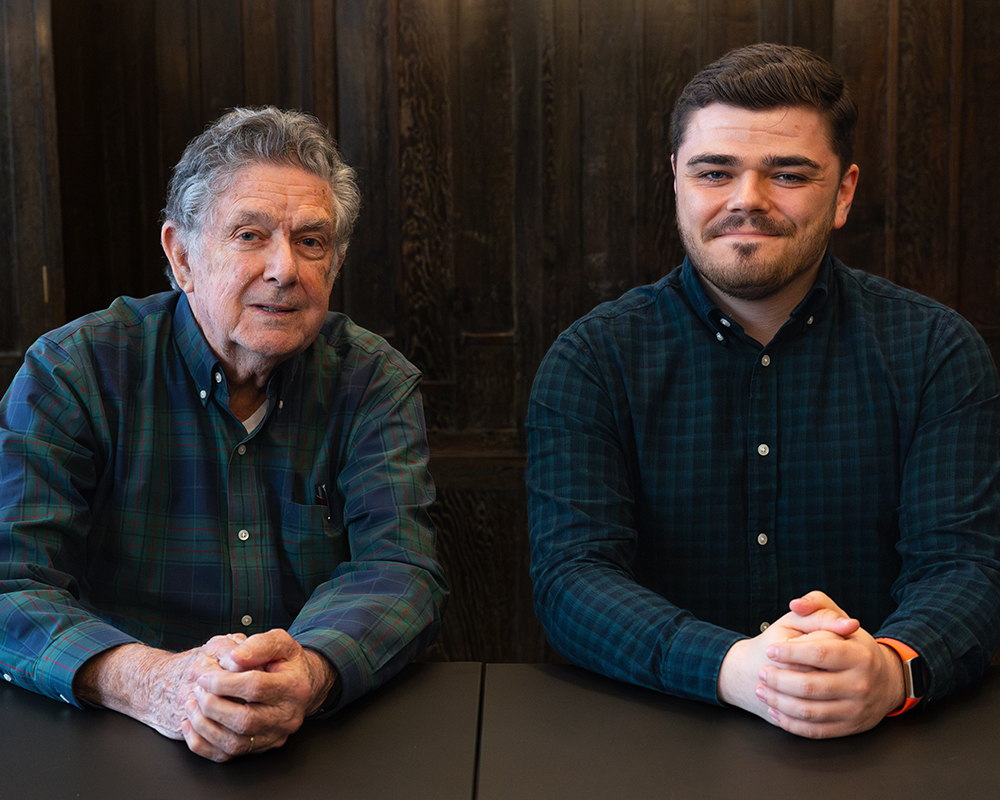
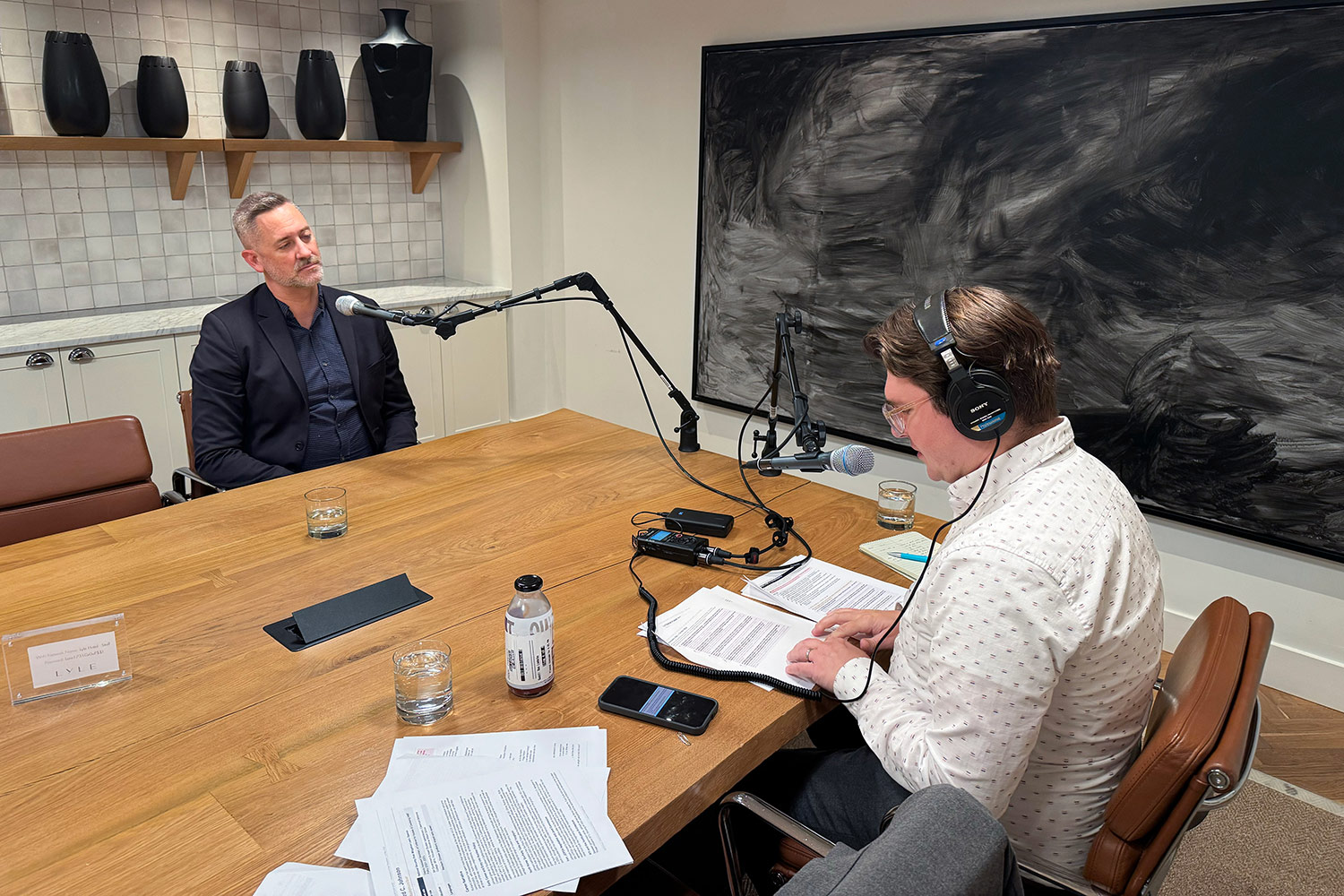
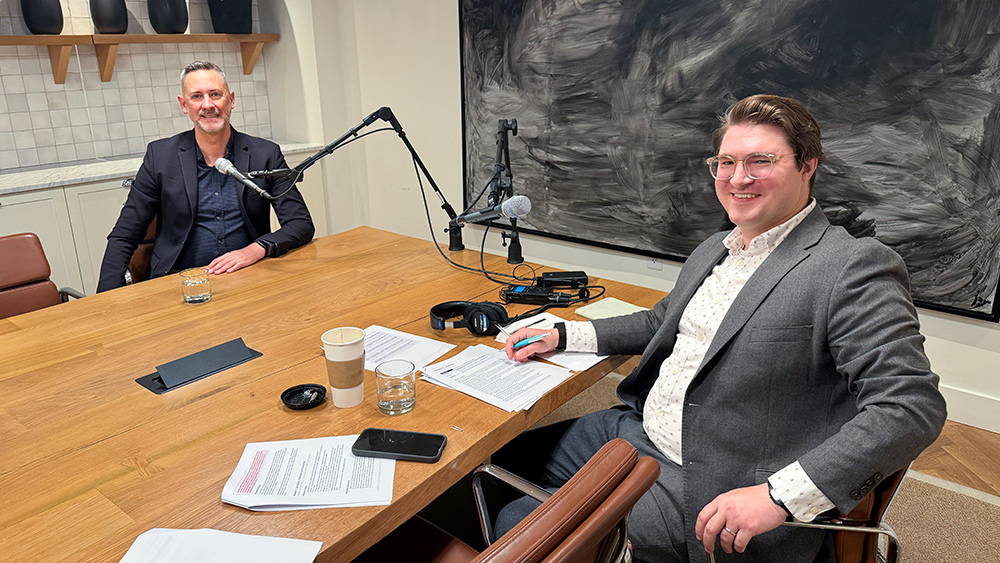
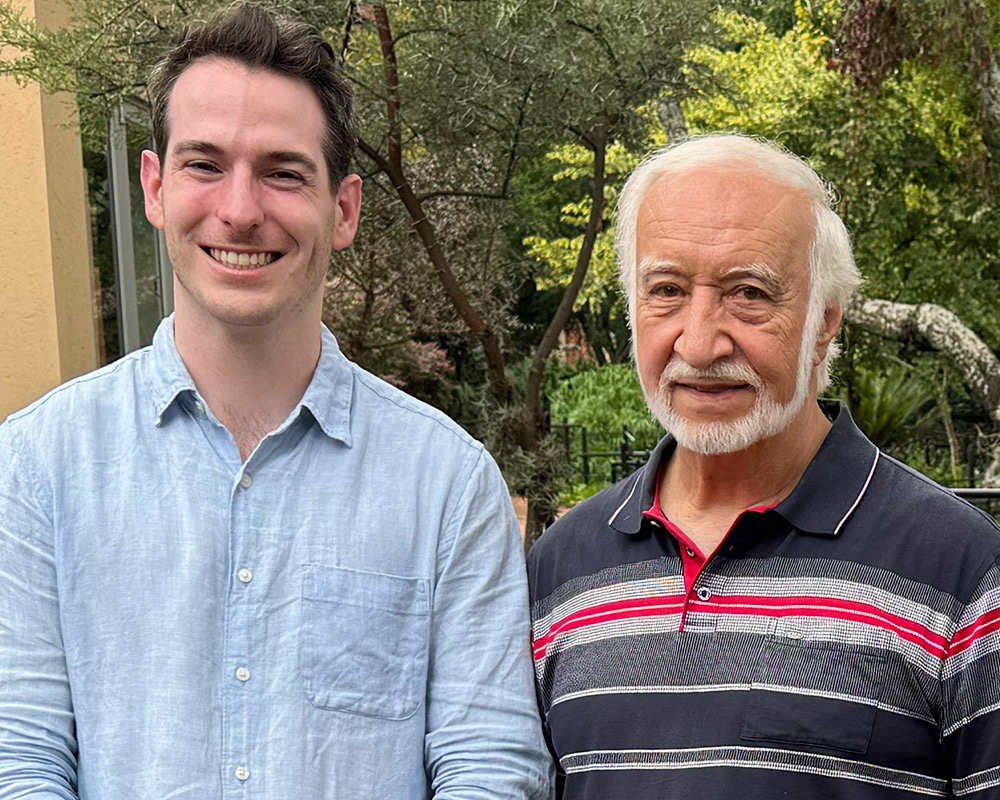
array(1) {
[0]=>
array(295) {
[0]=>
array(4) {
["speaker"]=>
string(9) "Max Hoell"
["timestamp"]=>
string(8) "00:00:00"
["seconds"]=>
int(0)
["text"]=>
string(300) "Record. I think this is recording. So this is an interview with Richard Johnson conducted by Max Hoell for the Oral History Project, a project of the Stanley Center for Peace and Security and BASIC. The interview is taking place on Friday, May 8th, 2026 in Washington, DC. This is session one of two."
}
[1]=>
array(4) {
["speaker"]=>
string(9) "Max Hoell"
["timestamp"]=>
string(8) "00:00:24"
["seconds"]=>
int(24)
["text"]=>
string(480) "So I'm here with Richard Johnson. Richard has had a really long and fruitful and rich career at the center of US nuclear policy and arms control policy with lots of direct experience on some of the most consequential proliferation cases of the post-Cold War era, North Korea and Iran. I think Richard is one of a very small number of practitioners who have worked on all three of the key nodes: negotiations, on the ground verification, and policy architectures across both files."
}
[2]=>
array(4) {
["speaker"]=>
string(9) "Max Hoell"
["timestamp"]=>
string(8) "00:00:57"
["seconds"]=>
int(57)
["text"]=>
string(307) "Richard, thank you so much for your time and for doing this. I wanted to ask you to kick us off by saying a few words about the young Richard Johnson. How did you first get interested in international affairs? What was your journey like from high school through university, through your first job in policy?"
}
[3]=>
array(4) {
["speaker"]=>
string(15) "Richard Johnson"
["timestamp"]=>
string(8) "00:01:16"
["seconds"]=>
int(76)
["text"]=>
string(1069) "Yeah, no. Well, first of all, Max, thanks so much for having me. This is a really important project that you're doing and it's really an honor to be asked to be part of it and thanks to the Stanley Center and BASIC for helping to support it. Young Richard Johnson. Boy, that's a story. Well, it's interesting. I grew up in a very sort of typical suburban Southern California childhood, kind of your cookie cutter houses, nice good school systems. The big thing to do on the weekends was go to the mall or Little League or whatever. So not somebody who was living around the world or super exposed in that sense, but I had two parents who were educators in different forms and were very interested in teaching me things about the world and grandparents as well who found that important. And of course, grandparents in particular who were of the World War II generation, both of my grandparents served in various ways during World War II and saw what happened when things in the international space didn't go so well. And so I do think that was a bit of a driver as well."
}
[4]=>
array(4) {
["speaker"]=>
string(15) "Richard Johnson"
["timestamp"]=>
string(8) "00:02:34"
["seconds"]=>
int(154)
["text"]=>
string(796) "A few things I think that really drove me into this space. One is, and I'll start with the nerdiest of them all, which is my father worked in the radio and television industry for many years, not an unsurprising career for somebody who lives just east of Los Angeles. And he was very into particularly the technical side and he was an amateur radio operator. I should say he still is an amateur radio operator, or Ham radio operator colloquially speaking, and he's very active in that space. And he got me into this as a child really as age 10, 11, 12. And the interesting thing about that is the particular license that I got to operate amateur radio was in a part of the radio frequencies that, especially at that time were a great opportunity to speak to people on the other side of the world."
}
[5]=>
array(4) {
["speaker"]=>
string(15) "Richard Johnson"
["timestamp"]=>
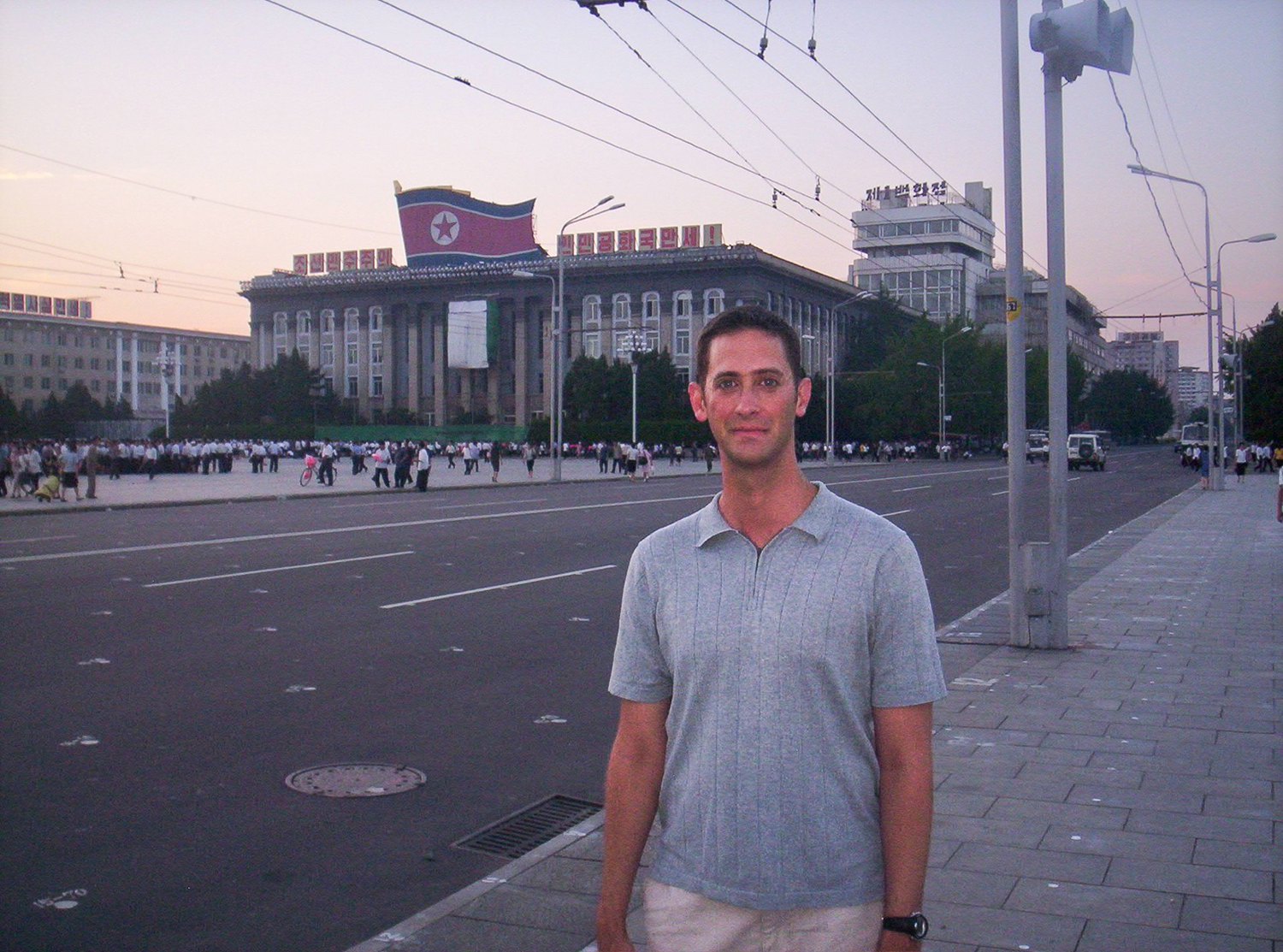
string(8) "00:03:36"
["seconds"]=>
int(216)
["text"]=>
string(963) "I didn't, I think, even realize that at first, I think I was more interested in pushing the buttons and playing with the Morse Code and learning about that. But very soon I realized I was now talking to people in Russia, in Japan, in Australia, and Europe and hearing different accents and learning about them. And again, this was in the early to mid '90s where you didn't have really the internet, you didn't have email and you didn't have that sort of interconnectivity that we have now. And so it was exciting to learn. I'd go to the map and say, "Where is Sakhalin Island?" Because I was talking to people on Sakhalin. And then in the tradition of amateur radio, you send each other, as an acknowledgement and kind of as a hobby, a card in the mail, like a postcard that says, "I spoke to you." And it says who you are and your call sign. So I was getting mail from Russia and Australia and Europe and for like an 11, 12 year old kid, that's kind of exciting."
}
[6]=>
array(4) {
["speaker"]=>
string(15) "Richard Johnson"
["timestamp"]=>
string(8) "00:04:40"
["seconds"]=>
int(280)
["text"]=>
string(617) "So that was, I think really one of the first things that sort of opened me up to there's a whole world out there, different possibilities. And then the other thing I would say is my grandfather got me a subscription to National Geographic and I was already really into maps and things like that and I think that really opened me up. And there was a particular issue about China that was very intriguing to me and you put all these things together plus some really wonderful teachers in high school. This was in the era of Bill Clinton and NAFTA and learning about globalization and I just kind of sparked an interest."
}
[7]=>
array(4) {
["speaker"]=>
string(15) "Richard Johnson"
["timestamp"]=>
string(8) "00:05:21"
["seconds"]=>
int(321)
["text"]=>
string(698) "And so when I decided what I was going to do in college and university, I decided I really wanted to do something in the international space. And so I applied only to schools that really were focused in that world and I got accepted to Claremont McKenna College in Southern California, a liberal arts college where I now actually teach a class and serve on a board there and ended up studying basically international policy and in particular right around the time that I was graduating from high school was the time that Hong Kong was reverting to China. And I remember watching that on television thinking, "Wow, this is a big deal. This is historic." And watching flags change and anthems change."
}
[8]=>
array(4) {
["speaker"]=>
string(15) "Richard Johnson"
["timestamp"]=>
string(8) "00:06:12"
["seconds"]=>
int(372)
["text"]=>
string(419) "And again, growing up in Southern California, had a lot of friends of mine who were from all around the world, particularly Asia. So I decided, even though I had taken Latin in high school, because that's a very helpful language in this modern day and age, I decided I wanted to take Chinese in college and maybe do something related to China, even though I had never been to Asia, I'd basically never left the country."
}
[9]=>
array(4) {
["speaker"]=>
string(15) "Richard Johnson"
["timestamp"]=>
string(8) "00:06:36"
["seconds"]=>
int(396)
["text"]=>
string(974) "And so that's what I did. I studied that. I ended up studying in Beijing for a semester. I ended up studying here in Washington DC on our Washington program and working for the Senate Foreign Relations Committee as an intern. And I did not realize at the time because I just wasn't as familiar with Senate process that when you work for a committee in the US Senate or the House, you were really working for either the chair or the ranking member of that committee. And at the time the Democrats were in the minority and I was a Democrat, am a Democrat, and wanted to work for the Democratic staff. And so I applied and after getting accepted, I found out that I was really technically working for this ranking member who was a senator who I'd never heard of before from a small state and his name was Joe Biden. And so that was my first introduction to the world in which Washington is a small place and you never know where people you work with or for are going to end up."
}
[10]=>
array(4) {
["speaker"]=>
string(15) "Richard Johnson"
["timestamp"]=>
string(8) "00:07:41"
["seconds"]=>
int(461)
["text"]=>
string(1022) "So in college, I really got an experience of working here in Washington living abroad in a place that was very different from where I grew up and ultimately graduated with a degree in government and Asian studies and hoped to at some point, I didn't immediately move into this space, but hoped to at some point move into kind of the diplomatic space. I'll tell one last story before I pause, which is that I mentioned that both of my parents were educators. My father was, amongst many things he did, a community college professor and both of my parents went to community college before going to four year institutions in California. And when I was applying to very pricey elite liberal arts colleges around the country, I kind of got this question of like, "Why do you have to spend this amount of money and time for a degree that isn't maybe as practical as one that ... This is not welding or something." And so my father asked me, he said, "I need you to sort of prove to me that you could get a job with this degree.""
}
[11]=>
array(4) {
["speaker"]=>
string(15) "Richard Johnson"
["timestamp"]=>
string(8) "00:08:54"
["seconds"]=>
int(534)
["text"]=>
string(813) "And so I went on to a very early version of the State Department's website. This was probably just a few years into the worldwide web really being a thing and they had a description of what a foreign service officer does and the career path there. And I printed it out and I handed it to him and I said, "This is what I could do. I'd like to do something like this." And he looked at it and he read it and he talked to me and he said, "Okay, you've convinced me." And while I didn't become a foreign service officer in the Diplomatic Corps, the work that I did at the State Department as a civil servant was very similar. So I always joke, I’m one of the few people that went to school and actually did the thing that I thought I was going to do. So yeah, that's a little bit of kind of how I got to this point."
}
[12]=>
array(4) {
["speaker"]=>
string(9) "Max Hoell"
["timestamp"]=>
string(8) "00:09:41"
["seconds"]=>
int(581)
["text"]=>
string(318) "Fantastic. Thank you so much for sharing that. That is such an inspiring story. At what point would you say you got interested in nuclear policy per se? Was there a particular class, for instance, in college or university that inspired you to go down that path or what did the trick for you? How did you get into this?"
}
[13]=>
array(4) {
["speaker"]=>
string(15) "Richard Johnson"
["timestamp"]=>
string(8) "00:10:00"
["seconds"]=>
int(600)
["text"]=>
string(933) "Yeah. As I mentioned, my initial interest was really more on the regional side, particularly China and East Asia. And obviously when you're talking about those countries and those places, there's a nuclear dimension and I got very lucky to take a couple of courses. One of the courses I took at Claremont McKenna was co-taught by a professor named Chae-Jin Lee, who's still emeritus there and another gentleman who unfortunately passed away a few years ago named Ji Chaozhu. Ji Chaozhu ultimately was the undersecretary of the United Nations at one point, but he's probably most well known for being the interpreter for Mao Zedong and Deng Xiaoping and he taught this class. I mean, literally we would see his picture in the history book sitting behind Nixon and Mao and he's in front of the class teaching us. So that was inspiring and obviously that involved again, some element of sort of great power, competition and interaction."
}
[14]=>
array(4) {
["speaker"]=>
string(15) "Richard Johnson"
["timestamp"]=>
string(8) "00:11:03"
["seconds"]=>
int(663)
["text"]=>
string(996) "But I'll be honest that the nuclear things really only came about actually a few years later. After I graduated, I worked for a few years actually in state politics in California, which I loved. And then I decided to go back to graduate school and I attended the School of Public and International Affairs at Princeton University. And as part of the international affairs program there, actually as part of all the degree programs there for the master's, you have to do something called the policy workshop. And the policy workshop is sort of a small consulting project. You work with a professor or a practitioner or both, come up with a topic that's relevant to the current day policy space and then go and essentially get a client. And in this case, it's usually a government agency or multilateral institution or an NGO. And I knew at that point I'd been a year and a half in and I really wanted to do something on national security and kind of more traditional kind of defense and diplomacy."
}
[15]=>
array(4) {
["speaker"]=>
string(15) "Richard Johnson"
["timestamp"]=>
string(8) "00:12:13"
["seconds"]=>
int(733)
["text"]=>
string(822) "And to be honest, the only offering that semester was a workshop entitled Stemming the Spread of Enrichment Plants taught by Frank von Hippel, who of course is a legend in this field, professor of physics and public policy at Princeton, now emeritus, and also formerly worked at the Office of Science and Technology Policy in the Clinton administration and co-taught by another legend in this field, a guy named Robert Einhorn. Bob Einhorn, who is a fellow graduate of that program at Princeton. And I didn't frankly know who either of those people were at the time or much about enrichment plants, but I knew it had something to do with nuclear and I knew for me as somebody who cared a lot about East Asia, I knew that there had connectivity here to things like North Korea and that was an area that I was interested in."
}
[16]=>
array(4) {
["speaker"]=>
string(15) "Richard Johnson"
["timestamp"]=>
string(8) "00:13:07"
["seconds"]=>
int(787)
["text"]=>
string(907) "So I said, "Well, this isn't maybe exactly what I thought I was going to do." Maybe I thought I was going to do cross-strait relations with Taiwan or something, but I thought, "Cool, this sounds fun." And that really was the thing that opened me up to this course. Both of those gentlemen are incredibly kind with their time and great mentors. I consider them both still to be mentors. I think every job that I've ever applied for, I've called Bob Einhorn and said, "Help me, tell me if I should do this or not." Including my current position. And what was remarkable about that is, as I like to joke, Princeton has more money than God. In our fall break, the Princeton program would pay for us to do field research. And so obviously the subject matter there was very focused particularly on things like the Iran situation. This was in 2005, I should say, 2005. So pre-JCPOA, during the Bush administration."
}
[17]=>
array(4) {
["speaker"]=>
string(15) "Richard Johnson"
["timestamp"]=>
string(8) "00:14:07"
["seconds"]=>
int(847)
["text"]=>
string(1012) "And so we spent a lot of time thinking about what actually makes sense for ... When is it actually justified for countries to have uranium enrichment? That was a big question at the time, still is. And that was the point of our research. And so to tell you how much things have changed, the original intent was for a small group of us to go to Tehran for research. And Bob Einhorn had a relationship with the then Iranian ambassador to the United Nations, a gentleman named Javad Zarif, who of course famously later became Iran's foreign minister. And we got permission from the State Department to allow Ambassador Zarif and his wife to come to Princeton, which is outside of the radius that they can normally be in, in New York for a few talks and a dinner. I think his wife maybe got a tour of the Persian collection at the Princeton University Library and really all of this was to both, not only to help with our project, but really to help encourage possibly granting us a visa so that we could visit Iran."
}
[18]=>
array(4) {
["speaker"]=>
string(15) "Richard Johnson"
["timestamp"]=>
string(8) "00:15:21"
["seconds"]=>
int(921)
["text"]=>
string(963) "Spoiler alert, we did not get this visa. I think I have a visa application probably still sitting in the archives of the Supreme National Security Council that probably says denied. And again, to tell you a little bit about how times have changed, our backup option, the safe option, if you will, was Moscow. And so that was my first time going to Moscow and thanks to Bob Einhorn, we got really great meetings with senior Russian nuclear officials and others in Russia. So anyway, that was kind of the first thing that really brought me into this space. I ended up taking a second, actually I think two additional courses the following semester that had relevance to the nuclear issues, one taught by Frank von Hippel. And then when I started applying for roles in the government, I felt much more confident that I could work in that space and possibly would like to work in that space. So maybe I'll stop there, but that was kind of the opening gambit, I guess."
}
[19]=>
array(4) {
["speaker"]=>
string(9) "Max Hoell"
["timestamp"]=>
string(8) "00:16:29"
["seconds"]=>
int(989)
["text"]=>
string(677) "Yeah. Fantastic. Thank you so much for sharing that. It sounds like having access to these subject matter experts in the field very early on in your education helped you with your career and your interest going forward. And I think that is such an important point because when you look at the debate in the space today, a lot of this is about how do you get young people interested in that and then you look at the broader picture that there may not be that many colleges and universities out there that actually offer courses on this specific subject. So it's really good to hear that here's an example of somebody who did have that access and who got into the space this way."
}
[20]=>
array(4) {
["speaker"]=>
string(9) "Max Hoell"
["timestamp"]=>
string(8) "00:17:13"
["seconds"]=>
int(1033)
["text"]=>
string(393) "I wanted to ask you before we move on to talk about your career on the nuclear front, I wanted to ask you about your experience working in California a little bit. And I think later on you also spent some time in the US embassy in China, that is right? So if you could just talk a little bit about that, what perhaps you took away from those episodes and what those taught you for your career."
}
[21]=>
array(4) {
["speaker"]=>
string(15) "Richard Johnson"
["timestamp"]=>
string(8) "00:17:38"
["seconds"]=>
int(1058)
["text"]=>
string(723) "Yeah, no absolutely. So being somebody who has broad interest in many things, one of my challenges as a younger person and probably still today is figuring out what I really want to focus on. And as much as I loved the international piece and ultimately made that the bulk of my career, I also really loved US and state domestic politics, was very involved. I was the president of our college Democrats organization, worked on campaigns and volunteered on campaigns. And one of my very good friends who to this day is still a very close friend who went to our sister college, Scripps College, which is a women's college in Claremont, California, had graduated a year or two before me and had been working in state politics."
}
[22]=>
array(4) {
["speaker"]=>
string(15) "Richard Johnson"
["timestamp"]=>
string(8) "00:18:34"
["seconds"]=>
int(1114)
["text"]=>
string(938) "And when I was on the verge of graduating from Claremont McKenna, I was looking for a job and honestly was thinking I would probably move to Washington. That's what I had done in my internship. That seemed like the kind of place to go. And I had also worked on a campaign for now United States Senator Adam Schiff, who at the time was a state senator in California and he was running for Congress in a very contested district and I had known that it was going to be an important race and I had kind of basically convinced the campaign staff to let me be a voluntary staff member on the campaign working on youth outreach issues. And in fact, the night that Adam Schiff was elected to Congress, I was there and there's a picture of me standing right behind him. I don't think that Senator Schiff remembers me to be absolutely clear, although I have occasionally run into him at events and showed him the picture and he just kind of laughs."
}
[23]=>
array(4) {
["speaker"]=>
string(15) "Richard Johnson"
["timestamp"]=>
string(8) "00:19:26"
["seconds"]=>
int(1166)
["text"]=>
string(1032) "So I thought I might go maybe work for him. And in fact, he did at one point reach out to me for a position, but by that point I'd already found a job and it was to work for a state legislator and my friend who I had gone to Scripps with had been working for this woman and the woman, her name is Carol Liu, L-I-U, and she was one of the first Chinese American women elected to the California state legislature and a former teacher herself. And there was a lot that really appealed to me in terms of her background and her sort of experience and style. And to be frank, it was also an opportunity for me to use my somewhat rusty but still workable Mandarin that I had studied in school because her district represented about ... I think about 20% of her district was Asian American Pacific Islander. And to be honest, she was also just a well-known figure in the community and many other parts of that community, even outside of her district, were often coming to her for help, questions on policy, questions on services, et cetera."
}
[24]=>
array(4) {
["speaker"]=>
string(15) "Richard Johnson"
["timestamp"]=>
string(8) "00:20:35"
["seconds"]=>
int(1235)
["text"]=>
string(979) "And so in an outcome that probably would not happen today, I ended up doing a lot of outreach to the Asian American community, even though I am very much not Asian American or Pacific Islander, but had a wonderful time working in that space and worked. And that was not my only job. I worked a lot across a bunch of other communities in her district and then I moved to Sacramento, the California capital to work there more on the policy side and ultimately became her senior legislative aide before I moved on to grad school. And what was really exciting about that is ... Well, first of all, California is, as we all know, if it was its own economy, its own country, it's like the fifth-largest economy in the world. It has a full-time legislature, extremely big executive branch and so it was sort of a microcosm of working in a national government and obviously California is very often on the cutting edge of policies that become adopted nationally and even internationally."
}
[25]=>
array(4) {
["speaker"]=>
string(15) "Richard Johnson"
["timestamp"]=>
string(8) "00:21:39"
["seconds"]=>
int(1299)
["text"]=>
string(588) "And so it was exciting to be there at that time. I was actually in Sacramento for 9/11 when that happened and that was a very poignant moment and I also was in California in the legislature as a staff member when the infamous recall occurred and we ended up with Arnold Schwarzenegger as our governor. I got to see him in the building, which at the time seemed absolutely insane that this was happening. In retrospect, I think Arnold Schwarzenegger was actually a pretty good governor of California and in some ways somewhat progressive on things like climate change and political reform."
}
[26]=>
array(4) {
["speaker"]=>
string(15) "Richard Johnson"
["timestamp"]=>
string(8) "00:22:19"
["seconds"]=>
int(1339)
["text"]=>
string(1520) "But all this to say sort of to me, the relevance I got there was working in a setting that was a legislative setting, a partisan setting, learning how to work across the aisle with other members. I actually really learned, and I'd learned this a bit in my US Senate internship too, about how important it is to work with people who you don't always agree with to find those partners, to build those relationships. I really got to enjoy working with some of the Republican staffs and colleagues, sometimes even more so than some of my Democratic colleagues. And I think that was relevant for how to operate in Washington. And I think the other really interesting thing that I learned a lot about working in California politics and California's legislature in particular is thinking about things like budgets. And it's a cliche to say, but a budget is a version of a prioritization list. And I worked in the California legislature during a time of budget crunches and budget cuts and figuring out how to manage those things in a way that didn't have devastating effects for people and for systems was a very eye-opening experience for somebody in their early 20s. And I think that's the other thing that's worth maybe saying for the record, I guess, is it's a reminder to people a lot of government and particularly in legislative settings, both in the Congress here in the US, in states or across the United States, I suspect this is true across many other democracies, a lot of these places are run by very young people."
}
[27]=>
array(4) {
["speaker"]=>
string(15) "Richard Johnson"
["timestamp"]=>
string(8) "00:24:12"
["seconds"]=>
int(1452)
["text"]=>
string(738) "When I left the state legislature as a staff member, I was maybe 25 and I was the senior legislative aide for a member of the state legislature who was a chair of a committee and was making policy advice and I was certainly not the only one. That was actually quite standard, which is both very exciting for young people, but also a recollection that there's only a certain concentration of people that have decades of experience and many of us ... And I know I was at the time relying on the people who had that experience and could be that advice because what did I know about transportation policy? I loved transportation policy. I nerd out on that stuff, but I didn't work for the California Department of Transportation for 30 years."
}
[28]=>
array(4) {
["speaker"]=>
string(15) "Richard Johnson"
["timestamp"]=>
string(8) "00:25:08"
["seconds"]=>
int(1508)
["text"]=>
string(631) "And I think that's true in Washington too, is you have a lot of people, especially on the Hill, who are trying to advise members to do the right thing, but they're young people. And so just not to be too meta here, but I think the collection of stories like this is actually really useful because the reality is a lot of the things that we're facing today, whether it's in nuclear security or pick another topic, have parallels to things that we've done before and it's always useful to go back and see what did we do? How did we do it? Did we do it well? If not, let's not do that again. If we did, let's try to build off of that."
}
[29]=>
array(4) {
["speaker"]=>
string(9) "Max Hoell"
["timestamp"]=>
string(8) "00:25:49"
["seconds"]=>
int(1549)
["text"]=>
string(152) "Right. Yeah. I wanted to ask you about, so you said you worked in California, from there you went to grad school, from there, I think you went to State."
}
[30]=>
array(4) {
["speaker"]=>
string(15) "Richard Johnson"
["timestamp"]=>
string(8) "00:26:00"
["seconds"]=>
int(1560)
["text"]=>
string(8) "Correct."
}
[31]=>
array(4) {
["speaker"]=>
string(9) "Max Hoell"
["timestamp"]=>
string(8) "00:26:01"
["seconds"]=>
int(1561)
["text"]=>
string(276) "Can you talk a little bit about your motivations for moving on to grad school? And then when you did join State out of grad school, I believe your first posting was in the US embassy in Beijing. How did you end up there? Could you choose Beijing or were you randomly assigned?"
}
[32]=>
array(4) {
["speaker"]=>
string(15) "Richard Johnson"
["timestamp"]=>
string(8) "00:26:22"
["seconds"]=>
int(1582)
["text"]=>
string(776) "Yeah. So yeah, I'll try to explain because my path is a little bit different than I think most kind of typical diplomats. So the decision to go back to graduate school was one, sort of a little bit just kind of a feeling that it was the next proper step in my life. Again, my very good friend who I had gone to college with who had helped me to get the job in the legislature, she went to grad school like the year before and I was kind of mirroring her in some ways like, "Oh, okay, this seems like the next right thing to do." And the other reason, going back to the earlier discussion, is I kind of realized I was about three or so years into working in the State of California and I wasn't really doing anything with all of this international work and study that I'd done."
}
[33]=>
array(4) {
["speaker"]=>
string(15) "Richard Johnson"
["timestamp"]=>
string(8) "00:27:15"
["seconds"]=>
int(1635)
["text"]=>
string(963) "And I kind of had this moment in my mid-twenties of, am I going to do something with this or have I kind of committed to being a state person? And there's again, absolutely nothing wrong with that. I love that and I still have moments where I go back and get really into those nuances. But I had a decision that I was like, "I really want to try to get - at least try that international career. And if it doesn't work, I could always come back to California or do something else." So it seemed like it was a reset to go to graduate school and there's of course so many excellent graduate programs that look at international policy and public policy. And so that's why I decided to go and ultimately was very privileged to be able to attend Princeton, particularly because, thanks to the generosity of the Robertson Foundation and others, almost every student that attends Princeton's public policy program in the master's program is basically covered for tuition."
}
[34]=>
array(4) {
["speaker"]=>
string(15) "Richard Johnson"
["timestamp"]=>
string(8) "00:28:20"
["seconds"]=>
int(1700)
["text"]=>
string(939) "So I was able to leave graduate school without any real severe student debt, which is an intentional thing that Princeton and the foundation does because they want people to go work in the public sector, to go work at the State Department. And actually at the time, side story, at the time the original foundation that had given those funds to Princeton was suing Princeton because they wanted to get the money back to spend it on other things and their contention was that not enough students from the program were going into public service. We had lots of data to show that that was not true. In fact, I think we were still amongst our peers, the highest number of graduates going into public service, but it was sort of a definition of what is public service? Some people were very narrow that it meant everybody should go work at the State Department and be a diplomat versus going to run an NGO or going to work at the UN or whatever."
}
[35]=>
array(4) {
["speaker"]=>
string(15) "Richard Johnson"
["timestamp"]=>
string(8) "00:29:19"
["seconds"]=>
int(1759)
["text"]=>
string(943) "So we were actually under a lot of pressure, to be honest, during that time because of the lawsuit to really go and work in the public sector. That was what I really wanted to do anyway, so I was already a model student in that regard and I was introduced to something called the Presidential Management Fellowship, the PMF, which is a program that had been in place for several decades. Unfortunately at the time of recording, that program is being phased out by the current administration. There are some people who are seeking to reinstate it and I hope that they're successful because it is a really fantastic program that brings recent graduates of graduate programs into the federal government with the idea that they are going to become the future managers and leaders in the public policy space in the US government and not just in the international space. I mean, there are PMFs at the IRS or the Health and Human Services Department."
}
[36]=>
array(4) {
["speaker"]=>
string(15) "Richard Johnson"
["timestamp"]=>
string(8) "00:30:23"
["seconds"]=>
int(1823)
["text"]=>
string(1727) "But it was also a really good entry path into the State Department and as is probably true in most other places, most jobs at the State Department or in a diplomatic agency are ones that are part of the diplomatic service. So you would take the foreign service exam and go through lots and lots of vetting and then get assigned to a first posting and be off and running. And then you're kind of in the system and also expecting to be moved all around the world every three to five years. To be perfectly frank, I wasn't sure that I really wanted to do that with my life and in the interest of sharing about myself and personally, I had fairly recently come out as gay and recognized that that was who I was and in my 20 something mind, wasn't sure that getting posted to some country on the other side of the planet that maybe wasn't so gay friendly was a really good idea for me, both from a safety perspective and also from a personal life perspective. By the way, I will say I have a lot of gay diplomatic friends who later met their partners on overseas postings and so maybe I made a mistake. That might've actually been a great idea for me, but I also kind of just knew I wanted to live and work in Washington and one of my internships, a previous time that I'd lived in Beijing as an intern, was working for the Commerce Department and I was very excited about that, which is obviously the commercial section is part of the broader US embassy. And we had a moment, this was during the Bush administration when the Commerce Secretary was visiting and I thought this was going to be amazing, right? "Okay, we're the Commerce Department in Beijing and he's coming to China. We're going to be deeply involved in this visit.""
}
[37]=>
array(4) {
["speaker"]=>
string(15) "Richard Johnson"
["timestamp"]=>
string(8) "00:32:19"
["seconds"]=>
int(1939)
["text"]=>
string(991) "And that's when I learned that yes, we were deeply involved, but not in the way that I wanted to be. We were not helping to write his speech or make his policy decision on what our trade policy should be with the PRC. We were helping to make sure that the food coming out the back of the cafeteria or the hotel ballroom was to his liking. And that's when I learned that policy is done in Washington generally or with people who come from Washington. And so with a ton of respect to our diplomatic corps, and of course our embassies do policy in their own ways, I just had this sense that where I wanted to be was Washington and not out in an embassy. So doing the PMF program was a way to get in that system without becoming a traditional diplomat. And so I was very lucky to have gotten the fellowship and ended up applying for a role at the State Department. One of the unique pieces of the PMF program is you can be named a PMF, get the fellowship, but there's no guarantee you get a job."
}
[38]=>
array(4) {
["speaker"]=>
string(15) "Richard Johnson"
["timestamp"]=>
string(8) "00:33:25"
["seconds"]=>
int(2005)
["text"]=>
string(556) "You still have to go find a job. And there was a lot of competition for a very small number of jobs at the State Department, but one of them that I noticed, was frankly the only one that I really wanted, was to work on the Korea Desk in the East Asia Bureau and it was specifically about North Korea and the nuclear program. And I kind of went, "I could do that." I now have a couple of years of experience living overseas in Asia. I have studied the language and I now have taken a grand total of two courses on nuclear issues and have a great connection-"
}
[39]=>
array(4) {
["speaker"]=>
string(15) "Richard Johnson"
["timestamp"]=>
string(8) "00:34:03"
["seconds"]=>
int(2043)
["text"]=>
string(866) "with some former senior State Department people, so let's just try. And thanks to a number of reasons, and I certainly am not egotistical enough to think it wasn't helpful that I knew people who worked on the desk who helped get my resume in place, I had people like Bob Einhorn vouching for me, but I did get the job. And so that was my first real job in the nuclear space, I was sort of named the nuclear expert, if you will, on the Korea Desk at the State Department in Washington. And to make things even more exciting, we were in the midst of negotiations with the North Koreans during the Six-Party Talks. And so I at that early stage had this sense that maybe I would get to either go to these negotiations or at least help to plan for them. And so that was how I got into the State Department. And I know we're going to talk more about North Korea in a bit."
}
[40]=>
array(4) {
["speaker"]=>
string(15) "Richard Johnson"
["timestamp"]=>
string(8) "00:35:05"
["seconds"]=>
int(2105)
["text"]=>
string(1008) "Maybe just to quickly mention the how did you get to Embassy Beijing piece, and that was also because of the PMF. One of the really incredible things about the fellowship program is not only did it bring in people on a fast track for leadership, it encouraged and actually required rotational assignments amongst other departments, agencies, offices. And so I sort of designed my rotational assignments around the issues that I cared a lot about, so one of those was to go work in the embassy in Beijing for like five or six months, and worked in the political section there and worked with the Foreign Service officers who were primarily looking into nuclear issues, arms control issues, export control, sanctions in that area. And so that was a great experience because I got to sort of see the other side of how our policies are created in Washington and then delivered into the Chinese government and got to travel a bit around China and had some really incredible experiences as part of that assignment."
}
[41]=>
array(4) {
["speaker"]=>
string(15) "Richard Johnson"
["timestamp"]=>
string(8) "00:36:23"
["seconds"]=>
int(2183)
["text"]=>
string(527) "My other rotation, I should just add, was with the Department of Energy National Nuclear Security Administration, NNSA, and in the defense nuclear nonproliferation part of that agency working on nuclear safeguards, and particularly on North Korea. And so I was able to get three for one in that job. I got to work on the Korea Desk at State, I got to work at the US Embassy in Beijing, and I got to work at the Department of Energy on nuclear all in the span of about three years, which is, again, why that program was so cool."
}
[42]=>
array(4) {
["speaker"]=>
string(15) "Richard Johnson"
["timestamp"]=>
string(8) "00:37:05"
["seconds"]=>
int(2225)
["text"]=>
string(41) "But yeah, that's how I ended up in China."
}
[43]=>
array(4) {
["speaker"]=>
string(9) "Max Hoell"
["timestamp"]=>
string(8) "00:37:08"
["seconds"]=>
int(2228)
["text"]=>
string(70) "That is an amazing story. Thank you so much for sharing that, Richard."
}
[44]=>
array(4) {
["speaker"]=>
string(9) "Max Hoell"
["timestamp"]=>
string(8) "00:37:12"
["seconds"]=>
int(2232)
["text"]=>
string(278) "Before I go on and ask a little bit about the next steps in your career and before we talk about North Korea and Iran, I wanted to ask you about language proficiency. You said that you studied Mandarin at some point. Did I hear you say that you studied Korean at some point too?"
}
[45]=>
array(4) {
["speaker"]=>
string(15) "Richard Johnson"
["timestamp"]=>
string(8) "00:37:31"
["seconds"]=>
int(2251)
["text"]=>
string(189) "I have the smallest amount of Korean you could possibly have, but I can sort of sound out Hangul, which is, of course, the written alphabet. And so I did get a little bit of that also, yes."
}
[46]=>
array(4) {
["speaker"]=>
string(9) "Max Hoell"
["timestamp"]=>
string(8) "00:37:43"
["seconds"]=>
int(2263)
["text"]=>
string(189) "For any aspiring diplomats that might listen to this, how important would you say your knowledge of languages was throughout your career? Did it help at all or was that just a nice to have?"
}
[47]=>
array(4) {
["speaker"]=>
string(15) "Richard Johnson"
["timestamp"]=>
string(8) "00:37:55"
["seconds"]=>
int(2275)
["text"]=>
string(671) "I think it helped a lot, and even though I will not allow you to give me any sort of exam right now on my Mandarin skills, because they're very rusty. At one point, I was okay. I was pretty good and would never have conducted negotiations in Mandarin, but it was enough that during the Iran nuclear implementation, I actually became sort of infamous. There was a joke that my colleagues started to give me a bad time about that I was maybe bragging a little bit too much about the fact that I had taken Chinese, because obviously China was part of the P5+1 process and an important part of certain elements of the implementation of the Joint Comprehensive Plan of Action."
}
[48]=>
array(4) {
["speaker"]=>
string(15) "Richard Johnson"
["timestamp"]=>
string(8) "00:38:46"
["seconds"]=>
int(2326)
["text"]=>
string(738) "And we had a moment, we were actually all in New York and on the margins of the UN General Assembly and we were having, I believe it was a Joint Commission meeting of the JCPOA. And one of the issues that the Chinese were the lead on, or the co-lead with the US, was on the redesign of the Arak plutonium reactor, heavy water reactor in Iran. And we were preparing, I think, to each make some sort of statement at the Joint Commission meeting on the current progress of that working group. I honestly can't even remember what the issue was, but I remember I had previously said to the Chinese, "It would be good if you would mention this one thing because we're going to mention it and I think it would be good for you to say it as well.""
}
[49]=>
array(4) {
["speaker"]=>
string(15) "Richard Johnson"
["timestamp"]=>
string(8) "00:39:40"
["seconds"]=>
int(2380)
["text"]=>
string(691) "And so I ran into my colleague, excellent Chinese diplomat, on the margins and I said, "Oh, are you guys going to say this?" And he started to sort of summarize it for me and I could see he's holding the intervention in his hand, and he started reading and translate it and I said, "Can I just read it?" And he looked at me and went, "Oh yeah, I forgot you sort of speak Chinese." And I said, "Can I just read it?" And again, my Chinese is not perfect. I would not say that I understood every single character on that page in this context, but I was able to read it enough to know that this one important point was not in there. And I said, "It's not there. Can you all try to include this?""
}
[50]=>
array(4) {
["speaker"]=>
string(15) "Richard Johnson"
["timestamp"]=>
string(8) "00:40:22"
["seconds"]=>
int(2422)
["text"]=>
string(318) "And so then I went back with lots of boasting and pride to my fellow US delegation and said, "Well, I just read their statement. Again, I can read Chinese, so I just read it." And that became this ongoing joke of, "You know Richard speaks Chinese, right?" It was just sort of to rib me, but it did help in that regard."
}
[51]=>
array(4) {
["speaker"]=>
string(15) "Richard Johnson"
["timestamp"]=>
string(8) "00:40:40"
["seconds"]=>
int(2440)
["text"]=>
string(552) "And there were other times when I could hear in a meeting that if it was a consecutive interpretation that something was being said and it didn't get picked up in the translation, and I would go, "You missed that." Or I could turn to my colleague and say, "They said that in a little bit stronger way in Chinese than they said it in English." And I actually had one of my other wonderful professional Chinese diplomatic counterparts come up to me and half jokingly and half seriously say, "We've decided we can't speak Chinese in front of you anymore.""
}
[52]=>
array(4) {
["speaker"]=>
string(15) "Richard Johnson"
["timestamp"]=>
string(8) "00:41:20"
["seconds"]=>
int(2480)
["text"]=>
string(450) "So I think it helps from a purely from the most obvious reasons of avoiding miscommunication and understanding where people come from. I also think it helps, to me, I learned so much about China, Chinese history, Chinese culture, and sort of even the mindset of how China might, and I don't want to stereotype an entire country or culture, but how folks from China might approach a certain issue. And I think learning about languages tells you a lot."
}
[53]=>
array(4) {
["speaker"]=>
string(15) "Richard Johnson"
["timestamp"]=>
string(8) "00:41:55"
["seconds"]=>
int(2515)
["text"]=>
string(578) "I always note that when you send a letter in China, when you address an envelope, it is the opposite as to the way that we address it in most Western cultures. You start with the largest entity, which is the country you're sending it to or the city or the province or something, and the last thing that you put on there is the name, the individual name. And so that sort of, to me, is like one of those small reminders of the differences between a more individualistic society, a more collectivist society, even those little things you learn a lot about from learning languages."
}
[54]=>
array(4) {
["speaker"]=>
string(15) "Richard Johnson"
["timestamp"]=>
string(8) "00:42:33"
["seconds"]=>
int(2553)
["text"]=>
string(355) "So to be honest, I used my Chinese most in that job I worked in the State of California, working with local Chinese-speaking constituents who were trying to get access to medical care or other services. That was also very rewarding, but it certainly came in handy as a diplomat and I would encourage folks that want to work in this space to understand it."
}
[55]=>
array(4) {
["speaker"]=>
string(15) "Richard Johnson"
["timestamp"]=>
string(8) "00:43:03"
["seconds"]=>
int(2583)
["text"]=>
string(530) "We were very lucky that our Iranian colleagues were willing to do most of our negotiations in English because that saved us a lot of time, but it was also, frankly, a privilege for us to be able to do that. And that was not the case for North Korea and that's not necessarily the case in other settings. And so you're not always going to get that lucky if you're an English speaker, and frankly, it shouldn't be that way. You should understand the other languages or at least have somebody that does on your team that can do that."
}
[56]=>
array(4) {
["speaker"]=>
string(9) "Max Hoell"
["timestamp"]=>
string(8) "00:43:35"
["seconds"]=>
int(2615)
["text"]=>
string(49) "Fantastic. Thank you. Thank you so much for that."
}
[57]=>
array(4) {
["speaker"]=>
string(9) "Max Hoell"
["timestamp"]=>
string(8) "00:43:38"
["seconds"]=>
int(2618)
["text"]=>
string(459) "I would like to ask you about your trajectory in nuclear policy. You've served in a variety of roles. From that first job that you were talking about a minute ago in the State Department on nuclear policy issues, did you at that point have the impression that this is a topic I would love to work on for the remainder of my career? Or was this something like, let's sort of try this out, see how it goes, and then let's see what else the service has to offer?"
}
[58]=>
array(4) {
["speaker"]=>
string(15) "Richard Johnson"
["timestamp"]=>
string(8) "00:44:10"
["seconds"]=>
int(2650)
["text"]=>
string(780) "It's hard to think about what my mindset was at that time. I do recall having a supervisor at that time advising me on some sort of paperwork. I think maybe it was for a performance review or something. And she said something like, "Well, it's good for you to get to know this because you're going to do this throughout your entire career." And at that point, I was probably 28 or 29 years old thinking, my entire career? I'm not going to be one of these people that sit at the State Department for 30 years. Come on, this is not the 1950s. People don't stay in one spot for decades. So there was a part of me that was like, "Eh, I don't know." And there were moments when I went, "I might not do this for more than a few years, and maybe I'll go back to California or something.""
}
[59]=>
array(4) {
["speaker"]=>
string(15) "Richard Johnson"
["timestamp"]=>
string(8) "00:45:03"
["seconds"]=>
int(2703)
["text"]=>
string(1029) "But I think one thing that probably really encouraged me and led me to stay in this field was, again, I got very lucky. I got to work on a top-priority issue at the time, top-priority issue today, but one that actually was proceeding in a diplomatic fashion. I have a wonderful colleague and friend who left the Korea Desk literally weeks before we started sending diplomats to North Korea to be part of negotiations, and she was the designated North Korea Desk officer and she's never been to North Korea. And then there was a series of people who were in that job for a couple of years who went multiple times, and then since then, there's people that have never been again. So there was a timing issue that really worked out for me that I was in the right place at the right time with the right people. I think there was a sense that I could keep doing this, but it's hard to say at that time. I think I could have easily seen myself saying, "Oh, this was interesting for a few years and I'll rotate off to do something else.""
}
[60]=>
array(4) {
["speaker"]=>
string(15) "Richard Johnson"
["timestamp"]=>
string(8) "00:46:20"
["seconds"]=>
int(2780)
["text"]=>
string(606) "And I think this is where I'll come back to the important role of mentors being a part of this. Not to jump too far ahead, but the second job that I took after being on the Korea Desk was with Bob Einhorn, who had been my professor and sort of brought me into this space, was appointed by Hillary Clinton when the Obama administration came in to serve as this special advisor for nonproliferation and arms control. And he reached out to me while I was still on the Korea Desk and said, "I'm setting up this small office. Would you come and work for me, or would you be interested in coming to work for me?""
}
[61]=>
array(4) {
["speaker"]=>
string(15) "Richard Johnson"
["timestamp"]=>
string(8) "00:46:58"
["seconds"]=>
int(2818)
["text"]=>
string(829) "And I don't know, if he hadn't done that, maybe I would've said, "Okay, I've done this and I've moved on." But instead a pathway was created for me, thanks to Bob, that said, "Actually, you now have a next stage of this work and you can do more in this space, and I'll be there to bring you along." And of course I couldn't say no to that. And so that also helped in showing me that there was a pathway to do this work. And every successive job that I had, I'm happy to say, not really necessarily by my own intention, but really just because of sheer luck, I was able to do some new aspect of nuclear or WMD or arms control policy that added onto that. But again, Bob creating that bridge to say, "Here's your next step," was probably a big influence in keeping me in this space as opposed to going off and doing something else."
}
[62]=>
array(4) {
["speaker"]=>
string(9) "Max Hoell"
["timestamp"]=>
string(8) "00:47:54"
["seconds"]=>
int(2874)
["text"]=>
string(400) "Right. On that note, so having worked for Bob, what was next in your career? And I'm conscious at one point you worked for the National Security Council, and then you worked for the Pentagon before at some point, I believe, you worked at the Nuclear Threat Initiative on verification issues. Could you just sort of give us a step-by-step overview of your career from that first job in nuclear policy?"
}
[63]=>
array(4) {
["speaker"]=>
string(15) "Richard Johnson"
["timestamp"]=>
string(8) "00:48:23"
["seconds"]=>
int(2903)
["text"]=>
string(408) "Sure. Yeah, so as discussed, I entered on the Korea Desk and spent about three years there. That includes those rotational assignments that I mentioned in our embassy in Beijing and at the NNSA. And I know we'll talk more about this, but those were really impactful years. I got to go to North Korea twice in that job. I got to go to international negotiations all around the world. It was really incredible."
}
[64]=>
array(4) {
["speaker"]=>
string(15) "Richard Johnson"
["timestamp"]=>
string(8) "00:48:48"
["seconds"]=>
int(2928)
["text"]=>
string(668) "And then when Bob Einhorn became the special advisor, I went to go work for him for, gosh, I have to get my timeline right in my head, but I guess that was about three and a half years or so, almost basically the entire time he served in that role, which was in the first term of Barack Obama. And that was an interesting job because as a direct report to the secretary, his role was not as constrained by the State Department bureaucracy and he had a couple of what I would call sort of special projects. As history has now shown us, he was very involved in some of the early days of what became sort of the P5+1 Iran talks and some of the work that led to the JCPOA."
}
[65]=>
array(4) {
["speaker"]=>
string(15) "Richard Johnson"
["timestamp"]=>
string(8) "00:49:40"
["seconds"]=>
int(2980)
["text"]=>
string(364) "And though I wasn't working on that for him at the time, he had me really as his North Korea person but also as his East Asia person. And on the Iran side, we were also implementing a bunch of sanctions on Iran related to oil sales and trying to convince governments in Japan and South Korea and in China to curtail Iranian oil purchases. So I got to work on that."
}
[66]=>
array(4) {
["speaker"]=>
string(15) "Richard Johnson"
["timestamp"]=>
string(8) "00:50:04"
["seconds"]=>
int(3004)
["text"]=>
string(484) "And then the other areas where I got to really expand my focus were in civil nuclear issues. And Bob was named the lead negotiator for the renewal of the Civil Nuclear Cooperation Agreement with South Korea, which was a rather contentious issue at the time. There's still echoes of that today of some of these issues related to the fuel cycle. So I got to help him on that. And actually after Bob left that portfolio, I still worked on that topic when I was at my next job at the NSC."
}
[67]=>
array(4) {
["speaker"]=>
string(15) "Richard Johnson"
["timestamp"]=>
string(8) "00:50:36"
["seconds"]=>
int(3036)
["text"]=>
string(926) "And so after Bob decided he was going to leave that role and go back and actually go work at the Brookings Institution, that office basically shut down, because it was sort of a created job for him, and I needed to figure out where I was going to go next. And once again, Bob and others were very helpful in building a path for me. And I had been up for consideration once before for a National Security Council position. Didn't get it, but another one opened up and, frankly, on topics that I was less familiar with. The earlier job was more of a clear North Korea job, but the new role was actually to come in and be the person that looked at a lot of multilateral nuclear issues, particularly related to the Nuclear Nonproliferation Treaty, export controls, nuclear cooperation, a number of other topics. And somehow by hook or crook, I got through that process and was named the director for nonproliferation in that role."
}
[68]=>
array(4) {
["speaker"]=>
string(15) "Richard Johnson"
["timestamp"]=>
string(8) "00:51:45"
["seconds"]=>
int(3105)
["text"]=>
string(465) "And so I moved over to the White House basically in the second term, primarily under the leadership of Susan Rice as the national security advisor, but more importantly, in some ways for listeners of this, some really wonderful leaders in the nuclear space, including folks like Laura Holgate and Lynn Rusten and Jon Wolfsthal and Elizabeth Sherwood-Randall. And very briefly, I worked for Gary Samore. And so a lot of sort of really legendary people in this space."
}
[69]=>
array(4) {
["speaker"]=>
string(15) "Richard Johnson"
["timestamp"]=>
string(8) "00:52:19"
["seconds"]=>
int(3139)
["text"]=>
string(386) "And there, I got to work for about two and a half years, as I mentioned, on a lot of multilateral issues. The 2015 NPT Review Conference was a big part of that. And towards the end, I ended up once again inheriting the North Korea portfolio and worked on some of those issues, including a couple of memos that went to the president on North Korea. That was an exciting thing to work on."
}
[70]=>
array(4) {
["speaker"]=>
string(15) "Richard Johnson"
["timestamp"]=>
string(8) "00:52:50"
["seconds"]=>
int(3170)
["text"]=>
string(527) "And then just to continue the journey, as that job was wrapping up, again, trying to find out what to do next, not being a career diplomat in the traditional sense meant that I didn't have a mapped out career path. If you're a Foreign Service officer, you every three years bid for jobs. There's a list of jobs, you get assigned something. It's very straightforward. As a civil servant, it's sort of choose your own adventure. And so I got nervous because I wasn't finding things and they didn't really know what to do with me."
}
[71]=>
array(4) {
["speaker"]=>
string(15) "Richard Johnson"
["timestamp"]=>
string(8) "00:53:20"
["seconds"]=>
int(3200)
["text"]=>
string(655) "But my cubicle mate at the NSC right next door to me was the NSC lead for the Iran nuclear negotiations. And as they were getting closer and closer to maybe getting a deal, he kept whispering to me, "Hey, we might actually get this thing. And I'm exhausted. I'm not going to work on this anymore. I'm going to go back to my other agency and do something totally different, but they're going to need people to help... This deal is not going to implement itself. They're going to need people. And so if you're looking for something, maybe you should see if you could get involved in this, if you were interested." And I had one or two people say this to me."
}
[72]=>
array(4) {
["speaker"]=>
string(15) "Richard Johnson"
["timestamp"]=>
string(8) "00:54:02"
["seconds"]=>
int(3242)
["text"]=>
string(859) "And funny story, I talked to folks in the assistant secretary-level roles at the State Department and the answers I was getting was, "Yeah, we don't really have a role for you." A lot of people go work at the NSC and think after they leave that they should become a senior official. It's sort of put into your head this is really good for your career, and I was thinking, I was like, "I'm going to come back and be an office director or maybe even a deputy assistant secretary." But the reality is there's only a few of those jobs, and so they didn't have anything for me, whether or not I was even qualified for them. And actually, side story, I did apply to be the deputy assistant secretary of defense for countering weapons of mass destruction at that time, a job that I later got, but I did not get at the time. And so it was a preview of things to come."
}
[73]=>
array(4) {
["speaker"]=>
string(15) "Richard Johnson"
["timestamp"]=>
string(8) "00:54:58"
["seconds"]=>
int(3298)
["text"]=>
string(627) "So I got to the end of my assignment and I didn't have a new assignment, and I had decided I had racked up a lot of leave time and I said, "I'm going to take a month off. I'm taking 30 days. I'm going to Europe. I'm going to travel around. I'm going to see friends. I'm going to do some family history research and I'm just going to relax because it's been a lot." And I got towards the end of that trip, still hadn't heard anything, and I was sitting on a beach in Greece and I remember saying, "Well, I'm going to be back in DC on Monday and I don't know where I'm even going. I have a State Department badge, but that's it.""
}
[74]=>
array(4) {
["speaker"]=>
string(15) "Richard Johnson"
["timestamp"]=>
string(8) "00:55:33"
["seconds"]=>
int(3333)
["text"]=>
string(537) "And so I sent an email to the assistant secretary at the time and said, "I'm going to be back on Monday. And after thinking about it, I still think that I'd be interested in potentially working on this Iran nuclear deal implementation. And based upon what I'm seeing in the news, it seems like this might happen. Would you be willing to find a place for me to do that?" And I got an email back fairly quickly that said, "Yeah, that's a good idea. Report to this office on Monday," this particular office that was working on these issues."
}
[75]=>
array(4) {
["speaker"]=>
string(15) "Richard Johnson"
["timestamp"]=>
string(8) "00:56:08"
["seconds"]=>
int(3368)
["text"]=>
string(626) "And so I did, and I spent a couple of weeks in a shadow role just sort of waiting and listening and monitoring and doing some initial planning, and then eventually they decided to... Eventually, the deal was agreed to and they decided to create a formal implementation office. And similar to the role that I had for Bob Einhorn, they decided to create sort of a special advisor role. And they went to another very distinguished senior diplomat, a career Foreign Service officer named Steve Mull. And Steve asked me to serve as his assistant coordinator for the Iran technical nuclear implementation, which was pretty exciting."
}
[76]=>
array(4) {
["speaker"]=>
string(15) "Richard Johnson"
["timestamp"]=>
string(8) "00:56:55"
["seconds"]=>
int(3415)
["text"]=>
string(765) "And so then for the next several years, I served in this role as basically the lead on the technical implementation from a State Department perspective on the JCPOA. And again, I know we'll talk a lot more about Iran in a bit, but that was a very exciting time. As an indicator of how much I was traveling and working on that time, that was the one and only time I got Global Services on United, that I was going to Vienna and Beijing actually a lot at that time. I think I was in Vienna every two or three weeks, but again, doing something that I never expected to do, having direct and regular interactions with Iranian diplomats and Iranian nuclear officials, much as I had gotten to do with North Korea. And so that was a really cool time, a very exciting time."
}
[77]=>
array(4) {
["speaker"]=>
string(15) "Richard Johnson"
["timestamp"]=>
string(8) "00:57:51"
["seconds"]=>
int(3471)
["text"]=>
string(830) "And unfortunately when the new administration came in, very famously, everybody knows that President Trump was not a big fan of the JCPOA. We actually maintained implementation of it for nearly a year and a half into his administration with a lot of moments where I thought it was going to fall apart, a lot of moments where I was really just trying to hold things together. And ultimately, of course, the decision was made to leave the deal. And I had certainly seen the writing on the wall. I had gotten some good advice several months before that said, " If you really think that you're not going to want to be there anymore, you need to find something else." And so I had been working to find something else and I had just nailed down a new position right around the time when it became apparent that they were going to leave."
}
[78]=>
array(4) {
["speaker"]=>
string(15) "Richard Johnson"
["timestamp"]=>
string(8) "00:58:46"
["seconds"]=>
int(3526)
["text"]=>
string(384) "And so I put in my resignation and said, "I really don't want to be here anymore." My job is to implement the JCPOA, and my joke is the US left the JCPOA I think on May 8th and I left the State Department on May 10th, and you can do the math. And so I left basically because of that, which was very sad for me and I think it was sad for the world, but it was important that I move on."
}
[79]=>
array(4) {
["speaker"]=>
string(15) "Richard Johnson"
["timestamp"]=>
string(8) "00:59:21"
["seconds"]=>
int(3561)
["text"]=>
string(564) "And so again, I got very lucky, and because of the work and the connections that I had done on the Iran nuclear deal, I had become pretty known to a number of folks who were now working at the Nuclear Threat Initiative, Corey Hinderstein, who had been working as a detailee on some of the work at the Department of Energy, and maybe even more importantly, certainly from a rank perspective, Ernest Moniz, who had been the secretary of energy and really sort of the co-lead negotiator of the JCPOA, who was then at the time the CEO of the Nuclear Threat Initiative."
}
[80]=>
array(4) {
["speaker"]=>
string(15) "Richard Johnson"
["timestamp"]=>
string(8) "01:00:04"
["seconds"]=>
int(3604)
["text"]=>
string(681) "And the story that was told to me was that they were looking for somebody to bring into that team and they had a really wonderful candidate who ended up not working out and they needed somebody rather quickly, and at least the story I was told was that somebody said, "Oh, we heard Richard Johnson is looking." And this boosted my ego. I don't know if this is a true story, but the egotistical story I got told was that Ernie said, "You need to get him in here right away." And so I got a text message on a weekend that said, "Hey, would you be interested in a job at NTI if there was one? And if so, could you come in next week for an interview?" And I said, "Yes, I'll be there.""
}
[81]=>
array(4) {
["speaker"]=>
string(15) "Richard Johnson"
["timestamp"]=>
string(8) "01:00:52"
["seconds"]=>
int(3652)
["text"]=>
string(608) "And that was it. And I was able to start there in a new chapter of my life working in a non-governmental space for really an incredible organization. As we are speaking, as this is being recorded, we've just had the passing of Ted Turner, who, of course, was a co-founder and co-chair of NTI and really instrumental in helping to create organizations that focus on these topics outside of government. And so I enjoyed a really wonderful nearly three years there at NTI and served in a role that looked at the nuclear fuel cycle and verification issues, obviously in the aftermath of the US leaving the JCPOA."
}
[82]=>
array(4) {
["speaker"]=>
string(15) "Richard Johnson"
["timestamp"]=>
string(8) "01:01:42"
["seconds"]=>
int(3702)
["text"]=>
string(960) "And that was a role that I'm grateful for on a lot of levels, but one in which I was for the first time able to speak with my own voice, obviously sometimes on behalf of NTI, but I got to write some articles, I got to appear in the media, got to get my name out there on my views, and worked on some really interesting topics ranging from IAEA safeguards issues to the future of nuclear energy in the Middle East, and also the potential for a threat reduction approach to North Korea that I did a project with Lynn Rusten on, seeing how we could apply the Nunn-Lugar type approach if there would have been a North Korea deal. And actually, that was a scenario where we were actually fairly encouraging of what President Trump was trying to do with the Kim Jong Un summits, hoping that we could get to a diplomatic outcome, and certainly folks like Sam Nunn were very vocal about that. That didn't happen, but I think there was a lot of good work that was done."
}
[83]=>
array(4) {
["speaker"]=>
string(15) "Richard Johnson"
["timestamp"]=>
string(8) "01:02:48"
["seconds"]=>
int(3768)
["text"]=>
string(539) "And then just to wrap up the last trajectory of my career to date, I, while being out of government, was able to, now in my personal capacity outside of work, also advise presidential campaigns or candidates that were running, and obviously was eager to do that. I initially decided to reach out to the campaign of Pete Buttigieg, who was the mayor of South Bend, Indiana. I found him to be a very interesting candidate. I saw a lot of myself in him. I'm a gay man of a similar age, had similar educational backgrounds and political views."
}
[84]=>
array(4) {
["speaker"]=>
string(15) "Richard Johnson"
["timestamp"]=>
string(8) "01:03:40"
["seconds"]=>
int(3820)
["text"]=>
string(774) "Interestingly enough, I really agonized because Joe Biden had been my first boss in Washington technically. Again, not that Joe Biden necessarily knows me, he doesn't, but I knew people who worked for him and people who would be working for him on his campaign, and I didn't want people to think that I had been sort of unloyal or disloyal, but I also knew to be frank that Joe Biden didn't really need my help. He had Jake Sullivan and Tony Blinken and Brian McKeon and all of these really incredibly smart people, and also 40 or 50 years of experience on foreign policy in his own brain. He didn't need little me to come help tell him what to do about Iran or North Korea. So the area that was most interesting and exciting for me was to see if I could advise a new voice."
}
[85]=>
array(4) {
["speaker"]=>
string(15) "Richard Johnson"
["timestamp"]=>
string(8) "01:04:28"
["seconds"]=>
int(3868)
["text"]=>
string(695) "And so I was able to make a connection and got onto one of these many large and sprawling working groups that exist in presidential campaigns on foreign policy. And while I would never have claimed to have been a close advisor to Pete, it was exciting to see sometimes words and paragraphs that I had written appear under his name in the New York Times, which happened once or twice. And I got invited to his foreign policy speech when he did it at Indiana University and I heard half a sentence in there and I was like, "Okay." So that was great. And obviously he's gone on to do bigger and better things, and I still think he's an incredible talent, and we'll see what happens with his career."
}
[86]=>
array(4) {
["speaker"]=>
string(15) "Richard Johnson"
["timestamp"]=>
string(8) "01:05:15"
["seconds"]=>
int(3915)
["text"]=>
string(579) "But once after Pete won in Iowa and did pretty well in New Hampshire, he ultimately dropped out of the race and endorsed Joe Biden. We were asked, "Would any of you who have been helping Pete want to be referred to the Biden campaign?" And of course I said yes, because I had worked for him before and really saw that he was very likely going to be the nominee and I thought was somebody that I could certainly support. And so then I ended up getting connected to the Biden campaign, which, again, as I had predicted, didn't really need my help, but I think I did a paper or two."
}
[87]=>
array(4) {
["speaker"]=>
string(15) "Richard Johnson"
["timestamp"]=>
string(8) "01:05:55"
["seconds"]=>
int(3955)
["text"]=>
string(407) "But the only reason I'm telling this story is I think that those side activities in addition to my ability to get my name out in my day job helped to set me up for my next move, which was I had sort of ended my civil service career when I left the State Department and I didn't really know how I'd ever get back in government, and I realized that maybe the only way would be through a political appointment."
}
[88]=>
array(4) {
["speaker"]=>
string(15) "Richard Johnson"
["timestamp"]=>
string(8) "01:06:22"
["seconds"]=>
int(3982)
["text"]=>
string(527) "And so I was lucky enough to apply for... I mean, it's an open application. Anybody can apply. But I was able to leverage some of the connections I'd made and the work that I'd done to apply for a role in the Biden-Harris administration and unsure exactly how that whole process ultimately works, but somehow on the other end, I got put into a pipeline and got some interviews and was ultimately offered a role at the Pentagon, a place I had not worked before. I kept thinking, oh, maybe they'll give me a State Department job."
}
[89]=>
array(4) {
["speaker"]=>
string(15) "Richard Johnson"
["timestamp"]=>
string(8) "01:07:02"
["seconds"]=>
int(4022)
["text"]=>
string(827) "But thankfully, actually, I'm really grateful that the administration decided I should go and do something different, offered me a role as the Deputy Assistant Secretary of Defense for Countering WMD Policy, and I accepted that role and started there early in the Biden administration. I think my official start date was in early March, and basically did that job throughout the entire administration. And in the course of that process, I ended up inheriting a much larger portfolio because of a reorganization that occurred. And they added the nuclear deterrence policy to my portfolio, which meant that in the middle of a Nuclear Posture Review, I took over and helped to steer that for the Biden administration and worked a lot on NATO nuclear issues, extended deterrence in the Indo-Pacific nuclear posture, and basing and-"
}
[90]=>
array(4) {
["speaker"]=>
string(15) "Richard Johnson"
["timestamp"]=>
string(8) "01:08:01"
["seconds"]=>
int(4081)
["text"]=>
string(847) "... and the Nuclear Weapons Council and all kinds of things that were relatively new to me. I had some familiarity of it from previous jobs, but certainly new to me. And then the entire mission to protect the United States and particularly the US military from threats from WMD, and doing a lot of work, was very excited to... This was of course in the aftermath of the COVID pandemic, we launched, and I was very honored to co-chair, a first ever Biodefense Posture Review for the department that I think is still very important and impactful and I think will be a process that's continued, I hope. And so did a lot of work in the bio space. And also, to be honest, spent a lot of time worrying about nuclear and chemical weapon potential use in the context of Ukraine. And so that was another interesting moment in my career, to be part of that."
}
[91]=>
array(4) {
["speaker"]=>
string(15) "Richard Johnson"
["timestamp"]=>
string(8) "01:08:59"
["seconds"]=>
int(4139)
["text"]=>
string(533) "And just to close, because this has been a long intervention, obviously once the Biden administration ended and I had to leave that job, I did, and spent some time out looking for new things, in the process became a dad around that time. So I was able to be distracted by diaper changes and feedings and naps. And then most recently I've transitioned to the private sector where I'm working in the AI space, but still getting to work on issues related to nuclear and other WMD threats. So that's how I got to here and to this moment."
}
[92]=>
array(4) {
["speaker"]=>
string(9) "Max Hoell"
["timestamp"]=>
string(8) "01:09:41"
["seconds"]=>
int(4181)
["text"]=>
string(482) "What a story, you had an incredibly rich career. Thank you for sharing all of that. I have one more question on your career before moving on to the more substantive part of this conversation, which is that I think you're one of the only people with a background in nuclear policy that I know that has now moved on to work for an AI company. With all this, and I may have a question on this later on if there's time toward the end of the conversation, but what is that actually like?"
}
[93]=>
array(4) {
["speaker"]=>
string(15) "Richard Johnson"
["timestamp"]=>
string(8) "01:10:20"
["seconds"]=>
int(4220)
["text"]=>
string(1061) "It's great actually, but it's obviously a very different type of place to work. I've spent my entire career mostly in government. My joke is I've worked at the most bureaucratic organization on the planet, at the Pentagon. Obviously the private sector and particularly the tech sector is not quite as bureaucratic, and that has its own pros and cons, but it is exciting because we can move very quickly and we can make decisions and we can be a little bit more flexible and nimble. And the one thing that I'll say that I find as a through line, which I really enjoy is, I think there's a lot of people, and I'm not sure this is as well known as people as it should be, there are a lot of people that work in this AI space, whether they're working for a company, whether they're working for an NGO, whether they're working in government, who are really deeply caring and passionate about making sure that this technology is ultimately doing good things for humanity and trying to make sure that we mitigate against the things that could be not good for humanity."
}
[94]=>
array(4) {
["speaker"]=>
string(15) "Richard Johnson"
["timestamp"]=>
string(8) "01:11:35"
["seconds"]=>
int(4295)
["text"]=>
string(651) "And I hear that every day in my own workplace and with many people that I work with across the field. And as somebody who has always been attracted to jobs that have a strong mission, whether that was at State or at the Defense Department or at the White House, I was actually very pleasantly surprised to see how much the concept of mission purveys my current work. And so that part is actually quite similar, but obviously very different cultural styles. I wear a lot less suits and ties, which is really nice. Actually, I enjoy that. A lot more flexibility in the use of the technology. I could be in rooms that have windows sometimes, that's good."
}
[95]=>
array(4) {
["speaker"]=>
string(15) "Richard Johnson"
["timestamp"]=>
string(8) "01:12:24"
["seconds"]=>
int(4344)
["text"]=>
string(972) "But to your point, I do think it's going to be important as this next wave of technology comes in and really diffuses across society to bring together all of these different communities, because I mean, even within what you might call the arms control or the non-pro or CBRN space, even just the nuclear people don't really understand the bio people per se, or the chemical field, right? Or people that do nuclear security don't necessarily talk a lot to the people that do nuclear nonproliferation or deterrence. And we make this mistake sometimes in our community where we put a label on ourselves, "Oh, I'm a deterrence person," or, "I'm a non-pro person," or, "I'm an arms control person," or, "I'm for total nuclear bans." And the reality is that unless you're really on one extreme or the other, we need to be a little bit of everything. And even if you have a strong view in one view or the other, you need to be able to talk to and with people across those fields."
}
[96]=>
array(4) {
["speaker"]=>
string(15) "Richard Johnson"
["timestamp"]=>
string(8) "01:13:39"
["seconds"]=>
int(4419)
["text"]=>
string(1265) "And that's just in the nuclear space. And now we're adding in this whole other domain with a whole bunch of different folks and different perspectives and different backgrounds in AI. And I think we're starting to see it happen, but it's probably got to happen more quickly and more effectively where we bring these communities together. I'm really happy that I can be one of those people or will try to be one of those people to do that. And I do think that there's a few other folks out there that are those people, but I mean, as of today, there's not very many. I think in three to five years, there's going to be a lot of people who bridge this gap, but today there's only a few of us. So really want to help to encourage people on both sides of that equation to start to really learn each other and learn about each other and the backgrounds, because there are potentially lessons learned from arms control and nonproliferation and disarmament efforts. I think there's some issues that are probably totally new and don't at all have any connection. And I think that the interest is there, I really do. It's just getting the right people in the room. So it's been exciting for me to be on the front lines of that, but I'm hoping a lot more people will join me."
}
[97]=>
array(4) {
["speaker"]=>
string(9) "Max Hoell"
["timestamp"]=>
string(8) "01:15:03"
["seconds"]=>
int(4503)
["text"]=>
string(740) "Great. Thank you. Thanks again, Richard, for this really interesting overview of your career to date. I would like to move us on to talk a little bit about substance. And preparing for this conversation today, I've had a look at the literature on Iran and on North Korea. And obviously in both cases, there's been a very rich literature out there making all sorts of claims about both files. I think you're one of the few people that has worked on both files in the US government. Before I ask you some questions about each case separately, I wanted to ask you if you could just take a step back and reflect on both cases holistically and in comparative perspective, is there anything that you think outside analysts get wrong all the time?"
}
[98]=>
array(4) {
["speaker"]=>
string(15) "Richard Johnson"
["timestamp"]=>
string(8) "01:16:01"
["seconds"]=>
int(4561)
["text"]=>
string(717) "That's a great question. One thing I think that happens a lot is people view the motivations of the regimes and of the purpose of having these programs as being exactly the same. And there are similarities, but North Korea, generally speaking, likes to be left alone. There's a reason that the term the Hermit Kingdom is a term of art that many people like to use about Korea, particularly North Korea. And part of, in my view, the reason that they sought a nuclear program was so that they would be left alone, so that they wouldn't be threatened, they wouldn't be invaded. And by the way, not just from the United States or South Korea, but I think they have concerns about other neighbors as well, including China."
}
[99]=>
array(4) {
["speaker"]=>
string(15) "Richard Johnson"
["timestamp"]=>
string(8) "01:16:55"
["seconds"]=>
int(4615)
["text"]=>
string(817) "Iran does not want to be left alone. Iran is still very much in its tradition of many thousands of years of wanting to be in some ways at the heart of that part of the world and more globally. And so they have a motivation to protect themselves, which is why some think that they may have at some point sought to have a nuclear weapon, but they don't want to be closed off. They don't take pride in being the pariah state, they actually go the other way. And so I think that has impacts when you're thinking about negotiating tactics and what these various governments want out of this and how you can be successful in getting the outcomes that you want. So I think that's a mistake, is that they're often lumped together. And it's easy to do. I do it all the time too, but they are rather different in those regards."
}
[100]=>
array(4) {
["speaker"]=>
string(15) "Richard Johnson"
["timestamp"]=>
string(8) "01:18:03"
["seconds"]=>
int(4683)
["text"]=>
string(853) "I think the other big difference here is that Iran, because of that interconnectivity, has a much more, let's just say, legitimate claim to their interest in nuclear power and interest in nuclear technology. And they have been much more savvy about their interaction with the Nuclear Nonproliferation Treaty, they have not left the NPT, they've been involved in the IAEA. The North Koreans just decided to cheat and leave. And so we're having debates as of this recording, the same debate that we've been having for many decades, of Iran may practically be in a place right now where because of military and other pressure, they may day-to-day decide to have a very limited nuclear program, but they don't want to give up the view that principally they can have access to nuclear technology, and in their view that they could have legitimate enrichment."
}
[101]=>
array(4) {
["speaker"]=>
string(15) "Richard Johnson"
["timestamp"]=>
string(8) "01:19:21"
["seconds"]=>
int(4761)
["text"]=>
string(886) "And I think that's often very confusing for people who haven't worked in this space of, "Why don't they just give it up? Why don't they stand on principle like this?" And it's because they do really buy into when you sign a treaty, that they think that they have a certain right. Of course, the NPT doesn't say you have a right to enrichment, but that's how they interpret it. And I think that's a very different diplomatic approach of really trying to work honestly within the existing multilateral system and using that in your favor. North Korea does the opposite. North Korea basically says, "The UN is not ultimately even that legitimate of a body. And we are just going to go our own way." So I think that's a big misconception. And so when people try to draw direct comparisons on what we should do about those two cases, that's when you start to go into, I think, a danger zone."
}
[102]=>
array(4) {
["speaker"]=>
string(9) "Max Hoell"
["timestamp"]=>
string(8) "01:20:17"
["seconds"]=>
int(4817)
["text"]=>
string(590) "Mm-hmm. Thank you. I have so many follow-up questions to that. I'm trying to think, let's perhaps take them in turn. Let's talk a little bit about North Korea and then we can move on to Iran a little later on. You've mentioned the term Hermit Kingdom, and I think this really goes back to this debate in the literature about whether North Korea was ever serious about negotiating, whether there was a world in which North Korea would've come to the table, agreed to something and stuck to the outcome in good faith, ultimately leading to the denuclearization of the Korean peninsula or not."
}
[103]=>
array(4) {
["speaker"]=>
string(9) "Max Hoell"
["timestamp"]=>
string(8) "01:20:58"
["seconds"]=>
int(4858)
["text"]=>
string(367) "At the most fundamental level, perhaps, what is your view on this? Why does North Korea seek nuclear weapons? Is it for, let's say, external security, for internal legitimacy, perhaps for national identity? And does it actually matter for diplomacy, how North Korea thinks about its nuclear weapons, why it believes it needs a nuclear-deterrent capability of its own?"
}
[104]=>
array(4) {
["speaker"]=>
string(15) "Richard Johnson"
["timestamp"]=>
string(8) "01:21:24"
["seconds"]=>
int(4884)
["text"]=>
string(599) "Yeah. So my fundamental belief is it is for survival of the regime, of the Kim regime in particular. And if you think about the environment in which the nuclear program came about, of course they had a nuclear program for many decades, with support primarily from the Soviet Union, but I like to recall, and I always give our British friends a bit of a bad time about this, but the Yongbyon graphite moderator reactor is basically a stolen version of Calder Hall in the UK. And so this information was out there in the '50s and the '60s. And so they built this and they got support from the Soviets."
}
[105]=>
array(4) {
["speaker"]=>
string(15) "Richard Johnson"
["timestamp"]=>
string(8) "01:22:06"
["seconds"]=>
int(4926)
["text"]=>
string(1042) "And I'd have to go back and see how far back we have earliest indications of a potential nuclear weapons program, but I mean, the nuclear energy program existed in the '80s and I think even before in some way, shape or form. They had a research reactor in Yongbyon, but the environment in which things started to shift, and again, some of this may have already been happening beforehand, but was probably accelerated, was the end of the Cold War. And so the Soviet Union was going away, and that was its main benefactor. And while China has always been an important, if not the most important, day-to-day partner of the DPRK, they always would talk about that they were like lips and teeth, right? Mao's son died in the Korean War, and that's why one reason why there was a view of they always had to support the North Koreans, the end of the Cold War was probably a scary time for the DPRK. And also remember that the Chinese had some moments where it wasn't clear where they were going to go, and Tiananmen being obviously the most obvious."
}
[106]=>
array(4) {
["speaker"]=>
string(15) "Richard Johnson"
["timestamp"]=>
string(8) "01:23:29"
["seconds"]=>
int(5009)
["text"]=>
string(719) "So this is a moment in which there's a lot of instability and insecurity. So I think that their program is for ultimately survival, and I think that then they parlay that existence of a program for all of the other things that you talked about, national legitimacy, creating a purpose and mission within their country that, "We're under constant threat," which is maybe one reason why, yes, maybe we all have to work harder and we're not quite all as... There's less of an abundance, as you might see, in smuggled South Korean DVDs and seeing the outside world, but that's because we're in a constant wartime footing, because we have to defend against the imperialists and the Americans and the South Koreans coming in."
}
[107]=>
array(4) {
["speaker"]=>
string(15) "Richard Johnson"
["timestamp"]=>
string(8) "01:24:19"
["seconds"]=>
int(5059)
["text"]=>
string(893) "So they can use that for all of their internal narrative, but I don't think that they created the North Korean nuclear program for that purpose. I think they legitimately believe that their existence as a state, and particularly their existence as a state under that leadership structure, is at threat. And so that would give you the reason to at least have the option to have a nuclear weapon, which is where the first North Korean nuclear crisis comes about in the early '90s, and ultimately Jimmy Carter's vision and the agreed framework. And fundamentally, I don't think that has changed. If anything, what I think has happened is the North Koreans feel that because they've had a series of unsuccessful interactions with the West, and particularly with the United States, that's only reinforced their motivation that they need this program and that diplomatic deals are not to be trusted."
}
[108]=>
array(4) {
["speaker"]=>
string(15) "Richard Johnson"
["timestamp"]=>
string(8) "01:25:27"
["seconds"]=>
int(5127)
["text"]=>
string(1007) "The Bush administration abandoned the agreed framework. I understand their concerns about the agreed framework. It was not a perfect deal and there were some pretty serious flaws. I disagree with the decision to leave it because I think it led to this pattern. The Six-Party Talks fell apart, the Leap Day deal, we have the Kim Jong Un summits with Trump, all of these things ultimately ended kind of badly for the North Koreans in their view. And so you see this shift in just the last few years where they're not even talking about unification anymore. They're basically saying, "We're us, leave us alone. And no, we're never going to give up this program. And we are now basically wanting to be treated like Pakistan or India." So that's a really hard place to be, and it's because of, in my view, both their own inherent lack of ability to feel that they've been protected and then a series of cases where they feel that they didn't get the outcome that they sought. So yeah, maybe I'll just stop there."
}
[109]=>
array(4) {
["speaker"]=>
string(9) "Max Hoell"
["timestamp"]=>
string(8) "01:26:42"
["seconds"]=>
int(5202)
["text"]=>
string(818) "Thank you. A huge part, I think, of the debate about North Korea is this question of unilateral restraint and whether there are certain things that the West or the United States could do unilaterally to incentivize North Korea to come to the negotiation table. I think one example of that, going back to 1991, was President Bush's presidential nuclear initiatives, which were publicly announced. And this was a set of unilateral changes to US nuclear policy intended in part to encourage, of course, North Korea not to go down the nuclear weapons path. With the benefit of hindsight and given your experience of working with North Korea, did you ever get the impression that this pattern of perhaps unilateral restraint worked with North Korea? Did it have a positive impact on the US-North Korea relationship at all?"
}
[110]=>
array(4) {
["speaker"]=>
string(15) "Richard Johnson"
["timestamp"]=>
string(8) "01:27:42"
["seconds"]=>
int(5262)
["text"]=>
string(950) "Probably a limited effect, but what I found working with the North Koreans is that it really has to be a two-way street. And there is a very base approach to negotiation with the DPRK. And not to sound too blunt, but they'll take whatever they can get and run with it and ask for more. I always used to joke that, and this is actually an area where the Iranians do the same thing, we would always have the, "Oh, and one more thing," moment. If you remember Steve Jobs, before he passed away, when he would do announcements of big products at Apple, he'd say, "Oh, and just one more thing." And then that would be his most important thing. There was always an ask for more. And there's a children's book that I love called If You Give a Mouse a Cookie. And if you give a mouse a cookie, then it'll ask for a glass of milk. And then it'll ask for a bedtime story. And so the unilateral aspect, it doesn't really encourage ultimately a positive outcome."
}
[111]=>
array(4) {
["speaker"]=>
string(15) "Richard Johnson"
["timestamp"]=>
string(8) "01:28:50"
["seconds"]=>
int(5330)
["text"]=>
string(944) "Now, I think you can have some nuance there maybe on sequencing, maybe there's something that one side does first with an expectation that something else comes afterwards. And if you get into a good pattern, then that can maybe be the kickoff to that, but too many unilateral things, I think actually can work against you. And what I would say fundamentally is the PNIs were a very important step in a particular moment in time at the end of the Cold War. I think that was probably a good stabilizing impact for broader strategic stability for certainly controlling the arms race and bringing down the tensions with the former Soviet Union. And I think the Chinese probably noticed that as well. I don't know if it was as reassuring to the North Koreans because fundamentally they still knew that we had at that time, I don't know the exact number, but probably something like 30 or 40,000 troops on the Korean peninsula, right on their border."
}
[112]=>
array(4) {
["speaker"]=>
string(15) "Richard Johnson"
["timestamp"]=>
string(8) "01:29:57"
["seconds"]=>
int(5397)
["text"]=>
string(1059) "And their concern, this goes back to the earlier question of one reason why they might have wanted to go nuclear is they knew that the combined capability of the US Forces Korea and the South Korean military on a conventional scale would easily and quickly overwhelm any North Korean attempt to either reinvade South Korea or even protect their own territory. So the changes in nuclear posture that you mentioned, in my view, would have not been sufficient to really tamp down the concerns that North Korea at the end of the Cold War losing one of its major benefactors would have had, because we were still very much there and still very much in a state of readiness. I mean, the motto for US Forces Korea is, "Be ready to fight tonight." And that's for good reason. That's not a critique. There's a good reason that they are on the verge of being able to fight tonight, but that's an indicator for you of the level of tension that exists on the peninsula that has absolutely nothing to do with nuclear. It's just the actual balance of forces across the DMZ."
}
[113]=>
array(4) {
["speaker"]=>
string(9) "Max Hoell"
["timestamp"]=>
string(8) "01:31:12"
["seconds"]=>
int(5472)
["text"]=>
string(331) "Mm-hmm. Thank you. Perhaps one more follow up to this, one more question on this notion of unilateral restraint. Is there anything in your view that at any point the United States could have offered in the way of unilateral restraint to make North Korea go like, "Okay, we have a deal and we'll get rid of all our nuclear weapons"?"
}
[114]=>
array(4) {
["speaker"]=>
string(15) "Richard Johnson"
["timestamp"]=>
string(8) "01:31:37"
["seconds"]=>
int(5497)
["text"]=>
string(1186) "That's a really hard question. And I think the short answer is probably no. We have a little bit of a case study with this on a smaller scale, which is that under the first Trump administration, the Trump administration basically ordered the cessation of a bunch of military exercises on the peninsula to try to create a more positive environment for the negotiations with Kim Jong Un. And my critique of that at the time wasn't so much that they did that, but it was that we didn't get anything for it. There was a very soft linkage to the supposed moratorium on nuclear testing and on missile testing, but there was no actual linkage there. There was no document, there was no nothing. And I always thought that was a mistake, because you probably could have created that linkage pretty quickly if you wanted to, if there was real interest. And that would have given you an anchor to go to the next phase of some negotiation, but it was just unilateral. And then in the meantime, our forces were concerned that they were... We have lots of rotations of folks on the peninsula. You have to keep people trained and exercised. You can't just do it once and then everybody's set for life."
}
[115]=>
array(4) {
["speaker"]=>
string(15) "Richard Johnson"
["timestamp"]=>
string(8) "01:32:55"
["seconds"]=>
int(5575)
["text"]=>
string(869) "So we didn't get anything from that. I thought that that was an unforced error of giving away a really powerful thing of, "Hey, we're not going to run this exercise that you see as very threatening." So yeah, that's a long way of saying that I don't think that there's anything unilateral there. I do think that there are cases, again, where we might have been willing to maybe on a temporary basis say, "We are willing to kind of take the first step and cancel this exercise or allow for a more flexible approach to verification," or something like that, and see how the other side responded, but ultimately would require a response. And if that didn't manifest in the outcome we wanted, then we would have to revert to it. And maybe this is just, again, with hindsight, I find it really hard to imagine a unilateral step that would have been effective in that regard."
}
[116]=>
array(4) {
["speaker"]=>
string(9) "Max Hoell"
["timestamp"]=>
string(8) "01:34:04"
["seconds"]=>
int(5644)
["text"]=>
string(519) "Thank you. I'd like to ask you quickly about the so-called agreed framework that you mentioned earlier on. Now, that framework held for nearly a decade. I wanted to ask for your views and perhaps any impressions that you got from working in government at the time of how that agreed framework was understood here in the United States. Was it seen as perhaps a genuine springboard to denuclearization? Or was there always this notion up there that the agreed framework was perhaps just a holding action buying some time?"
}
[117]=>
array(4) {
["speaker"]=>
string(15) "Richard Johnson"
["timestamp"]=>
string(8) "01:34:42"
["seconds"]=>
int(5682)
["text"]=>
string(1682) "So you'd have to ask the people that worked on it, but having worked with and for some of them, I think most people genuinely believed that this was going to be something that could lead to, at the bare minimum, the prevention of North Korea having a nuclear weapon and possibly to go beyond. I mean, I know for a fact that there are files in the State Department from way before I worked there that talked about Embassy Pyongyang. I mean, the idea that we would have diplomatic relations with North Korea at some point was not just a fantasy. It was certainly something that was considered and has come back multiple times, or having a liaison office or something like that. No, I mean, the people that worked on it, I think thought that they were really trying to do the right thing. And in retrospect, obviously there are flaws with that agreement. I always point out the Agreed Framework and even the Six-Party Talks agreements are relatively short. There's a lot of ambiguity in those documents. Compare that to the JCPOA, which is hundreds of pages long and very technical and very detailed, and even that didn't succeed for other reasons. To me, the challenge with the North Koreans in the Agreed Framework, which again predates my time, but based upon what I know and what I've heard is, number one, it was again, a different environment. They had not tested a nuclear weapon. We didn't know that they had the ability to build a nuclear weapon. So there was a feeling that we had gotten in just in time to pause. And even though they had announced their withdrawal and then rescinded it, they were still technically under the NPT and still technically under IAEA safeguards."
}
[118]=>
array(4) {
["speaker"]=>
string(15) "Richard Johnson"
["timestamp"]=>
string(8) "01:36:34"
["seconds"]=>
int(5794)
["text"]=>
string(1163) "And so that gave people, I think a bit of an assurance. And there's always value in having Americans on the ground in these places to give some feeling of we know what's happening there. Obviously they had very limited access, but that still is helpful. Now, there's a lot of people that critique the idea that we basically "gave" them or were going to give them nuclear power reactors under the KEDO construct as a way to sort of prevent them from continuing the work on their existing program. And a lot of people saw that as "rewarding bad behavior." I think that's a debatable proposition. And probably the biggest problem there is is that it was, and to a certain extent still remains, extremely challenging as a project to build nuclear power reactors anywhere, much less in a place like North Korea, where what I was told later on was even if we had built those reactors, it's unclear whether their electrical grid could have supported the power that was going to come off of those, and that much of that power might've had to have been diverted to South Korea because it wasn't going to work, to use a non-technical term, it was going to fry their system."
}
[119]=>
array(4) {
["speaker"]=>
string(15) "Richard Johnson"
["timestamp"]=>
string(8) "01:37:49"
["seconds"]=>
int(5869)
["text"]=>
string(888) "That's an interesting element just right there to think about building reactors that didn't work, or that worked, but were basically not going to be of use. I think that was one aspect that people were really upset about who were opposed to this. And the other one was just the broader case that there was enough information that has since come to light, and in some cases come to fruition, that they were cheating on the deal, that there was concerns about undeclared facilities and ultimately concerns about an undeclared enrichment program, which they did have an undeclared enrichment program ultimately. So on that regard, I agree with people like John Bolton that they were cheating on the deal. Yes. What I disagree with was the choice that was made under the George W. Bush administration, which was that the way to remedy that problem was just to leave the deal and to walk away."
}
[120]=>
array(4) {
["speaker"]=>
string(15) "Richard Johnson"
["timestamp"]=>
string(8) "01:38:45"
["seconds"]=>
int(5925)
["text"]=>
string(1224) "And I think that there would've been real value - there's no guarantee that there would've been success - but there would've been real value in trying to probe and say, "Listen, we think you're cheating. We need you to stop it. We need you to give us access to these locations. We need the IAEA in there." And maybe that would've led to a second round of negotiations, maybe the Bush administration could have tightened up restrictions, maybe the KEDO project would've been reformed or changed, but you would've still had eyes and ears on the ground and some ability to influence the program. And instead what happened is, I think somewhat for political reasons and ideological reasons, there was just a feeling that we shouldn't be working with these guys, they're quote unquote "bad" people, they're the axis of evil, and so let's just get rid of it and reverse this mistake that was made, which is interesting, because if you look forward, then only a couple years later there was a decision by that same administration with somewhat different people in certain leadership roles that actually know now we needed to negotiate with the North Koreans, because they were progressing to and ultimately tested a nuclear weapon."
}
[121]=>
array(4) {
["speaker"]=>
string(15) "Richard Johnson"
["timestamp"]=>
string(8) "01:39:58"
["seconds"]=>
int(5998)
["text"]=>
string(495) "So the Agreed Framework is almost a tragic thing, because it had the potential to be the entry point to a quote unquote "better" deal and a more long-lasting deal. But the decision that was made, number one, lost us all of the assurances that we had to the extent that they were viable, but also destroyed any goodwill, if we had any at all with the North Koreans, that it was one of those steps that made it even more difficult for a future round of negotiations and diplomacy to be successful."
}
[122]=>
array(4) {
["speaker"]=>
string(9) "Max Hoell"
["timestamp"]=>
string(8) "01:40:40"
["seconds"]=>
int(6040)
["text"]=>
string(567) "Thank you. You've mentioned the Six-Party Talks. And I believe you have had direct exposure working on the Six-Party Talk framework. The question that I have is similar to the one I asked you before. There is a burgeoning literature on the Six-Party Talks from a lot of observers who were not in the room and not part of that framework. Can you say a few words about what it was like working on the Six-Party Talks, what your role was, how did you find out you'd get to work on that file, and what were your thoughts when you found out that you'd get to work on this?"
}
[123]=>
array(4) {
["speaker"]=>
string(15) "Richard Johnson"
["timestamp"]=>
string(8) "01:41:16"
["seconds"]=>
int(6076)
["text"]=>
string(676) "Yeah. I mean, I was pretty excited when I finally got to go to one round. And I should for the record say there were many rounds of meetings across many administrations and negotiators, but I only myself formally attended one of those rounds, but I was very involved in some of the working groups and the implementation that came out of it. But I was excited to be working on the whole process, because I really genuinely believed that we could use that process to at a bare minimum freeze their program as you alluded to with the Agreed Framework, and hopefully to build a better outcome. And I think one thing that's often lost in the discussions on the six-party process..."
}
[124]=>
array(4) {
["speaker"]=>
string(15) "Richard Johnson"
["timestamp"]=>
string(8) "01:42:03"
["seconds"]=>
int(6123)
["text"]=>
string(640) "... is that it wasn't just about the nuclear program. The September 19th joint statement of the Six-Party Talks got into a bunch of other different issues, including the future of US-DPRK relations, DPRK-Japan relations, the issues of abducted Japanese citizens, energy assistance. So it was meant to be a stepping stone to potentially a much greater relationship with North Korea and its neighbors in the region and beyond. And so as somebody who just cared about diplomacy, that was also exciting. Again, I mentioned earlier this idea that there was a file somewhere that says Embassy Pyongyang, that's cool. We should probably have that."
}
[125]=>
array(4) {
["speaker"]=>
string(15) "Richard Johnson"
["timestamp"]=>
string(8) "01:42:52"
["seconds"]=>
int(6172)
["text"]=>
string(766) "So I was excited and certainly the other thing is it was a recognition that very few Americans have even met a North Korean, much less met a North Korean diplomat or senior official and understand what they think and how they operate. The dynamics for that process were very interesting and I think there's been a lot of debate as to whether that was the right format for doing this work. Again, some of this is an outcome of the experience from the Agreed Framework and the fact that the Bush administration, which did not like the Agreed Framework, decided that if they're going to do this at all, they needed to do this with others in the room and that the United States was not going to be the sole partner in doing this and that the region had to have a buy-in."
}
[126]=>
array(4) {
["speaker"]=>
string(15) "Richard Johnson"
["timestamp"]=>
string(8) "01:43:40"
["seconds"]=>
int(6220)
["text"]=>
string(991) "And so going from, and there were these four-party talks and then they went to six-party, there was positive, there were positive elements to that. The Chinese really, I think, were quite invested as the quote-unquote "host of the Six-Party Talks." All of those meetings took place in Beijing and it helped to keep them somewhat on side, if you will, to why it was important that North Korea not have a nuclear weapons program, but obviously it created a lot of challenging dynamics. Having Japan in the room, Japan had its own domestic concerns about, for example, the abduction issue. South Korea, which has a very dynamic political environment where sometimes the people in power are quite pro on engagement with the DPRK and sometimes very, very hawkish. And then Russia, which in the six-party context was an interesting player. Sometimes they would get a bit involved and other times they seemed like they were more of an observer and didn't really get quite as in the weeds on things."
}
[127]=>
array(4) {
["speaker"]=>
string(15) "Richard Johnson"
["timestamp"]=>
string(8) "01:44:52"
["seconds"]=>
int(6292)
["text"]=>
string(884) "And so yeah, I think there was sometimes discussion in post Six-Party of whether we should revive that construct. And probably my view on that would be no, but you might need a parallel process to a bilateral constraint that allowed for some more coordination across the region. But the ultimate demise of the Six-Party Talks, in some ways, I think was because of the format. If you recall, there were debates about verification and then there were debates about the provision of energy assistance, particularly from Japan to North Korea that were tied up with the abduction issue. And if this had been a bilateral issue, at least that latter issue would probably never have arisen. The verification issue still would've been there, but it might've been a little bit easier to resolve as a single point of contention. So anyway, I was excited. I thought it was an interesting element."
}
[128]=>
array(4) {
["speaker"]=>
string(15) "Richard Johnson"
["timestamp"]=>
string(8) "01:45:56"
["seconds"]=>
int(6356)
["text"]=>
string(886) "And maybe one last thing I'll say on this question is it was really fascinating to see the Chinese play this leading role in diplomacy because this was again, still early and mid-2000s where there was a lot of questions as to what does the rising China do as a player in diplomacy. And so it was interesting to see how they operated, where they could be effective and frankly sometimes where they could not be effective to their own surprise. And a good example of that is when an issue came up whereby the US Treasury Department had issued a finding that a bank in Macau was a primary money laundering concern in part because of work it had done with North Korea and the local monetary authority in Macau had frozen the funds to the great anger of the Kim Jong-il government and basically the entire negotiations on Six-Party broke down until there could be a resolution to this issue."
}
[129]=>
array(4) {
["speaker"]=>
string(15) "Richard Johnson"
["timestamp"]=>
string(8) "01:47:03"
["seconds"]=>
int(6423)
["text"]=>
string(753) "And to be frank, the Chinese government, I think initially thought that they could solve this pretty easily, potentially even using Chinese banks and no Chinese bank would allow for that money to pass through their system because they were more concerned about their reputation in the international financial system and especially their ability to process US dollars than they were about helping the PRC and the CCP. And I think that was an eye-opener for even the senior Chinese negotiators, that the Bank of China, for example, wasn't really all that interested in taking their phone calls on this. And of course, famously, that money ended up having to get moved through an obscure Russian bank to get back to the North Koreans and not through China."
}
[130]=>
array(4) {
["speaker"]=>
string(9) "Max Hoell"
["timestamp"]=>
string(8) "01:47:47"
["seconds"]=>
int(6467)
["text"]=>
string(400) "Interesting. Perhaps one quick follow up on China's role in the six-party framework. From your perspective and perhaps from the wider Washington perspective, was Beijing's cooperation ever what Washington needed or wanted it to be, or would you say there was perhaps this gap between what Beijing would do or was willing to do and what was required to find a consensus within the six-party framework?"
}
[131]=>
array(4) {
["speaker"]=>
string(15) "Richard Johnson"
["timestamp"]=>
string(8) "01:48:16"
["seconds"]=>
int(6496)
["text"]=>
string(431) "Yeah, that's a great question. And one of the things that drives me crazy every time this topic comes up, and it happened when I was in government, it happened when I was out of government, is that you would get somebody in the room and often a very smart person who I respect deeply, but who would say this throwaway line of, "Well, we just need to get the Chinese to do more. We just need to get the Chinese to be more involved.""
}
[132]=>
array(4) {
["speaker"]=>
string(15) "Richard Johnson"
["timestamp"]=>
string(8) "01:48:39"
["seconds"]=>
int(6519)
["text"]=>
string(835) "And the minute that that gets said, I actually lose a little bit of respect for, or at least I'm not as invested in that person's views because the Chinese have certainly a lot of influence and leverage over the DPRK, but they do not run that country and there have been moments in time where they have very bad relations. I think the first couple of years that Xi Jinping was leading China, he did not invite the Kim family to Beijing and he did not want to travel there. And there was a mistrust and a lot of reasons for that, some of which I'm sure are very internal that we may never know, but there was a view that the relationship was not very good. And again, remember Xi was probably one of the first leaders that had finally moved beyond the generation where they were influenced by that Mao, lips and teeth kind of construct."
}
[133]=>
array(4) {
["speaker"]=>
string(15) "Richard Johnson"
["timestamp"]=>
string(8) "01:49:38"
["seconds"]=>
int(6578)
["text"]=>
string(816) "So of course, I think the Chinese could have done more. I mean, the more extreme versions of this were they could have restricted food and fuel going into the DPRK, they could have been better about complying with UN sanctions on both the financial flows and the flows of material going into the DPRK. Famously, this is public, I can say this now, there were concerns that Chinese companies were selling these very large multi-axle vehicles that, in theory were for the lumber industry to carry giant tree trunks, but were being sold to the North Koreans and repackaged as missile transports. And they could have stopped that. Certainly China has the ability to do that as a state that has so much power over its own citizens. And I'll just say that I think that they knew it was happening and they didn't stop that."
}
[134]=>
array(4) {
["speaker"]=>
string(15) "Richard Johnson"
["timestamp"]=>
string(8) "01:50:49"
["seconds"]=>
int(6649)
["text"]=>
string(923) "So there was a little bit of sometimes they looked the other way. But part of the reason they looked the other way was because they also didn't want to see the collapse of this regime because they were afraid of and still are afraid of what does that look like for the PRC and particularly for Northeastern China? Refugee flows, potential for nuclear weapons and nuclear material flowing out of the country, just general chaos in the region and the concern that this would be not good for China. And we know that Chinese history is rife with experience that anytime that there is a lack of stability in their system that this is when there are potentially changes to the Chinese leadership system. Almost all of the dynastic changes in power had to do with internal instability, local religious movements or uprisings from the countryside. They don't need this in their backyard. And so they're trying to find that balance."
}
[135]=>
array(4) {
["speaker"]=>
string(15) "Richard Johnson"
["timestamp"]=>
string(8) "01:51:48"
["seconds"]=>
int(6708)
["text"]=>
string(753) "So yes, I would've liked to have seen the Chinese do more in some of this area. At the same time, I felt that in the Six-Party process that they were, at that moment, a relatively good player in this space. They did not want North Korea to have nuclear weapons and there was actually a decent amount of agreement on the overarching goal. There was a lot of disagreement, I think, on tactics and on how to get there and that just made things go more slowly and you add in all these other players and it goes even more slowly. I do think that there were definitely moments where we would not have made the progress we had made if it hadn't been for the PRC going and doing direct interventions with North Korea. And so that was an important role for them."
}
[136]=>
array(4) {
["speaker"]=>
string(15) "Richard Johnson"
["timestamp"]=>
string(8) "01:52:40"
["seconds"]=>
int(6760)
["text"]=>
string(1040) "That having been said, I do think that in a future potential negotiation, if there ever were to be one, that it would probably be more effective to be primarily a bilateral exchange between the US and the DPRK, but one that was very deeply informed by Chinese views because they still have quite a bit of influence in that system. But just to come back to where I started, the idea that they could just have made this happen, I think is ludicrous. It's not possible and the history that's followed has shown that to be true because the North Koreans are not stupid. They decided to build a relationship with Russia and now I would say, in some ways, their relationship with Putin might be stronger than it is with Xi Jinping. And so just putting this all on the Chinese, as much as I would've liked to have seen them do more and as much as I think they have done things that were frankly unhelpful and potentially dangerous in the sense of proliferation, allowing it to happen, I don't think they could have solved the problem on their own."
}
[137]=>
array(4) {
["speaker"]=>
string(9) "Max Hoell"
["timestamp"]=>
string(8) "01:53:47"
["seconds"]=>
int(6827)
["text"]=>
string(845) "Thank you. I know we're coming up to the end of session one. I had one more follow-up question on that just because I think this is a super interesting topic. Now again, we're having this conversation in May of 2026 and there is, I think in this debate about what to do about North Korea, what to do about Iran in the future. There is a point of view, I think, in this debate that perhaps Russia's and China's stake in seeing the complete denuclearization of the Korean peninsula may have shifted in the sense that if we go back to the early 2000s or even the mid-2010s, that both parties, both Russia and China were still very much perhaps at least that both of them at least acquiesced to this goal of denuclearizing the Korean peninsula and that in May of 2026, their views on this question may have changed. Do you have any thoughts on that?"
}
[138]=>
array(4) {
["speaker"]=>
string(15) "Richard Johnson"
["timestamp"]=>
string(8) "01:54:50"
["seconds"]=>
int(6890)
["text"]=>
string(1105) "I think they've changed for Russia, at least for now, but I think that is mostly driven by Russia's experience in Ukraine and their view that they have taken a much more adversarial approach to the United States and the West. And so I don't necessarily believe that this is a fundamental shift of "Aha, now the North Koreans are legitimate at... We think that what they did was the right thing." I think it's very tactical and I think it's very much in the general construct of the Putin view about the United States and the West. Fundamentally, do I think that they think it's a good idea that they have nuclear weapons? I don't know. I think you'd probably get a pretty mixed view on that within the Russian foreign ministry and maybe even in the defense ministry, I don't know. Russia has historically actually been quite concerned about seeing any other country get nuclear weapons. I mean, why would they want another player in that space? This is something that they have as a point of prestige and power on the international stage. So why would they want to see North Korea potentially dilute that?"
}
[139]=>
array(4) {
["speaker"]=>
string(15) "Richard Johnson"
["timestamp"]=>
string(8) "01:56:07"
["seconds"]=>
int(6967)
["text"]=>
string(617) "So I think this is, for them, a little bit more opportunistic about potentially we can get some more investment. By the way, we need North Korean soldiers to fight for us in Ukraine. We need to buy missiles from North Korea. I mean, the entire relationship, they're almost reversed in some ways. So Russia, I think is very much about Russia and their current interest and the North Korea policy impacts are just ancillary. China, I think is different. China, I still think fundamentally would prefer that the DPRK not have nuclear weapons. They may have gotten more comfortable with the idea, at least in the interim."
}
[140]=>
array(4) {
["speaker"]=>
string(15) "Richard Johnson"
["timestamp"]=>
string(8) "01:56:47"
["seconds"]=>
int(7007)
["text"]=>
string(844) "One important thing that I would say, and I say this again as a non-Chinese person, but my experience studying Chinese history and working with Chinese diplomats is they have a much longer historical framework for these big problems. When I used to talk to Chinese diplomats about "We really need to make progress on this North Korea issue," they would say 一步一步 (yī bù yī bù) - step by step. And step by step for an American is two years. Step by step in China might be 50 years. And so there may be a more of a willingness to say we can live with them having nuclear weapons for some extended period of time as long as there's a way, a framework, a construct to keep things relatively stable. But I think fundamentally they would like them not to have them. But again, this is another place where there's the two mindedness there."
}
[141]=>
array(4) {
["speaker"]=>
string(15) "Richard Johnson"
["timestamp"]=>
string(8) "01:57:54"
["seconds"]=>
int(7074)
["text"]=>
string(557) "The one thing that the PRC likes about North Korea is it keeps a buffer between the United States and US forces on the peninsula to the Chinese border. And there's always these questions and debates about if the DPRK were to collapse, if there were to be unification, what happens then? And we all know the history of the Korean War and the reason why Chinese quote-unquote "volunteers" entered the war was the march to the Yalu. And so I think that China would continue to live with this situation knowing that it keeps the US a little bit off guard there."
}
[142]=>
array(4) {
["speaker"]=>
string(15) "Richard Johnson"
["timestamp"]=>
string(8) "01:58:36"
["seconds"]=>
int(7116)
["text"]=>
string(485) "Now the flip side of that, and I'm not advocating for this to be clear, but the flip side of that is you could say if there were no more nuclear weapons on the Korean Peninsula, and if there was some sort of peace agreement or armistice or whatever between the US and the DPRK, that could remove an entire reason for having US troops on the peninsula in the first place. And I could see the PRC being very excited about using that as a way to try to get US troops off of the peninsula."
}
[143]=>
array(4) {
["speaker"]=>
string(15) "Richard Johnson"
["timestamp"]=>
string(8) "01:59:08"
["seconds"]=>
int(7148)
["text"]=>
string(666) "I don't necessarily think that's a good idea. And interestingly enough, I was told this and actually ultimately was able to, thanks to the Carter Center, read this in Jimmy Carter's own hand that when Jimmy Carter went to North Korea in 1993, if I'm getting that right, '93 or '94, he asked Kim Il-sung, " If we made progress here, would you still insist on the removal of US troops from South Korea?" And what Kim Il-sung told Jimmy Carter was, "Not necessarily. That we might actually see some value in American troops staying in the region and on the peninsula because we have other neighbors that we are concerned about," and that was a clear reference to China."
}
[144]=>
array(4) {
["speaker"]=>
string(15) "Richard Johnson"
["timestamp"]=>
string(8) "01:59:51"
["seconds"]=>
int(7191)
["text"]=>
string(439) "So all this is to say the Chinese have, I think potentially a lot of motivation to support denuclearization, but I think they are patient enough to take this in a much more relaxed way and will be very savvy and flexible about how to do it. I think that if a future or current administration were to propose some sort of an agreement that was short of denuclearization, at least for now, I think the Chinese would probably be okay with it."
}
[145]=>
array(4) {
["speaker"]=>
string(9) "Max Hoell"
["timestamp"]=>
string(8) "02:00:20"
["seconds"]=>
int(7220)
["text"]=>
string(191) "Richard, thank you so much for this conversation and these insights. I think this has been very rich for the audience and I think we'll break there. This is the end of session one. Thank you."
}
[146]=>
array(4) {
["speaker"]=>
string(9) "Max Hoell"
["timestamp"]=>
string(8) "02:00:37"
["seconds"]=>
int(7237)
["text"]=>
string(835) "This is an interview with Richard Johnson conducted by Max Hoell for the Oral History Project, a project of the Stanley Center for Peace and Security and BASIC. The interview is taking place on May 8th, 2026 in Washington, DC. This is session two of two. Richard, in session one, we talked about your career development, how you ended up doing what you do and we spoke a little bit about your experience with North Korea's nuclear program and the Six-Party Talks. I'd like to pick up there and ask you first off about North Korea's first nuclear test in October 2006. I mean, in many ways, I guess the literature identifies this as a significant threshold on North Korea's journey to a full nuclear capability. From your perspective, how did that nuclear test change the dynamic inside the policy conversation inside the US government?"
}
[147]=>
array(4) {
["speaker"]=>
string(15) "Richard Johnson"
["timestamp"]=>
string(8) "02:01:44"
["seconds"]=>
int(7304)
["text"]=>
string(675) "Yeah, clearly a really important moment. I'll tell you a funny story about that and then get into the substance. It just so happened, coincidentally, I think, that on that weekend I was the named duty officer for the East Asia Bureau at the State Department, which at that time, required me to carry around this big bag with phones and contact information. And if anything happened in the region that I would be the person to get some call from an embassy or from some senior official. And we had a pretty good knowledge, not great. We always have limited insight into North Korea, but we had enough signals that we thought maybe something like this was going to happen soon."
}
[148]=>
array(4) {
["speaker"]=>
string(15) "Richard Johnson"
["timestamp"]=>
string(8) "02:02:31"
["seconds"]=>
int(7351)
["text"]=>
string(648) "So I was on the watch, if you will. And I remember even going to a movie and going into the movie theater and having limited cell phone service and being worried that I was going to miss this and I kept running out every 30 minutes to check my phone and then I never got a message. And I was sitting in my apartment and I was flipping through the channels and I got to Fox News of all things and I just happened to see the headline and it said North Korea conducts first nuclear test. And I started looking at all my phones and my email and I had nothing and I'm going, "How is it that Fox News knows this before the State Department duty officer?""
}
[149]=>
array(4) {
["speaker"]=>
string(15) "Richard Johnson"
["timestamp"]=>
string(8) "02:03:08"
["seconds"]=>
int(7388)
["text"]=>
string(621) "So I called the State Department's operations center and I said, "Hi, I'm the North Korea nuclear officer, I'm the duty officer," all these things, "Is this happening? What's going on?" And they said, "Oh yeah, yeah, yeah, yeah, yeah. We already knew about that. We called your boss hours ago and we took care of it." And I thought, "Well, so much for the North Korea nuclear duty officer." But it was clearly an important moment. And of course, we were in the midst of the Six-Party Talks when this happened and we were in the midst of the dispute I mentioned earlier about the financial questions and the frozen funds."
}
[150]=>
array(4) {
["speaker"]=>
string(15) "Richard Johnson"
["timestamp"]=>
string(8) "02:03:47"
["seconds"]=>
int(7427)
["text"]=>
string(743) "And so it was a power play by the North Koreans to show that they had potentially the upper hand in these negotiations. And so I think that very much changed the tenor and the dynamics. My recollection is there was a small, if not huge delay in the dialogue, though I seem to recall we started up again pretty quickly and I think it created more motivation on the part of the United States and certainly the other players to try to get something in place in the way of at least a freeze. And so to a certain extent, their power play worked, but it also did get us to an actual freezing of selected facilities, basically the known facilities at Yongbyon and the return of the International Atomic Energy Agency to do monitoring of the shutdown."
}
[151]=>
array(4) {
["speaker"]=>
string(15) "Richard Johnson"
["timestamp"]=>
string(8) "02:04:52"
["seconds"]=>
int(7492)
["text"]=>
string(1105) "And really what then became the next and important phase and was the one that I was fairly involved with was in what comes next and could we start actually taking apart the North Korean program or at least building in more time to keep them farther away from being able to produce more plutonium, which would lead to more bombs and more tests. And that led to the second phase agreement, which became colloquially known as disablement, not dismantlement, disablement, which was a very much a reversible set of steps. I still have it on my resume though. I was just at a friend's retirement ceremony. I'll give him a shout out because he was so crucial to this, a gentleman named Dr. Kevin Veal, who is a longtime expert in safeguards and he, at that time, was actually seconded to the State Department with us. An example of integrating technical people onto diplomatic delegations, a really important element of negotiations and will prove very, very important in the Iran case. Kevin and I worked together to draft the set of disablement steps that would be proposed for the DPRK in the Six-Party Talks."
}
[152]=>
array(4) {
["speaker"]=>
string(15) "Richard Johnson"
["timestamp"]=>
string(8) "02:06:12"
["seconds"]=>
int(7572)
["text"]=>
string(807) "So I have it on my resume that I co-authored the North Korea Disablement Plan, but Kevin, I think probably wrote about 90% of it and I just added some polish, but that was really the next important step. So going back to the nuclear test, I do think that that had an impact in increasing the urgency. And what is interesting in retrospect is that could have ended the talks. That could have been seen as a sign that the North Koreans were not serious and that the Bush administration wanted to walk away or others did, but it didn't. And I think that showed that there was a recognition that this was a path we would have preferred not to go down of more nuclear tests and a growing nuclear stockpile. Unfortunately, that is ultimately the path we did go down, but clearly people were trying to avoid that."
}
[153]=>
array(4) {
["speaker"]=>
string(9) "Max Hoell"
["timestamp"]=>
string(8) "02:07:07"
["seconds"]=>
int(7627)
["text"]=>
string(471) "As you just alluded to, you eventually became, I think, a disablement inspector and in that capacity you got to visit the Yongbyon facility and I think that makes you one of the very few Western primary sources for that experience. Could you talk us through about what that was like... Well, first of all, how did you first learn that you'd be going to Yongbyon, what thoughts were going through your mind when you found out you'd get to go and what was it actually like?"
}
[154]=>
array(4) {
["speaker"]=>
string(15) "Richard Johnson"
["timestamp"]=>
string(8) "02:07:39"
["seconds"]=>
int(7659)
["text"]=>
string(759) "So I actually went twice. The first time was a much briefer visit and that was part of the agreement was that... So technically under the deal, the disablement steps were a Six-Party-led effort. The North Koreans were very clear that they didn't really want all the Six Parties to be there and they really just wanted it to be the United States. So to put a bit of diplomatic cover on this, they agreed to a visit of Six-Party experts to go and see, once the effort was underway what was happening. And I was asked to accompany my boss, Sung Kim, who at the time was the director of the Korea Desk, later became one of our envoys for the Six-Party and North Korea negotiations, and of course, importantly, a three-time ambassador, particularly to South Korea."
}
[155]=>
array(4) {
["speaker"]=>
string(15) "Richard Johnson"
["timestamp"]=>
string(8) "02:08:29"
["seconds"]=>
int(7709)
["text"]=>
string(673) "And so I think the way that it happened is I think Sung actually just came by my office and came in and said, "Do you want to go to North Korea with me?" And I remember kind of thinking he was half joking and I said, "Sure." And in my late 20s, a bit of naivete, barely even thinking about whether this was a bad idea or not, but thinking this was important, exciting, and as part of diplomatic work. So I wasn't super concerned for my personal safety. Maybe I should have been, but at the time I wasn't. So that first time I went really just for three days and spent essentially a day at Yongbyon with other Six-Party representatives and essentially took a glorified tour."
}
[156]=>
array(4) {
["speaker"]=>
string(15) "Richard Johnson"
["timestamp"]=>
string(8) "02:09:17"
["seconds"]=>
int(7757)
["text"]=>
string(967) "The second time that I went though, I was actually at that point on a detail to the NNSA and I went as part of a team and I was there for two weeks. A team led by an actual technical expert. In this case, the lead person was from the Pacific Northwest National Laboratory, myself as an advisor, and then we also had a health physicist on that team and a water quality expert because one of the concerns we had was how to maintain the spent fuel in the spent fuel facility and the material in the fuel, I believe it was these magnesium oxide, if I'm getting that correctly, had a really bad tendency to degrade and corrode. And we had experienced that in the Agreed Framework and we had a hope that we would be... One of the big disablement steps was that they were to discharge all the fuel from the Yongbyon five megawatt reactor and the hope was that that fuel would not be reprocessed into plutonium for their weapons program but would be removed from the country."
}
[157]=>
array(4) {
["speaker"]=>
string(15) "Richard Johnson"
["timestamp"]=>
string(8) "02:10:24"
["seconds"]=>
int(7824)
["text"]=>
string(687) "But to be able to do that somewhat successfully, we didn't want this fuel to degrade terribly. So the water quality expert was important to maintain that fuel. So a team of four, we went in via Beijing going in a couple days early, had to get a visa and then flew in on... In most cases, we flew in on North Korean air on Air Koryo. For a time there, Air China actually picked up some coverage there because they thought that things were getting better in the relationship. And so I did fly in a couple times on Air China. And then we would overnight in Pyongyang at the Koryo Hotel and then would go up in a caravan to Yongbyon. I was issued a pass that said I was allowed to be there."
}
[158]=>
array(4) {
["speaker"]=>
string(15) "Richard Johnson"
["timestamp"]=>
string(8) "02:11:11"
["seconds"]=>
int(7871)
["text"]=>
string(662) "I was very much monitored. We all lived in a guest house up on a hill and basically what we were told is we could go out, take a walk down the hill towards the end of the road. There was a tree at the end and we were not to go past that point. And I don't know what would've happened if I would've tried to do that. I did not try. There wasn't much to do beyond that point anyway, to be honest, because the facilities themselves were a decent drive away from this guest house. We could see them from a certain part on the hill. I could actually see the reactor, but it was not a close walk. And the IAEA had their operations in the other part of the guest house."
}
[159]=>
array(4) {
["speaker"]=>
string(15) "Richard Johnson"
["timestamp"]=>
string(8) "02:11:50"
["seconds"]=>
int(7910)
["text"]=>
string(997) "One interesting point on this just to say is this is one of those areas where creative diplomacy can be really important. The North Koreans were very, very opposed to the idea of incorporating into the agreement that the IAEA would verify the disablement steps. They wanted that only to be the United States, but we felt that that was not appropriate or sufficient and we wanted an independent view. And so Kevin Veal, very smartly, and I, but really just Kevin, designed the disablement steps to be things that would occur in locations where the IAEA was already granted access. And so every day we would go out and do a cursory look around some of those locations, the IAEA would follow us and then they would just stay. And so the IAEA would stay for a long time, for example, monitoring spent fuel discharge, whereas the other team members on the US team might go off to another location, but the IAEA would stay and that was the way that we back channeled in IAEA verification of disablement."
}
[160]=>
array(4) {
["speaker"]=>
string(15) "Richard Johnson"
["timestamp"]=>
string(8) "02:12:54"
["seconds"]=>
int(7974)
["text"]=>
string(681) "I was there for two weeks. Every day we would at least go to the reactor. Some days we would go to the reprocessing facility and some days we would also go to the, at the time, what was a fuel fabrication facility that later was secretly converted into one of their enrichment facilities. And so I got to know some of these places very well. I've literally climbed on the roof of the Yongbyon reactor to verify that a pipe has been cut. I've been in the basement of the reprocessing plant and all of these steps were things like removal of equipment, cutting pipes, discharging fuel, bagging up nuclear material and things that could be reversed, but that we could very easily see."
}
[161]=>
array(4) {
["speaker"]=>
string(15) "Richard Johnson"
["timestamp"]=>
string(8) "02:13:39"
["seconds"]=>
int(8019)
["text"]=>
string(684) "One other funny story, when I first visited, we were given permission to take photographs and I was taking a photograph at the reactor of one of the cut pipes and this very large North Korean soldier comes up to me and literally put his hands on my shoulder. And that was kind of nerve wracking because I was afraid he was about to take me into custody or I didn't know what he was doing. And he just really, not too forcefully, but with emphasis, moved my body a little bit to the left and pointed up. And apparently, there was something in the angle of the direction of my photo that he didn't want me taking a photo of. I don't know what it was. It could have been a military site."
}
[162]=>
array(4) {
["speaker"]=>
string(15) "Richard Johnson"
["timestamp"]=>
string(8) "02:14:27"
["seconds"]=>
int(8067)
["text"]=>
string(396) "I later on my second trip went up into the mountains over the Yongbyon facility. There's a park up there, actually quite a beautiful park and it's a location where one of the dear leaders has visited. So I don't know if that was considered to be something that you did not take a photo of. But in any case, he let me take the photo, but he just had a specific view on which angle I could take it."
}
[163]=>
array(4) {
["speaker"]=>
string(15) "Richard Johnson"
["timestamp"]=>
string(8) "02:14:52"
["seconds"]=>
int(8092)
["text"]=>
string(1032) "Our relationship with the people on the ground was actually fairly positive. We had been told stories that in the '90s they had a much more negative interaction. The Agreed Framework team was often taken into rooms and lectured and yelled at and screamed at and threatened. That never happened to me. And in fact, I had interesting discussions with particularly the person that I always refer to as my minder who spoke very good English but also was a technical expert in their team who asked me questions about the US presidential election. At that time, he wanted to know who Barack Obama was. They had never heard of him. We talked about the differences in language between North and South Korean and how the name of the then South Korean president was pronounced “E” instead of Lee and he brought up that subject. I didn't bring that up. So it was remarkable some of the things that we exchanged and they did give us some ability to feel like we had outside connections. Initially, there was only a fax machine and a very..."
}
[164]=>
array(4) {
["speaker"]=>
string(15) "Richard Johnson"
["timestamp"]=>
string(8) "02:16:03"
["seconds"]=>
int(8163)
["text"]=>
string(864) "Initially, there was only a fax machine and a very expensive landline to have contact back to Washington. Eventually they allowed us to have a satellite phone and they allowed us to have very, very old-school dial-up internet, which I think must have been routed through some sort of a German server because all of my ads were in German. But I had an ability, I'd set up my own email account for this obviously, but had an ability to send an email and to be in contact with the office in a limited way. And so that was really the experience. The treatment was good, but it was certainly very isolating. And there were moments where you really did feel like you were almost on another planet because not only were you in North Korea, but you were in a very remote and controlled and isolated part of North Korea where at night there was basically no light, so yeah."
}
[165]=>
array(4) {
["speaker"]=>
string(9) "Max Hoell"
["timestamp"]=>
string(8) "02:16:56"
["seconds"]=>
int(8216)
["text"]=>
string(501) "Right. Thank you. In terms of first impressions perhaps arriving in North Korea, stepping off that plane, I assume that the minder, as you called him just now, met you at the airport, picked you up, gave you a ride to the hotel, and probably gave you quite specific instructions about how far you could wander from the hotel. Could you say a few words about what that felt like, what was going through your mind at the time? Was it as you had expected it, or was there something completely unexpected?"
}
[166]=>
array(4) {
["speaker"]=>
string(15) "Richard Johnson"
["timestamp"]=>
string(8) "02:17:28"
["seconds"]=>
int(8248)
["text"]=>
string(471) "Actually, they gave us a lot less instruction than you might expect. The only thing that I really remember them saying was to ask us not to take photos of people. Now we had internally, of course, prepared for this. None of us brought any of our personal devices into the country; I had an old-school digital camera. And we'd had people say, for example, "Oh, they don't like it when you take a photo at the train station in Pyongyang." They never told us not to do that."
}
[167]=>
array(4) {
["speaker"]=>
string(15) "Richard Johnson"
["timestamp"]=>
string(8) "02:17:59"
["seconds"]=>
int(8279)
["text"]=>
string(500) "They did pick us up at the airport. I seem to recall that they did look through our bags a little bit. Nothing was seized, to my knowledge. And we were... then taken to the hotel. But I was always surprised at how much more flexibility we had. The people who had been going there more often knew a restaurant across the street back down an alley that we could go eat at, and I was like, "Whoa, we're walking around in Pyongyang by ourselves." It was a little disorienting, but nobody ever stopped us."
}
[168]=>
array(4) {
["speaker"]=>
string(15) "Richard Johnson"
["timestamp"]=>
string(8) "02:18:31"
["seconds"]=>
int(8311)
["text"]=>
string(961) "The first trip I went, we really had very little time to explore. And the second trip, even then, a lot of times by the time you got in and settled, it was getting late. You didn't have a lot of free time. On my last day there, we got back from the nuclear site, we were back in Pyongyang, it was probably about 3:00 or 4:00 in the afternoon, and I said, "I don't know if I'll ever be here again. I'd love to go for a walk around the city a little bit." And so my team lead asked one of our minders, "Would it be okay if we went for a walk," and all he said was, "Yes, of course. That would be fine. Just get back before it gets dark." And to be honest, the darkness was the scariest part because it really truly got very pitch black. And at one point we were crossing under a street in one of these under-crossings and there was no light in the tunnel. It was just pitch black. We had no flashlight. I was afraid I was going to run into a soldier or something."
}
[169]=>
array(4) {
["speaker"]=>
string(15) "Richard Johnson"
["timestamp"]=>
string(8) "02:19:25"
["seconds"]=>
int(8365)
["text"]=>
string(371) "But we did get to go for a walk through the city, ended up in Kim Il-sung Square where they were actually practicing for one of these big military parades. Fascinating to watch. People were generally kind and relatively friendly. I don't know who they thought we were. Maybe they thought we were Russians or something. But I did get to get a little bit of a flavor of it."
}
[170]=>
array(4) {
["speaker"]=>
string(15) "Richard Johnson"
["timestamp"]=>
string(8) "02:19:46"
["seconds"]=>
int(8386)
["text"]=>
string(538) "I know other stories of people who visited. One of the inspectors was a marathon runner and was training for a marathon. I know he went for a run throughout all of Pyongyang. He went to the other side of the river, came back around. If there was some poor North Korean person who had to follow him, I feel bad for them. I don't know if they got in a car at some point. So we had some decent access, but you were, of course, always reminded where you were and what was happening, and you heard propaganda songs being played in the morning."
}
[171]=>
array(4) {
["speaker"]=>
string(15) "Richard Johnson"
["timestamp"]=>
string(8) "02:20:21"
["seconds"]=>
int(8421)
["text"]=>
string(365) "The one thing I would say is it was very clear that you didn't have privacy anywhere you went. They were clearly monitoring us in the hotels, and so you just accepted that. But it was sometimes surprising... There were moments that felt very normal, and then there would be other moments where you'd be shaken out of that and say, "Oh, I forgot I'm in North Korea.""
}
[172]=>
array(4) {
["speaker"]=>
string(9) "Max Hoell"
["timestamp"]=>
string(8) "02:20:47"
["seconds"]=>
int(8447)
["text"]=>
string(457) "Right. And in terms of arriving for the first time at the Yongbyon facility, what was that like? I mean, I assume you wake up in the morning, have breakfast, get picked up at the hotel, and there's a drive to the facility. First impressions of the facility? And again, I'm assuming that in preparing for the trip, you'd seen perhaps satellite imagery of the facility. Was there anything that struck you as different from how you had expected or imagined it?"
}
[173]=>
array(4) {
["speaker"]=>
string(15) "Richard Johnson"
["timestamp"]=>
string(8) "02:21:17"
["seconds"]=>
int(8477)
["text"]=>
string(282) "You're right. I mean, there's probably been more satellite footage taken just commercially of Yongbyon than almost any other spot on the planet, so I definitely had moments where I kind of went, "Oh, I'm standing in that place that I was looking at from above. That's kind of wild.""
}
[174]=>
array(4) {
["speaker"]=>
string(15) "Richard Johnson"
["timestamp"]=>
string(8) "02:21:34"
["seconds"]=>
int(8494)
["text"]=>
string(366) "I think some of my colleagues were more surprised at what they saw because they had never been into, for lack of a better term, a developing country. I had spent a lot of time in rural China, so I had seen what that looked like. And this felt like you were going to a location that was in a very rural part and maybe even less developed part of, say, Southern China."
}
[175]=>
array(4) {
["speaker"]=>
string(15) "Richard Johnson"
["timestamp"]=>
string(8) "02:21:57"
["seconds"]=>
int(8517)
["text"]=>
string(550) "So initially we were taken to the guest house. It felt very sort of 1980s in vibe and in garb and all those sorts of things. And when we first went to the nuclear facility, which was the reactor, I think my immediate reaction was kind of like, "Wow, I'm actually here." I've seen this image before of the reactor hall and where the fuel is put in, and to be standing right there, and ultimately standing on top of that fuel, that was pretty overwhelming to know that this is this place that so many people have been thinking about and worrying about."
}
[176]=>
array(4) {
["speaker"]=>
string(15) "Richard Johnson"
["timestamp"]=>
string(8) "02:22:40"
["seconds"]=>
int(8560)
["text"]=>
string(788) "But it also was fascinating to see the elements of daily life. I've never been to one of the so-called closed cities in Russia that existed in the Soviet times, but this felt a little bit like maybe a version of that. It's on a military site. There's a town of Yongbyon on the other side of the ridge that's just where, I think, more normal people live, and then the other side is the military and the nuclear site, very controlled. And we drove through all of these cultural centers and schools and things. Many people lived in this area. And even more to the point, people... I mean, I was there on a national holiday once, and we were walking up the stairs to go into one of the reactor rooms, and there were people singing songs, patriotic songs. They were celebrating their holidays."
}
[177]=>
array(4) {
["speaker"]=>
string(15) "Richard Johnson"
["timestamp"]=>
string(8) "02:23:34"
["seconds"]=>
int(8614)
["text"]=>
string(817) "And the one thing I used to joke, the guest house that we stayed at served us all of our meals. We had to pay for everything. Things were very expensive. And we all had an expense account at the end that we had to pay for in cash, and we all had to carry lots of cash to North Korea to do that. But one of the things I really liked was they made this great corn chowder. And I started to question at some point whether I should be eating it because I realized that they were growing corn next to the cooling tower at the nuclear site, and I was like, "I wonder where this corn is coming from." So that was another reminder that it's North Korea. They were looking for any usable land to grow things, and you would see crops just randomly planted everywhere. So I think those elements were what really stood out to me."
}
[178]=>
array(4) {
["speaker"]=>
string(15) "Richard Johnson"
["timestamp"]=>
string(8) "02:24:28"
["seconds"]=>
int(8668)
["text"]=>
string(882) "Really quick, funny story, when we were preparing to go, our colleagues at Department of Energy got us enrolled into a radiological workers course, and that was the kind of course that if you were to go work at a nuclear facility in the US, you would take. And about halfway through the course, I realized that this instructor doesn't quite realize what's going on here with about half of his students because he was talking to us about all these signs and procedures and things that we would see safety-wise in a facility. And I finally said, "With due respect, where we're going, they don't have any of this," and the guy said, "Well, of course they will. It's required under the NRC and OSHA," and I said, "No, no, no, no, no, no, no. We're going to North Korea." And you just saw this man's face go white, and he sort of stopped and he said, "Okay, I'm starting all over again.""
}
[179]=>
array(4) {
["speaker"]=>
string(15) "Richard Johnson"
["timestamp"]=>
string(8) "02:25:20"
["seconds"]=>
int(8720)
["text"]=>
string(669) "And that was the other piece of it, which was that we had to bring our safety culture to North Korea. We had to bring in all of our personal protective equipment. I seem to recall I checked a bag full of gloves on my way to North Korea once. It was the only way to get them in. It was really hard to get equipment across the border, and so anybody that was going to North Korea would usually put one or two boxes in their luggage of just equipment that we needed to operate. And we then, of course, offered that all to the North Koreans too, many of whom were only just wearing lab coats into these facilities, and we had full protective equipment that we gave to them."
}
[180]=>
array(4) {
["speaker"]=>
string(15) "Richard Johnson"
["timestamp"]=>
string(8) "02:25:57"
["seconds"]=>
int(8757)
["text"]=>
string(775) "So the other big piece of the puzzle was how a facility that was producing one of the biggest threats to the world was also still very old. It worked, but it wasn't in the best of conditions. My former boss, Chris Hill, who was our negotiator for the Six-Party Talks, used to refer to them... People would say, "Oh, why are you even bothering with this? The North Korean facilities are so old, they're just going to fall apart anyway." And we would say, "Well, they are old, but they're a little bit like those cabs that they drive down in Havana, those '50s era Cadillacs. They're old, but they found a way to continue to make them work," and they certainly had in that case, even though the facilities were definitely not the kind of thing you would think of as high-tech."
}
[181]=>
array(4) {
["speaker"]=>
string(9) "Max Hoell"
["timestamp"]=>
string(8) "02:26:49"
["seconds"]=>
int(8809)
["text"]=>
string(448) "Right. Thank you. I think one of the biggest accounts of the Yongbyon facility comes from Siegfried Hecker’s work and his account of what it felt like going in. Did you get the impression that what you were seeing at the site was either way more advanced than you had expected or way more rudimentary than you had expected? Or were the assessments that you had off the site going in, did they pretty much match what you were seeing on the ground?"
}
[182]=>
array(4) {
["speaker"]=>
string(15) "Richard Johnson"
["timestamp"]=>
string(8) "02:27:22"
["seconds"]=>
int(8842)
["text"]=>
string(349) "I think for what we saw at that time, it was mostly what we expected. And we had benefited from people like Sieg having been there, and I've heard his story many times of basically asking the North Koreans to prove to him that they had make plutonium, which they did. And of course, we had the experience of people going during the Agreed Framework."
}
[183]=>
array(4) {
["speaker"]=>
string(15) "Richard Johnson"
["timestamp"]=>
string(8) "02:27:44"
["seconds"]=>
int(8864)
["text"]=>
string(429) "So one of the criticisms of the Six-Party agreement is that we didn't expand beyond the places that we already knew about. Those were still the core elements of the program at the time, but we didn't see anything new. I think what was surprising, from having spoken to Sig and others who went, is when they ended up going later after this period and seeing the enrichment facility, which was certainly an eye-opener to everybody."
}
[184]=>
array(4) {
["speaker"]=>
string(15) "Richard Johnson"
["timestamp"]=>
string(8) "02:28:14"
["seconds"]=>
int(8894)
["text"]=>
string(693) "But no, I think we were pretty familiar with what this was looking like and knew what they were doing. If anything, I think I was surprised not so much at the state of the facility, but sort of the operating procedures and the, as I said, sort of the lack of safety culture. But we kind of knew what we were going to see, and our folks were then prepared to quickly put in some monitoring activities. For example, the DOE had come up with a device to do some real-time monitoring of the fuel discharge, and having some knowledge of that reactor design allowed them to bring in a piece of equipment, which the North Koreans allowed for, that worked pretty well because they knew what to expect."
}
[185]=>
array(4) {
["speaker"]=>
string(9) "Max Hoell"
["timestamp"]=>
string(8) "02:29:07"
["seconds"]=>
int(8947)
["text"]=>
string(61) "Thank you. And you were at Yongbyon as a disablement monitor."
}
[186]=>
array(4) {
["speaker"]=>
string(15) "Richard Johnson"
["timestamp"]=>
string(8) "02:29:11"
["seconds"]=>
int(8951)
["text"]=>
string(4) "Yes."
}
[187]=>
array(4) {
["speaker"]=>
string(9) "Max Hoell"
["timestamp"]=>
string(8) "02:29:12"
["seconds"]=>
int(8952)
["text"]=>
string(291) "Can you walk us through what that disablement process actually looked like as you experienced it on the ground? I mean, I guess what did disabling a nuclear facility look like in practice? What were sort of the physical steps that you went through, and what was your role in monitoring that?"
}
[188]=>
array(4) {
["speaker"]=>
string(15) "Richard Johnson"
["timestamp"]=>
string(8) "02:29:30"
["seconds"]=>
int(8970)
["text"]=>
string(1096) "Yeah. So, again, I helped a little bit in the design of this with a lot of, of course, truly technical expertise. Ultimately, we knew that the North Koreans were not going to allow us to do anything that was deemed to be permanent, with one possible exception, which I'll talk about. And so we came up with a list of things that would make it not available for operation and would require enough repair to be noticeable to inspectors, assuming that there were still inspectors there, and also to buy us some time to respond. Not nearly to the level of the so-called breakout timeline that was often discussed around the JCPOA, but certainly to give us some time and space. Probably the biggest of those was the discharge of the existing fuel in the reactor, which was probably enough for, if I'm remembering correctly, a handful of nuclear weapons. And so getting that out of the reactor and hopefully getting it out... I think at that point it had been in the reactor long enough that it probably already had irradiated long enough to make enough plutonium, but getting it out sooner than later."
}
[189]=>
array(4) {
["speaker"]=>
string(15) "Richard Johnson"
["timestamp"]=>
string(8) "02:30:42"
["seconds"]=>
int(9042)
["text"]=>
string(817) "Other steps were things like, as I said, cutting pipes, removing elements of the cooling system in the reactor, bagging up and getting rid of different types of nuclear material that was in process at the fuel fabrication facility, getting the cutting machines. So in the basement of the reprocessing plant, there were these machines that were behind thick glass cells, hot cells, to cut open the rods from the reactor to be able to get access to the irradiated fuel that could then be put through the process, the PUREX process, for making plutonium. And getting those cutting machines out and stored and bagged up, those were the kinds of things that we did. And there's photos of this... Sig Hecker actually was there at some point during that process and has some great photos of some of that stuff that was done."
}
[190]=>
array(4) {
["speaker"]=>
string(15) "Richard Johnson"
["timestamp"]=>
string(8) "02:31:42"
["seconds"]=>
int(9102)
["text"]=>
string(401) "By the time that I got there, many of those steps had already been taken. The main thing that was still ongoing was the discharge of the fuel, and that was something that I definitely watched them do. And then I also spent a lot of time going and re-verifying that the pipes were cut, that the equipment was removed, the bags of fuel were still, or the bags of material were still where the bags were."
}
[191]=>
array(4) {
["speaker"]=>
string(15) "Richard Johnson"
["timestamp"]=>
string(8) "02:32:05"
["seconds"]=>
int(9125)
["text"]=>
string(909) "One interesting element to this is that I was there for the before and the after of was a debate about whether or not to force the North Koreans to get rid of the cooling tower at the facility. The reality is is that the steps that we had already put in place already had disabled the cooling loop for the reactor, which would have made it unable to operate safely. But Chris Hill and some of our leadership felt that we needed more of a narrative and more of an image to show to the world that this process was working and that there was a potential for it to proceed towards complete denuclearization. And so we had tried at the beginning to ask them to take down the cooling tower, which I think many people in our delegation felt was a classic symbol of what a nuclear facility looked like. And seeing that go away would be impactful. The North Koreans resisted. They didn't want to do this. They refused."
}
[192]=>
array(4) {
["speaker"]=>
string(15) "Richard Johnson"
["timestamp"]=>
string(8) "02:33:06"
["seconds"]=>
int(9186)
["text"]=>
string(409) "One of the steps we took, though, was to take down all of the interior components of the cooling tower. There was sort of a lattice work of wood where the water and the steam would land and that's how it would cool. So we'd already disabled the tower, but it still was standing. And finally, at some point between the first time that I went and the second time that we went, we got their agreement to do this."
}
[193]=>
array(4) {
["speaker"]=>
string(15) "Richard Johnson"
["timestamp"]=>
string(8) "02:33:32"
["seconds"]=>
int(9212)
["text"]=>
string(804) "But unfortunately, in a very North Korean way, they refused to let our American experts do the implosion. We had wanted to hire the people that take down the Las Vegas hotels or other big buildings around the world that really know how to implode a building. We wanted to bring that company in, and they refused. They said, "We'll do it." Well, our concern was, number one, we didn't know if they even knew how to do such a thing, and number two, the cooling tower sat very close to the spent fuel building where the spent fuel rods that had come out of the reactor were cooling. And any potential that could have, even just the seismic effect of falling near that building, much less it actually hitting the building, could have really damaged the pool or done some potentially more catastrophic things."
}
[194]=>
array(4) {
["speaker"]=>
string(15) "Richard Johnson"
["timestamp"]=>
string(8) "02:34:23"
["seconds"]=>
int(9263)
["text"]=>
string(689) "So there's great video footage of this you could see online, and Sung Kim was sent over there to sort of be the overseer, and I think there was a lot of nervousness. I know there was a lot of nervousness standing there of whether the North Koreans could do this and do it right. And they had brought in the international media. And so we used to give Ambassador Kim a bad time about this because I think he was so nervous that once it was done, and done successfully, the most eloquent thing he can say, and this is a very smart and well-spoken man, was something to the effect of, "Well, as you can see, the cooling tower is gone now," and he then proceeded to say why that was important."
}
[195]=>
array(4) {
["speaker"]=>
string(15) "Richard Johnson"
["timestamp"]=>
string(8) "02:35:04"
["seconds"]=>
int(9304)
["text"]=>
string(438) "But that was the only thing that was quote, unquote, “dismantled.” But, and of course we knew this from the beginning, they could find another way to cool the reactor without using a tower, and once the Six-Party process ended and didn't succeed and they restarted the Yongbyon reactor, they did not rebuild the tower. They just cooled it in a different way, basically using water from the Kuryong River, which is next to the reactor."
}
[196]=>
array(4) {
["speaker"]=>
string(9) "Max Hoell"
["timestamp"]=>
string(8) "02:35:32"
["seconds"]=>
int(9332)
["text"]=>
string(225) "Thank you. Now, Richard, as we spoke about earlier on, you are a political scientist by training. You just gave a very vivid account of cutting cables and pipes at the Yongbyon nuclear facility. How does one prepare for that?"
}
[197]=>
array(4) {
["speaker"]=>
string(15) "Richard Johnson"
["timestamp"]=>
string(8) "02:35:48"
["seconds"]=>
int(9348)
["text"]=>
string(418) "Well, my classic line that anybody who's ever been in a meeting with me knows is I always say I'm a political scientist, not an actual scientist. And so the thing that prepared me the most was being able to get to work with and meet the true technical experts and to learn a lot from them, particularly those from our US national laboratories and throughout the US government and other governments, including the IAEA."
}
[198]=>
array(4) {
["speaker"]=>
string(15) "Richard Johnson"
["timestamp"]=>
string(8) "02:36:16"
["seconds"]=>
int(9376)
["text"]=>
string(1036) "And so I had gotten a little bit of technical knowledge at Princeton. Frank von Hippel always encouraged us to learn these technical things also. But I mostly had to pick it up kind of on the fly. And so I just sort of became a student of that, and it's something that has served me well that I somehow am able to learn just enough of the science and the technology behind these things to be a communicator, a bit of a translator in some cases. I do recall Ambassador Hill calling me one afternoon and saying, "Hey, we just got an updated version of this disablement plan that we just spoke about," and he said, "This is what they've agreed to. Is this good enough? Because I'm about to go talk to Condoleezza Rice, the secretary of state, and tell her whether or not we should accept it." And I basically had 20 minutes to look at it and decide. I didn't have time to call my technical people. I just had to rely on what I knew and some of the tips and some of the shortcuts that I had been taught on how to figure out the real impact."
}
[199]=>
array(4) {
["speaker"]=>
string(15) "Richard Johnson"
["timestamp"]=>
string(8) "02:37:21"
["seconds"]=>
int(9441)
["text"]=>
string(745) "And so a lot of this was just about studying and listening and partnering with the true technical experts. And one of the best elements of the Six-Party process that was later duplicated and improved upon for the JCPOA was the embedding of true technical experts into the diplomatic teams and really focusing on that technical piece. So I am not nearly to the level of knowledge that those folks are, but I was able to learn enough so that when I did get to some of these facilities or did get to some of these discussions, that my brain didn't immediately go blank when we were talking about what a graphite moderator reactor is and what we need to do, or talking about issues related to environmental sampling or packaging of nuclear material."
}
[200]=>
array(4) {
["speaker"]=>
string(15) "Richard Johnson"
["timestamp"]=>
string(8) "02:38:24"
["seconds"]=>
int(9504)
["text"]=>
string(857) "That is one thing I would say, especially for the purpose of this project, is important, which is that I think a lot of people who might be interested in this field who are not scientists are often afraid to get into that space. And I used to have people at the State Department, when they asked me what I did, then they would say... Your standard diplomatic response would be, "Oh, you're a technical expert," and I would always say, "Not really, but I'm working in a technical field. But I am serving as a generalist really, as a diplomat," but somebody who has had to feel comfortable with that space. And I always say to people, "You can learn this. Don't let that be a barrier to entering into this field." Yes, there will always be a need for a true physicist or chemist or biologist, but lots of times the stand-in will do. And sometimes that was me."
}
[201]=>
array(4) {
["speaker"]=>
string(9) "Max Hoell"
["timestamp"]=>
string(8) "02:39:18"
["seconds"]=>
int(9558)
["text"]=>
string(179) "Thank you. I did want to ask you really briefly about the experience on the ground of interacting with North Korean counterparts. What was that like, both formally and informally?"
}
[202]=>
array(4) {
["speaker"]=>
string(15) "Richard Johnson"
["timestamp"]=>
string(8) "02:39:36"
["seconds"]=>
int(9576)
["text"]=>
string(305) "The interesting thing was, as I mentioned, overall it was a very professional, and as we often say in diplomacy, business-like sort of interaction. None of us really became friends, if you will, but we did find ways to be friendly and to have positive interaction, particularly on the ground, I would say."
}
[203]=>
array(4) {
["speaker"]=>
string(15) "Richard Johnson"
["timestamp"]=>
string(8) "02:40:03"
["seconds"]=>
int(9603)
["text"]=>
string(1565) "I mean, I remember you were asking about the first day that we arrived, and I had just forgotten this until just now, that one of the things that every team would do when they got in is they would first go to basically stock up for the week, go to essentially the grocery store. And there were a couple of stores in Pyongyang that catered to the diplomatic community, one that I particularly remember because we always called it the Argentine store, because for some reason a lot of the goods there came from Argentina. And one of the things that we bought always was a bottle or two of... Why am I blanking now on the Korean liquor [Soju] to drink? And we would always bring something up to the guest house, and for the last evening that we were there, we would have drinks with our Korean counterparts. I remember having a funny moment actually with them because we had the cups out, and I said... I don't really have that much Korean, as we talked about, but I do know a few words. And I had our cup, and I said, "Let's toast," and I said, "건배 (geonbae)," which is like, "Bottoms up." And my North Korean colleague said, "Stop." He said, "No, no, no, no, no. We don't say that. That's what the South Koreans say," and I said, "Oh, I'm sorry. I didn't mean to be offensive. I thought that was just a standard Korean phrase." And he said, "No, no, no, no, no, no." And I said, "Well, what do you say?" And he said, "Well, we say 죽배 (jukbae)." I said, "Okay, great. 죽배 (jukbae)," and then we sort of did a shot. And it was kind of festive in that sense."
}
[204]=>
array(4) {
["speaker"]=>
string(15) "Richard Johnson"
["timestamp"]=>
string(8) "02:41:44"
["seconds"]=>
int(9704)
["text"]=>
string(769) "So we created those working relationships on the ground, and even in negotiations. Later in my career I got brought back into this when there was an attempt to do a deal, and the Obama administration referred to as the Leap Day deal, and one of those negotiations took place at the North Korean Mission in Geneva. And for lunch, they invited us to have lunch with them, and I'm just making a factual statement here that all of the people who worked at the North Korean mission, at least that we had met, were all men, and their wives cooked us lunch, which was a lovely lunch, I should say. So we attempted to socialize over this lunch, and it was a bit of a challenge because many of them didn't speak English. The ones that did had very limited exposure to the world."
}
[205]=>
array(4) {
["speaker"]=>
string(15) "Richard Johnson"
["timestamp"]=>
string(8) "02:42:36"
["seconds"]=>
int(9756)
["text"]=>
string(473) "So we had one person who clearly had the best English of the group and tried his hardest. We talked about the weather. I think the World Cup was going on at the time, so we maybe talked about soccer. And then this poor gentleman, thinking he was clever, thought that he could engage a bunch of Americans about Shakespeare. But none of us were really all that big into Shakespeare, and that conversation kind of died. So you did have an attempt to build those relationships."
}
[206]=>
array(4) {
["speaker"]=>
string(15) "Richard Johnson"
["timestamp"]=>
string(8) "02:43:06"
["seconds"]=>
int(9786)
["text"]=>
string(567) "One last thing I'll say about sort of being on the ground, which is that for all of those moments that you felt like you were building a relationship or that you were kind of in some sort of a normal, you were constantly reminded that it was not normal. Whether it was the propaganda posters, the music that was being played, what you saw on state television, there was always just sort of a bit of a sense in the air that you were not in a place that felt normal to most people in the world, I would say, not even just a Western person, but most people in the world."
}
[207]=>
array(4) {
["speaker"]=>
string(15) "Richard Johnson"
["timestamp"]=>
string(8) "02:43:48"
["seconds"]=>
int(9828)
["text"]=>
string(560) "And there would definitely be moments where you'd be brought back to that reality. And especially I felt it at night, especially when it was so dark, even in the capital, and I would think... Less than an hour drive away is Seoul, which is this bustling, amazing city with light upon light upon light, and everybody has all these technology and abundance of food and drink and life. And to think that you were only an hour away from that, that would really take you back to the seriousness of what you were working on. So that was always a little bit sobering."
}
[208]=>
array(4) {
["speaker"]=>
string(9) "Max Hoell"
["timestamp"]=>
string(8) "02:44:31"
["seconds"]=>
int(9871)
["text"]=>
string(699) "Mm-hmm. Thank you. First of all, in preparing for this conversation today, I went over a lot of the literature on North Korea's nuclear program, and it strikes me that a lot of the accounts essentially recite failure after failure after failure, and the accounts are very critical. I'd like to ask you about a positive counterfactual. In other words, was there ever a time from your experience of having worked on this file, both in North Korea and as a member of the US government, was there ever a time when you thought that you were so close to reaching a breakthrough for achieving the denuclearization of North Korea? And what would have had to happen in order for that to actually materialize?"
}
[209]=>
array(4) {
["speaker"]=>
string(15) "Richard Johnson"
["timestamp"]=>
string(8) "02:45:24"
["seconds"]=>
int(9924)
["text"]=>
string(1058) "Yes. So in addition to the disablement work, which did feel like we were making progress, I would say that the challenge there was... We always refer to that as the second phase and that there would be a third phase, and that third phase would be the dismantlement. And obviously, the third phase never came. Phase three, the vaunted phase three never came. And the reasons for that are many, and I won't go into all the details, but they include disputes over provision of heavy fuel oil by Japan to North Korea, concerns about verification access, and in particular the revelation that came about around that time that North Korea had been building a reactor for Syria at the Al Kibar site. And this really was brought in into the Bush administration at the time that was very divided on whether or not we should even be doing this with North Korea, and the late Dick Cheney and others around him used the Syria revelations as a reason to say, "We really shouldn't be doing this. They can't be trusted, these North Koreans. We should just get out of this.""
}
[210]=>
array(4) {
["speaker"]=>
string(15) "Richard Johnson"
["timestamp"]=>
string(8) "02:46:34"
["seconds"]=>
int(9994)
["text"]=>
string(486) "And so there was a lot of political pressure at that point to then quickly move to the so-called phase three and to get it done in a very comprehensive way. And so that kind of upset the momentum that we had, which was admittedly a bit of a salami slice, but slowly but surely building some, I don't even want to say the word trust, but some sort of a basis of stability to build on each successive step, the step-by-step approach, which was always the term used in the Six-Party Talks."
}
[211]=>
array(4) {
["speaker"]=>
string(15) "Richard Johnson"
["timestamp"]=>
string(8) "02:47:05"
["seconds"]=>
int(10025)
["text"]=>
string(946) "And so the moment that I thought we might actually get there and then didn't was we had a lot of back-and-forth about verification, and sampling in particular, because the concern was that we wanted to really be able to know exactly how much nuclear material the North Koreans had produced. So as we got to a stage where they would presumably then turn over this material for either downblending or being shipped out or whatever, that we'd gotten it all and there was going to be nothing left. And again, this is totally setting aside the later revelations about uranium enrichment. This is just plutonium. And there was a specific set of fuel that was discharged from the reactor and a reprocessing run that was run where there was a lot of dispute as to whether that created a small amount, sort of a gram quantity, of plutonium or several kilograms worth, which could be several weapons worth. And that was really, I think, the sticking point."
}
[212]=>
array(4) {
["speaker"]=>
string(15) "Richard Johnson"
["timestamp"]=>
string(8) "02:48:06"
["seconds"]=>
int(10086)
["text"]=>
string(682) "There were two points at which I thought we were making it to the point where we might actually get a regime in place that could take us to that third phase. One was when they agreed to turn over over 18,000 pages of operating documents from the Yongbyon facility to the United States. Interestingly enough, I was the person who received those documents when they landed at Dulles Airport in the United States. Sung Kim was the courier. We had to buy an extra seat on the plane for the bag because they could not let it out of sight. And I ultimately met them at the airport and watched as they were transported to an undisclosed facility for them to all be reviewed and translated."
}
[213]=>
array(4) {
["speaker"]=>
string(15) "Richard Johnson"
["timestamp"]=>
string(8) "02:48:51"
["seconds"]=>
int(10131)
["text"]=>
string(921) "Now, with every positive thing comes a negative, which is that those same papers that were handed over were later found to have residue of enriched uranium on them. And that was another clue of what was really going on, and that first positive step forward ended up being kind of a step backward. The other moment was we had, again, Sung Kim really trying to engage, and I recall we had them on the verge of allowing us to do some sort of sampling and kind of coming up with a verification protocol. There was a lot of internal disagreement at the State Department of how strict that should be, and we thought that they were going to accept this. And then because of a variety of things, including this fuel oil issue tied up with the abduction issue, the North Koreans basically just stopped carrying out the disablement activities, and ultimately everything sort of ground to a halt. And we ended up having an election-"
}
[214]=>
array(4) {
["speaker"]=>
string(15) "Richard Johnson"
["timestamp"]=>
string(8) "02:50:02"
["seconds"]=>
int(10202)
["text"]=>
string(195) "... to a halt and we ended up having an election. And once Obama was in place, I think they felt that they needed to demonstrate strength. And again, we went back into the cycle of nuclear tests."
}
[215]=>
array(4) {
["speaker"]=>
string(15) "Richard Johnson"
["timestamp"]=>
string(8) "02:50:13"
["seconds"]=>
int(10213)
["text"]=>
string(877) "So I think we got very, very close when we... We had a press conference one morning, I remember, where we were announcing that we had come to the general agreement on these verification measures and then it didn't go anywhere. So again, this is a perfect example of how things outside of your control and outside of the even specific space that you're negotiating can really impact things. I think that if the Syria revelations had not come to light, if the North Koreans had not done that or if that had still not happened until maybe a few years later, that might've changed the circumstances. I think that if the residue was not found on the papers, that might've changed things, but they were. And then once that happens, it goes from being a technical process to being a political process. And verification is ultimately not a technical process. It is a political process."
}
[216]=>
array(4) {
["speaker"]=>
string(9) "Max Hoell"
["timestamp"]=>
string(8) "02:51:17"
["seconds"]=>
int(10277)
["text"]=>
string(214) "Thank you. Thanks for sharing that. Now, I'd like to move us on to talk about Iran, but before I do that, I wanted to ask if there's anything else that you want to say about North Korea that I didn't ask you about?"
}
[217]=>
array(4) {
["speaker"]=>
string(15) "Richard Johnson"
["timestamp"]=>
string(8) "02:51:31"
["seconds"]=>
int(10291)
["text"]=>
string(1074) "There's probably so many things, and I do want to talk about Iran, but no, I think the most important thing that I would say about North Korea is that it is now the prime example of what we need to avoid in future cases because there were multiple opportunities to have prevented, I think, the outcome that we've had. I think the Agreed Framework probably being first and foremost, but even the Six-Party process got relatively close. And I'll even give credit and say, I think the Trump administration, if they had been better prepared in their negotiating style, might have been able to get at least a freeze going in the first administration. Now I'm relatively pessimistic that the North Koreans will give up their nuclear program. I think the only way that that will ever happen at this point is either with a regime-ending event, whatever that might be, sort of ala South Africa or something that happens over the very long term that is ultimately driven not so much by the nuclear program, but by a change in the relationship between all the parties on the peninsula."
}
[218]=>
array(4) {
["speaker"]=>
string(15) "Richard Johnson"
["timestamp"]=>
string(8) "02:52:53"
["seconds"]=>
int(10373)
["text"]=>
string(650) "And if it ended up being that a peace treaty kind of in a reverse way led to denuclearization, maybe that's going to happen. But I am fairly pessimistic that in my lifetime, or certainly at least until my son is out of college, that we're going to see any change there. So it's a reminder why this was important. And just to segue into your next topic, it's one reason why I was excited to work on the Iran topic because in the Iran case, we were ahead of them not having conducted a nuclear test and not having assembled a nuclear weapon and there felt like there could be a way to learn the lessons of North Korea and applying them to this problem."
}
[219]=>
array(4) {
["speaker"]=>
string(9) "Max Hoell"
["timestamp"]=>
string(8) "02:53:36"
["seconds"]=>
int(10416)
["text"]=>
string(360) "Thank you. I was actually just going to ask you that very question. You obviously spent years working on North Korea before starting work on the Iran file. Were there certain assumptions or lessons that you thought you had learned from the North Korea experience that at the outset seemed applicable to the Iran problem and that perhaps did not end up holding?"
}
[220]=>
array(4) {
["speaker"]=>
string(15) "Richard Johnson"
["timestamp"]=>
string(8) "02:54:02"
["seconds"]=>
int(10442)
["text"]=>
string(592) "Yeah. So I'll just start with the caveat that I was not involved in the core negotiation of the JCPOA. When that was happening, I was doing other work at the NSC and primarily focused on multilateral nuclear issues and still North Korea. And to be honest, actually I had hoped we could do more on North Korea in the Obama administration. And I think one reason we didn't was there was so much focus on getting an Iran nuclear deal that politically it was hard to spend capital doing both. And I think they made the right call ultimately, but it was still a negative for North Korea diplomacy."
}
[221]=>
array(4) {
["speaker"]=>
string(15) "Richard Johnson"
["timestamp"]=>
string(8) "02:54:40"
["seconds"]=>
int(10480)
["text"]=>
string(857) "So I will not sit here and contend that I had some overarching role in shaping the core contents of the JCPOA. My role in the JCPOA was to implement that deal and to make sure that it was carried out in the way that it was negotiated with the caveat that any meeting with the Iranians on nuclear issues is a negotiation. And we ended up doing what I would call subsequent negotiations on implementation. I used to say I didn't negotiate with the Iranians and now I realize that I did. It just wasn't on the core deal. So without taking credit for anything, because I can't, I would say that I do think that the negotiators, some of whom were involved in North Korea, particularly on the technical side, did learn from the North Korea experience. And the key elements to me there are, one, really, really detailed focus on the technical measures to be taken."
}
[222]=>
array(4) {
["speaker"]=>
string(15) "Richard Johnson"
["timestamp"]=>
string(8) "02:55:39"
["seconds"]=>
int(10539)
["text"]=>
string(924) "And if you read the JCPOA, there's a lot of numbers in there. There's a lot of technical jargon. There's even like a math formula at one point somewhere in there. I mean, it is very, very detailed. And what the JCPOA negotiators did is to take what we did on North Korea in embedding a technical team and multiplying it like 10x or 100x. And what Jim Timbie and Ernie Moniz and the folks would always talk about is Jim Timbie would always say, "We take advantage of the curvature of the earth." Because the negotiations on Iran were happening in Europe, mostly initially in Lausanne, in Switzerland, and then in Vienna, in Austria, and what they would do is they would negotiate over specific issues like how many centrifuges Iran could have, how much uranium could they have, all these things at what enrichment level and then run a bunch of initial calculations with embedded people from Department of Energy and the labs."
}
[223]=>
array(4) {
["speaker"]=>
string(15) "Richard Johnson"
["timestamp"]=>
string(8) "02:56:49"
["seconds"]=>
int(10609)
["text"]=>
string(849) "And then they would send that back all the way over to the labs on the West Coast of the United States, including Lawrence Livermore in California. I think some of it went to Los Alamos and others. So really in that case, talking about maybe a nine-hour time difference. And so as the negotiators were going to bed each day, the technical experts on the West Coast of the United States could run a bunch of calculations and do a bunch of science and then they could send back the next morning for the negotiators their findings on whether or not these numbers would work and would they reach their technical goals. And so that idea of not just embedding on the delegation, but really kind of almost in real time having a much more expanded technical set of inputs to the negotiation, I think that was a core learning from the North Korea experience."
}
[224]=>
array(4) {
["speaker"]=>
string(15) "Richard Johnson"
["timestamp"]=>
string(8) "02:57:40"
["seconds"]=>
int(10660)
["text"]=>
string(980) "The other one that I think is essential, but again, there was a difference here, is that Iran has remained in the IAEA system and has maintained having a comprehensive safeguards agreement with the IAEA, which North Korea had not done. North Korea had pulled out and the only existing agreement was not a CSA. So the other important learning there was to keep the IAEA really integrated into that aspect of the negotiation such that it wasn't one of these things that we had to negotiate where the North Koreans were saying, "No, no, no, no, no. You guys do this, not the IAEA." It was almost assumed that the IAEA would do this. And in fact, going back to your earlier question about differences, the Iranians, I don't think would've wanted Americans on the ground in their facilities. They liked the fact that the IAEA would do this. They didn't like the IAEA per se, but they didn't have to open up their doors to the Americans. So I think those were important lessons learned."
}
[225]=>
array(4) {
["speaker"]=>
string(15) "Richard Johnson"
["timestamp"]=>
string(8) "02:58:41"
["seconds"]=>
int(10721)
["text"]=>
string(848) "And then maybe the last thing I would say is that there were real true milestones and a process put in place in the JCPOA to how to get and determine whether or not compliance was happening and verification was occurring. And that was set up at the outset. There was a whole set of things that had to happen ultimately leading up to what was called Implementation Day when the IAEA determined that the various steps that needed to happen had occurred, that they could certify that and upon that certification, other elements of the deal, like certain types of sanctions relief to the Iranians would then be implemented. And so there wasn't this kind of like, "Will they or won't they," debate. It was all laid out in advance so that we knew how to prepare for and then implement that deal. And the reality is that those things all basically worked."
}
[226]=>
array(4) {
["speaker"]=>
string(15) "Richard Johnson"
["timestamp"]=>
string(8) "02:59:36"
["seconds"]=>
int(10776)
["text"]=>
string(429) "Oh, sorry. Very last thing I should say is there was also the creation of an oversight body. So the creation of a Joint Commission of all of the participants in the JCPOA to monitor the implementation was crucial. You sort of had that in the sense that the Six Parties were doing that for North Korea, but this was a much more formalized approach that could allow for true oversight of whether or not the deal was working or not."
}
[227]=>
array(4) {
["speaker"]=>
string(9) "Max Hoell"
["timestamp"]=>
string(8) "03:00:04"
["seconds"]=>
int(10804)
["text"]=>
string(303) "Thank you. I think you said a while ago that obviously North Korea had tested a nuclear weapon or at some point did test a nuclear weapon, whereas Iran did not. How important do you think was that single variable in explaining why an agreement was ultimately possible with Iran but not with North Korea?"
}
[228]=>
array(4) {
["speaker"]=>
string(15) "Richard Johnson"
["timestamp"]=>
string(8) "03:00:26"
["seconds"]=>
int(10826)
["text"]=>
string(829) "I think it's a very big component because the ability to say that we are still preventing Iran from getting a nuclear weapon, preventing a new possessor state from coming onto the scene is really crucial, especially politically here in the United States and around the world. And the idea that in the case of North Korea, the threat is still there. Whether or not you get a deal, that was always going to be something over our heads on the North Korea cases. At some point, even if you had, let's say, maintained the six-party process for a while, there would still ultimately be this question of, "Well, what are you going to do with those weapons?" And are they really going to turn those over? And are you really going to know that they gave over every single weapon or do they still have one hiding in the basement somewhere?"
}
[229]=>
array(4) {
["speaker"]=>
string(15) "Richard Johnson"
["timestamp"]=>
string(8) "03:01:16"
["seconds"]=>
int(10876)
["text"]=>
string(938) "And in the case of Iran, while there was certainly lots of debate about whether they had pursued a weapon, whether they had an active program or not, there were very few people and certainly almost zero credible people claiming that Iran already had a nuclear weapon. So there was at least the chance that you could forestall this and prevent this. I think that gave people much more leeway to potentially negotiate with a country that most people in this country and certainly in many other countries would consider to be a very unhelpful and adversarial actor. And so that was crucial, but it also became a sticking point politically of how much confirmation did you really need that the elements that could have been used to develop a nuclear weapon, those individuals, those institutes were accounted for in the deal. And that was one of the critiques of the deal that, "Did you really get after all of those elements of the program?""
}
[230]=>
array(4) {
["speaker"]=>
string(15) "Richard Johnson"
["timestamp"]=>
string(8) "03:02:22"
["seconds"]=>
int(10942)
["text"]=>
string(966) "And what the negotiators tried to do and the implementers after them tried to say was, at the end of the day, the most important thing when it comes to a nuclear weapon is the material that's used to put in that weapon. And if we know with some very strong certainty that they don't have the material to do that, or if they do, it's under close monitoring, then even if they maintain the ability to do all the other elements of their weapon, it's a car without gas. They can't do anything with it. And I think that was convincing to a lot of people, but I will say that political overhang hurt us in that people would say, including the Israeli government and others in Congress here, "But you never really got to those people. You never really got to those programs and are they doing tests on implosion somewhere?" And sure, what if they could do that? That makes this deal too weak. I don't agree with that, but that was certainly a politically powerful argument."
}
[231]=>
array(4) {
["speaker"]=>
string(9) "Max Hoell"
["timestamp"]=>
string(8) "03:03:25"
["seconds"]=>
int(11005)
["text"]=>
string(413) "Thank you. And perhaps just to follow up on this point, I think you mentioned some time ago that the Obama administration ended up prioritizing a deal with Iran over a deal with North Korea. Would you say that the absence of an Iranian nuclear test contributed to that in the sense that perhaps there was a feeling that a deal was more feasible with Iran because Iran had not yet actually tested a nuclear device?"
}
[232]=>
array(4) {
["speaker"]=>
string(15) "Richard Johnson"
["timestamp"]=>
string(8) "03:03:53"
["seconds"]=>
int(11033)
["text"]=>
string(757) "Yes. And I don't think it was just the absence of a nuclear test that that was very important. I also thought there was a political assessment of the likelihood of success. And remember that in the case of Iran, there was first of all, a much more, I don't want to say diverse because we still know that that country is run as a theocracy and lately even more so run by the IRGC, but there was a lot more insight into the thinking of the Iranian governing powers that be and especially after the election of Hassan Rouhani, a quote unquote moderate or more moderate president than Ahmadinejad, there was a feeling that him and Javad Zarif and Ali Salehi were people that we could work with. And there was a track record there of potentially seeing progress."
}
[233]=>
array(4) {
["speaker"]=>
string(15) "Richard Johnson"
["timestamp"]=>
string(8) "03:04:51"
["seconds"]=>
int(11091)
["text"]=>
string(1513) "And if you're looking at that potential track record versus the track record we had with North Korea and the very closed off and very hard to understand North Korean regime, it just made more sense that you had this a moment in time. You had leadership in the United States that was more open to engaging with Iran than probably any president since the revolution and you had an Iranian leadership that was similarly more inclined to pursue some sort of an arrangement and so why not take advantage of that? We did not have that with North Korea and I think I understand why the decision was made. Just a side comment, we had many people come to us towards the end of the Obama administration and make an argument similar to what was made to the Trump administration, which was, "We think that the North Koreans would take a meeting with President Obama and we think that they just need to engage at the highest level because that's how their system works." Frankly speaking, people in our administration and the Obama administration either didn't believe that or didn't want to take the political risk to do that and risk failing at these other issues. And so when that same argument was made to the Trump administration, Donald Trump being a deal maker was like, "Sure, I'll meet with this guy." And lo and behold, they took him up on the offer. Which makes me think that that language that we were being told at the time was potentially real, but there was no motivation to have that happen under Barack Obama."
}
[234]=>
array(4) {
["speaker"]=>
string(9) "Max Hoell"
["timestamp"]=>
string(8) "03:06:23"
["seconds"]=>
int(11183)
["text"]=>
string(345) "Thank you for explaining that. I think when I asked you about North Korea earlier on, we talked a little bit about the PNIs as an example of unilateral restraint. In the Iran case, do you think sanctions relief and sequencing sanctions relief as a bargaining tool, is that a form of unilateral restraint and do you think that was more effective?"
}
[235]=>
array(4) {
["speaker"]=>
string(15) "Richard Johnson"
["timestamp"]=>
string(8) "03:06:52"
["seconds"]=>
int(11212)
["text"]=>
string(785) "It was not unilateral restraint because the Iranians had to do certain things as well, but it's often forgotten that we started this process with this what they call the interim deal, which is the JPOA, the Joint Program of Action, which was sort of a first stage. Again, another example of somewhat learning from the North Korea case, we have sort of a first stage and a second phase, but yes, in that case there was some limited sanctions relief and in return for some limited nuclear action. And I think I wouldn't necessarily call that unilateral, I would call that a phased approach and I would show that we carried out our end of the bargain and the Iranians did too. And again, the crucial role of the IAEA and comprehensive verification to show that these things had been done."
}
[236]=>
array(4) {
["speaker"]=>
string(15) "Richard Johnson"
["timestamp"]=>
string(8) "03:07:42"
["seconds"]=>
int(11262)
["text"]=>
string(892) "Sanctions are a complex topic that we could probably go for a whole other day on, but I do think that the interesting thing about the sanctions relief in this case was there was a very, very concerted effort on the part of the negotiators to determine exactly what the right sanctions were to be lifted and what the right ones were that were not to be lifted because recall that some of these sanctions were put in place by executive order, some of them by legislation, some of them by the United Nations. And so then when we got to the point where we said, "Well, we're going to lift all quote unquote nuclear related sanctions," that actually wasn't well-defined. And so we had to kind of post facto define what is a nuclear related sanction versus what's one that's related to their support for terrorism or for their missile program or for other nefarious activities, support for proxies."
}
[237]=>
array(4) {
["speaker"]=>
string(15) "Richard Johnson"
["timestamp"]=>
string(8) "03:08:39"
["seconds"]=>
int(11319)
["text"]=>
string(695) "So that element also became important of using the leverage provided by sanctions to get the outcomes that we want without overreaching or giving away too much because then you wouldn't have gotten that impact that you had. So I think the JPOA was a really crucial step. And again, sitting here in May of 2026, I don't know what's going to happen, but it's possible that if there's to be a resolution of the current conflict, you could see something like a JPOA type of agreement come about again as a way to basically stop the clock and that's what the JPOA was for, was to stop the clock so that they didn't accumulate more nuclear material to give us time to negotiate the comprehensive deal."
}
[238]=>
array(4) {
["speaker"]=>
string(9) "Max Hoell"
["timestamp"]=>
string(8) "03:09:27"
["seconds"]=>
int(11367)
["text"]=>
string(327) "Thank you. I believe you said that you helped negotiate parts of the verification regime of the JCPOA. What was that like in terms of meeting the Iranians for the first time? Could you just walk us through that? Did you think that was very similar to the first time you had met the North Koreans or was it completely different?"
}
[239]=>
array(4) {
["speaker"]=>
string(15) "Richard Johnson"
["timestamp"]=>
string(8) "03:09:52"
["seconds"]=>
int(11392)
["text"]=>
string(623) "Yeah. So when I say that I was involved at all in those elements, again, the deal itself was already done by the time I started, but it was also clear that as with any agreement, there were going to be certain areas that still had gray areas, need for further improvement. In some cases, it was actually a task of... There was like a template, for example, that we had to fill out with the Iranians describing the various characteristics of their different centrifuge programs and that was something that had to be filled out. All of these things were in some way, shape, or form, a negotiation. So that's what I would say."
}
[240]=>
array(4) {
["speaker"]=>
string(15) "Richard Johnson"
["timestamp"]=>
string(8) "03:10:32"
["seconds"]=>
int(11432)
["text"]=>
string(1022) "The experience was... I do remember it very vividly. The first meeting I remember joining was in Vienna in a conference room in a hotel. I think it was the Hotel Bristol and we did a lot of meetings in the Bristol and in the Imperial and in the Marriott. And I walked in and ended up sitting, I think directly next to Jim Timbie, who is a bit of a legend in US arms control and nonproliferation circles, negotiated so many important agreements who I respected very much, slightly feared out of respect, but also was one of the nicest people I could know. I remember he turned to me at the very beginning and he said, "Listen very carefully to what the Iranians have to say. Their lead negotiator for this meeting chooses his words very carefully." And their senior diplomat for that particular setting was a gentleman named Hamid Baeidinejad who later became their ambassador to the UK, and Hamid was very well-spoken. If I could use such terminology, an elegant man, I would say clearly a man of the world, international."
}
[241]=>
array(4) {
["speaker"]=>
string(15) "Richard Johnson"
["timestamp"]=>
string(8) "03:11:56"
["seconds"]=>
int(11516)
["text"]=>
string(772) "This is different than how the North Koreans were and I don't mean to say that in a rude way. The North Koreans just don't have that much exposure to the rest of the world, and they don't have very many people who have that caliber of experience and it was very, very different. It was also very different because we conducted all of the meetings in English, all of them. There was no interpreter and so we were able to be much more direct and their English was extremely good. I mean, very, very good. And so that was the first clue to me that this was going to be different than the North Korea experience because these folks were on their A game and they were going to be extremely detailed about what they wanted and what they did not want. And that raises the stakes."
}
[242]=>
array(4) {
["speaker"]=>
string(15) "Richard Johnson"
["timestamp"]=>
string(8) "03:12:48"
["seconds"]=>
int(11568)
["text"]=>
string(581) "But I also being... Again, just to be clear on the record, no fan of the Iranian regime and their policies and their approach to the world, but I did have a respect for the caliber of the people that were working there and that actually is important in negotiations to have respect for each other, even if you have very different views and disagreements on the subject matter at hand. So a clear difference there on how this was going to go and a very clear sign that these folks were going to be very knowledgeable of the agreement and of what their negotiating instructions were."
}
[243]=>
array(4) {
["speaker"]=>
string(9) "Max Hoell"
["timestamp"]=>
string(8) "03:13:28"
["seconds"]=>
int(11608)
["text"]=>
string(520) "Thank you. Richard, I think you're one of very few people that has worked on the JCPOA verification regime after having directly seen the Yongbyon facility. As you were thinking about the JCPOA verification regime, were there certain elements that you had come across at Yongbyon where you would say, "No, let's definitely not do that again," and conversely, were there elements where you might say, "Okay, that appeared to have worked quite well in a North Korea context that might be applicable to an Iranian context"?"
}
[244]=>
array(4) {
["speaker"]=>
string(15) "Richard Johnson"
["timestamp"]=>
string(8) "03:14:06"
["seconds"]=>
int(11646)
["text"]=>
string(991) "Yeah. And again here, I'll give full credit where it is due to the negotiating team that came before me on the implementation side. I really think here there's just a fundamental difference in that the JCPOA was based first and foremost on extremely comprehensive IAEA verification. I mean, they did the verification. In the case of the DPRK, the IAEA was present, but they really had put a lot of the onus on the United States. They didn't do it under the guise of an IAEA agreement, whereas the JCPOA was not only under the existing comprehensive safeguards agreement, but they actually agreed to implement, they never formally adopted it, but to implement the Additional Protocol. And then the JCPOA had additional requirements placed upon it in terms of access notifications, certain types of monitoring. So there's almost no comparison. The one thing that I would say if there is a similarity was an effort to use whatever the current technology of the time was to help facilitate that."
}
[245]=>
array(4) {
["speaker"]=>
string(15) "Richard Johnson"
["timestamp"]=>
string(8) "03:15:16"
["seconds"]=>
int(11716)
["text"]=>
string(945) "And so I mentioned in North Korea, there was a device that had been developed to help monitor the spent fuel discharge and basically to confirm that when a fuel rod dropped past this sensor, that it was in fact an actual fuel rod and not a proxy, it actually had nuclear material in it. In the case of the JCPOA, one of the really important technological advancements was something that we called the OLEM, the online enrichment monitor that was put in place at cascades in Natanz and I think in Fordow as well ultimately, if I remember correctly, that could in a sort of a real-time way detect the level of enrichment that was going through the cascade. Now, it still didn't have some of the higher-end aspects that I would've liked. It didn't real-time report back to Vienna. You still had to have an IAEA inspector kind of go and pull a card or something and take it back, but it gave you some ability to see in real time what was happening."
}
[246]=>
array(4) {
["speaker"]=>
string(15) "Richard Johnson"
["timestamp"]=>
string(8) "03:16:16"
["seconds"]=>
int(11776)
["text"]=>
string(770) "So using that technology I think was really essential, but I also just in this case, I think what the lesson that was learned from North Korea was not to put off the discussions about verification until a later stage. I think that was in retrospect a mistake on the issues of the Six-Party Talks. That was one reason why that broke down because there were just very different expectations on both sides of what verification would be and needed to be to satisfy all parties. In the case of JCPOA, it was front and center at the very beginning and was core to the document. And so, when we did have discussions about the implementation, we were already on a strong basis of knowing it was going to be on the backs of these existing agreements and these existing functions."
}
[247]=>
array(4) {
["speaker"]=>
string(15) "Richard Johnson"
["timestamp"]=>
string(8) "03:17:09"
["seconds"]=>
int(11829)
["text"]=>
string(524) "One thing that I did work on was issues related to verifying the materials that they were using to make their centrifuges. And we did have a lot of disputes about carbon fiber and about the types of carbon fiber they could use and how that would be verified and when the IAEA could verify it. And that did have some delaying effect in a few cases, but even then we were able to get a procedure agreed to the IAEA could verify. And that never would have happened, frankly, with the North Koreans, so it was pretty impressive."
}
[248]=>
array(4) {
["speaker"]=>
string(9) "Max Hoell"
["timestamp"]=>
string(8) "03:17:49"
["seconds"]=>
int(11869)
["text"]=>
string(580) "Thank you. I want to move us onto from this comparative perspective and focus a little more on the Iranian experience per se. Were there certain elements of the JCPOA, perhaps certain verification provisions that you believe were inadequate, but at the end of the day, politically necessary to accept or were there certain known weak points going in? I mean, I guess what I'm getting at is that there is a literature out there claiming, for example, that the 24-day managed access rule was too lax, that it essentially gave the Iranians too much time to clean up their facilities."
}
[249]=>
array(4) {
["speaker"]=>
string(15) "Richard Johnson"
["timestamp"]=>
string(8) "03:18:37"
["seconds"]=>
int(11917)
["text"]=>
string(858) "I think the bigger problem there was the perception and narrative than it was the actual procedure. And I think this is where diplomacy gets really hard, especially diplomacy on a technical issue because it's the old political line, "If you're explaining yourself, you're already losing," and this by definition required explanation. I remember when I first ... So I mentioned earlier that the way I got put onto the JCPOA was kind of after my role at the White House, I went into kind of a standby mode at the State Department and they had yet to finalize the agreement. And those last couple of weeks, we would get every day or two an updated text. And I remember reading it thinking, "I can't believe they're going to get this. This is so detailed. This is so comprehensive. This is so much better than what we did in North Korea. It's really incredible.""
}
[250]=>
array(4) {
["speaker"]=>
string(15) "Richard Johnson"
["timestamp"]=>
string(8) "03:19:38"
["seconds"]=>
int(11978)
["text"]=>
string(895) "And when it finally was completed, I had so many people in this community that we all work with in the nuclear community come up to say, "It's amazing what they've gotten. This is really a lot." And yes, there were critiques including from some nuclear experts, but it was just so, so, so deep and so wide in the various ways that you could do verification. Are there things that I wish... Ideally, yes, there's a lot of things I wish that were there, and I wish that we could have done things even beyond the nuclear program. I wish we could have done something on missiles and those sorts of things, but that was never really in the cards. So, what I regret is we probably could have had a clearer narrative about some of these more complex issues about 24 days and access and those sorts of things, and we probably could have gotten ahead of those before our critics started to seize on them."
}
[251]=>
array(4) {
["speaker"]=>
string(15) "Richard Johnson"
["timestamp"]=>
string(8) "03:20:48"
["seconds"]=>
int(12048)
["text"]=>
string(887) "I think the closest that we got to it, and I remember an often forgotten episode, literally an episode. I think something like the third or fourth episode of Stephen Colbert's late show here in the US, there were two lead guests on that night. One was Donald Trump who was running for president at the time. The other one was Ernie Moniz. They were on the show together, not at the same time, but they were on the show together. Moniz was asked by Stephen Colbert about this exact issue. I think the way he phrased it either in this interview or another was sort of like, "People think this is like when somebody is being raided by the cops and they flush their drugs down the toilet so that they can't be caught." And I think what Dr. Moniz said was something like, "You can't just flush nuclear material down the toilet. It's really hard to get rid of those residues and those traces.""
}
[252]=>
array(4) {
["speaker"]=>
string(15) "Richard Johnson"
["timestamp"]=>
string(8) "03:21:48"
["seconds"]=>
int(12108)
["text"]=>
string(684) "And maybe we should have just led with that. I still have a fantasy, this is the nerdiest thing I could say, but I've always thought that we should have a TV show that's a little bit like CSI here in the United States, but instead it's the IAEA and talking about how the IAEA acts like a detective and can really figure things out. Maybe we should have commissioned that show and shown the world how we would have found out even in 24 days if that had happened because there really was very little to add to the... You can always make something better, but there was very little to add to the provisions. We just needed to do a better job of explaining why they were so comprehensive."
}
[253]=>
array(4) {
["speaker"]=>
string(15) "Richard Johnson"
["timestamp"]=>
string(8) "03:22:34"
["seconds"]=>
int(12154)
["text"]=>
string(909) "I think the only other thing that I would say here is I think we really got caught up on the sunset dates. Lots and lots of discussions about, "Oh, but this deal only lasts for 10 years or only lasts for 15 years." And again, from a negotiating perspective, that was actually probably a really smart thing for the negotiators to do. But in trying to sell this as a deal, it made it seem like it wasn't worth the paper that it was written on. In reality, of course, here we are almost exactly 10 years later from the decision to go forward with the JCPOA and we're in a much worse place than we would've been if we had just stuck with that 10 year timeline. But again, that doesn't sell newspapers and it doesn't run off your tongue like the worst deal ever when you're running for president. So anyway, I've now repeated myself twice, but just to say, we had a narrative problem more than a substance problem."
}
[254]=>
array(4) {
["speaker"]=>
string(9) "Max Hoell"
["timestamp"]=>
string(8) "03:23:28"
["seconds"]=>
int(12208)
["text"]=>
string(405) "Thank you. I have one more question on verification of the JCPOA specifically about the so-called Section T activities. I believe the literature really singles out Section T as one of the hardest provisions to verify. The question is, because the literature is so thin on this, would you say this was, in inverted commas, “a known problem” at the design stage? And if so, how did the team handle that?"
}
[255]=>
array(4) {
["speaker"]=>
string(15) "Richard Johnson"
["timestamp"]=>
string(8) "03:24:02"
["seconds"]=>
int(12242)
["text"]=>
string(26) "Yeah. So I think that's..."
}
[256]=>
array(4) {
["speaker"]=>
string(9) "Max Hoell"
["timestamp"]=>
string(8) "03:24:03"
["seconds"]=>
int(12243)
["text"]=>
string(37) "... [inaudible 03:24:01] handle that."
}
[257]=>
array(4) {
["speaker"]=>
string(15) "Richard Johnson"
["timestamp"]=>
string(8) "03:24:02"
["seconds"]=>
int(12242)
["text"]=>
string(795) "Yeah. So, I think that's an accurate critique to say, the way I think of at Section T as somebody who was on the implementation side, is it was a hook for us to use. It was very difficult to verify I think, but it gave us the ability to, if we ever had concerns, if we ever had intelligence that indicated that they were attempting to conduct some of those activities that were mentioned in Section T. And for listeners, the Section T part of the JCPOA was really about activities that could be related to weaponization. So, this is not activities related to nuclear material production or those sorts of things, or even things like heavy water, but really various activities that could have contributed to the creation of a nuclear weapon, the non-nuclear parts of the nuclear weapon basically."
}
[258]=>
array(4) {
["speaker"]=>
string(15) "Richard Johnson"
["timestamp"]=>
string(8) "03:25:09"
["seconds"]=>
int(12309)
["text"]=>
string(776) "I think, to be honest, I think some of that was an acknowledgement of an understanding of what we believe the Iranian program to have done in the past, without an ability to say exactly how you would carry that out. Now, we did have a number of discussions with the IAEA about what a verification regime for Section T might need to look like, that got very complicated because obviously when you're talking about weaponization, you're also talking about NPT obligations, not to get information into the hands of people, nationals from states that don't have nuclear weapons. And we had talked somewhat about whether you could come up with a system in which cleared inspectors from nuclear weapon states could help to verify if there ever was to be a verification of Section T."
}
[259]=>
array(4) {
["speaker"]=>
string(15) "Richard Johnson"
["timestamp"]=>
string(8) "03:26:05"
["seconds"]=>
int(12365)
["text"]=>
string(536) "I also think, by the way, one of the more important elements of weaponization that's not in Section T is the metallurgy piece of the deal, which did not allow for the creation of uranium and plutonium metal, which is something that we've seen as a concern in recent years. So, I think we all knew that that area was far less developed when it came to a procedure, but it was still essential that it'd be in the agreement because I think those critiques would come out, as they already did, of you didn't really talk about weaponization."
}
[260]=>
array(4) {
["speaker"]=>
string(15) "Richard Johnson"
["timestamp"]=>
string(8) "03:26:41"
["seconds"]=>
int(12401)
["text"]=>
string(570) "And so, if we were to have information, credible information, that any of those activities were to occur, I do think that there would have been, had the deal stayed in place, I think there would have been a concerted effort to build out some more of those procedures. Just the reality is by the time that we got to the US pulling out of the deal, those things had not been completed, and so that never really came to fruition. But we talked about Section T a lot. So, it was certainly not a throwaway part of the agreement, but it was a very difficult part to implement."
}
[261]=>
array(4) {
["speaker"]=>
string(9) "Max Hoell"
["timestamp"]=>
string(8) "03:27:18"
["seconds"]=>
int(12438)
["text"]=>
string(507) "Right. Thank you. The JCPOA was the product of the P5+1 framework, many of the states in that framework were also party to the Six-Party Talks, including the United States, China, and Russia. We've already talked about the US, and in particular the Obama administration appearing more enthusiastic about the prospect of a deal with Iran than with North Korea. Could you comment about whether there was a similar level of enthusiasm at play in Beijing and Moscow for a deal with Iran relative to North Korea?"
}
[262]=>
array(4) {
["speaker"]=>
string(15) "Richard Johnson"
["timestamp"]=>
string(8) "03:28:02"
["seconds"]=>
int(12482)
["text"]=>
string(839) "Oh, I think there was actually more enthusiasm in this case. And again, I think in part because there was a feeling that we could actually get at the problem before they got a nuclear weapon. One of the very slightly bizarre experiences that I had as a diplomat is the JCPOA in the last few years of the Obama administration was one of the few topics where we actually had really good relations with both the PRC and Russia on this topic. I ended up almost feeling like I was a bit of my own diplomatic bubble thinking about this great relationship I had with Russian diplomats and Chinese diplomats because we were actually quite aligned, not exactly aligned. And of course Russia had a longstanding relationship with Iran that was generally positive, and the same for China, but we did have a lot of alignment on the goals for the JCPOA."
}
[263]=>
array(4) {
["speaker"]=>
string(15) "Richard Johnson"
["timestamp"]=>
string(8) "03:29:02"
["seconds"]=>
int(12542)
["text"]=>
string(954) "And I could think of multiple times where in various working groups on implementation that I would actually call on the Russians and say, "Could you please comment on this?" Because I knew they would say something that was actually positive, that would push back against an Iranian narrative. I'll respect my colleagues' diplomatic privileges here, but I'll just say broadly speaking, I think there was a surprise from some of my Chinese colleagues at how difficult it was to negotiate with the Iranians. And I was in a few specific meetings where a new technical delegation head came in, and this person sort of read the Iranians, the riot act about how badly they were behaving. And I remember there were notes being passed back and forth in the US delegation of like, "We really like so-and-so, this is great..." Because that person could say things that we couldn't say, because we were of course automatically the enemy, but the PRC not necessarily."
}
[264]=>
array(4) {
["speaker"]=>
string(15) "Richard Johnson"
["timestamp"]=>
string(8) "03:30:05"
["seconds"]=>
int(12605)
["text"]=>
string(829) "So, I really relied on also the technical expertise, especially from the Russians. The Russians knew this stuff so well because they're obviously an advanced nuclear power, and having those folks in the room to comment on issues about, we had lots of debates in the so-called Technical Working Group about whether or not Iran would ever be allowed to make nuclear fuel for its reactors, and could you do that in a way that if they ever tried to reprocess them, that it would have a poison in them so that they couldn't... All these very technical things. And you would get these baloney responses from the Iranian side, saying, "Oh, we can do this easily." And the Russians would say, "No, you really can't. That's why it's not allowed for you to do unless we can find an eventual agreement on that procedure, you can't do that.""
}
[265]=>
array(4) {
["speaker"]=>
string(15) "Richard Johnson"
["timestamp"]=>
string(8) "03:31:04"
["seconds"]=>
int(12664)
["text"]=>
string(799) "And this is really hard. And my German colleagues would say that to a certain extent, the French, all of these folks were really helpful, but oftentimes I found myself quite aligned with the Russians and the Chinese. The Chinese were the co-chairs of this Arak working group to repurpose the Arak facility, and they were also really very focused on how to do that technically. And I think that they took real ownership of it. That was also, I should say, a very smart move by the negotiators. I was, again, not one of them, but to give the Chinese a project. Because in the case of Iran, you could have had the reverse scenario that you had in North Korea. In the North Korea talks, the Chinese were deeply involved, they were the center. The Russians were kind of like a little bit off to the side."
}
[266]=>
array(4) {
["speaker"]=>
string(15) "Richard Johnson"
["timestamp"]=>
string(8) "03:31:53"
["seconds"]=>
int(12713)
["text"]=>
string(883) "They were a player, but they were often an observer. You had a little bit of that flavor in reverse with JCPOA. The Russians were really core to a lot of what they did, the Russians were the ones that said, "We will take the nuclear fuel out of Iran and put it in Russia. We will assist with all this transport. We will do all these things." The Chinese had less of those commitments. And so, giving them the Arak assignment was a really smart move to keep them engaged, and to give them a reason to have buy-in to it. So, anyway, it was a bit of a rude awakening for me when I came back into government and ended up being in a position where all the issues I worked on were actually, where the Russians and the Chinese were actually playing rather negative roles because I was used to working with them in a pretty positive setting, but that was the uniqueness of that Iran problem."
}
[267]=>
array(4) {
["speaker"]=>
string(9) "Max Hoell"
["timestamp"]=>
string(8) "03:32:46"
["seconds"]=>
int(12766)
["text"]=>
string(371) "Thanks very much for that. I think that literature is generally very thin on the day-to-day work of the Joint Commission. Could you talk us through your experience of working on the Joint Commission? What was that like on a day-to-day? How did implementation work on a day-to-day basis? Were there areas of frictions or anything that surprised you and so on and so forth?"
}
[268]=>
array(4) {
["speaker"]=>
string(15) "Richard Johnson"
["timestamp"]=>
string(8) "03:33:11"
["seconds"]=>
int(12791)
["text"]=>
string(809) "Yeah. So, the Joint Commission met, I think it was quarterly, was the requirement, and we could also meet more if needed, but I want to say it was a quarterly event. There was a lot of work that entailed prep for that, and the Joint Commission covered a series of things including the nuclear aspects, those technical aspects, but also a lot of discussion on sanctions. Thankfully, I didn't have to do really that much on the sanctions piece, so I could tune out a little bit when we got to that part of the meeting. But the Joint Commission was a really important forcing mechanism to make sure that issues that could have been stalled out on implementation didn't persist forever. And in some cases they persisted for quite some time, but there was still a bit of an urgency to eventually get them resolved."
}
[269]=>
array(4) {
["speaker"]=>
string(15) "Richard Johnson"
["timestamp"]=>
string(8) "03:34:03"
["seconds"]=>
int(12843)
["text"]=>
string(1036) "And so, for listeners, the Joint Commission was made up of the same people who had come up with the JCPOA. So, that would be the P5+1 and/or you could call it the E3+3, and the European Union. The European Union served as the de facto chair of this Joint Commission, and a lot of these working groups that existed, some of which I have mentioned, Arak, Technical Working Group, Sanctions Working Group, et cetera, also reported up to this Joint Commission. And so, the Joint Commission had elements of substance whereby you would try to use the threat that something would come up at the Joint Commission as a way to resolve a dispute or disagreement on any various technical topic, whether that's carbon fiber sampling, or the amount of heavy water Iran was allowed to have, or access provisions, or sanctions issues. The meeting itself was a little bit more in the realm of political theater or diplomatic theater, but that's actually okay because that theater is what also sometimes drives the work that's going on below and beneath."
}
[270]=>
array(4) {
["speaker"]=>
string(15) "Richard Johnson"
["timestamp"]=>
string(8) "03:35:16"
["seconds"]=>
int(12916)
["text"]=>
string(971) "And so, every Joint Commission meeting was held in Vienna at the Palais Coburg, a former Hapsburg Palace turned into a hotel, which is also where the JCPOA negotiations primarily took place. And there would always be a big opening session with flags and reporters and photos, and I'm in quite a few of those pictures. I believe I went to every single Joint Commission meeting until the US pulled out of it. And I served at one point as the deputy head of delegation for that commission, for the US. And then the reporters would get kicked out of the room, and we would have serious talks. And there was real back and forth there, it wasn't just set pieces. And I will recall, again, I'll be slightly circumspect so as to respect others, but I will recall that there was one moment where I had moved from the back of the room to being at the table, and our head of delegation at the time had said, "Hey, on some of these technical issues, I'd rather you weigh in than me.""
}
[271]=>
array(4) {
["speaker"]=>
string(15) "Richard Johnson"
["timestamp"]=>
string(8) "03:36:27"
["seconds"]=>
int(12987)
["text"]=>
string(768) "He was a senior diplomat. Even though he was very smart and could have done it on his own. And I said, "Sure, I'm happy to do that." And I had moved so far forward so quickly that the Iranian with whom I was engaged with started to go off on a tirade of how much he disagreed with what I had just had to say, and then he stopped and he said, "What's your name again?" In a very polite and lovely way. Which reminded you that there's a little bit of theater to this. But some of those issues ultimately got resolved. And so, that's a long way of saying that the value of the Joint Commission in some ways wasn't the meetings themselves, but it was that they drove the imminent ultimate meeting of those was a driver for all of the underlying work that would get pushed."
}
[272]=>
array(4) {
["speaker"]=>
string(15) "Richard Johnson"
["timestamp"]=>
string(8) "03:37:16"
["seconds"]=>
int(13036)
["text"]=>
string(680) "And so, all of the many... The reason that I got on a plane every two weeks to go to Vienna was to go to some working group meeting so that by the time we got to a Joint Commission meeting, that those working groups could report out whatever progress was made. And that's really what is often missed in the storytelling is the Joint Commission itself was more of a place to either formalize what had already been done or to show where more work needed to be done. But all of those documents and agreements and procedures, those were all worked out at the underlying levels with the framework of the Joint Commission sitting above it. And I would say overall it worked pretty well."
}
[273]=>
array(4) {
["speaker"]=>
string(9) "Max Hoell"
["timestamp"]=>
string(8) "03:37:57"
["seconds"]=>
int(13077)
["text"]=>
string(187) "Thank you. I think when we started talking about North Korea earlier on, I asked you if there was anything that outside analysts got wrong. I'd like to ask you the same question for Iran."
}
[274]=>
array(4) {
["speaker"]=>
string(15) "Richard Johnson"
["timestamp"]=>
string(8) "03:38:11"
["seconds"]=>
int(13091)
["text"]=>
string(935) "There's a lot that outside analysts got wrong, many of which has been well documented. But I think the tragedy of the JCPOA is that it was actually working. The Agreed Framework was very flawed, and it was only sort of working, and it was certainly not covering the comprehensive scope of what North Korea was doing. The Six-Party Agreement was also similarly pretty narrow and didn't really get that far off the ground. The JCPOA was basically working. It had some small issues, and none of which would I have called a breach of compliance, but it was doing what needed to be done. So, you often hear people say, "Oh, Iran was violating the JCPOA," or da, da, da, da, da... That's basically incorrect. We had some disputes about the amount of heavy water they could have, for example, but nothing that had real impacts on the breakout timeline or them getting close to having a nuclear weapon, or enough nuclear material for a weapon."
}
[275]=>
array(4) {
["speaker"]=>
string(15) "Richard Johnson"
["timestamp"]=>
string(8) "03:39:23"
["seconds"]=>
int(13163)
["text"]=>
string(701) "I think the biggest critique I have is that the people that say that it was a bad deal and it was a flawed deal, I basically fundamentally disagree. Could you have done better? Sure, I would have loved to have done better, but the only way in my view that we could have "done better" would have been to stay in that deal and then use the positive implementation momentum to try to negotiate a follow-on deal. Whether that was related to nuclear or whether that was adding on other components like missile or other things. And so, that's to me the tragedy is that there really was very little to dislike about the JCPOA in terms of what your ultimate goal was. It was a victim of politics, to be frank."
}
[276]=>
array(4) {
["speaker"]=>
string(15) "Richard Johnson"
["timestamp"]=>
string(8) "03:40:15"
["seconds"]=>
int(13215)
["text"]=>
string(723) "I guess that's probably what I would say. I was trying to think of anything that I feel like analysts have missed here. There's been so much done looking at the JCPOA, I guess I'll just add one more thing. And it's actually somewhat outside of my scope, but it's important. One of the big critiques of the JCPOA was that it provided this huge amount of sanctions relief and potential access to cash flow, if you will, or other sorts of monetary flows to the Iranian regime, and this concern that Iran would use that money to do nefarious things. Build its missile program, support proxies, et cetera. It's very hard to track where money goes, and obviously it is possible that some of that money was used in those purposes."
}
[277]=>
array(4) {
["speaker"]=>
string(15) "Richard Johnson"
["timestamp"]=>
string(8) "03:41:04"
["seconds"]=>
int(13264)
["text"]=>
string(805) "But the intelligence community at the time said this publicly, that their assessment was that, broadly speaking, Iran was always going to fund those things and they always had set aside funds for them, and that the reality is most of those released funds were going to go to other core needs that were frankly important for Iran's stability as a nation, like its water supply and its economic development and the Tehran subway and all these other things. And so, I do think that there's this whole notion that... Pallets of cash and all these other things. I'm not going to go so far as to say that I think that no money could have ever been transferred, I think we have to be open to that potential. But I think in the grand scheme of things, it was pretty small compared to what they were already doing."
}
[278]=>
array(4) {
["speaker"]=>
string(15) "Richard Johnson"
["timestamp"]=>
string(8) "03:41:49"
["seconds"]=>
int(13309)
["text"]=>
string(1382) "What I do think is often missed is how difficult it was already for them, even after the sanctions were lifted for them to access a lot of these funds. A lot of banks still were reticent to do business with Iran, not just because they had previously been sanctioned, but because their banking system was corrupt, and that they had really, really, really bad ties to the international monetary system, and there was a lot of concern that they were just not trustworthy as a financial player, not setting aside the issue of their nuclear program. And so, we actually got a lot of complaints from the Iranians during that time, that they didn't get the sanctions relief that they expected. They wanted to buy all these Boeing planes, and Boeing was sort of like, "But we have to get export licenses, we don't really want to do this..." It was challenging. Their critique of us, and I can understand their critique, was, "You promised we're going to get all this stuff and we're not getting it." And the response that we gave back was, "No, we promised that we would lift these sanctions, we didn't promise how the rest of the world and the international financial community was going to react to that lifting." And so, that created a little bit of a mismatch there, but I do think that there's this view amongst some that this created a huge tidal wave of funds for the Iranian regime."
}
[279]=>
array(4) {
["speaker"]=>
string(15) "Richard Johnson"
["timestamp"]=>
string(8) "03:43:10"
["seconds"]=>
int(13390)
["text"]=>
string(297) "And in fact, if you look at what they actually got access to, a lot of it was tied up in insurance funds and other things, and they just didn't get what they expected. And that by the way, also made them unhappy. So, it was a lose-lose in that sense. So, that would be the other thing I would add."
}
[280]=>
array(4) {
["speaker"]=>
string(9) "Max Hoell"
["timestamp"]=>
string(8) "03:43:27"
["seconds"]=>
int(13407)
["text"]=>
string(282) "Thank you. After the United States withdrew from the JCPOA in 2018, I think it was, the agreement survived for a certain period of time. Does that episode offer any lessons perhaps about the conditions under which multilateral nuclear agreements can survive a major power defection?"
}
[281]=>
array(4) {
["speaker"]=>
string(15) "Richard Johnson"
["timestamp"]=>
string(8) "03:43:50"
["seconds"]=>
int(13430)
["text"]=>
string(888) "I don't know. I think the reason that it survived ultimately was that the Iranians were really not sure exactly why the Americans left in the first place. And this is just me, I have no evidence of this, this is my own supposition. I think the Iranians were sort of in a wait-and-see mode, to see whether or not this was all a negotiating tactic by the Trump administration. There were some people I think at the time that felt that Donald Trump could never agree to keep the existing deal because he had campaigned against it. In fact, I know for a fact that that was his view. How could I support this deal when I ran specifically saying it was the worst deal ever? At the same time, there were a lot of people, including in his administration, that thought he could agree to something similar to the JCPOA, but that had a Trump branded logo on it, and that could be the best deal ever."
}
[282]=>
array(4) {
["speaker"]=>
string(15) "Richard Johnson"
["timestamp"]=>
string(8) "03:44:49"
["seconds"]=>
int(13489)
["text"]=>
string(623) "We might still see something like that here in 2026. And I think the Iranians, again, very savvy, were looking at all this reporting and going, well, maybe we shouldn't totally go the other direction yet because we might come back to the table. And I think when it became clear that that wasn't going to happen, and that the Israelis were taking additional steps, and all these other sorts of things, that they felt that they had no choice but to respond. And particularly, I think their concern was when there was a move to try to "snap back" the sanctions in the UN Security Council that they started to make these moves."
}
[283]=>
array(4) {
["speaker"]=>
string(15) "Richard Johnson"
["timestamp"]=>
string(8) "03:45:31"
["seconds"]=>
int(13531)
["text"]=>
string(866) "And then the other, I think, really important indicator for the Iranians that they were not going to get back to the table with this team was the killing of Soleimani. And once that happened, I think they felt that just domestically internally, they couldn't support saying that we're somehow still complying with this deal, when the Americans have pulled out and they're accusing, and they're trying to reinstate sanctions on us, and they're killing our senior military leadership, or IRGC leadership, we just can't. And so, I don't know that there's... I think that the durability in that case was a moment in time, and probably doesn't hold a lot of lessons to be learned for future deals. I do think that the strength of that deal was also the weakness of that deal, in that the most important element for the Iranians was the lifting of international sanctions."
}
[284]=>
array(4) {
["speaker"]=>
string(15) "Richard Johnson"
["timestamp"]=>
string(8) "03:46:39"
["seconds"]=>
int(13599)
["text"]=>
string(421) "And once that was at risk, they were able to live with the US sanctions being in place, but once the international sanctions potentially came back on board, that was a bridge too far for that. So, maybe that is a lesson to be learned, of the sanction tool is one that can be very effective, but it can also be a little bit of an anchor on you if you can't execute the lifting of those sanctions in a way that's effective."
}
[285]=>
array(4) {
["speaker"]=>
string(9) "Max Hoell"
["timestamp"]=>
string(8) "03:47:06"
["seconds"]=>
int(13626)
["text"]=>
string(195) "I had a follow-up to that, which is that after the United States left the JCPOA, the Europeans created, I think it was called the special purpose vehicle, which eventually became known as INSTEX."
}
[286]=>
array(4) {
["speaker"]=>
string(15) "Richard Johnson"
["timestamp"]=>
string(8) "03:47:18"
["seconds"]=>
int(13638)
["text"]=>
string(29) "INSTEX. [inaudible 03:47:21]."
}
[287]=>
array(4) {
["speaker"]=>
string(9) "Max Hoell"
["timestamp"]=>
string(8) "03:47:20"
["seconds"]=>
int(13640)
["text"]=>
string(444) "To allow Iran to continue receiving economic benefits outside the dollar system. Now, that effort I think became known in the literature as a failure. How did the US government at the time think about that European special purpose vehicle? Was it a serious challenge? Was it a nuisance? Was it a face-saver for European partners, or what was the mood like in Washington when the European said, we'll push ahead with the special purpose vehicle?"
}
[288]=>
array(4) {
["speaker"]=>
string(15) "Richard Johnson"
["timestamp"]=>
string(8) "03:47:56"
["seconds"]=>
int(13676)
["text"]=>
string(896) "Yeah. So, I was out of government when that happened, I can't speak to what the government internally was saying. My personal sense was that they viewed it as sort of a combination of a nuisance, and something that they couldn't ignore. I don't know that anybody ever believed that INSTEX was going to be all that successful, and it wasn't. But I do, from what I can remember and what I can tell from the outside, I do think that probably every meeting that some US official had with a European one, there was probably a talking point that says, we have concerns about INSTEX, we don't know what you're doing, you have to comply with US laws and whatever. But I also remember even from the beginning hearing people who I trusted, who knew these issues, say, "I don't know that this is ever going to work." And so, probably it wasn't something that the Americans stayed up at night worrying about."
}
[289]=>
array(4) {
["speaker"]=>
string(15) "Richard Johnson"
["timestamp"]=>
string(8) "03:48:53"
["seconds"]=>
int(13733)
["text"]=>
string(392) "If they had found a way to make it work, that would have been a much different story, and it would have had real implications for the effectiveness of US unilateral economic sanctions, and that would have been the biggest concern that Americans would have had, not just about Iran, but just generally that tool. But it didn't really work, so I think nuisance is probably the best explanation."
}
[290]=>
array(4) {
["speaker"]=>
string(9) "Max Hoell"
["timestamp"]=>
string(8) "03:49:18"
["seconds"]=>
int(13758)
["text"]=>
string(296) "Richard, thank you, you've been incredibly insightful. Before we wrap, I wanted to ask on behalf of any young person listening to this, you've obviously had a very rich career in this space, what advice would you offer to a young person interested in making a career in this space for themselves?"
}
[291]=>
array(4) {
["speaker"]=>
string(15) "Richard Johnson"
["timestamp"]=>
string(8) "03:49:41"
["seconds"]=>
int(13781)
["text"]=>
string(856) "Honestly, if you are interested in this even just slightly, give it a try, go for it, if you will, and don't let the techno babble and the science get in your way. Now, that having been said, if you are a scientist or technologist and you are interested in these things, please come and work in this space. We need people who understand the technology and can do policy really well. But even if you're just somewhat interested, don't let that be a barrier. Because I'm of the view that almost every major issue that we will be facing in the next 10, 20, 50 years in international policy is going to be directly tied to science and technology in some way, shape or form. Whether that's AI, whether that's nuclear, whether that's biology, whether that's climate change, pandemics, whether that's space, all of these things are going to be a core tie to this."
}
[292]=>
array(4) {
["speaker"]=>
string(15) "Richard Johnson"
["timestamp"]=>
string(8) "03:50:44"
["seconds"]=>
int(13844)
["text"]=>
string(833) "And we've left the era where we're operating, and it's really more just about who has a bigger army, and how many cannons do they have. Even that in some ways was a technical issue, but now much more so. So, I have been urging anybody that will listen to me, including in colleges and universities, that the best thing that anybody can do is to offer a course that is for a general audience that allows an aspiring diplomat or an aspiring negotiator to feel confident in these issues enough that they can then proceed with a career. The only reason that I'm in this space is because I took basically one class at Princeton that gave me just enough knowledge to give me just enough of, I guess, an ego, boost to say, sure, I could go work in an office that does nuclear. Sure. And that really was the key that opened the doors for me."
}
[293]=>
array(4) {
["speaker"]=>
string(15) "Richard Johnson"
["timestamp"]=>
string(8) "03:51:46"
["seconds"]=>
int(13906)
["text"]=>
string(1002) "And so, I would say it's not always going to be the easiest path forward, this is not like going and getting a job in the financial industry or someplace that has a really clear pathway, but it's a really rewarding thing. And as we close here to say, I never in my life thought I would go to North Korea twice. I never in my life thought that I would have spent as many hours as I did talking to Iranian senior officials, the vice president of Iran I spoke to multiple times. That's really exciting, and I'm really privileged to have had that experience, and so it's a great way to serve your country, it's a great way to serve humanity, and it is a vital thing that we need now and moving forward. So, whether you're listening to this in 2027 or 2057, or I don't know when this is going to last until, I really hope that folks are continuing down this path because we've needed diplomats since the beginning of humanity, and I think we'll continue to need them for many, many, many more years to come."
}
[294]=>
array(4) {
["speaker"]=>
string(9) "Max Hoell"
["timestamp"]=>
string(8) "03:52:59"
["seconds"]=>
int(13979)
["text"]=>
string(29) "[END OF INTERVIEW] [03:53:04]"
}
}
}
Richard Johnson
Interviewed by Max Hoell
--:--/--:--
Facilitated by Ben Loehrke
May 8, 2026 | Washington, DC, United States
Richard Johnson stands in Kim Il Sung Square in Pyongyang after completing a two week mission on the U.S. nuclear disablement monitoring team to the Yongbyon nuclear research center in the DPRK. Photo taken by U.S. delegation member, August 4, 2008.
As part of disablement efforts under the Six-Party Talks agreement, North Korean workers remove interior wooden lattice work in the cooling tower at the Yongbyon nuclear research center in the DPRK. Photo taken by Richard Johnson, November 27, 2007.
Search
Download Transcript
Richard Johnson | Oral History Project
Richard Johnson is one of a small number of US practitioners who has worked on both the North Korea and Iran nuclear files from the inside—as a negotiator, an on-the-ground verifier, and a designer of policy architecture. He entered the State Department during the Six-Party Talks and travelled to North Korea twice as a disablement monitor at the Yongbyon nuclear complex. He later served as Assistant Coordinator for Iran technical nuclear implementation, leading day-to-day implementation of the Joint Comprehensive Plan of Action until the United States withdrew from the agreement in May 2018.
In this interview, Johnson traces the arc of his career across the State Department, the National Security Council, the Nuclear Threat Initiative, and the Pentagon, before moving into the private sector. He offers a rare comparative account of the two cases—what the diplomacy actually looked like from inside the room, where it succeeded, where it broke down, and what the practitioner record can tell future generations about the limits and possibilities of nuclear negotiation.
Record. I think this is recording. So this is an interview with Richard Johnson conducted by Max Hoell for the Oral History Project, a project of the Stanley Center for Peace and Security and BASIC. The interview is taking place on Friday, May 8th, 2026 in Washington, DC. This is session one of two.
So I'm here with Richard Johnson. Richard has had a really long and fruitful and rich career at the center of US nuclear policy and arms control policy with lots of direct experience on some of the most consequential proliferation cases of the post-Cold War era, North Korea and Iran. I think Richard is one of a very small number of practitioners who have worked on all three of the key nodes: negotiations, on the ground verification, and policy architectures across both files.
Richard, thank you so much for your time and for doing this. I wanted to ask you to kick us off by saying a few words about the young Richard Johnson. How did you first get interested in international affairs? What was your journey like from high school through university, through your first job in policy?
Yeah, no. Well, first of all, Max, thanks so much for having me. This is a really important project that you're doing and it's really an honor to be asked to be part of it and thanks to the Stanley Center and BASIC for helping to support it. Young Richard Johnson. Boy, that's a story. Well, it's interesting. I grew up in a very sort of typical suburban Southern California childhood, kind of your cookie cutter houses, nice good school systems. The big thing to do on the weekends was go to the mall or Little League or whatever. So not somebody who was living around the world or super exposed in that sense, but I had two parents who were educators in different forms and were very interested in teaching me things about the world and grandparents as well who found that important. And of course, grandparents in particular who were of the World War II generation, both of my grandparents served in various ways during World War II and saw what happened when things in the international space didn't go so well. And so I do think that was a bit of a driver as well.
A few things I think that really drove me into this space. One is, and I'll start with the nerdiest of them all, which is my father worked in the radio and television industry for many years, not an unsurprising career for somebody who lives just east of Los Angeles. And he was very into particularly the technical side and he was an amateur radio operator. I should say he still is an amateur radio operator, or Ham radio operator colloquially speaking, and he's very active in that space. And he got me into this as a child really as age 10, 11, 12. And the interesting thing about that is the particular license that I got to operate amateur radio was in a part of the radio frequencies that, especially at that time were a great opportunity to speak to people on the other side of the world.
I didn't, I think, even realize that at first, I think I was more interested in pushing the buttons and playing with the Morse Code and learning about that. But very soon I realized I was now talking to people in Russia, in Japan, in Australia, and Europe and hearing different accents and learning about them. And again, this was in the early to mid '90s where you didn't have really the internet, you didn't have email and you didn't have that sort of interconnectivity that we have now. And so it was exciting to learn. I'd go to the map and say, "Where is Sakhalin Island?" Because I was talking to people on Sakhalin. And then in the tradition of amateur radio, you send each other, as an acknowledgement and kind of as a hobby, a card in the mail, like a postcard that says, "I spoke to you." And it says who you are and your call sign. So I was getting mail from Russia and Australia and Europe and for like an 11, 12 year old kid, that's kind of exciting.
So that was, I think really one of the first things that sort of opened me up to there's a whole world out there, different possibilities. And then the other thing I would say is my grandfather got me a subscription to National Geographic and I was already really into maps and things like that and I think that really opened me up. And there was a particular issue about China that was very intriguing to me and you put all these things together plus some really wonderful teachers in high school. This was in the era of Bill Clinton and NAFTA and learning about globalization and I just kind of sparked an interest.
And so when I decided what I was going to do in college and university, I decided I really wanted to do something in the international space. And so I applied only to schools that really were focused in that world and I got accepted to Claremont McKenna College in Southern California, a liberal arts college where I now actually teach a class and serve on a board there and ended up studying basically international policy and in particular right around the time that I was graduating from high school was the time that Hong Kong was reverting to China. And I remember watching that on television thinking, "Wow, this is a big deal. This is historic." And watching flags change and anthems change.
And again, growing up in Southern California, had a lot of friends of mine who were from all around the world, particularly Asia. So I decided, even though I had taken Latin in high school, because that's a very helpful language in this modern day and age, I decided I wanted to take Chinese in college and maybe do something related to China, even though I had never been to Asia, I'd basically never left the country.
And so that's what I did. I studied that. I ended up studying in Beijing for a semester. I ended up studying here in Washington DC on our Washington program and working for the Senate Foreign Relations Committee as an intern. And I did not realize at the time because I just wasn't as familiar with Senate process that when you work for a committee in the US Senate or the House, you were really working for either the chair or the ranking member of that committee. And at the time the Democrats were in the minority and I was a Democrat, am a Democrat, and wanted to work for the Democratic staff. And so I applied and after getting accepted, I found out that I was really technically working for this ranking member who was a senator who I'd never heard of before from a small state and his name was Joe Biden. And so that was my first introduction to the world in which Washington is a small place and you never know where people you work with or for are going to end up.
So in college, I really got an experience of working here in Washington living abroad in a place that was very different from where I grew up and ultimately graduated with a degree in government and Asian studies and hoped to at some point, I didn't immediately move into this space, but hoped to at some point move into kind of the diplomatic space. I'll tell one last story before I pause, which is that I mentioned that both of my parents were educators. My father was, amongst many things he did, a community college professor and both of my parents went to community college before going to four year institutions in California. And when I was applying to very pricey elite liberal arts colleges around the country, I kind of got this question of like, "Why do you have to spend this amount of money and time for a degree that isn't maybe as practical as one that ... This is not welding or something." And so my father asked me, he said, "I need you to sort of prove to me that you could get a job with this degree."
And so I went on to a very early version of the State Department's website. This was probably just a few years into the worldwide web really being a thing and they had a description of what a foreign service officer does and the career path there. And I printed it out and I handed it to him and I said, "This is what I could do. I'd like to do something like this." And he looked at it and he read it and he talked to me and he said, "Okay, you've convinced me." And while I didn't become a foreign service officer in the Diplomatic Corps, the work that I did at the State Department as a civil servant was very similar. So I always joke, I’m one of the few people that went to school and actually did the thing that I thought I was going to do. So yeah, that's a little bit of kind of how I got to this point.
Fantastic. Thank you so much for sharing that. That is such an inspiring story. At what point would you say you got interested in nuclear policy per se? Was there a particular class, for instance, in college or university that inspired you to go down that path or what did the trick for you? How did you get into this?
Yeah. As I mentioned, my initial interest was really more on the regional side, particularly China and East Asia. And obviously when you're talking about those countries and those places, there's a nuclear dimension and I got very lucky to take a couple of courses. One of the courses I took at Claremont McKenna was co-taught by a professor named Chae-Jin Lee, who's still emeritus there and another gentleman who unfortunately passed away a few years ago named Ji Chaozhu. Ji Chaozhu ultimately was the undersecretary of the United Nations at one point, but he's probably most well known for being the interpreter for Mao Zedong and Deng Xiaoping and he taught this class. I mean, literally we would see his picture in the history book sitting behind Nixon and Mao and he's in front of the class teaching us. So that was inspiring and obviously that involved again, some element of sort of great power, competition and interaction.
But I'll be honest that the nuclear things really only came about actually a few years later. After I graduated, I worked for a few years actually in state politics in California, which I loved. And then I decided to go back to graduate school and I attended the School of Public and International Affairs at Princeton University. And as part of the international affairs program there, actually as part of all the degree programs there for the master's, you have to do something called the policy workshop. And the policy workshop is sort of a small consulting project. You work with a professor or a practitioner or both, come up with a topic that's relevant to the current day policy space and then go and essentially get a client. And in this case, it's usually a government agency or multilateral institution or an NGO. And I knew at that point I'd been a year and a half in and I really wanted to do something on national security and kind of more traditional kind of defense and diplomacy.
And to be honest, the only offering that semester was a workshop entitled Stemming the Spread of Enrichment Plants taught by Frank von Hippel, who of course is a legend in this field, professor of physics and public policy at Princeton, now emeritus, and also formerly worked at the Office of Science and Technology Policy in the Clinton administration and co-taught by another legend in this field, a guy named Robert Einhorn. Bob Einhorn, who is a fellow graduate of that program at Princeton. And I didn't frankly know who either of those people were at the time or much about enrichment plants, but I knew it had something to do with nuclear and I knew for me as somebody who cared a lot about East Asia, I knew that there had connectivity here to things like North Korea and that was an area that I was interested in.
So I said, "Well, this isn't maybe exactly what I thought I was going to do." Maybe I thought I was going to do cross-strait relations with Taiwan or something, but I thought, "Cool, this sounds fun." And that really was the thing that opened me up to this course. Both of those gentlemen are incredibly kind with their time and great mentors. I consider them both still to be mentors. I think every job that I've ever applied for, I've called Bob Einhorn and said, "Help me, tell me if I should do this or not." Including my current position. And what was remarkable about that is, as I like to joke, Princeton has more money than God. In our fall break, the Princeton program would pay for us to do field research. And so obviously the subject matter there was very focused particularly on things like the Iran situation. This was in 2005, I should say, 2005. So pre-JCPOA, during the Bush administration.
And so we spent a lot of time thinking about what actually makes sense for ... When is it actually justified for countries to have uranium enrichment? That was a big question at the time, still is. And that was the point of our research. And so to tell you how much things have changed, the original intent was for a small group of us to go to Tehran for research. And Bob Einhorn had a relationship with the then Iranian ambassador to the United Nations, a gentleman named Javad Zarif, who of course famously later became Iran's foreign minister. And we got permission from the State Department to allow Ambassador Zarif and his wife to come to Princeton, which is outside of the radius that they can normally be in, in New York for a few talks and a dinner. I think his wife maybe got a tour of the Persian collection at the Princeton University Library and really all of this was to both, not only to help with our project, but really to help encourage possibly granting us a visa so that we could visit Iran.
Spoiler alert, we did not get this visa. I think I have a visa application probably still sitting in the archives of the Supreme National Security Council that probably says denied. And again, to tell you a little bit about how times have changed, our backup option, the safe option, if you will, was Moscow. And so that was my first time going to Moscow and thanks to Bob Einhorn, we got really great meetings with senior Russian nuclear officials and others in Russia. So anyway, that was kind of the first thing that really brought me into this space. I ended up taking a second, actually I think two additional courses the following semester that had relevance to the nuclear issues, one taught by Frank von Hippel. And then when I started applying for roles in the government, I felt much more confident that I could work in that space and possibly would like to work in that space. So maybe I'll stop there, but that was kind of the opening gambit, I guess.
Yeah. Fantastic. Thank you so much for sharing that. It sounds like having access to these subject matter experts in the field very early on in your education helped you with your career and your interest going forward. And I think that is such an important point because when you look at the debate in the space today, a lot of this is about how do you get young people interested in that and then you look at the broader picture that there may not be that many colleges and universities out there that actually offer courses on this specific subject. So it's really good to hear that here's an example of somebody who did have that access and who got into the space this way.
I wanted to ask you before we move on to talk about your career on the nuclear front, I wanted to ask you about your experience working in California a little bit. And I think later on you also spent some time in the US embassy in China, that is right? So if you could just talk a little bit about that, what perhaps you took away from those episodes and what those taught you for your career.
Yeah, no absolutely. So being somebody who has broad interest in many things, one of my challenges as a younger person and probably still today is figuring out what I really want to focus on. And as much as I loved the international piece and ultimately made that the bulk of my career, I also really loved US and state domestic politics, was very involved. I was the president of our college Democrats organization, worked on campaigns and volunteered on campaigns. And one of my very good friends who to this day is still a very close friend who went to our sister college, Scripps College, which is a women's college in Claremont, California, had graduated a year or two before me and had been working in state politics.
And when I was on the verge of graduating from Claremont McKenna, I was looking for a job and honestly was thinking I would probably move to Washington. That's what I had done in my internship. That seemed like the kind of place to go. And I had also worked on a campaign for now United States Senator Adam Schiff, who at the time was a state senator in California and he was running for Congress in a very contested district and I had known that it was going to be an important race and I had kind of basically convinced the campaign staff to let me be a voluntary staff member on the campaign working on youth outreach issues. And in fact, the night that Adam Schiff was elected to Congress, I was there and there's a picture of me standing right behind him. I don't think that Senator Schiff remembers me to be absolutely clear, although I have occasionally run into him at events and showed him the picture and he just kind of laughs.
So I thought I might go maybe work for him. And in fact, he did at one point reach out to me for a position, but by that point I'd already found a job and it was to work for a state legislator and my friend who I had gone to Scripps with had been working for this woman and the woman, her name is Carol Liu, L-I-U, and she was one of the first Chinese American women elected to the California state legislature and a former teacher herself. And there was a lot that really appealed to me in terms of her background and her sort of experience and style. And to be frank, it was also an opportunity for me to use my somewhat rusty but still workable Mandarin that I had studied in school because her district represented about ... I think about 20% of her district was Asian American Pacific Islander. And to be honest, she was also just a well-known figure in the community and many other parts of that community, even outside of her district, were often coming to her for help, questions on policy, questions on services, et cetera.
And so in an outcome that probably would not happen today, I ended up doing a lot of outreach to the Asian American community, even though I am very much not Asian American or Pacific Islander, but had a wonderful time working in that space and worked. And that was not my only job. I worked a lot across a bunch of other communities in her district and then I moved to Sacramento, the California capital to work there more on the policy side and ultimately became her senior legislative aide before I moved on to grad school. And what was really exciting about that is ... Well, first of all, California is, as we all know, if it was its own economy, its own country, it's like the fifth-largest economy in the world. It has a full-time legislature, extremely big executive branch and so it was sort of a microcosm of working in a national government and obviously California is very often on the cutting edge of policies that become adopted nationally and even internationally.
And so it was exciting to be there at that time. I was actually in Sacramento for 9/11 when that happened and that was a very poignant moment and I also was in California in the legislature as a staff member when the infamous recall occurred and we ended up with Arnold Schwarzenegger as our governor. I got to see him in the building, which at the time seemed absolutely insane that this was happening. In retrospect, I think Arnold Schwarzenegger was actually a pretty good governor of California and in some ways somewhat progressive on things like climate change and political reform.
But all this to say sort of to me, the relevance I got there was working in a setting that was a legislative setting, a partisan setting, learning how to work across the aisle with other members. I actually really learned, and I'd learned this a bit in my US Senate internship too, about how important it is to work with people who you don't always agree with to find those partners, to build those relationships. I really got to enjoy working with some of the Republican staffs and colleagues, sometimes even more so than some of my Democratic colleagues. And I think that was relevant for how to operate in Washington. And I think the other really interesting thing that I learned a lot about working in California politics and California's legislature in particular is thinking about things like budgets. And it's a cliche to say, but a budget is a version of a prioritization list. And I worked in the California legislature during a time of budget crunches and budget cuts and figuring out how to manage those things in a way that didn't have devastating effects for people and for systems was a very eye-opening experience for somebody in their early 20s. And I think that's the other thing that's worth maybe saying for the record, I guess, is it's a reminder to people a lot of government and particularly in legislative settings, both in the Congress here in the US, in states or across the United States, I suspect this is true across many other democracies, a lot of these places are run by very young people.
When I left the state legislature as a staff member, I was maybe 25 and I was the senior legislative aide for a member of the state legislature who was a chair of a committee and was making policy advice and I was certainly not the only one. That was actually quite standard, which is both very exciting for young people, but also a recollection that there's only a certain concentration of people that have decades of experience and many of us ... And I know I was at the time relying on the people who had that experience and could be that advice because what did I know about transportation policy? I loved transportation policy. I nerd out on that stuff, but I didn't work for the California Department of Transportation for 30 years.
And I think that's true in Washington too, is you have a lot of people, especially on the Hill, who are trying to advise members to do the right thing, but they're young people. And so just not to be too meta here, but I think the collection of stories like this is actually really useful because the reality is a lot of the things that we're facing today, whether it's in nuclear security or pick another topic, have parallels to things that we've done before and it's always useful to go back and see what did we do? How did we do it? Did we do it well? If not, let's not do that again. If we did, let's try to build off of that.
Right. Yeah. I wanted to ask you about, so you said you worked in California, from there you went to grad school, from there, I think you went to State.
Correct.
Can you talk a little bit about your motivations for moving on to grad school? And then when you did join State out of grad school, I believe your first posting was in the US embassy in Beijing. How did you end up there? Could you choose Beijing or were you randomly assigned?
Yeah. So yeah, I'll try to explain because my path is a little bit different than I think most kind of typical diplomats. So the decision to go back to graduate school was one, sort of a little bit just kind of a feeling that it was the next proper step in my life. Again, my very good friend who I had gone to college with who had helped me to get the job in the legislature, she went to grad school like the year before and I was kind of mirroring her in some ways like, "Oh, okay, this seems like the next right thing to do." And the other reason, going back to the earlier discussion, is I kind of realized I was about three or so years into working in the State of California and I wasn't really doing anything with all of this international work and study that I'd done.
And I kind of had this moment in my mid-twenties of, am I going to do something with this or have I kind of committed to being a state person? And there's again, absolutely nothing wrong with that. I love that and I still have moments where I go back and get really into those nuances. But I had a decision that I was like, "I really want to try to get - at least try that international career. And if it doesn't work, I could always come back to California or do something else." So it seemed like it was a reset to go to graduate school and there's of course so many excellent graduate programs that look at international policy and public policy. And so that's why I decided to go and ultimately was very privileged to be able to attend Princeton, particularly because, thanks to the generosity of the Robertson Foundation and others, almost every student that attends Princeton's public policy program in the master's program is basically covered for tuition.
So I was able to leave graduate school without any real severe student debt, which is an intentional thing that Princeton and the foundation does because they want people to go work in the public sector, to go work at the State Department. And actually at the time, side story, at the time the original foundation that had given those funds to Princeton was suing Princeton because they wanted to get the money back to spend it on other things and their contention was that not enough students from the program were going into public service. We had lots of data to show that that was not true. In fact, I think we were still amongst our peers, the highest number of graduates going into public service, but it was sort of a definition of what is public service? Some people were very narrow that it meant everybody should go work at the State Department and be a diplomat versus going to run an NGO or going to work at the UN or whatever.
So we were actually under a lot of pressure, to be honest, during that time because of the lawsuit to really go and work in the public sector. That was what I really wanted to do anyway, so I was already a model student in that regard and I was introduced to something called the Presidential Management Fellowship, the PMF, which is a program that had been in place for several decades. Unfortunately at the time of recording, that program is being phased out by the current administration. There are some people who are seeking to reinstate it and I hope that they're successful because it is a really fantastic program that brings recent graduates of graduate programs into the federal government with the idea that they are going to become the future managers and leaders in the public policy space in the US government and not just in the international space. I mean, there are PMFs at the IRS or the Health and Human Services Department.
But it was also a really good entry path into the State Department and as is probably true in most other places, most jobs at the State Department or in a diplomatic agency are ones that are part of the diplomatic service. So you would take the foreign service exam and go through lots and lots of vetting and then get assigned to a first posting and be off and running. And then you're kind of in the system and also expecting to be moved all around the world every three to five years. To be perfectly frank, I wasn't sure that I really wanted to do that with my life and in the interest of sharing about myself and personally, I had fairly recently come out as gay and recognized that that was who I was and in my 20 something mind, wasn't sure that getting posted to some country on the other side of the planet that maybe wasn't so gay friendly was a really good idea for me, both from a safety perspective and also from a personal life perspective. By the way, I will say I have a lot of gay diplomatic friends who later met their partners on overseas postings and so maybe I made a mistake. That might've actually been a great idea for me, but I also kind of just knew I wanted to live and work in Washington and one of my internships, a previous time that I'd lived in Beijing as an intern, was working for the Commerce Department and I was very excited about that, which is obviously the commercial section is part of the broader US embassy. And we had a moment, this was during the Bush administration when the Commerce Secretary was visiting and I thought this was going to be amazing, right? "Okay, we're the Commerce Department in Beijing and he's coming to China. We're going to be deeply involved in this visit."
And that's when I learned that yes, we were deeply involved, but not in the way that I wanted to be. We were not helping to write his speech or make his policy decision on what our trade policy should be with the PRC. We were helping to make sure that the food coming out the back of the cafeteria or the hotel ballroom was to his liking. And that's when I learned that policy is done in Washington generally or with people who come from Washington. And so with a ton of respect to our diplomatic corps, and of course our embassies do policy in their own ways, I just had this sense that where I wanted to be was Washington and not out in an embassy. So doing the PMF program was a way to get in that system without becoming a traditional diplomat. And so I was very lucky to have gotten the fellowship and ended up applying for a role at the State Department. One of the unique pieces of the PMF program is you can be named a PMF, get the fellowship, but there's no guarantee you get a job.
You still have to go find a job. And there was a lot of competition for a very small number of jobs at the State Department, but one of them that I noticed, was frankly the only one that I really wanted, was to work on the Korea Desk in the East Asia Bureau and it was specifically about North Korea and the nuclear program. And I kind of went, "I could do that." I now have a couple of years of experience living overseas in Asia. I have studied the language and I now have taken a grand total of two courses on nuclear issues and have a great connection-
with some former senior State Department people, so let's just try. And thanks to a number of reasons, and I certainly am not egotistical enough to think it wasn't helpful that I knew people who worked on the desk who helped get my resume in place, I had people like Bob Einhorn vouching for me, but I did get the job. And so that was my first real job in the nuclear space, I was sort of named the nuclear expert, if you will, on the Korea Desk at the State Department in Washington. And to make things even more exciting, we were in the midst of negotiations with the North Koreans during the Six-Party Talks. And so I at that early stage had this sense that maybe I would get to either go to these negotiations or at least help to plan for them. And so that was how I got into the State Department. And I know we're going to talk more about North Korea in a bit.
Maybe just to quickly mention the how did you get to Embassy Beijing piece, and that was also because of the PMF. One of the really incredible things about the fellowship program is not only did it bring in people on a fast track for leadership, it encouraged and actually required rotational assignments amongst other departments, agencies, offices. And so I sort of designed my rotational assignments around the issues that I cared a lot about, so one of those was to go work in the embassy in Beijing for like five or six months, and worked in the political section there and worked with the Foreign Service officers who were primarily looking into nuclear issues, arms control issues, export control, sanctions in that area. And so that was a great experience because I got to sort of see the other side of how our policies are created in Washington and then delivered into the Chinese government and got to travel a bit around China and had some really incredible experiences as part of that assignment.
My other rotation, I should just add, was with the Department of Energy National Nuclear Security Administration, NNSA, and in the defense nuclear nonproliferation part of that agency working on nuclear safeguards, and particularly on North Korea. And so I was able to get three for one in that job. I got to work on the Korea Desk at State, I got to work at the US Embassy in Beijing, and I got to work at the Department of Energy on nuclear all in the span of about three years, which is, again, why that program was so cool.
But yeah, that's how I ended up in China.
That is an amazing story. Thank you so much for sharing that, Richard.
Before I go on and ask a little bit about the next steps in your career and before we talk about North Korea and Iran, I wanted to ask you about language proficiency. You said that you studied Mandarin at some point. Did I hear you say that you studied Korean at some point too?
I have the smallest amount of Korean you could possibly have, but I can sort of sound out Hangul, which is, of course, the written alphabet. And so I did get a little bit of that also, yes.
For any aspiring diplomats that might listen to this, how important would you say your knowledge of languages was throughout your career? Did it help at all or was that just a nice to have?
I think it helped a lot, and even though I will not allow you to give me any sort of exam right now on my Mandarin skills, because they're very rusty. At one point, I was okay. I was pretty good and would never have conducted negotiations in Mandarin, but it was enough that during the Iran nuclear implementation, I actually became sort of infamous. There was a joke that my colleagues started to give me a bad time about that I was maybe bragging a little bit too much about the fact that I had taken Chinese, because obviously China was part of the P5+1 process and an important part of certain elements of the implementation of the Joint Comprehensive Plan of Action.
And we had a moment, we were actually all in New York and on the margins of the UN General Assembly and we were having, I believe it was a Joint Commission meeting of the JCPOA. And one of the issues that the Chinese were the lead on, or the co-lead with the US, was on the redesign of the Arak plutonium reactor, heavy water reactor in Iran. And we were preparing, I think, to each make some sort of statement at the Joint Commission meeting on the current progress of that working group. I honestly can't even remember what the issue was, but I remember I had previously said to the Chinese, "It would be good if you would mention this one thing because we're going to mention it and I think it would be good for you to say it as well."
And so I ran into my colleague, excellent Chinese diplomat, on the margins and I said, "Oh, are you guys going to say this?" And he started to sort of summarize it for me and I could see he's holding the intervention in his hand, and he started reading and translate it and I said, "Can I just read it?" And he looked at me and went, "Oh yeah, I forgot you sort of speak Chinese." And I said, "Can I just read it?" And again, my Chinese is not perfect. I would not say that I understood every single character on that page in this context, but I was able to read it enough to know that this one important point was not in there. And I said, "It's not there. Can you all try to include this?"
And so then I went back with lots of boasting and pride to my fellow US delegation and said, "Well, I just read their statement. Again, I can read Chinese, so I just read it." And that became this ongoing joke of, "You know Richard speaks Chinese, right?" It was just sort of to rib me, but it did help in that regard.
And there were other times when I could hear in a meeting that if it was a consecutive interpretation that something was being said and it didn't get picked up in the translation, and I would go, "You missed that." Or I could turn to my colleague and say, "They said that in a little bit stronger way in Chinese than they said it in English." And I actually had one of my other wonderful professional Chinese diplomatic counterparts come up to me and half jokingly and half seriously say, "We've decided we can't speak Chinese in front of you anymore."
So I think it helps from a purely from the most obvious reasons of avoiding miscommunication and understanding where people come from. I also think it helps, to me, I learned so much about China, Chinese history, Chinese culture, and sort of even the mindset of how China might, and I don't want to stereotype an entire country or culture, but how folks from China might approach a certain issue. And I think learning about languages tells you a lot.
I always note that when you send a letter in China, when you address an envelope, it is the opposite as to the way that we address it in most Western cultures. You start with the largest entity, which is the country you're sending it to or the city or the province or something, and the last thing that you put on there is the name, the individual name. And so that sort of, to me, is like one of those small reminders of the differences between a more individualistic society, a more collectivist society, even those little things you learn a lot about from learning languages.
So to be honest, I used my Chinese most in that job I worked in the State of California, working with local Chinese-speaking constituents who were trying to get access to medical care or other services. That was also very rewarding, but it certainly came in handy as a diplomat and I would encourage folks that want to work in this space to understand it.
We were very lucky that our Iranian colleagues were willing to do most of our negotiations in English because that saved us a lot of time, but it was also, frankly, a privilege for us to be able to do that. And that was not the case for North Korea and that's not necessarily the case in other settings. And so you're not always going to get that lucky if you're an English speaker, and frankly, it shouldn't be that way. You should understand the other languages or at least have somebody that does on your team that can do that.
Fantastic. Thank you. Thank you so much for that.
I would like to ask you about your trajectory in nuclear policy. You've served in a variety of roles. From that first job that you were talking about a minute ago in the State Department on nuclear policy issues, did you at that point have the impression that this is a topic I would love to work on for the remainder of my career? Or was this something like, let's sort of try this out, see how it goes, and then let's see what else the service has to offer?
It's hard to think about what my mindset was at that time. I do recall having a supervisor at that time advising me on some sort of paperwork. I think maybe it was for a performance review or something. And she said something like, "Well, it's good for you to get to know this because you're going to do this throughout your entire career." And at that point, I was probably 28 or 29 years old thinking, my entire career? I'm not going to be one of these people that sit at the State Department for 30 years. Come on, this is not the 1950s. People don't stay in one spot for decades. So there was a part of me that was like, "Eh, I don't know." And there were moments when I went, "I might not do this for more than a few years, and maybe I'll go back to California or something."
But I think one thing that probably really encouraged me and led me to stay in this field was, again, I got very lucky. I got to work on a top-priority issue at the time, top-priority issue today, but one that actually was proceeding in a diplomatic fashion. I have a wonderful colleague and friend who left the Korea Desk literally weeks before we started sending diplomats to North Korea to be part of negotiations, and she was the designated North Korea Desk officer and she's never been to North Korea. And then there was a series of people who were in that job for a couple of years who went multiple times, and then since then, there's people that have never been again. So there was a timing issue that really worked out for me that I was in the right place at the right time with the right people. I think there was a sense that I could keep doing this, but it's hard to say at that time. I think I could have easily seen myself saying, "Oh, this was interesting for a few years and I'll rotate off to do something else."
And I think this is where I'll come back to the important role of mentors being a part of this. Not to jump too far ahead, but the second job that I took after being on the Korea Desk was with Bob Einhorn, who had been my professor and sort of brought me into this space, was appointed by Hillary Clinton when the Obama administration came in to serve as this special advisor for nonproliferation and arms control. And he reached out to me while I was still on the Korea Desk and said, "I'm setting up this small office. Would you come and work for me, or would you be interested in coming to work for me?"
And I don't know, if he hadn't done that, maybe I would've said, "Okay, I've done this and I've moved on." But instead a pathway was created for me, thanks to Bob, that said, "Actually, you now have a next stage of this work and you can do more in this space, and I'll be there to bring you along." And of course I couldn't say no to that. And so that also helped in showing me that there was a pathway to do this work. And every successive job that I had, I'm happy to say, not really necessarily by my own intention, but really just because of sheer luck, I was able to do some new aspect of nuclear or WMD or arms control policy that added onto that. But again, Bob creating that bridge to say, "Here's your next step," was probably a big influence in keeping me in this space as opposed to going off and doing something else.
Right. On that note, so having worked for Bob, what was next in your career? And I'm conscious at one point you worked for the National Security Council, and then you worked for the Pentagon before at some point, I believe, you worked at the Nuclear Threat Initiative on verification issues. Could you just sort of give us a step-by-step overview of your career from that first job in nuclear policy?
Sure. Yeah, so as discussed, I entered on the Korea Desk and spent about three years there. That includes those rotational assignments that I mentioned in our embassy in Beijing and at the NNSA. And I know we'll talk more about this, but those were really impactful years. I got to go to North Korea twice in that job. I got to go to international negotiations all around the world. It was really incredible.
And then when Bob Einhorn became the special advisor, I went to go work for him for, gosh, I have to get my timeline right in my head, but I guess that was about three and a half years or so, almost basically the entire time he served in that role, which was in the first term of Barack Obama. And that was an interesting job because as a direct report to the secretary, his role was not as constrained by the State Department bureaucracy and he had a couple of what I would call sort of special projects. As history has now shown us, he was very involved in some of the early days of what became sort of the P5+1 Iran talks and some of the work that led to the JCPOA.
And though I wasn't working on that for him at the time, he had me really as his North Korea person but also as his East Asia person. And on the Iran side, we were also implementing a bunch of sanctions on Iran related to oil sales and trying to convince governments in Japan and South Korea and in China to curtail Iranian oil purchases. So I got to work on that.
And then the other areas where I got to really expand my focus were in civil nuclear issues. And Bob was named the lead negotiator for the renewal of the Civil Nuclear Cooperation Agreement with South Korea, which was a rather contentious issue at the time. There's still echoes of that today of some of these issues related to the fuel cycle. So I got to help him on that. And actually after Bob left that portfolio, I still worked on that topic when I was at my next job at the NSC.
And so after Bob decided he was going to leave that role and go back and actually go work at the Brookings Institution, that office basically shut down, because it was sort of a created job for him, and I needed to figure out where I was going to go next. And once again, Bob and others were very helpful in building a path for me. And I had been up for consideration once before for a National Security Council position. Didn't get it, but another one opened up and, frankly, on topics that I was less familiar with. The earlier job was more of a clear North Korea job, but the new role was actually to come in and be the person that looked at a lot of multilateral nuclear issues, particularly related to the Nuclear Nonproliferation Treaty, export controls, nuclear cooperation, a number of other topics. And somehow by hook or crook, I got through that process and was named the director for nonproliferation in that role.
And so I moved over to the White House basically in the second term, primarily under the leadership of Susan Rice as the national security advisor, but more importantly, in some ways for listeners of this, some really wonderful leaders in the nuclear space, including folks like Laura Holgate and Lynn Rusten and Jon Wolfsthal and Elizabeth Sherwood-Randall. And very briefly, I worked for Gary Samore. And so a lot of sort of really legendary people in this space.
And there, I got to work for about two and a half years, as I mentioned, on a lot of multilateral issues. The 2015 NPT Review Conference was a big part of that. And towards the end, I ended up once again inheriting the North Korea portfolio and worked on some of those issues, including a couple of memos that went to the president on North Korea. That was an exciting thing to work on.
And then just to continue the journey, as that job was wrapping up, again, trying to find out what to do next, not being a career diplomat in the traditional sense meant that I didn't have a mapped out career path. If you're a Foreign Service officer, you every three years bid for jobs. There's a list of jobs, you get assigned something. It's very straightforward. As a civil servant, it's sort of choose your own adventure. And so I got nervous because I wasn't finding things and they didn't really know what to do with me.
But my cubicle mate at the NSC right next door to me was the NSC lead for the Iran nuclear negotiations. And as they were getting closer and closer to maybe getting a deal, he kept whispering to me, "Hey, we might actually get this thing. And I'm exhausted. I'm not going to work on this anymore. I'm going to go back to my other agency and do something totally different, but they're going to need people to help... This deal is not going to implement itself. They're going to need people. And so if you're looking for something, maybe you should see if you could get involved in this, if you were interested." And I had one or two people say this to me.
And funny story, I talked to folks in the assistant secretary-level roles at the State Department and the answers I was getting was, "Yeah, we don't really have a role for you." A lot of people go work at the NSC and think after they leave that they should become a senior official. It's sort of put into your head this is really good for your career, and I was thinking, I was like, "I'm going to come back and be an office director or maybe even a deputy assistant secretary." But the reality is there's only a few of those jobs, and so they didn't have anything for me, whether or not I was even qualified for them. And actually, side story, I did apply to be the deputy assistant secretary of defense for countering weapons of mass destruction at that time, a job that I later got, but I did not get at the time. And so it was a preview of things to come.
So I got to the end of my assignment and I didn't have a new assignment, and I had decided I had racked up a lot of leave time and I said, "I'm going to take a month off. I'm taking 30 days. I'm going to Europe. I'm going to travel around. I'm going to see friends. I'm going to do some family history research and I'm just going to relax because it's been a lot." And I got towards the end of that trip, still hadn't heard anything, and I was sitting on a beach in Greece and I remember saying, "Well, I'm going to be back in DC on Monday and I don't know where I'm even going. I have a State Department badge, but that's it."
And so I sent an email to the assistant secretary at the time and said, "I'm going to be back on Monday. And after thinking about it, I still think that I'd be interested in potentially working on this Iran nuclear deal implementation. And based upon what I'm seeing in the news, it seems like this might happen. Would you be willing to find a place for me to do that?" And I got an email back fairly quickly that said, "Yeah, that's a good idea. Report to this office on Monday," this particular office that was working on these issues.
And so I did, and I spent a couple of weeks in a shadow role just sort of waiting and listening and monitoring and doing some initial planning, and then eventually they decided to... Eventually, the deal was agreed to and they decided to create a formal implementation office. And similar to the role that I had for Bob Einhorn, they decided to create sort of a special advisor role. And they went to another very distinguished senior diplomat, a career Foreign Service officer named Steve Mull. And Steve asked me to serve as his assistant coordinator for the Iran technical nuclear implementation, which was pretty exciting.
And so then for the next several years, I served in this role as basically the lead on the technical implementation from a State Department perspective on the JCPOA. And again, I know we'll talk a lot more about Iran in a bit, but that was a very exciting time. As an indicator of how much I was traveling and working on that time, that was the one and only time I got Global Services on United, that I was going to Vienna and Beijing actually a lot at that time. I think I was in Vienna every two or three weeks, but again, doing something that I never expected to do, having direct and regular interactions with Iranian diplomats and Iranian nuclear officials, much as I had gotten to do with North Korea. And so that was a really cool time, a very exciting time.
And unfortunately when the new administration came in, very famously, everybody knows that President Trump was not a big fan of the JCPOA. We actually maintained implementation of it for nearly a year and a half into his administration with a lot of moments where I thought it was going to fall apart, a lot of moments where I was really just trying to hold things together. And ultimately, of course, the decision was made to leave the deal. And I had certainly seen the writing on the wall. I had gotten some good advice several months before that said, " If you really think that you're not going to want to be there anymore, you need to find something else." And so I had been working to find something else and I had just nailed down a new position right around the time when it became apparent that they were going to leave.
And so I put in my resignation and said, "I really don't want to be here anymore." My job is to implement the JCPOA, and my joke is the US left the JCPOA I think on May 8th and I left the State Department on May 10th, and you can do the math. And so I left basically because of that, which was very sad for me and I think it was sad for the world, but it was important that I move on.
And so again, I got very lucky, and because of the work and the connections that I had done on the Iran nuclear deal, I had become pretty known to a number of folks who were now working at the Nuclear Threat Initiative, Corey Hinderstein, who had been working as a detailee on some of the work at the Department of Energy, and maybe even more importantly, certainly from a rank perspective, Ernest Moniz, who had been the secretary of energy and really sort of the co-lead negotiator of the JCPOA, who was then at the time the CEO of the Nuclear Threat Initiative.
And the story that was told to me was that they were looking for somebody to bring into that team and they had a really wonderful candidate who ended up not working out and they needed somebody rather quickly, and at least the story I was told was that somebody said, "Oh, we heard Richard Johnson is looking." And this boosted my ego. I don't know if this is a true story, but the egotistical story I got told was that Ernie said, "You need to get him in here right away." And so I got a text message on a weekend that said, "Hey, would you be interested in a job at NTI if there was one? And if so, could you come in next week for an interview?" And I said, "Yes, I'll be there."
And that was it. And I was able to start there in a new chapter of my life working in a non-governmental space for really an incredible organization. As we are speaking, as this is being recorded, we've just had the passing of Ted Turner, who, of course, was a co-founder and co-chair of NTI and really instrumental in helping to create organizations that focus on these topics outside of government. And so I enjoyed a really wonderful nearly three years there at NTI and served in a role that looked at the nuclear fuel cycle and verification issues, obviously in the aftermath of the US leaving the JCPOA.
And that was a role that I'm grateful for on a lot of levels, but one in which I was for the first time able to speak with my own voice, obviously sometimes on behalf of NTI, but I got to write some articles, I got to appear in the media, got to get my name out there on my views, and worked on some really interesting topics ranging from IAEA safeguards issues to the future of nuclear energy in the Middle East, and also the potential for a threat reduction approach to North Korea that I did a project with Lynn Rusten on, seeing how we could apply the Nunn-Lugar type approach if there would have been a North Korea deal. And actually, that was a scenario where we were actually fairly encouraging of what President Trump was trying to do with the Kim Jong Un summits, hoping that we could get to a diplomatic outcome, and certainly folks like Sam Nunn were very vocal about that. That didn't happen, but I think there was a lot of good work that was done.
And then just to wrap up the last trajectory of my career to date, I, while being out of government, was able to, now in my personal capacity outside of work, also advise presidential campaigns or candidates that were running, and obviously was eager to do that. I initially decided to reach out to the campaign of Pete Buttigieg, who was the mayor of South Bend, Indiana. I found him to be a very interesting candidate. I saw a lot of myself in him. I'm a gay man of a similar age, had similar educational backgrounds and political views.
Interestingly enough, I really agonized because Joe Biden had been my first boss in Washington technically. Again, not that Joe Biden necessarily knows me, he doesn't, but I knew people who worked for him and people who would be working for him on his campaign, and I didn't want people to think that I had been sort of unloyal or disloyal, but I also knew to be frank that Joe Biden didn't really need my help. He had Jake Sullivan and Tony Blinken and Brian McKeon and all of these really incredibly smart people, and also 40 or 50 years of experience on foreign policy in his own brain. He didn't need little me to come help tell him what to do about Iran or North Korea. So the area that was most interesting and exciting for me was to see if I could advise a new voice.
And so I was able to make a connection and got onto one of these many large and sprawling working groups that exist in presidential campaigns on foreign policy. And while I would never have claimed to have been a close advisor to Pete, it was exciting to see sometimes words and paragraphs that I had written appear under his name in the New York Times, which happened once or twice. And I got invited to his foreign policy speech when he did it at Indiana University and I heard half a sentence in there and I was like, "Okay." So that was great. And obviously he's gone on to do bigger and better things, and I still think he's an incredible talent, and we'll see what happens with his career.
But once after Pete won in Iowa and did pretty well in New Hampshire, he ultimately dropped out of the race and endorsed Joe Biden. We were asked, "Would any of you who have been helping Pete want to be referred to the Biden campaign?" And of course I said yes, because I had worked for him before and really saw that he was very likely going to be the nominee and I thought was somebody that I could certainly support. And so then I ended up getting connected to the Biden campaign, which, again, as I had predicted, didn't really need my help, but I think I did a paper or two.
But the only reason I'm telling this story is I think that those side activities in addition to my ability to get my name out in my day job helped to set me up for my next move, which was I had sort of ended my civil service career when I left the State Department and I didn't really know how I'd ever get back in government, and I realized that maybe the only way would be through a political appointment.
And so I was lucky enough to apply for... I mean, it's an open application. Anybody can apply. But I was able to leverage some of the connections I'd made and the work that I'd done to apply for a role in the Biden-Harris administration and unsure exactly how that whole process ultimately works, but somehow on the other end, I got put into a pipeline and got some interviews and was ultimately offered a role at the Pentagon, a place I had not worked before. I kept thinking, oh, maybe they'll give me a State Department job.
But thankfully, actually, I'm really grateful that the administration decided I should go and do something different, offered me a role as the Deputy Assistant Secretary of Defense for Countering WMD Policy, and I accepted that role and started there early in the Biden administration. I think my official start date was in early March, and basically did that job throughout the entire administration. And in the course of that process, I ended up inheriting a much larger portfolio because of a reorganization that occurred. And they added the nuclear deterrence policy to my portfolio, which meant that in the middle of a Nuclear Posture Review, I took over and helped to steer that for the Biden administration and worked a lot on NATO nuclear issues, extended deterrence in the Indo-Pacific nuclear posture, and basing and-
... and the Nuclear Weapons Council and all kinds of things that were relatively new to me. I had some familiarity of it from previous jobs, but certainly new to me. And then the entire mission to protect the United States and particularly the US military from threats from WMD, and doing a lot of work, was very excited to... This was of course in the aftermath of the COVID pandemic, we launched, and I was very honored to co-chair, a first ever Biodefense Posture Review for the department that I think is still very important and impactful and I think will be a process that's continued, I hope. And so did a lot of work in the bio space. And also, to be honest, spent a lot of time worrying about nuclear and chemical weapon potential use in the context of Ukraine. And so that was another interesting moment in my career, to be part of that.
And just to close, because this has been a long intervention, obviously once the Biden administration ended and I had to leave that job, I did, and spent some time out looking for new things, in the process became a dad around that time. So I was able to be distracted by diaper changes and feedings and naps. And then most recently I've transitioned to the private sector where I'm working in the AI space, but still getting to work on issues related to nuclear and other WMD threats. So that's how I got to here and to this moment.
What a story, you had an incredibly rich career. Thank you for sharing all of that. I have one more question on your career before moving on to the more substantive part of this conversation, which is that I think you're one of the only people with a background in nuclear policy that I know that has now moved on to work for an AI company. With all this, and I may have a question on this later on if there's time toward the end of the conversation, but what is that actually like?
It's great actually, but it's obviously a very different type of place to work. I've spent my entire career mostly in government. My joke is I've worked at the most bureaucratic organization on the planet, at the Pentagon. Obviously the private sector and particularly the tech sector is not quite as bureaucratic, and that has its own pros and cons, but it is exciting because we can move very quickly and we can make decisions and we can be a little bit more flexible and nimble. And the one thing that I'll say that I find as a through line, which I really enjoy is, I think there's a lot of people, and I'm not sure this is as well known as people as it should be, there are a lot of people that work in this AI space, whether they're working for a company, whether they're working for an NGO, whether they're working in government, who are really deeply caring and passionate about making sure that this technology is ultimately doing good things for humanity and trying to make sure that we mitigate against the things that could be not good for humanity.
And I hear that every day in my own workplace and with many people that I work with across the field. And as somebody who has always been attracted to jobs that have a strong mission, whether that was at State or at the Defense Department or at the White House, I was actually very pleasantly surprised to see how much the concept of mission purveys my current work. And so that part is actually quite similar, but obviously very different cultural styles. I wear a lot less suits and ties, which is really nice. Actually, I enjoy that. A lot more flexibility in the use of the technology. I could be in rooms that have windows sometimes, that's good.
But to your point, I do think it's going to be important as this next wave of technology comes in and really diffuses across society to bring together all of these different communities, because I mean, even within what you might call the arms control or the non-pro or CBRN space, even just the nuclear people don't really understand the bio people per se, or the chemical field, right? Or people that do nuclear security don't necessarily talk a lot to the people that do nuclear nonproliferation or deterrence. And we make this mistake sometimes in our community where we put a label on ourselves, "Oh, I'm a deterrence person," or, "I'm a non-pro person," or, "I'm an arms control person," or, "I'm for total nuclear bans." And the reality is that unless you're really on one extreme or the other, we need to be a little bit of everything. And even if you have a strong view in one view or the other, you need to be able to talk to and with people across those fields.
And that's just in the nuclear space. And now we're adding in this whole other domain with a whole bunch of different folks and different perspectives and different backgrounds in AI. And I think we're starting to see it happen, but it's probably got to happen more quickly and more effectively where we bring these communities together. I'm really happy that I can be one of those people or will try to be one of those people to do that. And I do think that there's a few other folks out there that are those people, but I mean, as of today, there's not very many. I think in three to five years, there's going to be a lot of people who bridge this gap, but today there's only a few of us. So really want to help to encourage people on both sides of that equation to start to really learn each other and learn about each other and the backgrounds, because there are potentially lessons learned from arms control and nonproliferation and disarmament efforts. I think there's some issues that are probably totally new and don't at all have any connection. And I think that the interest is there, I really do. It's just getting the right people in the room. So it's been exciting for me to be on the front lines of that, but I'm hoping a lot more people will join me.
Great. Thank you. Thanks again, Richard, for this really interesting overview of your career to date. I would like to move us on to talk a little bit about substance. And preparing for this conversation today, I've had a look at the literature on Iran and on North Korea. And obviously in both cases, there's been a very rich literature out there making all sorts of claims about both files. I think you're one of the few people that has worked on both files in the US government. Before I ask you some questions about each case separately, I wanted to ask you if you could just take a step back and reflect on both cases holistically and in comparative perspective, is there anything that you think outside analysts get wrong all the time?
That's a great question. One thing I think that happens a lot is people view the motivations of the regimes and of the purpose of having these programs as being exactly the same. And there are similarities, but North Korea, generally speaking, likes to be left alone. There's a reason that the term the Hermit Kingdom is a term of art that many people like to use about Korea, particularly North Korea. And part of, in my view, the reason that they sought a nuclear program was so that they would be left alone, so that they wouldn't be threatened, they wouldn't be invaded. And by the way, not just from the United States or South Korea, but I think they have concerns about other neighbors as well, including China.
Iran does not want to be left alone. Iran is still very much in its tradition of many thousands of years of wanting to be in some ways at the heart of that part of the world and more globally. And so they have a motivation to protect themselves, which is why some think that they may have at some point sought to have a nuclear weapon, but they don't want to be closed off. They don't take pride in being the pariah state, they actually go the other way. And so I think that has impacts when you're thinking about negotiating tactics and what these various governments want out of this and how you can be successful in getting the outcomes that you want. So I think that's a mistake, is that they're often lumped together. And it's easy to do. I do it all the time too, but they are rather different in those regards.
I think the other big difference here is that Iran, because of that interconnectivity, has a much more, let's just say, legitimate claim to their interest in nuclear power and interest in nuclear technology. And they have been much more savvy about their interaction with the Nuclear Nonproliferation Treaty, they have not left the NPT, they've been involved in the IAEA. The North Koreans just decided to cheat and leave. And so we're having debates as of this recording, the same debate that we've been having for many decades, of Iran may practically be in a place right now where because of military and other pressure, they may day-to-day decide to have a very limited nuclear program, but they don't want to give up the view that principally they can have access to nuclear technology, and in their view that they could have legitimate enrichment.
And I think that's often very confusing for people who haven't worked in this space of, "Why don't they just give it up? Why don't they stand on principle like this?" And it's because they do really buy into when you sign a treaty, that they think that they have a certain right. Of course, the NPT doesn't say you have a right to enrichment, but that's how they interpret it. And I think that's a very different diplomatic approach of really trying to work honestly within the existing multilateral system and using that in your favor. North Korea does the opposite. North Korea basically says, "The UN is not ultimately even that legitimate of a body. And we are just going to go our own way." So I think that's a big misconception. And so when people try to draw direct comparisons on what we should do about those two cases, that's when you start to go into, I think, a danger zone.
Mm-hmm. Thank you. I have so many follow-up questions to that. I'm trying to think, let's perhaps take them in turn. Let's talk a little bit about North Korea and then we can move on to Iran a little later on. You've mentioned the term Hermit Kingdom, and I think this really goes back to this debate in the literature about whether North Korea was ever serious about negotiating, whether there was a world in which North Korea would've come to the table, agreed to something and stuck to the outcome in good faith, ultimately leading to the denuclearization of the Korean peninsula or not.
At the most fundamental level, perhaps, what is your view on this? Why does North Korea seek nuclear weapons? Is it for, let's say, external security, for internal legitimacy, perhaps for national identity? And does it actually matter for diplomacy, how North Korea thinks about its nuclear weapons, why it believes it needs a nuclear-deterrent capability of its own?
Yeah. So my fundamental belief is it is for survival of the regime, of the Kim regime in particular. And if you think about the environment in which the nuclear program came about, of course they had a nuclear program for many decades, with support primarily from the Soviet Union, but I like to recall, and I always give our British friends a bit of a bad time about this, but the Yongbyon graphite moderator reactor is basically a stolen version of Calder Hall in the UK. And so this information was out there in the '50s and the '60s. And so they built this and they got support from the Soviets.
And I'd have to go back and see how far back we have earliest indications of a potential nuclear weapons program, but I mean, the nuclear energy program existed in the '80s and I think even before in some way, shape or form. They had a research reactor in Yongbyon, but the environment in which things started to shift, and again, some of this may have already been happening beforehand, but was probably accelerated, was the end of the Cold War. And so the Soviet Union was going away, and that was its main benefactor. And while China has always been an important, if not the most important, day-to-day partner of the DPRK, they always would talk about that they were like lips and teeth, right? Mao's son died in the Korean War, and that's why one reason why there was a view of they always had to support the North Koreans, the end of the Cold War was probably a scary time for the DPRK. And also remember that the Chinese had some moments where it wasn't clear where they were going to go, and Tiananmen being obviously the most obvious.
So this is a moment in which there's a lot of instability and insecurity. So I think that their program is for ultimately survival, and I think that then they parlay that existence of a program for all of the other things that you talked about, national legitimacy, creating a purpose and mission within their country that, "We're under constant threat," which is maybe one reason why, yes, maybe we all have to work harder and we're not quite all as... There's less of an abundance, as you might see, in smuggled South Korean DVDs and seeing the outside world, but that's because we're in a constant wartime footing, because we have to defend against the imperialists and the Americans and the South Koreans coming in.
So they can use that for all of their internal narrative, but I don't think that they created the North Korean nuclear program for that purpose. I think they legitimately believe that their existence as a state, and particularly their existence as a state under that leadership structure, is at threat. And so that would give you the reason to at least have the option to have a nuclear weapon, which is where the first North Korean nuclear crisis comes about in the early '90s, and ultimately Jimmy Carter's vision and the agreed framework. And fundamentally, I don't think that has changed. If anything, what I think has happened is the North Koreans feel that because they've had a series of unsuccessful interactions with the West, and particularly with the United States, that's only reinforced their motivation that they need this program and that diplomatic deals are not to be trusted.
The Bush administration abandoned the agreed framework. I understand their concerns about the agreed framework. It was not a perfect deal and there were some pretty serious flaws. I disagree with the decision to leave it because I think it led to this pattern. The Six-Party Talks fell apart, the Leap Day deal, we have the Kim Jong Un summits with Trump, all of these things ultimately ended kind of badly for the North Koreans in their view. And so you see this shift in just the last few years where they're not even talking about unification anymore. They're basically saying, "We're us, leave us alone. And no, we're never going to give up this program. And we are now basically wanting to be treated like Pakistan or India." So that's a really hard place to be, and it's because of, in my view, both their own inherent lack of ability to feel that they've been protected and then a series of cases where they feel that they didn't get the outcome that they sought. So yeah, maybe I'll just stop there.
Thank you. A huge part, I think, of the debate about North Korea is this question of unilateral restraint and whether there are certain things that the West or the United States could do unilaterally to incentivize North Korea to come to the negotiation table. I think one example of that, going back to 1991, was President Bush's presidential nuclear initiatives, which were publicly announced. And this was a set of unilateral changes to US nuclear policy intended in part to encourage, of course, North Korea not to go down the nuclear weapons path. With the benefit of hindsight and given your experience of working with North Korea, did you ever get the impression that this pattern of perhaps unilateral restraint worked with North Korea? Did it have a positive impact on the US-North Korea relationship at all?
Probably a limited effect, but what I found working with the North Koreans is that it really has to be a two-way street. And there is a very base approach to negotiation with the DPRK. And not to sound too blunt, but they'll take whatever they can get and run with it and ask for more. I always used to joke that, and this is actually an area where the Iranians do the same thing, we would always have the, "Oh, and one more thing," moment. If you remember Steve Jobs, before he passed away, when he would do announcements of big products at Apple, he'd say, "Oh, and just one more thing." And then that would be his most important thing. There was always an ask for more. And there's a children's book that I love called If You Give a Mouse a Cookie. And if you give a mouse a cookie, then it'll ask for a glass of milk. And then it'll ask for a bedtime story. And so the unilateral aspect, it doesn't really encourage ultimately a positive outcome.
Now, I think you can have some nuance there maybe on sequencing, maybe there's something that one side does first with an expectation that something else comes afterwards. And if you get into a good pattern, then that can maybe be the kickoff to that, but too many unilateral things, I think actually can work against you. And what I would say fundamentally is the PNIs were a very important step in a particular moment in time at the end of the Cold War. I think that was probably a good stabilizing impact for broader strategic stability for certainly controlling the arms race and bringing down the tensions with the former Soviet Union. And I think the Chinese probably noticed that as well. I don't know if it was as reassuring to the North Koreans because fundamentally they still knew that we had at that time, I don't know the exact number, but probably something like 30 or 40,000 troops on the Korean peninsula, right on their border.
And their concern, this goes back to the earlier question of one reason why they might have wanted to go nuclear is they knew that the combined capability of the US Forces Korea and the South Korean military on a conventional scale would easily and quickly overwhelm any North Korean attempt to either reinvade South Korea or even protect their own territory. So the changes in nuclear posture that you mentioned, in my view, would have not been sufficient to really tamp down the concerns that North Korea at the end of the Cold War losing one of its major benefactors would have had, because we were still very much there and still very much in a state of readiness. I mean, the motto for US Forces Korea is, "Be ready to fight tonight." And that's for good reason. That's not a critique. There's a good reason that they are on the verge of being able to fight tonight, but that's an indicator for you of the level of tension that exists on the peninsula that has absolutely nothing to do with nuclear. It's just the actual balance of forces across the DMZ.
Mm-hmm. Thank you. Perhaps one more follow up to this, one more question on this notion of unilateral restraint. Is there anything in your view that at any point the United States could have offered in the way of unilateral restraint to make North Korea go like, "Okay, we have a deal and we'll get rid of all our nuclear weapons"?
That's a really hard question. And I think the short answer is probably no. We have a little bit of a case study with this on a smaller scale, which is that under the first Trump administration, the Trump administration basically ordered the cessation of a bunch of military exercises on the peninsula to try to create a more positive environment for the negotiations with Kim Jong Un. And my critique of that at the time wasn't so much that they did that, but it was that we didn't get anything for it. There was a very soft linkage to the supposed moratorium on nuclear testing and on missile testing, but there was no actual linkage there. There was no document, there was no nothing. And I always thought that was a mistake, because you probably could have created that linkage pretty quickly if you wanted to, if there was real interest. And that would have given you an anchor to go to the next phase of some negotiation, but it was just unilateral. And then in the meantime, our forces were concerned that they were... We have lots of rotations of folks on the peninsula. You have to keep people trained and exercised. You can't just do it once and then everybody's set for life.
So we didn't get anything from that. I thought that that was an unforced error of giving away a really powerful thing of, "Hey, we're not going to run this exercise that you see as very threatening." So yeah, that's a long way of saying that I don't think that there's anything unilateral there. I do think that there are cases, again, where we might have been willing to maybe on a temporary basis say, "We are willing to kind of take the first step and cancel this exercise or allow for a more flexible approach to verification," or something like that, and see how the other side responded, but ultimately would require a response. And if that didn't manifest in the outcome we wanted, then we would have to revert to it. And maybe this is just, again, with hindsight, I find it really hard to imagine a unilateral step that would have been effective in that regard.
Thank you. I'd like to ask you quickly about the so-called agreed framework that you mentioned earlier on. Now, that framework held for nearly a decade. I wanted to ask for your views and perhaps any impressions that you got from working in government at the time of how that agreed framework was understood here in the United States. Was it seen as perhaps a genuine springboard to denuclearization? Or was there always this notion up there that the agreed framework was perhaps just a holding action buying some time?
So you'd have to ask the people that worked on it, but having worked with and for some of them, I think most people genuinely believed that this was going to be something that could lead to, at the bare minimum, the prevention of North Korea having a nuclear weapon and possibly to go beyond. I mean, I know for a fact that there are files in the State Department from way before I worked there that talked about Embassy Pyongyang. I mean, the idea that we would have diplomatic relations with North Korea at some point was not just a fantasy. It was certainly something that was considered and has come back multiple times, or having a liaison office or something like that. No, I mean, the people that worked on it, I think thought that they were really trying to do the right thing. And in retrospect, obviously there are flaws with that agreement. I always point out the Agreed Framework and even the Six-Party Talks agreements are relatively short. There's a lot of ambiguity in those documents. Compare that to the JCPOA, which is hundreds of pages long and very technical and very detailed, and even that didn't succeed for other reasons. To me, the challenge with the North Koreans in the Agreed Framework, which again predates my time, but based upon what I know and what I've heard is, number one, it was again, a different environment. They had not tested a nuclear weapon. We didn't know that they had the ability to build a nuclear weapon. So there was a feeling that we had gotten in just in time to pause. And even though they had announced their withdrawal and then rescinded it, they were still technically under the NPT and still technically under IAEA safeguards.
And so that gave people, I think a bit of an assurance. And there's always value in having Americans on the ground in these places to give some feeling of we know what's happening there. Obviously they had very limited access, but that still is helpful. Now, there's a lot of people that critique the idea that we basically "gave" them or were going to give them nuclear power reactors under the KEDO construct as a way to sort of prevent them from continuing the work on their existing program. And a lot of people saw that as "rewarding bad behavior." I think that's a debatable proposition. And probably the biggest problem there is is that it was, and to a certain extent still remains, extremely challenging as a project to build nuclear power reactors anywhere, much less in a place like North Korea, where what I was told later on was even if we had built those reactors, it's unclear whether their electrical grid could have supported the power that was going to come off of those, and that much of that power might've had to have been diverted to South Korea because it wasn't going to work, to use a non-technical term, it was going to fry their system.
That's an interesting element just right there to think about building reactors that didn't work, or that worked, but were basically not going to be of use. I think that was one aspect that people were really upset about who were opposed to this. And the other one was just the broader case that there was enough information that has since come to light, and in some cases come to fruition, that they were cheating on the deal, that there was concerns about undeclared facilities and ultimately concerns about an undeclared enrichment program, which they did have an undeclared enrichment program ultimately. So on that regard, I agree with people like John Bolton that they were cheating on the deal. Yes. What I disagree with was the choice that was made under the George W. Bush administration, which was that the way to remedy that problem was just to leave the deal and to walk away.
And I think that there would've been real value - there's no guarantee that there would've been success - but there would've been real value in trying to probe and say, "Listen, we think you're cheating. We need you to stop it. We need you to give us access to these locations. We need the IAEA in there." And maybe that would've led to a second round of negotiations, maybe the Bush administration could have tightened up restrictions, maybe the KEDO project would've been reformed or changed, but you would've still had eyes and ears on the ground and some ability to influence the program. And instead what happened is, I think somewhat for political reasons and ideological reasons, there was just a feeling that we shouldn't be working with these guys, they're quote unquote "bad" people, they're the axis of evil, and so let's just get rid of it and reverse this mistake that was made, which is interesting, because if you look forward, then only a couple years later there was a decision by that same administration with somewhat different people in certain leadership roles that actually know now we needed to negotiate with the North Koreans, because they were progressing to and ultimately tested a nuclear weapon.
So the Agreed Framework is almost a tragic thing, because it had the potential to be the entry point to a quote unquote "better" deal and a more long-lasting deal. But the decision that was made, number one, lost us all of the assurances that we had to the extent that they were viable, but also destroyed any goodwill, if we had any at all with the North Koreans, that it was one of those steps that made it even more difficult for a future round of negotiations and diplomacy to be successful.
Thank you. You've mentioned the Six-Party Talks. And I believe you have had direct exposure working on the Six-Party Talk framework. The question that I have is similar to the one I asked you before. There is a burgeoning literature on the Six-Party Talks from a lot of observers who were not in the room and not part of that framework. Can you say a few words about what it was like working on the Six-Party Talks, what your role was, how did you find out you'd get to work on that file, and what were your thoughts when you found out that you'd get to work on this?
Yeah. I mean, I was pretty excited when I finally got to go to one round. And I should for the record say there were many rounds of meetings across many administrations and negotiators, but I only myself formally attended one of those rounds, but I was very involved in some of the working groups and the implementation that came out of it. But I was excited to be working on the whole process, because I really genuinely believed that we could use that process to at a bare minimum freeze their program as you alluded to with the Agreed Framework, and hopefully to build a better outcome. And I think one thing that's often lost in the discussions on the six-party process...
... is that it wasn't just about the nuclear program. The September 19th joint statement of the Six-Party Talks got into a bunch of other different issues, including the future of US-DPRK relations, DPRK-Japan relations, the issues of abducted Japanese citizens, energy assistance. So it was meant to be a stepping stone to potentially a much greater relationship with North Korea and its neighbors in the region and beyond. And so as somebody who just cared about diplomacy, that was also exciting. Again, I mentioned earlier this idea that there was a file somewhere that says Embassy Pyongyang, that's cool. We should probably have that.
So I was excited and certainly the other thing is it was a recognition that very few Americans have even met a North Korean, much less met a North Korean diplomat or senior official and understand what they think and how they operate. The dynamics for that process were very interesting and I think there's been a lot of debate as to whether that was the right format for doing this work. Again, some of this is an outcome of the experience from the Agreed Framework and the fact that the Bush administration, which did not like the Agreed Framework, decided that if they're going to do this at all, they needed to do this with others in the room and that the United States was not going to be the sole partner in doing this and that the region had to have a buy-in.
And so going from, and there were these four-party talks and then they went to six-party, there was positive, there were positive elements to that. The Chinese really, I think, were quite invested as the quote-unquote "host of the Six-Party Talks." All of those meetings took place in Beijing and it helped to keep them somewhat on side, if you will, to why it was important that North Korea not have a nuclear weapons program, but obviously it created a lot of challenging dynamics. Having Japan in the room, Japan had its own domestic concerns about, for example, the abduction issue. South Korea, which has a very dynamic political environment where sometimes the people in power are quite pro on engagement with the DPRK and sometimes very, very hawkish. And then Russia, which in the six-party context was an interesting player. Sometimes they would get a bit involved and other times they seemed like they were more of an observer and didn't really get quite as in the weeds on things.
And so yeah, I think there was sometimes discussion in post Six-Party of whether we should revive that construct. And probably my view on that would be no, but you might need a parallel process to a bilateral constraint that allowed for some more coordination across the region. But the ultimate demise of the Six-Party Talks, in some ways, I think was because of the format. If you recall, there were debates about verification and then there were debates about the provision of energy assistance, particularly from Japan to North Korea that were tied up with the abduction issue. And if this had been a bilateral issue, at least that latter issue would probably never have arisen. The verification issue still would've been there, but it might've been a little bit easier to resolve as a single point of contention. So anyway, I was excited. I thought it was an interesting element.
And maybe one last thing I'll say on this question is it was really fascinating to see the Chinese play this leading role in diplomacy because this was again, still early and mid-2000s where there was a lot of questions as to what does the rising China do as a player in diplomacy. And so it was interesting to see how they operated, where they could be effective and frankly sometimes where they could not be effective to their own surprise. And a good example of that is when an issue came up whereby the US Treasury Department had issued a finding that a bank in Macau was a primary money laundering concern in part because of work it had done with North Korea and the local monetary authority in Macau had frozen the funds to the great anger of the Kim Jong-il government and basically the entire negotiations on Six-Party broke down until there could be a resolution to this issue.
And to be frank, the Chinese government, I think initially thought that they could solve this pretty easily, potentially even using Chinese banks and no Chinese bank would allow for that money to pass through their system because they were more concerned about their reputation in the international financial system and especially their ability to process US dollars than they were about helping the PRC and the CCP. And I think that was an eye-opener for even the senior Chinese negotiators, that the Bank of China, for example, wasn't really all that interested in taking their phone calls on this. And of course, famously, that money ended up having to get moved through an obscure Russian bank to get back to the North Koreans and not through China.
Interesting. Perhaps one quick follow up on China's role in the six-party framework. From your perspective and perhaps from the wider Washington perspective, was Beijing's cooperation ever what Washington needed or wanted it to be, or would you say there was perhaps this gap between what Beijing would do or was willing to do and what was required to find a consensus within the six-party framework?
Yeah, that's a great question. And one of the things that drives me crazy every time this topic comes up, and it happened when I was in government, it happened when I was out of government, is that you would get somebody in the room and often a very smart person who I respect deeply, but who would say this throwaway line of, "Well, we just need to get the Chinese to do more. We just need to get the Chinese to be more involved."
And the minute that that gets said, I actually lose a little bit of respect for, or at least I'm not as invested in that person's views because the Chinese have certainly a lot of influence and leverage over the DPRK, but they do not run that country and there have been moments in time where they have very bad relations. I think the first couple of years that Xi Jinping was leading China, he did not invite the Kim family to Beijing and he did not want to travel there. And there was a mistrust and a lot of reasons for that, some of which I'm sure are very internal that we may never know, but there was a view that the relationship was not very good. And again, remember Xi was probably one of the first leaders that had finally moved beyond the generation where they were influenced by that Mao, lips and teeth kind of construct.
So of course, I think the Chinese could have done more. I mean, the more extreme versions of this were they could have restricted food and fuel going into the DPRK, they could have been better about complying with UN sanctions on both the financial flows and the flows of material going into the DPRK. Famously, this is public, I can say this now, there were concerns that Chinese companies were selling these very large multi-axle vehicles that, in theory were for the lumber industry to carry giant tree trunks, but were being sold to the North Koreans and repackaged as missile transports. And they could have stopped that. Certainly China has the ability to do that as a state that has so much power over its own citizens. And I'll just say that I think that they knew it was happening and they didn't stop that.
So there was a little bit of sometimes they looked the other way. But part of the reason they looked the other way was because they also didn't want to see the collapse of this regime because they were afraid of and still are afraid of what does that look like for the PRC and particularly for Northeastern China? Refugee flows, potential for nuclear weapons and nuclear material flowing out of the country, just general chaos in the region and the concern that this would be not good for China. And we know that Chinese history is rife with experience that anytime that there is a lack of stability in their system that this is when there are potentially changes to the Chinese leadership system. Almost all of the dynastic changes in power had to do with internal instability, local religious movements or uprisings from the countryside. They don't need this in their backyard. And so they're trying to find that balance.
So yes, I would've liked to have seen the Chinese do more in some of this area. At the same time, I felt that in the Six-Party process that they were, at that moment, a relatively good player in this space. They did not want North Korea to have nuclear weapons and there was actually a decent amount of agreement on the overarching goal. There was a lot of disagreement, I think, on tactics and on how to get there and that just made things go more slowly and you add in all these other players and it goes even more slowly. I do think that there were definitely moments where we would not have made the progress we had made if it hadn't been for the PRC going and doing direct interventions with North Korea. And so that was an important role for them.
That having been said, I do think that in a future potential negotiation, if there ever were to be one, that it would probably be more effective to be primarily a bilateral exchange between the US and the DPRK, but one that was very deeply informed by Chinese views because they still have quite a bit of influence in that system. But just to come back to where I started, the idea that they could just have made this happen, I think is ludicrous. It's not possible and the history that's followed has shown that to be true because the North Koreans are not stupid. They decided to build a relationship with Russia and now I would say, in some ways, their relationship with Putin might be stronger than it is with Xi Jinping. And so just putting this all on the Chinese, as much as I would've liked to have seen them do more and as much as I think they have done things that were frankly unhelpful and potentially dangerous in the sense of proliferation, allowing it to happen, I don't think they could have solved the problem on their own.
Thank you. I know we're coming up to the end of session one. I had one more follow-up question on that just because I think this is a super interesting topic. Now again, we're having this conversation in May of 2026 and there is, I think in this debate about what to do about North Korea, what to do about Iran in the future. There is a point of view, I think, in this debate that perhaps Russia's and China's stake in seeing the complete denuclearization of the Korean peninsula may have shifted in the sense that if we go back to the early 2000s or even the mid-2010s, that both parties, both Russia and China were still very much perhaps at least that both of them at least acquiesced to this goal of denuclearizing the Korean peninsula and that in May of 2026, their views on this question may have changed. Do you have any thoughts on that?
I think they've changed for Russia, at least for now, but I think that is mostly driven by Russia's experience in Ukraine and their view that they have taken a much more adversarial approach to the United States and the West. And so I don't necessarily believe that this is a fundamental shift of "Aha, now the North Koreans are legitimate at... We think that what they did was the right thing." I think it's very tactical and I think it's very much in the general construct of the Putin view about the United States and the West. Fundamentally, do I think that they think it's a good idea that they have nuclear weapons? I don't know. I think you'd probably get a pretty mixed view on that within the Russian foreign ministry and maybe even in the defense ministry, I don't know. Russia has historically actually been quite concerned about seeing any other country get nuclear weapons. I mean, why would they want another player in that space? This is something that they have as a point of prestige and power on the international stage. So why would they want to see North Korea potentially dilute that?
So I think this is, for them, a little bit more opportunistic about potentially we can get some more investment. By the way, we need North Korean soldiers to fight for us in Ukraine. We need to buy missiles from North Korea. I mean, the entire relationship, they're almost reversed in some ways. So Russia, I think is very much about Russia and their current interest and the North Korea policy impacts are just ancillary. China, I think is different. China, I still think fundamentally would prefer that the DPRK not have nuclear weapons. They may have gotten more comfortable with the idea, at least in the interim.
One important thing that I would say, and I say this again as a non-Chinese person, but my experience studying Chinese history and working with Chinese diplomats is they have a much longer historical framework for these big problems. When I used to talk to Chinese diplomats about "We really need to make progress on this North Korea issue," they would say 一步一步 (yī bù yī bù) - step by step. And step by step for an American is two years. Step by step in China might be 50 years. And so there may be a more of a willingness to say we can live with them having nuclear weapons for some extended period of time as long as there's a way, a framework, a construct to keep things relatively stable. But I think fundamentally they would like them not to have them. But again, this is another place where there's the two mindedness there.
The one thing that the PRC likes about North Korea is it keeps a buffer between the United States and US forces on the peninsula to the Chinese border. And there's always these questions and debates about if the DPRK were to collapse, if there were to be unification, what happens then? And we all know the history of the Korean War and the reason why Chinese quote-unquote "volunteers" entered the war was the march to the Yalu. And so I think that China would continue to live with this situation knowing that it keeps the US a little bit off guard there.
Now the flip side of that, and I'm not advocating for this to be clear, but the flip side of that is you could say if there were no more nuclear weapons on the Korean Peninsula, and if there was some sort of peace agreement or armistice or whatever between the US and the DPRK, that could remove an entire reason for having US troops on the peninsula in the first place. And I could see the PRC being very excited about using that as a way to try to get US troops off of the peninsula.
I don't necessarily think that's a good idea. And interestingly enough, I was told this and actually ultimately was able to, thanks to the Carter Center, read this in Jimmy Carter's own hand that when Jimmy Carter went to North Korea in 1993, if I'm getting that right, '93 or '94, he asked Kim Il-sung, " If we made progress here, would you still insist on the removal of US troops from South Korea?" And what Kim Il-sung told Jimmy Carter was, "Not necessarily. That we might actually see some value in American troops staying in the region and on the peninsula because we have other neighbors that we are concerned about," and that was a clear reference to China.
So all this is to say the Chinese have, I think potentially a lot of motivation to support denuclearization, but I think they are patient enough to take this in a much more relaxed way and will be very savvy and flexible about how to do it. I think that if a future or current administration were to propose some sort of an agreement that was short of denuclearization, at least for now, I think the Chinese would probably be okay with it.
Richard, thank you so much for this conversation and these insights. I think this has been very rich for the audience and I think we'll break there. This is the end of session one. Thank you.
This is an interview with Richard Johnson conducted by Max Hoell for the Oral History Project, a project of the Stanley Center for Peace and Security and BASIC. The interview is taking place on May 8th, 2026 in Washington, DC. This is session two of two. Richard, in session one, we talked about your career development, how you ended up doing what you do and we spoke a little bit about your experience with North Korea's nuclear program and the Six-Party Talks. I'd like to pick up there and ask you first off about North Korea's first nuclear test in October 2006. I mean, in many ways, I guess the literature identifies this as a significant threshold on North Korea's journey to a full nuclear capability. From your perspective, how did that nuclear test change the dynamic inside the policy conversation inside the US government?
Yeah, clearly a really important moment. I'll tell you a funny story about that and then get into the substance. It just so happened, coincidentally, I think, that on that weekend I was the named duty officer for the East Asia Bureau at the State Department, which at that time, required me to carry around this big bag with phones and contact information. And if anything happened in the region that I would be the person to get some call from an embassy or from some senior official. And we had a pretty good knowledge, not great. We always have limited insight into North Korea, but we had enough signals that we thought maybe something like this was going to happen soon.
So I was on the watch, if you will. And I remember even going to a movie and going into the movie theater and having limited cell phone service and being worried that I was going to miss this and I kept running out every 30 minutes to check my phone and then I never got a message. And I was sitting in my apartment and I was flipping through the channels and I got to Fox News of all things and I just happened to see the headline and it said North Korea conducts first nuclear test. And I started looking at all my phones and my email and I had nothing and I'm going, "How is it that Fox News knows this before the State Department duty officer?"
So I called the State Department's operations center and I said, "Hi, I'm the North Korea nuclear officer, I'm the duty officer," all these things, "Is this happening? What's going on?" And they said, "Oh yeah, yeah, yeah, yeah, yeah. We already knew about that. We called your boss hours ago and we took care of it." And I thought, "Well, so much for the North Korea nuclear duty officer." But it was clearly an important moment. And of course, we were in the midst of the Six-Party Talks when this happened and we were in the midst of the dispute I mentioned earlier about the financial questions and the frozen funds.
And so it was a power play by the North Koreans to show that they had potentially the upper hand in these negotiations. And so I think that very much changed the tenor and the dynamics. My recollection is there was a small, if not huge delay in the dialogue, though I seem to recall we started up again pretty quickly and I think it created more motivation on the part of the United States and certainly the other players to try to get something in place in the way of at least a freeze. And so to a certain extent, their power play worked, but it also did get us to an actual freezing of selected facilities, basically the known facilities at Yongbyon and the return of the International Atomic Energy Agency to do monitoring of the shutdown.
And really what then became the next and important phase and was the one that I was fairly involved with was in what comes next and could we start actually taking apart the North Korean program or at least building in more time to keep them farther away from being able to produce more plutonium, which would lead to more bombs and more tests. And that led to the second phase agreement, which became colloquially known as disablement, not dismantlement, disablement, which was a very much a reversible set of steps. I still have it on my resume though. I was just at a friend's retirement ceremony. I'll give him a shout out because he was so crucial to this, a gentleman named Dr. Kevin Veal, who is a longtime expert in safeguards and he, at that time, was actually seconded to the State Department with us. An example of integrating technical people onto diplomatic delegations, a really important element of negotiations and will prove very, very important in the Iran case. Kevin and I worked together to draft the set of disablement steps that would be proposed for the DPRK in the Six-Party Talks.
So I have it on my resume that I co-authored the North Korea Disablement Plan, but Kevin, I think probably wrote about 90% of it and I just added some polish, but that was really the next important step. So going back to the nuclear test, I do think that that had an impact in increasing the urgency. And what is interesting in retrospect is that could have ended the talks. That could have been seen as a sign that the North Koreans were not serious and that the Bush administration wanted to walk away or others did, but it didn't. And I think that showed that there was a recognition that this was a path we would have preferred not to go down of more nuclear tests and a growing nuclear stockpile. Unfortunately, that is ultimately the path we did go down, but clearly people were trying to avoid that.
As you just alluded to, you eventually became, I think, a disablement inspector and in that capacity you got to visit the Yongbyon facility and I think that makes you one of the very few Western primary sources for that experience. Could you talk us through about what that was like... Well, first of all, how did you first learn that you'd be going to Yongbyon, what thoughts were going through your mind when you found out you'd get to go and what was it actually like?
So I actually went twice. The first time was a much briefer visit and that was part of the agreement was that... So technically under the deal, the disablement steps were a Six-Party-led effort. The North Koreans were very clear that they didn't really want all the Six Parties to be there and they really just wanted it to be the United States. So to put a bit of diplomatic cover on this, they agreed to a visit of Six-Party experts to go and see, once the effort was underway what was happening. And I was asked to accompany my boss, Sung Kim, who at the time was the director of the Korea Desk, later became one of our envoys for the Six-Party and North Korea negotiations, and of course, importantly, a three-time ambassador, particularly to South Korea.
And so I think the way that it happened is I think Sung actually just came by my office and came in and said, "Do you want to go to North Korea with me?" And I remember kind of thinking he was half joking and I said, "Sure." And in my late 20s, a bit of naivete, barely even thinking about whether this was a bad idea or not, but thinking this was important, exciting, and as part of diplomatic work. So I wasn't super concerned for my personal safety. Maybe I should have been, but at the time I wasn't. So that first time I went really just for three days and spent essentially a day at Yongbyon with other Six-Party representatives and essentially took a glorified tour.
The second time that I went though, I was actually at that point on a detail to the NNSA and I went as part of a team and I was there for two weeks. A team led by an actual technical expert. In this case, the lead person was from the Pacific Northwest National Laboratory, myself as an advisor, and then we also had a health physicist on that team and a water quality expert because one of the concerns we had was how to maintain the spent fuel in the spent fuel facility and the material in the fuel, I believe it was these magnesium oxide, if I'm getting that correctly, had a really bad tendency to degrade and corrode. And we had experienced that in the Agreed Framework and we had a hope that we would be... One of the big disablement steps was that they were to discharge all the fuel from the Yongbyon five megawatt reactor and the hope was that that fuel would not be reprocessed into plutonium for their weapons program but would be removed from the country.
But to be able to do that somewhat successfully, we didn't want this fuel to degrade terribly. So the water quality expert was important to maintain that fuel. So a team of four, we went in via Beijing going in a couple days early, had to get a visa and then flew in on... In most cases, we flew in on North Korean air on Air Koryo. For a time there, Air China actually picked up some coverage there because they thought that things were getting better in the relationship. And so I did fly in a couple times on Air China. And then we would overnight in Pyongyang at the Koryo Hotel and then would go up in a caravan to Yongbyon. I was issued a pass that said I was allowed to be there.
I was very much monitored. We all lived in a guest house up on a hill and basically what we were told is we could go out, take a walk down the hill towards the end of the road. There was a tree at the end and we were not to go past that point. And I don't know what would've happened if I would've tried to do that. I did not try. There wasn't much to do beyond that point anyway, to be honest, because the facilities themselves were a decent drive away from this guest house. We could see them from a certain part on the hill. I could actually see the reactor, but it was not a close walk. And the IAEA had their operations in the other part of the guest house.
One interesting point on this just to say is this is one of those areas where creative diplomacy can be really important. The North Koreans were very, very opposed to the idea of incorporating into the agreement that the IAEA would verify the disablement steps. They wanted that only to be the United States, but we felt that that was not appropriate or sufficient and we wanted an independent view. And so Kevin Veal, very smartly, and I, but really just Kevin, designed the disablement steps to be things that would occur in locations where the IAEA was already granted access. And so every day we would go out and do a cursory look around some of those locations, the IAEA would follow us and then they would just stay. And so the IAEA would stay for a long time, for example, monitoring spent fuel discharge, whereas the other team members on the US team might go off to another location, but the IAEA would stay and that was the way that we back channeled in IAEA verification of disablement.
I was there for two weeks. Every day we would at least go to the reactor. Some days we would go to the reprocessing facility and some days we would also go to the, at the time, what was a fuel fabrication facility that later was secretly converted into one of their enrichment facilities. And so I got to know some of these places very well. I've literally climbed on the roof of the Yongbyon reactor to verify that a pipe has been cut. I've been in the basement of the reprocessing plant and all of these steps were things like removal of equipment, cutting pipes, discharging fuel, bagging up nuclear material and things that could be reversed, but that we could very easily see.
One other funny story, when I first visited, we were given permission to take photographs and I was taking a photograph at the reactor of one of the cut pipes and this very large North Korean soldier comes up to me and literally put his hands on my shoulder. And that was kind of nerve wracking because I was afraid he was about to take me into custody or I didn't know what he was doing. And he just really, not too forcefully, but with emphasis, moved my body a little bit to the left and pointed up. And apparently, there was something in the angle of the direction of my photo that he didn't want me taking a photo of. I don't know what it was. It could have been a military site.
I later on my second trip went up into the mountains over the Yongbyon facility. There's a park up there, actually quite a beautiful park and it's a location where one of the dear leaders has visited. So I don't know if that was considered to be something that you did not take a photo of. But in any case, he let me take the photo, but he just had a specific view on which angle I could take it.
Our relationship with the people on the ground was actually fairly positive. We had been told stories that in the '90s they had a much more negative interaction. The Agreed Framework team was often taken into rooms and lectured and yelled at and screamed at and threatened. That never happened to me. And in fact, I had interesting discussions with particularly the person that I always refer to as my minder who spoke very good English but also was a technical expert in their team who asked me questions about the US presidential election. At that time, he wanted to know who Barack Obama was. They had never heard of him. We talked about the differences in language between North and South Korean and how the name of the then South Korean president was pronounced “E” instead of Lee and he brought up that subject. I didn't bring that up. So it was remarkable some of the things that we exchanged and they did give us some ability to feel like we had outside connections. Initially, there was only a fax machine and a very...
Initially, there was only a fax machine and a very expensive landline to have contact back to Washington. Eventually they allowed us to have a satellite phone and they allowed us to have very, very old-school dial-up internet, which I think must have been routed through some sort of a German server because all of my ads were in German. But I had an ability, I'd set up my own email account for this obviously, but had an ability to send an email and to be in contact with the office in a limited way. And so that was really the experience. The treatment was good, but it was certainly very isolating. And there were moments where you really did feel like you were almost on another planet because not only were you in North Korea, but you were in a very remote and controlled and isolated part of North Korea where at night there was basically no light, so yeah.
Right. Thank you. In terms of first impressions perhaps arriving in North Korea, stepping off that plane, I assume that the minder, as you called him just now, met you at the airport, picked you up, gave you a ride to the hotel, and probably gave you quite specific instructions about how far you could wander from the hotel. Could you say a few words about what that felt like, what was going through your mind at the time? Was it as you had expected it, or was there something completely unexpected?
Actually, they gave us a lot less instruction than you might expect. The only thing that I really remember them saying was to ask us not to take photos of people. Now we had internally, of course, prepared for this. None of us brought any of our personal devices into the country; I had an old-school digital camera. And we'd had people say, for example, "Oh, they don't like it when you take a photo at the train station in Pyongyang." They never told us not to do that.
They did pick us up at the airport. I seem to recall that they did look through our bags a little bit. Nothing was seized, to my knowledge. And we were... then taken to the hotel. But I was always surprised at how much more flexibility we had. The people who had been going there more often knew a restaurant across the street back down an alley that we could go eat at, and I was like, "Whoa, we're walking around in Pyongyang by ourselves." It was a little disorienting, but nobody ever stopped us.
The first trip I went, we really had very little time to explore. And the second trip, even then, a lot of times by the time you got in and settled, it was getting late. You didn't have a lot of free time. On my last day there, we got back from the nuclear site, we were back in Pyongyang, it was probably about 3:00 or 4:00 in the afternoon, and I said, "I don't know if I'll ever be here again. I'd love to go for a walk around the city a little bit." And so my team lead asked one of our minders, "Would it be okay if we went for a walk," and all he said was, "Yes, of course. That would be fine. Just get back before it gets dark." And to be honest, the darkness was the scariest part because it really truly got very pitch black. And at one point we were crossing under a street in one of these under-crossings and there was no light in the tunnel. It was just pitch black. We had no flashlight. I was afraid I was going to run into a soldier or something.
But we did get to go for a walk through the city, ended up in Kim Il-sung Square where they were actually practicing for one of these big military parades. Fascinating to watch. People were generally kind and relatively friendly. I don't know who they thought we were. Maybe they thought we were Russians or something. But I did get to get a little bit of a flavor of it.
I know other stories of people who visited. One of the inspectors was a marathon runner and was training for a marathon. I know he went for a run throughout all of Pyongyang. He went to the other side of the river, came back around. If there was some poor North Korean person who had to follow him, I feel bad for them. I don't know if they got in a car at some point. So we had some decent access, but you were, of course, always reminded where you were and what was happening, and you heard propaganda songs being played in the morning.
The one thing I would say is it was very clear that you didn't have privacy anywhere you went. They were clearly monitoring us in the hotels, and so you just accepted that. But it was sometimes surprising... There were moments that felt very normal, and then there would be other moments where you'd be shaken out of that and say, "Oh, I forgot I'm in North Korea."
Right. And in terms of arriving for the first time at the Yongbyon facility, what was that like? I mean, I assume you wake up in the morning, have breakfast, get picked up at the hotel, and there's a drive to the facility. First impressions of the facility? And again, I'm assuming that in preparing for the trip, you'd seen perhaps satellite imagery of the facility. Was there anything that struck you as different from how you had expected or imagined it?
You're right. I mean, there's probably been more satellite footage taken just commercially of Yongbyon than almost any other spot on the planet, so I definitely had moments where I kind of went, "Oh, I'm standing in that place that I was looking at from above. That's kind of wild."
I think some of my colleagues were more surprised at what they saw because they had never been into, for lack of a better term, a developing country. I had spent a lot of time in rural China, so I had seen what that looked like. And this felt like you were going to a location that was in a very rural part and maybe even less developed part of, say, Southern China.
So initially we were taken to the guest house. It felt very sort of 1980s in vibe and in garb and all those sorts of things. And when we first went to the nuclear facility, which was the reactor, I think my immediate reaction was kind of like, "Wow, I'm actually here." I've seen this image before of the reactor hall and where the fuel is put in, and to be standing right there, and ultimately standing on top of that fuel, that was pretty overwhelming to know that this is this place that so many people have been thinking about and worrying about.
But it also was fascinating to see the elements of daily life. I've never been to one of the so-called closed cities in Russia that existed in the Soviet times, but this felt a little bit like maybe a version of that. It's on a military site. There's a town of Yongbyon on the other side of the ridge that's just where, I think, more normal people live, and then the other side is the military and the nuclear site, very controlled. And we drove through all of these cultural centers and schools and things. Many people lived in this area. And even more to the point, people... I mean, I was there on a national holiday once, and we were walking up the stairs to go into one of the reactor rooms, and there were people singing songs, patriotic songs. They were celebrating their holidays.
And the one thing I used to joke, the guest house that we stayed at served us all of our meals. We had to pay for everything. Things were very expensive. And we all had an expense account at the end that we had to pay for in cash, and we all had to carry lots of cash to North Korea to do that. But one of the things I really liked was they made this great corn chowder. And I started to question at some point whether I should be eating it because I realized that they were growing corn next to the cooling tower at the nuclear site, and I was like, "I wonder where this corn is coming from." So that was another reminder that it's North Korea. They were looking for any usable land to grow things, and you would see crops just randomly planted everywhere. So I think those elements were what really stood out to me.
Really quick, funny story, when we were preparing to go, our colleagues at Department of Energy got us enrolled into a radiological workers course, and that was the kind of course that if you were to go work at a nuclear facility in the US, you would take. And about halfway through the course, I realized that this instructor doesn't quite realize what's going on here with about half of his students because he was talking to us about all these signs and procedures and things that we would see safety-wise in a facility. And I finally said, "With due respect, where we're going, they don't have any of this," and the guy said, "Well, of course they will. It's required under the NRC and OSHA," and I said, "No, no, no, no, no, no, no. We're going to North Korea." And you just saw this man's face go white, and he sort of stopped and he said, "Okay, I'm starting all over again."
And that was the other piece of it, which was that we had to bring our safety culture to North Korea. We had to bring in all of our personal protective equipment. I seem to recall I checked a bag full of gloves on my way to North Korea once. It was the only way to get them in. It was really hard to get equipment across the border, and so anybody that was going to North Korea would usually put one or two boxes in their luggage of just equipment that we needed to operate. And we then, of course, offered that all to the North Koreans too, many of whom were only just wearing lab coats into these facilities, and we had full protective equipment that we gave to them.
So the other big piece of the puzzle was how a facility that was producing one of the biggest threats to the world was also still very old. It worked, but it wasn't in the best of conditions. My former boss, Chris Hill, who was our negotiator for the Six-Party Talks, used to refer to them... People would say, "Oh, why are you even bothering with this? The North Korean facilities are so old, they're just going to fall apart anyway." And we would say, "Well, they are old, but they're a little bit like those cabs that they drive down in Havana, those '50s era Cadillacs. They're old, but they found a way to continue to make them work," and they certainly had in that case, even though the facilities were definitely not the kind of thing you would think of as high-tech.
Right. Thank you. I think one of the biggest accounts of the Yongbyon facility comes from Siegfried Hecker’s work and his account of what it felt like going in. Did you get the impression that what you were seeing at the site was either way more advanced than you had expected or way more rudimentary than you had expected? Or were the assessments that you had off the site going in, did they pretty much match what you were seeing on the ground?
I think for what we saw at that time, it was mostly what we expected. And we had benefited from people like Sieg having been there, and I've heard his story many times of basically asking the North Koreans to prove to him that they had make plutonium, which they did. And of course, we had the experience of people going during the Agreed Framework.
So one of the criticisms of the Six-Party agreement is that we didn't expand beyond the places that we already knew about. Those were still the core elements of the program at the time, but we didn't see anything new. I think what was surprising, from having spoken to Sig and others who went, is when they ended up going later after this period and seeing the enrichment facility, which was certainly an eye-opener to everybody.
But no, I think we were pretty familiar with what this was looking like and knew what they were doing. If anything, I think I was surprised not so much at the state of the facility, but sort of the operating procedures and the, as I said, sort of the lack of safety culture. But we kind of knew what we were going to see, and our folks were then prepared to quickly put in some monitoring activities. For example, the DOE had come up with a device to do some real-time monitoring of the fuel discharge, and having some knowledge of that reactor design allowed them to bring in a piece of equipment, which the North Koreans allowed for, that worked pretty well because they knew what to expect.
Thank you. And you were at Yongbyon as a disablement monitor.
Yes.
Can you walk us through what that disablement process actually looked like as you experienced it on the ground? I mean, I guess what did disabling a nuclear facility look like in practice? What were sort of the physical steps that you went through, and what was your role in monitoring that?
Yeah. So, again, I helped a little bit in the design of this with a lot of, of course, truly technical expertise. Ultimately, we knew that the North Koreans were not going to allow us to do anything that was deemed to be permanent, with one possible exception, which I'll talk about. And so we came up with a list of things that would make it not available for operation and would require enough repair to be noticeable to inspectors, assuming that there were still inspectors there, and also to buy us some time to respond. Not nearly to the level of the so-called breakout timeline that was often discussed around the JCPOA, but certainly to give us some time and space. Probably the biggest of those was the discharge of the existing fuel in the reactor, which was probably enough for, if I'm remembering correctly, a handful of nuclear weapons. And so getting that out of the reactor and hopefully getting it out... I think at that point it had been in the reactor long enough that it probably already had irradiated long enough to make enough plutonium, but getting it out sooner than later.
Other steps were things like, as I said, cutting pipes, removing elements of the cooling system in the reactor, bagging up and getting rid of different types of nuclear material that was in process at the fuel fabrication facility, getting the cutting machines. So in the basement of the reprocessing plant, there were these machines that were behind thick glass cells, hot cells, to cut open the rods from the reactor to be able to get access to the irradiated fuel that could then be put through the process, the PUREX process, for making plutonium. And getting those cutting machines out and stored and bagged up, those were the kinds of things that we did. And there's photos of this... Sig Hecker actually was there at some point during that process and has some great photos of some of that stuff that was done.
By the time that I got there, many of those steps had already been taken. The main thing that was still ongoing was the discharge of the fuel, and that was something that I definitely watched them do. And then I also spent a lot of time going and re-verifying that the pipes were cut, that the equipment was removed, the bags of fuel were still, or the bags of material were still where the bags were.
One interesting element to this is that I was there for the before and the after of was a debate about whether or not to force the North Koreans to get rid of the cooling tower at the facility. The reality is is that the steps that we had already put in place already had disabled the cooling loop for the reactor, which would have made it unable to operate safely. But Chris Hill and some of our leadership felt that we needed more of a narrative and more of an image to show to the world that this process was working and that there was a potential for it to proceed towards complete denuclearization. And so we had tried at the beginning to ask them to take down the cooling tower, which I think many people in our delegation felt was a classic symbol of what a nuclear facility looked like. And seeing that go away would be impactful. The North Koreans resisted. They didn't want to do this. They refused.
One of the steps we took, though, was to take down all of the interior components of the cooling tower. There was sort of a lattice work of wood where the water and the steam would land and that's how it would cool. So we'd already disabled the tower, but it still was standing. And finally, at some point between the first time that I went and the second time that we went, we got their agreement to do this.
But unfortunately, in a very North Korean way, they refused to let our American experts do the implosion. We had wanted to hire the people that take down the Las Vegas hotels or other big buildings around the world that really know how to implode a building. We wanted to bring that company in, and they refused. They said, "We'll do it." Well, our concern was, number one, we didn't know if they even knew how to do such a thing, and number two, the cooling tower sat very close to the spent fuel building where the spent fuel rods that had come out of the reactor were cooling. And any potential that could have, even just the seismic effect of falling near that building, much less it actually hitting the building, could have really damaged the pool or done some potentially more catastrophic things.
So there's great video footage of this you could see online, and Sung Kim was sent over there to sort of be the overseer, and I think there was a lot of nervousness. I know there was a lot of nervousness standing there of whether the North Koreans could do this and do it right. And they had brought in the international media. And so we used to give Ambassador Kim a bad time about this because I think he was so nervous that once it was done, and done successfully, the most eloquent thing he can say, and this is a very smart and well-spoken man, was something to the effect of, "Well, as you can see, the cooling tower is gone now," and he then proceeded to say why that was important.
But that was the only thing that was quote, unquote, “dismantled.” But, and of course we knew this from the beginning, they could find another way to cool the reactor without using a tower, and once the Six-Party process ended and didn't succeed and they restarted the Yongbyon reactor, they did not rebuild the tower. They just cooled it in a different way, basically using water from the Kuryong River, which is next to the reactor.
Thank you. Now, Richard, as we spoke about earlier on, you are a political scientist by training. You just gave a very vivid account of cutting cables and pipes at the Yongbyon nuclear facility. How does one prepare for that?
Well, my classic line that anybody who's ever been in a meeting with me knows is I always say I'm a political scientist, not an actual scientist. And so the thing that prepared me the most was being able to get to work with and meet the true technical experts and to learn a lot from them, particularly those from our US national laboratories and throughout the US government and other governments, including the IAEA.
And so I had gotten a little bit of technical knowledge at Princeton. Frank von Hippel always encouraged us to learn these technical things also. But I mostly had to pick it up kind of on the fly. And so I just sort of became a student of that, and it's something that has served me well that I somehow am able to learn just enough of the science and the technology behind these things to be a communicator, a bit of a translator in some cases. I do recall Ambassador Hill calling me one afternoon and saying, "Hey, we just got an updated version of this disablement plan that we just spoke about," and he said, "This is what they've agreed to. Is this good enough? Because I'm about to go talk to Condoleezza Rice, the secretary of state, and tell her whether or not we should accept it." And I basically had 20 minutes to look at it and decide. I didn't have time to call my technical people. I just had to rely on what I knew and some of the tips and some of the shortcuts that I had been taught on how to figure out the real impact.
And so a lot of this was just about studying and listening and partnering with the true technical experts. And one of the best elements of the Six-Party process that was later duplicated and improved upon for the JCPOA was the embedding of true technical experts into the diplomatic teams and really focusing on that technical piece. So I am not nearly to the level of knowledge that those folks are, but I was able to learn enough so that when I did get to some of these facilities or did get to some of these discussions, that my brain didn't immediately go blank when we were talking about what a graphite moderator reactor is and what we need to do, or talking about issues related to environmental sampling or packaging of nuclear material.
That is one thing I would say, especially for the purpose of this project, is important, which is that I think a lot of people who might be interested in this field who are not scientists are often afraid to get into that space. And I used to have people at the State Department, when they asked me what I did, then they would say... Your standard diplomatic response would be, "Oh, you're a technical expert," and I would always say, "Not really, but I'm working in a technical field. But I am serving as a generalist really, as a diplomat," but somebody who has had to feel comfortable with that space. And I always say to people, "You can learn this. Don't let that be a barrier to entering into this field." Yes, there will always be a need for a true physicist or chemist or biologist, but lots of times the stand-in will do. And sometimes that was me.
Thank you. I did want to ask you really briefly about the experience on the ground of interacting with North Korean counterparts. What was that like, both formally and informally?
The interesting thing was, as I mentioned, overall it was a very professional, and as we often say in diplomacy, business-like sort of interaction. None of us really became friends, if you will, but we did find ways to be friendly and to have positive interaction, particularly on the ground, I would say.
I mean, I remember you were asking about the first day that we arrived, and I had just forgotten this until just now, that one of the things that every team would do when they got in is they would first go to basically stock up for the week, go to essentially the grocery store. And there were a couple of stores in Pyongyang that catered to the diplomatic community, one that I particularly remember because we always called it the Argentine store, because for some reason a lot of the goods there came from Argentina. And one of the things that we bought always was a bottle or two of... Why am I blanking now on the Korean liquor [Soju] to drink? And we would always bring something up to the guest house, and for the last evening that we were there, we would have drinks with our Korean counterparts. I remember having a funny moment actually with them because we had the cups out, and I said... I don't really have that much Korean, as we talked about, but I do know a few words. And I had our cup, and I said, "Let's toast," and I said, "건배 (geonbae)," which is like, "Bottoms up." And my North Korean colleague said, "Stop." He said, "No, no, no, no, no. We don't say that. That's what the South Koreans say," and I said, "Oh, I'm sorry. I didn't mean to be offensive. I thought that was just a standard Korean phrase." And he said, "No, no, no, no, no, no." And I said, "Well, what do you say?" And he said, "Well, we say 죽배 (jukbae)." I said, "Okay, great. 죽배 (jukbae)," and then we sort of did a shot. And it was kind of festive in that sense.
So we created those working relationships on the ground, and even in negotiations. Later in my career I got brought back into this when there was an attempt to do a deal, and the Obama administration referred to as the Leap Day deal, and one of those negotiations took place at the North Korean Mission in Geneva. And for lunch, they invited us to have lunch with them, and I'm just making a factual statement here that all of the people who worked at the North Korean mission, at least that we had met, were all men, and their wives cooked us lunch, which was a lovely lunch, I should say. So we attempted to socialize over this lunch, and it was a bit of a challenge because many of them didn't speak English. The ones that did had very limited exposure to the world.
So we had one person who clearly had the best English of the group and tried his hardest. We talked about the weather. I think the World Cup was going on at the time, so we maybe talked about soccer. And then this poor gentleman, thinking he was clever, thought that he could engage a bunch of Americans about Shakespeare. But none of us were really all that big into Shakespeare, and that conversation kind of died. So you did have an attempt to build those relationships.
One last thing I'll say about sort of being on the ground, which is that for all of those moments that you felt like you were building a relationship or that you were kind of in some sort of a normal, you were constantly reminded that it was not normal. Whether it was the propaganda posters, the music that was being played, what you saw on state television, there was always just sort of a bit of a sense in the air that you were not in a place that felt normal to most people in the world, I would say, not even just a Western person, but most people in the world.
And there would definitely be moments where you'd be brought back to that reality. And especially I felt it at night, especially when it was so dark, even in the capital, and I would think... Less than an hour drive away is Seoul, which is this bustling, amazing city with light upon light upon light, and everybody has all these technology and abundance of food and drink and life. And to think that you were only an hour away from that, that would really take you back to the seriousness of what you were working on. So that was always a little bit sobering.
Mm-hmm. Thank you. First of all, in preparing for this conversation today, I went over a lot of the literature on North Korea's nuclear program, and it strikes me that a lot of the accounts essentially recite failure after failure after failure, and the accounts are very critical. I'd like to ask you about a positive counterfactual. In other words, was there ever a time from your experience of having worked on this file, both in North Korea and as a member of the US government, was there ever a time when you thought that you were so close to reaching a breakthrough for achieving the denuclearization of North Korea? And what would have had to happen in order for that to actually materialize?
Yes. So in addition to the disablement work, which did feel like we were making progress, I would say that the challenge there was... We always refer to that as the second phase and that there would be a third phase, and that third phase would be the dismantlement. And obviously, the third phase never came. Phase three, the vaunted phase three never came. And the reasons for that are many, and I won't go into all the details, but they include disputes over provision of heavy fuel oil by Japan to North Korea, concerns about verification access, and in particular the revelation that came about around that time that North Korea had been building a reactor for Syria at the Al Kibar site. And this really was brought in into the Bush administration at the time that was very divided on whether or not we should even be doing this with North Korea, and the late Dick Cheney and others around him used the Syria revelations as a reason to say, "We really shouldn't be doing this. They can't be trusted, these North Koreans. We should just get out of this."
And so there was a lot of political pressure at that point to then quickly move to the so-called phase three and to get it done in a very comprehensive way. And so that kind of upset the momentum that we had, which was admittedly a bit of a salami slice, but slowly but surely building some, I don't even want to say the word trust, but some sort of a basis of stability to build on each successive step, the step-by-step approach, which was always the term used in the Six-Party Talks.
And so the moment that I thought we might actually get there and then didn't was we had a lot of back-and-forth about verification, and sampling in particular, because the concern was that we wanted to really be able to know exactly how much nuclear material the North Koreans had produced. So as we got to a stage where they would presumably then turn over this material for either downblending or being shipped out or whatever, that we'd gotten it all and there was going to be nothing left. And again, this is totally setting aside the later revelations about uranium enrichment. This is just plutonium. And there was a specific set of fuel that was discharged from the reactor and a reprocessing run that was run where there was a lot of dispute as to whether that created a small amount, sort of a gram quantity, of plutonium or several kilograms worth, which could be several weapons worth. And that was really, I think, the sticking point.
There were two points at which I thought we were making it to the point where we might actually get a regime in place that could take us to that third phase. One was when they agreed to turn over over 18,000 pages of operating documents from the Yongbyon facility to the United States. Interestingly enough, I was the person who received those documents when they landed at Dulles Airport in the United States. Sung Kim was the courier. We had to buy an extra seat on the plane for the bag because they could not let it out of sight. And I ultimately met them at the airport and watched as they were transported to an undisclosed facility for them to all be reviewed and translated.
Now, with every positive thing comes a negative, which is that those same papers that were handed over were later found to have residue of enriched uranium on them. And that was another clue of what was really going on, and that first positive step forward ended up being kind of a step backward. The other moment was we had, again, Sung Kim really trying to engage, and I recall we had them on the verge of allowing us to do some sort of sampling and kind of coming up with a verification protocol. There was a lot of internal disagreement at the State Department of how strict that should be, and we thought that they were going to accept this. And then because of a variety of things, including this fuel oil issue tied up with the abduction issue, the North Koreans basically just stopped carrying out the disablement activities, and ultimately everything sort of ground to a halt. And we ended up having an election-
... to a halt and we ended up having an election. And once Obama was in place, I think they felt that they needed to demonstrate strength. And again, we went back into the cycle of nuclear tests.
So I think we got very, very close when we... We had a press conference one morning, I remember, where we were announcing that we had come to the general agreement on these verification measures and then it didn't go anywhere. So again, this is a perfect example of how things outside of your control and outside of the even specific space that you're negotiating can really impact things. I think that if the Syria revelations had not come to light, if the North Koreans had not done that or if that had still not happened until maybe a few years later, that might've changed the circumstances. I think that if the residue was not found on the papers, that might've changed things, but they were. And then once that happens, it goes from being a technical process to being a political process. And verification is ultimately not a technical process. It is a political process.
Thank you. Thanks for sharing that. Now, I'd like to move us on to talk about Iran, but before I do that, I wanted to ask if there's anything else that you want to say about North Korea that I didn't ask you about?
There's probably so many things, and I do want to talk about Iran, but no, I think the most important thing that I would say about North Korea is that it is now the prime example of what we need to avoid in future cases because there were multiple opportunities to have prevented, I think, the outcome that we've had. I think the Agreed Framework probably being first and foremost, but even the Six-Party process got relatively close. And I'll even give credit and say, I think the Trump administration, if they had been better prepared in their negotiating style, might have been able to get at least a freeze going in the first administration. Now I'm relatively pessimistic that the North Koreans will give up their nuclear program. I think the only way that that will ever happen at this point is either with a regime-ending event, whatever that might be, sort of ala South Africa or something that happens over the very long term that is ultimately driven not so much by the nuclear program, but by a change in the relationship between all the parties on the peninsula.
And if it ended up being that a peace treaty kind of in a reverse way led to denuclearization, maybe that's going to happen. But I am fairly pessimistic that in my lifetime, or certainly at least until my son is out of college, that we're going to see any change there. So it's a reminder why this was important. And just to segue into your next topic, it's one reason why I was excited to work on the Iran topic because in the Iran case, we were ahead of them not having conducted a nuclear test and not having assembled a nuclear weapon and there felt like there could be a way to learn the lessons of North Korea and applying them to this problem.
Thank you. I was actually just going to ask you that very question. You obviously spent years working on North Korea before starting work on the Iran file. Were there certain assumptions or lessons that you thought you had learned from the North Korea experience that at the outset seemed applicable to the Iran problem and that perhaps did not end up holding?
Yeah. So I'll just start with the caveat that I was not involved in the core negotiation of the JCPOA. When that was happening, I was doing other work at the NSC and primarily focused on multilateral nuclear issues and still North Korea. And to be honest, actually I had hoped we could do more on North Korea in the Obama administration. And I think one reason we didn't was there was so much focus on getting an Iran nuclear deal that politically it was hard to spend capital doing both. And I think they made the right call ultimately, but it was still a negative for North Korea diplomacy.
So I will not sit here and contend that I had some overarching role in shaping the core contents of the JCPOA. My role in the JCPOA was to implement that deal and to make sure that it was carried out in the way that it was negotiated with the caveat that any meeting with the Iranians on nuclear issues is a negotiation. And we ended up doing what I would call subsequent negotiations on implementation. I used to say I didn't negotiate with the Iranians and now I realize that I did. It just wasn't on the core deal. So without taking credit for anything, because I can't, I would say that I do think that the negotiators, some of whom were involved in North Korea, particularly on the technical side, did learn from the North Korea experience. And the key elements to me there are, one, really, really detailed focus on the technical measures to be taken.
And if you read the JCPOA, there's a lot of numbers in there. There's a lot of technical jargon. There's even like a math formula at one point somewhere in there. I mean, it is very, very detailed. And what the JCPOA negotiators did is to take what we did on North Korea in embedding a technical team and multiplying it like 10x or 100x. And what Jim Timbie and Ernie Moniz and the folks would always talk about is Jim Timbie would always say, "We take advantage of the curvature of the earth." Because the negotiations on Iran were happening in Europe, mostly initially in Lausanne, in Switzerland, and then in Vienna, in Austria, and what they would do is they would negotiate over specific issues like how many centrifuges Iran could have, how much uranium could they have, all these things at what enrichment level and then run a bunch of initial calculations with embedded people from Department of Energy and the labs.
And then they would send that back all the way over to the labs on the West Coast of the United States, including Lawrence Livermore in California. I think some of it went to Los Alamos and others. So really in that case, talking about maybe a nine-hour time difference. And so as the negotiators were going to bed each day, the technical experts on the West Coast of the United States could run a bunch of calculations and do a bunch of science and then they could send back the next morning for the negotiators their findings on whether or not these numbers would work and would they reach their technical goals. And so that idea of not just embedding on the delegation, but really kind of almost in real time having a much more expanded technical set of inputs to the negotiation, I think that was a core learning from the North Korea experience.
The other one that I think is essential, but again, there was a difference here, is that Iran has remained in the IAEA system and has maintained having a comprehensive safeguards agreement with the IAEA, which North Korea had not done. North Korea had pulled out and the only existing agreement was not a CSA. So the other important learning there was to keep the IAEA really integrated into that aspect of the negotiation such that it wasn't one of these things that we had to negotiate where the North Koreans were saying, "No, no, no, no, no. You guys do this, not the IAEA." It was almost assumed that the IAEA would do this. And in fact, going back to your earlier question about differences, the Iranians, I don't think would've wanted Americans on the ground in their facilities. They liked the fact that the IAEA would do this. They didn't like the IAEA per se, but they didn't have to open up their doors to the Americans. So I think those were important lessons learned.
And then maybe the last thing I would say is that there were real true milestones and a process put in place in the JCPOA to how to get and determine whether or not compliance was happening and verification was occurring. And that was set up at the outset. There was a whole set of things that had to happen ultimately leading up to what was called Implementation Day when the IAEA determined that the various steps that needed to happen had occurred, that they could certify that and upon that certification, other elements of the deal, like certain types of sanctions relief to the Iranians would then be implemented. And so there wasn't this kind of like, "Will they or won't they," debate. It was all laid out in advance so that we knew how to prepare for and then implement that deal. And the reality is that those things all basically worked.
Oh, sorry. Very last thing I should say is there was also the creation of an oversight body. So the creation of a Joint Commission of all of the participants in the JCPOA to monitor the implementation was crucial. You sort of had that in the sense that the Six Parties were doing that for North Korea, but this was a much more formalized approach that could allow for true oversight of whether or not the deal was working or not.
Thank you. I think you said a while ago that obviously North Korea had tested a nuclear weapon or at some point did test a nuclear weapon, whereas Iran did not. How important do you think was that single variable in explaining why an agreement was ultimately possible with Iran but not with North Korea?
I think it's a very big component because the ability to say that we are still preventing Iran from getting a nuclear weapon, preventing a new possessor state from coming onto the scene is really crucial, especially politically here in the United States and around the world. And the idea that in the case of North Korea, the threat is still there. Whether or not you get a deal, that was always going to be something over our heads on the North Korea cases. At some point, even if you had, let's say, maintained the six-party process for a while, there would still ultimately be this question of, "Well, what are you going to do with those weapons?" And are they really going to turn those over? And are you really going to know that they gave over every single weapon or do they still have one hiding in the basement somewhere?
And in the case of Iran, while there was certainly lots of debate about whether they had pursued a weapon, whether they had an active program or not, there were very few people and certainly almost zero credible people claiming that Iran already had a nuclear weapon. So there was at least the chance that you could forestall this and prevent this. I think that gave people much more leeway to potentially negotiate with a country that most people in this country and certainly in many other countries would consider to be a very unhelpful and adversarial actor. And so that was crucial, but it also became a sticking point politically of how much confirmation did you really need that the elements that could have been used to develop a nuclear weapon, those individuals, those institutes were accounted for in the deal. And that was one of the critiques of the deal that, "Did you really get after all of those elements of the program?"
And what the negotiators tried to do and the implementers after them tried to say was, at the end of the day, the most important thing when it comes to a nuclear weapon is the material that's used to put in that weapon. And if we know with some very strong certainty that they don't have the material to do that, or if they do, it's under close monitoring, then even if they maintain the ability to do all the other elements of their weapon, it's a car without gas. They can't do anything with it. And I think that was convincing to a lot of people, but I will say that political overhang hurt us in that people would say, including the Israeli government and others in Congress here, "But you never really got to those people. You never really got to those programs and are they doing tests on implosion somewhere?" And sure, what if they could do that? That makes this deal too weak. I don't agree with that, but that was certainly a politically powerful argument.
Thank you. And perhaps just to follow up on this point, I think you mentioned some time ago that the Obama administration ended up prioritizing a deal with Iran over a deal with North Korea. Would you say that the absence of an Iranian nuclear test contributed to that in the sense that perhaps there was a feeling that a deal was more feasible with Iran because Iran had not yet actually tested a nuclear device?
Yes. And I don't think it was just the absence of a nuclear test that that was very important. I also thought there was a political assessment of the likelihood of success. And remember that in the case of Iran, there was first of all, a much more, I don't want to say diverse because we still know that that country is run as a theocracy and lately even more so run by the IRGC, but there was a lot more insight into the thinking of the Iranian governing powers that be and especially after the election of Hassan Rouhani, a quote unquote moderate or more moderate president than Ahmadinejad, there was a feeling that him and Javad Zarif and Ali Salehi were people that we could work with. And there was a track record there of potentially seeing progress.
And if you're looking at that potential track record versus the track record we had with North Korea and the very closed off and very hard to understand North Korean regime, it just made more sense that you had this a moment in time. You had leadership in the United States that was more open to engaging with Iran than probably any president since the revolution and you had an Iranian leadership that was similarly more inclined to pursue some sort of an arrangement and so why not take advantage of that? We did not have that with North Korea and I think I understand why the decision was made. Just a side comment, we had many people come to us towards the end of the Obama administration and make an argument similar to what was made to the Trump administration, which was, "We think that the North Koreans would take a meeting with President Obama and we think that they just need to engage at the highest level because that's how their system works." Frankly speaking, people in our administration and the Obama administration either didn't believe that or didn't want to take the political risk to do that and risk failing at these other issues. And so when that same argument was made to the Trump administration, Donald Trump being a deal maker was like, "Sure, I'll meet with this guy." And lo and behold, they took him up on the offer. Which makes me think that that language that we were being told at the time was potentially real, but there was no motivation to have that happen under Barack Obama.
Thank you for explaining that. I think when I asked you about North Korea earlier on, we talked a little bit about the PNIs as an example of unilateral restraint. In the Iran case, do you think sanctions relief and sequencing sanctions relief as a bargaining tool, is that a form of unilateral restraint and do you think that was more effective?
It was not unilateral restraint because the Iranians had to do certain things as well, but it's often forgotten that we started this process with this what they call the interim deal, which is the JPOA, the Joint Program of Action, which was sort of a first stage. Again, another example of somewhat learning from the North Korea case, we have sort of a first stage and a second phase, but yes, in that case there was some limited sanctions relief and in return for some limited nuclear action. And I think I wouldn't necessarily call that unilateral, I would call that a phased approach and I would show that we carried out our end of the bargain and the Iranians did too. And again, the crucial role of the IAEA and comprehensive verification to show that these things had been done.
Sanctions are a complex topic that we could probably go for a whole other day on, but I do think that the interesting thing about the sanctions relief in this case was there was a very, very concerted effort on the part of the negotiators to determine exactly what the right sanctions were to be lifted and what the right ones were that were not to be lifted because recall that some of these sanctions were put in place by executive order, some of them by legislation, some of them by the United Nations. And so then when we got to the point where we said, "Well, we're going to lift all quote unquote nuclear related sanctions," that actually wasn't well-defined. And so we had to kind of post facto define what is a nuclear related sanction versus what's one that's related to their support for terrorism or for their missile program or for other nefarious activities, support for proxies.
So that element also became important of using the leverage provided by sanctions to get the outcomes that we want without overreaching or giving away too much because then you wouldn't have gotten that impact that you had. So I think the JPOA was a really crucial step. And again, sitting here in May of 2026, I don't know what's going to happen, but it's possible that if there's to be a resolution of the current conflict, you could see something like a JPOA type of agreement come about again as a way to basically stop the clock and that's what the JPOA was for, was to stop the clock so that they didn't accumulate more nuclear material to give us time to negotiate the comprehensive deal.
Thank you. I believe you said that you helped negotiate parts of the verification regime of the JCPOA. What was that like in terms of meeting the Iranians for the first time? Could you just walk us through that? Did you think that was very similar to the first time you had met the North Koreans or was it completely different?
Yeah. So when I say that I was involved at all in those elements, again, the deal itself was already done by the time I started, but it was also clear that as with any agreement, there were going to be certain areas that still had gray areas, need for further improvement. In some cases, it was actually a task of... There was like a template, for example, that we had to fill out with the Iranians describing the various characteristics of their different centrifuge programs and that was something that had to be filled out. All of these things were in some way, shape, or form, a negotiation. So that's what I would say.
The experience was... I do remember it very vividly. The first meeting I remember joining was in Vienna in a conference room in a hotel. I think it was the Hotel Bristol and we did a lot of meetings in the Bristol and in the Imperial and in the Marriott. And I walked in and ended up sitting, I think directly next to Jim Timbie, who is a bit of a legend in US arms control and nonproliferation circles, negotiated so many important agreements who I respected very much, slightly feared out of respect, but also was one of the nicest people I could know. I remember he turned to me at the very beginning and he said, "Listen very carefully to what the Iranians have to say. Their lead negotiator for this meeting chooses his words very carefully." And their senior diplomat for that particular setting was a gentleman named Hamid Baeidinejad who later became their ambassador to the UK, and Hamid was very well-spoken. If I could use such terminology, an elegant man, I would say clearly a man of the world, international.
This is different than how the North Koreans were and I don't mean to say that in a rude way. The North Koreans just don't have that much exposure to the rest of the world, and they don't have very many people who have that caliber of experience and it was very, very different. It was also very different because we conducted all of the meetings in English, all of them. There was no interpreter and so we were able to be much more direct and their English was extremely good. I mean, very, very good. And so that was the first clue to me that this was going to be different than the North Korea experience because these folks were on their A game and they were going to be extremely detailed about what they wanted and what they did not want. And that raises the stakes.
But I also being... Again, just to be clear on the record, no fan of the Iranian regime and their policies and their approach to the world, but I did have a respect for the caliber of the people that were working there and that actually is important in negotiations to have respect for each other, even if you have very different views and disagreements on the subject matter at hand. So a clear difference there on how this was going to go and a very clear sign that these folks were going to be very knowledgeable of the agreement and of what their negotiating instructions were.
Thank you. Richard, I think you're one of very few people that has worked on the JCPOA verification regime after having directly seen the Yongbyon facility. As you were thinking about the JCPOA verification regime, were there certain elements that you had come across at Yongbyon where you would say, "No, let's definitely not do that again," and conversely, were there elements where you might say, "Okay, that appeared to have worked quite well in a North Korea context that might be applicable to an Iranian context"?
Yeah. And again here, I'll give full credit where it is due to the negotiating team that came before me on the implementation side. I really think here there's just a fundamental difference in that the JCPOA was based first and foremost on extremely comprehensive IAEA verification. I mean, they did the verification. In the case of the DPRK, the IAEA was present, but they really had put a lot of the onus on the United States. They didn't do it under the guise of an IAEA agreement, whereas the JCPOA was not only under the existing comprehensive safeguards agreement, but they actually agreed to implement, they never formally adopted it, but to implement the Additional Protocol. And then the JCPOA had additional requirements placed upon it in terms of access notifications, certain types of monitoring. So there's almost no comparison. The one thing that I would say if there is a similarity was an effort to use whatever the current technology of the time was to help facilitate that.
And so I mentioned in North Korea, there was a device that had been developed to help monitor the spent fuel discharge and basically to confirm that when a fuel rod dropped past this sensor, that it was in fact an actual fuel rod and not a proxy, it actually had nuclear material in it. In the case of the JCPOA, one of the really important technological advancements was something that we called the OLEM, the online enrichment monitor that was put in place at cascades in Natanz and I think in Fordow as well ultimately, if I remember correctly, that could in a sort of a real-time way detect the level of enrichment that was going through the cascade. Now, it still didn't have some of the higher-end aspects that I would've liked. It didn't real-time report back to Vienna. You still had to have an IAEA inspector kind of go and pull a card or something and take it back, but it gave you some ability to see in real time what was happening.
So using that technology I think was really essential, but I also just in this case, I think what the lesson that was learned from North Korea was not to put off the discussions about verification until a later stage. I think that was in retrospect a mistake on the issues of the Six-Party Talks. That was one reason why that broke down because there were just very different expectations on both sides of what verification would be and needed to be to satisfy all parties. In the case of JCPOA, it was front and center at the very beginning and was core to the document. And so, when we did have discussions about the implementation, we were already on a strong basis of knowing it was going to be on the backs of these existing agreements and these existing functions.
One thing that I did work on was issues related to verifying the materials that they were using to make their centrifuges. And we did have a lot of disputes about carbon fiber and about the types of carbon fiber they could use and how that would be verified and when the IAEA could verify it. And that did have some delaying effect in a few cases, but even then we were able to get a procedure agreed to the IAEA could verify. And that never would have happened, frankly, with the North Koreans, so it was pretty impressive.
Thank you. I want to move us onto from this comparative perspective and focus a little more on the Iranian experience per se. Were there certain elements of the JCPOA, perhaps certain verification provisions that you believe were inadequate, but at the end of the day, politically necessary to accept or were there certain known weak points going in? I mean, I guess what I'm getting at is that there is a literature out there claiming, for example, that the 24-day managed access rule was too lax, that it essentially gave the Iranians too much time to clean up their facilities.
I think the bigger problem there was the perception and narrative than it was the actual procedure. And I think this is where diplomacy gets really hard, especially diplomacy on a technical issue because it's the old political line, "If you're explaining yourself, you're already losing," and this by definition required explanation. I remember when I first ... So I mentioned earlier that the way I got put onto the JCPOA was kind of after my role at the White House, I went into kind of a standby mode at the State Department and they had yet to finalize the agreement. And those last couple of weeks, we would get every day or two an updated text. And I remember reading it thinking, "I can't believe they're going to get this. This is so detailed. This is so comprehensive. This is so much better than what we did in North Korea. It's really incredible."
And when it finally was completed, I had so many people in this community that we all work with in the nuclear community come up to say, "It's amazing what they've gotten. This is really a lot." And yes, there were critiques including from some nuclear experts, but it was just so, so, so deep and so wide in the various ways that you could do verification. Are there things that I wish... Ideally, yes, there's a lot of things I wish that were there, and I wish that we could have done things even beyond the nuclear program. I wish we could have done something on missiles and those sorts of things, but that was never really in the cards. So, what I regret is we probably could have had a clearer narrative about some of these more complex issues about 24 days and access and those sorts of things, and we probably could have gotten ahead of those before our critics started to seize on them.
I think the closest that we got to it, and I remember an often forgotten episode, literally an episode. I think something like the third or fourth episode of Stephen Colbert's late show here in the US, there were two lead guests on that night. One was Donald Trump who was running for president at the time. The other one was Ernie Moniz. They were on the show together, not at the same time, but they were on the show together. Moniz was asked by Stephen Colbert about this exact issue. I think the way he phrased it either in this interview or another was sort of like, "People think this is like when somebody is being raided by the cops and they flush their drugs down the toilet so that they can't be caught." And I think what Dr. Moniz said was something like, "You can't just flush nuclear material down the toilet. It's really hard to get rid of those residues and those traces."
And maybe we should have just led with that. I still have a fantasy, this is the nerdiest thing I could say, but I've always thought that we should have a TV show that's a little bit like CSI here in the United States, but instead it's the IAEA and talking about how the IAEA acts like a detective and can really figure things out. Maybe we should have commissioned that show and shown the world how we would have found out even in 24 days if that had happened because there really was very little to add to the... You can always make something better, but there was very little to add to the provisions. We just needed to do a better job of explaining why they were so comprehensive.
I think the only other thing that I would say here is I think we really got caught up on the sunset dates. Lots and lots of discussions about, "Oh, but this deal only lasts for 10 years or only lasts for 15 years." And again, from a negotiating perspective, that was actually probably a really smart thing for the negotiators to do. But in trying to sell this as a deal, it made it seem like it wasn't worth the paper that it was written on. In reality, of course, here we are almost exactly 10 years later from the decision to go forward with the JCPOA and we're in a much worse place than we would've been if we had just stuck with that 10 year timeline. But again, that doesn't sell newspapers and it doesn't run off your tongue like the worst deal ever when you're running for president. So anyway, I've now repeated myself twice, but just to say, we had a narrative problem more than a substance problem.
Thank you. I have one more question on verification of the JCPOA specifically about the so-called Section T activities. I believe the literature really singles out Section T as one of the hardest provisions to verify. The question is, because the literature is so thin on this, would you say this was, in inverted commas, “a known problem” at the design stage? And if so, how did the team handle that?
Yeah. So I think that's...
... [inaudible 03:24:01] handle that.
Yeah. So, I think that's an accurate critique to say, the way I think of at Section T as somebody who was on the implementation side, is it was a hook for us to use. It was very difficult to verify I think, but it gave us the ability to, if we ever had concerns, if we ever had intelligence that indicated that they were attempting to conduct some of those activities that were mentioned in Section T. And for listeners, the Section T part of the JCPOA was really about activities that could be related to weaponization. So, this is not activities related to nuclear material production or those sorts of things, or even things like heavy water, but really various activities that could have contributed to the creation of a nuclear weapon, the non-nuclear parts of the nuclear weapon basically.
I think, to be honest, I think some of that was an acknowledgement of an understanding of what we believe the Iranian program to have done in the past, without an ability to say exactly how you would carry that out. Now, we did have a number of discussions with the IAEA about what a verification regime for Section T might need to look like, that got very complicated because obviously when you're talking about weaponization, you're also talking about NPT obligations, not to get information into the hands of people, nationals from states that don't have nuclear weapons. And we had talked somewhat about whether you could come up with a system in which cleared inspectors from nuclear weapon states could help to verify if there ever was to be a verification of Section T.
I also think, by the way, one of the more important elements of weaponization that's not in Section T is the metallurgy piece of the deal, which did not allow for the creation of uranium and plutonium metal, which is something that we've seen as a concern in recent years. So, I think we all knew that that area was far less developed when it came to a procedure, but it was still essential that it'd be in the agreement because I think those critiques would come out, as they already did, of you didn't really talk about weaponization.
And so, if we were to have information, credible information, that any of those activities were to occur, I do think that there would have been, had the deal stayed in place, I think there would have been a concerted effort to build out some more of those procedures. Just the reality is by the time that we got to the US pulling out of the deal, those things had not been completed, and so that never really came to fruition. But we talked about Section T a lot. So, it was certainly not a throwaway part of the agreement, but it was a very difficult part to implement.
Right. Thank you. The JCPOA was the product of the P5+1 framework, many of the states in that framework were also party to the Six-Party Talks, including the United States, China, and Russia. We've already talked about the US, and in particular the Obama administration appearing more enthusiastic about the prospect of a deal with Iran than with North Korea. Could you comment about whether there was a similar level of enthusiasm at play in Beijing and Moscow for a deal with Iran relative to North Korea?
Oh, I think there was actually more enthusiasm in this case. And again, I think in part because there was a feeling that we could actually get at the problem before they got a nuclear weapon. One of the very slightly bizarre experiences that I had as a diplomat is the JCPOA in the last few years of the Obama administration was one of the few topics where we actually had really good relations with both the PRC and Russia on this topic. I ended up almost feeling like I was a bit of my own diplomatic bubble thinking about this great relationship I had with Russian diplomats and Chinese diplomats because we were actually quite aligned, not exactly aligned. And of course Russia had a longstanding relationship with Iran that was generally positive, and the same for China, but we did have a lot of alignment on the goals for the JCPOA.
And I could think of multiple times where in various working groups on implementation that I would actually call on the Russians and say, "Could you please comment on this?" Because I knew they would say something that was actually positive, that would push back against an Iranian narrative. I'll respect my colleagues' diplomatic privileges here, but I'll just say broadly speaking, I think there was a surprise from some of my Chinese colleagues at how difficult it was to negotiate with the Iranians. And I was in a few specific meetings where a new technical delegation head came in, and this person sort of read the Iranians, the riot act about how badly they were behaving. And I remember there were notes being passed back and forth in the US delegation of like, "We really like so-and-so, this is great..." Because that person could say things that we couldn't say, because we were of course automatically the enemy, but the PRC not necessarily.
So, I really relied on also the technical expertise, especially from the Russians. The Russians knew this stuff so well because they're obviously an advanced nuclear power, and having those folks in the room to comment on issues about, we had lots of debates in the so-called Technical Working Group about whether or not Iran would ever be allowed to make nuclear fuel for its reactors, and could you do that in a way that if they ever tried to reprocess them, that it would have a poison in them so that they couldn't... All these very technical things. And you would get these baloney responses from the Iranian side, saying, "Oh, we can do this easily." And the Russians would say, "No, you really can't. That's why it's not allowed for you to do unless we can find an eventual agreement on that procedure, you can't do that."
And this is really hard. And my German colleagues would say that to a certain extent, the French, all of these folks were really helpful, but oftentimes I found myself quite aligned with the Russians and the Chinese. The Chinese were the co-chairs of this Arak working group to repurpose the Arak facility, and they were also really very focused on how to do that technically. And I think that they took real ownership of it. That was also, I should say, a very smart move by the negotiators. I was, again, not one of them, but to give the Chinese a project. Because in the case of Iran, you could have had the reverse scenario that you had in North Korea. In the North Korea talks, the Chinese were deeply involved, they were the center. The Russians were kind of like a little bit off to the side.
They were a player, but they were often an observer. You had a little bit of that flavor in reverse with JCPOA. The Russians were really core to a lot of what they did, the Russians were the ones that said, "We will take the nuclear fuel out of Iran and put it in Russia. We will assist with all this transport. We will do all these things." The Chinese had less of those commitments. And so, giving them the Arak assignment was a really smart move to keep them engaged, and to give them a reason to have buy-in to it. So, anyway, it was a bit of a rude awakening for me when I came back into government and ended up being in a position where all the issues I worked on were actually, where the Russians and the Chinese were actually playing rather negative roles because I was used to working with them in a pretty positive setting, but that was the uniqueness of that Iran problem.
Thanks very much for that. I think that literature is generally very thin on the day-to-day work of the Joint Commission. Could you talk us through your experience of working on the Joint Commission? What was that like on a day-to-day? How did implementation work on a day-to-day basis? Were there areas of frictions or anything that surprised you and so on and so forth?
Yeah. So, the Joint Commission met, I think it was quarterly, was the requirement, and we could also meet more if needed, but I want to say it was a quarterly event. There was a lot of work that entailed prep for that, and the Joint Commission covered a series of things including the nuclear aspects, those technical aspects, but also a lot of discussion on sanctions. Thankfully, I didn't have to do really that much on the sanctions piece, so I could tune out a little bit when we got to that part of the meeting. But the Joint Commission was a really important forcing mechanism to make sure that issues that could have been stalled out on implementation didn't persist forever. And in some cases they persisted for quite some time, but there was still a bit of an urgency to eventually get them resolved.
And so, for listeners, the Joint Commission was made up of the same people who had come up with the JCPOA. So, that would be the P5+1 and/or you could call it the E3+3, and the European Union. The European Union served as the de facto chair of this Joint Commission, and a lot of these working groups that existed, some of which I have mentioned, Arak, Technical Working Group, Sanctions Working Group, et cetera, also reported up to this Joint Commission. And so, the Joint Commission had elements of substance whereby you would try to use the threat that something would come up at the Joint Commission as a way to resolve a dispute or disagreement on any various technical topic, whether that's carbon fiber sampling, or the amount of heavy water Iran was allowed to have, or access provisions, or sanctions issues. The meeting itself was a little bit more in the realm of political theater or diplomatic theater, but that's actually okay because that theater is what also sometimes drives the work that's going on below and beneath.
And so, every Joint Commission meeting was held in Vienna at the Palais Coburg, a former Hapsburg Palace turned into a hotel, which is also where the JCPOA negotiations primarily took place. And there would always be a big opening session with flags and reporters and photos, and I'm in quite a few of those pictures. I believe I went to every single Joint Commission meeting until the US pulled out of it. And I served at one point as the deputy head of delegation for that commission, for the US. And then the reporters would get kicked out of the room, and we would have serious talks. And there was real back and forth there, it wasn't just set pieces. And I will recall, again, I'll be slightly circumspect so as to respect others, but I will recall that there was one moment where I had moved from the back of the room to being at the table, and our head of delegation at the time had said, "Hey, on some of these technical issues, I'd rather you weigh in than me."
He was a senior diplomat. Even though he was very smart and could have done it on his own. And I said, "Sure, I'm happy to do that." And I had moved so far forward so quickly that the Iranian with whom I was engaged with started to go off on a tirade of how much he disagreed with what I had just had to say, and then he stopped and he said, "What's your name again?" In a very polite and lovely way. Which reminded you that there's a little bit of theater to this. But some of those issues ultimately got resolved. And so, that's a long way of saying that the value of the Joint Commission in some ways wasn't the meetings themselves, but it was that they drove the imminent ultimate meeting of those was a driver for all of the underlying work that would get pushed.
And so, all of the many... The reason that I got on a plane every two weeks to go to Vienna was to go to some working group meeting so that by the time we got to a Joint Commission meeting, that those working groups could report out whatever progress was made. And that's really what is often missed in the storytelling is the Joint Commission itself was more of a place to either formalize what had already been done or to show where more work needed to be done. But all of those documents and agreements and procedures, those were all worked out at the underlying levels with the framework of the Joint Commission sitting above it. And I would say overall it worked pretty well.
Thank you. I think when we started talking about North Korea earlier on, I asked you if there was anything that outside analysts got wrong. I'd like to ask you the same question for Iran.
There's a lot that outside analysts got wrong, many of which has been well documented. But I think the tragedy of the JCPOA is that it was actually working. The Agreed Framework was very flawed, and it was only sort of working, and it was certainly not covering the comprehensive scope of what North Korea was doing. The Six-Party Agreement was also similarly pretty narrow and didn't really get that far off the ground. The JCPOA was basically working. It had some small issues, and none of which would I have called a breach of compliance, but it was doing what needed to be done. So, you often hear people say, "Oh, Iran was violating the JCPOA," or da, da, da, da, da... That's basically incorrect. We had some disputes about the amount of heavy water they could have, for example, but nothing that had real impacts on the breakout timeline or them getting close to having a nuclear weapon, or enough nuclear material for a weapon.
I think the biggest critique I have is that the people that say that it was a bad deal and it was a flawed deal, I basically fundamentally disagree. Could you have done better? Sure, I would have loved to have done better, but the only way in my view that we could have "done better" would have been to stay in that deal and then use the positive implementation momentum to try to negotiate a follow-on deal. Whether that was related to nuclear or whether that was adding on other components like missile or other things. And so, that's to me the tragedy is that there really was very little to dislike about the JCPOA in terms of what your ultimate goal was. It was a victim of politics, to be frank.
I guess that's probably what I would say. I was trying to think of anything that I feel like analysts have missed here. There's been so much done looking at the JCPOA, I guess I'll just add one more thing. And it's actually somewhat outside of my scope, but it's important. One of the big critiques of the JCPOA was that it provided this huge amount of sanctions relief and potential access to cash flow, if you will, or other sorts of monetary flows to the Iranian regime, and this concern that Iran would use that money to do nefarious things. Build its missile program, support proxies, et cetera. It's very hard to track where money goes, and obviously it is possible that some of that money was used in those purposes.
But the intelligence community at the time said this publicly, that their assessment was that, broadly speaking, Iran was always going to fund those things and they always had set aside funds for them, and that the reality is most of those released funds were going to go to other core needs that were frankly important for Iran's stability as a nation, like its water supply and its economic development and the Tehran subway and all these other things. And so, I do think that there's this whole notion that... Pallets of cash and all these other things. I'm not going to go so far as to say that I think that no money could have ever been transferred, I think we have to be open to that potential. But I think in the grand scheme of things, it was pretty small compared to what they were already doing.
What I do think is often missed is how difficult it was already for them, even after the sanctions were lifted for them to access a lot of these funds. A lot of banks still were reticent to do business with Iran, not just because they had previously been sanctioned, but because their banking system was corrupt, and that they had really, really, really bad ties to the international monetary system, and there was a lot of concern that they were just not trustworthy as a financial player, not setting aside the issue of their nuclear program. And so, we actually got a lot of complaints from the Iranians during that time, that they didn't get the sanctions relief that they expected. They wanted to buy all these Boeing planes, and Boeing was sort of like, "But we have to get export licenses, we don't really want to do this..." It was challenging. Their critique of us, and I can understand their critique, was, "You promised we're going to get all this stuff and we're not getting it." And the response that we gave back was, "No, we promised that we would lift these sanctions, we didn't promise how the rest of the world and the international financial community was going to react to that lifting." And so, that created a little bit of a mismatch there, but I do think that there's this view amongst some that this created a huge tidal wave of funds for the Iranian regime.
And in fact, if you look at what they actually got access to, a lot of it was tied up in insurance funds and other things, and they just didn't get what they expected. And that by the way, also made them unhappy. So, it was a lose-lose in that sense. So, that would be the other thing I would add.
Thank you. After the United States withdrew from the JCPOA in 2018, I think it was, the agreement survived for a certain period of time. Does that episode offer any lessons perhaps about the conditions under which multilateral nuclear agreements can survive a major power defection?
I don't know. I think the reason that it survived ultimately was that the Iranians were really not sure exactly why the Americans left in the first place. And this is just me, I have no evidence of this, this is my own supposition. I think the Iranians were sort of in a wait-and-see mode, to see whether or not this was all a negotiating tactic by the Trump administration. There were some people I think at the time that felt that Donald Trump could never agree to keep the existing deal because he had campaigned against it. In fact, I know for a fact that that was his view. How could I support this deal when I ran specifically saying it was the worst deal ever? At the same time, there were a lot of people, including in his administration, that thought he could agree to something similar to the JCPOA, but that had a Trump branded logo on it, and that could be the best deal ever.
We might still see something like that here in 2026. And I think the Iranians, again, very savvy, were looking at all this reporting and going, well, maybe we shouldn't totally go the other direction yet because we might come back to the table. And I think when it became clear that that wasn't going to happen, and that the Israelis were taking additional steps, and all these other sorts of things, that they felt that they had no choice but to respond. And particularly, I think their concern was when there was a move to try to "snap back" the sanctions in the UN Security Council that they started to make these moves.
And then the other, I think, really important indicator for the Iranians that they were not going to get back to the table with this team was the killing of Soleimani. And once that happened, I think they felt that just domestically internally, they couldn't support saying that we're somehow still complying with this deal, when the Americans have pulled out and they're accusing, and they're trying to reinstate sanctions on us, and they're killing our senior military leadership, or IRGC leadership, we just can't. And so, I don't know that there's... I think that the durability in that case was a moment in time, and probably doesn't hold a lot of lessons to be learned for future deals. I do think that the strength of that deal was also the weakness of that deal, in that the most important element for the Iranians was the lifting of international sanctions.
And once that was at risk, they were able to live with the US sanctions being in place, but once the international sanctions potentially came back on board, that was a bridge too far for that. So, maybe that is a lesson to be learned, of the sanction tool is one that can be very effective, but it can also be a little bit of an anchor on you if you can't execute the lifting of those sanctions in a way that's effective.
I had a follow-up to that, which is that after the United States left the JCPOA, the Europeans created, I think it was called the special purpose vehicle, which eventually became known as INSTEX.
INSTEX. [inaudible 03:47:21].
To allow Iran to continue receiving economic benefits outside the dollar system. Now, that effort I think became known in the literature as a failure. How did the US government at the time think about that European special purpose vehicle? Was it a serious challenge? Was it a nuisance? Was it a face-saver for European partners, or what was the mood like in Washington when the European said, we'll push ahead with the special purpose vehicle?
Yeah. So, I was out of government when that happened, I can't speak to what the government internally was saying. My personal sense was that they viewed it as sort of a combination of a nuisance, and something that they couldn't ignore. I don't know that anybody ever believed that INSTEX was going to be all that successful, and it wasn't. But I do, from what I can remember and what I can tell from the outside, I do think that probably every meeting that some US official had with a European one, there was probably a talking point that says, we have concerns about INSTEX, we don't know what you're doing, you have to comply with US laws and whatever. But I also remember even from the beginning hearing people who I trusted, who knew these issues, say, "I don't know that this is ever going to work." And so, probably it wasn't something that the Americans stayed up at night worrying about.
If they had found a way to make it work, that would have been a much different story, and it would have had real implications for the effectiveness of US unilateral economic sanctions, and that would have been the biggest concern that Americans would have had, not just about Iran, but just generally that tool. But it didn't really work, so I think nuisance is probably the best explanation.
Richard, thank you, you've been incredibly insightful. Before we wrap, I wanted to ask on behalf of any young person listening to this, you've obviously had a very rich career in this space, what advice would you offer to a young person interested in making a career in this space for themselves?
Honestly, if you are interested in this even just slightly, give it a try, go for it, if you will, and don't let the techno babble and the science get in your way. Now, that having been said, if you are a scientist or technologist and you are interested in these things, please come and work in this space. We need people who understand the technology and can do policy really well. But even if you're just somewhat interested, don't let that be a barrier. Because I'm of the view that almost every major issue that we will be facing in the next 10, 20, 50 years in international policy is going to be directly tied to science and technology in some way, shape or form. Whether that's AI, whether that's nuclear, whether that's biology, whether that's climate change, pandemics, whether that's space, all of these things are going to be a core tie to this.
And we've left the era where we're operating, and it's really more just about who has a bigger army, and how many cannons do they have. Even that in some ways was a technical issue, but now much more so. So, I have been urging anybody that will listen to me, including in colleges and universities, that the best thing that anybody can do is to offer a course that is for a general audience that allows an aspiring diplomat or an aspiring negotiator to feel confident in these issues enough that they can then proceed with a career. The only reason that I'm in this space is because I took basically one class at Princeton that gave me just enough knowledge to give me just enough of, I guess, an ego, boost to say, sure, I could go work in an office that does nuclear. Sure. And that really was the key that opened the doors for me.
And so, I would say it's not always going to be the easiest path forward, this is not like going and getting a job in the financial industry or someplace that has a really clear pathway, but it's a really rewarding thing. And as we close here to say, I never in my life thought I would go to North Korea twice. I never in my life thought that I would have spent as many hours as I did talking to Iranian senior officials, the vice president of Iran I spoke to multiple times. That's really exciting, and I'm really privileged to have had that experience, and so it's a great way to serve your country, it's a great way to serve humanity, and it is a vital thing that we need now and moving forward. So, whether you're listening to this in 2027 or 2057, or I don't know when this is going to last until, I really hope that folks are continuing down this path because we've needed diplomats since the beginning of humanity, and I think we'll continue to need them for many, many, many more years to come.
[END OF INTERVIEW] [03:53:04]
Richard Johnson
Richard Johnson has spent nearly two decades at the center of US nuclear and arms control policy, with direct experience across negotiations, on-the-ground verification, and policy architecture on both the North Korea and Iran files.
He began his federal career as a Presidential Management Fellow on the State Department’s Korea Desk in the East Asia Bureau, where he handled the nuclear portfolio during the Six-Party Talks and travelled to North Korea twice—including as a disablement monitor at the Yongbyon nuclear complex during the 2007–2008 second-phase agreement. His rotational assignments took him to the US Embassy in Beijing and to the Department of Energy’s National Nuclear Security Administration.
He subsequently served as staff to Robert Einhorn, the Special Advisor for Nonproliferation and Arms Control, and then joined the National Security Council as Director for Nonproliferation, where he worked on multilateral nuclear issues including the 2015 NPT Review Conference. From 2015 to 2018 he served as Assistant Coordinator for Iran technical nuclear implementation, leading the State Department’s implementation of the Joint Comprehensive Plan of Action alongside Special Coordinator Steve Mull. He resigned two days after the US withdrawal from the JCPOA in May 2018.
From 2018 to 2021 Richard was a Senior Director at the Nuclear Threat Initiative, working on the nuclear fuel cycle, IAEA safeguards, and verification issues alongside Ernest Moniz and Corey Hinderstein. He returned to government in 2021 as Deputy Assistant Secretary of Defense for Countering Weapons of Mass Destruction, with an expanded portfolio in 2023 to include Nuclear Deterrence Policy. In that role he co-chaired the first Biodefense Posture Review, helped shape the 2022 Nuclear Posture Review, and worked extensively on NATO and Indo-Pacific extended deterrence.
He now works at an AI company, focused on the intersection of frontier AI with nuclear and other weapons-of-mass-destruction risks. He holds a BA in Government and Asian Studies from Claremont McKenna College and a Master’s in Public Affairs from Princeton University’s School of Public and International Affairs.
Max Hoell
Max Hoell is a Senior Nuclear Program Associate at Longview Philanthropy, where he leads grantmaking focused on reducing the risk of great-power nuclear war. His portfolio spans nuclear deterrence, arms control, and strategic stability.
Before joining Longview, Max was a postdoctoral fellow at Lawrence Livermore National Laboratory’s Center for Global Security Research. He was previously a Senior Policy Fellow at the European Leadership Network, and held concurrent part-time university teaching positions.
He holds a PhD in International Relations from University College London.
Co-hosted by BASIC and the Stanley Center for Peace and Security, the Oral History Project provides professional training on oral history methodology for policy researchers who seek to develop their research skillsets, add to the historical record, elevate the role of storytelling in policy discourse, and expand their professional networks.
Participants in the project are applying their training to prepare, conduct, publish, and archive oral history interviews with risk reduction practitioners.
Richard Johnson stands in Kim Il Sung Square in Pyongyang after completing a two week mission on the U.S. nuclear disablement monitoring team to the Yongbyon nuclear research center in the DPRK. Photo taken by U.S. delegation member, August 4, 2008.
As part of disablement efforts under the Six-Party Talks agreement, North Korean workers remove interior wooden lattice work in the cooling tower at the Yongbyon nuclear research center in the DPRK. Photo taken by Richard Johnson, November 27, 2007.